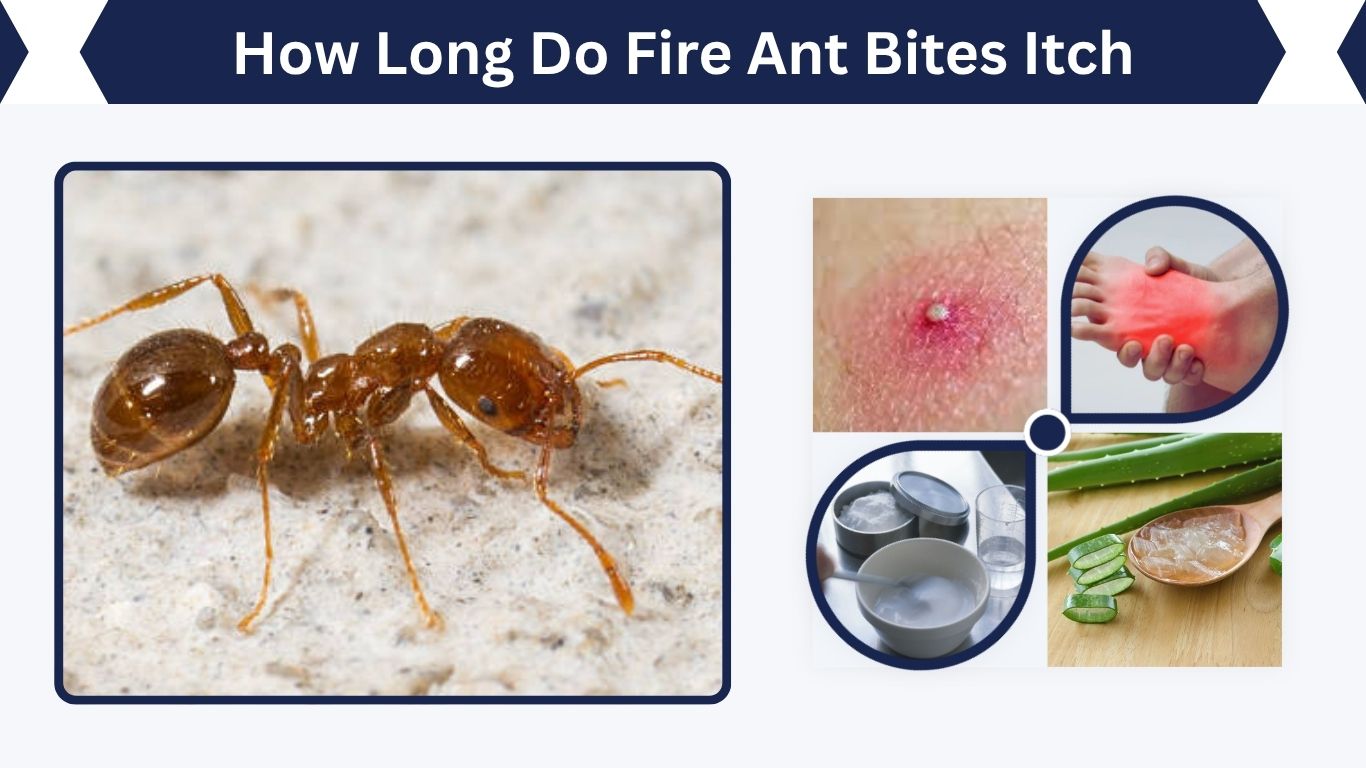
Fire ant bites are notorious for their painful sting and persistent itching. These bites can affect humans and pets alike, causing redness, swelling, and discomfort. The duration of itching varies depending on factors like skin sensitivity, bite location, and the individual’s immune response. Understanding how long fire ant bites itch, recognizing symptoms, and learning proper treatment methods is essential for reducing discomfort and preventing infections. This guide explains everything from bite identification to effective relief techniques.
Understanding Fire Ant Bites
Fire ant bites result from the ant injecting venom into the skin through its sting. This venom contains proteins that trigger an allergic reaction and histamine release, causing itching and redness. While most bites are mild, some people or pets may experience stronger reactions, requiring prompt attention.
How Fire Ants Bite and Sting
Fire ants latch onto the skin with their mandibles and inject venom through a stinger. This venom causes immediate pain followed by itching and the formation of small, raised pustules. Multiple bites in the same area can intensify symptoms.
Typical Symptoms
- Redness and swelling around the bite site
- Intense itching that may last several hours or days
- Formation of small, white pustules
- Pain or burning sensation, especially in sensitive areas
Allergic Reactions
Some individuals may experience severe reactions, including hives, dizziness, or difficulty breathing. Pets, particularly dogs, may also have pronounced swelling or excessive licking. In these cases, medical or veterinary care is essential.
Fire Ant Bites Duration of Itching in Humans
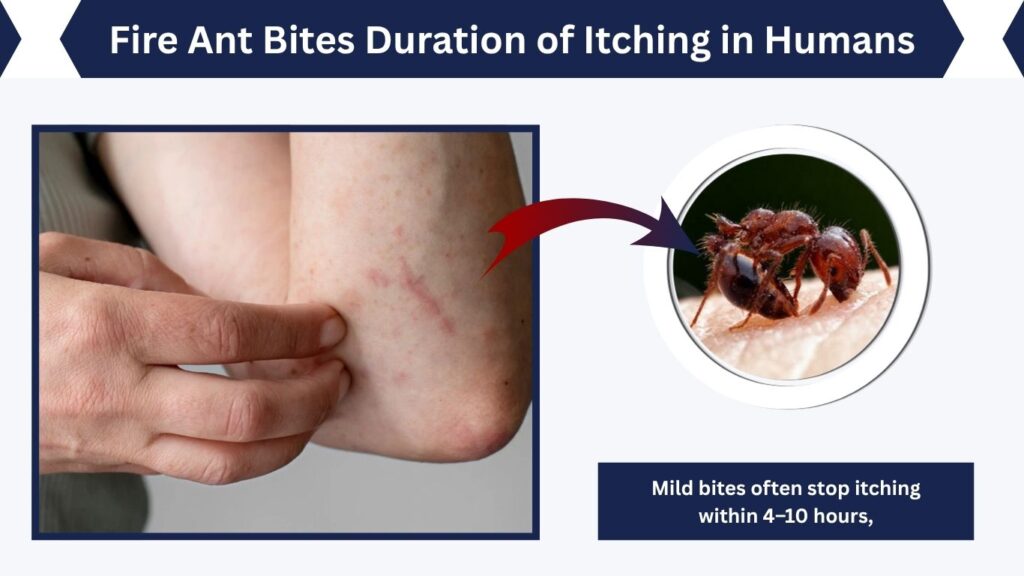
The itching from fire ant bites can last from a few hours to several days, depending on the severity of the reaction. Mild bites often stop itching within 4–10 hours, whereas larger clusters of bites may persist for 2–3 days. Scratching can prolong the discomfort and increase the risk of infection.
Factors Affecting Itch Duration
- Skin sensitivity: People with sensitive skin may itch longer.
- Bite location: Bites on hands or feet may take longer to heal due to frequent contact or movement.
- Immune response: Individuals with stronger allergic reactions may experience more prolonged symptoms.
Duration in Children vs Adults
Children may experience more intense itching than adults because of sensitive skin and smaller body mass. Adults generally have a more localized reaction, but scratching or friction can extend itching duration.
Fire Ant Bites in Pets
Pets are also vulnerable to fire ant bites, particularly dogs that play outdoors in grassy or sandy areas. Pets often react by licking or chewing at the bite site, which can worsen irritation or cause infection.
How Bites Affect Dogs and Cats
- Swelling and redness around paws, legs, or face
- Excessive licking, scratching, or chewing
- Whining or unusual behavior due to discomfort
Treatment Options for Pets
- Cold compresses to reduce swelling and itching
- Topical soothing creams safe for pets
- Veterinary-administered antihistamines for severe reactions
Signs of Severe Reaction in Pets
- Difficulty breathing or panting heavily
- Widespread swelling
- Lethargy or refusal to eat
Prompt veterinary care is essential for these symptoms.
Treatment and Relief for Fire Ant Bites
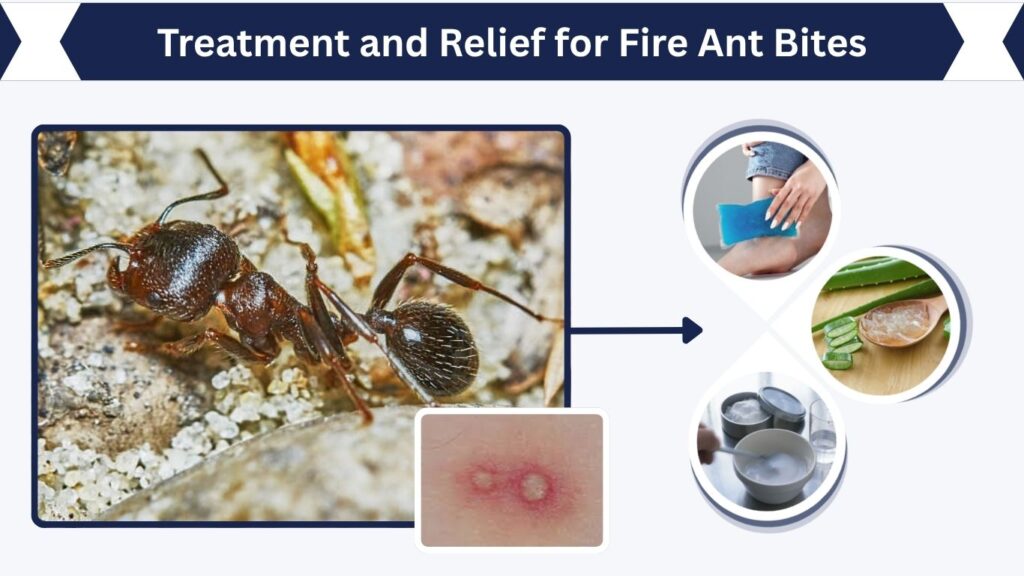
Managing the discomfort from fire ant bites is essential to prevent prolonged itching and secondary infections. While most bites are mild, prompt treatment can reduce irritation and swelling. Various home remedies, over-the-counter medications, and proper care for pets and children are effective in relieving symptoms.
Home Remedies
Home treatments can help soothe itching and decrease inflammation:
- Cold Compress: Apply ice or a cold pack to the bite for 10–15 minutes.
- Aloe Vera Gel: Reduces redness, swelling, and soothes the skin.
- Oatmeal Baths: Colloidal oatmeal can calm itchy skin for multiple bites.
- Baking Soda Paste: Mix baking soda with water and apply to neutralize irritation.
Over-the-Counter Medications
Over-the-counter options are effective for persistent itching or swelling:
- Topical Anti-Itch Creams: Hydrocortisone cream or calamine lotion.
- Oral Antihistamines: Medications like diphenhydramine can reduce histamine reactions.
- Pain Relievers: Acetaminophen or ibuprofen can ease discomfort.
When to Seek Medical Attention
Seek professional care if symptoms are severe, prolonged, or include:
- Extensive swelling beyond the bite site
- Hives, dizziness, or difficulty breathing
- Signs of infection such as pus or spreading redness
Preventing Fire Ant Bites
Prevention is the most effective strategy to avoid prolonged itching and health risks from fire ant bites. Awareness of habitats, protective clothing, and yard management can minimize exposure.
Outdoor Precautions
- Avoid standing on or disturbing ant mounds.
- Wear closed shoes, long pants, and gloves when working in grassy or sandy areas.
- Supervise children and pets to prevent contact with nests.
Yard and Home Management
- Remove debris, logs, and excessive mulch where ants nest.
- Use approved fire ant baits and treatments to control colonies.
- Ensure wooden structures are sealed and dry to discourage infestation.
Symptoms Beyond Itching
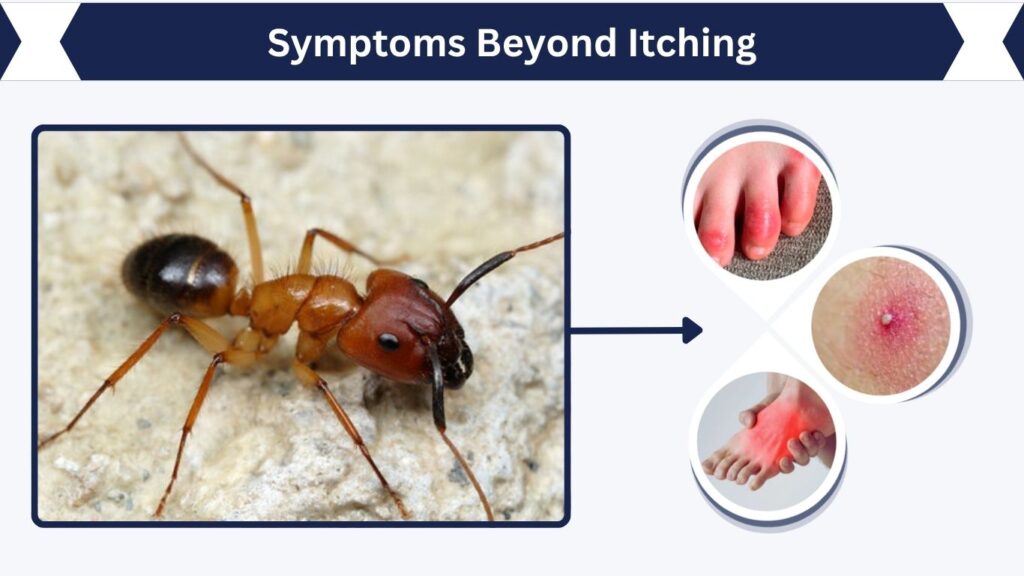
Fire ant bites often produce more than just itching. Understanding all symptoms helps with effective management:
- Redness and Swelling: Common immediately after the bite.
- Pustules: Small white blisters may form at the sting site.
- Pain or Burning Sensation: Especially at bite onset or in sensitive areas.
FAQs
How long do fire ant bites itch?
Itching usually lasts 4–10 hours for mild bites but can persist for 2–3 days for multiple stings or sensitive individuals.
Can scratching make the bite worse?
Yes. Scratching increases the risk of infection, prolongs irritation, and can worsen redness or swelling.
Are pets affected differently than humans?
Pets often lick or chew at bites, which can intensify irritation and lead to infection. Dogs and cats may also experience more pronounced swelling.
How can I prevent fire ant bites?
Avoid ant mounds, wear protective clothing outdoors, and manage yards to reduce nesting areas. Use fire ant baits or treatments if necessary.
When should I see a doctor or veterinarian?
Seek medical attention if bites cause severe allergic reactions, persistent swelling, pus formation, or difficulty breathing in humans or pets.