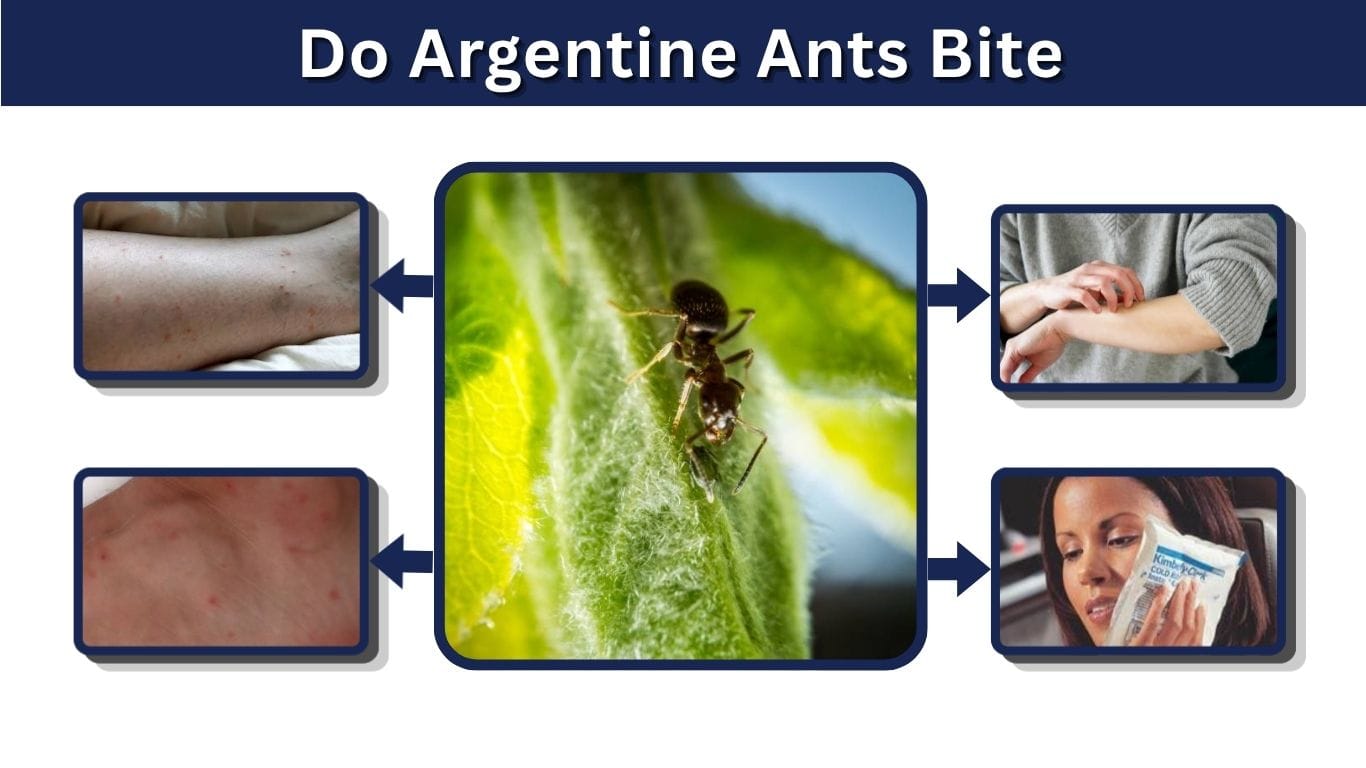
Argentine ants are tiny brown ants commonly found traveling in long trails around kitchens, bathrooms, gardens, and other moist areas. Because large numbers may crawl onto surfaces—and occasionally onto people—many homeowners wonder whether Argentine ants bite humans. Unlike fire ants, Argentine ants are primarily considered nuisance ants and are not known for painful or venomous attacks. Still, understanding what happens after skin contact can help you identify the ant correctly, recognize unusual reactions, and know when simple home care or medical attention may be appropriate.
Do Argentine Ants Bite Humans?
Argentine ants (Linepithema humile) are small invasive ants that frequently enter homes searching for moisture and food. Despite their abundance, they are not considered dangerous biting or stinging ants. Major entomology resources describe Argentine ants as species that generally do not bite or sting people, making painful encounters unusual compared with fire ants or some other ant species.
Can Argentine Ants Actually Bite?
Argentine ants have jaws, or mandibles, that they use for carrying food, tending young, and interacting with other insects. However, they are not recognized as significant human-biters.
Some observations describe occasional nipping when large numbers of ants are disturbed or trapped against the skin, but even then, the reaction is generally minor. They also lack the painful venomous sting associated with fire ants.
Therefore, if you experience intense burning, significant swelling, pustules, or repeated painful stings after encountering ants, another ant species may be responsible.
What Does an Argentine Ant Bite Look Like?
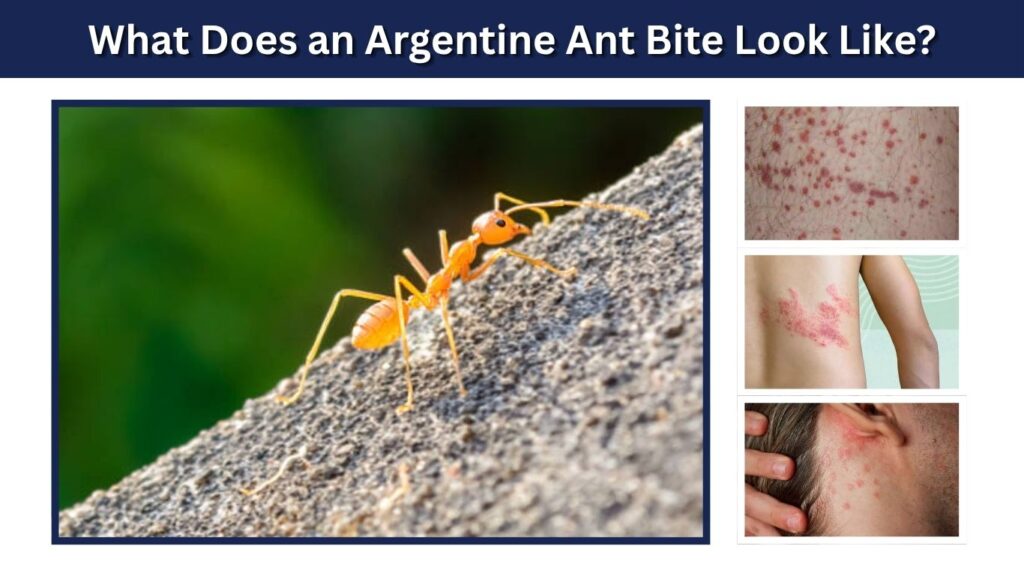
Because Argentine ants rarely cause noticeable bites, there is no distinctive Argentine ant bite pattern comparable with the characteristic pustules produced by fire ant stings. A minor skin reaction following contact may simply resemble temporary irritation. Appearance alone usually cannot confirm which insect caused a small red bump, especially when the ant itself was not identified.
Possible Symptoms After Skin Contact
If irritation occurs after Argentine ants crawl on the skin, possible signs may include:
- A tiny red or pink spot
- Mild itching around the affected area
- Slight localized redness
- Minor tenderness or irritation
- A small raised bump
- Temporary discomfort
Severe burning, large blisters, numerous pustules, widespread hives, or major swelling would be unusual for an Argentine ant encounter and should make you consider another cause.
How Long Can Symptoms Last?
Minor irritation should generally improve relatively quickly. The exact duration depends on skin sensitivity, scratching, and whether another insect actually caused the reaction.
A small itchy spot may remain noticeable for several hours or occasionally longer. Continued scratching can make seemingly minor irritation redder, more swollen, and slower to heal.
If the area becomes progressively more painful, warm, swollen, or red rather than improving, it should not automatically be assumed to be a normal Argentine ant bite.
Why Do Argentine Ants Crawl on Humans?
Argentine ants do not normally seek humans as prey or as a blood source. They primarily forage for sugary foods, honeydew, proteins, and moisture. Their massive colonies create heavily traveled trails, which sometimes bring thousands of workers around homes, patios, gardens, sinks, pet bowls, and food preparation areas.
Why They May Seem Aggressive
An Argentine ant crawling across your arm or leg is usually exploring rather than attempting to attack.
Problems are more likely when someone sits or stands directly beside a heavily traveled trail, disturbs a nesting area, or comes into contact with vegetation containing large numbers of ants.
Because numerous workers can quickly crawl onto clothing or skin, the sensation may feel alarming even though these ants are generally considered nuisance pests rather than dangerous stinging ants.
Argentine Ant Bite Treatment
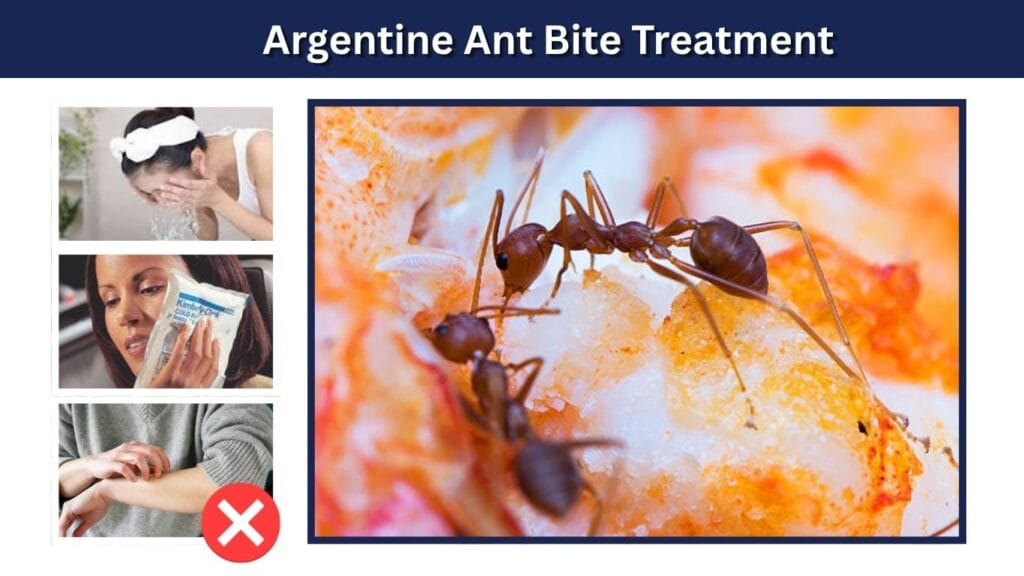
If you believe an ant caused minor skin irritation, basic insect-bite first aid is generally sufficient. Most mild insect bite reactions can be managed at home, while worsening swelling, infection, or systemic symptoms warrant medical evaluation.
How to Treat the Area
For a mild reaction:
- Wash the skin gently with soap and water.
- Apply a cold compress for about 10–20 minutes.
- Avoid scratching the irritated area.
- Keep the area clean while it heals.
- Consider an appropriate over-the-counter anti-itch product if needed.
- Monitor the area for increasing redness, pain, or swelling.
Scratching is particularly important to avoid because broken skin can allow bacteria to enter.
What Not to Do
Do not squeeze, cut, or aggressively scratch an unexplained bump. Avoid applying harsh chemicals, pesticides, bleach, or household cleaners to the skin.
If you are unsure what caused a painful lesion, treating it repeatedly with home remedies can sometimes irritate the skin further and make identification more difficult.
Can Argentine Ant Bites Cause Infection?
An Argentine ant itself is not generally associated with medically important venomous bites. However, virtually any break or heavily scratched area of skin can potentially become infected. Infection is therefore more likely to result from damaged skin and bacterial contamination than from Argentine ant venom.
Signs That Need Medical Attention
Contact a healthcare professional if you develop:
- Redness that continues spreading
- Increasing warmth around the area
- Significant swelling
- Increasing pain or tenderness
- Pus or other drainage
- Fever or feeling generally unwell
- Symptoms that continue worsening instead of healing
Medical evaluation is also appropriate when you cannot identify what caused the lesion and symptoms are unusually painful or persistent.
Argentine Ant Bite vs. Fire Ant Sting
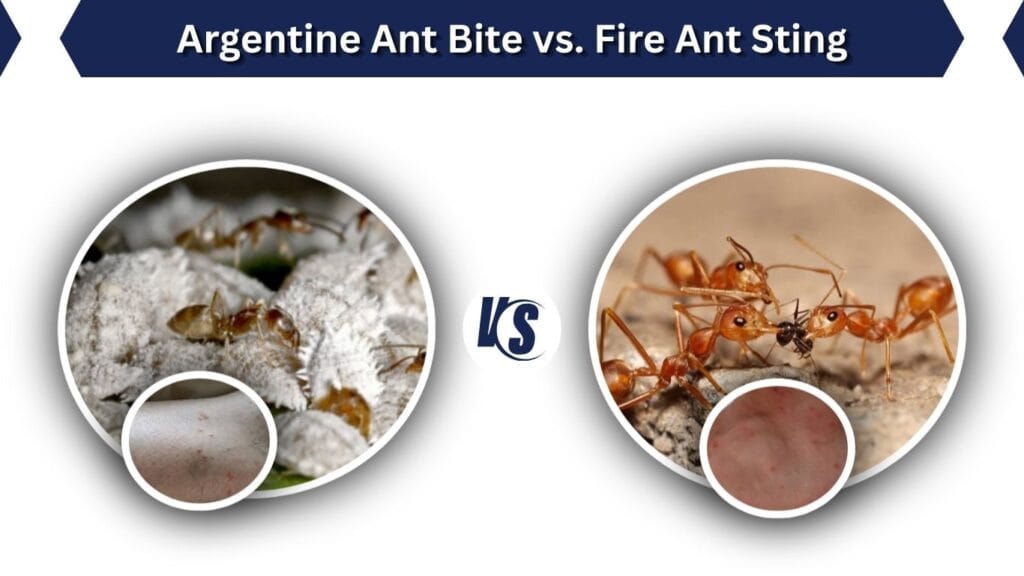
Confusing Argentine ants with fire ants can create unnecessary concern. Argentine ants are small, relatively uniform in size, and commonly travel in long organized trails. Fire ants are considerably more important from a medical standpoint because they can bite to anchor themselves and then repeatedly sting, injecting venom into the skin.
Major Differences
Argentine ants:
- Usually about 2–3 mm long
- Brown to dark brown
- Commonly form long trails
- Frequently invade buildings
- Generally do not sting people
- Human biting is uncommon or insignificant
Fire ants:
- Workers vary noticeably in size
- Often reddish brown
- Become aggressive when nests are disturbed
- Can sting repeatedly
- Cause immediate burning or pain
- Frequently produce raised lesions or pustules
If numerous painful spots suddenly appear after ants swarm onto your feet or legs outdoors, fire ants or another stinging species are more likely than Argentine ants.
How to Prevent Argentine Ant Problems
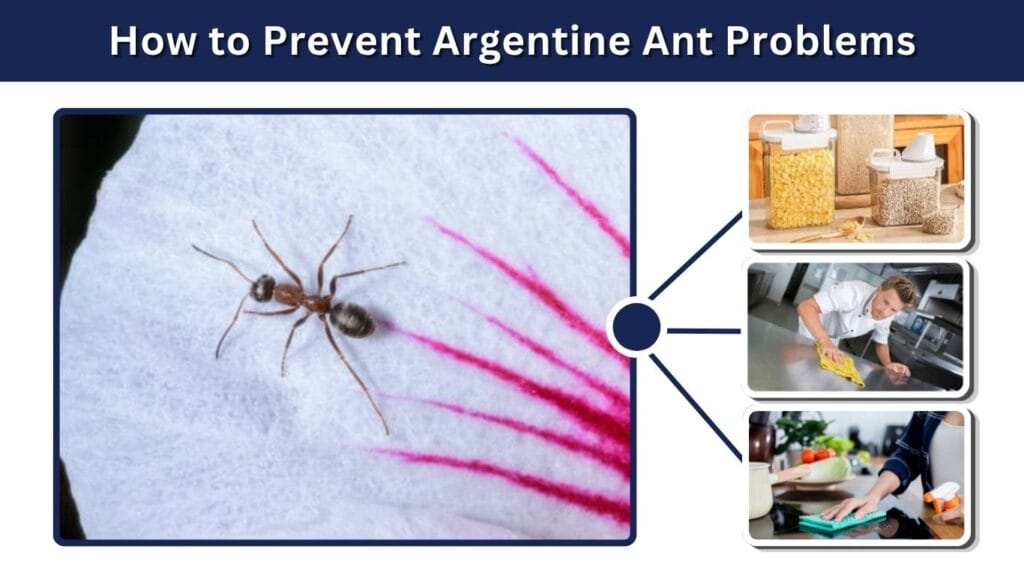
Although their bites are not a significant health concern, Argentine ants can become serious household nuisances because colonies may contain enormous numbers of workers and multiple queens. Controlling their access to food, moisture, and entry points is usually more useful than worrying about bites.
Ways to Keep Argentine Ants Away
Try these preventive measures:
- Wipe up sugary spills immediately.
- Store food in sealed containers.
- Clean crumbs from counters and floors.
- Avoid leaving pet food out unnecessarily.
- Repair leaking faucets and pipes.
- Remove unnecessary moisture around the house.
- Seal cracks around doors, windows, and walls.
- Follow ant trails to locate likely entry points.
- Use appropriately labeled ant baits when control is necessary.
Large Argentine ant colonies can be difficult to control because of their colony structure, so persistent infestations may require a broader baiting and pest-management strategy rather than simply killing visible workers.
FAQs
Argentine ants cause far more concern as invasive household pests than as biting insects. The following answers address several common questions about human contact, symptoms, treatment, and the possibility of confusing these tiny brown ants with more aggressive species.
1. Do Argentine Ants Bite or Sting?
Argentine ants are generally considered non-stinging ants and are not known for medically significant human bites. Although ants have mandibles, Argentine ants normally use them for feeding and colony activities rather than attacking people.
2. Are Argentine Ant Bites Poisonous?
Argentine ants are not considered venomous stinging ants like fire ants. A severe burning reaction or pustule after an ant encounter is therefore unlikely to be a typical Argentine ant reaction and may indicate another ant species or another source of skin irritation.
3. Why Do Argentine Ants Crawl on People?
They may accidentally crawl onto people when someone is close to a food trail or nesting location. Argentine ants are searching primarily for food and moisture rather than humans, so crawling onto your body does not normally mean they are attempting to attack.
4. How Do You Treat an Argentine Ant Bite?
Wash the area with soap and water, apply a cool compress, and avoid scratching. Mild irritation usually requires little treatment. Seek medical advice if redness, pain, swelling, or other symptoms continue to worsen or signs of infection develop.
5. Can Argentine Ant Bites Cause an Allergic Reaction?
Significant allergic reactions from Argentine ants would be unusual because they are not important stinging ants. If someone develops widespread hives, swelling of the face or throat, breathing difficulty, dizziness, or another severe reaction after an insect encounter, emergency medical attention is necessary.