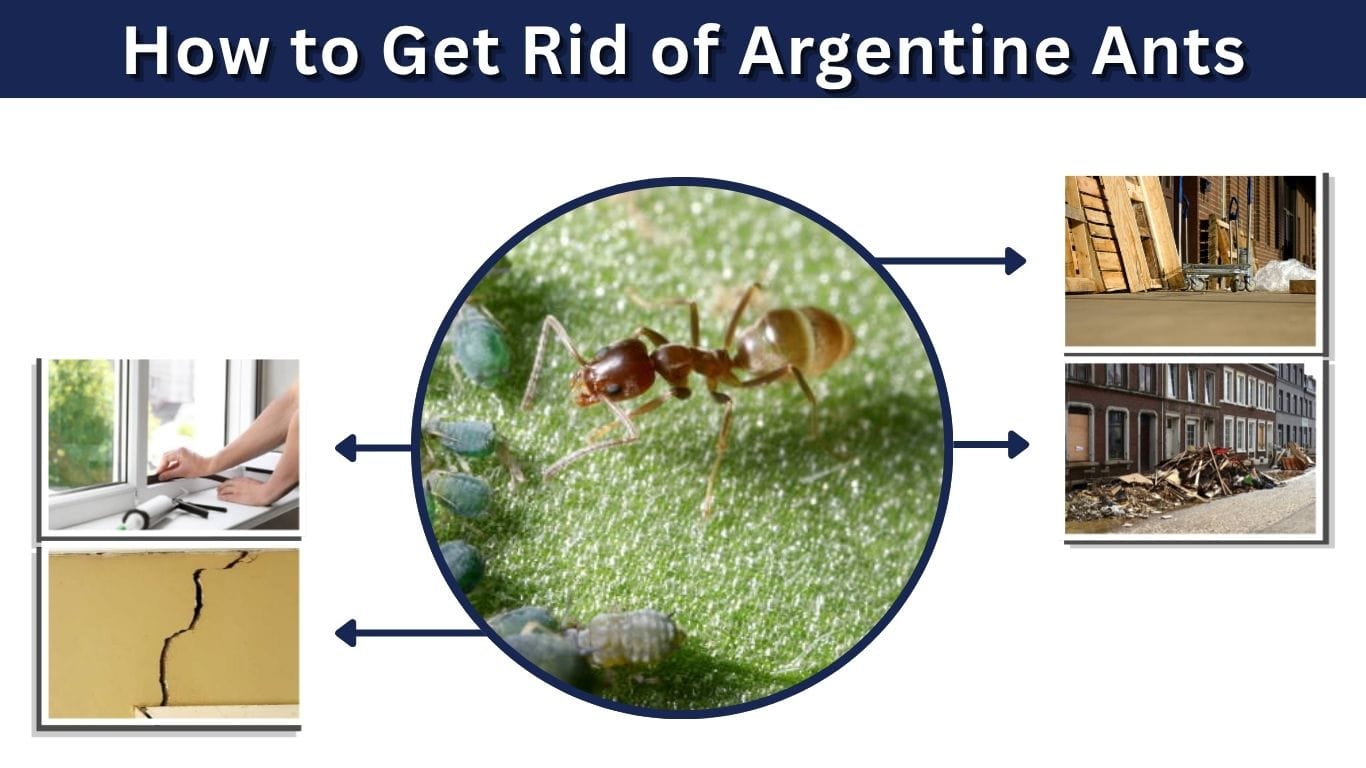
Argentine ants can quickly become a frustrating household pest because they form massive colonies and travel in long trails searching for food and moisture. Simply killing the ants you see often provides only temporary relief because many more workers and queens may remain nearby. The best way to get rid of Argentine ants is to combine slow-acting bait, sanitation, moisture control, and outdoor prevention. This guide explains how to remove Argentine ants from your house, yard, garden, and other problem areas while reducing the chance of another infestation.
Best Way to Get Rid of Argentine Ants
Argentine ants can be harder to eliminate than many common household ants because their colonies may contain multiple queens and numerous interconnected nesting areas. Spraying visible workers may reduce activity temporarily, but it rarely reaches the entire colony. A more effective approach focuses on allowing worker ants to carry treatment back to queens, larvae, and other colony members.
Use Slow-Acting Ant Baits
Ant bait is often one of the most effective options for Argentine ant infestations.
- Place bait close to active ant trails.
- Position bait near entry points and suspected nesting areas.
- Keep bait away from children and pets.
- Avoid spraying insecticide directly around bait stations.
- Replace bait when it becomes dry, contaminated, or empty.
- Continue baiting even if ant numbers initially increase.
Seeing additional ants around bait does not necessarily mean the treatment is failing. Worker ants may gather around an attractive food source before carrying it back to the colony.
Avoid Killing Every Visible Ant Immediately
It can be tempting to spray every line of ants as soon as you find them. However, when using bait, worker ants need enough time to collect the bait and share it throughout their colony.
Fast-killing sprays may eliminate only the workers walking across a countertop while leaving queens and hidden nests unaffected. In some situations, disturbing Argentine ant colonies too aggressively can also cause them to relocate.
For long-term control, focus on the colony rather than only the individual ants you can see.
How to Get Rid of Argentine Ants in the House
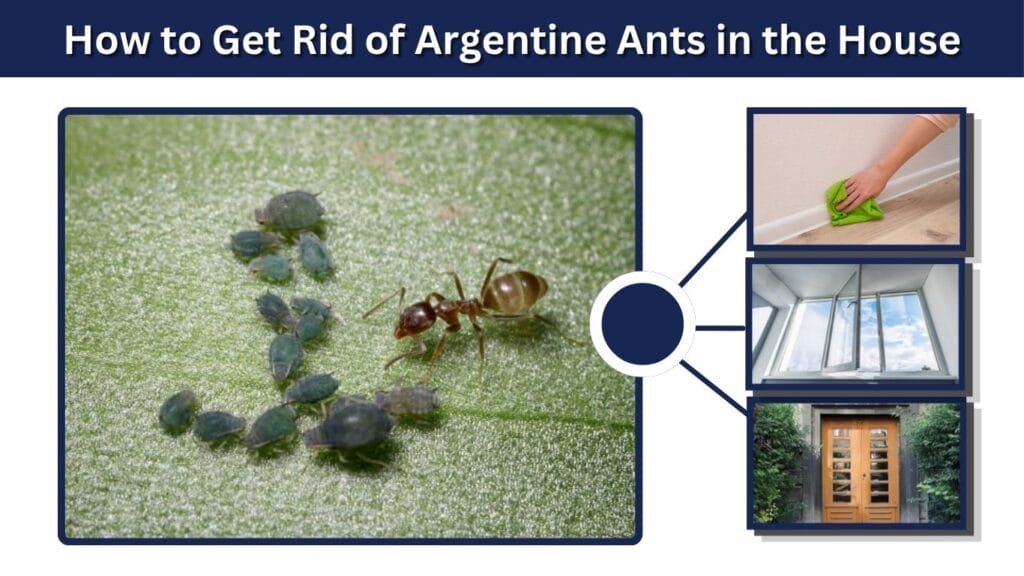
Indoor Argentine ant problems usually begin when outdoor colonies discover easy access to food, water, or shelter. Kitchens and bathrooms are especially attractive because crumbs, sweet residues, sinks, plumbing, and condensation can provide ideal conditions. Indoor control should therefore combine baiting with cleaning and removal of the resources that are encouraging ants to remain inside.
Find and Follow Their Trails
Argentine ants commonly form highly visible trails. Following them can help determine where they are entering the building.
Check areas such as:
- Window frames
- Door frames
- Baseboards
- Plumbing openings
- Cracks in walls
- Electrical outlets
- Kitchen cabinets
- Areas behind appliances
Rather than immediately wiping away every trail, first identify where the ants are coming from. This information can help you place bait more effectively.
Remove Food Sources
Argentine ants are strongly attracted to easily accessible foods, especially sweet substances.
Clean countertops regularly and wipe up spilled juice, syrup, soda, honey, or other sugary liquids. Store cereal, sugar, baked goods, pet food, and similar products in tightly sealed containers.
Dirty dishes should not remain in the sink overnight when ants are active. Regularly clean beneath refrigerators, stoves, and cabinets where food particles can accumulate unnoticed.
Removing competing food sources can also make bait stations more attractive.
How to Get Rid of Argentine Ants Outside
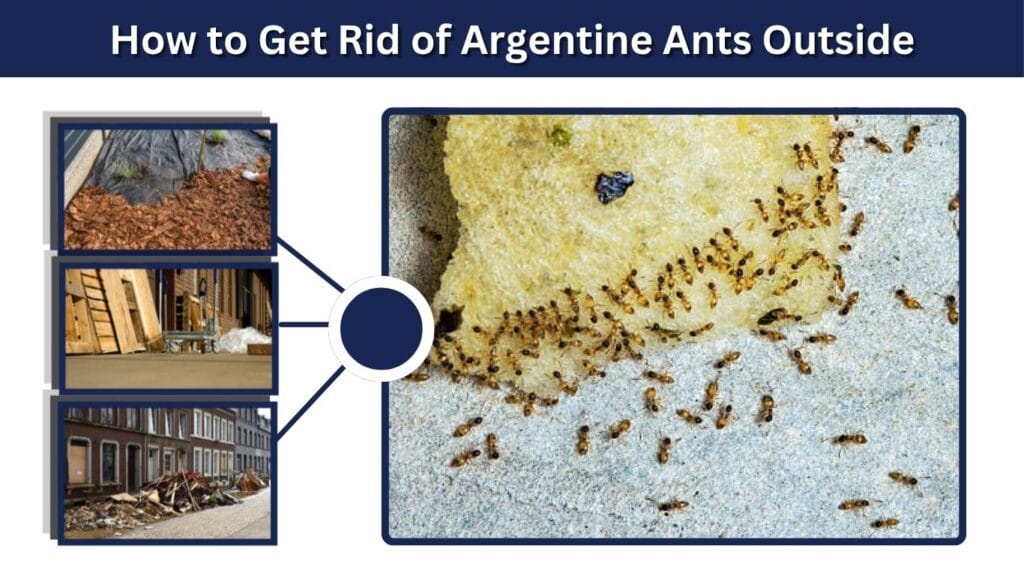
Outdoor control is extremely important because many indoor infestations originate from colonies surrounding the property. Argentine ants may nest beneath mulch, stones, boards, flowerpots, landscape materials, and other protected areas with suitable moisture. Reducing outdoor habitat and placing bait along active trails can limit the number of ants continually entering the building.
Reduce Outdoor Nesting Areas
Make the area around your house less attractive by:
- Moving firewood away from exterior walls
- Removing piles of leaves and garden debris
- Avoiding excessive mulch against foundations
- Moving unused boards, bricks, and containers
- Trimming plants that touch the building
- Repairing leaking outdoor faucets
- Improving drainage around wet areas
- Removing unnecessary standing water
Moist environments can support large numbers of Argentine ants, particularly during warm weather.
Use Outdoor Ant Bait
Outdoor bait can help target colonies before workers reach your kitchen or bathroom. Place approved bait stations or products near trails, foundations, garden borders, and other areas where Argentine ants are active.
Always follow the product instructions carefully. More pesticide does not necessarily provide better control.
Because Argentine ants may occupy a large area, several strategically placed bait locations are often more useful than applying treatment to only one small trail.
How to Get Rid of Argentine Ants Naturally
Homeowners who want to reduce pesticide use can make their property significantly less attractive to Argentine ants through sanitation, exclusion, and moisture management. Natural methods may work particularly well for minor problems, although established colonies may still require a properly designed baiting strategy for complete control.
Natural Control Methods
Helpful non-chemical measures include:
- Clean food spills immediately.
- Vacuum active ant trails indoors.
- Wash trail areas with soapy water.
- Seal cracks around windows and doors.
- Store food in airtight containers.
- Keep garbage containers tightly closed.
- Repair leaking pipes and faucets.
- Reduce excessive garden moisture.
- Remove branches touching the roof or walls.
- Keep mulch slightly away from the foundation.
Soapy water can remove the chemical trail ants use to guide other workers, which may temporarily reduce traffic along a particular route.
Does Vinegar Get Rid of Argentine Ants?
Vinegar may help clean surfaces and disrupt ant trails, but it usually will not eliminate a large Argentine ant colony.
You can use diluted vinegar as a surface cleaner in areas where ants have been traveling, provided the surface can safely tolerate it. However, workers from the colony may eventually establish another trail.
Vinegar is therefore better viewed as a cleaning and temporary deterrent method rather than a complete colony treatment.
How to Get Rid of Argentine Ants in the Garden
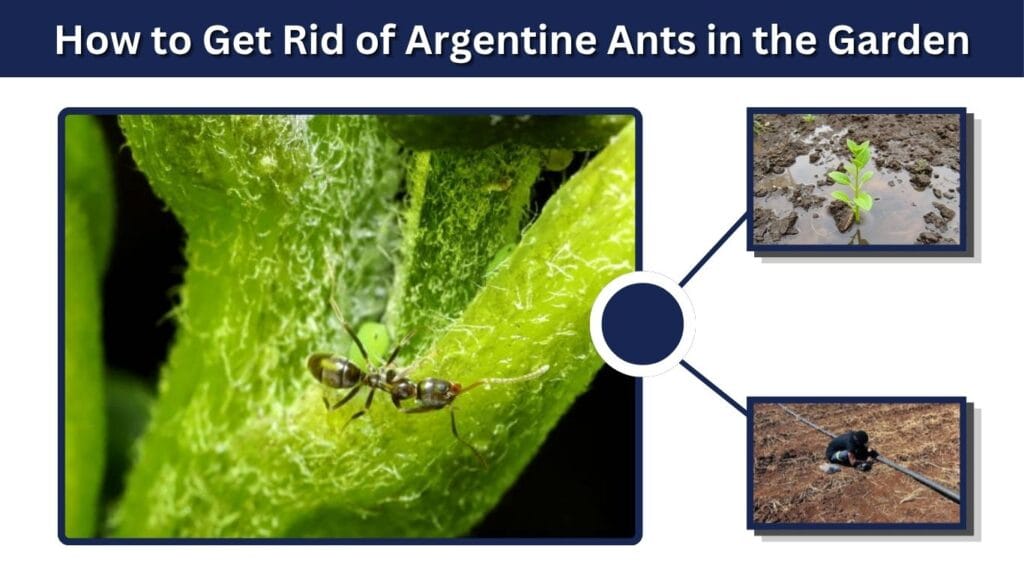
Gardens provide Argentine ants with moisture, shelter, and abundant food. They are also attracted to honeydew produced by aphids, scale insects, mealybugs, and other plant-feeding insects. Controlling these insects and changing garden conditions can significantly reduce Argentine ant activity without disturbing beneficial plants.
Control Honeydew-Producing Insects
Examine leaves, stems, and new plant growth for aphids, scale insects, and mealybugs.
Argentine ants frequently protect these pests because they feed on the sugary honeydew they produce. A heavy aphid infestation can therefore support a large ant population.
Managing the plant pests reduces one of the ants’ major food sources and may make other control methods more successful.
Manage Water Carefully
Avoid excessive irrigation that keeps soil continuously damp. Water plants according to their actual needs and repair leaking irrigation lines.
Remove containers, trays, or other objects that hold unnecessary water. Keeping the garden healthy without creating constantly wet hiding places can make the area less attractive for nesting.
How to Prevent Argentine Ants From Coming Back
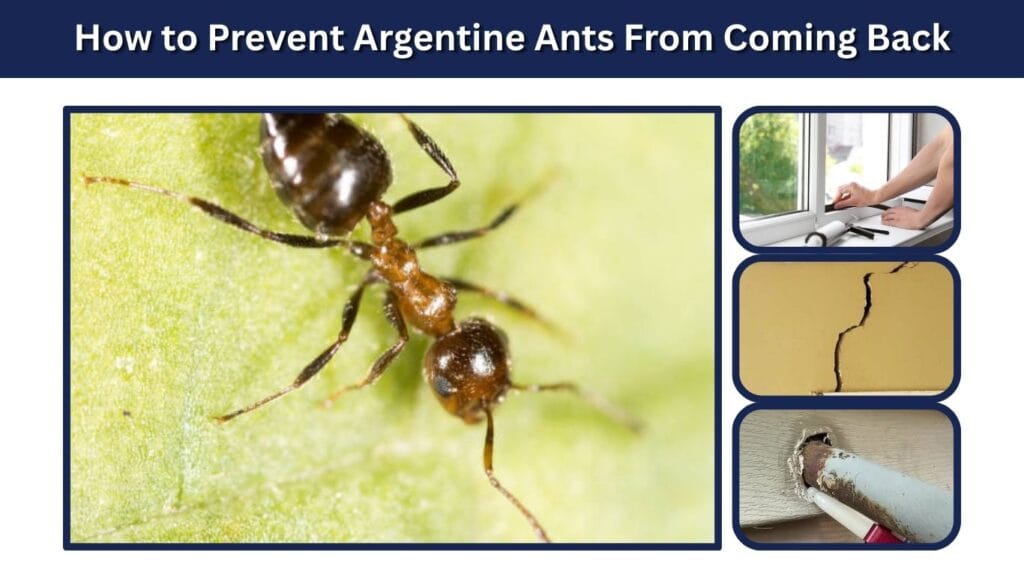
Eliminating an existing infestation is only part of long-term Argentine ant control. Colonies from surrounding properties or outdoor areas may eventually discover the same entry points again. Prevention therefore depends on reducing access to your home while making indoor and outdoor environments less rewarding for foraging workers.
Seal Common Entry Points
Inspect the exterior of the building and seal:
- Cracks around doors
- Gaps around windows
- Openings around pipes
- Foundation cracks
- Gaps around utility cables
- Damaged weather stripping
- Small wall openings
Argentine ants are extremely small, so even narrow gaps can provide entry.
Maintain a Clean, Dry Home
Continue cleaning even after the ants disappear. Keep food sealed, wipe counters regularly, and avoid leaving pet food or sugary liquids exposed for long periods.
Repair plumbing leaks quickly and control condensation in bathrooms, kitchens, and laundry areas.
These measures reduce the chances that scouting ants will find enough resources to establish persistent indoor trails.
Common Mistakes When Controlling Argentine Ants
Argentine ant infestations often continue because treatment focuses on the ants that are visible rather than the colony itself. Understanding the most common mistakes can save time and reduce repeated infestations, especially when several colonies are active around a property.
Mistakes to Avoid
Avoid these common problems:
- Spraying every ant before bait can work
- Placing bait far away from active trails
- Leaving food available beside bait
- Using too little bait for a large infestation
- Allowing outdoor leaks to continue
- Ignoring aphids and other honeydew-producing pests
- Sealing entry points without addressing outdoor colonies
- Giving up after only a few days
Argentine ant control may require patience because workers need time to distribute slow-acting bait throughout their colony.
FAQs
Argentine ants can be persistent because their colonies may spread across large areas and continually send workers into buildings. These common questions explain how quickly treatment works, which methods are most effective, and what homeowners should expect while controlling an infestation.
1. What Is the Best Way to Get Rid of Argentine Ants?
Slow-acting ant bait combined with sanitation, moisture control, and exclusion is generally the most effective approach. Bait allows workers to carry treatment back into the colony instead of killing only visible ants. Outdoor control is also important when colonies are nesting around the property.
2. How Long Does It Take to Get Rid of Argentine Ants?
Minor infestations may noticeably decline within several days, while large colonies can require longer treatment. Results depend on colony size, bait placement, competing food sources, weather, and whether outdoor nesting areas are also being addressed. Continue monitoring trails after activity decreases.
3. Why Are Argentine Ants Suddenly in My House?
Argentine ants may move indoors while searching for food, water, or more comfortable conditions. Hot, dry weather, heavy rainfall, or nearby colony disturbance can increase indoor activity. Kitchens and bathrooms commonly attract them because these areas provide moisture and accessible food.
4. Can I Get Rid of Argentine Ants Without Chemicals?
Sanitation, sealing entry points, removing water sources, cleaning trails, and controlling garden pests can significantly reduce ant activity. However, very large established colonies may be difficult to eliminate completely without bait or another targeted control method.
5. Why Do Argentine Ants Keep Coming Back?
Argentine ants may return because large colonies remain outdoors, food or water is still available, or entry points have not been sealed. Their colony structure can make them particularly persistent. Long-term control usually requires treating the surrounding environment rather than focusing only on ants found indoors.