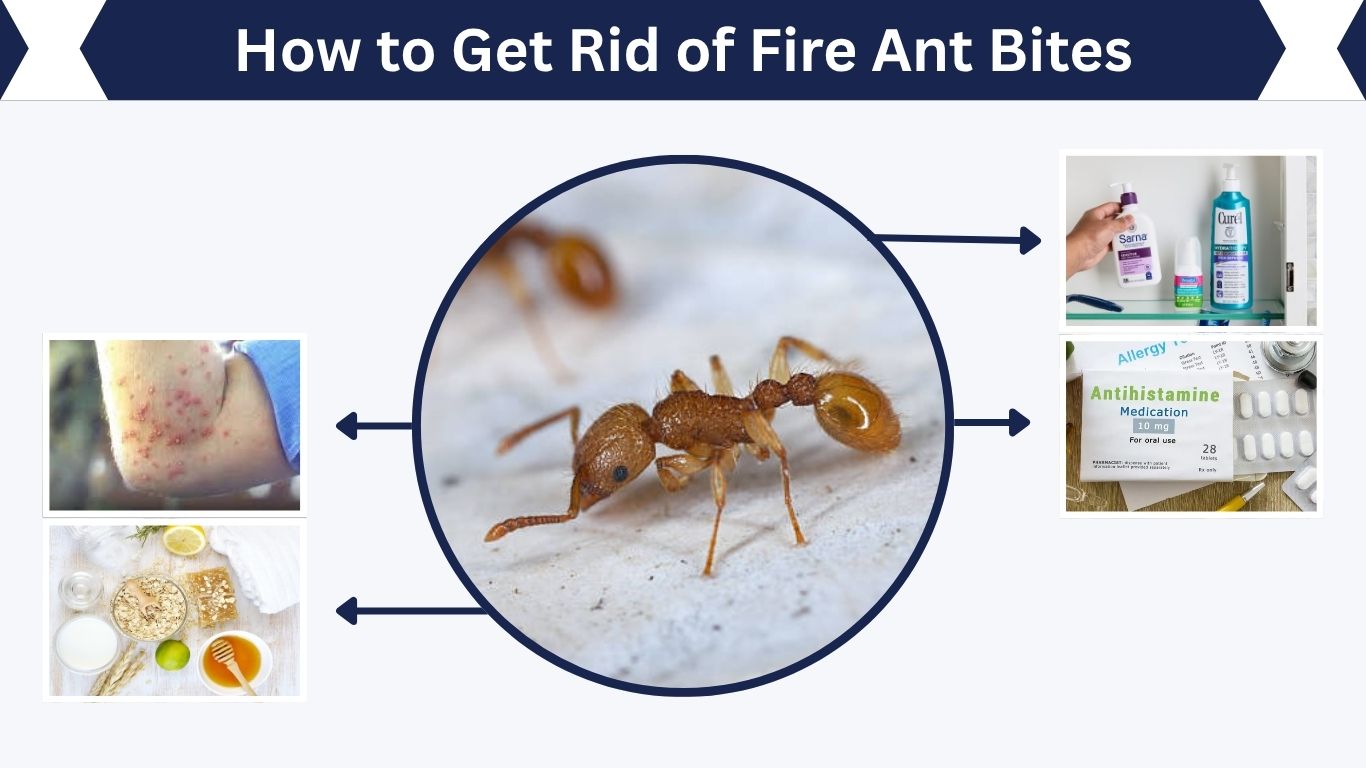
Fire ant bites can cause intense burning pain, itching, swelling, and small blisters on the skin. These aggressive ants often attack in groups, which means a person may receive multiple stings at once. While most bites heal within several days, some reactions can become severe and require medical attention.
Quick treatment is important for reducing discomfort and preventing infection. Home remedies, cold compresses, anti-itch creams, and proper skin care can help relieve symptoms and speed up healing. Understanding how fire ant bites affect the skin can also help prevent long-term scars and irritation.
What Are Fire Ant Bites?
Fire ant bites are actually stings caused by venom injected into the skin. These ants grab the skin with their jaws and sting multiple times in a circular pattern. The venom causes a painful burning sensation followed by redness, swelling, and itching.
How Fire Ants Bite and Sting
Fire ants first attach themselves to the skin using their jaws. After gripping the skin, they inject venom through repeated stings. This venom is responsible for the painful burning feeling and the white blisters that often appear later.
Why Fire Ant Bites Hurt
The venom released by fire ants contains toxic chemicals that irritate the skin and trigger inflammation. This reaction causes pain, swelling, redness, and itching that may last for several days depending on the severity of the sting.
Common Symptoms of Fire Ant Bites
- Burning pain
- Red swollen bumps
- Intense itching
- White pus-filled blisters
- Skin irritation
How Long Fire Ant Bites Last
Mild fire ant bites may improve within a few days, while larger reactions can last for one to two weeks. Blisters often appear within 24 hours and slowly dry out as the skin heals.
How to Get Rid of Fire Ant Bites Fast
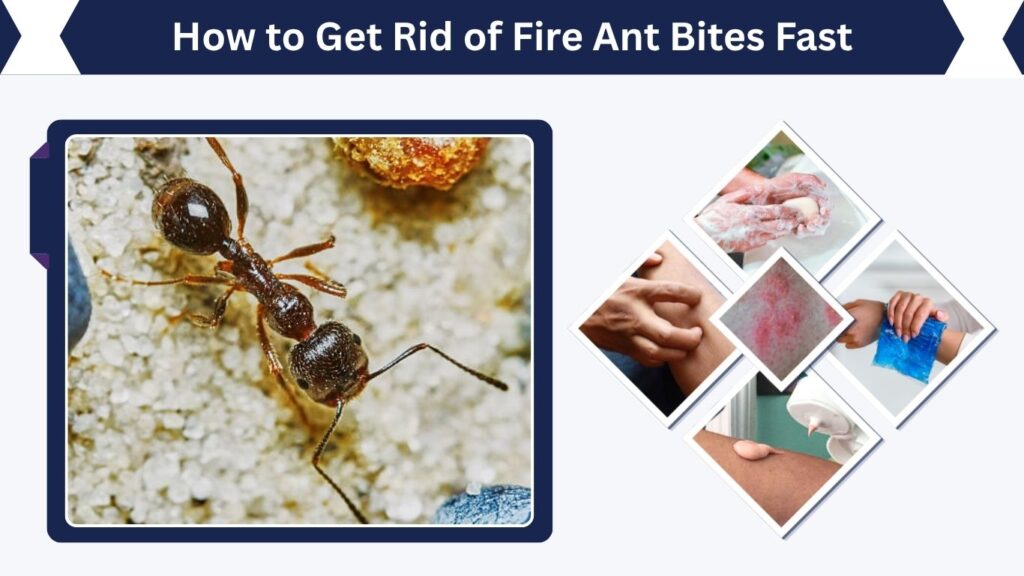
Fast treatment can reduce pain, swelling, and itching before symptoms become worse. Cleaning the area and cooling the skin are usually the first steps after being stung by fire ants.
Wash the Area Immediately
- Use soap and water
- Remove dirt and bacteria
- Lower infection risk
- Clean gently without scrubbing
Use Cold Compresses
Applying a cold compress can reduce swelling and numb the painful area. Ice packs should be wrapped in a cloth before placing them on the skin to avoid irritation or ice burns. Short cooling sessions repeated several times a day may provide the best relief.
Apply Anti-Itch Treatments
Hydrocortisone cream, calamine lotion, and antihistamines are commonly used to reduce itching and swelling. These treatments can make the healing process more comfortable and help prevent scratching.
Avoid Scratching the Bites
Scratching can break the skin and increase the risk of infection or scarring. Keeping the area clean and using anti-itch products may help reduce the urge to scratch while the bites heal.
Home Remedies for Fire Ant Bites
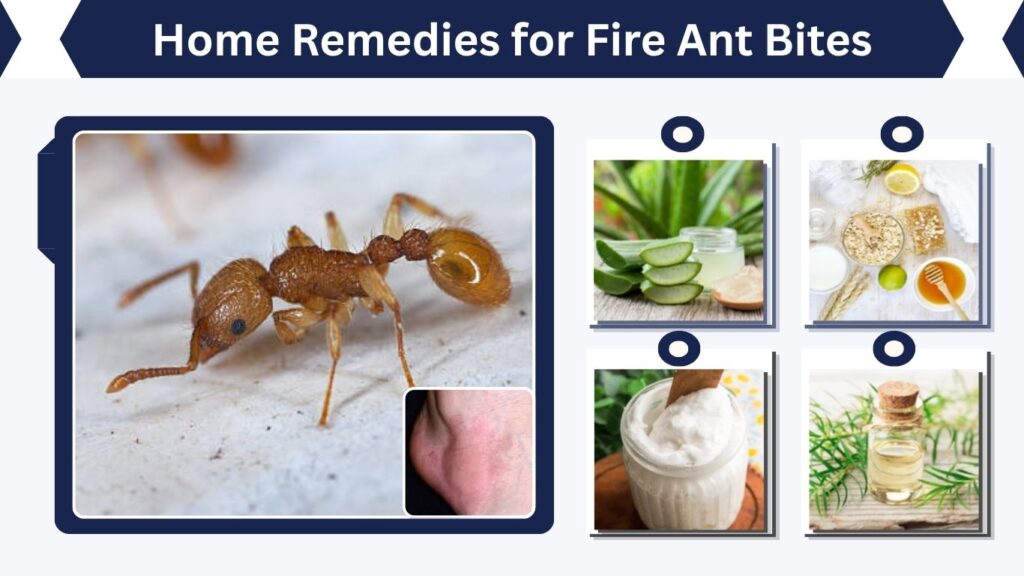
Many people use natural remedies to calm itching and reduce inflammation after fire ant stings. While home remedies may not remove symptoms instantly, they often provide temporary relief and improve comfort during recovery.
Natural Remedies for Fire Ant Bites
- Aloe vera gel
- Baking soda paste
- Honey
- Oatmeal baths
- Tea tree oil
How to Reduce Fire Ant Bite Itching
Cooling treatments and moisturizing products can help soothe irritated skin. Anti-itch creams and antihistamines may also reduce inflammation caused by the venom reaction. Some people find relief by applying aloe vera or cool oatmeal compresses directly to the affected area.
How to Reduce Swelling From Fire Ant Bites
Keeping the affected area elevated may help reduce swelling. Ice packs and anti-inflammatory medications can also calm inflammation and decrease redness around the sting site.
Do Home Remedies Work Overnight?
Most home remedies provide symptom relief rather than instant healing. Mild bites may feel better overnight, but blisters and swelling often require several days to fully disappear.
Fire Ant Bite Blisters and Scars
Fire ant bites commonly form white blisters that may look alarming but are usually part of the normal healing process. Proper care is important because damaged blisters can become infected and leave scars behind.
Why Fire Ant Bite Blisters Form
The venom triggers an immune response that causes fluid to collect under the skin. This creates the small white blisters often seen after fire ant stings.
Should You Pop Fire Ant Blisters?
- Avoid popping blisters
- Keep the area clean
- Prevent infection
- Allow natural healing
- Cover with bandages if needed
How to Get Rid of Fire Ant Bite Scars
Scar creams, moisturizers, and sunscreen may help reduce dark marks left behind after healing. Avoid scratching or picking at the skin because this can worsen scarring and slow recovery.
Medical Treatments for Fire Ant Bites
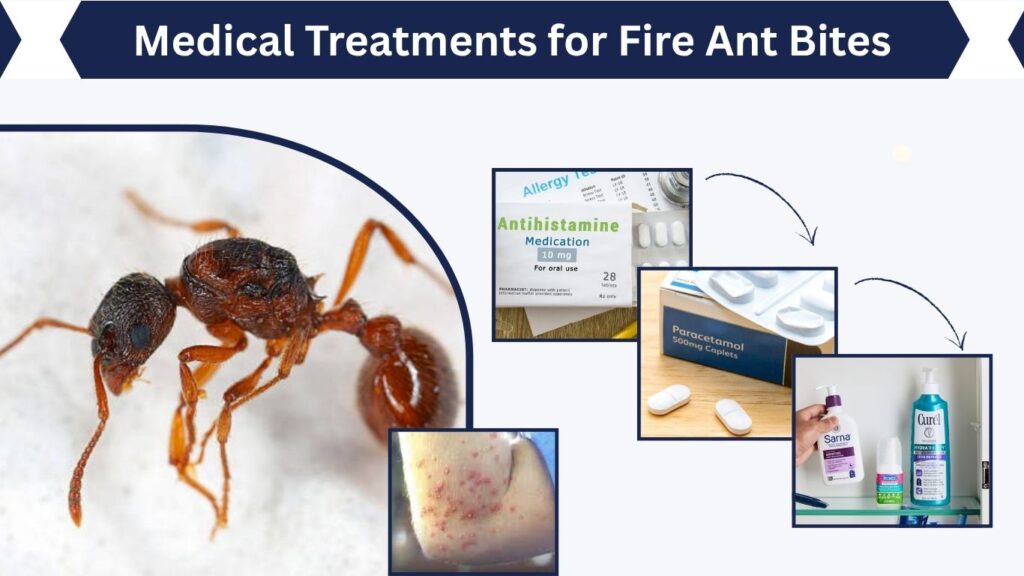
Most fire ant bites can be treated at home, but severe reactions sometimes require professional medical care. Strong swelling, infection, or allergic reactions should never be ignored. Medical treatments may help control inflammation, reduce pain, and prevent complications caused by repeated stings.
Over-the-Counter Treatments
- Antihistamine tablets
- Hydrocortisone cream
- Pain relievers
- Anti-itch lotion
- Antibiotic ointment
Prescription Treatments for Severe Reactions
Doctors may prescribe stronger steroid creams or oral medications when swelling becomes severe. Infected bites may require antibiotics, especially if scratching damages the skin. People with serious allergies may also need emergency medication such as epinephrine.
When to See a Doctor
Medical attention is important if swelling spreads rapidly, breathing becomes difficult, or the sting area shows signs of infection. Fever, pus, severe redness, and dizziness are warning signs that should not be ignored.
Allergic Reactions to Fire Ant Bites
Some people experience severe allergic reactions called anaphylaxis after fire ant stings. Symptoms may include trouble breathing, throat swelling, rapid heartbeat, and fainting. Emergency treatment should be sought immediately if these symptoms appear.
How to Get Rid of Fire Ant Bite Pain and Itching
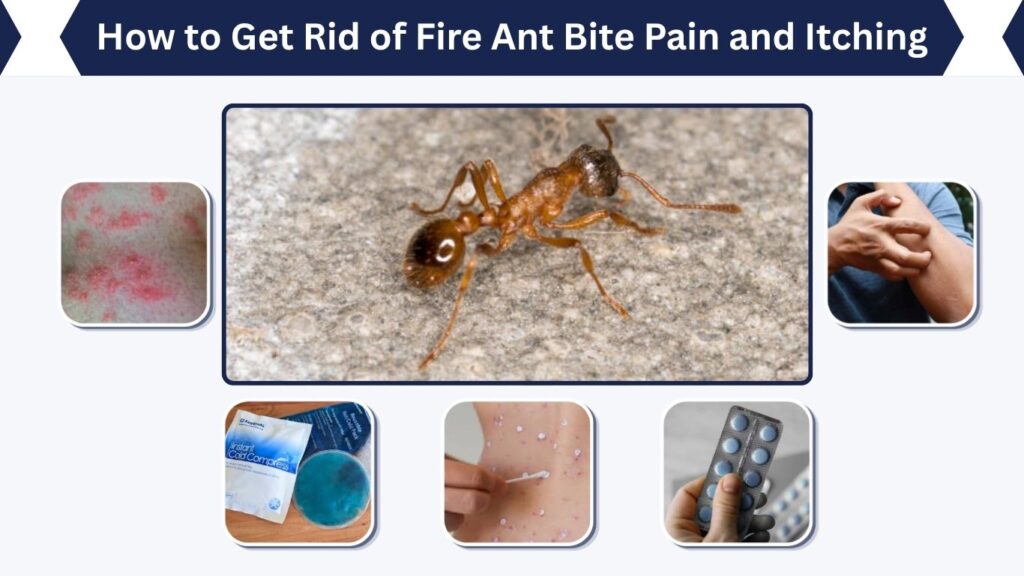
Pain and itching are the most common complaints after fire ant bites. Managing these symptoms quickly can make recovery much more comfortable and reduce the temptation to scratch the skin.
Best Ways to Stop the Itch
- Apply cold packs
- Use calamine lotion
- Take antihistamines
- Try oatmeal baths
- Use anti-itch creams
How to Relieve Burning Pain
Cooling gels and ice packs may help numb the sting area and calm inflammation. Over-the-counter pain relievers can also reduce discomfort if multiple bites cause widespread soreness.
Why Fire Ant Bites Itch So Much
The itching happens because the immune system reacts to the venom released by the ants. Histamine and inflammation in the skin create irritation that can last for several days after the sting.
How Long Itching Usually Lasts
Mild itching may disappear within a few days, while stronger reactions can last for one to two weeks. Scratching the bites may prolong irritation and increase healing time.
Preventing Fire Ant Bites
Avoiding fire ant bites is often easier than treating them. Fire ants commonly build mounds in sunny outdoor areas, and disturbing these nests can trigger aggressive swarming behavior.
Where Fire Ants Are Commonly Found
- Lawns
- Gardens
- Parks
- Sidewalk edges
- Open fields
How to Avoid Fire Ant Bites Outdoors
Wearing closed shoes and avoiding visible ant mounds can reduce sting risks. People working outdoors should also inspect the ground before standing or sitting in grassy areas.
Fire Ant Bite Prevention for Children and Pets
Children and pets are often stung because they accidentally disturb fire ant nests while playing outside. Regular yard inspections and keeping pets away from ant mounds can help reduce accidents.
Common Myths About Fire Ant Bites
Many home remedies and myths about fire ant bites continue circulating online. Some treatments may provide comfort, while others have little scientific support or may even irritate the skin further.
Are Fire Ant Bites Actually Bites or Stings?
Fire ants both bite and sting. They use their jaws to hold onto the skin and then inject venom through repeated stings. The venom is what causes pain, itching, and blister formation.
Can Toothpaste Help Fire Ant Bites?
Some people apply toothpaste for temporary cooling relief, but there is little medical evidence proving it helps heal fire ant stings. Cold compresses and anti-itch creams are usually more effective options.
Do Fire Ant Bites Heal Overnight?
Most fire ant bites do not disappear overnight. Mild swelling may improve quickly, but blisters and itching often take several days to heal completely.
FAQs
How do you get rid of fire ant bites fast?
Wash the area with soap and water, apply a cold compress, and use anti-itch cream or antihistamines to reduce swelling and irritation. Quick treatment can help ease pain and prevent further skin irritation.
What helps stop fire ant bite itching?
Calamine lotion, hydrocortisone cream, cold packs, and antihistamines are commonly used to reduce itching. Avoid scratching the bites because it can increase irritation and raise the risk of infection.
Should you pop fire ant bite blisters?
No, fire ant bite blisters should not be popped. Breaking the blister can expose the skin to bacteria and increase the chance of infection or scarring during healing.
How long do fire ant bites last?
Mild fire ant bites may improve within a few days, while larger reactions can last one to two weeks. Blisters often appear within 24 hours and slowly dry out as the skin heals.
When should you see a doctor for fire ant bites?
Seek medical help if you develop severe swelling, trouble breathing, dizziness, fever, or signs of infection such as pus and spreading redness. These symptoms may indicate a serious allergic reaction or infection.