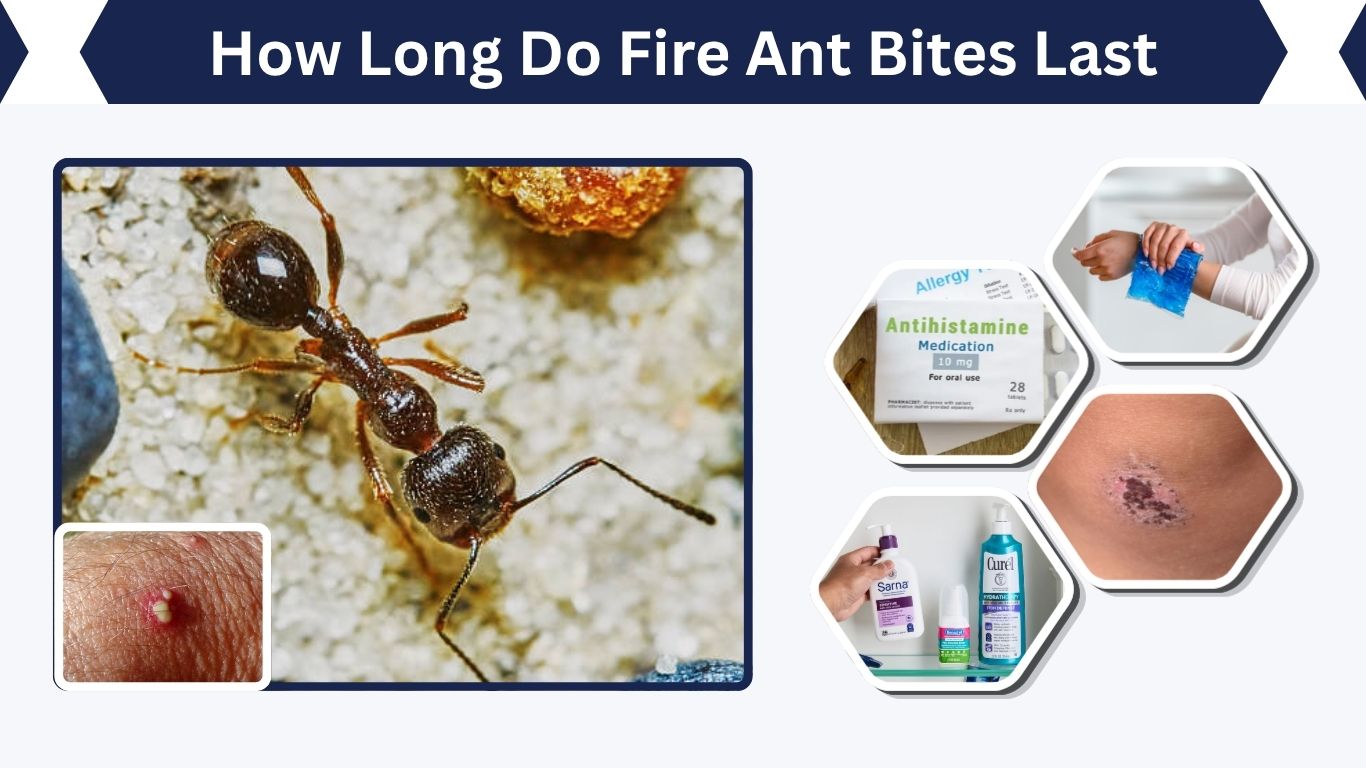
Fire ant bites can cause burning pain, itching, swelling, and small white blisters that may last for several days. These aggressive ants often sting multiple times, leading to stronger skin reactions than many other insect bites. While mild cases usually heal without serious problems, some people experience longer-lasting irritation or allergic reactions.
The healing time for fire ant bites depends on the number of stings, skin sensitivity, and how well the area is treated. Understanding the normal recovery stages can help you manage symptoms, avoid infection, and know when medical attention may be necessary.
What Are Fire Ant Bites?
Fire ant bites are actually venomous stings that happen when fire ants attach to the skin and inject venom. The venom creates a painful burning feeling followed by redness, swelling, and itching. In many cases, small white blisters appear within a day after the sting.
How Fire Ants Sting
Fire ants use their jaws to grip the skin before stinging several times in a circular pattern. Unlike bees, they can sting repeatedly without losing their stinger. This is why multiple painful bumps often appear close together after an attack.
Why Fire Ant Bites Cause Blisters
The venom triggers an immune response inside the skin. Fluid collects beneath the surface, creating the white pustules or blisters commonly associated with fire ant stings. These blisters are a normal part of the healing process in many cases.
Common Symptoms of Fire Ant Bites
- Burning pain
- Red swollen bumps
- Itching
- White blisters
- Skin irritation
Are Fire Ant Bites Dangerous?
Most fire ant bites are mild and heal without serious complications. However, some people develop severe allergic reactions or infections. Large swelling, breathing difficulty, or spreading redness may require immediate medical attention.
How Long Do Fire Ant Bites Last?
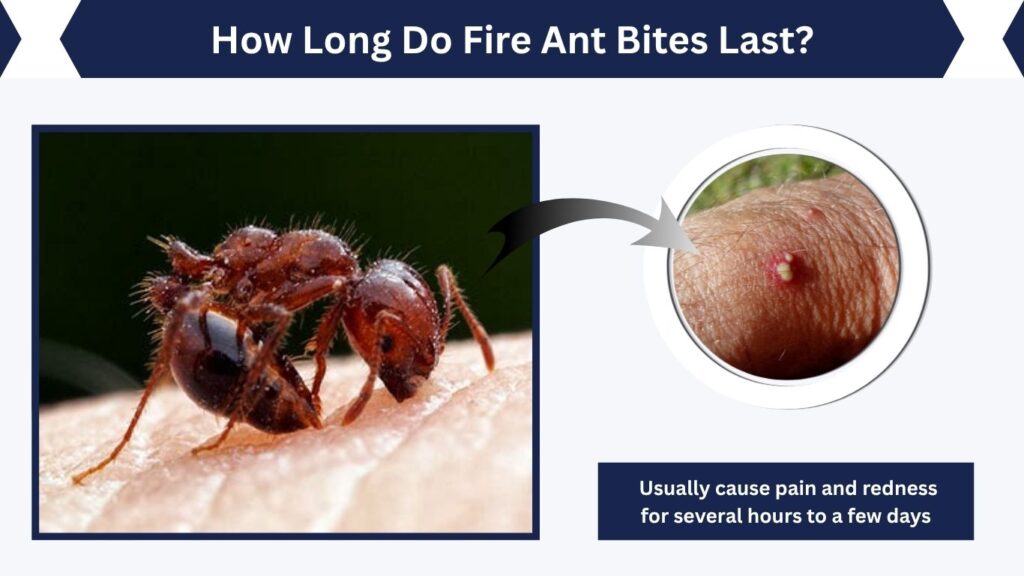
The duration of fire ant bite symptoms varies depending on the severity of the sting and the body’s reaction to the venom. Mild bites often improve within a few days, while stronger reactions may continue for one to two weeks.
How Long Mild Fire Ant Bites Last
Mild fire ant bites usually cause pain and redness for several hours to a few days. Swelling often decreases within the first week as the skin slowly heals.
How Long Fire Ant Bite Blisters Last
Blisters commonly form within 24 hours after the sting. In many cases, they dry out and begin healing within several days, though some may remain visible for up to two weeks.
How Long Fire Ant Bite Symptoms Last
- Pain may last several hours
- Itching may continue for days
- Swelling may last one week
- Blisters may remain for two weeks
Why Some Fire Ant Bites Last Longer
Some bites take longer to heal because of sensitive skin, allergic reactions, scratching, or infection. Repeated stings may also increase inflammation and extend recovery time.
Stages of Fire Ant Bite Healing
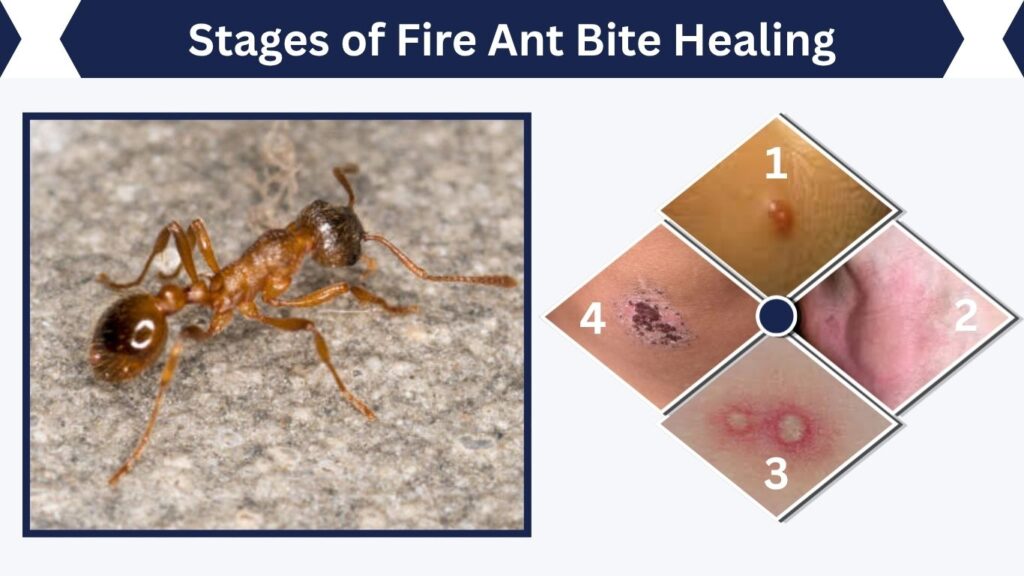
Fire ant bites usually heal in several stages. Understanding these stages can help you recognize normal healing and identify signs of infection or severe reactions.
Stage 1: Immediate Burning Pain
The first stage begins immediately after the sting. The venom causes a sharp burning sensation that may feel intense for several minutes. Red bumps usually appear quickly around the sting site.
Stage 2: Redness and Swelling
After the initial pain, the skin often becomes swollen and inflamed. The affected area may feel warm, tender, and itchy as the immune system reacts to the venom.
Stage 3: Blister Formation
Small white blisters or pustules often form within a day after the sting. These blisters contain fluid created by the body’s immune response. They may appear alarming but are common after fire ant stings.
Stage 4: Scabbing and Recovery
As healing continues, blisters dry out and the skin slowly repairs itself. Mild discoloration or small marks may remain temporarily before fading completely.
How to Heal Fire Ant Bites Faster
Proper treatment can reduce discomfort and help fire ant bites heal more quickly. Cleaning the skin, reducing swelling, and avoiding irritation are important parts of recovery.
Clean the Area Properly
- Wash with soap and water
- Remove dirt and bacteria
- Prevent infection
- Dry the area gently
Use Cold Compresses
Cold compresses help reduce swelling and numb the painful area. Ice packs should always be wrapped in a cloth before touching the skin to avoid irritation or cold burns.
Apply Anti-Itch Treatments
Hydrocortisone cream, calamine lotion, and antihistamines are commonly used to reduce itching and inflammation. These treatments may help prevent scratching and further skin irritation.
Fire Ant Bite Blisters Explained
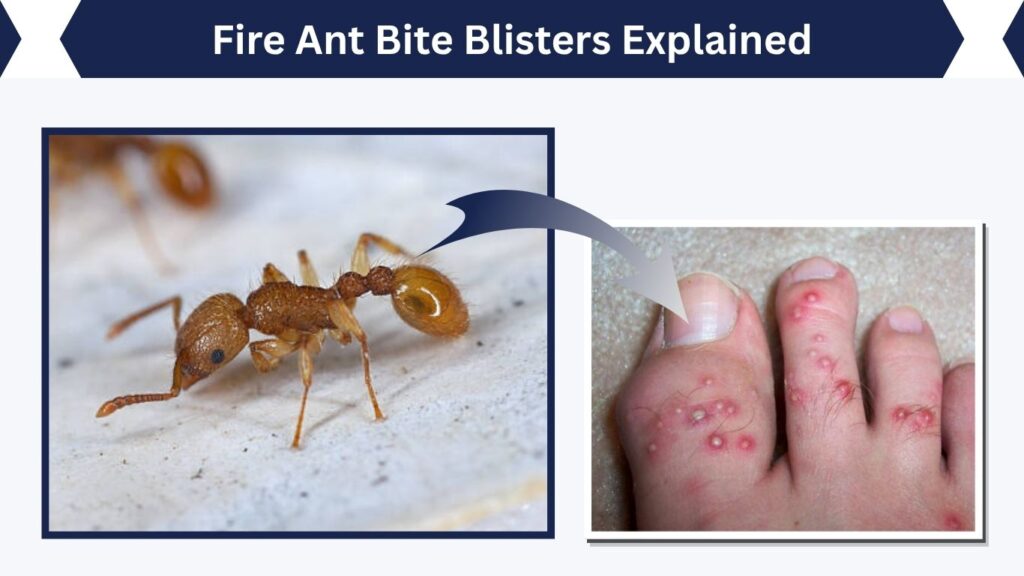
Fire ant bite blisters are one of the most recognizable signs of a sting reaction. These small white pustules usually appear within a day after being stung and may remain for several days while the skin heals. Although they may look infected, the blisters are often a normal response to the venom.
Why Fire Ant Bite Blisters Form
The venom injected by fire ants triggers inflammation and fluid buildup beneath the skin. This reaction creates the white pustules commonly seen after stings. The body forms these blisters as part of its immune response to the venom.
Should You Pop Fire Ant Blisters?
Popping the blisters is not recommended because it can expose the skin to bacteria and increase the risk of infection. Keeping the blisters clean and protected helps the skin heal more safely and reduces the chance of scarring.
How Long Blisters Usually Last
- Blisters may appear within 24 hours
- Mild blisters may heal in several days
- Larger blisters can last up to two weeks
- Drying and peeling happen during recovery
Signs of Infected Blisters
Blisters that become extremely painful, filled with pus, or surrounded by spreading redness may be infected. Fever, warmth, and increased swelling are also warning signs that medical care may be needed.
Medical Treatment for Fire Ant Bites
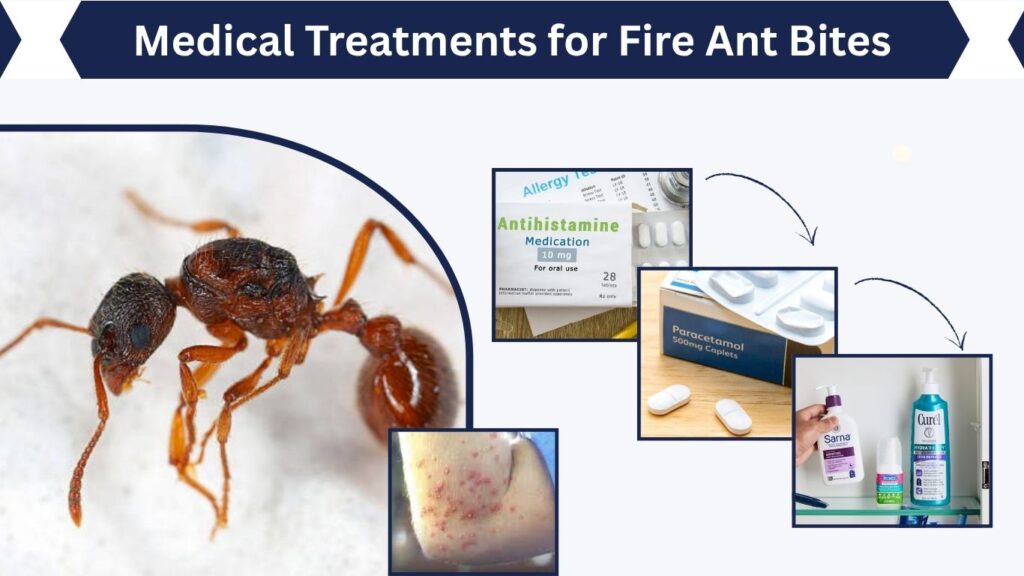
Most fire ant bites improve with home care, but severe reactions sometimes require professional treatment. Medical attention may help reduce swelling, control allergic reactions, and prevent complications caused by infection.
Over-the-Counter Treatments
- Antihistamines
- Anti-itch creams
- Pain relievers
- Hydrocortisone cream
- Antibiotic ointment
Prescription Treatments
Doctors may prescribe stronger steroid creams or oral medications for severe swelling and allergic reactions. Antibiotics may also be necessary if the skin becomes infected after scratching or blister damage.
When to See a Doctor
Medical care should be sought if breathing becomes difficult, swelling spreads rapidly, or signs of infection appear. Severe dizziness, chest tightness, and throat swelling may indicate a dangerous allergic reaction.
Allergic Reactions to Fire Ant Bites
Some people experience anaphylaxis after fire ant stings. Symptoms may include trouble breathing, hives, rapid heartbeat, and fainting. Emergency treatment is necessary if these symptoms develop.
How to Prevent Fire Ant Bites
Preventing fire ant bites is often easier than treating them. Fire ants commonly build mounds in sunny outdoor areas where people and pets may accidentally disturb them.
Where Fire Ants Commonly Live
- Lawns
- Gardens
- Parks
- Sidewalk edges
- Open fields
Outdoor Safety Tips
Wearing shoes outdoors and avoiding visible ant mounds can greatly reduce the risk of stings. People working in grassy areas should inspect the ground carefully before standing or sitting.
Protecting Children and Pets
Children and pets are especially vulnerable because they may accidentally step on ant mounds while playing outside. Regular yard inspections and keeping pets away from visible colonies can help prevent painful stings.
Common Myths About Fire Ant Bites
Many myths about fire ant bites continue spreading online. Some remedies may provide comfort, but others have little scientific support and may not help the healing process.
Do Fire Ant Bites Heal Overnight?
Most fire ant bites do not disappear overnight. Mild swelling may improve quickly, but blisters and itching often require several days or even weeks to fully heal.
Are Fire Ant Bites Actually Bites?
Fire ants both bite and sting. They use their jaws to hold onto the skin while injecting venom through repeated stings.
Can Toothpaste Heal Fire Ant Bites?
Some people use toothpaste for temporary cooling relief, but there is little scientific evidence proving it helps heal fire ant stings. Cold compresses and anti-itch creams are usually more effective.
FAQs
How long do fire ant bites usually last?
Most mild fire ant bites improve within a few days, while stronger reactions may last one to two weeks. Swelling and itching often decrease gradually as the skin heals.
How long do fire ant bite blisters last?
Fire ant bite blisters commonly appear within 24 hours after the sting and may last several days to two weeks before drying out and healing completely.
Why do fire ant bites itch for days?
The itching happens because the body reacts to the fire ant venom with inflammation and histamine release. This immune response can continue for several days after the sting.
Should you pop fire ant bite blisters?
No, fire ant bite blisters should not be popped. Opening the blister may increase the risk of infection, scarring, and slower healing.
When should you worry about fire ant bites?
Medical attention may be needed if there is severe swelling, trouble breathing, spreading redness, fever, or signs of an allergic reaction after the sting.