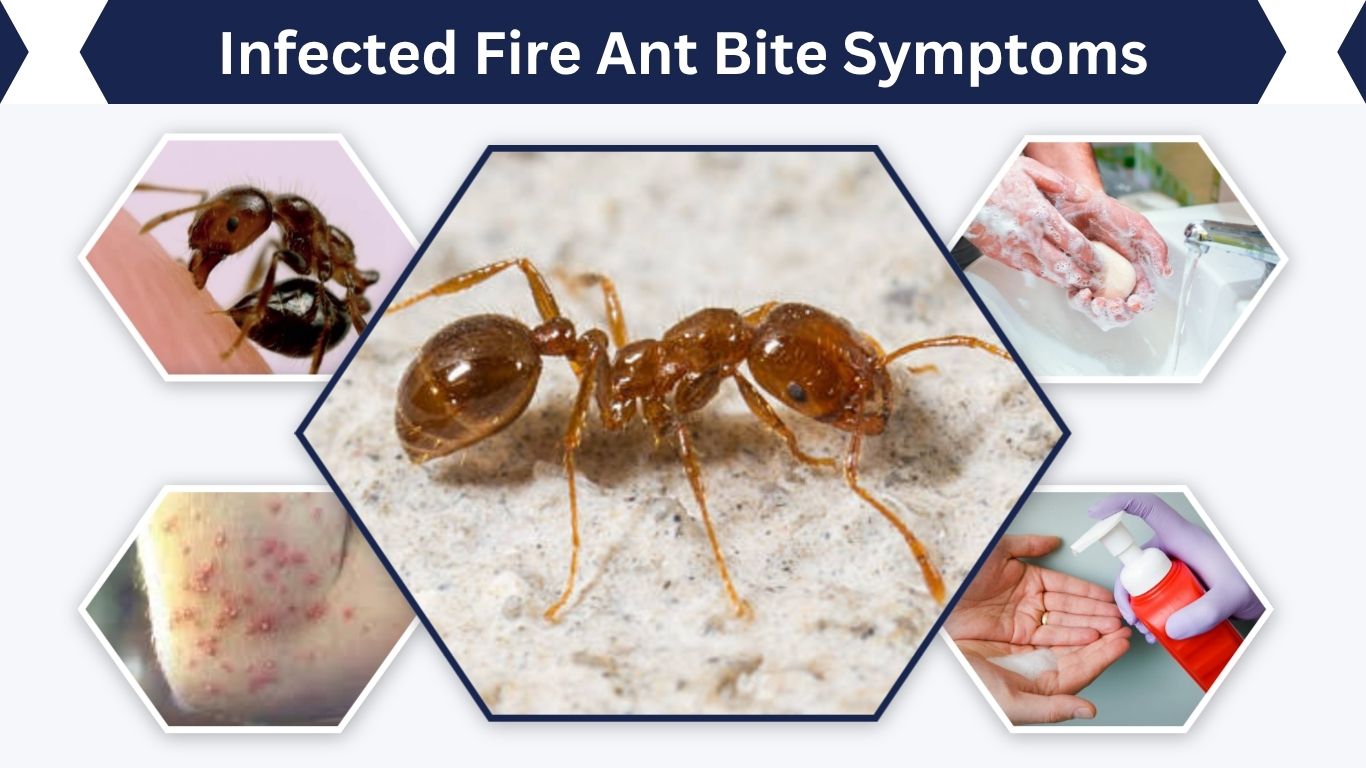
Fire ant bites are painful stings that often create red swollen bumps and itchy white pustules on the skin. While many bites heal naturally within several days, some become infected when bacteria enter broken or scratched skin. Infected fire ant bites may appear more swollen, painful, warm, and filled with drainage compared to normal healing bites. Severe infections can sometimes spread and require medical treatment. Learning to recognize the signs of infection early may help reduce complications and improve healing after fire ant stings.
Because infected fire ant bites can resemble other skin conditions, proper identification is important. Understanding symptoms, treatment methods, and warning signs may help people know when simple home care is enough and when medical attention is necessary.
What Is an Infected Fire Ant Bite?
An infected fire ant bite occurs when bacteria enter the damaged skin around a sting. Fire ant venom already irritates the skin, and scratching the itchy pustules can increase the chance of infection developing during healing.
How Fire Ant Bites Occur
- Fire ants sting repeatedly
- Venom enters the skin
- Red swollen bumps develop
- White pustules often form
- Burning pain appears quickly
Why Fire Ant Bites Get Infected
Fire ant bites often become infected after scratching breaks open the skin. Bacteria from dirty hands, nails, or contaminated surfaces may then enter the wound and cause swelling, redness, and drainage.
Difference Between Normal and Infected Bites
Normal fire ant bites usually improve gradually over several days. Infected bites often become more painful, increasingly red, swollen, warm, and may produce pus or drainage instead of healing normally.
What Does an Infected Fire Ant Bite Look Like?
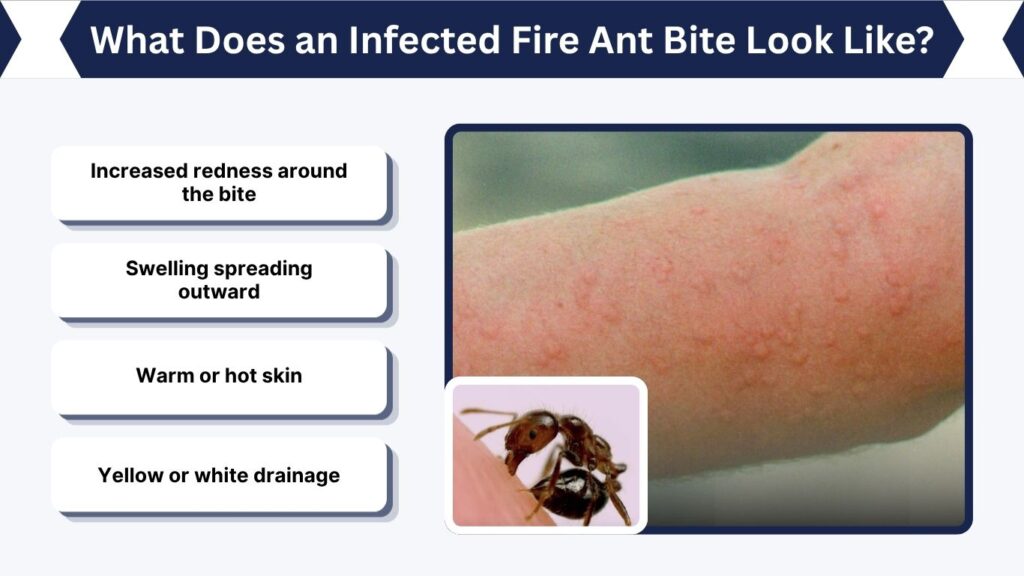
Infected fire ant bites usually appear larger, redder, and more irritated than normal healing stings. The skin surrounding the bite may feel warm and swollen while drainage or crusting develops around the wound.
Common Signs of Infection
- Increased redness around the bite
- Swelling spreading outward
- Warm or hot skin
- Yellow or white drainage
- Tender painful skin
Infected Fire Ant Bite Pictures and Identification
Infected bites may show red inflamed skin, crusted sores, open wounds, or pus-filled drainage. Some bites develop darker discoloration or thick scabs as the infection worsens.
Severe Infection Appearance
Large swollen areas, severe redness, darkened skin, and painful draining sores may indicate a more serious infection. Red streaks spreading away from the bite may signal infection moving through surrounding tissue.
Symptoms of an Infected Fire Ant Bite
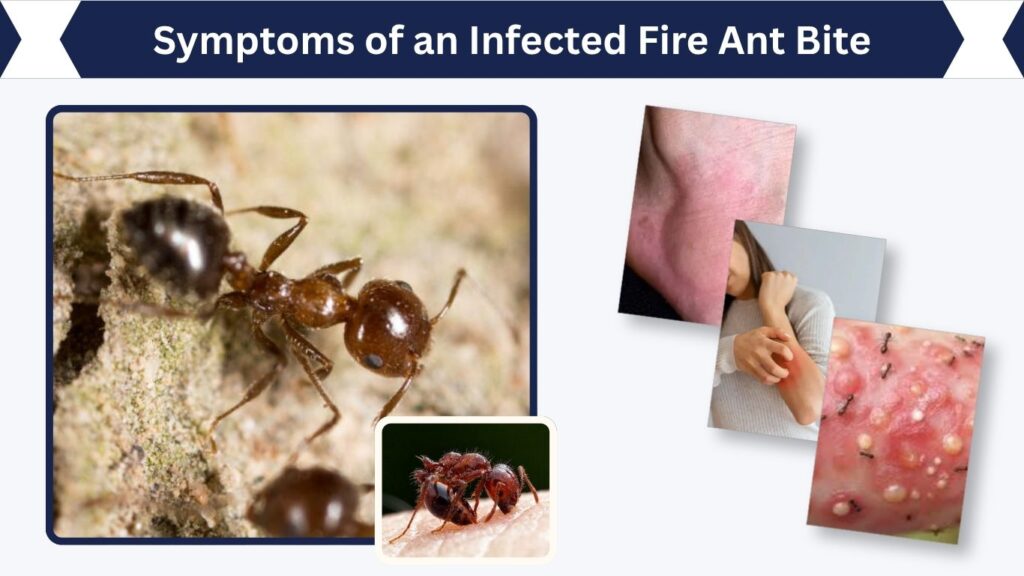
Symptoms vary depending on the severity of infection and the person’s immune response. Mild infections may stay localized, while more serious infections can spread beyond the original bite area.
Mild Infection Symptoms
- Slight redness
- Itching and tenderness
- Mild swelling
- Warm skin
- Small amounts of drainage
Moderate Infection Symptoms
Moderate infections often cause larger swollen areas, stronger pain, worsening redness, and visible pus formation. The bite area may remain irritated and uncomfortable for several days without improvement.
Serious Infection Symptoms
Severe infections may cause fever, chills, spreading redness, swollen lymph nodes, worsening pain, and extreme swelling. These symptoms may require immediate medical treatment to prevent complications.
Fire Ant Bite Infection vs Normal Healing
Fire ant bites normally pass through several healing stages, including pustule formation and drying scabs. Understanding the difference between normal healing and infection helps prevent unnecessary worry while identifying dangerous symptoms early.
Normal Fire Ant Bite Healing
- White sterile pustules
- Mild redness
- Drying scabs
- Reduced swelling over time
- Gradual itching improvement
Signs Healing Is Delayed
Some bites remain swollen, painful, or irritated longer than expected. Ongoing drainage, worsening redness, or increasing tenderness may suggest infection instead of normal healing.
When Infection Is Likely
Infection risk increases when bites are scratched heavily, exposed to dirty environments, or repeatedly reopened during healing. Broken skin creates an easy entry point for bacteria.
Can Fire Ant Bites Cause Staph Infection?
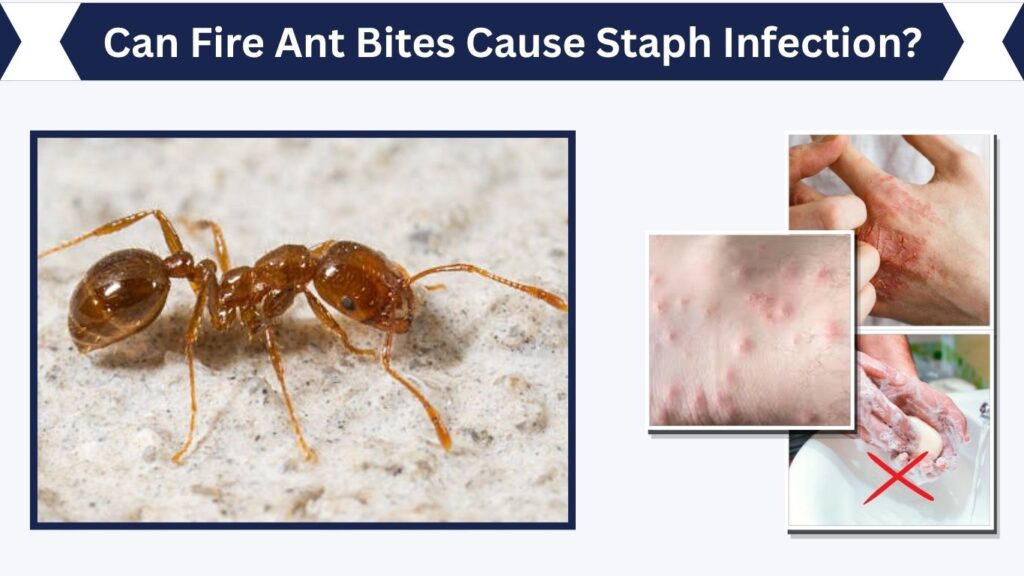
Fire ant bites sometimes become infected with bacteria such as staph when the skin barrier becomes damaged. Although uncommon, these infections can become serious if left untreated.
How Staph Infection Develops
- Bacteria enter broken skin
- Scratching damages tissue
- Open pustules collect bacteria
- Poor wound cleaning increases risk
- Infection spreads through nearby skin
Symptoms of Staph Infection
Staph infections may cause painful swelling, thick drainage, crusting sores, fever, and increasing redness around the fire ant bite area. Severe infections can spread quickly without treatment.
Why Prompt Treatment Matters
Early treatment helps reduce swelling, prevent worsening infection, and support faster healing. Untreated infections may spread deeper into the skin and surrounding tissue.
How to Treat an Infected Fire Ant Bite
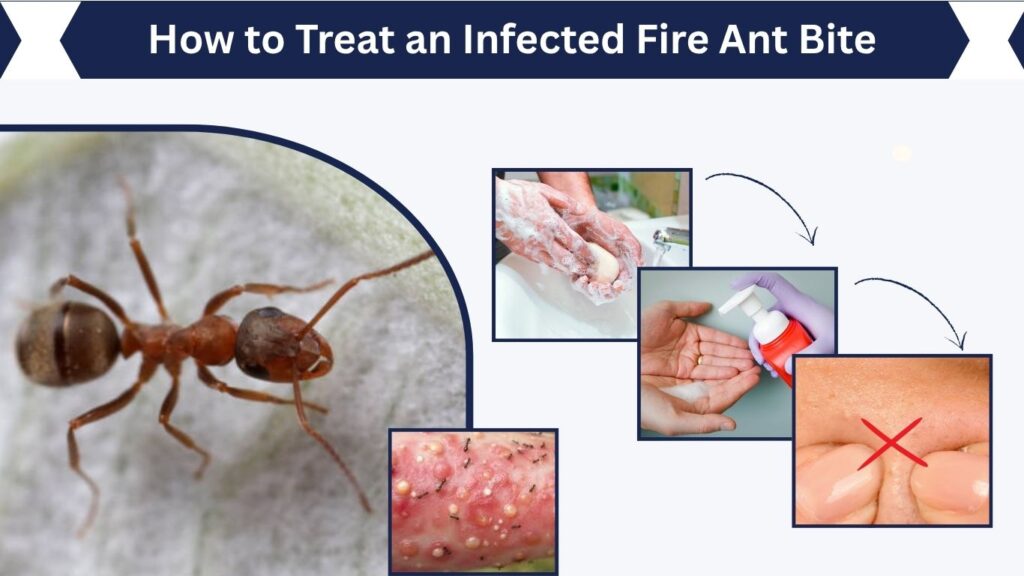
Most mild infections can improve with careful cleaning and proper wound care. However, worsening symptoms or severe swelling may require prescription medication and medical evaluation.
Cleaning the Bite Properly
- Wash the area with soap and water
- Use antiseptic solutions carefully
- Keep the wound dry and clean
- Avoid scratching or squeezing pustules
- Change clean bandages regularly
Home Remedies for Mild Infections
Warm compresses may help reduce discomfort and encourage drainage from mild infected bites. Anti-itch creams and soothing ointments may also help calm irritation during healing.
Medical Treatments
Doctors may recommend antibiotic ointments, oral antibiotics, or prescription creams for infected fire ant bites that continue worsening or show signs of bacterial spread.
When to See a Doctor
Some infected fire ant bites become serious and require professional medical care. Recognizing dangerous symptoms early may help prevent complications from spreading infections.
Severe Swelling and Pain
Large swollen areas, intense pain, and worsening redness may indicate deeper infection or severe inflammation. Difficulty moving the affected area can also signal worsening symptoms.
Fever and Spreading Infection
- Fever or chills
- Red streaks near the bite
- Body aches
- Swollen lymph nodes
- Severe skin warmth
Emergency Allergic Reactions
Trouble breathing, throat swelling, dizziness, chest tightness, and widespread hives may indicate a dangerous allergic reaction rather than infection alone. Emergency medical treatment is required immediately.
Infected Fire Ant Bites in Children and Pets
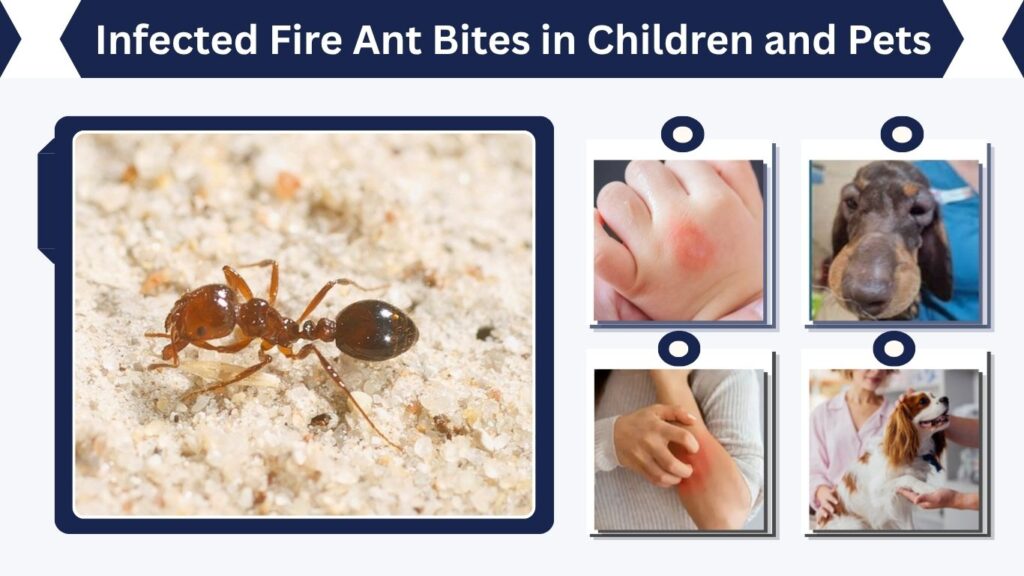
Children and pets may experience stronger reactions because of their smaller body size and sensitive skin. Early cleaning and monitoring are especially important after multiple stings.
Why Children Are More Sensitive
Children often scratch bites heavily, increasing the risk of broken skin and bacterial infection. Multiple fire ant stings may also cause stronger swelling and irritation in younger children.
Fire Ant Bite Infections in Dogs
Dogs may develop swollen paws, irritated skin, redness, and excessive licking after fire ant bites. Scratching or chewing the affected area can increase infection risks.
Preventing Complications
Keeping bites clean, discouraging scratching, and monitoring swelling closely may help reduce complications. Veterinary care may be necessary if pets develop severe swelling or worsening skin irritation.
How Long Does an Infected Fire Ant Bite Last?
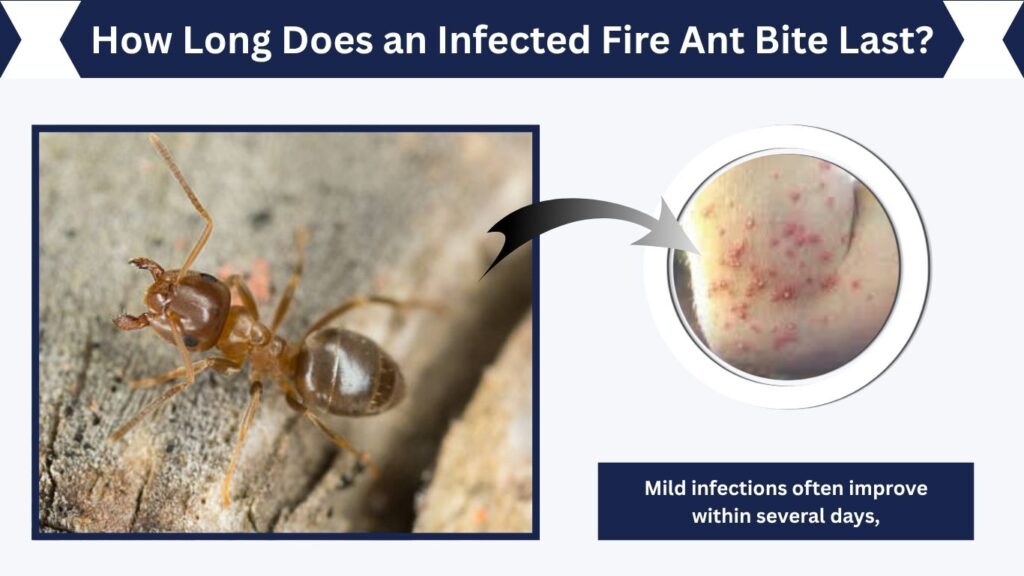
Healing time depends on infection severity, skin sensitivity, and how quickly treatment begins. Mild infections often improve within several days, while severe infections may last longer.
Mild Infection Recovery Time
- Several days of swelling
- Gradual redness reduction
- Drying scabs form
- Less pain over time
- Itching slowly improves
Severe Infection Healing
More serious infections may require antibiotics and extended healing periods. Swelling, drainage, and tenderness can continue for weeks if the infection becomes severe.
Lasting Skin Marks
Some infected fire ant bites leave temporary dark spots, mild scars, or lingering discoloration after healing. Severe scratching may increase the chance of permanent skin marks.
How to Prevent Fire Ant Bite Infections
Preventing infection is often easier than treating it later. Proper wound care and avoiding scratching can greatly reduce the chance of bacterial complications.
Avoid Scratching Bites
- Prevent skin damage
- Reduce bacteria exposure
- Avoid reopening wounds
- Lower infection risk
- Support faster healing
Proper Bite Cleaning
Daily washing with mild soap and water helps remove dirt and bacteria from the bite area. Clean bandages and antiseptic products may also help protect healing skin.
Avoiding Fire Ant Stings
Wearing protective clothing, watching for fire ant mounds, and using pest control methods around homes can help reduce the risk of painful fire ant bites and infections.
FAQs
What does an infected fire ant bite look like?
An infected fire ant bite often appears redder, more swollen, painful, and warm compared to a normal healing bite. Pus drainage, crusting, spreading redness, and open sores may also develop around the sting area.
How do you know if a fire ant bite is infected?
Signs of infection include worsening swelling, increasing pain, yellow or white drainage, spreading redness, fever, and skin warmth. Normal fire ant pustules usually improve gradually instead of worsening over time.
Can fire ant bites cause staph infections?
Yes, fire ant bites can sometimes develop staph infections if bacteria enter broken or scratched skin. Keeping bites clean and avoiding scratching may help reduce the risk of bacterial infection.
How do you treat an infected fire ant bite?
Wash the bite gently with soap and water, keep the area clean, and avoid scratching. Mild infections may improve with antiseptics and antibiotic ointments, while severe infections may require prescription antibiotics from a doctor.
When should you see a doctor for a fire ant bite?
Medical attention may be needed if swelling becomes severe, redness spreads quickly, fever develops, drainage worsens, or breathing problems occur after the fire ant sting.