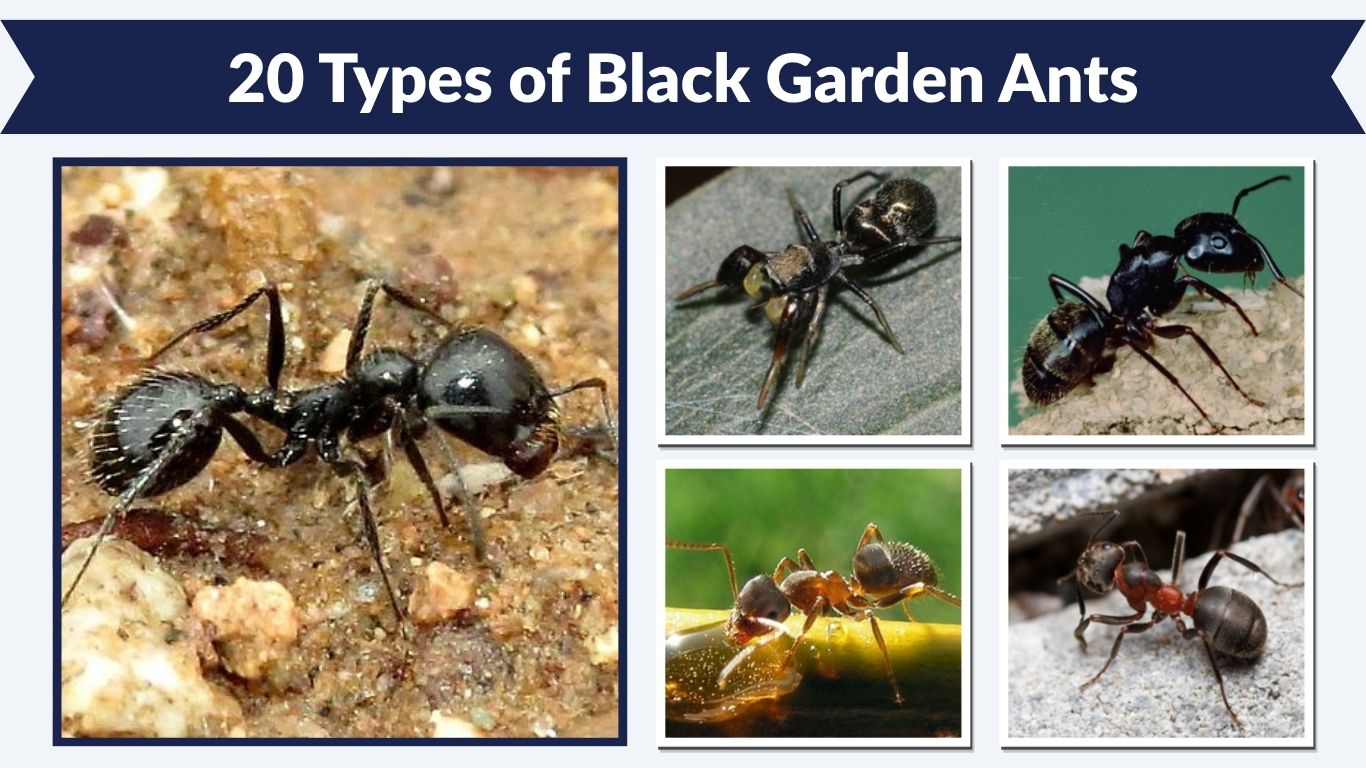
Black ants are among the most common and widely distributed insects in the world, inhabiting a diverse range of environments from gardens and forests to deserts and urban landscapes. While many people assume all black ants are the same, numerous species differ in size, behavior, habitat preferences, and ecological roles. Some are important scavengers and soil engineers, while others are known for nesting in wood or invading homes. In this guide, you’ll discover 20 fascinating types of black garden ants, along with their identification features, habitats, behaviors, and life cycles to help you better understand these remarkable social insects.
1. Black Garden Ant (Lasius niger)
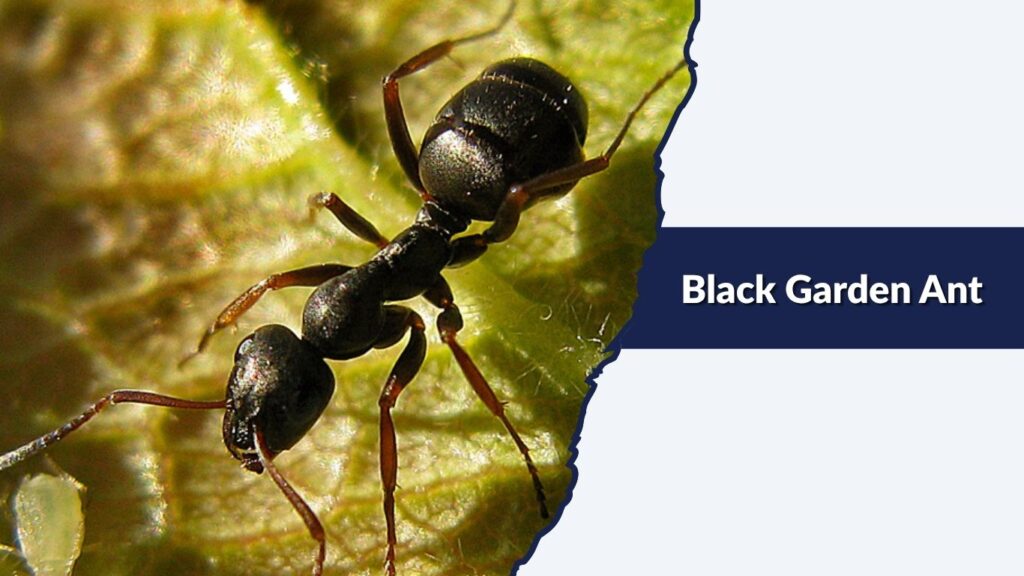
The Black Garden Ant (Lasius niger) is one of the most common and widely recognized ant species in Europe and parts of Asia. Known for its adaptability and large colony sizes, this species is frequently found in gardens, lawns, parks, and urban environments. Black Garden Ants play an important role in ecosystems by aerating soil and helping with the decomposition of organic matter.
Identification
- Scientific Name: Lasius niger
- Common Name: Black Garden Ant
- Color: Dark brown to black
- Worker Size: 3–5 mm (0.12–0.20 inches)
- Queen Size: 9–15 mm (0.35–0.59 inches)
- Body Shape: Slender body with a distinct waist (petiole)
- Antennae: Elbowed with 12 segments
- Wings: Present only on reproductive males and queens during mating season
- Distinguishing Feature: Smooth, shiny black body and highly organized foraging trails
Habitat and Distribution
Black Garden Ants are highly adaptable and can thrive in a variety of environments. They commonly build nests underground in soil, beneath stones, under paving slabs, and within lawn areas. In urban settings, colonies may establish themselves near building foundations, sidewalks, and garden beds.
Their native range extends across Europe and parts of Asia, but they have also been introduced to other regions through human activity. Due to their ability to tolerate different climates and habitats, they remain one of the most successful ant species in residential and agricultural landscapes.
Behavior and Diet
Black Garden Ants are social insects that live in colonies consisting of workers, queens, and seasonal reproductive individuals. Workers are responsible for foraging, nest maintenance, and caring for larvae.
Their diet primarily consists of sugary substances such as nectar and honeydew produced by aphids. They are known to protect aphid populations in exchange for access to this sweet food source. Additionally, they consume small insects, dead arthropods, seeds, and other organic materials when available.
Workers create well-defined pheromone trails that help guide nestmates to food sources, allowing colonies to efficiently exploit available resources.
Life Cycle
The life cycle of the Black Garden Ant follows four stages: egg, larva, pupa, and adult. Queens typically mate during large nuptial flights that occur on warm summer days, often referred to as “flying ant days.”
After mating, a queen sheds her wings and establishes a new colony. She lays eggs that hatch into larvae, which are fed and cared for by worker ants. The larvae eventually develop into pupae before emerging as adult workers.
As the colony grows, it produces additional workers to expand the nest and gather food. Mature colonies may eventually produce new queens and males, continuing the reproductive cycle and establishing future colonies.
2. Southern Black Ant (Lasius alienus)
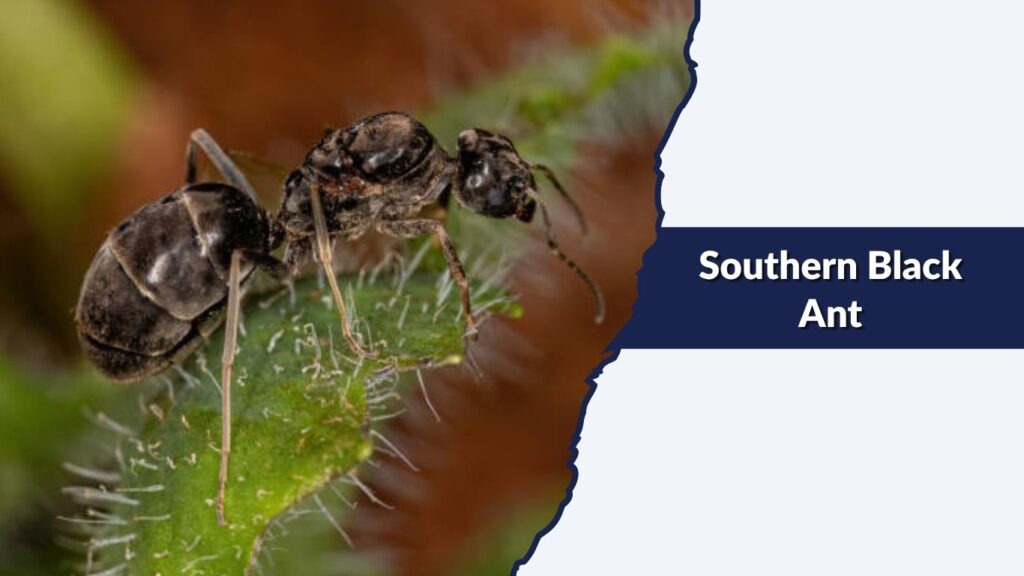
The Southern Black Ant (Lasius alienus) is a small, dark-colored ant species closely related to the Black Garden Ant. It is commonly found in open, sunny habitats and is known for its ability to thrive in dry environments. Although often overlooked due to its resemblance to other black ants, Lasius alienus plays an important role in soil health and ecosystem balance.
Identification
- Scientific Name: Lasius alienus
- Common Name: Southern Black Ant
- Color: Dark brown to black
- Worker Size: 2.5–4.5 mm (0.10–0.18 inches)
- Queen Size: 7–9 mm (0.28–0.35 inches)
- Body Shape: Compact body with a single petiole node
- Antennae: 12-segmented with distinct elbow joints
- Wings: Reproductive males and queens develop wings during mating season
- Distinguishing Feature: Smaller size and preference for dry, open habitats compared to Lasius niger
Habitat and Distribution
Southern Black Ants are widely distributed across Europe, parts of Western Asia, and neighboring regions. They prefer warm, dry environments and are frequently found in grasslands, meadows, roadsides, gardens, and sandy soils.
Their nests are usually constructed underground, often beneath stones, logs, or patches of exposed soil. Unlike some related species, they tend to avoid heavily shaded or overly moist areas, making sunny locations ideal nesting sites.
Behavior and Diet
Southern Black Ants are highly organized social insects that live in colonies ranging from a few hundred to several thousand individuals. Workers forage actively during warm weather and use chemical pheromone trails to communicate food locations to nestmates.
Their diet consists mainly of honeydew collected from aphids and other sap-feeding insects. They also consume nectar, small insects, dead arthropods, and various organic materials. Colonies often maintain mutually beneficial relationships with aphids by protecting them from predators in exchange for honeydew.
Life Cycle
The life cycle of the Southern Black Ant includes four developmental stages: egg, larva, pupa, and adult. Reproductive flights typically occur during warm summer conditions when winged males and queens leave their colonies to mate.
After mating, the queen sheds her wings and establishes a new nest site. She lays eggs that develop into larvae, which are fed by worker ants. The larvae eventually pupate before emerging as adult workers.
As the colony matures, it expands in size and complexity. Established colonies eventually produce reproductive individuals, allowing the species to spread and form new colonies throughout suitable habitats.
3. Cornfield Ant (Lasius neoniger)
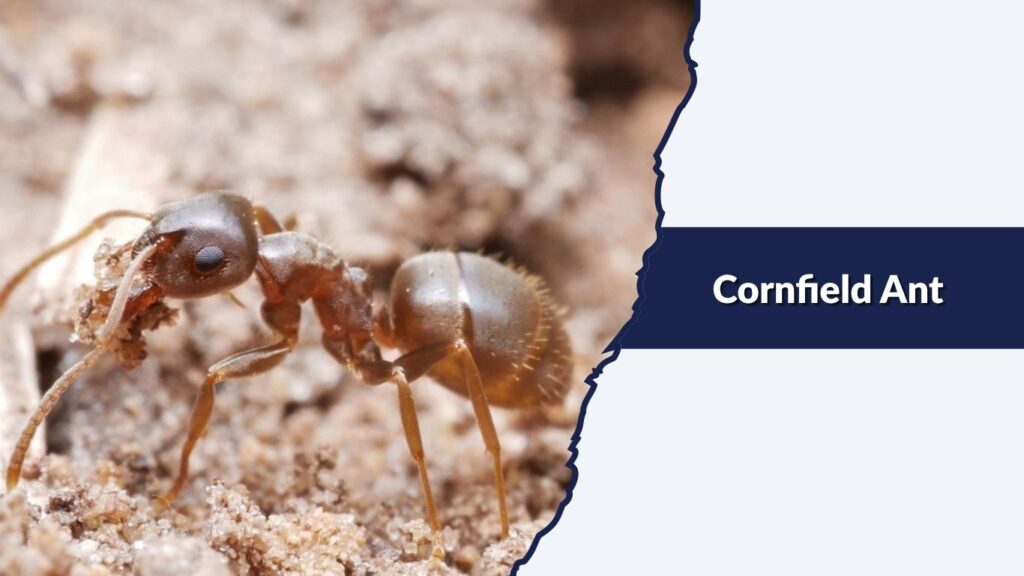
The Cornfield Ant (Lasius neoniger) is a common North American ant species known for its preference for open fields, lawns, and agricultural land. Despite its name, it is not limited to cornfields and can be found in a wide variety of grassy habitats. This species is an important soil engineer, helping to improve soil structure through its nesting activities.
Identification
- Scientific Name: Lasius neoniger
- Common Name: Cornfield Ant
- Color: Dark brown to black
- Worker Size: 3–4 mm (0.12–0.16 inches)
- Queen Size: 7–9 mm (0.28–0.35 inches)
- Body Shape: Small, slender body with a single petiole node
- Antennae: 12-segmented and elbowed
- Wings: Present on reproductive males and queens during mating flights
- Distinguishing Feature: Commonly nests in grassy areas and creates small soil mounds around nest entrances
Habitat and Distribution
Cornfield Ants are widespread throughout North America, particularly in the United States and southern Canada. They prefer open habitats such as grasslands, pastures, lawns, parks, golf courses, and agricultural fields.
Their nests are usually built underground in well-drained soil. Nest entrances are often marked by small craters or mounds of loose soil. Because they tolerate disturbance well, they are frequently encountered in both rural and suburban environments.
Behavior and Diet
Cornfield Ants are highly social insects that live in colonies containing thousands of workers. Foraging activity is most common during warmer months, with workers traveling considerable distances in search of food.
Their diet consists mainly of honeydew produced by aphids and other sap-feeding insects. Workers often tend and protect these insects to ensure a steady food supply. They also feed on nectar, small insects, dead arthropods, and various organic materials.
This species is particularly active in maintaining underground tunnel systems, which help aerate soil and improve water penetration.
Life Cycle
Like other ants, the Cornfield Ant undergoes complete metamorphosis with four stages: egg, larva, pupa, and adult. Reproductive males and queens participate in mating flights, typically during late summer or early autumn.
Following mating, queens shed their wings and establish new colonies underground. The first generation of workers is raised by the queen alone. Once workers emerge, they assume responsibility for nest construction, food collection, and brood care.
As colonies mature, they grow steadily and eventually produce winged reproductive ants that disperse to establish new colonies, ensuring the continuation of the species.
4. Jet Black Ant (Lasius fuliginosus)
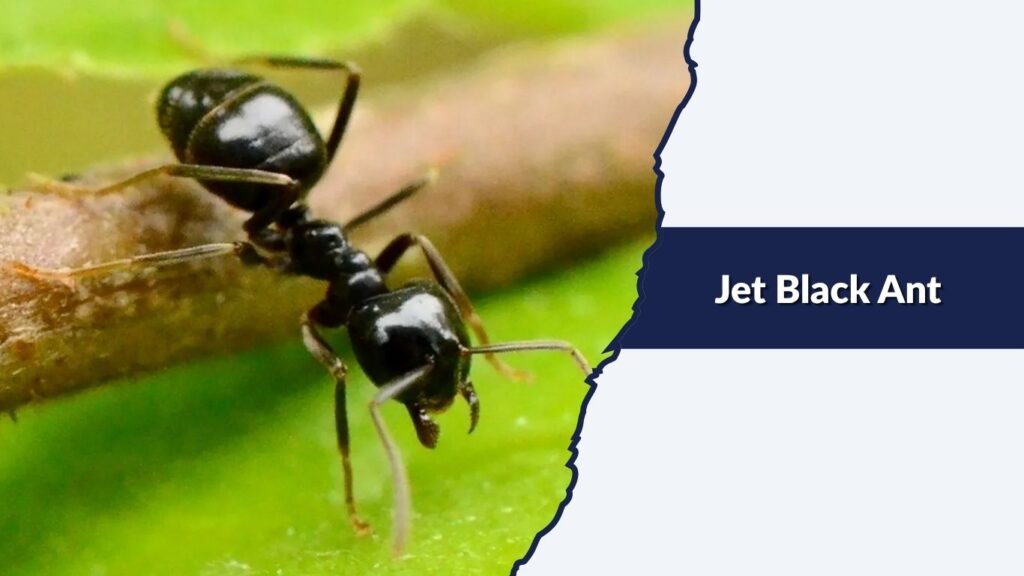
The Jet Black Ant (Lasius fuliginosus) is a striking ant species known for its glossy black appearance and large, well-organized colonies. Unlike many other members of the Lasius genus, this species often nests in decaying wood and hollow trees. It is widely recognized for constructing unique carton nests made from chewed wood fibers mixed with fungal material.
Identification
- Scientific Name: Lasius fuliginosus
- Common Name: Jet Black Ant
- Color: Shiny jet black
- Worker Size: 4–6 mm (0.16–0.24 inches)
- Queen Size: 8–10 mm (0.31–0.39 inches)
- Body Shape: Slender body with a distinctive rounded thorax
- Antennae: 12-segmented with elbowed joints
- Wings: Present on reproductive males and queens during mating season
- Distinguishing Feature: Highly polished black body and carton nests built inside trees and wood cavities
Habitat and Distribution
Jet Black Ants are found throughout much of Europe and parts of Asia. They prefer wooded environments, including forests, parks, orchards, and mature gardens with abundant trees.
Colonies are commonly established within hollow trunks, decaying wood, tree stumps, and other sheltered cavities. The ants construct extensive carton structures inside these spaces, creating a durable nesting environment that can support large populations.
Behavior and Diet
This species is highly social and forms colonies that may contain tens of thousands of workers. Workers create long foraging trails that connect the nest to feeding areas, often extending over considerable distances.
Their diet consists mainly of honeydew collected from aphids and scale insects. Workers actively protect these insects and transport them between feeding sites when necessary. They also consume nectar, plant secretions, and small insects.
Jet Black Ants are known for their efficient communication system, relying heavily on pheromone trails to coordinate foraging and colony activities.
Life Cycle
The Jet Black Ant undergoes complete metamorphosis through four stages: egg, larva, pupa, and adult. Mating flights usually occur during warm summer periods when winged males and queens leave their colonies to reproduce.
After mating, queens establish new colonies, often beginning as temporary social parasites in nests of related ant species. Once established, the colony gradually develops its own worker population.
As the colony grows, workers expand the nest and maintain the carton structures. Mature colonies eventually produce new reproductive ants, allowing the species to spread and establish colonies in suitable wooded habitats.
5. Woodland Black Ant (Lasius platythorax)
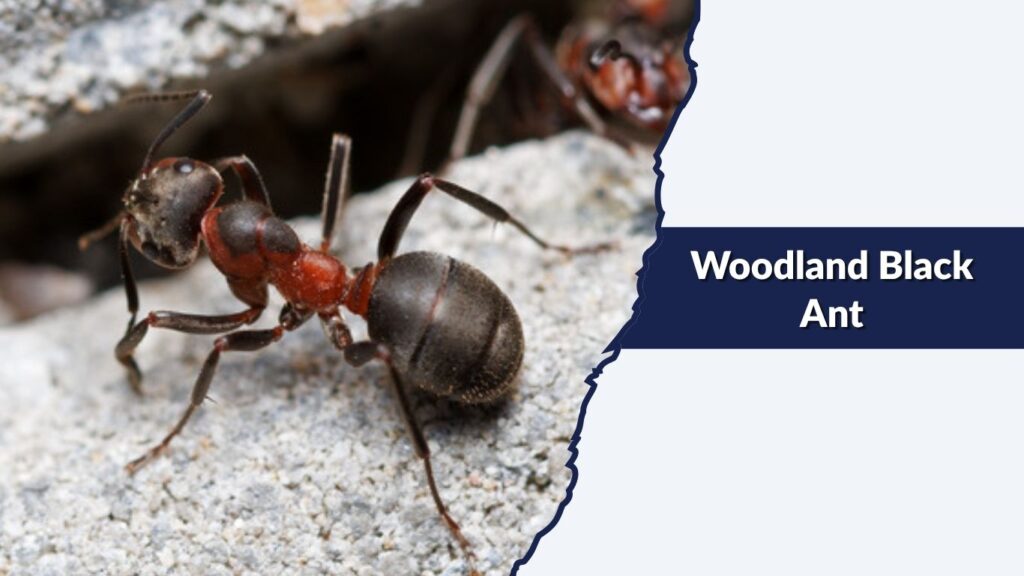
The Woodland Black Ant (Lasius platythorax) is a forest-dwelling ant species commonly found in wooded areas across Europe and parts of Asia. Closely related to the Black Garden Ant, it prefers natural habitats with abundant leaf litter and decaying wood. This species contributes significantly to nutrient recycling by helping break down organic matter within forest ecosystems.
Identification
- Scientific Name: Lasius platythorax
- Common Name: Woodland Black Ant
- Color: Dark brown to black
- Worker Size: 3–5 mm (0.12–0.20 inches)
- Queen Size: 8–10 mm (0.31–0.39 inches)
- Body Shape: Slender body with a single petiole node
- Antennae: 12-segmented and elbowed
- Wings: Present on reproductive males and queens during mating flights
- Distinguishing Feature: Strong preference for woodland habitats and nesting within decaying wood and forest debris
Habitat and Distribution
Woodland Black Ants are widely distributed throughout Europe and extend into parts of northern Asia. They are most commonly encountered in forests, woodlands, and heavily vegetated natural areas.
Unlike many garden-dwelling ants, this species typically nests in rotting logs, tree stumps, fallen branches, moss-covered wood, and deep leaf litter. Moist forest environments provide ideal conditions for colony development and long-term survival.
Behavior and Diet
Woodland Black Ants live in organized colonies that may contain several thousand workers. They are active foragers and often travel through leaf litter and along fallen logs in search of food.
Their diet primarily consists of honeydew collected from aphids and other sap-feeding insects. Workers also consume nectar, fungi, dead insects, and various organic materials found within the forest floor.
The species plays an important ecological role by aiding decomposition processes and helping recycle nutrients within woodland ecosystems.
Life Cycle
The Woodland Black Ant undergoes complete metamorphosis through four developmental stages: egg, larva, pupa, and adult. Winged males and queens participate in mating flights during warm periods of the year.
Following mating, queens establish new colonies in suitable woodland habitats. The queen lays eggs that hatch into larvae, which are fed and protected until they develop into pupae and eventually emerge as workers.
As colonies mature, worker numbers increase and the nest expands within available wood or organic material. Established colonies eventually produce new reproductive ants, ensuring the continued spread of the species throughout forested regions.
6. Hairy Black Garden Ant (Lasius psammophilus)
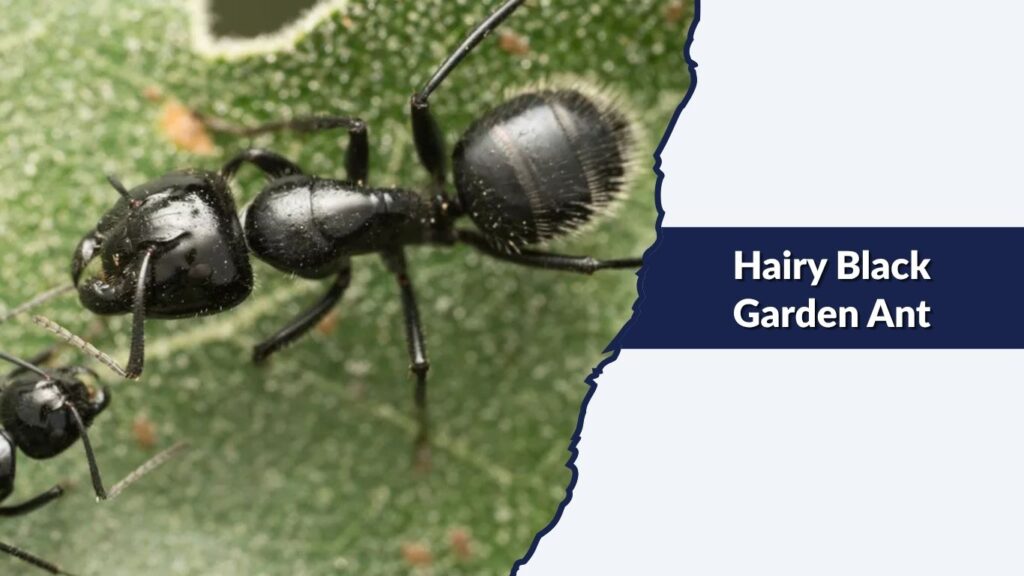
The Hairy Black Garden Ant (Lasius psammophilus) is a lesser-known member of the Lasius genus that is primarily associated with sandy habitats. This species closely resembles other black garden ants but can be distinguished by its slightly hairier body and preference for dry, sandy environments. It plays an important role in maintaining soil health and supporting local ecosystems.
Identification
- Scientific Name: Lasius psammophilus
- Common Name: Hairy Black Garden Ant
- Color: Dark brown to black
- Worker Size: 3–5 mm (0.12–0.20 inches)
- Queen Size: 8–10 mm (0.31–0.39 inches)
- Body Shape: Slender body with a single petiole node
- Antennae: 12-segmented and elbowed
- Wings: Present on reproductive males and queens during mating season
- Distinguishing Feature: Fine body hairs and strong association with sandy soils and dunes
Habitat and Distribution
Hairy Black Garden Ants are found in parts of Europe, particularly in regions with sandy terrain. They commonly inhabit coastal dunes, sandy grasslands, heathlands, and other dry open landscapes.
Their nests are usually constructed underground in loose, well-drained soil. Sandy habitats provide ideal conditions for tunneling and colony expansion, allowing these ants to establish stable underground networks.
Behavior and Diet
This species forms organized colonies consisting of workers, queens, and seasonal reproductive ants. Workers are active foragers that search for food both on the ground and among low vegetation.
Their diet mainly includes honeydew produced by aphids, along with nectar, small insects, dead arthropods, and organic debris. Like many Lasius species, they maintain mutualistic relationships with aphids, protecting them from predators in exchange for sugary secretions.
Hairy Black Garden Ants are generally non-aggressive and rely on cooperation and chemical communication to coordinate colony activities.
Life Cycle
The Hairy Black Garden Ant undergoes complete metamorphosis with four stages: egg, larva, pupa, and adult. Reproductive flights typically occur during warm weather when winged males and queens leave their colonies to mate.
After mating, queens shed their wings and begin establishing new nests in suitable sandy habitats. The queen raises the first generation of workers, which later take over tasks such as brood care, nest maintenance, and food collection.
As the colony grows, it develops a larger workforce and expanded tunnel systems. Mature colonies eventually produce new reproductive ants, ensuring the species continues to colonize appropriate sandy environments.
7. Asian Black Garden Ant (Lasius japonicus)
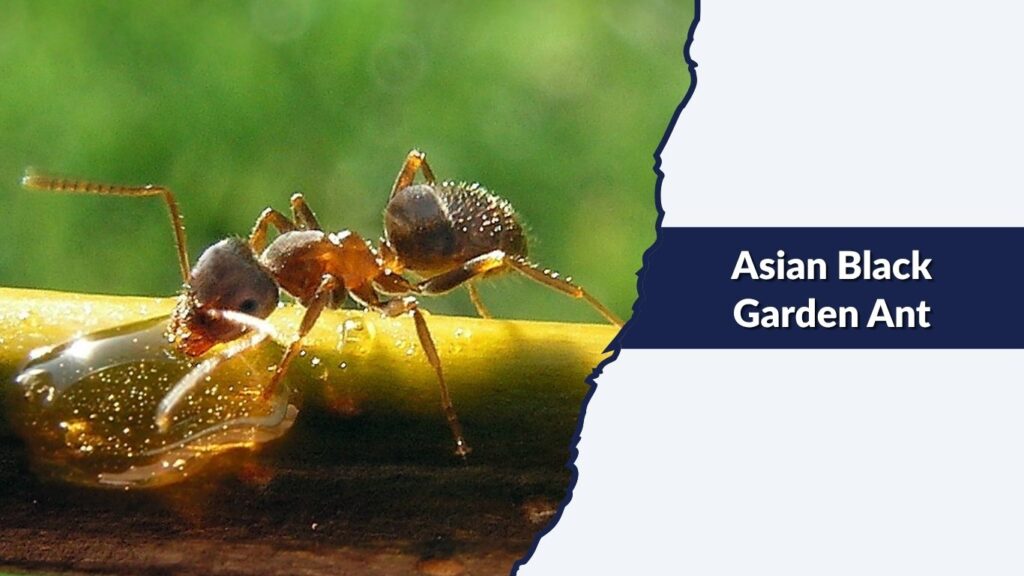
The Asian Black Garden Ant (Lasius japonicus) is a common ant species native to East Asia. Closely related to the Black Garden Ant, it is highly adaptable and can thrive in forests, grasslands, agricultural areas, and urban environments. This species is known for its strong colony structure and its role in soil aeration and nutrient recycling.
Identification
- Scientific Name: Lasius japonicus
- Common Name: Asian Black Garden Ant
- Color: Dark brown to black
- Worker Size: 3–5 mm (0.12–0.20 inches)
- Queen Size: 8–12 mm (0.31–0.47 inches)
- Body Shape: Slender body with a single petiole node
- Antennae: 12-segmented and elbowed
- Wings: Present on reproductive males and queens during mating flights
- Distinguishing Feature: Adaptability to a wide range of habitats and close resemblance to the European Black Garden Ant
Habitat and Distribution
Asian Black Garden Ants are widely distributed across Japan, China, Korea, and neighboring regions of East Asia. They inhabit a variety of environments, including forests, meadows, farmland, gardens, parks, and urban landscapes.
Their nests are usually built underground beneath soil, stones, logs, or pavement. In natural settings, colonies may also occupy spaces beneath leaf litter and decaying wood. Their adaptability allows them to flourish in both rural and densely populated areas.
Behavior and Diet
Asian Black Garden Ants are social insects that form colonies ranging from hundreds to several thousand workers. They rely heavily on chemical communication, using pheromone trails to coordinate foraging and colony defense.
Their diet consists mainly of honeydew produced by aphids and scale insects. Workers also feed on nectar, plant secretions, small insects, dead arthropods, and various organic materials. Colonies frequently tend aphids, protecting them from predators in exchange for a reliable source of sugary honeydew.
Workers are active foragers and can quickly recruit nestmates when valuable food sources are discovered.
Life Cycle
The life cycle of the Asian Black Garden Ant includes four stages: egg, larva, pupa, and adult. Winged males and queens emerge seasonally and participate in mating flights during favorable weather conditions.
After mating, queens shed their wings and establish new colonies in suitable nesting locations. The queen initially cares for the developing brood until the first workers emerge. These workers then assume responsibility for foraging, nest expansion, and caring for future generations.
As colonies mature, they grow in size and eventually produce new reproductive ants. These individuals disperse and establish new colonies, ensuring the continued success of the species across its extensive geographic range.
8. Turkish Black Ant (Lasius emarginatus)
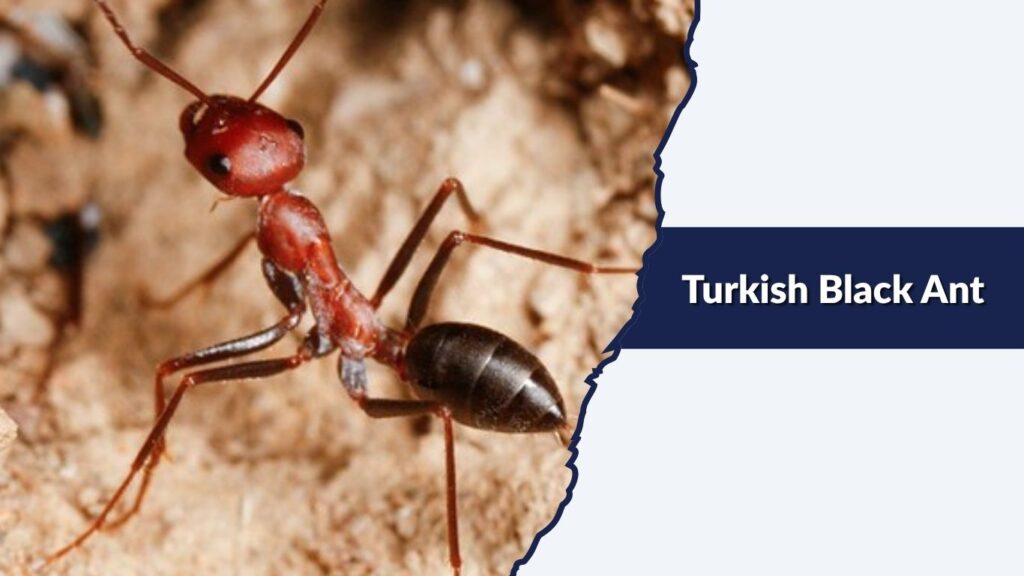
The Turkish Black Ant (Lasius emarginatus) is a resilient ant species native to Europe and parts of Western Asia. Although often associated with warm climates, it has successfully adapted to urban environments, where it commonly nests in walls, cracks, and stone structures. Its ability to thrive in both natural and human-made habitats has contributed to its widespread distribution.
Identification
- Scientific Name: Lasius emarginatus
- Common Name: Turkish Black Ant
- Color: Dark brown to black with reddish-brown areas on the thorax
- Worker Size: 3–5 mm (0.12–0.20 inches)
- Queen Size: 7–9 mm (0.28–0.35 inches)
- Body Shape: Slender body with a single petiole node
- Antennae: 12-segmented and elbowed
- Wings: Present on reproductive males and queens during mating flights
- Distinguishing Feature: Dark body combined with a reddish-brown thorax and frequent nesting in stone structures
Habitat and Distribution
Turkish Black Ants are found throughout Southern and Central Europe, extending into parts of Western Asia. They prefer warm, dry environments and are especially common in rocky landscapes, woodlands, gardens, parks, and urban areas.
Their nests are often located beneath stones, within wall crevices, under tree bark, or inside decaying wood. In cities, colonies frequently occupy cracks in buildings, sidewalks, and masonry structures, where they can find shelter and stable temperatures.
Behavior and Diet
This species lives in organized colonies that may contain thousands of workers. Workers actively forage during daylight hours and establish pheromone trails that help direct nestmates to food sources.
Their diet primarily consists of honeydew collected from aphids and scale insects. They also consume nectar, plant juices, dead insects, and other small arthropods. Colonies often protect aphid populations to maintain a dependable supply of sugary honeydew.
Turkish Black Ants are generally non-aggressive but will defend their nests when threatened.
Life Cycle
Like other ants, the Turkish Black Ant undergoes complete metamorphosis consisting of four stages: egg, larva, pupa, and adult. Winged males and queens participate in mating flights during the warmer months of the year.
After mating, queens shed their wings and establish new colonies in suitable nesting sites. The queen lays eggs that hatch into larvae, which are nourished until they develop into pupae and later emerge as adult workers.
As the colony expands, workers take responsibility for nest construction, brood care, and food collection. Mature colonies eventually produce new reproductive ants that disperse and establish additional colonies, continuing the species’ life cycle.
9. Black Field Ant (Formica fusca)
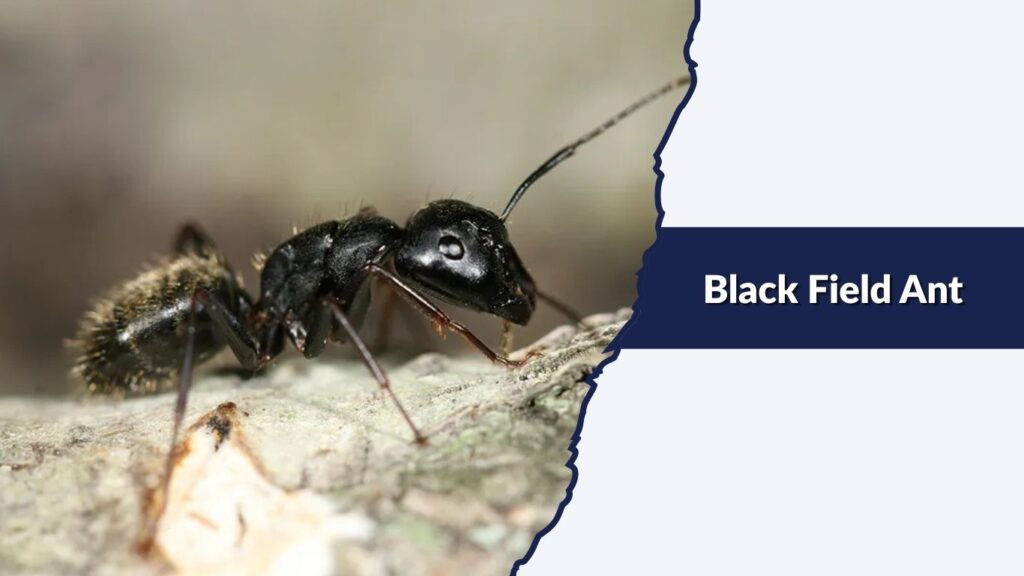
The Black Field Ant (Formica fusca) is one of the most widespread ant species in the Northern Hemisphere. Known for its adaptability and resilience, this species inhabits a variety of environments ranging from forests and grasslands to agricultural fields and urban green spaces. Black Field Ants are important predators and scavengers that help regulate insect populations and contribute to ecosystem health.
Identification
- Scientific Name: Formica fusca
- Common Name: Black Field Ant
- Color: Dark brown to black with a slightly glossy appearance
- Worker Size: 4–8 mm (0.16–0.31 inches)
- Queen Size: 8–11 mm (0.31–0.43 inches)
- Body Shape: Slender body with long legs and a single petiole node
- Antennae: 12-segmented and elbowed
- Wings: Present on reproductive males and queens during mating season
- Distinguishing Feature: Long-legged appearance and highly adaptable nesting habits
Habitat and Distribution
Black Field Ants are widely distributed across Europe, Asia, and North America. They thrive in a broad range of habitats, including forests, meadows, grasslands, farmland, woodland edges, and urban parks.
Their nests are typically constructed underground, beneath stones, within rotting wood, or among tree roots. Due to their adaptability, colonies can establish themselves in both natural and disturbed environments, making them one of the most commonly encountered ant species in many regions.
Behavior and Diet
Black Field Ants are active and efficient foragers that live in colonies ranging from a few hundred to several thousand workers. They are generally less aggressive than many other Formica species and often avoid direct conflicts when possible.
Their diet is highly varied and includes honeydew from aphids, nectar, dead insects, small arthropods, and other organic matter. As both predators and scavengers, they help control populations of various insect species while also assisting in the decomposition process.
Workers communicate through pheromone trails and cooperate closely when locating and transporting food resources.
Life Cycle
The life cycle of the Black Field Ant consists of four stages: egg, larva, pupa, and adult. Winged males and queens emerge during the reproductive season and participate in mating flights.
After mating, queens establish new colonies either independently or, in some cases, by taking advantage of existing ant colonies through temporary social parasitism. The queen lays eggs that develop into larvae, pupae, and eventually adult workers.
As worker numbers increase, the colony expands its nest and foraging territory. Mature colonies eventually produce new reproductive ants, allowing the species to spread and establish colonies across a wide range of habitats.
10. Dusky Black Ant (Formica lemani)
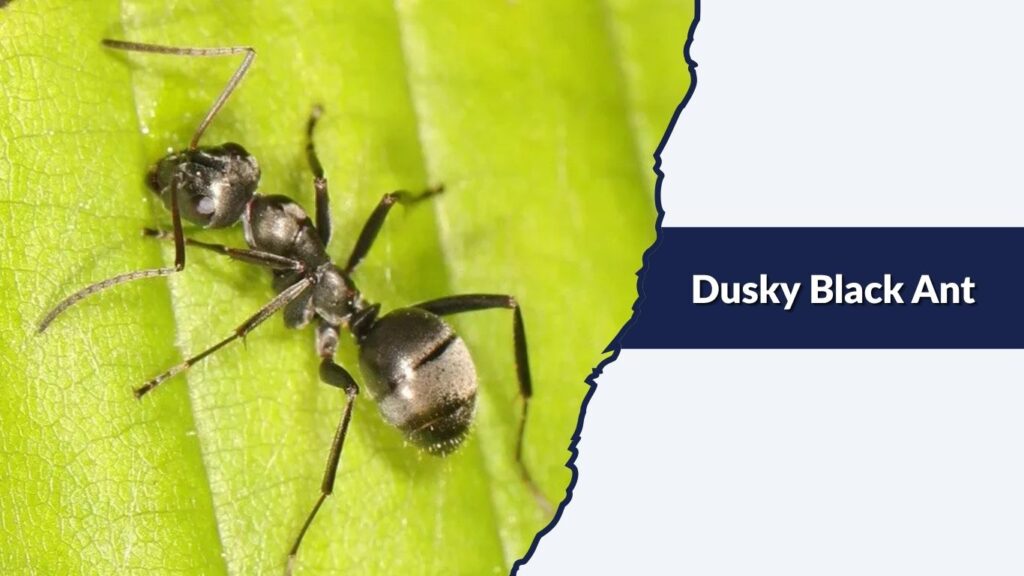
The Dusky Black Ant (Formica lemani) is a hardy ant species commonly found in cooler regions of Europe and parts of northern Asia. Closely related to the Black Field Ant, it thrives in mountainous, woodland, and heathland habitats. This species is valued for its role in controlling small insect populations and contributing to the health of natural ecosystems.
Identification
- Scientific Name: Formica lemani
- Common Name: Dusky Black Ant
- Color: Dark brown to black with a dull or slightly matte appearance
- Worker Size: 4–7 mm (0.16–0.28 inches)
- Queen Size: 8–10 mm (0.31–0.39 inches)
- Body Shape: Slender body with long legs and a single petiole node
- Antennae: 12-segmented and elbowed
- Wings: Present on reproductive males and queens during mating flights
- Distinguishing Feature: Dark, less glossy body and preference for cooler, upland habitats
Habitat and Distribution
Dusky Black Ants are distributed across much of Europe, particularly in northern regions and mountainous areas. They are commonly found in forests, moorlands, heathlands, grasslands, and woodland edges.
Their nests are usually built underground beneath stones, among plant roots, or within decaying wood. Colonies often favor moist but well-drained soils and can survive in environments with cooler temperatures where many other ant species are less common.
Behavior and Diet
This species lives in moderately sized colonies composed of workers, queens, and seasonal reproductive ants. Workers are active foragers and frequently search the surrounding area for food.
Their diet includes honeydew collected from aphids, nectar, small insects, dead arthropods, and organic debris. As opportunistic feeders, they readily adapt their diet to available food sources.
Dusky Black Ants are generally peaceful compared to some larger Formica species, although they will defend their nests when threatened. Their foraging activity helps regulate populations of small insects within their habitats.
Life Cycle
The Dusky Black Ant undergoes complete metamorphosis through four stages: egg, larva, pupa, and adult. Winged males and queens emerge during the breeding season and participate in mating flights on warm days.
After mating, queens establish new colonies in suitable nesting locations. The queen lays eggs that develop into larvae, which are fed and cared for until they pupate and emerge as adult workers.
As the colony grows, workers expand the nest, gather food, and care for the developing brood. Mature colonies eventually produce new reproductive ants, allowing the species to spread into new habitats and maintain healthy populations throughout its range.
11. Black Carpenter Ant (Camponotus pennsylvanicus)
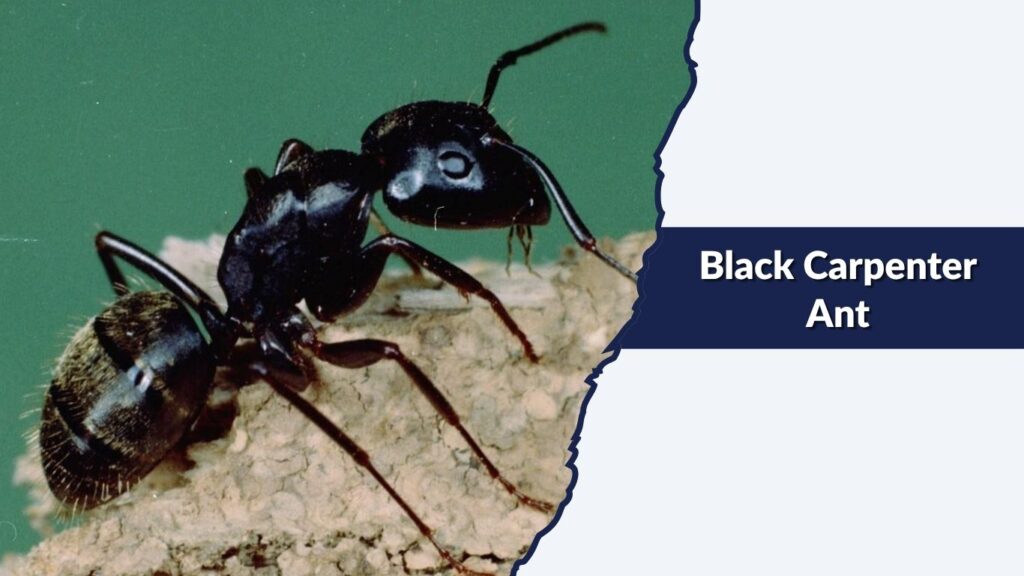
The Black Carpenter Ant (Camponotus pennsylvanicus) is one of the largest and most recognizable black ant species in North America. Unlike termites, carpenter ants do not eat wood, but they excavate tunnels and galleries within it to create nests. Because of this behavior, they are often considered structural pests when they establish colonies in buildings.
Identification
- Scientific Name: Camponotus pennsylvanicus
- Common Name: Black Carpenter Ant
- Color: Solid black or dark blackish-brown
- Worker Size: 6–13 mm (0.24–0.51 inches)
- Queen Size: 15–20 mm (0.59–0.79 inches)
- Body Shape: Large, robust body with a smoothly rounded thorax
- Antennae: 12-segmented and elbowed
- Wings: Present on reproductive males and queens during nuptial flights
- Distinguishing Feature: Large size and ability to excavate smooth tunnels inside wood
Habitat and Distribution
Black Carpenter Ants are native to eastern and central North America. They are commonly found in forests, woodlands, parks, and residential areas.
Colonies often nest in dead trees, rotting logs, tree stumps, and wooden structures. In homes and buildings, they prefer damp or decaying wood that is easier to excavate. Large colonies may establish satellite nests in multiple locations connected to a primary nest.
Behavior and Diet
Black Carpenter Ants are primarily nocturnal and become most active after sunset. Workers travel long distances in search of food and establish pheromone trails that guide nestmates to reliable food sources.
Their diet includes honeydew from aphids, plant nectar, fruit juices, dead insects, and other protein-rich foods. While they tunnel through wood for nesting purposes, they do not consume it as food.
Workers are capable of delivering a painful bite and may spray small amounts of formic acid into the wound as a defensive measure.
Life Cycle
The life cycle of the Black Carpenter Ant includes four stages: egg, larva, pupa, and adult. Winged reproductive males and queens emerge during spring and early summer to participate in mating flights.
After mating, a queen sheds her wings and establishes a new colony in a suitable nesting site. She lays eggs that hatch into larvae, which develop into pupae before emerging as workers.
The first generation of workers assumes responsibility for foraging, brood care, and nest expansion. Colonies grow slowly and may require several years to reach full maturity. Mature colonies eventually produce new queens and males, allowing the species to establish additional colonies and expand its range.
12. Small Black Ant (Monomorium minimum)
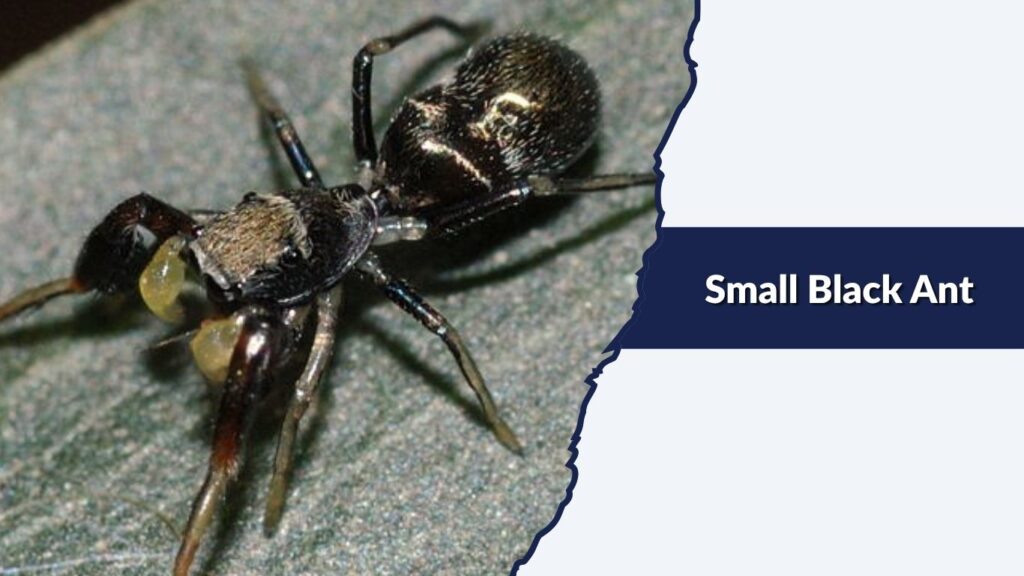
The Small Black Ant (Monomorium minimum) is one of the tiniest black ant species found in North America. Despite its small size, it forms large colonies and is a highly effective forager. This species is commonly encountered in lawns, gardens, and buildings, where it often searches for sweet foods and other readily available resources.
Identification
- Scientific Name: Monomorium minimum
- Common Name: Small Black Ant
- Color: Shiny black
- Worker Size: 1.5–2 mm (0.06–0.08 inches)
- Queen Size: 4–5 mm (0.16–0.20 inches)
- Body Shape: Small, compact body with a two-segmented waist
- Antennae: 12-segmented with a distinct three-segmented club
- Wings: Present on reproductive males and queens during mating season
- Distinguishing Feature: Extremely small size and glossy black appearance
Habitat and Distribution
Small Black Ants are widely distributed throughout the United States, southern Canada, and parts of Mexico. They thrive in a variety of environments, including grasslands, forests, agricultural fields, parks, gardens, and urban areas.
Their nests are commonly built in soil, beneath rocks, under logs, within decaying wood, and occasionally inside buildings. Outdoor colonies often create nests in lawns, flower beds, and areas with loose soil.
Behavior and Diet
Small Black Ants live in colonies that can contain thousands of workers. They are highly active foragers and frequently establish trails leading to food sources.
Their diet consists primarily of sweets such as nectar, honeydew, fruit juices, and sugary household foods. They also consume dead insects, grease, seeds, and other protein-rich materials when available.
Because of their small size, workers can easily enter homes through tiny cracks and openings, making them a common nuisance pest in kitchens and food storage areas.
Life Cycle
The Small Black Ant undergoes complete metamorphosis through four stages: egg, larva, pupa, and adult. Reproductive males and queens participate in mating flights during warm weather, usually in late spring or summer.
After mating, queens establish new colonies and begin laying eggs. The developing larvae are cared for by workers until they pupate and emerge as adults.
As the colony grows, worker ants expand the nest, gather food, and care for new brood. Mature colonies eventually produce winged reproductive ants that disperse and establish new colonies, ensuring the continued spread of the species across its range.
13. Black House Ant (Ochetellus glaber)
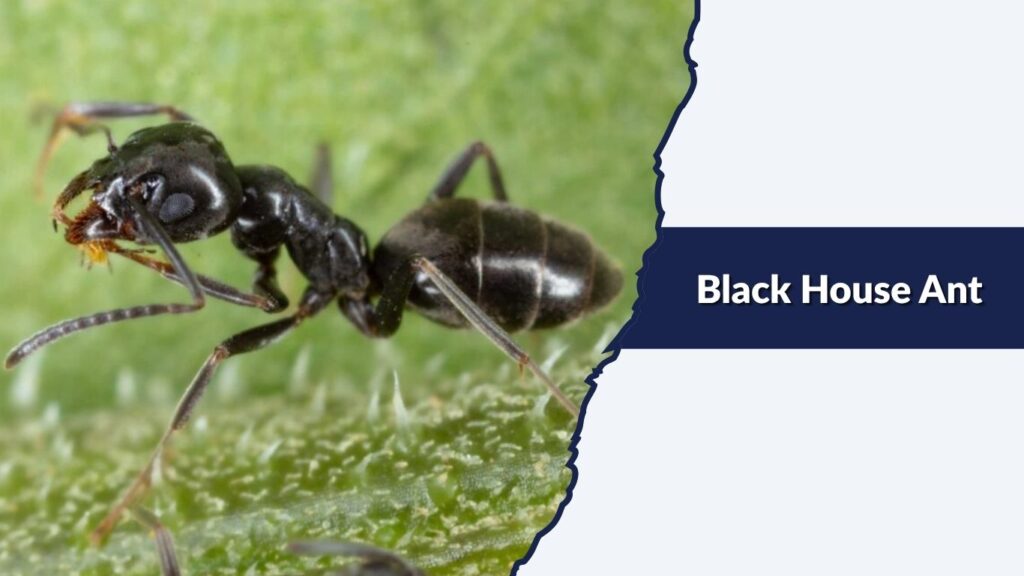
The Black House Ant (Ochetellus glaber) is a common ant species native to Australia and found in several Pacific regions. It is well known for its tendency to invade homes and buildings in search of food. Highly adaptable and efficient at foraging, this species thrives in both natural and urban environments.
Identification
- Scientific Name: Ochetellus glaber
- Common Name: Black House Ant
- Color: Shiny black to dark brown
- Worker Size: 2.5–3 mm (0.10–0.12 inches)
- Queen Size: 5–6 mm (0.20–0.24 inches)
- Body Shape: Slender body with a single petiole node
- Antennae: 12-segmented and elbowed
- Wings: Present on reproductive males and queens during breeding periods
- Distinguishing Feature: Glossy black appearance and strong tendency to form long foraging trails into buildings
Habitat and Distribution
Black House Ants are native to Australia and are also found in New Zealand and several Pacific islands. They inhabit forests, grasslands, gardens, parks, and urban areas.
Their nests are commonly located beneath rocks, under tree bark, within logs, inside wall cavities, and around building foundations. In residential areas, colonies often establish nests close to food and water sources, making homes attractive nesting locations.
Behavior and Diet
Black House Ants live in colonies that may contain thousands of workers. They are active foragers and are particularly attracted to sweet substances. Workers establish well-defined pheromone trails that can extend considerable distances between the nest and food sources.
Their diet includes nectar, honeydew, fruit juices, sugary foods, dead insects, and various organic materials. When indoors, they frequently invade kitchens and pantries in search of sweets and other food items.
This species is generally non-aggressive but can become a nuisance when large numbers of workers enter buildings.
Life Cycle
The Black House Ant undergoes complete metamorphosis with four stages: egg, larva, pupa, and adult. Winged males and queens emerge during the reproductive season and participate in mating flights.
After mating, queens establish new colonies in suitable nesting locations. Eggs hatch into larvae, which are fed and protected by worker ants until they develop into pupae and eventually emerge as adults.
As colonies mature, workers expand nesting areas, gather food, and care for developing brood. Established colonies eventually produce new reproductive ants, allowing the species to spread into additional habitats and urban environments.
14. Australian Black Ant (Iridomyrmex purpureus)
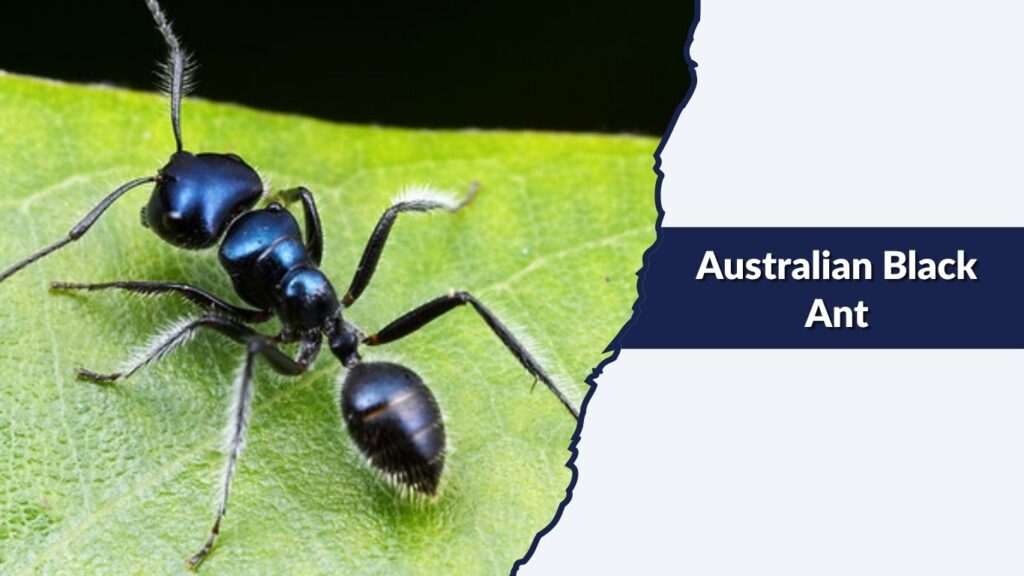
The Australian Black Ant (Iridomyrmex purpureus), commonly known as the Meat Ant, is one of Australia’s most dominant and widespread ant species. Although its common name varies by region, many populations appear dark black to purplish-black in color. This highly territorial species forms massive colonies and plays a significant role in Australian ecosystems by scavenging organic matter and controlling insect populations.
Identification
- Scientific Name: Iridomyrmex purpureus
- Common Name: Australian Black Ant (Meat Ant)
- Color: Black, dark purple, or metallic blue-black sheen
- Worker Size: 5–8 mm (0.20–0.31 inches)
- Queen Size: 12–15 mm (0.47–0.59 inches)
- Body Shape: Robust body with long legs and a single petiole node
- Antennae: 12-segmented and elbowed
- Wings: Present on reproductive males and queens during mating flights
- Distinguishing Feature: Metallic black coloration and large gravel-covered nest mounds
Habitat and Distribution
Australian Black Ants are found throughout most of Australia, especially in open woodlands, grasslands, agricultural areas, deserts, and suburban environments. They are highly adaptable and can survive in both dry and moderately humid climates.
Their nests are typically constructed in soil and are often marked by large mounds covered with pebbles, gravel, or plant debris. Colonies frequently occupy open, sunny areas where they can maintain suitable temperatures for brood development.
Behavior and Diet
Australian Black Ants are highly aggressive and territorial. Colonies establish extensive foraging networks and actively defend their territory from competing ant species.
Their diet includes dead insects, small arthropods, nectar, honeydew, seeds, and various organic materials. As scavengers, they play an important role in cleaning up animal remains and recycling nutrients within the environment.
Workers are active during the day and often travel long distances while searching for food. Their strong territorial behavior can lead to conflicts with neighboring colonies and other ant species.
Life Cycle
The life cycle of the Australian Black Ant consists of four stages: egg, larva, pupa, and adult. Reproductive males and queens emerge seasonally and participate in mating flights during favorable weather conditions.
After mating, queens establish new colonies underground and begin laying eggs. The larvae are cared for until they pupate and eventually emerge as workers.
As the colony grows, workers expand the nest, forage for food, and protect the colony’s territory. Mature colonies can contain hundreds of thousands of ants and eventually produce new reproductive individuals, ensuring the continued expansion of the species across Australia.
15. Black Rover Ant (Brachymyrmex patagonicus)
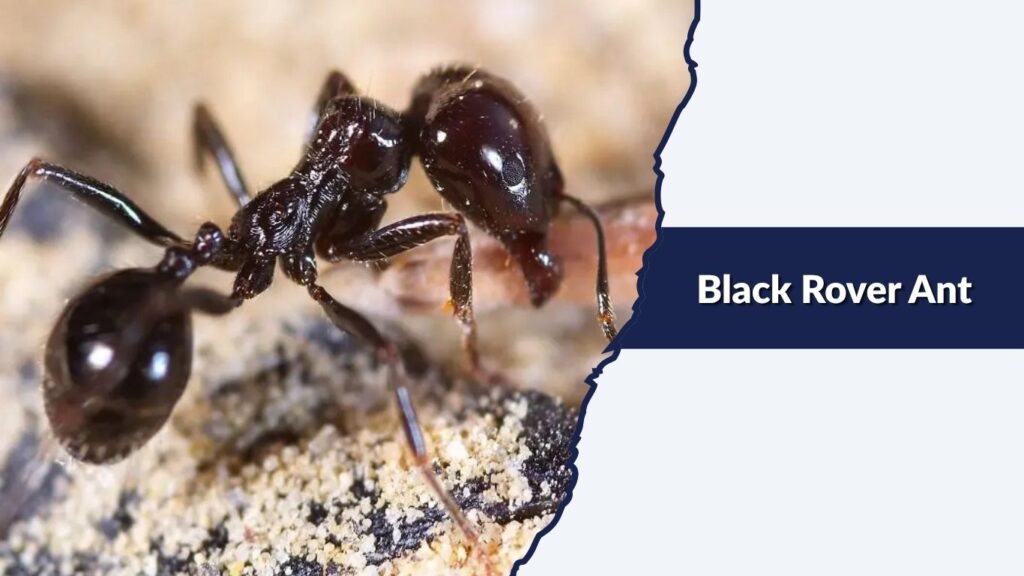
The Black Rover Ant (Brachymyrmex patagonicus) is a small but highly adaptable ant species native to South America that has spread to many parts of North America and other regions. It is commonly found in urban and suburban environments, where it frequently enters buildings in search of food and moisture. Due to its rapid expansion and ability to establish colonies in a variety of habitats, it has become a well-known invasive species in some areas.
Identification
- Scientific Name: Brachymyrmex patagonicus
- Common Name: Black Rover Ant
- Color: Dark brown to black
- Worker Size: 1–2 mm (0.04–0.08 inches)
- Queen Size: 3–4 mm (0.12–0.16 inches)
- Body Shape: Small, slender body with a single petiole node
- Antennae: 9-segmented without a club
- Wings: Present on reproductive males and queens during mating flights
- Distinguishing Feature: Extremely small size and unique 9-segmented antennae
Habitat and Distribution
Black Rover Ants originated in South America but are now widely distributed across the southern United States, parts of Central America, and other warm regions. They thrive in urban, suburban, and agricultural environments.
Their nests are commonly found in soil, mulch, leaf litter, under rocks, inside wall voids, beneath potted plants, and around building foundations. The species readily exploits human-made structures, making it a frequent indoor pest.
Behavior and Diet
Black Rover Ants live in colonies that may contain multiple queens, allowing populations to grow quickly. Workers are active foragers and often establish trails leading to food sources.
Their diet primarily consists of sugary substances such as nectar, honeydew, fruit juices, and household sweets. They also consume dead insects and other protein-rich materials when available.
Unlike many aggressive ant species, Black Rover Ants are generally non-confrontational and often avoid direct competition with larger ants. Their success comes from their ability to reproduce rapidly and exploit a wide range of food sources.
Life Cycle
The Black Rover Ant undergoes complete metamorphosis with four developmental stages: egg, larva, pupa, and adult. Reproductive flights occur during warm periods of the year, although new colonies can also spread through colony budding.
After mating, queens establish new nesting sites and begin laying eggs. Workers care for the developing larvae until they pupate and emerge as adults.
Because colonies often contain multiple queens, growth can be rapid. Mature colonies continuously produce workers and reproductive ants, enabling the species to expand efficiently into new environments and maintain thriving populations in both outdoor and indoor habitats.
16. Shiny Black Ant (Formica gagates)
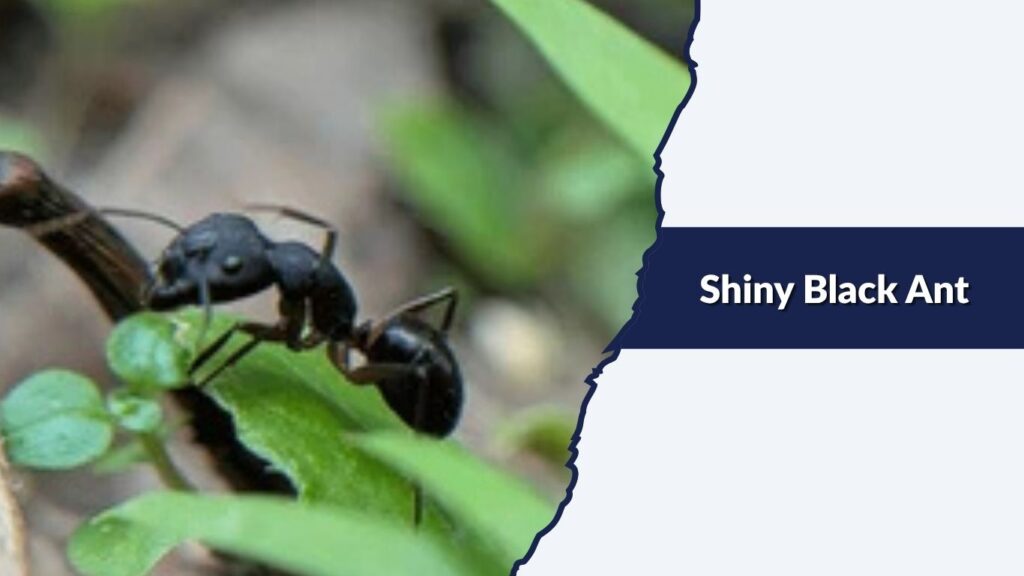
The Shiny Black Ant (Formica gagates) is a distinctive ant species recognized for its glossy black appearance and active foraging behavior. Native to parts of Europe, North Africa, and Western Asia, this species is commonly found in warm, open habitats. Its adaptability and efficient colony organization make it a successful member of the Formica genus.
Identification
- Scientific Name: Formica gagates
- Common Name: Shiny Black Ant
- Color: Deep glossy black
- Worker Size: 4–7 mm (0.16–0.28 inches)
- Queen Size: 8–11 mm (0.31–0.43 inches)
- Body Shape: Slender body with long legs and a single petiole node
- Antennae: 12-segmented and elbowed
- Wings: Present on reproductive males and queens during mating flights
- Distinguishing Feature: Smooth, highly polished black body with a noticeable shine
Habitat and Distribution
Shiny Black Ants are distributed throughout Southern Europe, the Mediterranean region, North Africa, and parts of Western Asia. They prefer warm climates and are often found in grasslands, scrublands, woodland edges, rocky slopes, and coastal habitats.
Their nests are usually built underground in well-drained soil, often beneath stones, rocks, or sparse vegetation. Colonies favor sunny locations where temperatures remain suitable for brood development and daily activity.
Behavior and Diet
This species forms organized colonies consisting of workers, queens, and seasonal reproductive ants. Workers are active during the day and forage extensively for food across their territory.
Their diet includes honeydew from aphids, nectar, small insects, dead arthropods, and various organic materials. As both predators and scavengers, they contribute to natural pest control while helping recycle nutrients within their ecosystems.
Shiny Black Ants rely heavily on pheromone communication and coordinated worker activity to locate food and defend their nesting areas.
Life Cycle
The Shiny Black Ant undergoes complete metamorphosis through four stages: egg, larva, pupa, and adult. Winged males and queens emerge during the breeding season and participate in mating flights under favorable weather conditions.
Following mating, queens establish new colonies by selecting suitable nesting sites. Eggs hatch into larvae, which are fed and protected by workers until they pupate and emerge as adults.
As the colony grows, workers expand the nest, gather food, and care for developing brood. Mature colonies eventually produce new reproductive ants that disperse to establish additional colonies, ensuring the long-term survival and expansion of the species.
17. Black Sugar Ant (Camponotus nigriceps)
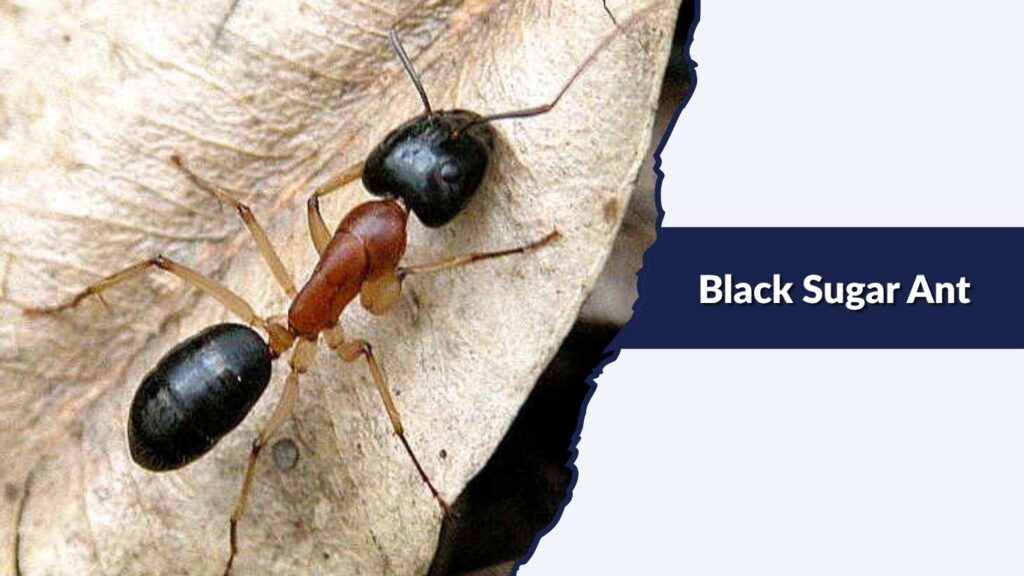
The Black Sugar Ant (Camponotus nigriceps) is a common ant species native to Australia. Known for its attraction to sweet foods, this species is frequently found in gardens, parks, woodlands, and residential areas. Black Sugar Ants are important scavengers that help clean up organic matter while also serving as pollinators and seed dispersers in some ecosystems.
Identification
- Scientific Name: Camponotus nigriceps
- Common Name: Black Sugar Ant
- Color: Black head with a dark brown to black body
- Worker Size: 5–12 mm (0.20–0.47 inches)
- Queen Size: 13–16 mm (0.51–0.63 inches)
- Body Shape: Large, robust body with a smoothly rounded thorax
- Antennae: 12-segmented and elbowed
- Wings: Present on reproductive males and queens during mating flights
- Distinguishing Feature: Large size, black head, and strong attraction to sugary substances
Habitat and Distribution
Black Sugar Ants are widely distributed throughout Australia and are commonly found in both natural and urban environments. They inhabit forests, woodlands, grasslands, gardens, parks, and suburban neighborhoods.
Their nests are typically constructed underground, beneath rocks, within decaying wood, under logs, and occasionally inside wall cavities or other sheltered structures. Colonies prefer areas with easy access to food sources and suitable nesting materials.
Behavior and Diet
Black Sugar Ants live in large colonies and are highly active foragers. Workers often travel long distances in search of food and establish well-defined trails between the nest and feeding sites.
Their diet primarily consists of nectar, honeydew from aphids and scale insects, fruit juices, and other sugary substances. They also consume dead insects, small arthropods, and protein-rich materials needed for larval development.
This species is generally non-aggressive but will defend its nest if disturbed. Workers are most active during warmer parts of the day and evening.
Life Cycle
The Black Sugar Ant undergoes complete metamorphosis through four stages: egg, larva, pupa, and adult. Winged reproductive males and queens emerge during the breeding season and participate in mating flights.
After mating, queens shed their wings and establish new colonies in suitable nesting locations. The queen lays eggs that hatch into larvae, which are cared for until they pupate and emerge as workers.
As the colony grows, workers assume responsibility for foraging, nest maintenance, and brood care. Mature colonies eventually produce new reproductive ants that disperse and establish additional colonies, helping the species maintain its widespread presence across Australia.
18. Black Pavement Ant (Tetramorium caespitum)
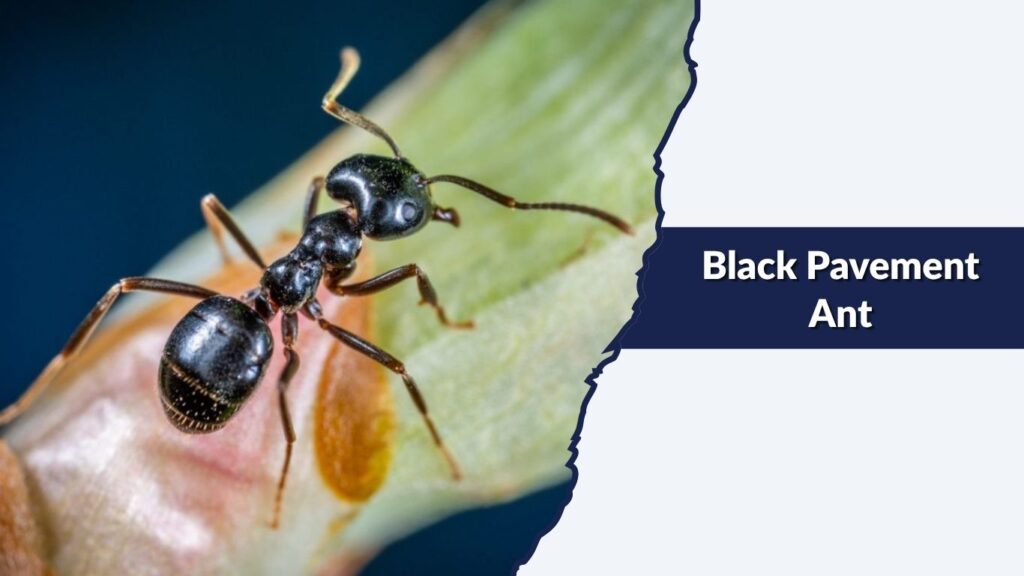
The Black Pavement Ant (Tetramorium caespitum) is a small but highly successful ant species commonly found in urban and suburban environments. It earned its common name from its habit of nesting beneath sidewalks, driveways, patios, and building foundations. This species is one of the most frequently encountered ants in cities and residential areas across North America and Europe.
Identification
- Scientific Name: Tetramorium caespitum
- Common Name: Black Pavement Ant
- Color: Dark brown to black
- Worker Size: 2.5–4 mm (0.10–0.16 inches)
- Queen Size: 7–8 mm (0.28–0.31 inches)
- Body Shape: Compact body with a two-segmented waist
- Antennae: 12-segmented with a three-segmented club
- Wings: Present on reproductive males and queens during mating flights
- Distinguishing Feature: Parallel grooves on the head and thorax, along with its tendency to nest under pavement
Habitat and Distribution
Black Pavement Ants are native to Europe but have become widely established across North America and other regions. They thrive in urban environments, where concrete and paved surfaces provide ideal nesting conditions.
Colonies commonly nest beneath sidewalks, driveways, patios, foundation slabs, and stones. They can also establish nests in lawns, gardens, and wall voids. Small piles of displaced soil near cracks in pavement often indicate the presence of a colony.
Behavior and Diet
Black Pavement Ants live in colonies that can contain several thousand workers. They are active foragers and frequently enter homes in search of food.
Their diet includes honeydew, seeds, dead insects, grease, crumbs, pet food, and sugary substances. Because they are opportunistic feeders, they can exploit a wide variety of food sources in both outdoor and indoor environments.
Neighboring colonies often engage in territorial battles, resulting in large groups of workers fighting near nest boundaries. These conflicts are especially common during the warmer months.
Life Cycle
The life cycle of the Black Pavement Ant includes four stages: egg, larva, pupa, and adult. Winged males and queens emerge during the reproductive season and participate in mating flights, typically during spring and early summer.
After mating, queens establish new colonies by selecting suitable nesting locations beneath pavement or other protected structures. Eggs hatch into larvae, which are cared for by workers until they pupate and emerge as adults.
As the colony matures, workers expand the nest, gather food, and care for developing brood. Mature colonies eventually produce new reproductive ants, allowing the species to spread successfully throughout urban and suburban environments.
19. Black Crazy Ant (Paratrechina longicornis)
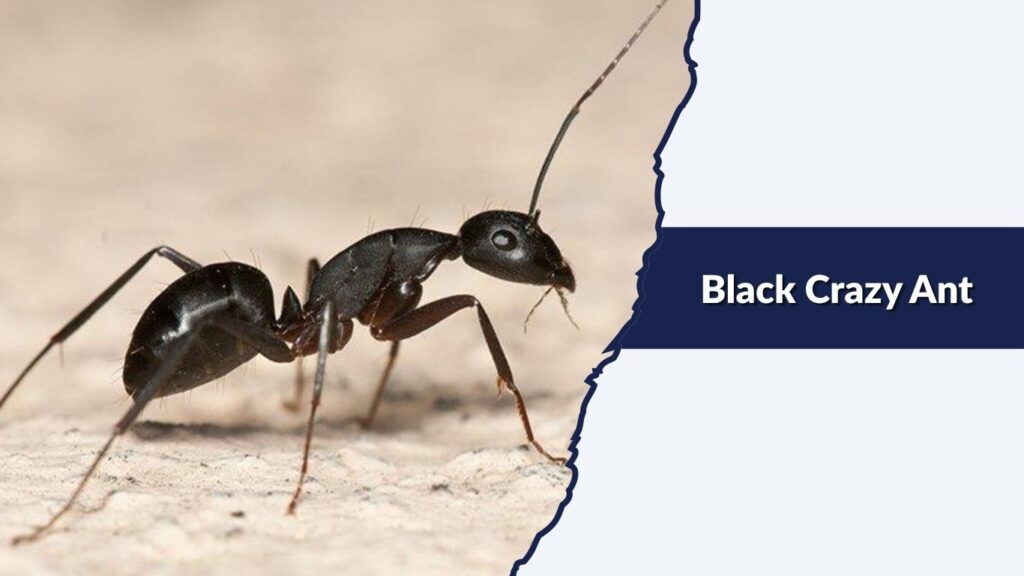
The Black Crazy Ant (Paratrechina longicornis) is a highly adaptable ant species known for its rapid, erratic movements, which give it the common name “crazy ant.” Native to tropical regions, this species has spread throughout much of the world and is now considered one of the most widespread ant species. Its ability to establish colonies in diverse environments makes it a successful invasive ant in many countries.
Identification
- Scientific Name: Paratrechina longicornis
- Common Name: Black Crazy Ant
- Color: Dark brown to black
- Worker Size: 2.3–3 mm (0.09–0.12 inches)
- Queen Size: 4–5 mm (0.16–0.20 inches)
- Body Shape: Slender body with exceptionally long legs and antennae
- Antennae: 12-segmented and unusually long
- Wings: Present on reproductive males and queens
- Distinguishing Feature: Fast, unpredictable running behavior and extremely long antennae and legs
Habitat and Distribution
Black Crazy Ants are found throughout tropical and subtropical regions worldwide, including Asia, Africa, Australia, North America, South America, and many Pacific islands.
They nest in a wide variety of locations, including soil, leaf litter, rotting logs, under stones, wall voids, potted plants, and buildings. Their adaptability allows them to thrive in urban, agricultural, and natural environments.
Because they readily move with transported goods and materials, they have become one of the world’s most successful invasive ant species.
Behavior and Diet
Black Crazy Ants are famous for their erratic foraging behavior. Unlike many ants that follow orderly trails, workers move quickly in seemingly random directions while searching for food.
Their diet includes honeydew, nectar, fruit, dead insects, small arthropods, household sweets, and greasy foods. Colonies often contain multiple queens, which helps them expand rapidly and establish large populations.
Workers are highly opportunistic and can quickly exploit new food sources. In buildings, they are often considered nuisance pests because they invade kitchens, food storage areas, and electrical equipment.
Life Cycle
The Black Crazy Ant undergoes complete metamorphosis with four stages: egg, larva, pupa, and adult. Colonies reproduce through both mating flights and colony budding, where queens and workers establish new nests nearby.
After eggs hatch, larvae are fed and protected by worker ants until they develop into pupae and eventually emerge as adults. The presence of multiple queens allows colonies to grow quickly and recover from disturbances.
As colonies mature, they expand into interconnected nesting sites that may cover large areas. This reproductive strategy contributes significantly to the species’ success and widespread distribution across the globe.
20. Black Desert Ant (Cataglyphis bicolor)
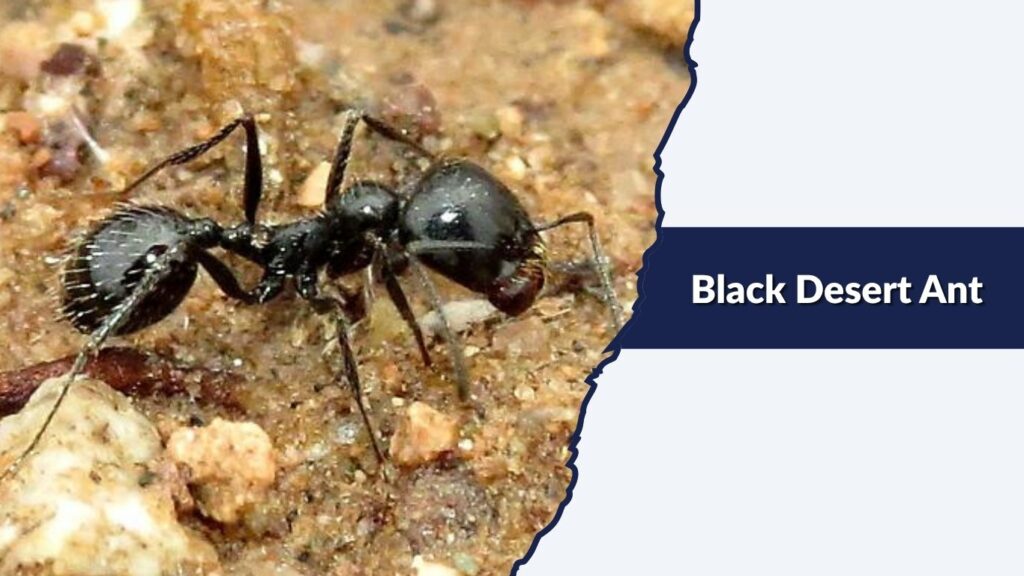
The Black Desert Ant (Cataglyphis bicolor) is a remarkable ant species adapted to some of the harshest desert environments on Earth. Known for its ability to withstand extreme heat, this species forages during the hottest parts of the day when most predators and competing insects remain inactive. Its exceptional navigation skills and heat tolerance have made it a popular subject of scientific research.
Identification
- Scientific Name: Cataglyphis bicolor
- Common Name: Black Desert Ant
- Color: Black to dark brown
- Worker Size: 6–12 mm (0.24–0.47 inches)
- Queen Size: 12–15 mm (0.47–0.59 inches)
- Body Shape: Slender body with long legs adapted for desert travel
- Antennae: 12-segmented and elbowed
- Wings: Present on reproductive males and queens during mating flights
- Distinguishing Feature: Long legs, fast movement, and exceptional ability to navigate across hot desert terrain
Habitat and Distribution
Black Desert Ants are primarily found in arid and semi-arid regions of North Africa, the Middle East, and parts of the Mediterranean region. They inhabit deserts, sandy plains, rocky wastelands, and dry scrublands where temperatures can become extremely high.
Their nests are typically constructed underground in sandy or loose soil. Nest entrances are often simple and inconspicuous, helping protect the colony from predators and harsh environmental conditions.
Behavior and Diet
Black Desert Ants are among the most heat-tolerant insects in the world. Workers commonly forage during midday when surface temperatures are high enough to discourage most other animals.
Their diet mainly consists of dead insects and other arthropods that have succumbed to the harsh desert environment. They are efficient scavengers and can quickly locate food over large distances.
One of their most impressive traits is their navigation ability. Workers use the position of the sun, polarized light patterns, and visual landmarks to find their way back to the nest after long foraging trips across seemingly featureless desert landscapes.
Life Cycle
The Black Desert Ant undergoes complete metamorphosis through four stages: egg, larva, pupa, and adult. Reproductive males and queens emerge seasonally and participate in mating flights when environmental conditions are favorable.
After mating, queens establish new underground colonies and begin laying eggs. The developing larvae are fed and protected until they pupate and emerge as adult workers.
As the colony grows, workers take over nest maintenance, brood care, and food collection. Mature colonies eventually produce new reproductive ants that disperse and establish additional colonies, ensuring the species’ survival in some of the world’s most challenging environments.
FAQs
What is the most common black ant species?
The Black Garden Ant (Lasius niger) is one of the most common black ant species, especially in Europe. It is frequently found in gardens, lawns, parks, and urban areas where it builds underground nests.
Are black ants harmful to humans?
Most black ant species are harmless to humans. While some larger species, such as the Black Carpenter Ant (Camponotus pennsylvanicus), can bite when disturbed, they are generally not dangerous and rarely cause serious reactions.
What do black ants eat?
Black ants are omnivorous and feed on a variety of foods, including honeydew from aphids, nectar, fruits, seeds, dead insects, and organic matter. Their diet varies depending on the species and available food sources.
Why do black ants enter homes?
Black ants typically enter homes in search of food, water, or shelter. Sweet foods, grease, crumbs, pet food, and moisture-rich areas can attract foraging workers, especially during warm weather or dry conditions.
How can I prevent black ants from invading my property?
To prevent black ants, keep food sealed, clean up spills promptly, remove standing water, seal cracks and entry points, trim vegetation touching buildings, and eliminate potential nesting sites such as piles of wood, debris, or mulch near structures.