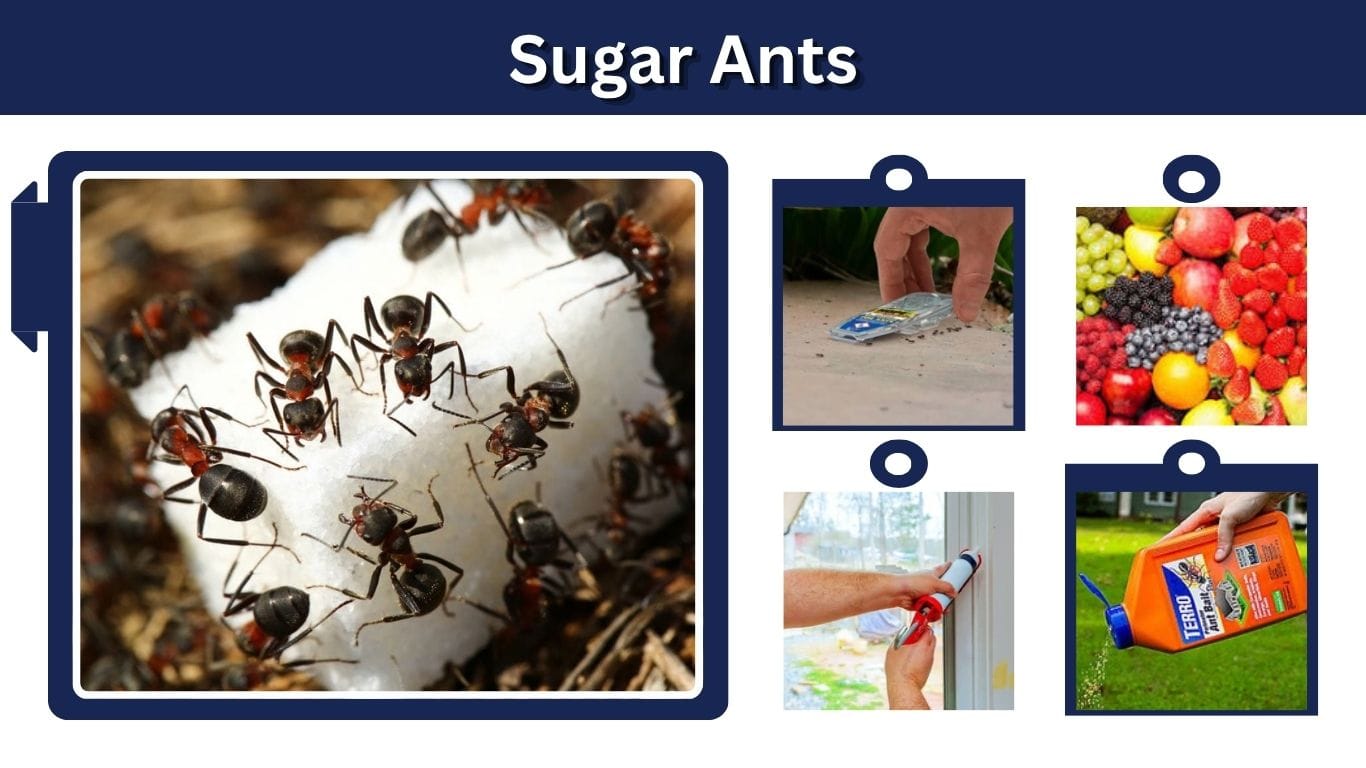
Sugar ants are small ants commonly noticed around kitchens, pantries, sinks, and other places where sweet foods are available. The name “sugar ant” is often used loosely for several ant species attracted to sugary foods rather than one specific ant throughout the world. Once workers discover food indoors, they can form visible trails leading back to a nest. Effective sugar ant control requires more than killing individual workers—you need to remove food sources, block entry points, and use appropriate bait that workers can carry back to the colony.
What Are Sugar Ants?
The term sugar ant can have different meanings depending on location. In Australia, “sugar ant” may refer specifically to banded sugar ants in the genus Camponotus. In many other places, homeowners use the name for almost any small household ant strongly attracted to sweets.
This means identification should consider size, color, nesting location, and behavior rather than relying on the common name alone.
What Do Sugar Ants Look Like?
Typical household ants called sugar ants may have:
- Small to medium-sized bodies
- Brown, black, reddish, or yellowish coloration
- Six legs
- Elbowed antennae
- A narrow waist between the thorax and abdomen
- Workers traveling in organized trails
- Strong attraction to syrup, sugar, fruit, and other sweet foods
Tiny sugar ants found indoors can be difficult to identify precisely without examining body structure closely.
Why Are Sugar Ants in the House?
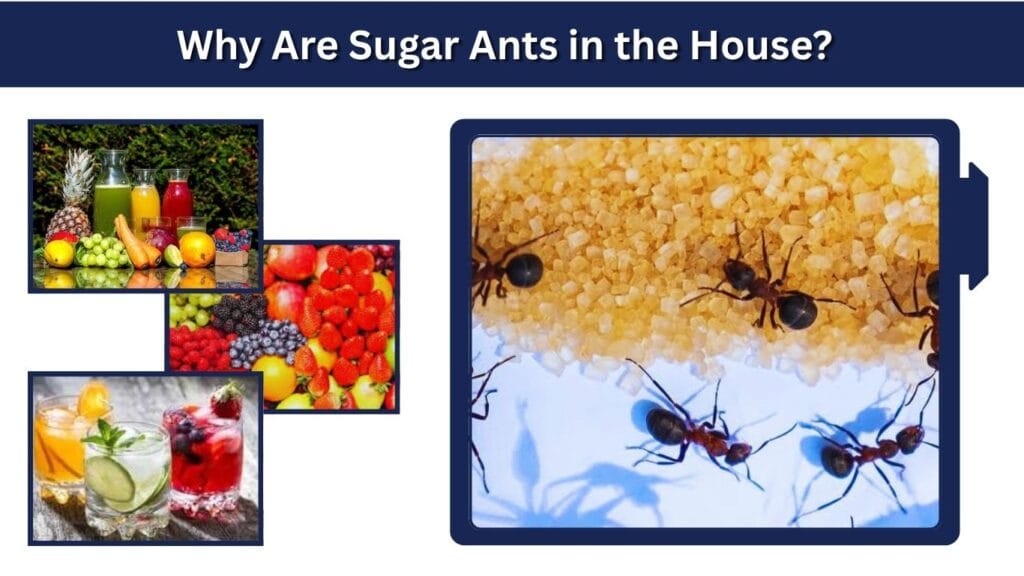
Sugar ants normally enter homes because they have discovered food, water, or suitable shelter. A few scouting ants may explore first. Once a worker locates a dependable food source, it can recruit additional ants from the colony.
Kitchens are particularly attractive because they offer crumbs, spills, moisture, and food stored in easily accessible containers.
Sugar Ants in the Kitchen
Common attractions include:
- Sugar spills
- Syrup
- Honey
- Fruit juice
- Soft drinks
- Ripe fruit
- Cake and baked goods
- Pet food
- Grease and food crumbs
- Moisture around sinks
Even small amounts of residue can support repeated ant activity.
Where Are Sugar Ants Coming From?
Ants may enter through extremely small openings around windows, doors, foundations, pipes, cables, or cracks.
The actual nest might be outdoors beneath soil, rocks, mulch, or wood, or it could be located within a wall void or another protected space depending on the species.
Following an active ant trail can sometimes help reveal the general direction of the colony.
How to Get Rid of Sugar Ants
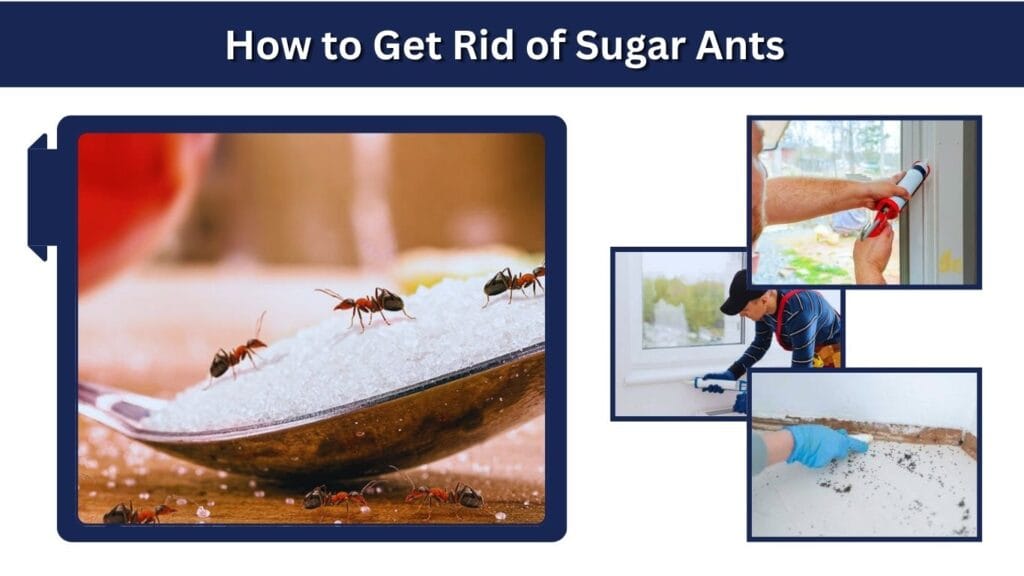
The best way to get rid of sugar ants is usually to combine sanitation, exclusion, and slow-acting ant bait. Spraying or crushing visible workers may provide immediate relief, but it often fails to reach the queen and other ants inside the colony.
A successful control program targets the entire colony.
1. Remove Food Sources
Clean counters, floors, tables, and food preparation areas regularly.
Store sugar, sweets, cereal, baked goods, and pet food in sealed containers. Wash sticky drink containers before recycling them and clean spills as soon as possible.
Removing alternative food makes ant bait more attractive.
2. Clean Ant Trails
Ants communicate partly through chemical trails.
After identifying where the ants are traveling, clean the surface with ordinary household cleaner or soapy water. This helps remove food residue and trail chemicals.
Avoid cleaning directly around active bait stations while ants are feeding on them.
3. Seal Entry Points
Inspect areas where trails disappear into walls, windows, cabinets, or floors.
Seal accessible cracks and gaps around:
- Windows
- Doors
- Pipes
- Baseboards
- Utility openings
- Foundation cracks
Exclusion works best after baiting has reduced the active colony.
Sugar Ant Bait and Traps
Ant bait is often more useful than a contact spray because bait takes advantage of the ants’ social behavior.
Worker ants collect attractive food, carry it toward the colony, and share it with other members.
How Sugar Ant Bait Works
An effective bait combines an attractive food with a slow-acting insecticidal ingredient.
The poison should not kill workers immediately. They need enough time to carry it back toward the nest and distribute it among other ants.
Place bait close to active trails while keeping it inaccessible to children and pets. Always follow the instructions provided with the product.
Sugar Ant Traps
Enclosed ant bait stations can be convenient inside kitchens and other living areas.
Good placement locations may include:
- Near ant trails
- Under sinks
- Behind appliances
- Along baseboards
- Near entry points
Avoid spraying insecticide around bait stations because this can repel or kill workers before they carry bait back to the colony.
Borax and Sugar for Ants
Borax combined with a sweet attractant is a commonly discussed homemade ant-bait approach. Borax can act as a slow-acting toxicant when ants ingest an appropriate bait.
However, homemade mixtures can be inconsistent because concentration affects whether workers feed on the bait and survive long enough to return to the colony.
Does Borax and Sugar Kill Sugar Ants?
Borax-based bait can kill certain ants when they consume it.
However, commercially formulated ant bait is often easier to use correctly because the active ingredient and concentration are already controlled.
If using any borax-containing product, keep it away from children, pets, food-preparation surfaces, and places where it could be accidentally consumed.
Does Sugar and Baking Soda Kill Ants?
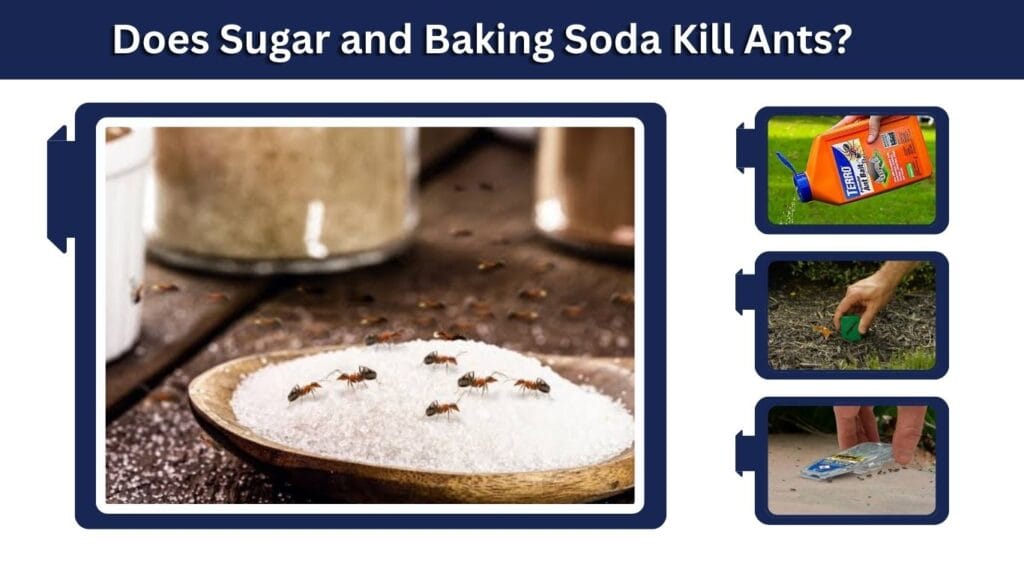
Baking soda mixed with sugar is widely promoted as a homemade ant killer, but it should not be considered as dependable as properly formulated ant bait.
The sugar may attract ants, but results from baking soda are inconsistent, and killing a few workers does not necessarily eliminate the nest.
Baking Soda vs. Ant Bait
If the goal is colony control, slow-acting bait designed for ants is generally the more practical option.
An effective strategy should allow workers to:
- Discover the bait.
- Feed on it.
- Return to the colony.
- Share the bait with nestmates.
Simply killing ants immediately along the trail can leave the queen and most of the colony untouched.
What Kills Sugar Ants?
Several approaches can reduce sugar ants, but they serve different purposes.
Effective Sugar Ant Control Options
Useful measures include:
- Slow-acting ant bait
- Enclosed ant bait traps
- Proper sanitation
- Removing water sources
- Sealing entry points
- Cleaning ant trails
- Treating outdoor nesting areas when accurately located
- Professional pest control for persistent infestations
The best treatment can vary because “sugar ant” may describe several different species.
Do Sugar Ants Bite?
Some ants commonly called sugar ants are capable of biting, but they usually do not pose a serious threat to humans.
Whether biting occurs depends on the actual species.
What Do Sugar Ant Bites Feel Like?
If an ant bites, you may notice:
- Mild pinching
- Temporary redness
- Minor irritation
- Itching
- A small raised area
Sugar ants should not automatically be assumed to be stinging ants. If you repeatedly experience painful stings rather than mild bites, another ant species may be responsible.
Sugar Ant Queen
A sugar ant colony depends on one or more reproductive queens, depending on the species.
The queen remains protected within the nest and produces eggs that develop into workers and reproductive ants.
Why Killing the Queen Matters
Killing visible workers alone rarely solves a well-established infestation because workers represent only part of the colony.
This is why bait can be useful. Instead of trying to physically locate the queen, workers transport toxic bait into the colony where it can affect ants hidden inside the nest.
Banded Sugar Ant
The banded sugar ant is a specific Australian ant associated with the genus Camponotus. It should not be confused with every tiny household ant that people casually call a sugar ant.
Banded sugar ants are substantially larger than many tiny kitchen ants and may show distinctive orange-brown and dark coloration.
Banded Sugar Ant vs. Tiny Sugar Ant
A tiny ant crawling around a kitchen in North America is unlikely to be the same insect as Australia’s banded sugar ant.
This illustrates why the term “sugar ant” can be confusing. Geographic location and physical appearance matter when determining the actual species.
Ghost Ants vs. Sugar Ants
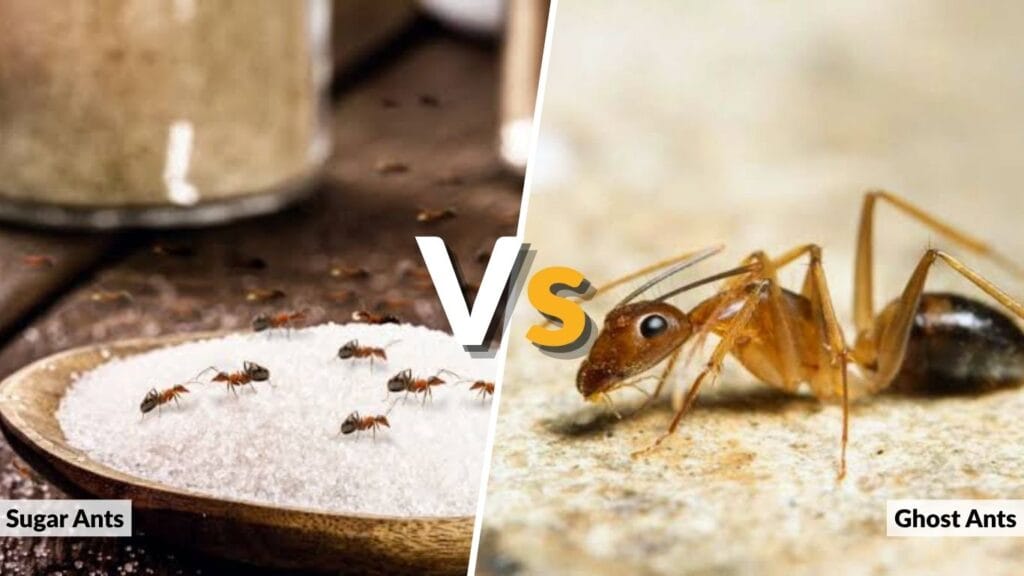
Ghost ants are one of the small household ants that may be casually described as sugar ants because they readily feed on sweets.
Ghost ants have an especially distinctive pale appearance.
Main Differences
| Feature | Ghost Ant | “Sugar Ant” |
| Scientific identity | Tapinoma melanocephalum | Varies |
| Size | Very small | Varies |
| Abdomen/head | Darker | Species dependent |
| Legs | Very pale | Variable |
| Attraction to sweets | Strong | Usually strong |
| Indoor infestations | Common in warm areas | Common for several species |
Accurate identification is helpful because nesting behavior and the best treatment strategy can differ.
Carpenter Ants vs. Sugar Ants
Carpenter ants may also feed on sweet substances, but they are important to distinguish from tiny kitchen ants because carpenter ants can nest in damaged or moisture-softened wood.
How to Tell Them Apart
Carpenter ants are generally much larger than the tiny ants commonly called sugar ants.
They do not eat wood like termites. Instead, they excavate galleries inside wood to create nesting space.
If large ants repeatedly emerge from walls, window frames, or damp structural wood, identifying the species becomes more important than simply treating them as ordinary sugar ants.
How to Prevent Sugar Ants
Prevention focuses on making your home less rewarding to exploring workers.
Sugar Ant Prevention Tips
- Store sweet foods in sealed containers.
- Clean kitchen surfaces regularly.
- Vacuum food crumbs.
- Do not leave pet food out unnecessarily.
- Repair leaking faucets and pipes.
- Rinse recyclable food containers.
- Seal cracks around doors and windows.
- Trim vegetation touching the house.
- Keep outdoor trash containers closed.
- Check ant activity before it develops into a large trail.
Consistent sanitation is especially important because even a tiny amount of sugary residue can attract foraging ants.
FAQs
What Is the Fastest Way to Get Rid of Sugar Ants?
Cleaning visible food sources and placing appropriate ant bait near active trails can begin reducing activity quickly. However, colony elimination may take longer because workers need to transport bait back to the nest. Avoid relying only on killing visible ants.
Does Borax and Sugar Kill Ants?
Borax can work as an ingredient in slow-acting ant bait, while sugar serves as an attractant for sweet-feeding species. Homemade concentrations can be inconsistent, so properly formulated commercial bait is usually easier to use safely and effectively.
Does Baking Soda and Sugar Kill Sugar Ants?
Baking soda and sugar is a popular home remedy, but its reliability is questionable compared with established ant-bait products. Even when some workers die, that does not necessarily eliminate the queen or colony.
Why Do Sugar Ants Keep Coming Back?
Sugar ants may return when the colony remains active and food, moisture, or entry points are still available. Killing workers alone rarely solves the underlying problem. Remove attractants, use suitable bait, clean trails, and seal entry points.
Are Sugar Ants Dangerous?
Most household ants commonly called sugar ants are primarily a nuisance rather than a serious danger. Some species can bite, but reactions are generally minor. The more important concern is persistent food contamination and identifying whether the ants are actually another species requiring different control.