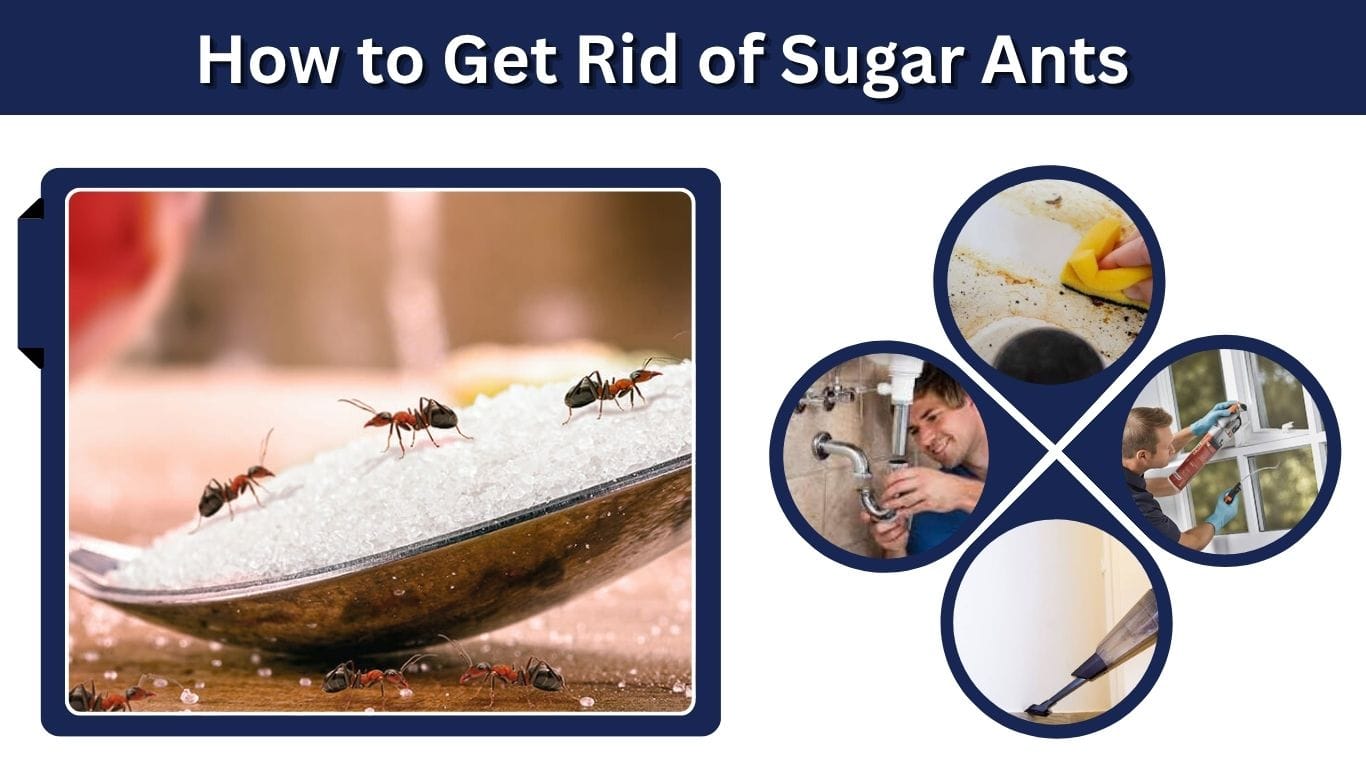
Knowing how to get rid of sugar ants starts with understanding why they keep returning. These tiny ants enter homes searching for sweets, crumbs, grease, pet food, and moisture. Killing the workers you see may provide temporary relief, but the colony can continue sending new ants into your kitchen, bathroom, bedroom, or pantry. The most effective approach combines sanitation, ant bait, removal of food and water sources, and sealing entry points. With consistent treatment, you can reduce an infestation and make your home much less attractive to sugar ants.
How to Get Rid of Sugar Ants
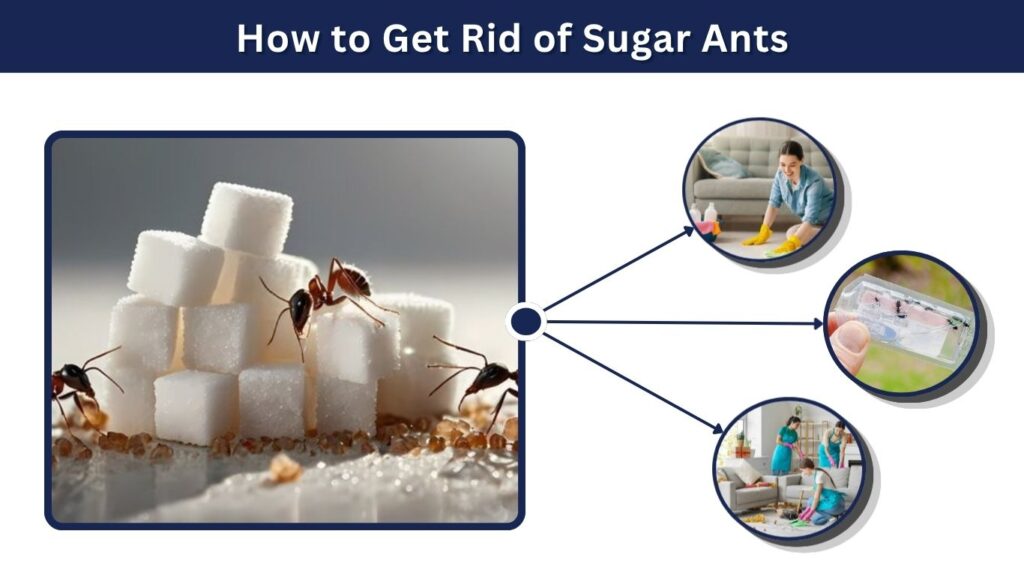
Sugar ants are social insects, so eliminating visible workers alone usually does not solve the infestation. The nest may contain hundreds or thousands of ants hidden outdoors, inside walls, beneath floors, or around foundations. A better strategy is to remove their food, identify their trails, use appropriate slow-acting bait, and prevent additional ants from entering.
1. Follow the Ant Trail
Before cleaning everything, watch where the ants are traveling.
Follow workers in both directions to determine where they are finding food and where they disappear. Common entry points include cracks around windows, gaps beneath cabinets, plumbing openings, baseboards, and spaces around doors.
Knowing their route helps you position bait where workers are most likely to find it.
2. Remove Food and Water Sources
Sugar ants can survive on surprisingly small amounts of food.
Clean:
- Syrup and juice spills
- Sugar grains
- Food crumbs
- Grease
- Pet food
- Fruit residue
- Dirty dishes
- Sticky containers
- Trash cans
Store sugar, honey, cereal, cookies, and other foods in tightly sealed containers.
Also repair leaking faucets and wipe moisture from sinks because ants need water as well as food.
3. Use Slow-Acting Ant Bait
Ant bait is often more effective than simply spraying visible workers.
Workers feed on the bait and carry it toward the colony. Because the active ingredient acts gradually, they may distribute it among other ants before dying.
Place bait near active trails but away from children and pets, and follow the product label carefully.
Avoid spraying insecticide directly around bait because this can stop ants from approaching it.
How to Get Rid of Sugar Ants in the House
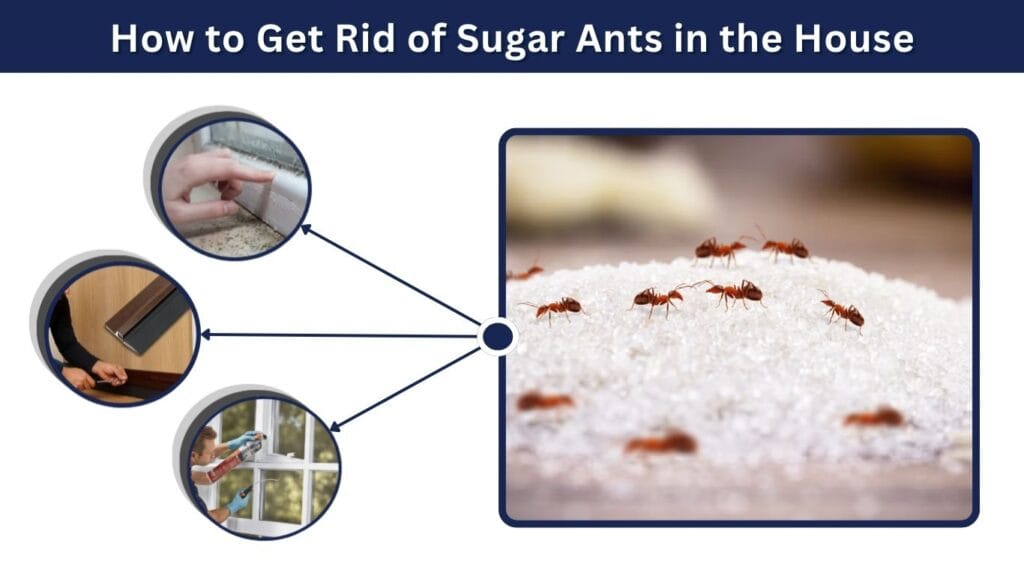
Indoor sugar ants usually enter from outdoors or establish satellite nesting areas in protected parts of a building.
Finding the source is important if you want to get rid of sugar ants permanently.
Seal Indoor Entry Points
After ant activity begins declining, seal accessible openings around:
- Windows
- Door frames
- Pipes
- Electrical penetrations
- Baseboards
- Cracks in walls
- Foundation gaps
Do not immediately seal a heavily active trail before baiting because ants may simply find another route into the room.
Clean Ant Trails
Workers leave chemical trails that help other ants locate food.
After bait activity decreases, clean counters, floors, and other ant routes with ordinary household cleaner or soapy water.
This removes food residue and can disrupt established foraging trails.
How to Get Rid of Sugar Ants in the Kitchen
The kitchen is one of the most common places to find sugar ants because food and water are constantly available.
Even a few drops of juice or small crumbs beneath an appliance can attract workers.
Focus on Hidden Food Sources
Check:
- Behind refrigerators
- Under ovens
- Inside pantry shelves
- Under cabinets
- Around garbage bins
- Beneath pet bowls
- Around dishwashers
- Near kitchen sinks
Wipe containers before returning them to cabinets and keep ripe fruit covered or refrigerated when ants are active.
Sugar Ants in the Kitchen Sink
Ants around a sink may be attracted to moisture or food residue in nearby areas rather than living inside the drain itself.
Clean around the sink, repair leaks, dry wet surfaces, and check gaps where plumbing passes through the wall.
Place bait near the route the ants are using rather than inside food-preparation surfaces.
How to Get Rid of Sugar Ants Naturally
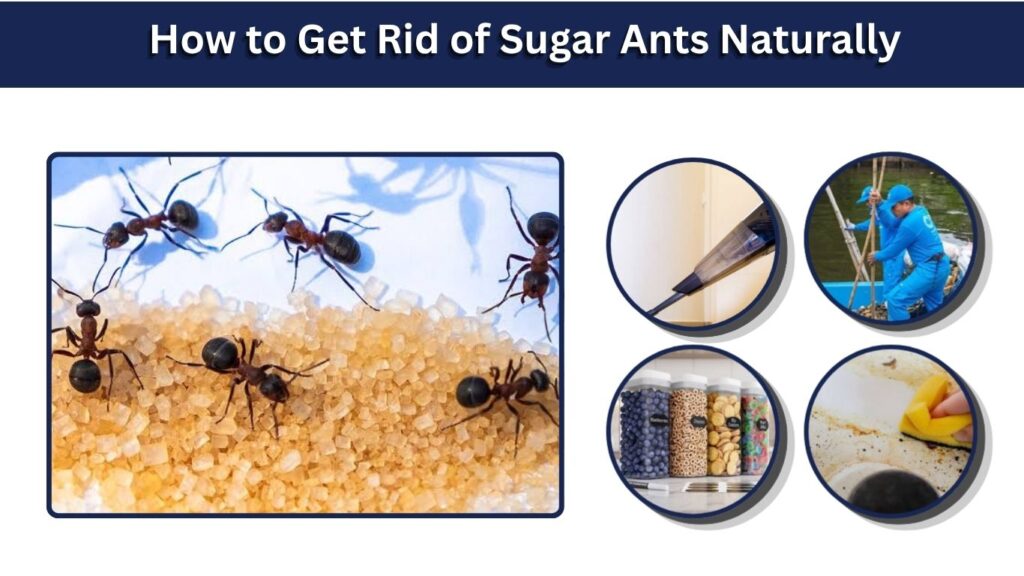
People who want to reduce chemical use can begin with sanitation, exclusion, and physical removal.
Natural approaches are best for prevention and small infestations rather than large colonies hidden inside walls.
Natural Sugar Ant Control
Try these steps:
- Vacuum visible ants.
- Clean food spills immediately.
- Store sweets in airtight containers.
- Remove trash regularly.
- Eliminate standing water.
- Seal cracks and gaps.
- Keep tree branches away from the house.
- Clean ant trails with soap and water.
These methods remove the conditions that encourage ants to keep returning.
Does Vinegar Get Rid of Sugar Ants?
Vinegar can help clean surfaces and temporarily disrupt ant trails, but it generally does not eliminate an established colony.
Use it as a cleaning measure rather than relying on it as the main treatment.
If the queen and nest remain active, new workers can eventually establish another trail.
Borax and Sugar for Sugar Ants
Borax-and-sugar bait is a popular home remedy because sugar attracts sweet-feeding ants while borax can act as a slow-acting toxicant.
However, homemade mixtures can be inconsistent.
Can Borax Get Rid of Sugar Ants?
Borax-based bait may kill ants that consume it, but concentration matters. A mixture that acts too quickly may kill workers before they return to the colony, while an unattractive mixture may simply be ignored.
For predictable treatment, commercially prepared ant bait is usually easier to use correctly.
Keep borax and all pesticide products away from children, pets, and food.
Does Baking Soda Kill Sugar Ants?
Baking soda mixed with powdered or icing sugar is another frequently discussed home remedy.
The sweet ingredient may attract ants, but baking soda should not be considered a dependable colony-control method.
Baking Soda vs. Ant Bait
Even if a homemade mixture kills individual workers, the queen and most of the colony may remain unaffected.
Slow-acting ant bait is designed specifically to take advantage of food sharing within the colony, making it more suitable when your goal is long-term control.
How to Get Rid of Sugar Ants in the Bathroom
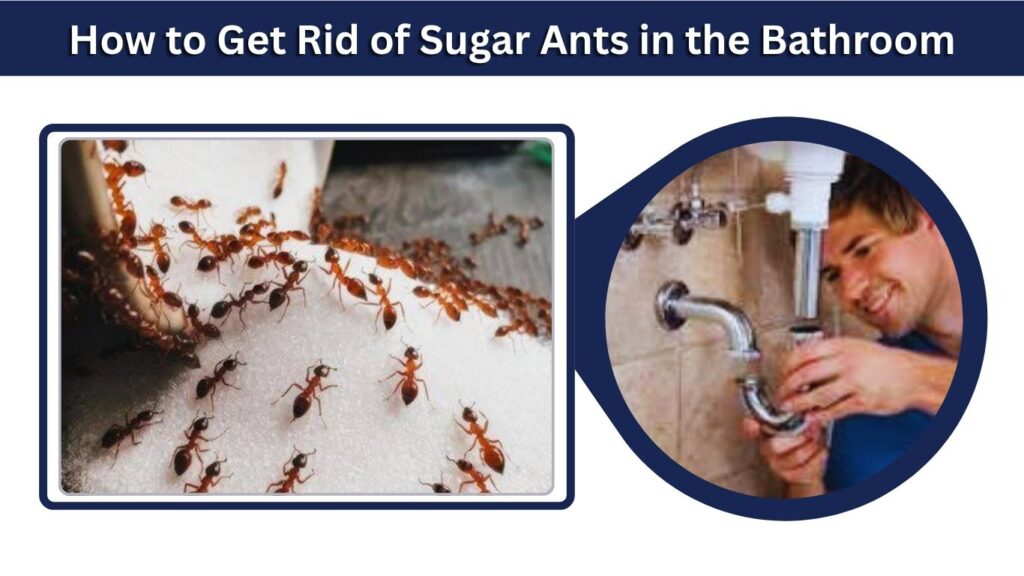
Bathrooms provide moisture that can attract ants even when little food is available.
Repeated activity may indicate a water source or a nearby entry point.
Check Moisture Problems
Inspect:
- Sink pipes
- Bathtub edges
- Shower areas
- Toilet plumbing
- Damp cabinets
- Window frames
Repair leaks and improve ventilation.
If ants repeatedly disappear into the same wall opening, place appropriate bait nearby rather than spraying directly into every crack.
How to Get Rid of Sugar Ants in Walls
Ants entering and leaving wall gaps may have a nest nearby or simply be using the wall as a protected pathway.
Repeatedly spraying the opening may kill only the workers you can see.
Treating Ants in Walls
Use bait near the active trail so workers can transport it deeper into the colony.
Once activity has stopped, seal accessible cracks and openings to prevent future entry.
Persistent wall infestations may require professional pest control, especially when the exact species or nest location cannot be determined.
How to Get Rid of Sugar Ants in a Car
Sugar ants can enter cars when food crumbs, spilled drinks, candy wrappers, or other residues are present.
Sometimes ants also enter when a vehicle is parked close to an active outdoor colony.
Clean the Car Thoroughly
Start by:
- Vacuuming seats and carpets
- Cleaning cup holders
- Removing food packaging
- Wiping sticky surfaces
- Checking beneath floor mats
- Emptying trash
- Cleaning the trunk
Move the vehicle away from the original parking location if ants appear to be coming from the surrounding ground.
Avoid applying pesticide to seats or surfaces that people frequently touch unless the product is specifically labeled for that use.
How to Get Rid of Sugar Ants Outside
Outdoor colonies can continually send workers into a home.
Inspect the foundation and surrounding landscape for trails leading toward windows, doors, utility lines, or cracks.
Outdoor Sugar Ant Control
Helpful measures include:
- Keep vegetation from touching the house.
- Remove food waste from patios.
- Keep garbage bins closed.
- Repair leaking outdoor faucets.
- Remove unnecessary debris near foundations.
- Seal exterior gaps.
- Use appropriately labeled outdoor ant bait where necessary.
Outdoor management can be particularly useful when indoor ants repeatedly return despite good sanitation.
How to Get Rid of Sugar Ants Overnight
You can dramatically reduce visible ants overnight by cleaning food sources and placing bait along active trails, but completely eliminating a colony often takes longer.
Fast Sugar Ant Control
For quick improvement:
- Remove exposed food.
- Wipe up sugary spills.
- Vacuum large numbers of workers.
- Identify their main trail.
- Place suitable bait near that trail.
- Leave feeding ants undisturbed.
- Continue checking bait for several days.
Seeing ants around bait initially can actually be useful because workers need to carry it back toward the nest.
How to Get Rid of Sugar Ants Permanently
Permanent control depends more on prevention than repeatedly killing individual ants.
A home that continues providing easy access to food, moisture, and entry points may attract new colonies even after the original infestation disappears.
Long-Term Prevention
To keep sugar ants away:
- Keep counters clean.
- Seal food containers.
- Store pet food properly.
- Repair plumbing leaks.
- Rinse recyclable containers.
- Seal cracks around windows and doors.
- Keep vegetation away from exterior walls.
- Monitor areas where ants previously entered.
- Address new trails before they become large infestations.
Combining these measures with colony-targeting bait usually provides better long-term results than relying on sprays alone.
FAQs
What Is the Best Way to Get Rid of Sugar Ants?
Use a combination of sanitation, slow-acting ant bait, moisture control, and exclusion. Remove alternative food sources so workers are more likely to feed on bait. Once activity decreases, clean their trails and seal the openings they used to enter your home.
How Long Does It Take to Get Rid of Sugar Ants?
Visible activity may decrease within days, but eliminating a colony can take longer. Treatment time depends on colony size, ant species, bait acceptance, and nest location. Continue monitoring even after you stop seeing large numbers of workers.
How Do I Get Rid of Tiny Sugar Ants in My Kitchen?
Clean all sugary residue and crumbs, store food in sealed containers, repair moisture problems, and place ant bait close to active trails. Avoid spraying workers around the bait because they need to survive long enough to carry it back toward the colony.
Can I Get Rid of Sugar Ants Without Chemicals?
Sanitation, vacuuming, trail cleaning, moisture reduction, and sealing entry points can greatly reduce small infestations without conventional pesticides. However, an established colony may continue producing workers, so bait or professional treatment may be necessary when nonchemical approaches repeatedly fail.
Why Won’t My Sugar Ants Go Away?
The nest may still be active even though many visible ants have been killed. Accessible food, water, hidden entry points, or ineffective treatment can also allow activity to continue. Focus on colony-level control and prevention instead of repeatedly killing only the workers you see.