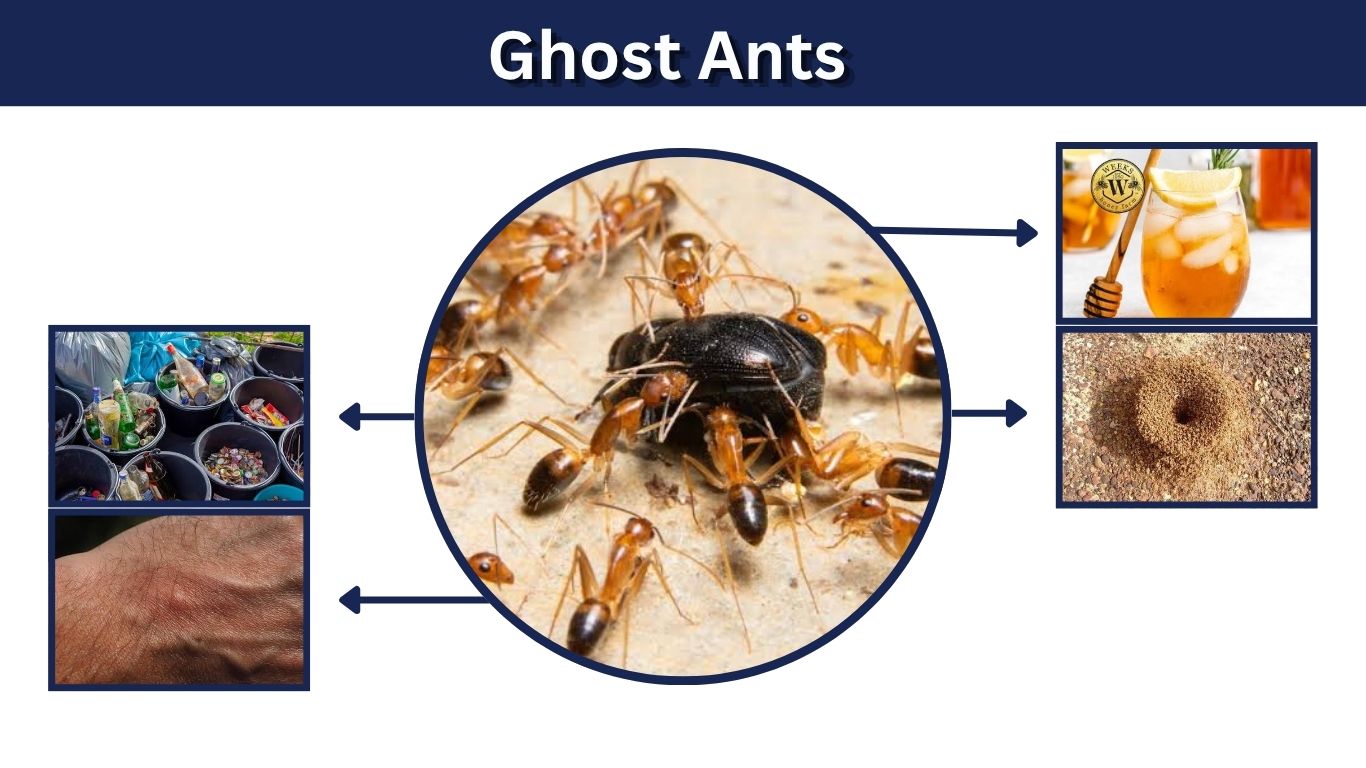
Ghost ants are tiny household ants that can be difficult to notice until a trail appears around food, sinks, counters, or other moist areas. Their unusually pale abdomen and legs make them look almost transparent, while the head and thorax are noticeably darker. These ants commonly establish multiple nesting sites and can quickly spread through kitchens, bathrooms, wall spaces, and outdoor vegetation. Knowing how to identify ghost ants, what attracts them, whether they bite, and which control methods work can make an infestation much easier to manage.
What Are Ghost Ants?
The ghost ant (Tapinoma melanocephalum) is a very small ant found in warm climates and heated indoor environments. Its name comes from its pale abdomen and legs, which can be difficult to see against light surfaces. Colonies can contain numerous workers and multiple queens, allowing infestations to spread throughout buildings and nearby outdoor areas.
Ghost Ant Identification
Look for these characteristics when identifying ghost ants:
- Workers approximately 1.3–1.5 mm long
- Dark brown to nearly black head and thorax
- Pale or translucent abdomen
- Very light-colored legs
- Tiny size compared with many household ants
- Fast movement along established trails
- Strong attraction to sweet foods
- Multiple ants appearing around moisture and food
Their two-tone coloration is one of the easiest ways to distinguish them from other tiny indoor ants.
What Do Ghost Ants Look Like?
Ghost ants can appear as moving dark dots because their pale abdomen and legs blend into many backgrounds. Looking closely reveals a distinctly dark front half and an almost whitish or translucent rear portion.
Their small size means they can travel through extremely narrow cracks around windows, baseboards, plumbing, cabinets, and walls. Workers often form visible trails between nesting areas and food or water sources.
Where Do Ghost Ants Come From?
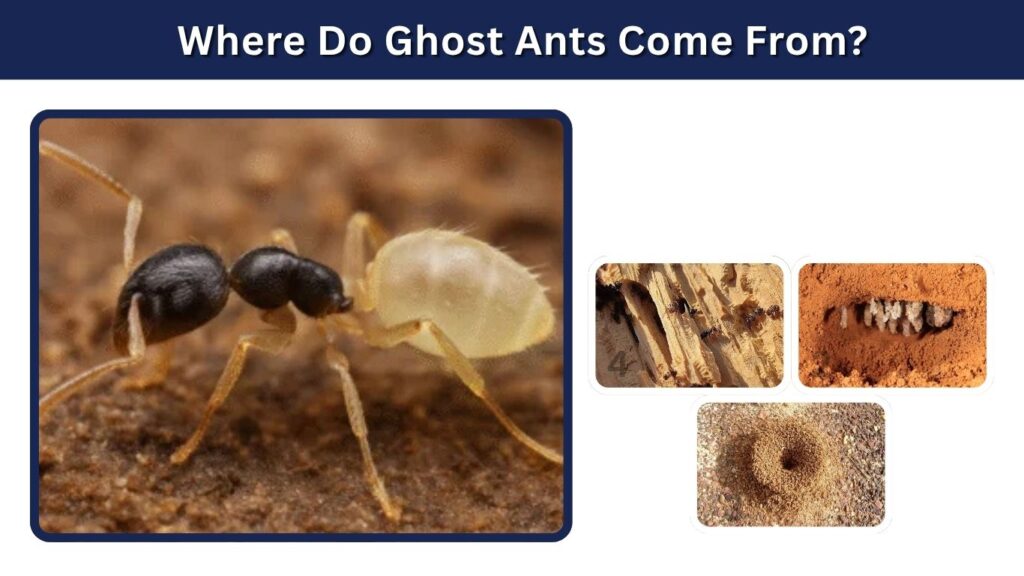
Ghost ants thrive in tropical and subtropical climates, but they can survive indoors in cooler regions where buildings provide warmth and moisture. Colonies may occur outdoors beneath loose bark, stones, plant debris, flowerpots, and other protected areas. Indoors, they frequently occupy small hidden spaces near plumbing, kitchens, and bathrooms.
Common Ghost Ant Nesting Areas
Possible nesting locations include:
- Wall voids
- Cabinet gaps
- Behind baseboards
- Around sinks
- Beneath countertops
- Around plumbing lines
- Inside potted plants
- Beneath stones outdoors
- Under loose tree bark
- Inside moist protected cracks
Because a single infestation can consist of several interconnected nesting sites, finding one group of ants does not necessarily reveal the entire colony.
Why Ghost Ants Enter Houses
Food, water, shelter, and favorable temperatures can draw ghost ants indoors. Kitchens are especially attractive because even tiny amounts of sugar, syrup, juice, crumbs, grease, or spilled drinks can provide food.
Water is equally important. Leaking pipes, wet sinks, condensation, damp sponges, and moisture around appliances can encourage colonies to remain inside.
Once established, ghost ants may continue moving between indoor and outdoor nesting areas.
What Are Ghost Ants Attracted To?
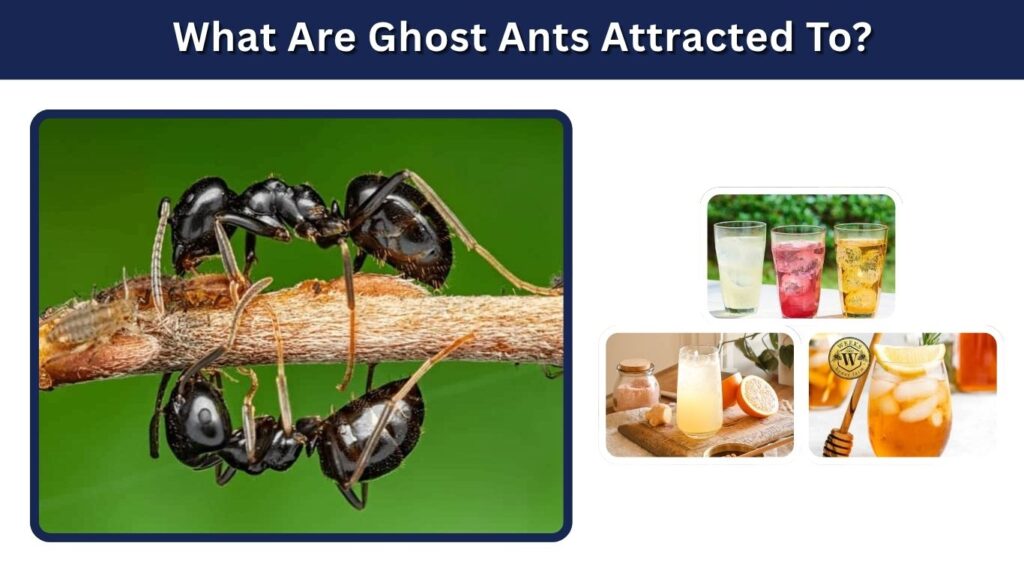
Ghost ants are strongly attracted to sugary substances, although their diet is more varied than sweets alone. Outdoors they can feed on honeydew produced by aphids and other sap-feeding insects. Indoors, workers explore kitchens and food-storage areas while searching for carbohydrates, protein, and moisture.
Foods That Attract Ghost Ants
Common attractants include:
- Sugar
- Syrup
- Honey
- Fruit juice
- Soft drinks
- Cake and desserts
- Food crumbs
- Grease
- Pet food
- Sweet residues around containers
- Honeydew from plant-feeding insects
Cleaning food residues is therefore an important part of long-term control rather than relying only on insecticides.
Why Are Ghost Ants in the Kitchen?
Kitchens provide nearly everything ghost ants need. Food residues supply energy while sinks, pipes, dishwashers, and damp areas provide moisture.
Ants may enter through tiny gaps and build satellite nests nearby. A trail appearing on a countertop does not necessarily mean the nest is directly beneath it. Workers can travel considerable distances through walls and cabinets before reaching food.
Following the trail may help reveal where they enter the room.
Do Ghost Ants Bite?
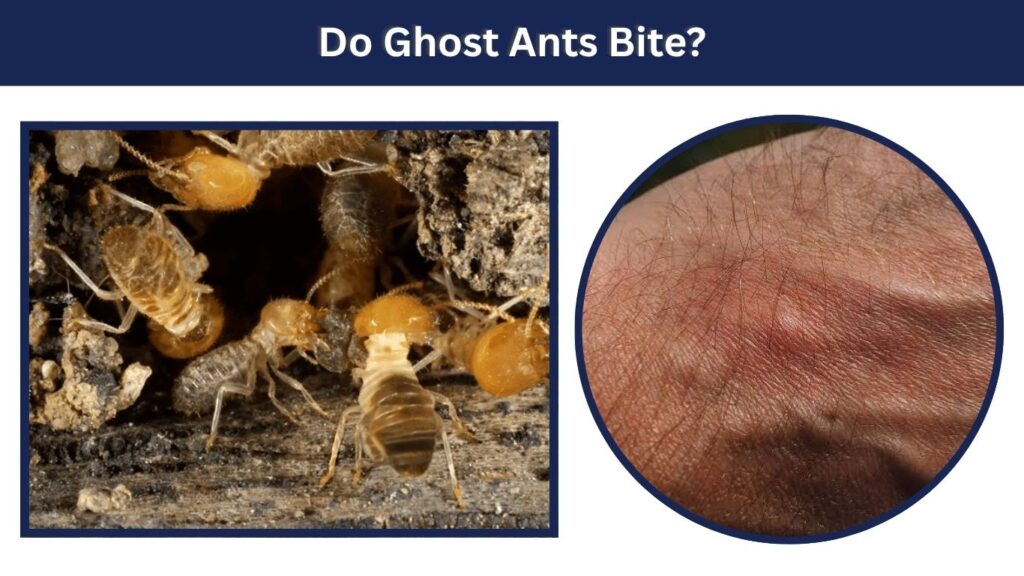
Ghost ants are generally considered a nuisance pest rather than a significant threat to people. Their extremely small size makes defensive biting relatively insignificant. Most homeowners are more likely to notice ants contaminating food, crawling across counters, or forming persistent trails than experience any physical reaction from them.
Are Ghost Ants Dangerous?
Ghost ants are not considered highly dangerous household ants. They do not possess the painful sting associated with fire ants and are not known for aggressive behavior toward people.
However, ants traveling between hidden spaces, garbage areas, sinks, and food surfaces can become a sanitation concern. Food that has been heavily invaded by ants is best discarded, and affected preparation surfaces should be cleaned.
Anyone experiencing an unusual or severe reaction after an unidentified insect bite should seek appropriate medical advice rather than assuming ghost ants were responsible.
How to Get Rid of Ghost Ants
Ghost ant control can be challenging because their colonies may contain multiple queens and numerous nesting sites. Killing only visible workers usually provides temporary improvement. Successful control focuses on removing food and water sources while using methods that workers can carry back into hidden colonies. The supplied topics strongly emphasize bait and household control approaches.
Steps to Control Ghost Ants
A practical control plan includes:
- Wipe counters and floors regularly.
- Store sugar and sweet foods in sealed containers.
- Clean spills immediately.
- Keep pet food covered when possible.
- Repair leaking faucets and plumbing.
- Reduce moisture beneath sinks.
- Follow trails to locate entry points.
- Seal cracks after active colonies are controlled.
- Trim vegetation touching exterior walls.
- Use appropriate slow-acting ant bait near active trails.
Reducing competing food sources can make properly placed bait more attractive to foraging workers.
Best Bait for Ghost Ants
Slow-acting sweet ant baits are commonly used because worker ants can feed on the bait and carry it back to colony members.
Bait should generally be placed near active trails rather than directly blocking them. Avoid contaminating bait stations with strong cleaners or insecticide sprays.
Check bait regularly because feeding preferences may change. If ants ignore one bait formulation, another suitable carbohydrate- or protein-based bait may perform better.
Always follow the product label, particularly around children and pets.
Why Spraying Ghost Ants Can Cause Problems
Applying repellent insecticide directly to visible workers may kill some ants without reaching hidden queens and nests.
Disturbing certain multi-queen ant colonies can also encourage parts of the colony to relocate, potentially making an infestation harder to track. This is why bait-based control is often preferable for indoor ghost ant infestations.
Rather than repeatedly spraying trails, focus on sanitation, moisture reduction, bait placement, and eliminating access points after activity declines.
How to Get Rid of Ghost Ants Naturally
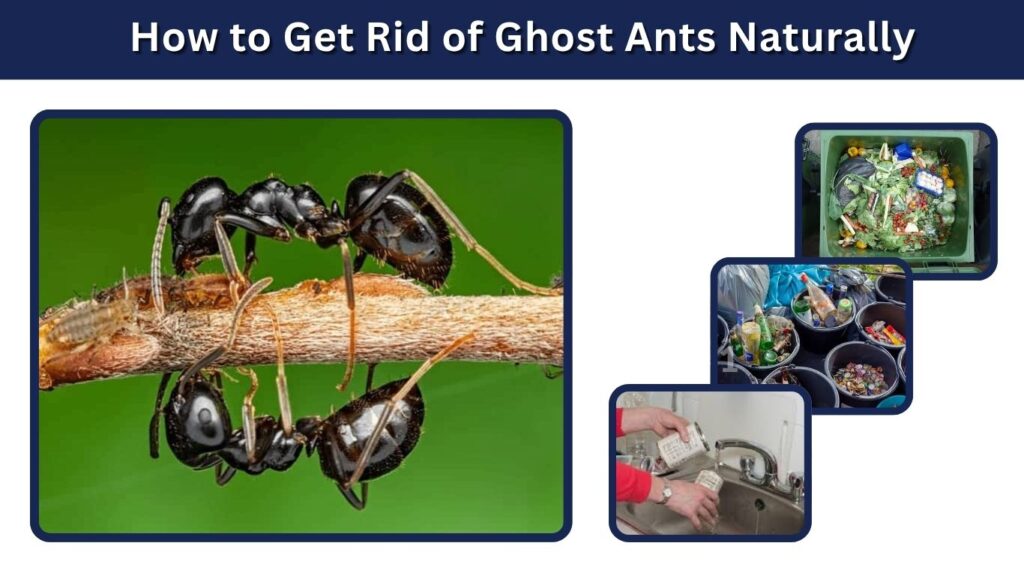
Nonchemical measures can significantly reduce ghost ant activity, particularly when an infestation is small. These approaches work best by removing conditions that allow the ants to survive rather than expecting a household remedy to eliminate a large hidden colony immediately.
Natural Prevention Methods
Helpful measures include:
- Remove crumbs and sticky residues.
- Rinse recyclable containers.
- Empty garbage frequently.
- Keep fruit and sweets protected.
- Fix water leaks.
- Dry sinks overnight when practical.
- Seal gaps around pipes and windows.
- Remove plant debris near foundations.
- Check potted plants for ant activity.
- Keep tree branches away from buildings.
For an established infestation with numerous nesting locations, sanitation alone may not completely eliminate the colony.
Ghost Ants vs Sugar Ants and Pharaoh Ants
Ghost ants are sometimes casually called sugar ants because they readily feed on sweets. However, “sugar ant” is a broad common term that can refer to different ants depending on location. Ghost ants are also frequently confused with pharaoh ants because both are extremely small indoor pests capable of forming large, persistent colonies.
Ghost Ants vs Pharaoh Ants
Ghost ants have a distinctive dark head and thorax combined with a pale abdomen and legs. Pharaoh ants are usually more uniformly yellowish to light brown.
Both species can nest inside buildings and may form colonies with multiple queens, making careful baiting important.
Correct identification matters because repeatedly disturbing nests or relying only on surface treatments can make control more complicated.
Ghost Ants in Florida and Other Warm Areas
Ghost ants are particularly successful in warm, humid environments, which explains why they are frequently encountered in places such as Florida. They can live outdoors throughout favorable weather while also invading homes, apartments, greenhouses, and other structures.
Preventing Outdoor Ghost Ants From Entering
Reduce entry opportunities by keeping vegetation away from exterior walls, removing debris near the foundation, sealing openings around utility lines, and checking windows and doors for gaps.
Inspect outdoor potted plants before bringing them indoors because ants can nest within or beneath containers.
Prevention is especially important in warm regions where outdoor colonies may remain active for long periods and repeatedly send workers indoors in search of food and water.
FAQs
What Are Ghost Ants?
Ghost ants are extremely small ants scientifically known as Tapinoma melanocephalum. Workers have dark heads and thoraxes with pale, nearly transparent abdomens and legs. They commonly enter buildings looking for food, water, warmth, and protected nesting locations.
Do Ghost Ants Bite Humans?
Ghost ants can potentially bite, but they are not considered a serious biting or stinging threat. Their tiny size means interactions with people usually go unnoticed. The main concerns are persistent indoor infestations, food contamination, and large numbers appearing in kitchens or bathrooms.
What Is the Best Way to Get Rid of Ghost Ants?
A combination of sanitation, moisture reduction, exclusion, and slow-acting ant bait is generally more effective than killing individual workers. Keep other food unavailable and place suitable bait near active trails so workers can transport it into hidden nesting areas.
What Attracts Ghost Ants?
Ghost ants are particularly attracted to sugary foods and liquids, including honey, syrup, juice, desserts, and sweet residues. They also seek moisture and may feed on protein or greasy foods. Kitchens, bathrooms, and areas around leaking plumbing can therefore become common activity sites.
Why Do Ghost Ants Keep Coming Back?
Ghost ants may return because an infestation can contain multiple queens and several nesting sites. Killing visible workers does not necessarily eliminate hidden colonies. Continued access to food, water, entry gaps, or untreated satellite nests can allow ant activity to resume even after numbers temporarily decline.