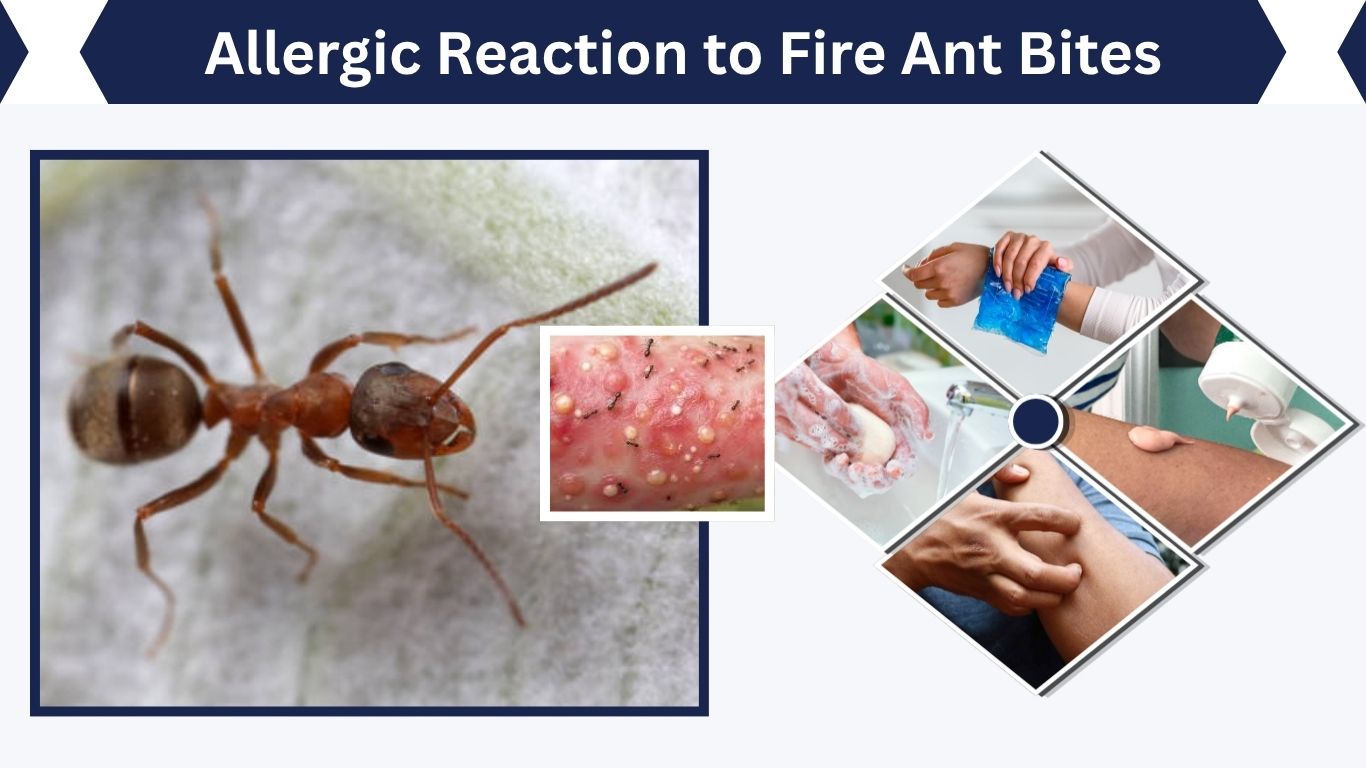
Fire ant bites can cause painful stings, itching, swelling, and skin irritation. While many people only develop mild symptoms, others may experience allergic reactions that range from moderate swelling to severe breathing problems. Pictures of allergic reactions to fire ant bites often show redness, blisters, hives, and swollen skin around the affected area. In some cases, symptoms spread beyond the bite site and become dangerous. Learning how these reactions appear can help people identify warning signs early and know when medical treatment may be necessary after a fire ant sting.
What Does a Fire Ant Bite Allergic Reaction Look Like?
Fire ant bite allergic reactions can appear in several ways depending on the person’s sensitivity to the venom. Some reactions remain small and localized, while others spread across larger areas of the body. Understanding the difference between mild and severe reactions can help people respond quickly and safely.
Mild Allergic Reaction Pictures and Symptoms
Mild allergic reactions usually appear as red, swollen bumps with itching and burning around the sting area. Small white pustules may form within several hours after the bite. These symptoms often stay limited to the bite location and improve within a few days with basic treatment and proper skin care.
Moderate Fire Ant Bite Reactions
- Larger areas of swelling around the bite
- Strong itching and redness
- Warm or painful skin
- Clusters of raised bumps
- Swelling that lasts several days
Severe Allergic Reaction Appearance
Severe allergic reactions may include widespread swelling, hives, facial puffiness, and breathing difficulties. In serious cases, the skin may develop large rashes far away from the original bite area. Some people also experience dizziness, nausea, or rapid heartbeat, which may signal a medical emergency known as anaphylaxis.
Common Symptoms of Fire Ant Bite Allergies
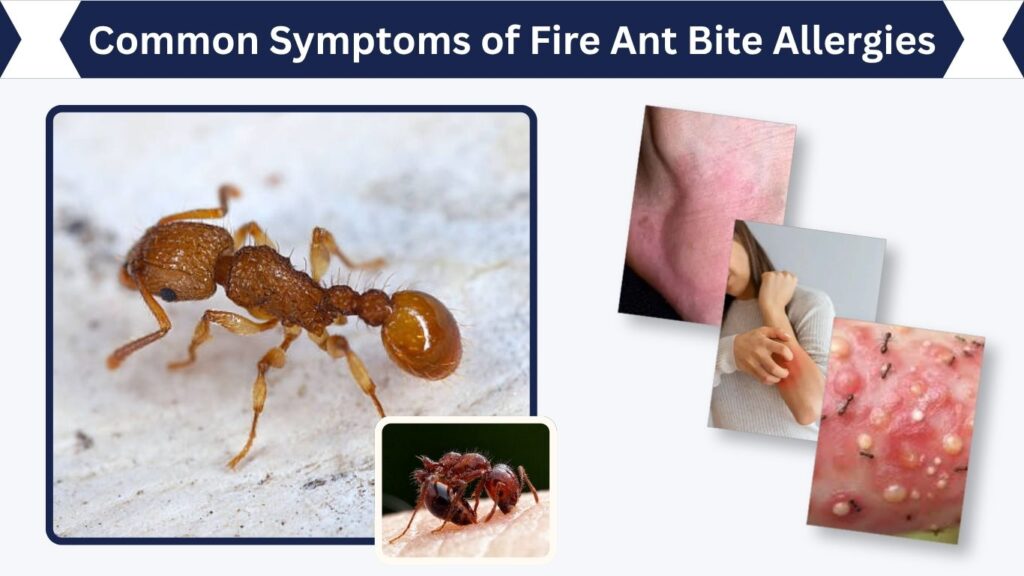
Fire ant allergies can affect both the skin and other parts of the body. Symptoms often begin within minutes after the sting, but delayed reactions are also possible. The severity usually depends on the number of bites and the person’s immune response to the venom.
Skin Symptoms
- Redness around the sting site
- Intense itching and burning
- White pus-filled blisters
- Swollen raised bumps
- Warm or tender skin
Breathing and Body Symptoms
Serious allergic reactions may affect breathing and circulation. Some people develop throat swelling, chest tightness, wheezing, or shortness of breath shortly after being bitten. Severe reactions can also cause dizziness, confusion, fainting, or rapid heartbeat, which require immediate emergency medical care.
Symptoms in Children
Children may react more strongly to fire ant venom because of their smaller body size and sensitive skin. Large swelling, excessive itching, and widespread rashes are common symptoms in younger children. Parents should closely monitor children after multiple bites because allergic reactions can sometimes become severe quickly.
Pictures of Mild vs Severe Fire Ant Bite Reactions
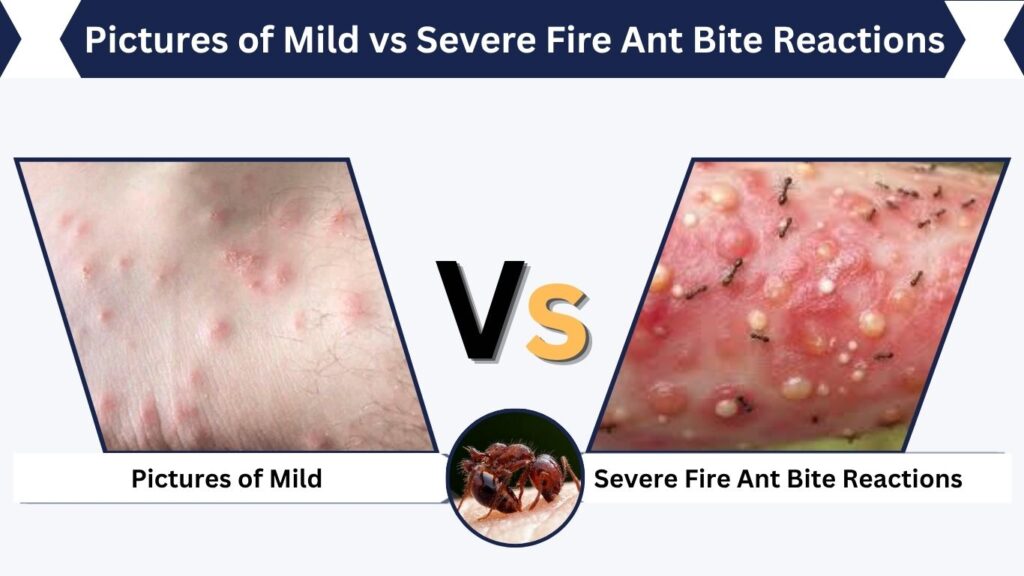
Pictures of fire ant bite reactions often help people compare normal skin irritation with allergic symptoms. Mild reactions usually remain close to the sting area, while severe reactions spread across the body and may involve serious medical symptoms.
Mild Swelling and Redness
Mild reactions usually appear as small red bumps surrounded by slight swelling. The skin may itch or burn for several hours before small pustules develop. These reactions are uncomfortable but generally improve without major medical treatment.
Large Localized Swelling
- Swelling may spread several inches from the bite
- Skin can appear tight and shiny
- Redness often becomes more noticeable
- Itching may become severe
- Symptoms can last up to a week
Hives and Rash Pictures
Hives caused by fire ant allergies often appear as raised itchy welts across the skin. These rashes may spread beyond the bite site and affect large areas of the body. In some people, hives develop together with facial swelling or breathing problems, which can indicate a dangerous allergic reaction.
Why Some People Are Allergic to Fire Ant Bites
Fire ant venom contains proteins and toxic chemicals that can trigger strong immune system reactions in sensitive people. While some individuals only experience mild irritation, others develop serious allergic responses after one or multiple stings. Previous exposure to fire ant venom may increase the risk of stronger reactions in the future.
How Fire Ant Venom Affects the Body
When a fire ant stings, venom enters the skin and causes inflammation. The immune system reacts by releasing chemicals such as histamine, which leads to itching, swelling, redness, and pain. In allergic individuals, the immune response becomes much stronger and may affect the entire body instead of only the sting area.
Risk Factors for Severe Allergic Reactions
- Previous allergic reactions to insect stings
- Multiple fire ant stings at one time
- Sensitive immune system responses
- Asthma or breathing-related conditions
- Family history of severe allergies
Can Allergies Get Worse Over Time?
For some people, allergic reactions may become more severe after repeated fire ant stings. A person who once experienced only mild swelling could later develop widespread hives or breathing problems after another sting. Because reactions are unpredictable, people with known allergies should always remain cautious around fire ant mounds.
How to Treat Allergic Reactions to Fire Ant Bites
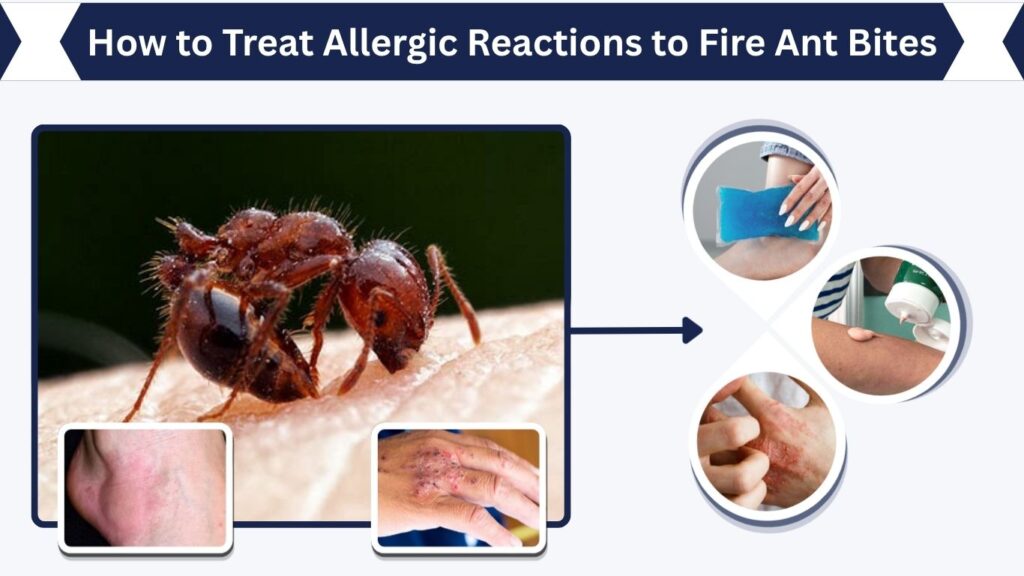
Treatment depends on the severity of the allergic reaction. Mild symptoms often improve with home remedies and over-the-counter medications, while severe reactions require emergency medical attention. Quick treatment can reduce complications and improve recovery time after a sting.
Home Treatments for Mild Reactions
- Apply a cold compress to reduce swelling
- Use hydrocortisone cream for itching
- Take oral antihistamines if needed
- Wash the skin with soap and water
- Avoid scratching the bite area
Emergency Treatment for Severe Reactions
Severe allergic reactions may require emergency treatment with epinephrine injections and immediate medical care. Doctors may also provide oxygen, antihistamines, or corticosteroids to stabilize the reaction. People who have experienced anaphylaxis from insect stings are often advised to carry an epinephrine auto-injector for emergencies.
When to Visit a Doctor
Medical attention is important if symptoms continue worsening after several hours or if signs of infection appear around the bite area. People should also contact a doctor if swelling spreads rapidly, breathing becomes difficult, or dizziness develops after being stung by fire ants.
Fire Ant Bite Allergy vs Other Insect Bite Allergies
Fire ant bite allergies can sometimes look similar to reactions caused by mosquitoes, bees, fleas, or spiders. However, fire ant stings often create painful pustules and burning sensations that help distinguish them from other insect bites.
| Fire Ant Bite Allergy | Other Insect Bite Allergies |
| White pustules commonly form | Pustules are less common |
| Burning sensation is frequent | More itching than burning |
| Often appears in clusters | Usually isolated bites |
| Can trigger severe swelling | Reactions vary by insect |
How to Prevent Fire Ant Bite Allergic Reactions
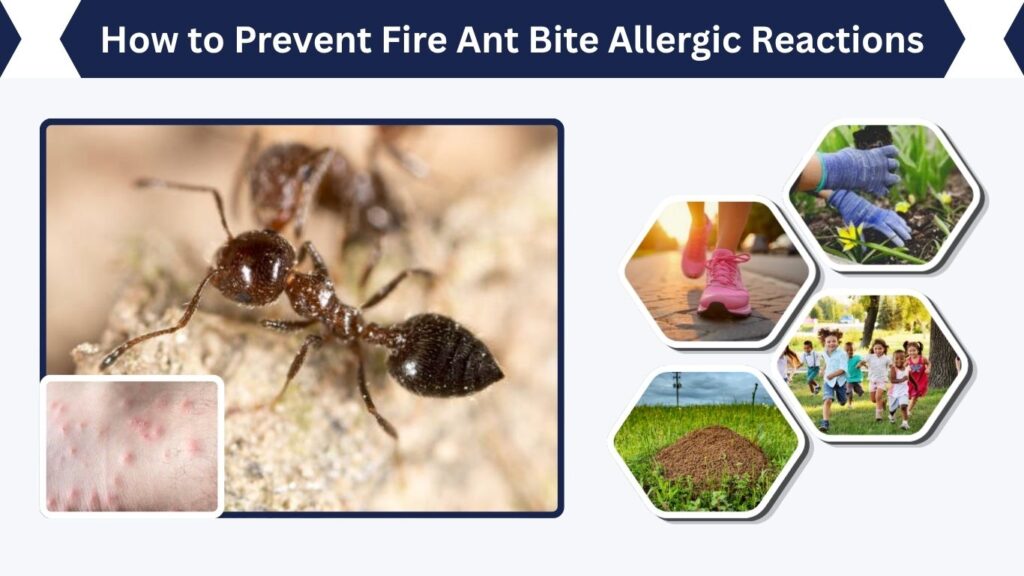
Avoiding fire ant bites is the best way to prevent allergic reactions and serious complications. People with known allergies should take extra safety measures when spending time outdoors in areas where fire ants are common.
Avoid Fire Ant Mounds
- Watch for dirt mounds in grass and soil
- Avoid stepping near active colonies
- Keep children away from ant nests
- Be careful while gardening or mowing
- Do not disturb fire ant hills intentionally
Wear Protective Clothing Outdoors
Wearing long pants, socks, gloves, and closed shoes can help protect the skin from fire ant stings. Protective clothing is especially useful during outdoor work, hiking, gardening, or camping in areas where fire ants are active.
FAQs
What does an allergic reaction to a fire ant bite look like?
An allergic reaction to a fire ant bite may cause redness, swelling, itching, hives, and painful white pustules. Severe reactions can include facial swelling, widespread rash, breathing difficulty, and dizziness. Symptoms vary depending on how sensitive a person is to the fire ant venom.
How long does a fire ant allergic reaction last?
Mild allergic reactions usually improve within a few days, while larger swelling and itching may last up to a week. Severe allergic reactions can require medical treatment and may take longer to fully heal. Repeated scratching can also slow the recovery process and increase irritation.
Can fire ant bites cause anaphylaxis?
Yes, fire ant bites can sometimes trigger anaphylaxis, which is a serious and potentially life-threatening allergic reaction. Symptoms may include throat swelling, trouble breathing, rapid heartbeat, dizziness, and fainting. Emergency medical treatment is necessary if these symptoms appear after a fire ant sting.
When should I go to the hospital for a fire ant bite?
You should seek emergency medical care if you experience breathing problems, swelling of the face or throat, severe dizziness, widespread hives, or chest tightness after a fire ant bite. These symptoms may indicate a severe allergic reaction that requires immediate treatment.
Are children more sensitive to fire ant bite allergies?
Children may experience stronger swelling and skin irritation because of their smaller body size and sensitive skin. Multiple bites can sometimes cause more serious reactions in children. Parents should monitor symptoms carefully and contact a doctor if severe swelling or breathing problems develop.