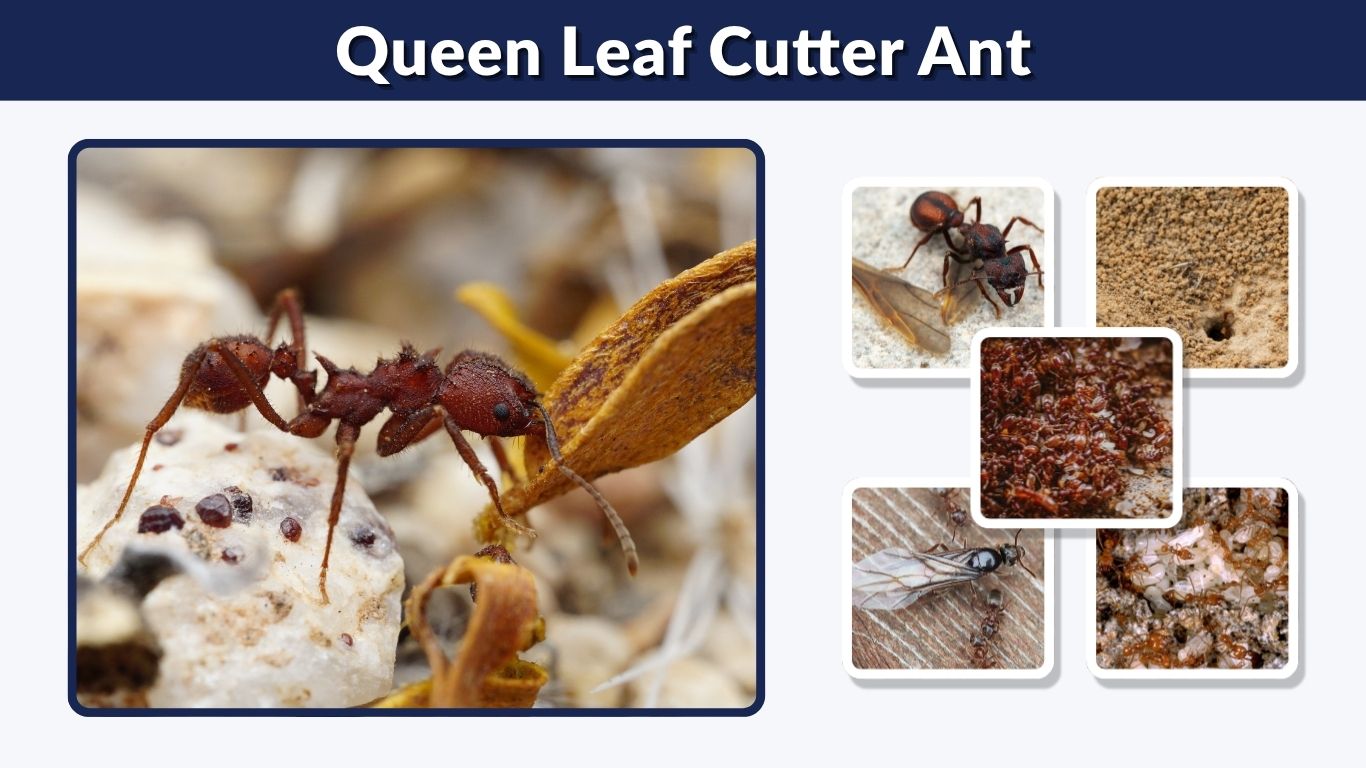
A queen leaf cutter ant is the heart of a leaf cutter ant colony. She starts the colony, lays the eggs, and helps build one of the most organized societies in the insect world. Unlike worker ants, the queen’s main job is reproduction. This article explains what a queen leaf cutter ant does, how she starts a colony, and why she is so important.
What Is a Queen Leaf Cutter Ant?
A queen leaf cutter ant is the reproductive female in a leaf cutter ant colony. She is usually much larger than the workers and can live for many years. Her main purpose is to lay eggs and keep the colony growing.
The Main Role of the Queen
The queen does not cut leaves or care for young ants once the colony is established. Instead, she stays deep inside the nest and produces eggs. These eggs become workers, soldiers, and future reproductive ants.
A healthy queen can produce thousands or even millions of offspring during her lifetime. Without her, the colony cannot continue for long.
How She Is Different From Worker Ants
Worker leaf cutter ants are female, but they usually do not reproduce. They perform daily jobs such as cutting leaves, carrying plant pieces, farming fungus, cleaning the nest, and defending the colony.
The queen is different because she is built for reproduction. She has a larger body, especially a larger abdomen, where eggs develop. She also begins life with wings, which she uses during her mating flight.
How a Queen Leaf Cutter Ant Starts a Colony
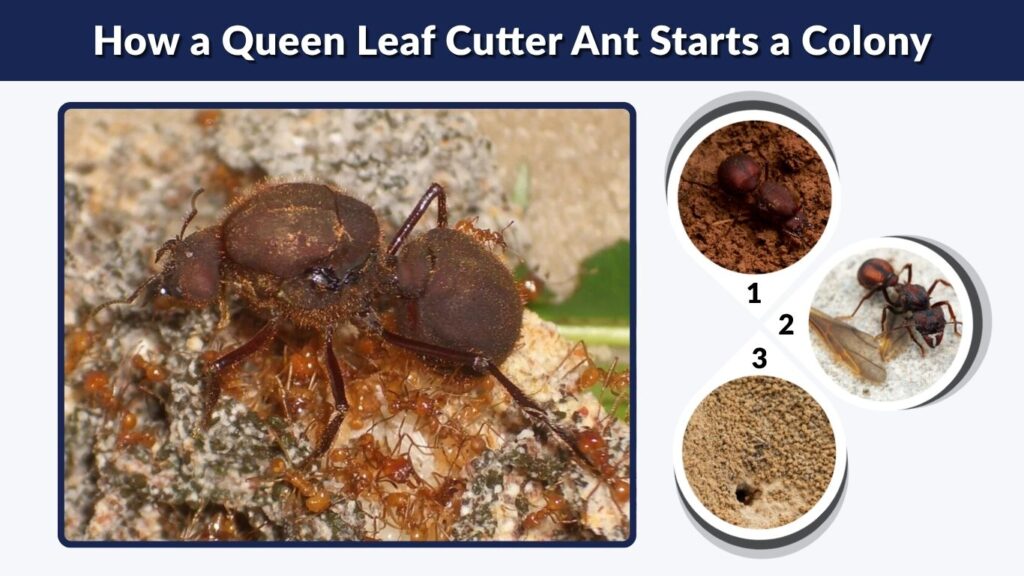
A leaf cutter ant colony begins when a young queen leaves her original nest during a mating flight. After mating, she searches for a suitable place to start her own colony.
The Mating Flight
Young queen ants and male ants leave their nests during certain seasons, often after rain or when conditions are humid. This event is called a nuptial flight.
During the flight, the queen mates with one or more males. After mating, the males usually die, while the queen stores sperm inside her body. She can use this stored sperm for many years to fertilize eggs.
Starting a New Nest
After mating, the queen lands, removes her wings, and looks for a safe place underground. She digs a small chamber where she can begin her colony.
One of the most interesting things about leaf cutter ants is that the queen carries a tiny piece of fungus from her original colony. This fungus becomes the food source for her future colony.
The First Fungus Garden
Leaf cutter ants do not actually eat most of the leaves they cut. Instead, they use leaf pieces to grow fungus. The fungus is the colony’s main food source.
When the queen starts a new nest, she uses the fungus piece she carried with her to grow the first fungus garden. She carefully feeds and protects it until the first workers are born.
Queen Leaf Cutter Ant Life Cycle
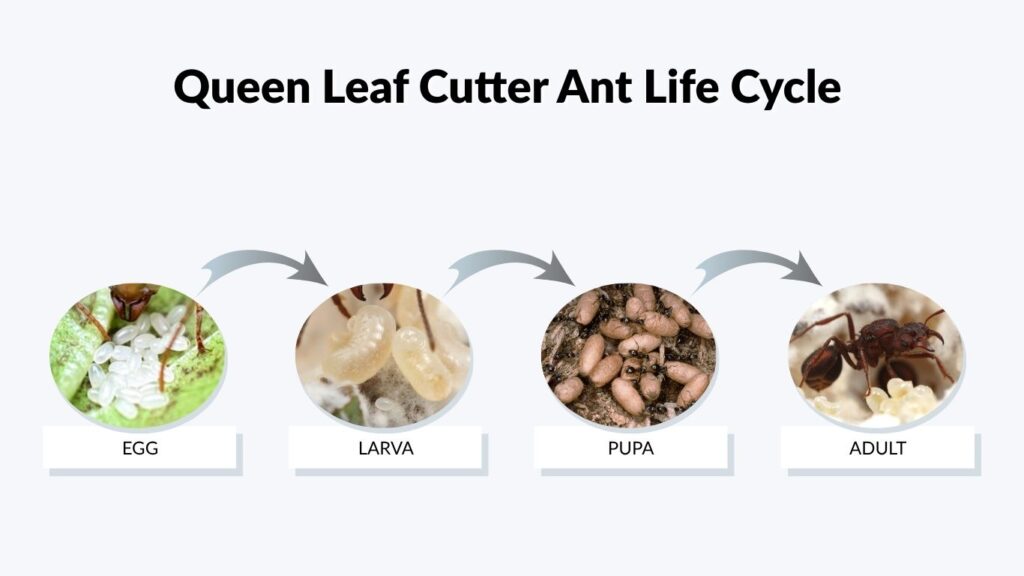
The queen’s life cycle is closely connected to the growth of the colony. She begins as an egg, develops into a winged reproductive female, mates, and then becomes the mother of a new colony.
| Stage | What Happens | Queen’s Role |
|---|---|---|
| Egg | The future queen starts as an egg | No active role yet |
| Larva | She is fed and cared for by workers | Grows rapidly |
| Pupa | Her body changes into an adult form | Develops wings and reproductive organs |
| Young queen | She leaves the nest for mating | Joins the nuptial flight |
| Founding queen | She starts a new nest | Grows fungus and lays first eggs |
| Mature queen | Colony becomes established | Lays eggs for years |
Egg, Larva, and Pupa Stages
Like other ants, leaf cutter ants go through complete metamorphosis. This means they develop from egg to larva, then pupa, and finally adult.
Future queens receive special care while developing. They grow larger than workers and develop wings for their mating flight.
Becoming a Founding Queen
After the mating flight, the queen’s life changes completely. She no longer needs wings, so she breaks them off. From this point forward, she remains underground and focuses on colony growth.
At first, the queen must do everything alone. She protects the fungus, lays eggs, and cares for her first larvae. Once the first workers mature, they take over most tasks.
What Does a Queen Leaf Cutter Ant Eat?
A queen leaf cutter ant depends on the colony’s fungus garden for food. Leaf cutter ants are famous for cutting leaves, but the leaves are mostly used to grow fungus, not eaten directly.
Fungus as the Main Food Source
The fungus garden is essential to the colony. Workers bring in fresh plant material, chew it into smaller pieces, and use it as a growing surface for the fungus.
The queen receives nutrition from the fungus and from food provided by worker ants. This allows her to focus on egg production.
Feeding During the Colony’s Early Days
When a young queen first starts a colony, she has no workers to feed her. She must survive using stored energy from her body while she raises the first brood.
During this early stage, the queen carefully tends the fungus and feeds the first larvae until they become workers. After that, the workers begin collecting leaves and caring for the queen.
Why the Queen Is Important to the Colony
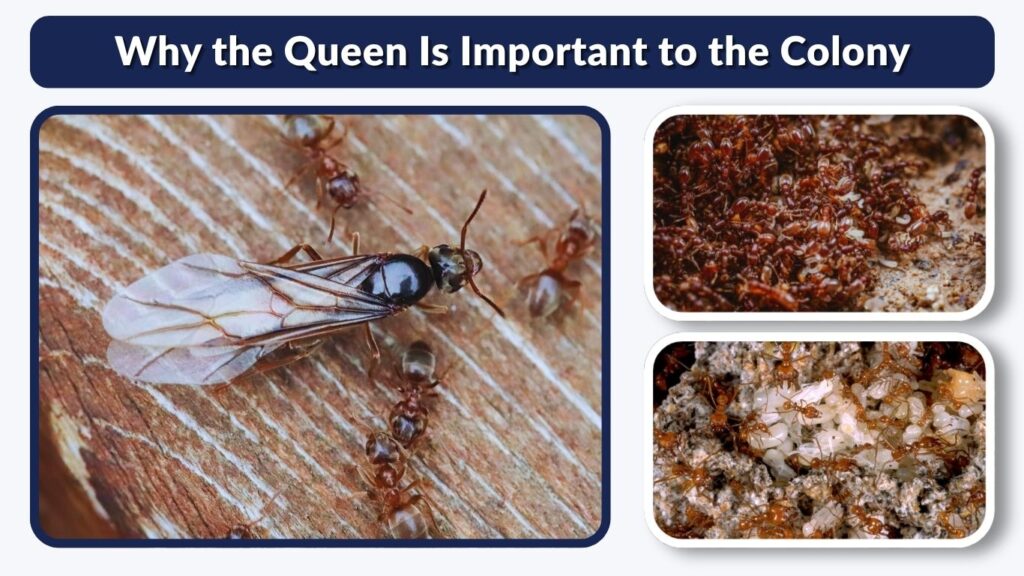
The queen leaf cutter ant is the only ant in the colony that can produce fertilized eggs in large numbers. Her survival is directly connected to the colony’s future.
Egg Production
The queen’s most important job is laying eggs. These eggs become the workers that run the colony. A large colony may contain thousands or even millions of ants, and most of them come from one queen.
The queen can produce different types of offspring depending on the colony’s needs. Workers take care of the eggs and larvae after they are laid.
Colony Growth
As the queen lays more eggs, the colony grows larger. More workers means the colony can collect more leaves, expand the fungus garden, defend the nest, and build deeper chambers.
A strong queen can support a huge colony for many years. If the queen dies and there is no replacement reproductive female, the colony will usually decline over time.
Genetic Foundation
The queen is also the genetic foundation of the colony. Since most ants in the colony are her offspring, her health and reproductive success affect the entire nest.
This is why workers protect the queen carefully. She usually stays hidden deep inside the nest, away from predators and environmental dangers.
Worker Ants and the Queen
The queen does not manage the colony like a human ruler. She does not give direct orders. Instead, the colony runs through instinct, chemical signals, and division of labor.
How Workers Care for the Queen
Worker ants protect, clean, and feed the queen. They also move her eggs away after she lays them and care for the developing larvae.
Workers may also help regulate the nest environment. Leaf cutter ants need proper humidity and temperature to keep their fungus garden healthy.
Jobs Around the Colony
Leaf cutter ant workers have many specialized tasks, including:
- Cutting leaves from plants
- Carrying leaf pieces back to the nest
- Cleaning and preparing plant material
- Growing and protecting the fungus garden
- Feeding larvae and the queen
- Removing waste from the nest
- Defending the colony from threats
This teamwork allows the queen to focus almost entirely on reproduction.
How Long Does a Queen Leaf Cutter Ant Live?
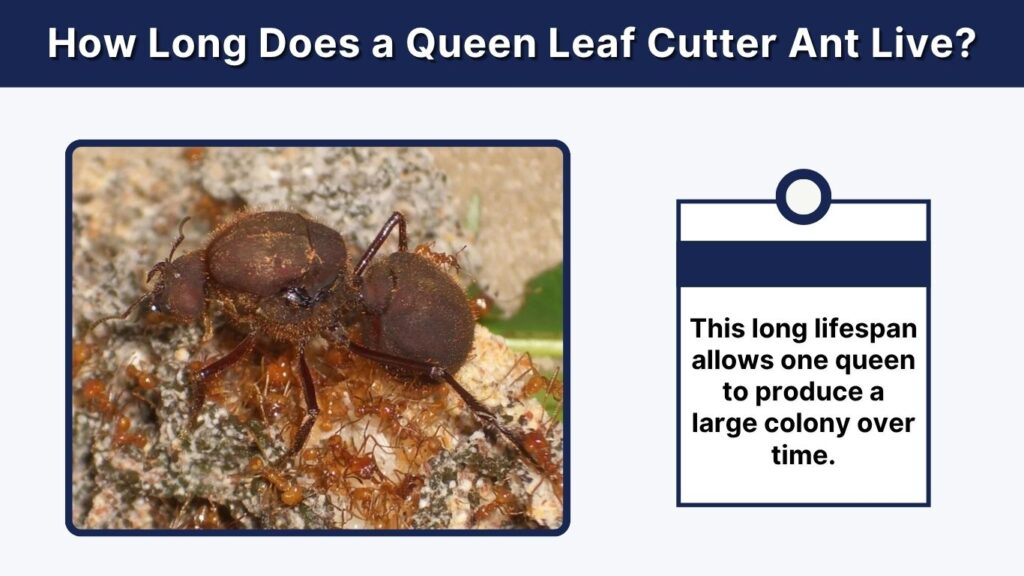
A queen leaf cutter ant can live much longer than worker ants. In some species, queens may live for many years, especially in a stable and successful colony.
Queen Lifespan
The queen’s exact lifespan depends on species, environment, food supply, predators, disease, and colony health. In ideal conditions, a queen may live for more than a decade.
This long lifespan allows one queen to produce a large colony over time. Her ability to store sperm after mating is one reason she can continue laying fertilized eggs for years.
Worker Lifespan
Worker ants usually live much shorter lives than the queen. Their lifespan depends on their job. Workers that forage outside the nest face more danger than those working inside.
The queen remains protected underground, which helps her live longer than most colony members.
Threats to a Queen Leaf Cutter Ant
Although the queen is protected, she still faces dangers. The riskiest time in her life is the period after mating, when she is alone and trying to start a new colony.
Early Colony Failure
Many young queens do not survive the founding stage. They may be eaten by predators, fail to grow their fungus garden, choose a poor nesting site, or die before the first workers mature.
Starting a new colony is difficult because the queen must survive without help until her first workers are ready.
Disease and Fungus Problems
Leaf cutter ants depend on their fungus garden. If the fungus becomes contaminated or dies, the colony may be in danger.
Workers usually help protect the fungus from harmful microbes. In the early stage, however, the queen must protect the small fungus garden by herself.
Predators and Environmental Stress
Predators, flooding, drought, habitat disturbance, and human activity can all affect leaf cutter ant colonies. A mature colony is harder to destroy, but young colonies are very vulnerable.
Interesting Facts About Queen Leaf Cutter Ants
Queen leaf cutter ants are among the most fascinating insects because their colonies depend on farming, teamwork, and long-term organization.
Fascinating Queen Facts
Here are some interesting facts about queen leaf cutter ants:
- A queen starts her colony with a tiny piece of fungus.
- She removes her wings after mating.
- She may lay eggs for many years.
- Most ants in the colony are her daughters.
- She does not cut leaves herself after workers appear.
- Her colony farms fungus as its main food source.
- A mature colony can contain huge numbers of workers.
These facts show why leaf cutter ants are often called nature’s farmers.
FAQs
What does a queen leaf cutter ant do?
A queen leaf cutter ant lays eggs and keeps the colony growing. She starts the colony after mating and carries a small piece of fungus to begin the first fungus garden. Once workers develop, they care for her, the young ants, and the fungus.
Do queen leaf cutter ants cut leaves?
No, queen leaf cutter ants usually do not cut leaves after the colony begins. Worker ants cut and carry leaves back to the nest. The leaves are used to grow fungus, which becomes the colony’s main food source.
How long does a queen leaf cutter ant live?
A queen leaf cutter ant can live for many years, sometimes more than a decade in good conditions. Her long lifespan allows her to lay eggs for a long time and support a large colony with thousands or even millions of workers.
Why does a queen leaf cutter ant carry fungus?
A young queen carries a small piece of fungus from her original colony when she leaves to mate. After mating, she uses that fungus to start a new fungus garden. This garden becomes the first food source for her future colony.
What happens if the queen leaf cutter ant dies?
If the queen dies, the colony usually cannot produce enough new workers to survive long-term. Existing workers may continue their tasks for a while, but without the queen’s eggs, the colony will eventually decline.