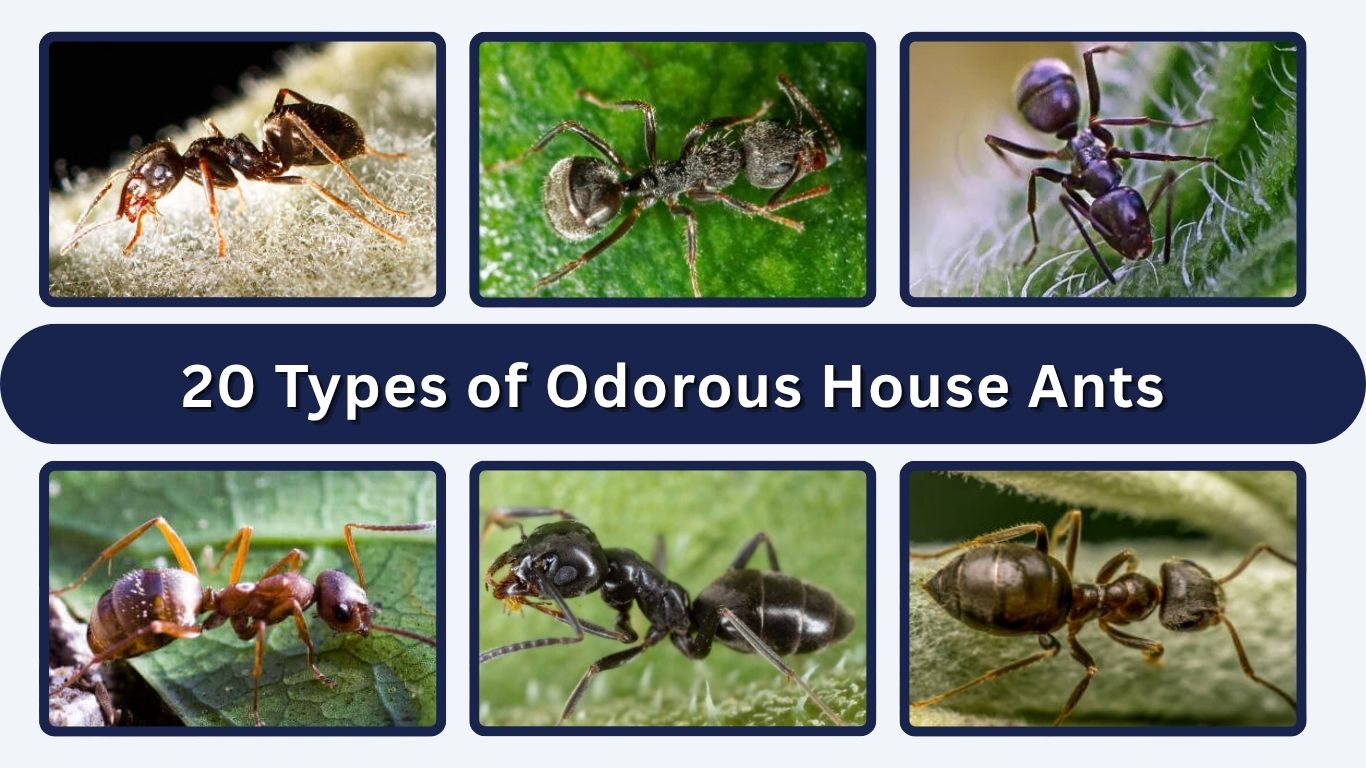
Odorous house ants are among the most common nuisance ants found inside homes, gardens, sidewalks, and commercial buildings. These tiny ants are well known for the strong rotten coconut-like smell they produce when crushed. Although they are not considered dangerous, they can quickly become frustrating pests by invading kitchens, pantries, bathrooms, and food storage areas in large numbers. Different types of odorous house ants may vary slightly in color, habitat, nesting behavior, and environmental preferences. Learning to identify these ants can help homeowners better understand infestations and choose effective prevention and control methods.
1. Odorous House Ant
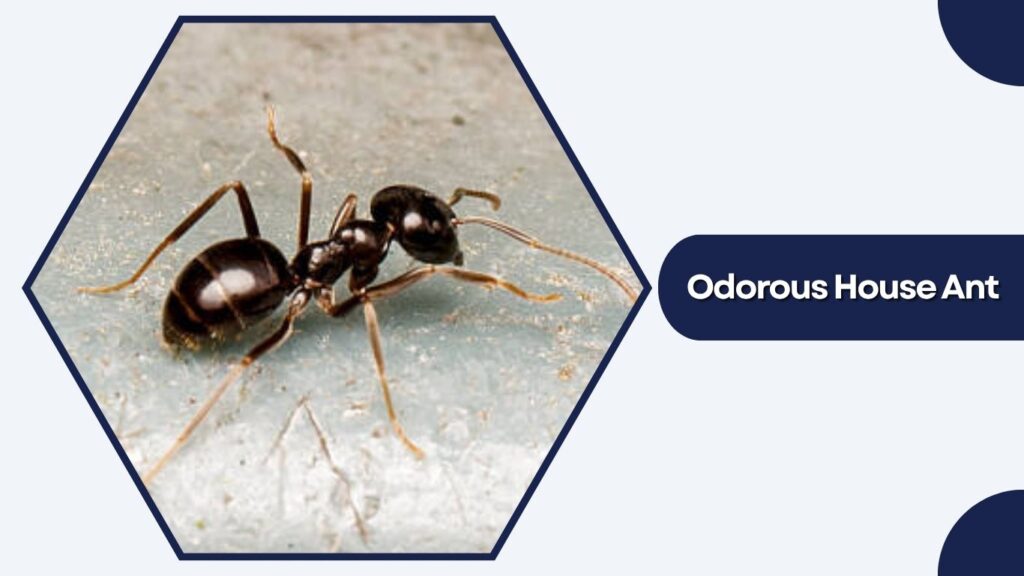
Odorous house ants are one of the most common household ants found in kitchens, bathrooms, gardens, and wall voids. They are known for producing a strong rotten coconut-like smell when crushed. These ants form large colonies and often invade homes searching for sweet foods and moisture. Their adaptability allows them to thrive in both indoor and outdoor environments.
Identification
- Small dark brown or black body
- About 1/16 to 1/8 inch long
- Uneven thorax shape
- One hidden node between thorax and abdomen
- Strong odor when crushed
- Fast-moving workers
- Long antennae
Habitat and Distribution
Odorous house ants are commonly found throughout North America and many urban environments worldwide. Outdoors, they nest under rocks, logs, mulch, and debris, while indoors they prefer wall voids, kitchens, insulation, and areas near moisture sources.
Behavior and Diet
These ants are highly attracted to sugary foods, honey, fruit juices, and spilled drinks. They may also feed on grease, dead insects, and pet food when necessary. Odorous house ants often create long visible trails between food sources and their nests.
Reproduction and Colony Structure
Odorous house ant colonies may contain multiple queens, allowing populations to grow rapidly. Colonies can split into smaller groups when disturbed, making infestations harder to eliminate once they become established inside homes.
2. Dark Odorous House Ant
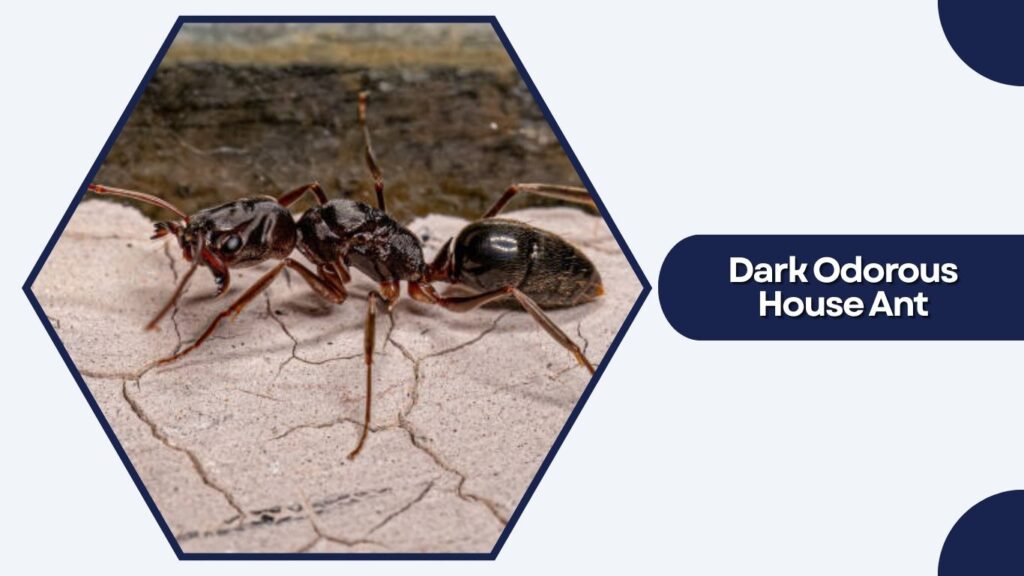
Dark odorous house ants are small nuisance ants commonly seen invading homes, especially during warm and humid weather. They are closely related to standard odorous house ants and are recognized by their darker body coloration and strong odor when crushed. These ants often build large colonies near buildings and search indoors for sugary foods and water sources.
Identification
- Dark brown to black body color
- Small slender body
- About 1/8 inch long
- Uneven thorax profile
- One hidden petiole node
- Long segmented antennae
- Rotten coconut-like odor when crushed
Habitat and Distribution
Dark odorous house ants commonly live in urban neighborhoods, gardens, forests, and residential areas. They nest beneath rocks, mulch, logs, wall voids, insulation, and damp spaces around homes where moisture and shelter are available.
Behavior and Diet
These ants actively forage for sweets, syrup, fruit, honeydew, and kitchen crumbs. Workers travel in long organized trails and quickly recruit other ants once food is discovered. Indoor infestations often increase during rainy or extremely hot conditions.
Reproduction and Colony Structure
Dark odorous house ant colonies may contain several queens and thousands of workers. Their colonies expand rapidly and may split into multiple nests, allowing infestations to spread throughout homes, yards, and nearby structures.
3. Coastal Odorous House Ant
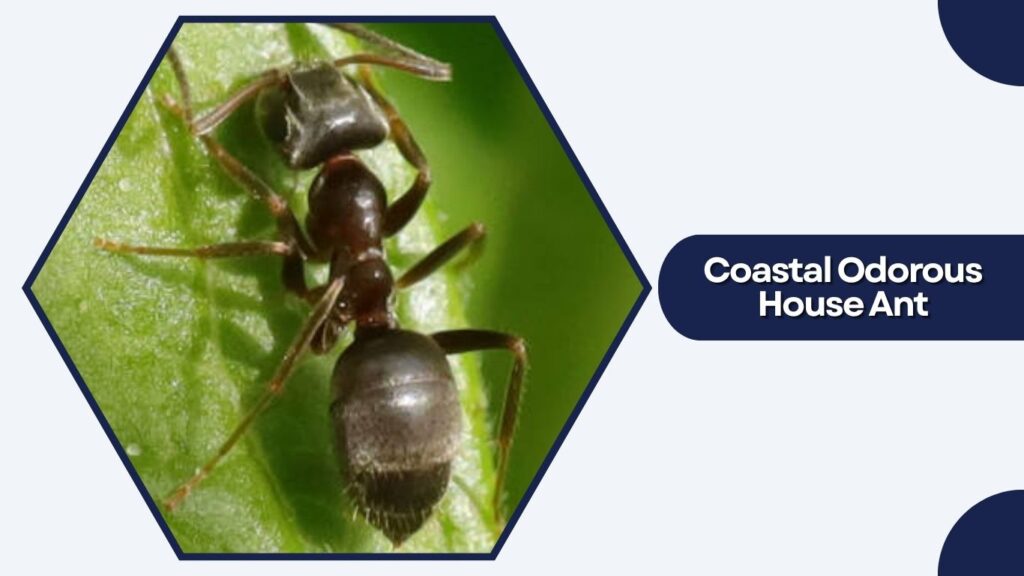
Coastal odorous house ants are commonly found in humid coastal environments where mild temperatures and moisture support large ant colonies. These ants frequently invade homes, restaurants, and buildings near shorelines while searching for sugary foods and water. Like other odorous house ants, they release a strong unpleasant smell when crushed.
Identification
- Small dark brown body
- Smooth shiny appearance
- About 1/16 to 1/8 inch long
- Uneven thorax shape
- One concealed node
- Fast-moving worker ants
- Strong rotten odor when crushed
Habitat and Distribution
Coastal odorous house ants are often found in beachside towns, humid forests, parks, gardens, and residential coastal areas. Outdoors, they nest beneath stones, driftwood, mulch, and loose soil, while indoors they occupy wall voids and damp hidden spaces.
Behavior and Diet
These ants mainly feed on sugary liquids, nectar, fruit, kitchen spills, and honeydew from aphids. Coastal colonies may create long foraging trails along sidewalks, fences, pipes, and walls while searching for food and moisture.
Reproduction and Colony Structure
Coastal odorous house ant colonies may contain multiple queens and thousands of workers. Colonies reproduce quickly and often divide into smaller satellite nests, making infestations difficult to control in heavily populated coastal environments.
4. Northern Odorous House Ant
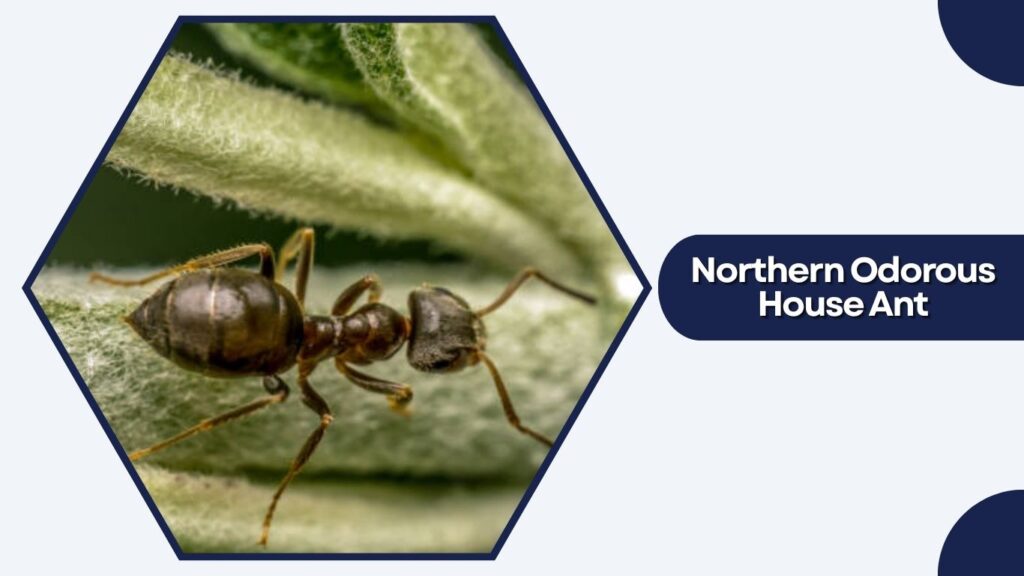
Northern odorous house ants are cold-tolerant ants commonly found in cooler climates, forests, suburban neighborhoods, and residential buildings. These ants often enter homes during seasonal weather changes while searching for warmth, food, and moisture. Like other odorous house ants, they produce a strong unpleasant odor when crushed and can form very large colonies.
Identification
- Dark brown or black body
- Small slender appearance
- Around 1/8 inch long
- Uneven thorax profile
- Hidden single-node waist
- Long elbowed antennae
- Rotten coconut-like smell when crushed
Habitat and Distribution
Northern odorous house ants are widely distributed across cooler northern regions, wooded habitats, parks, and suburban areas. They commonly nest beneath rocks, logs, mulch, insulation, and wall voids near moisture and shelter.
Behavior and Diet
These ants forage actively for sugary foods, syrup, fruit juices, crumbs, and honeydew from plant-feeding insects. Workers create organized trails and frequently invade kitchens and bathrooms during dry, cold, or rainy weather.
Reproduction and Colony Structure
Northern odorous house ant colonies may contain several queens and thousands of worker ants. Colonies expand rapidly during warmer seasons and may split into multiple satellite nests when disturbed or overcrowded.
5. Southern Odorous House Ant
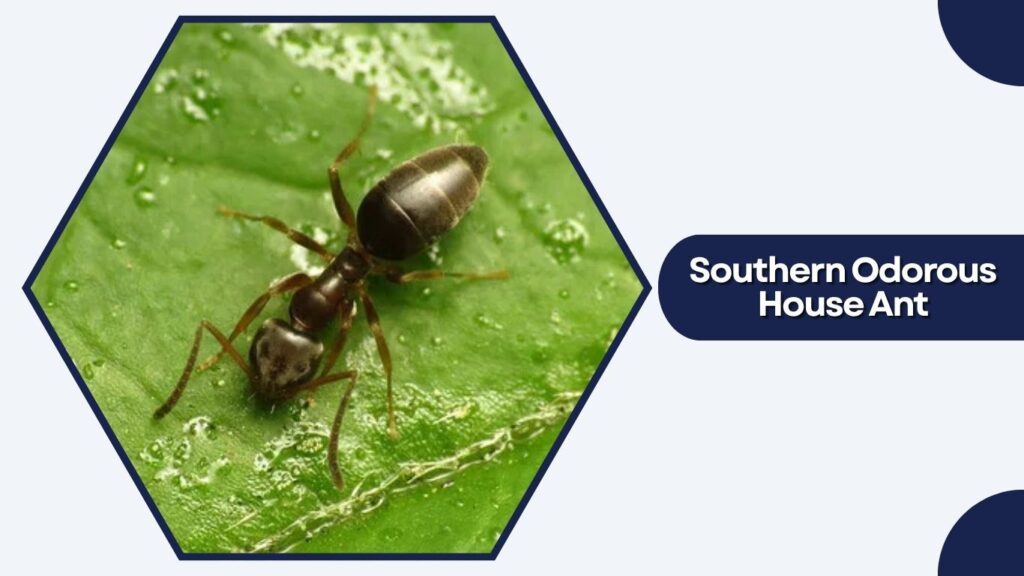
Southern odorous house ants are common nuisance ants found in warm southern climates where humidity and heat support large thriving colonies. These ants often invade homes, especially kitchens and bathrooms, while searching for sugary foods and water. When crushed, they release the same strong rotten coconut-like odor associated with odorous house ants.
Identification
- Small dark brown to black body
- Smooth slightly shiny appearance
- About 1/16 to 1/8 inch long
- Uneven thorax shape
- Hidden waist node
- Long antennae with elbowed shape
- Strong unpleasant odor when crushed
Habitat and Distribution
Southern odorous house ants commonly live in warm residential areas, gardens, forests, sidewalks, and urban environments. Outdoors, they nest under mulch, stones, logs, and loose soil, while indoors they occupy wall voids and damp hidden spaces.
Behavior and Diet
These ants strongly prefer sugary foods such as syrup, candy, fruit juice, and honeydew from aphids. Workers travel in long visible trails and can quickly spread through homes once reliable food or moisture sources are discovered.
Reproduction and Colony Structure
Southern odorous house ant colonies often contain multiple queens and very large worker populations. Colonies reproduce rapidly in warm climates and frequently create satellite nests that allow infestations to spread throughout nearby structures.
6. Western Odorous House Ant
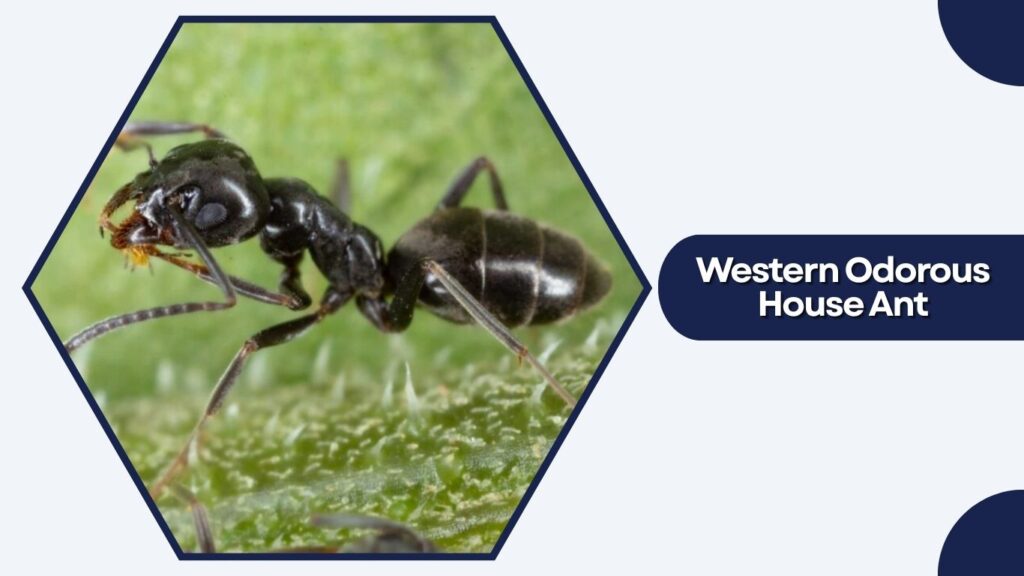
Western odorous house ants are commonly found in western regions with dry summers and mild climates. These ants often invade homes, offices, and outdoor living spaces while searching for water and sugary foods. Like other odorous house ants, they are known for producing a strong unpleasant smell when crushed.
Identification
- Small dark brown or black body
- Slender smooth appearance
- About 1/8 inch long
- Uneven thorax profile
- Hidden waist node
- Long segmented antennae
- Rotten coconut-like odor when crushed
Habitat and Distribution
Western odorous house ants commonly nest in dry soil, mulch, under stones, wall voids, and around building foundations. They are frequently found in suburban neighborhoods, gardens, parks, and drought-prone residential environments.
Behavior and Diet
These ants actively search for sweet foods, sugary liquids, fruit, pet food, and honeydew produced by aphids. During hot weather, they often move indoors seeking water sources and cooler nesting conditions.
Reproduction and Colony Structure
Western odorous house ant colonies may contain several queens and thousands of workers. Colonies expand quickly and often form multiple satellite nests, making infestations difficult to eliminate once established around homes and buildings.
7. Eastern Odorous House Ant
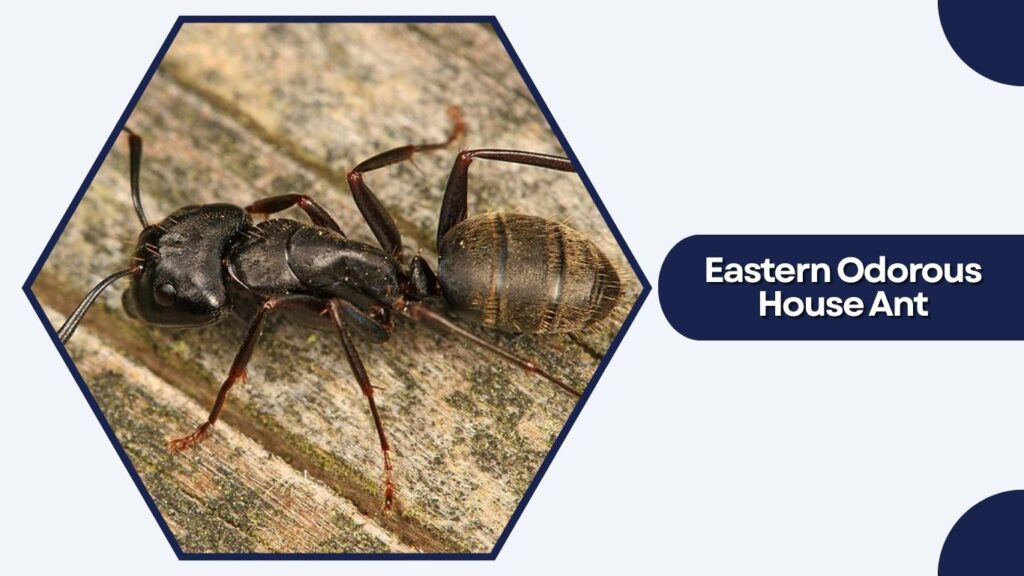
Eastern odorous house ants are widespread nuisance ants commonly found in eastern regions with humid climates and dense vegetation. These ants frequently invade homes searching for food, moisture, and shelter, especially during rainy weather or seasonal temperature changes. When crushed, they produce the strong rotten coconut-like odor typical of odorous house ants.
Identification
- Small dark brown to black body
- Smooth slightly shiny texture
- Around 1/16 to 1/8 inch long
- Uneven thorax structure
- One hidden waist node
- Long elbowed antennae
- Strong unpleasant odor when crushed
Habitat and Distribution
Eastern odorous house ants are commonly found in forests, gardens, suburban neighborhoods, and urban areas throughout humid eastern regions. Outdoors, they nest beneath rocks, mulch, logs, and loose soil, while indoors they prefer damp wall voids and hidden crevices.
Behavior and Diet
These ants feed mainly on sugary substances such as syrup, fruit juice, honey, and honeydew from aphids. Workers create visible foraging trails and may invade kitchens, bathrooms, and pantries in large numbers.
Reproduction and Colony Structure
Eastern odorous house ant colonies often contain multiple queens and large worker populations. Colonies reproduce rapidly and may divide into several satellite nests, allowing infestations to spread throughout nearby buildings and outdoor spaces.
8. Black Odorous House Ant
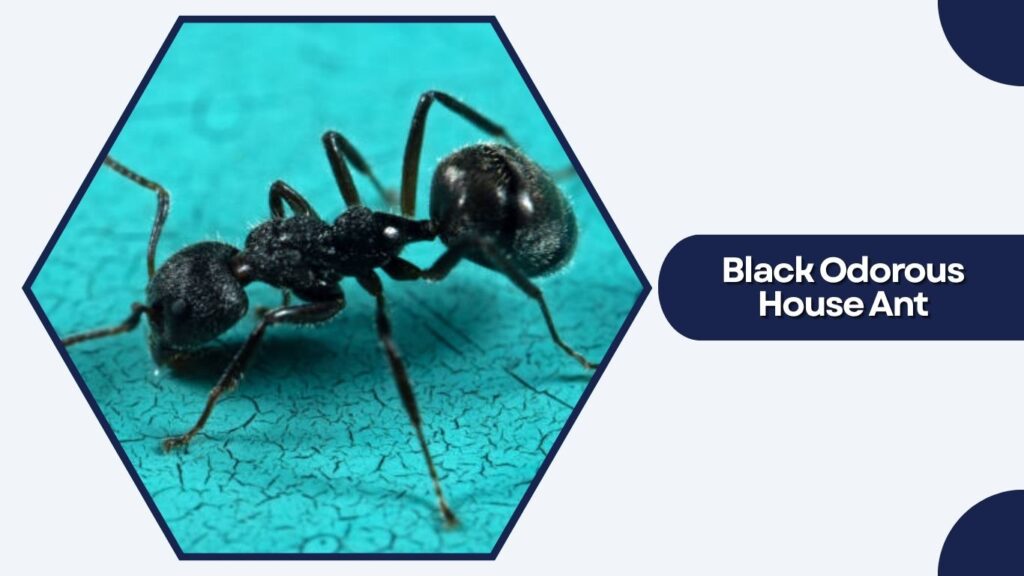
Black odorous house ants are small dark-colored ants commonly seen invading homes, sidewalks, patios, and gardens. They are highly adaptable and often build large colonies near human structures where food and moisture are easy to find. Like other odorous house ants, they release a strong rotten smell when crushed.
Identification
- Shiny black body color
- Small slender build
- Around 1/8 inch long
- Uneven thorax shape
- Hidden waist node
- Long elbowed antennae
- Rotten coconut-like odor when crushed
Habitat and Distribution
Black odorous house ants are commonly found in urban neighborhoods, parks, forests, and residential landscapes. They nest under rocks, mulch, wood piles, insulation, and wall voids where moisture and shelter are available.
Behavior and Diet
These ants prefer sugary foods such as syrup, candy, fruit juice, and honeydew from plant-feeding insects. They also feed on grease, crumbs, and dead insects when necessary. Workers travel in long organized trails while foraging.
Reproduction and Colony Structure
Black odorous house ant colonies may contain several queens and thousands of workers. Colonies grow rapidly and frequently split into multiple satellite nests, allowing infestations to spread through homes and surrounding outdoor areas.
9. Brown Odorous House Ant
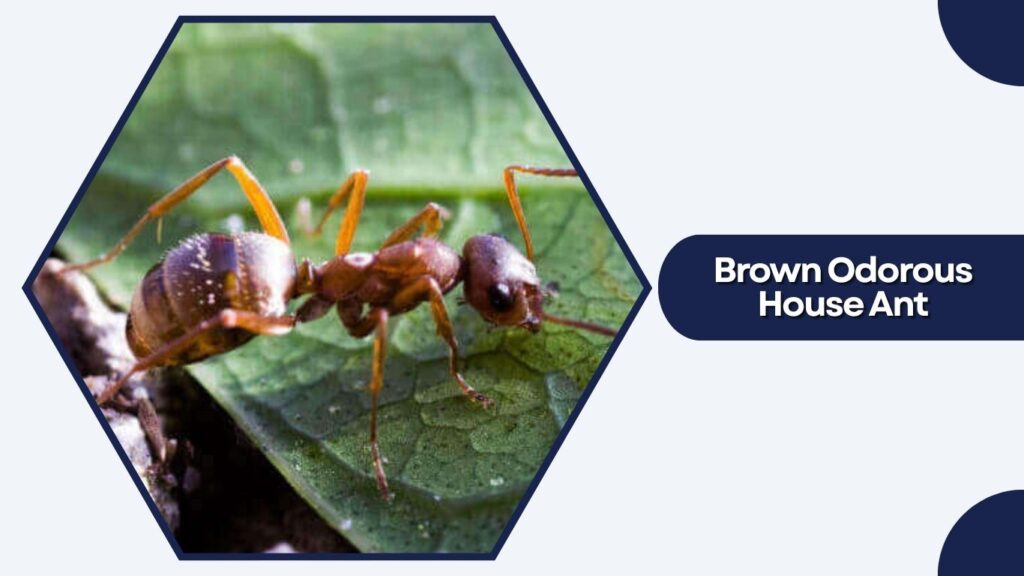
Brown odorous house ants are small nuisance ants commonly found in homes, gardens, and commercial buildings. Their lighter brown coloration helps distinguish them from darker odorous house ant varieties. These ants are highly adaptable and frequently invade kitchens and bathrooms while searching for food and moisture.
Identification
- Light brown to dark brown body
- Small slender appearance
- About 1/16 to 1/8 inch long
- Uneven thorax profile
- Hidden single-node waist
- Long segmented antennae
- Rotten coconut-like odor when crushed
Habitat and Distribution
Brown odorous house ants commonly nest beneath mulch, stones, logs, leaf litter, and building foundations. Indoors, they prefer damp wall voids, kitchens, bathrooms, and insulation near moisture sources.
Behavior and Diet
These ants mainly feed on sugary foods such as syrup, fruit juice, candy, and honeydew from aphids. They may also consume grease, pet food, and dead insects when sweeter food sources are unavailable.
Reproduction and Colony Structure
Brown odorous house ant colonies often contain multiple queens and large populations of workers. Colonies reproduce quickly and may divide into several satellite nests that spread throughout nearby structures and outdoor environments.
10. Tiny Odorous House Ant
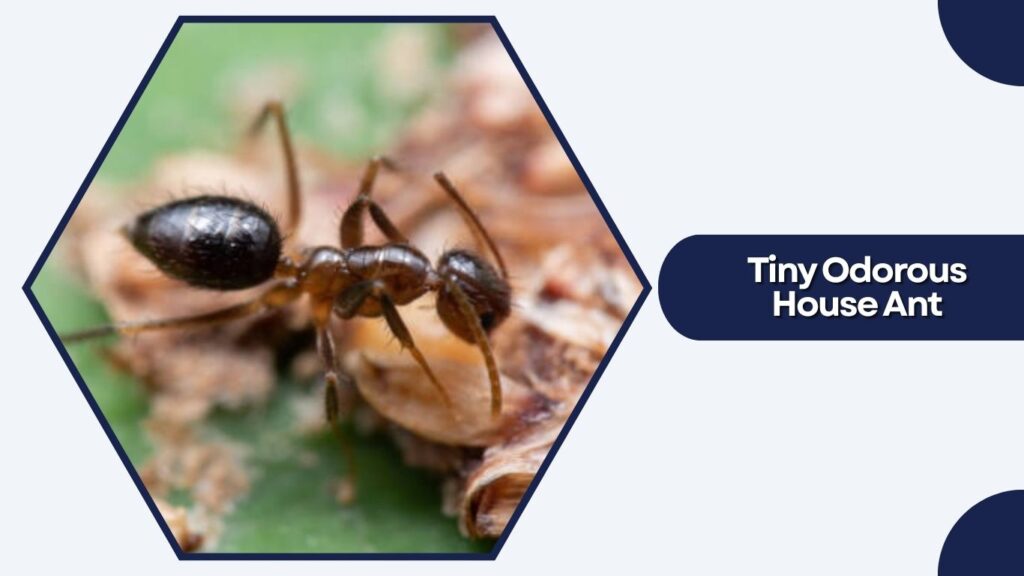
Tiny odorous house ants are very small nuisance ants that commonly invade homes searching for sugary foods and moisture. Their tiny size allows them to enter through extremely small cracks and gaps around buildings. Like other odorous house ants, they release a strong unpleasant odor when crushed.
Identification
- Very small dark brown body
- Slender lightweight appearance
- Around 1/16 inch long
- Uneven thorax shape
- Hidden waist node
- Long elbowed antennae
- Rotten coconut-like smell when crushed
Habitat and Distribution
Tiny odorous house ants are commonly found in residential neighborhoods, apartments, gardens, and commercial buildings. Outdoors, they nest beneath rocks, mulch, and debris, while indoors they hide inside wall voids, cabinets, and insulation.
Behavior and Diet
These ants strongly prefer sugary liquids, fruit, syrup, crumbs, and honeydew from aphids. Workers often create long visible trails leading to food and water sources inside kitchens, bathrooms, and pantries.
Reproduction and Colony Structure
Tiny odorous house ant colonies may contain multiple queens and thousands of workers despite their small size. Colonies expand rapidly and often split into satellite nests that spread throughout buildings and nearby outdoor areas.
11. Pavement Odorous House Ant
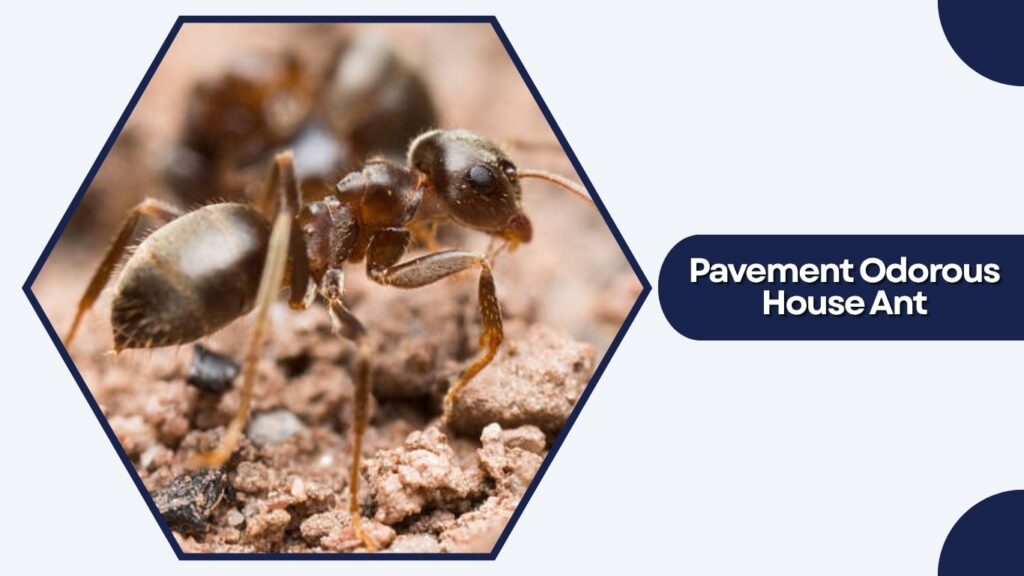
Pavement odorous house ants are commonly found near sidewalks, driveways, patios, and building foundations where cracks provide nesting spaces. These ants often enter homes searching for sugary foods and water, especially during hot or rainy weather. When crushed, they release the strong rotten odor typical of odorous house ants.
Identification
- Small dark brown or black body
- Smooth slightly shiny appearance
- About 1/8 inch long
- Uneven thorax structure
- Hidden waist node
- Long segmented antennae
- Strong rotten coconut-like smell when crushed
Habitat and Distribution
Pavement odorous house ants commonly nest beneath sidewalks, concrete slabs, stones, mulch, and foundation cracks. They are widespread in urban areas, parking lots, gardens, and residential neighborhoods with paved surfaces.
Behavior and Diet
These ants feed mainly on sweet foods, honeydew, kitchen crumbs, grease, and spilled drinks. Workers often form long visible trails across sidewalks, walls, and floors while searching for food and moisture sources.
Reproduction and Colony Structure
Pavement odorous house ant colonies can contain multiple queens and large worker populations. Colonies reproduce rapidly and may spread into nearby buildings through tiny cracks and structural openings.
12. Indoor Odorous House Ant
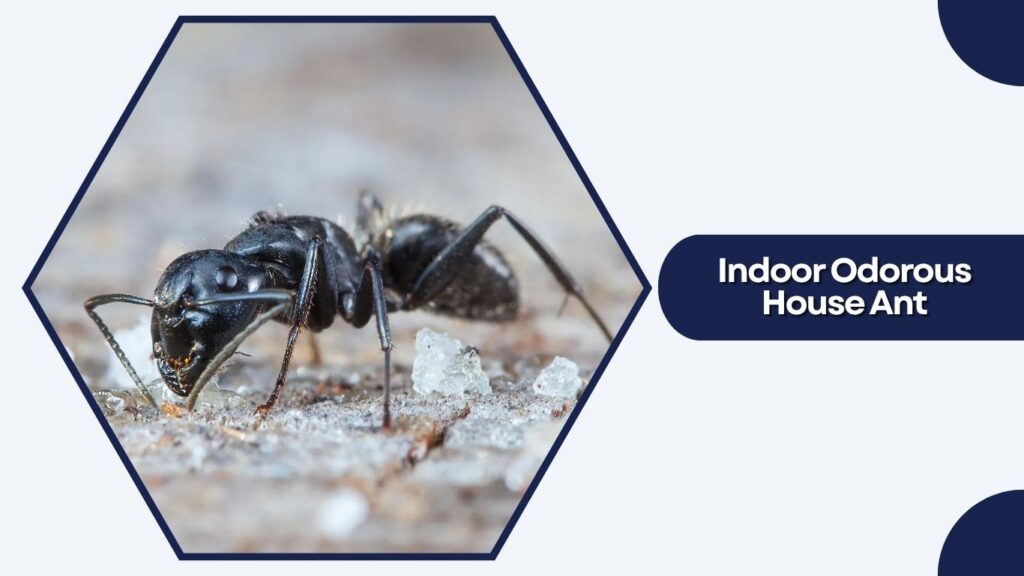
Indoor odorous house ants are nuisance ants commonly found inside homes, apartments, restaurants, and commercial buildings. These ants invade indoor spaces searching for food, moisture, and shelter, especially during extreme weather conditions. Like other odorous house ants, they produce a strong unpleasant odor when crushed.
Identification
- Small dark brown to black body
- Slender smooth appearance
- About 1/16 to 1/8 inch long
- Uneven thorax profile
- Hidden waist node
- Long elbowed antennae
- Rotten coconut-like odor when crushed
Habitat and Distribution
Indoor odorous house ants commonly nest inside wall voids, under flooring, behind cabinets, near plumbing, and inside insulation. They are frequently found in kitchens, bathrooms, laundry rooms, and damp indoor environments.
Behavior and Diet
These ants strongly prefer sugary foods, syrup, fruit juice, crumbs, and pet food. Workers create visible indoor trails and may travel along pipes, electrical wiring, and wall edges while searching for food and moisture.
Reproduction and Colony Structure
Indoor odorous house ant colonies often contain multiple queens and thousands of workers. Colonies may split into several satellite nests, allowing infestations to spread rapidly throughout homes and connected buildings.
13. Woodland Odorous House Ant
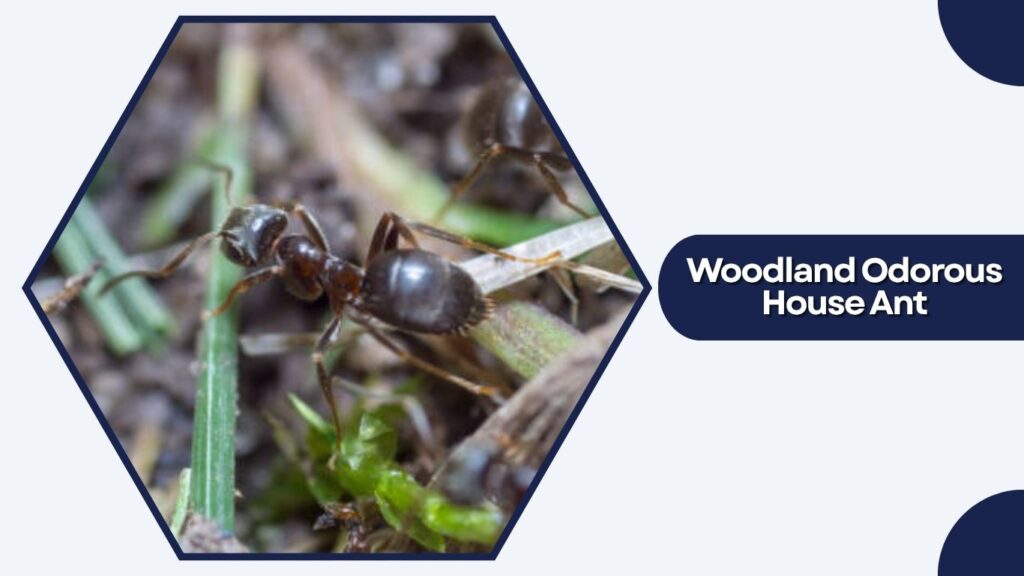
Woodland odorous house ants are commonly found in forests, wooded yards, parks, and natural environments with abundant leaf litter and moisture. Although they primarily live outdoors, they may enter homes searching for food or shelter during harsh weather conditions. Like other odorous house ants, they release a strong unpleasant odor when crushed.
Identification
- Small dark brown or black body
- Smooth slightly shiny texture
- Around 1/8 inch long
- Uneven thorax shape
- Hidden waist node
- Long segmented antennae
- Rotten coconut-like odor when crushed
Habitat and Distribution
Woodland odorous house ants commonly nest beneath logs, rocks, fallen branches, leaf litter, and decaying wood in forested habitats. They are often found in wooded suburban neighborhoods and areas with dense vegetation.
Behavior and Diet
These ants feed on sugary plant materials, nectar, honeydew from aphids, dead insects, and organic debris. Workers travel in long trails across tree trunks, forest floors, and nearby structures while foraging for food.
Reproduction and Colony Structure
Woodland odorous house ant colonies may contain multiple queens and large populations of worker ants. Colonies expand through budding, allowing satellite nests to develop throughout wooded habitats and nearby residential areas.
14. Moisture-Loving Odorous House Ant
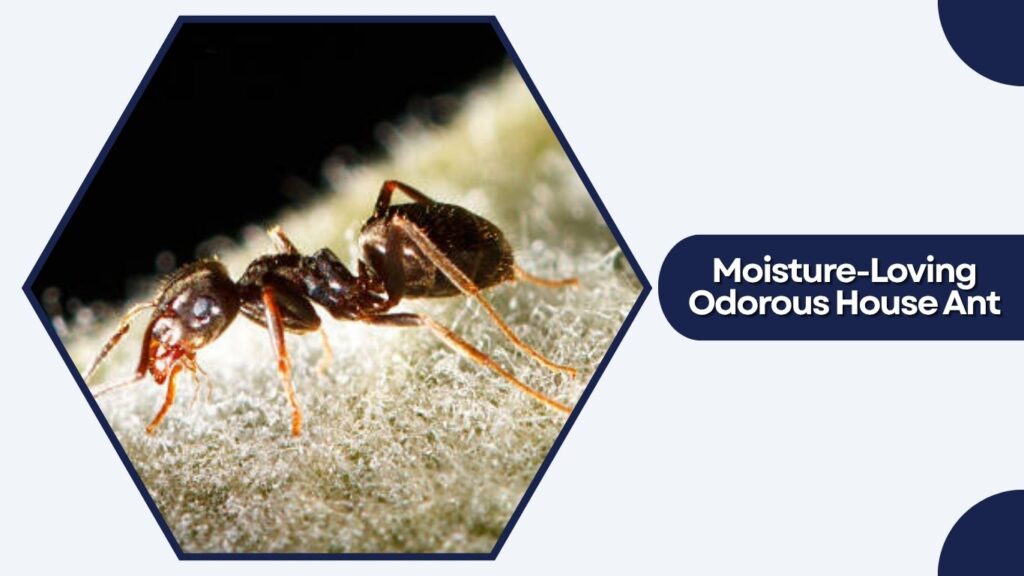
Moisture-loving odorous house ants are commonly associated with damp environments where water and humidity are consistently available. These ants frequently invade kitchens, bathrooms, basements, and plumbing areas inside homes. Like other odorous house ants, they produce a strong rotten coconut-like smell when crushed.
Identification
- Small dark brown body
- Slender smooth appearance
- About 1/16 to 1/8 inch long
- Uneven thorax profile
- Hidden waist node
- Long elbowed antennae
- Strong unpleasant odor when crushed
Habitat and Distribution
Moisture-loving odorous house ants commonly nest near leaking pipes, damp wood, wall voids, mulch, and wet soil. They are often found in humid climates, water-damaged structures, and areas with poor ventilation.
Behavior and Diet
These ants actively search for sugary foods, moisture, fruit juice, crumbs, and honeydew from plant-feeding insects. Workers often travel along plumbing lines, sinks, and damp surfaces while foraging indoors.
Reproduction and Colony Structure
Moisture-loving odorous house ant colonies may contain multiple queens and thousands of workers. Colonies reproduce rapidly in humid environments and can spread into nearby rooms through wall voids and hidden structural spaces.
15. Sugar Odorous House Ant
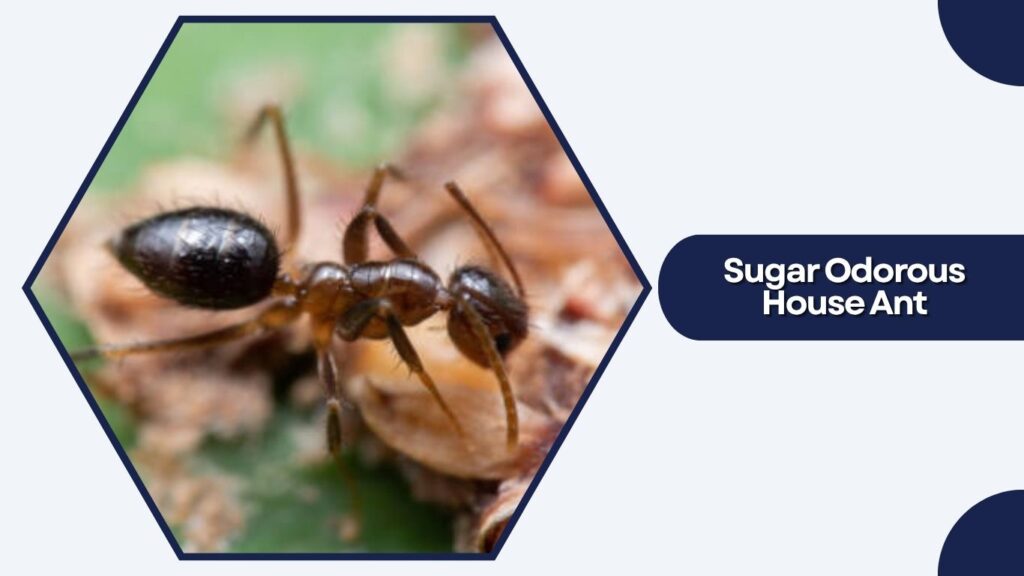
Sugar odorous house ants are highly attracted to sweet foods and are commonly found invading kitchens, pantries, restaurants, and food storage areas. These ants form long foraging trails to sugary spills and beverages. Like other odorous house ants, they release a strong unpleasant odor when crushed.
Identification
- Small dark brown to black body
- Slender lightweight appearance
- Around 1/16 to 1/8 inch long
- Uneven thorax structure
- Hidden waist node
- Long segmented antennae
- Rotten coconut-like smell when crushed
Habitat and Distribution
Sugar odorous house ants commonly nest under rocks, mulch, wall voids, insulation, and foundation cracks. They are frequently found in homes, grocery stores, gardens, and urban areas with abundant food sources.
Behavior and Diet
These ants strongly prefer sugary foods such as candy, syrup, fruit juice, honey, soft drinks, and honeydew from aphids. Workers quickly recruit other ants once sweet food sources are discovered indoors.
Reproduction and Colony Structure
Sugar odorous house ant colonies may contain several queens and large worker populations. Colonies reproduce rapidly and often create multiple satellite nests, allowing infestations to spread throughout buildings and nearby outdoor areas.
16. Tree-Nesting Odorous House Ant
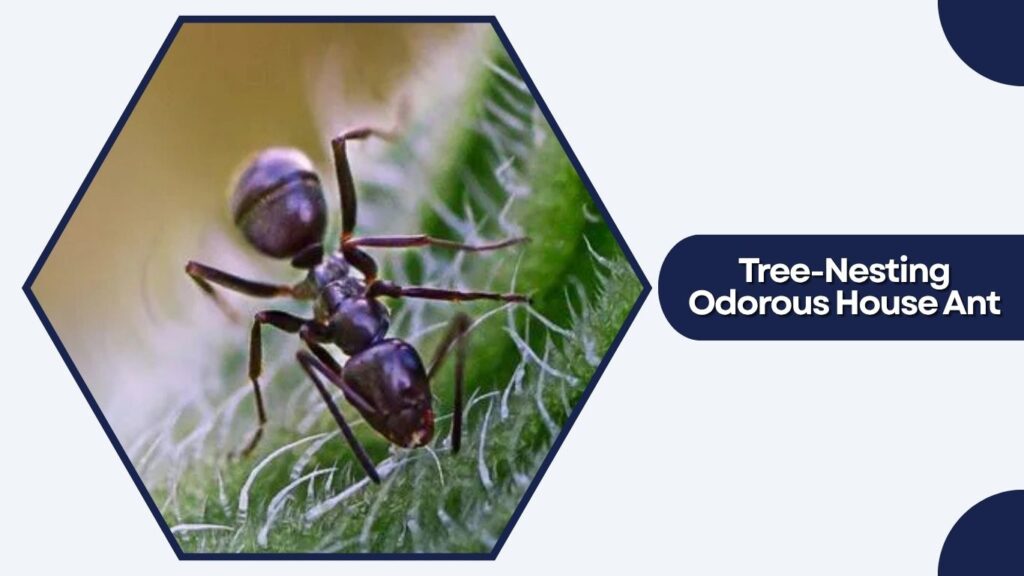
Tree-nesting odorous house ants are commonly found living in trees, hollow branches, decaying wood, and wooded residential areas. These ants may travel from outdoor nests into homes while searching for food and moisture. Like other odorous house ants, they release a strong rotten coconut-like odor when crushed.
Identification
- Small dark brown or black body
- Smooth slightly shiny appearance
- Around 1/8 inch long
- Uneven thorax shape
- Hidden waist node
- Long elbowed antennae
- Strong unpleasant odor when crushed
Habitat and Distribution
Tree-nesting odorous house ants commonly nest inside hollow trees, rotting branches, wood piles, fence posts, and forested suburban areas. They are often found near yards with dense vegetation and mature trees.
Behavior and Diet
These ants feed on sugary liquids, nectar, honeydew from aphids, fruit, and small insects. Workers frequently travel along tree trunks, branches, fences, and utility lines while searching for food sources.
Reproduction and Colony Structure
Tree-nesting odorous house ant colonies may contain multiple queens and thousands of workers. Colonies often spread through budding, creating satellite nests in nearby trees, wood structures, and residential buildings.
17. Urban Odorous House Ant
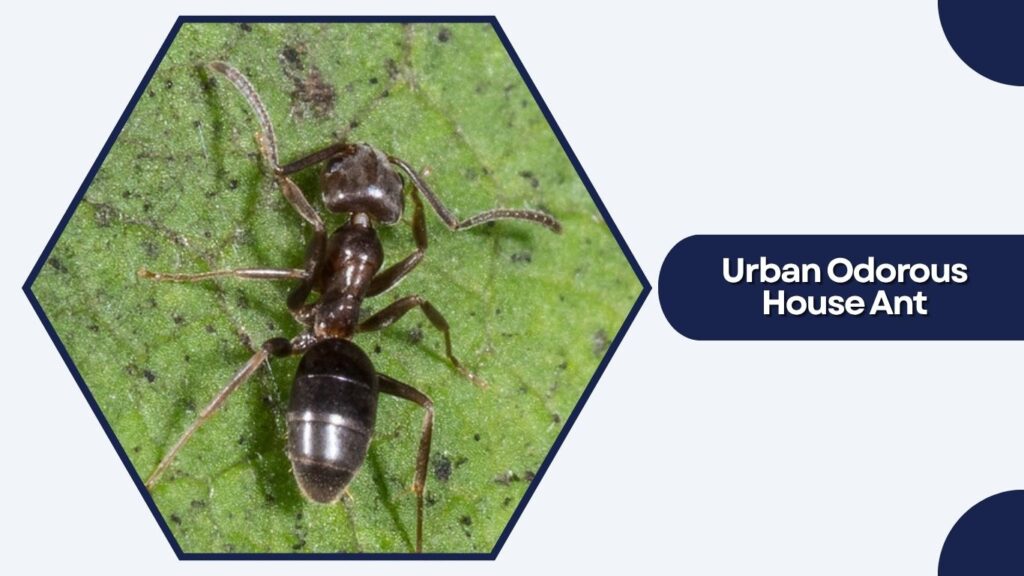
Urban odorous house ants are highly adaptable ants commonly found in cities, apartment buildings, offices, sidewalks, and residential neighborhoods. These ants thrive around human activity where food, moisture, and shelter are consistently available. Like other odorous house ants, they release a strong rotten coconut-like smell when crushed.
Identification
- Small dark brown to black body
- Smooth slender appearance
- About 1/16 to 1/8 inch long
- Uneven thorax profile
- Hidden waist node
- Long segmented antennae
- Strong unpleasant odor when crushed
Habitat and Distribution
Urban odorous house ants commonly nest beneath sidewalks, concrete slabs, wall voids, insulation, landscaping mulch, and foundation cracks. They are especially common in densely populated neighborhoods and commercial areas.
Behavior and Diet
These ants feed mainly on sugary foods, grease, crumbs, spilled drinks, and honeydew from plant-feeding insects. Workers form long visible trails along walls, sidewalks, pipes, and electrical lines while foraging indoors and outdoors.
Reproduction and Colony Structure
Urban odorous house ant colonies may contain several queens and extremely large worker populations. Colonies reproduce quickly and often split into multiple satellite nests that spread throughout connected urban structures.
18. Field Odorous House Ant
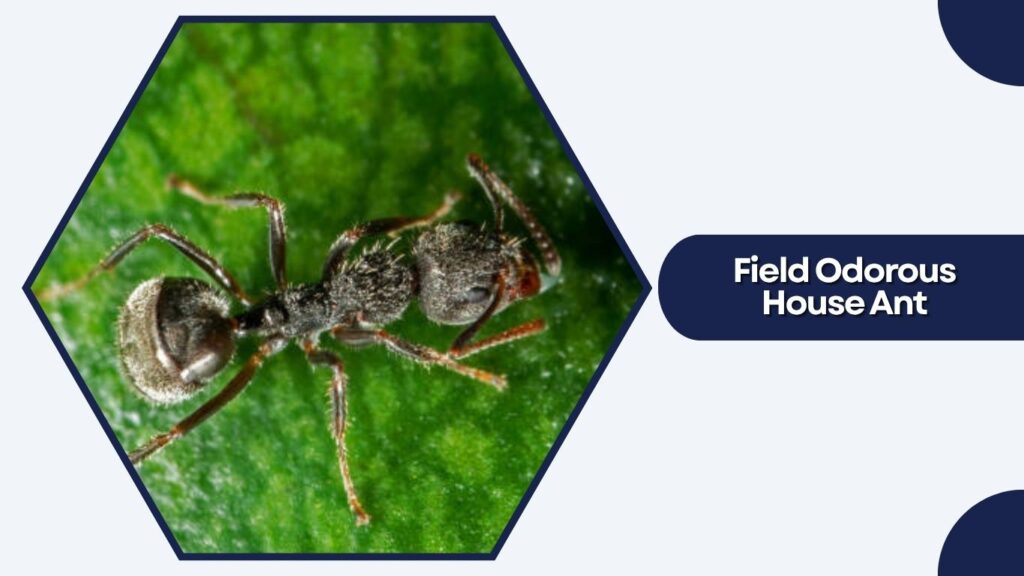
Field odorous house ants are commonly found in grassy areas, open fields, gardens, and agricultural landscapes. Although they primarily nest outdoors, they may enter nearby homes and buildings while searching for food and water. Like other odorous house ants, they release a strong unpleasant odor when crushed.
Identification
- Small dark brown body
- Slender smooth appearance
- About 1/8 inch long
- Uneven thorax shape
- Hidden waist node
- Long elbowed antennae
- Rotten coconut-like smell when crushed
Habitat and Distribution
Field odorous house ants commonly nest beneath rocks, soil, mulch, grass roots, and decaying vegetation in open outdoor environments. They are frequently found in lawns, gardens, parks, farms, and suburban landscapes.
Behavior and Diet
These ants feed mainly on sugary liquids, honeydew from aphids, plant material, dead insects, and food scraps. Workers often create visible trails across grass, sidewalks, fences, and building foundations while foraging.
Reproduction and Colony Structure
Field odorous house ant colonies may contain multiple queens and thousands of workers. Colonies grow rapidly during warm weather and may establish several nearby satellite nests throughout grassy outdoor habitats.
19. Household Odorous House Ant
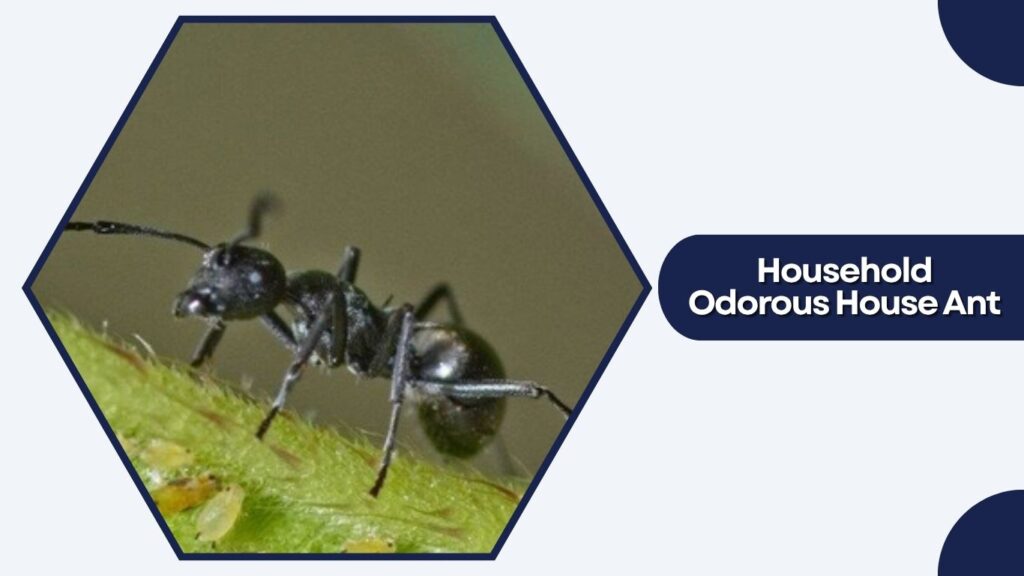
Household odorous house ants are common indoor nuisance ants frequently found in kitchens, bathrooms, laundry rooms, and food storage areas. These ants are highly adaptable and often establish large colonies close to human structures where food and moisture are easily available. When crushed, they release the strong rotten coconut-like odor typical of odorous house ants.
Identification
- Small dark brown to black body
- Slender slightly shiny appearance
- Around 1/16 to 1/8 inch long
- Uneven thorax structure
- Hidden waist node
- Long segmented antennae
- Strong unpleasant odor when crushed
Habitat and Distribution
Household odorous house ants commonly nest inside wall voids, beneath flooring, behind appliances, near plumbing, and under insulation. They are widespread in homes, apartments, restaurants, and commercial buildings.
Behavior and Diet
These ants strongly prefer sugary foods, crumbs, pet food, syrup, fruit juice, and grease. Workers create organized trails through kitchens and storage areas while searching for food and moisture sources indoors.
Reproduction and Colony Structure
Household odorous house ant colonies often contain multiple queens and very large worker populations. Colonies reproduce quickly and may divide into satellite nests, allowing infestations to spread rapidly throughout buildings.
20. Common Odorous House Ant
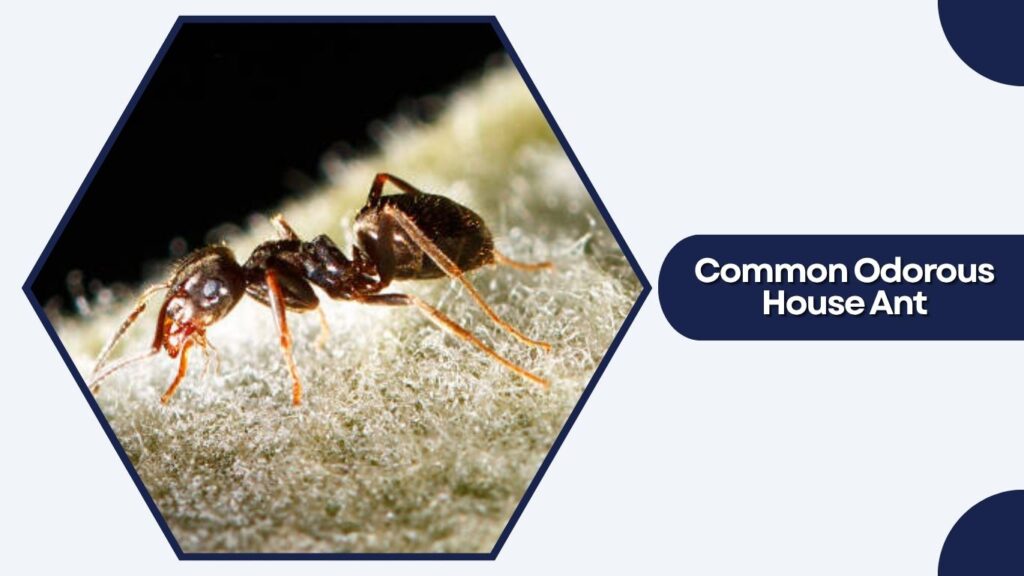
Common odorous house ants are among the most widespread nuisance ants found in homes, gardens, sidewalks, and commercial buildings. These ants are highly adaptable and frequently invade indoor spaces searching for food and moisture. Like all odorous house ants, they produce a strong rotten coconut-like smell when crushed.
Identification
- Small dark brown or black body
- Smooth slender appearance
- About 1/16 to 1/8 inch long
- Uneven thorax profile
- Hidden waist node
- Long elbowed antennae
- Strong unpleasant odor when crushed
Habitat and Distribution
Common odorous house ants are found throughout urban, suburban, and natural environments. They commonly nest beneath rocks, mulch, logs, sidewalks, wall voids, and insulation near moisture and shelter sources.
Behavior and Diet
These ants mainly feed on sugary foods, fruit juice, syrup, grease, pet food, and honeydew from aphids. Workers form long visible trails and can quickly spread through homes once reliable food sources are discovered.
Reproduction and Colony Structure
Common odorous house ant colonies may contain several queens and thousands of workers. Colonies reproduce rapidly and often establish multiple satellite nests, making infestations difficult to control once they spread indoors.
FAQs
What are odorous house ants?
Odorous house ants are small dark-colored ants known for producing a strong rotten coconut-like smell when crushed. They commonly invade homes searching for sugary foods, moisture, and shelter, especially in kitchens and bathrooms.
Why are odorous house ants called “odorous”?
These ants are called odorous because they release a strong unpleasant smell when crushed. Many people compare the odor to rotten coconut, spoiled butter, or a musty chemical scent.
Are odorous house ants dangerous?
Odorous house ants are not considered dangerous to humans because they rarely bite and do not spread serious diseases directly. However, they can contaminate food and become major nuisance pests indoors.
What do odorous house ants eat?
Odorous house ants mainly feed on sugary substances such as syrup, fruit juice, candy, and honeydew from aphids. They may also eat grease, crumbs, dead insects, and pet food when necessary.
How do you get rid of odorous house ants?
Removing food sources, sealing entry points, reducing moisture, and using bait treatments are common ways to control odorous house ants. Large infestations may require professional pest control for complete elimination.