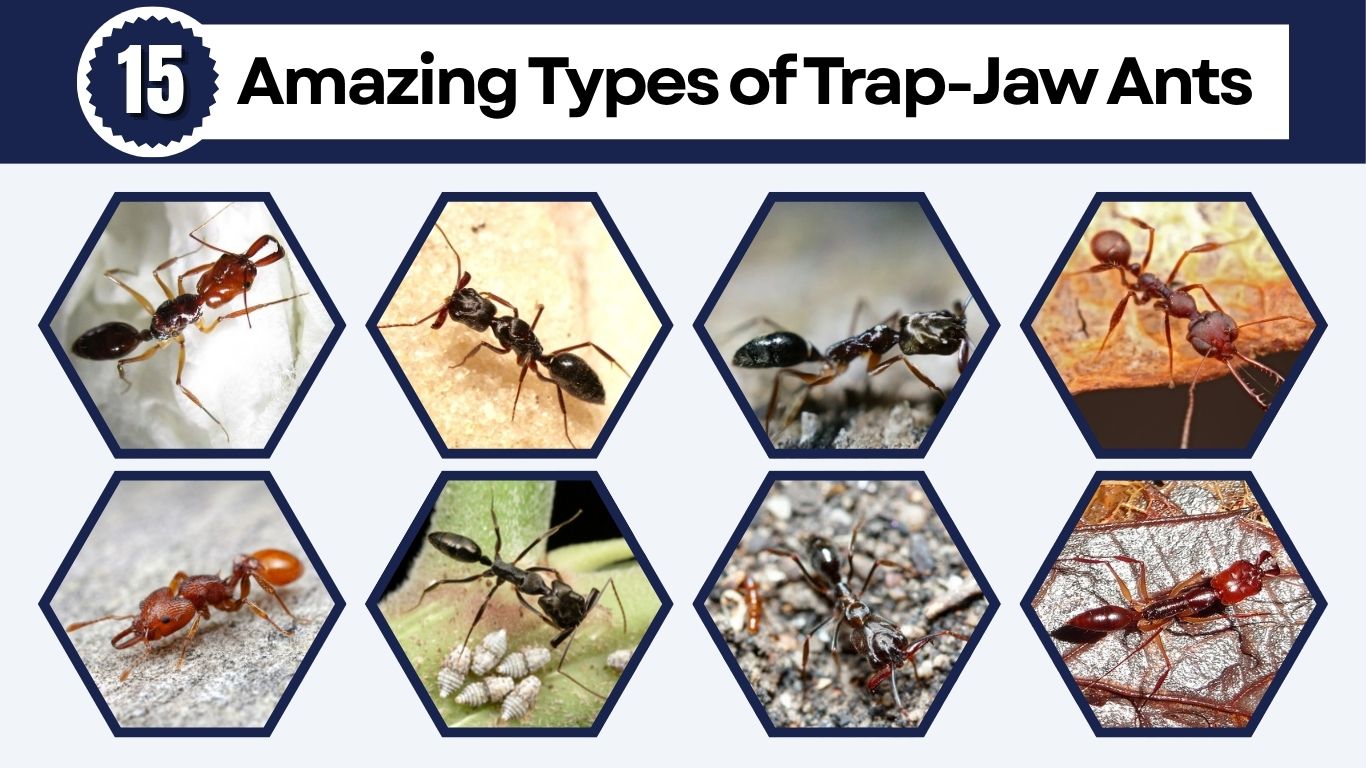
Trap-jaw ants are some of the most fascinating ants in the insect world. They are famous for their lightning-fast mandibles, which snap shut to capture prey and defend against predators. These ants are found mainly in tropical and subtropical regions where forests, leaf litter, and moist soil provide perfect nesting conditions. Different types of trap-jaw ants vary in color, size, habitat, and behavior, but all are skilled hunters with powerful jaws. In this guide, you will discover 15 interesting types of trap-jaw ants along with their identification features, habitats, diets, and life cycles.
1. Giant Trap-Jaw Ant
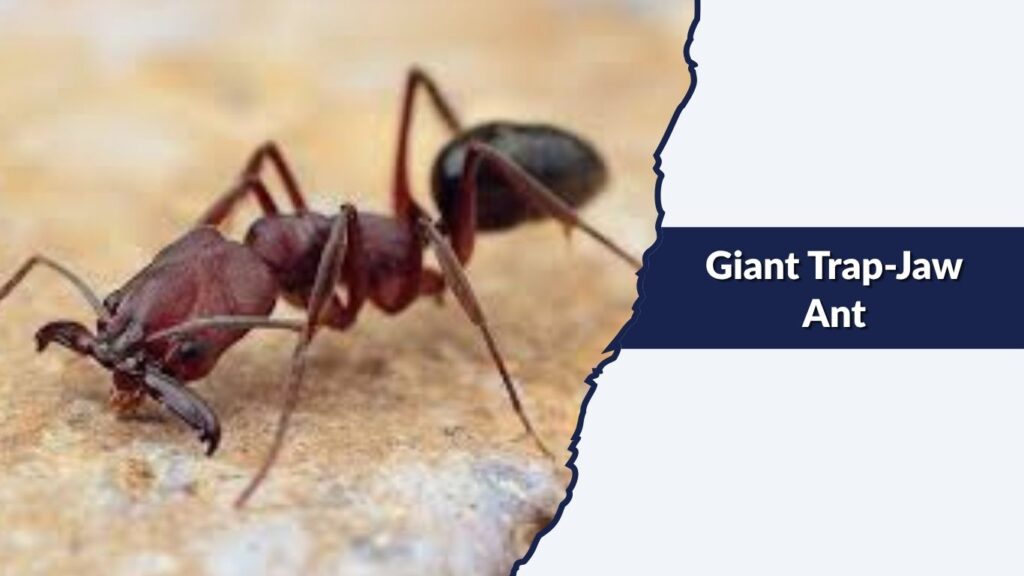
The Giant Trap-Jaw Ant is one of the most powerful and fascinating ant species found in tropical forests. It is famous for its extremely fast jaws, which snap shut with incredible speed to catch prey and defend the colony. These ants are skilled hunters and usually live in soil, leaf litter, or rotting wood in warm environments.
Identification
- Large body compared to many other ant species
- Dark brown to black body coloration
- Long, straight mandibles that open wide
- Strong legs built for fast movement
- Large eyes with excellent vision
- Workers usually range from 10 to 15 mm long
- Capable of snapping jaws extremely quickly
Habitat and Distribution
Giant Trap-Jaw Ants are mainly found in tropical and subtropical forests across Asia, Africa, and the Americas. They prefer humid habitats with loose soil, fallen leaves, and decaying wood. Colonies are often hidden under rocks, logs, or forest debris where moisture levels stay high and prey is abundant.
Behavior and Diet
These ants are aggressive predators that rely on their powerful jaws to capture insects and defend themselves from threats. Their mandibles can snap shut so quickly that they may even launch the ant backward as an escape response. Giant Trap-Jaw Ants feed mainly on insects, spiders, and other small invertebrates found on the forest floor.
Life Cycle
The colony begins when a queen lays eggs inside a protected underground nest. The eggs hatch into larvae, which are cared for by worker ants until they become pupae. After developing into adults, young ants join colony activities such as hunting and nest defense. Mature colonies may contain hundreds of workers living together in organized social groups.
2. Brown Trap-Jaw Ant
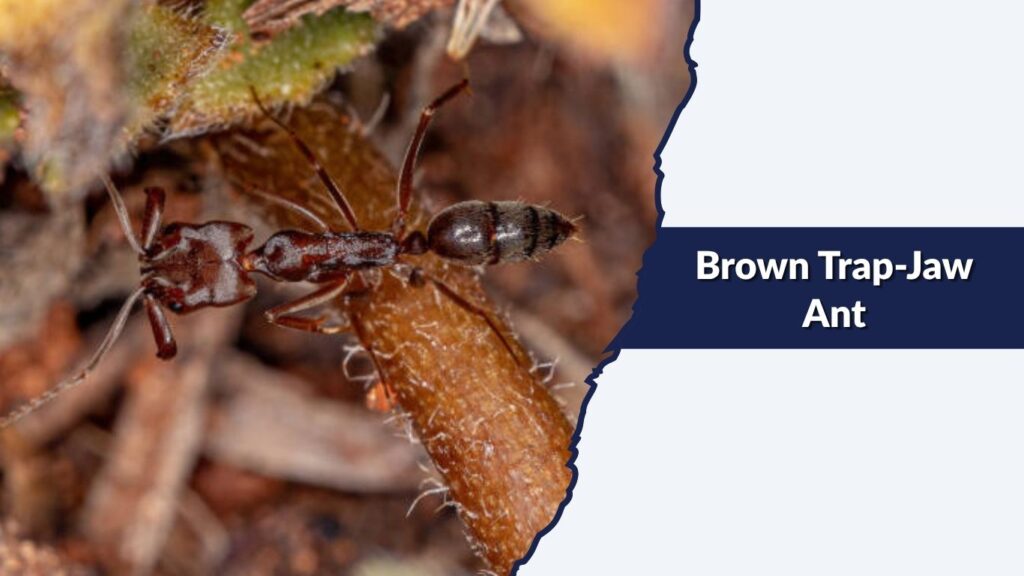
The Brown Trap-Jaw Ant is a fast-moving ant species known for its long snapping mandibles and strong hunting skills. These ants use their powerful jaws to catch prey, defend the colony, and escape danger. They are commonly found in forests and humid environments where leaf litter and loose soil provide good shelter for nesting.
Identification
- Brown to dark reddish-brown body color
- Long trap-like mandibles that open widely
- Slender body with long legs
- Large eyes positioned on the sides of the head
- Workers usually grow between 8 and 12 mm long
- Smooth shiny body surface
- Quick movement when disturbed
Habitat and Distribution
Brown Trap-Jaw Ants are commonly found in tropical forests, woodland habitats, and moist environments in Asia, Africa, and the Americas. They usually build nests under rocks, fallen logs, and leaf litter where humidity remains stable. These ants prefer warm climates with abundant insects and loose soil for easy tunnel construction.
Behavior and Diet
These ants are active hunters that rely on speed and sharp reflexes to capture prey. Their jaws snap shut rapidly when triggered, helping them catch insects and defend against predators. Brown Trap-Jaw Ants feed mainly on small insects, spiders, larvae, and other tiny invertebrates found on the forest floor.
Life Cycle
The queen lays eggs inside a protected underground nest. Worker ants care for the eggs and larvae until they develop into pupae and later emerge as adult ants. As the colony grows, workers expand the nest and continue hunting for food. Mature colonies may contain several hundred ants working together in organized groups.
3. Asian Trap-Jaw Ant
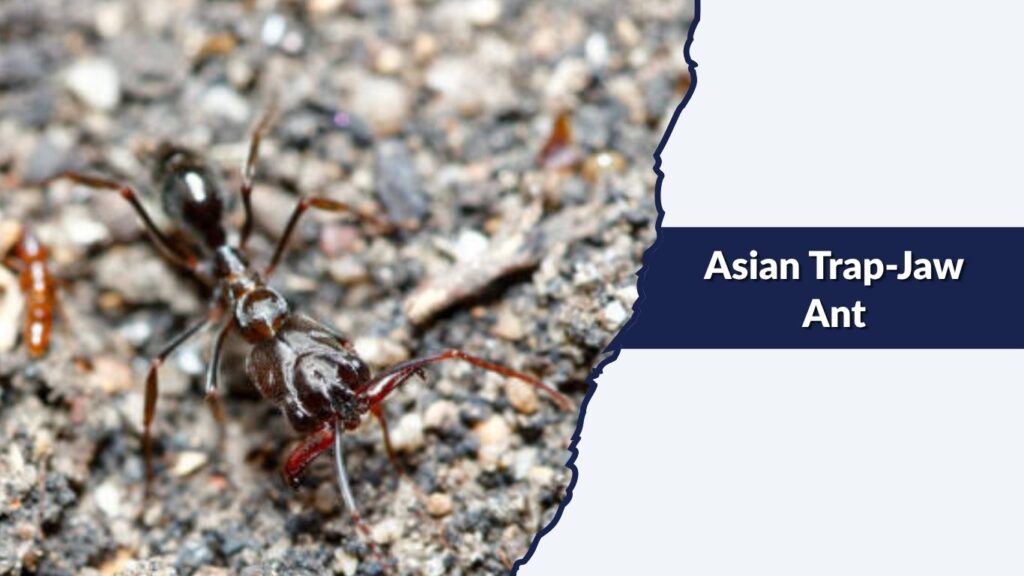
The Asian Trap-Jaw Ant is a powerful predatory ant species known for its lightning-fast mandibles and aggressive hunting behavior. These ants are commonly found in tropical forests and humid environments throughout Asia. Their strong jaws help them capture prey quickly and defend their colonies from predators and other insects.
Identification
- Dark brown to black body color
- Long straight mandibles that snap shut rapidly
- Slender body with strong legs
- Large eyes with sharp vision
- Workers usually measure 8 to 13 mm long
- Smooth body surface with a narrow waist
- Fast-moving and highly alert behavior
Habitat and Distribution
Asian Trap-Jaw Ants are widely distributed across tropical and subtropical regions of Asia, including forests, woodlands, and rainforest habitats. They prefer moist environments with loose soil, fallen leaves, and rotting wood. Colonies are often hidden beneath rocks, logs, or deep leaf litter where the ants can safely hunt and nest.
Behavior and Diet
These ants are solitary hunters that depend on their powerful jaws to catch insects and defend themselves. Their mandibles close at extremely high speed when triggered by nearby movement. Asian Trap-Jaw Ants mainly feed on insects, spiders, larvae, and other small invertebrates living on the forest floor and around decaying vegetation.
Life Cycle
The colony starts when a queen lays eggs inside a secure underground nest. Worker ants protect the eggs and care for the larvae until they become pupae. Young adult ants later emerge and begin helping with hunting, nest maintenance, and colony defense. Established colonies may contain hundreds of workers living together underground.
4. Australian Trap-Jaw Ant
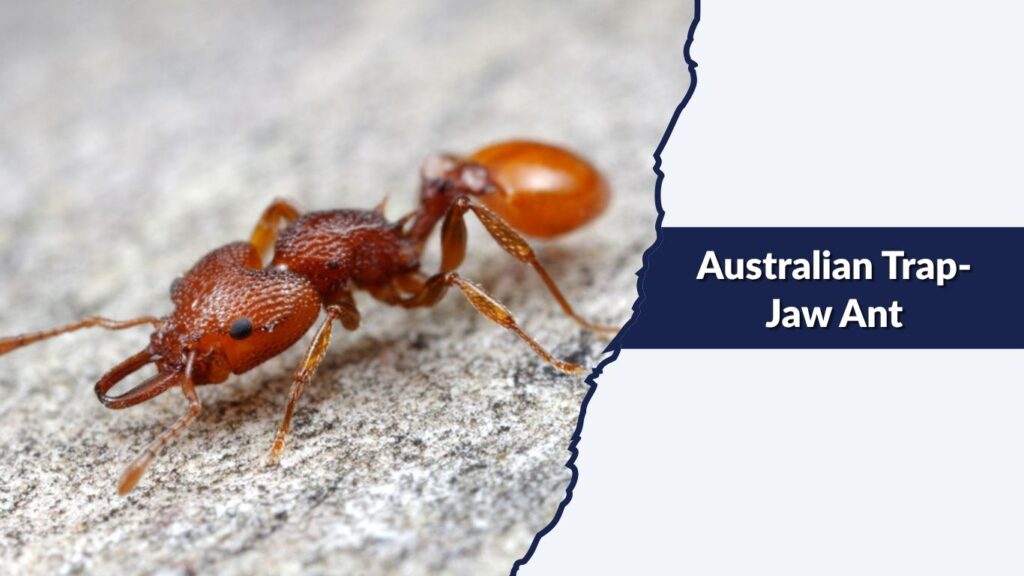
The Australian Trap-Jaw Ant is a fast and aggressive ant species famous for its powerful snapping jaws. These ants are skilled predators that hunt insects on the ground and among leaf litter. Their quick reflexes and strong mandibles make them highly effective hunters in Australia’s warm forests and woodland habitats.
Identification
- Dark brown, reddish-brown, or black body color
- Long trap-like mandibles with sharp edges
- Slim body with long powerful legs
- Large eyes positioned toward the front of the head
- Workers usually grow between 9 and 14 mm long
- Smooth body with a narrow waist section
- Extremely quick jaw-snapping movement
Habitat and Distribution
Australian Trap-Jaw Ants are mainly found in forests, grasslands, and woodland areas throughout Australia. They prefer warm habitats with loose soil, fallen leaves, and rotting logs. Their nests are usually hidden underground, beneath stones, or inside decaying wood where moisture levels remain suitable for colony survival.
Behavior and Diet
These ants are active predators that rely on their fast jaws to catch prey and defend themselves. When threatened, they may use their jaws to launch themselves backward away from danger. Australian Trap-Jaw Ants feed mostly on insects, spiders, larvae, and other small invertebrates found around the forest floor.
Life Cycle
The queen begins the colony by laying eggs inside a protected nest chamber. Worker ants later hatch and care for the larvae until they develop into pupae and become adults. As the colony expands, workers continue building tunnels, hunting for food, and protecting the nest from predators and rival ants.
5. Long-Mandible Trap-Jaw Ant
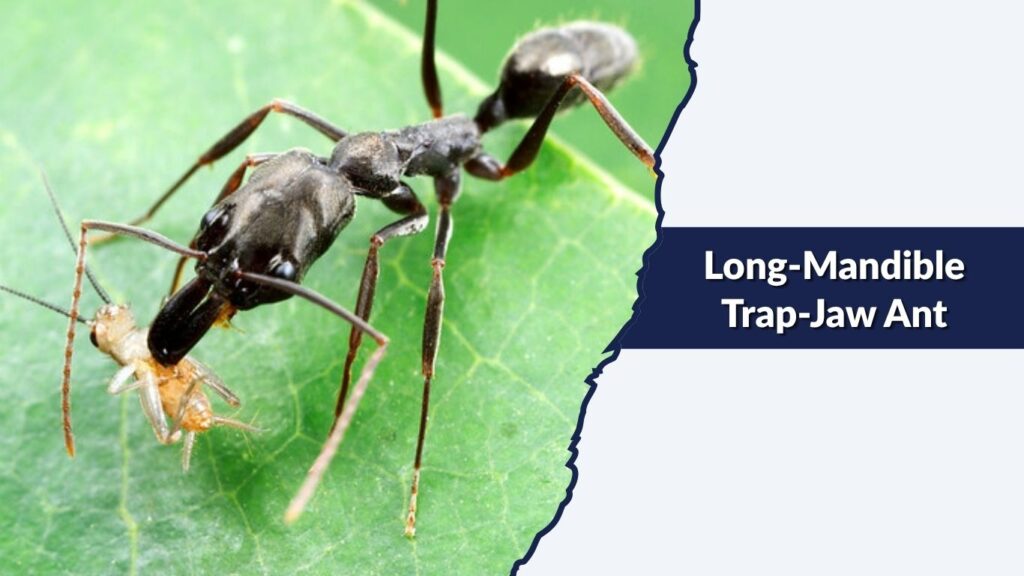
The Long-Mandible Trap-Jaw Ant is a remarkable ant species recognized for its extra-long snapping jaws used for hunting and defense. These ants are fast-moving predators that rely on their powerful mandibles to capture prey with incredible speed. They are usually found in tropical forests where moist soil and leaf litter provide ideal nesting conditions.
Identification
- Very long straight mandibles compared to body size
- Dark brown to black body coloration
- Slender body with long legs
- Large eyes with excellent vision
- Workers usually measure 9 to 14 mm long
- Narrow waist and smooth outer body surface
- Fast jaw-snapping reaction when disturbed
Habitat and Distribution
Long-Mandible Trap-Jaw Ants are commonly found in tropical and subtropical forests across Asia, Africa, and the Americas. They prefer humid environments with loose soil, fallen leaves, and decaying wood. Their nests are often hidden under logs, rocks, and thick forest debris where prey is plentiful.
Behavior and Diet
These ants are skilled hunters that use their long mandibles to catch insects and defend their colony. Their jaws snap shut at extremely high speed when triggered by movement. Long-Mandible Trap-Jaw Ants feed mainly on insects, spiders, larvae, and other small invertebrates living near the forest floor.
Life Cycle
The queen lays eggs inside a secure underground nest protected by worker ants. The eggs hatch into larvae, which are fed and cleaned by workers until they develop into pupae. Young adult ants later emerge and begin helping with hunting, nest maintenance, and colony defense. Mature colonies may contain hundreds of workers living together underground.
6. Black Trap-Jaw Ant
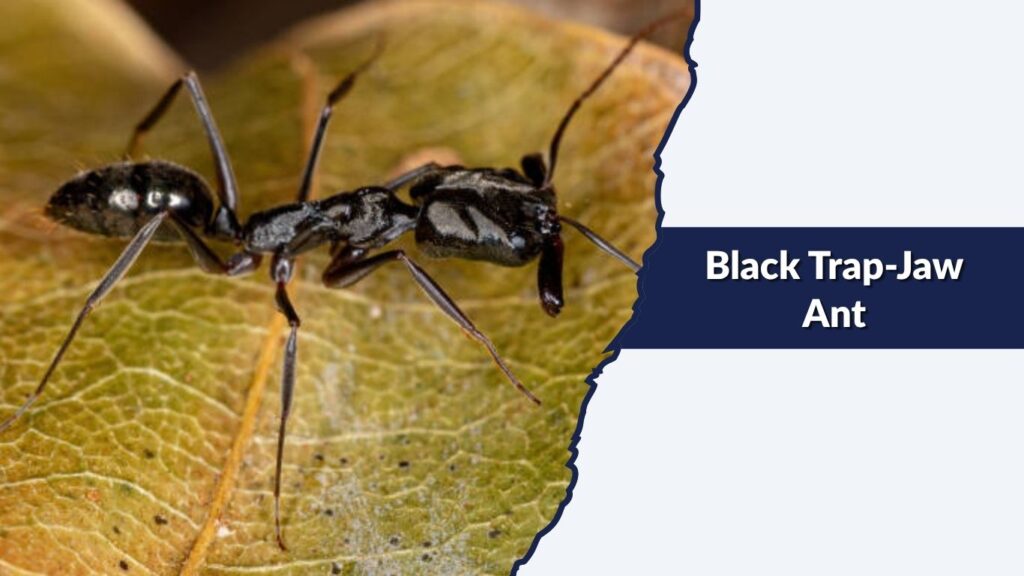
The Black Trap-Jaw Ant is a powerful predatory ant species known for its dark body color and lightning-fast jaws. These ants use their snapping mandibles to capture prey, defend the colony, and escape danger. They are highly alert hunters commonly found in forests, woodlands, and humid tropical habitats.
Identification
- Shiny black or dark brown body color
- Long trap-like mandibles with sharp tips
- Slender body with strong legs
- Large eyes positioned on the sides of the head
- Workers usually grow between 8 and 13 mm long
- Narrow waist with a smooth body surface
- Extremely quick jaw-snapping movement
Habitat and Distribution
Black Trap-Jaw Ants are mainly found in tropical forests and warm woodland habitats across Asia, Africa, and the Americas. They prefer moist environments with leaf litter, soft soil, and decaying wood. Their nests are commonly hidden under rocks, fallen logs, or underground in shaded forest areas.
Behavior and Diet
These ants are aggressive hunters that rely on speed and precision to catch prey. Their jaws close with incredible force when triggered by movement or touch. Black Trap-Jaw Ants feed on insects, spiders, larvae, and other tiny invertebrates found around the forest floor and rotting vegetation.
Life Cycle
The colony begins when a queen establishes a protected underground nest and lays eggs. Worker ants later hatch and care for the developing larvae until they become pupae and adult ants. As the colony grows, workers continue hunting, expanding tunnels, and defending the nest from predators and rival colonies.
7. Red Trap-Jaw Ant
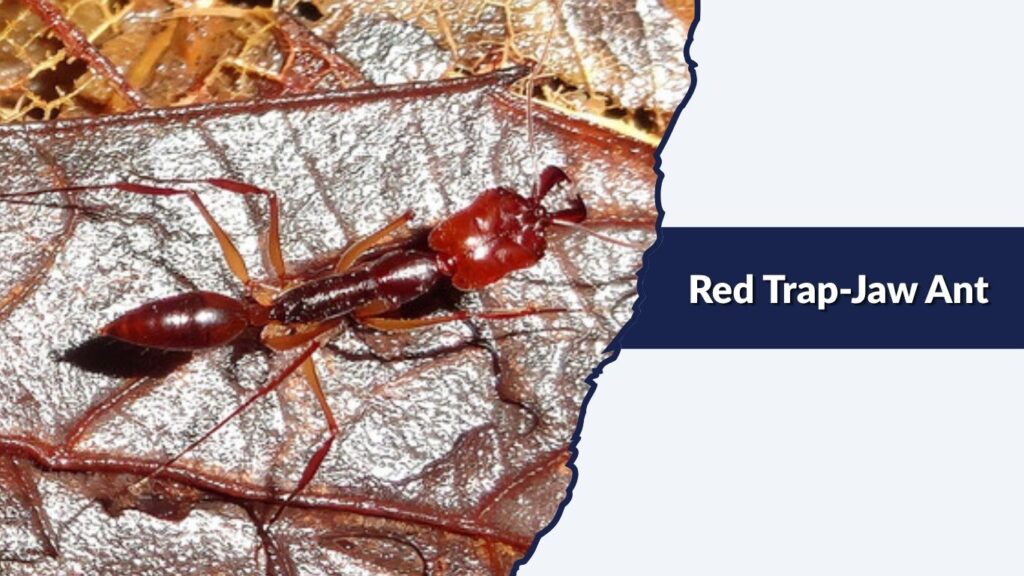
The Red Trap-Jaw Ant is a striking ant species recognized for its reddish body color and powerful snapping mandibles. These ants are fast predators that use their jaws to catch prey and defend their colonies from threats. They are commonly found in tropical forests and humid habitats with plenty of leaf litter and soft soil.
Identification
- Bright reddish-brown to dark red body color
- Long straight mandibles that open widely
- Slim body with long legs
- Large eyes with strong daytime vision
- Workers usually measure 8 to 12 mm long
- Smooth body surface with a narrow waist
- Fast-moving and highly alert behavior
Habitat and Distribution
Red Trap-Jaw Ants are widely found in tropical and subtropical forests across Asia, Africa, and the Americas. They prefer warm, humid environments with loose soil, decaying wood, and thick leaf litter. Their nests are usually built underground or beneath rocks and fallen logs in shaded forest areas.
Behavior and Diet
These ants are active hunters that rely on their powerful jaws to capture insects quickly. When disturbed, they may snap their mandibles shut with enough force to push themselves backward away from danger. Red Trap-Jaw Ants feed mainly on insects, spiders, larvae, and other small invertebrates found near the forest floor.
Life Cycle
The queen lays eggs inside a protected nest chamber underground. Worker ants care for the eggs and larvae until they develop into pupae and later emerge as adults. Young ants eventually join colony tasks such as hunting, nest maintenance, and colony defense. Mature colonies may contain hundreds of workers living together in organized groups.
8. Forest Trap-Jaw Ant
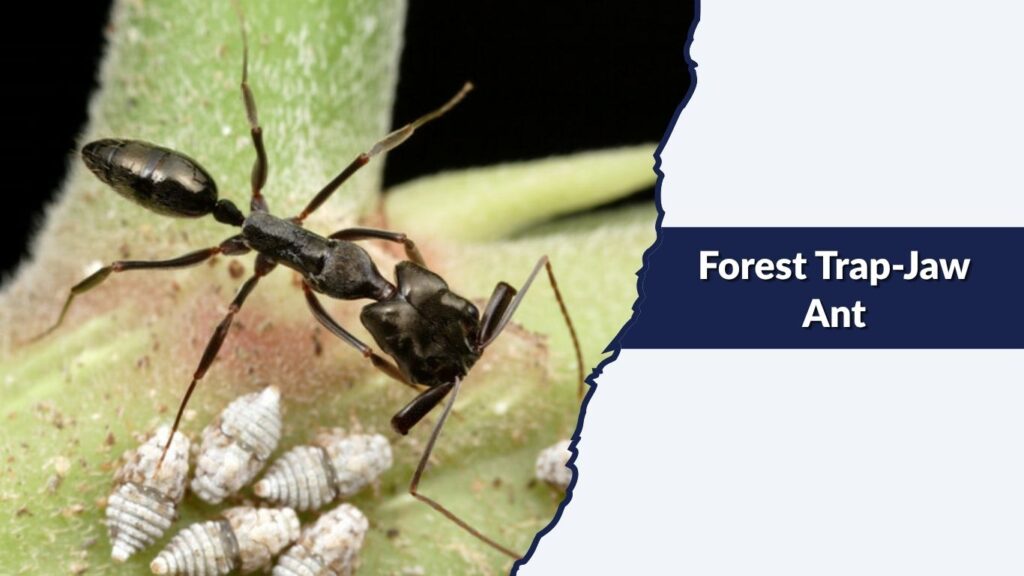
The Forest Trap-Jaw Ant is a fast and aggressive ant species that lives mainly in dense woodland and rainforest habitats. These ants are famous for their powerful snapping jaws, which they use to catch prey and defend themselves from predators. Their quick reactions and strong hunting abilities make them effective predators on the forest floor.
Identification
- Dark brown to reddish-black body color
- Long mandibles that snap shut rapidly
- Slender body with long legs
- Large eyes with sharp vision
- Workers usually grow between 9 and 13 mm long
- Smooth body with a narrow waist
- Extremely alert and quick-moving behavior
Habitat and Distribution
Forest Trap-Jaw Ants are commonly found in tropical forests, rainforests, and humid woodland areas across Asia, Africa, and the Americas. They prefer moist habitats with thick leaf litter, loose soil, and rotting wood. Colonies are usually hidden underground or beneath logs and stones where humidity remains stable.
Behavior and Diet
These ants are skilled predators that hunt alone or in small groups. Their powerful mandibles snap shut at incredible speed when triggered by nearby movement. Forest Trap-Jaw Ants feed mainly on insects, spiders, larvae, and other tiny invertebrates living among leaves and decaying forest material.
Life Cycle
The queen begins the colony by laying eggs inside a protected underground nest. Worker ants later hatch and care for the larvae until they become pupae and eventually adult ants. As the colony grows, workers continue expanding tunnels, gathering food, and protecting the nest from predators and rival ants.
9. Tropical Trap-Jaw Ant
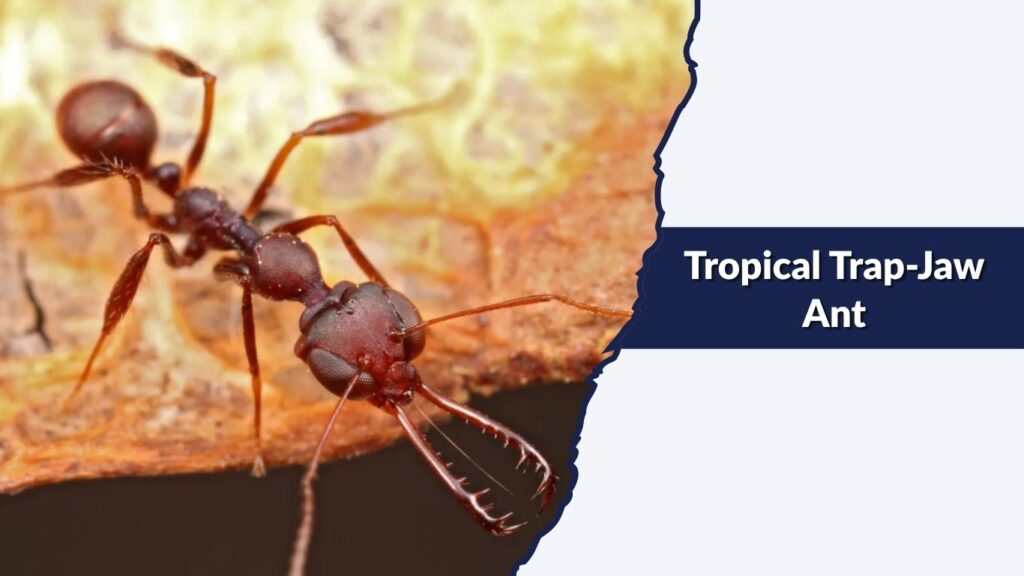
The Tropical Trap-Jaw Ant is a powerful hunting ant commonly found in warm tropical environments. It is famous for its extremely fast mandibles that snap shut to catch prey and defend the colony. These ants are active predators and usually live in humid forests where leaf litter and loose soil provide ideal nesting conditions.
Identification
- Dark brown, reddish-brown, or black body color
- Long trap-like mandibles with sharp inner edges
- Slender body supported by long legs
- Large eyes with excellent vision
- Workers usually measure 8 to 14 mm long
- Smooth body surface with a narrow waist
- Fast-moving and highly defensive behavior
Habitat and Distribution
Tropical Trap-Jaw Ants are widely distributed throughout tropical forests in Asia, Africa, Australia, and the Americas. They prefer humid habitats with dense vegetation, fallen leaves, and rotting wood. Their nests are commonly found underground, beneath stones, or inside decaying logs where moisture levels remain high.
Behavior and Diet
These ants are aggressive hunters that use their powerful jaws to seize prey instantly. Their mandibles can snap shut so quickly that the force may help the ant jump backward away from danger. Tropical Trap-Jaw Ants mainly feed on insects, spiders, larvae, and other small invertebrates found on the forest floor.
Life Cycle
The colony starts when a queen lays eggs inside a secure underground nest. Worker ants protect the eggs and feed the larvae until they develop into pupae. After emerging as adults, young ants begin helping with hunting, nest construction, and colony defense. Mature colonies may contain hundreds of workers living together underground.
10. Leaf-Litter Trap-Jaw Ant
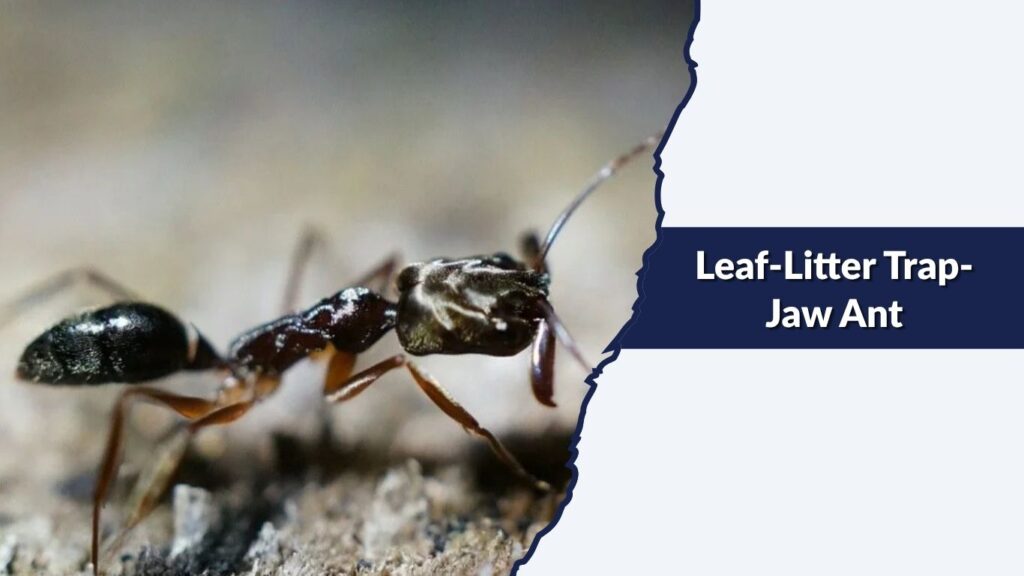
The Leaf-Litter Trap-Jaw Ant is a ground-dwelling ant species commonly found among fallen leaves and forest debris. These ants are famous for their lightning-fast jaws, which help them capture prey and defend themselves from predators. Their hidden lifestyle and quick reflexes make them highly effective hunters on the forest floor.
Identification
- Dark brown to black body coloration
- Long snapping mandibles with sharp tips
- Slim body with long legs for fast movement
- Large eyes adapted for hunting
- Workers usually grow between 7 and 12 mm long
- Narrow waist and smooth outer body surface
- Often seen moving quickly through leaf litter
Habitat and Distribution
Leaf-Litter Trap-Jaw Ants are commonly found in tropical forests, rainforests, and woodland habitats across Asia, Africa, and the Americas. They prefer moist environments rich in fallen leaves, decaying wood, and soft soil. Their nests are usually hidden beneath leaf litter, logs, stones, or shallow underground tunnels.
Behavior and Diet
These ants are active predators that rely on their powerful jaws to catch small prey quickly. They hunt insects, spiders, larvae, and other tiny invertebrates living among leaves and forest debris. When threatened, Leaf-Litter Trap-Jaw Ants may snap their jaws against the ground to launch themselves backward and escape danger.
Life Cycle
The queen lays eggs inside a protected underground or hidden nest chamber. Worker ants care for the eggs and larvae until they develop into pupae and later emerge as adult ants. As the colony grows, workers continue expanding the nest, searching for food, and defending the colony from predators and rival ants.
11. Small Trap-Jaw Ant
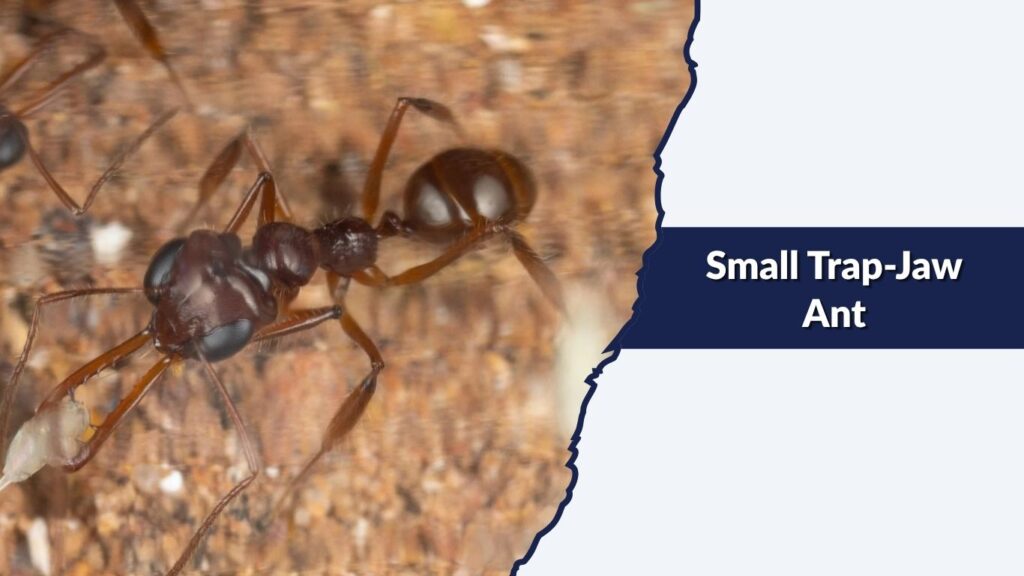
The Small Trap-Jaw Ant is a tiny but highly aggressive ant species known for its fast-closing mandibles and quick hunting behavior. Despite its smaller size, this ant is an efficient predator that uses its snapping jaws to capture prey and defend itself. These ants are commonly found in forests, gardens, and humid environments with loose soil and leaf litter.
Identification
- Small dark brown to reddish-black body color
- Long narrow mandibles compared to body size
- Slender body with thin legs
- Large eyes for detecting movement
- Workers usually measure 5 to 8 mm long
- Smooth shiny body surface
- Extremely quick jaw-snapping reflexes
Habitat and Distribution
Small Trap-Jaw Ants are widely distributed across tropical and subtropical forests in Asia, Africa, and the Americas. They prefer warm and moist habitats with leaf litter, decaying wood, and soft soil. Their nests are often hidden underground, beneath stones, or inside rotting logs where moisture levels remain stable.
Behavior and Diet
These ants are active hunters that rely on speed rather than strength to capture prey. Their jaws close instantly when triggered by movement, allowing them to catch tiny insects and other small invertebrates. Small Trap-Jaw Ants mainly feed on insects, larvae, spiders, and soft-bodied arthropods found on the forest floor.
Life Cycle
The colony begins when a queen lays eggs inside a protected nest chamber. Worker ants later hatch and care for the larvae until they become pupae and develop into adults. Young ants gradually take over colony duties such as hunting, nest maintenance, and defense. Mature colonies may contain hundreds of workers living together underground.
12. Spiny Trap-Jaw Ant
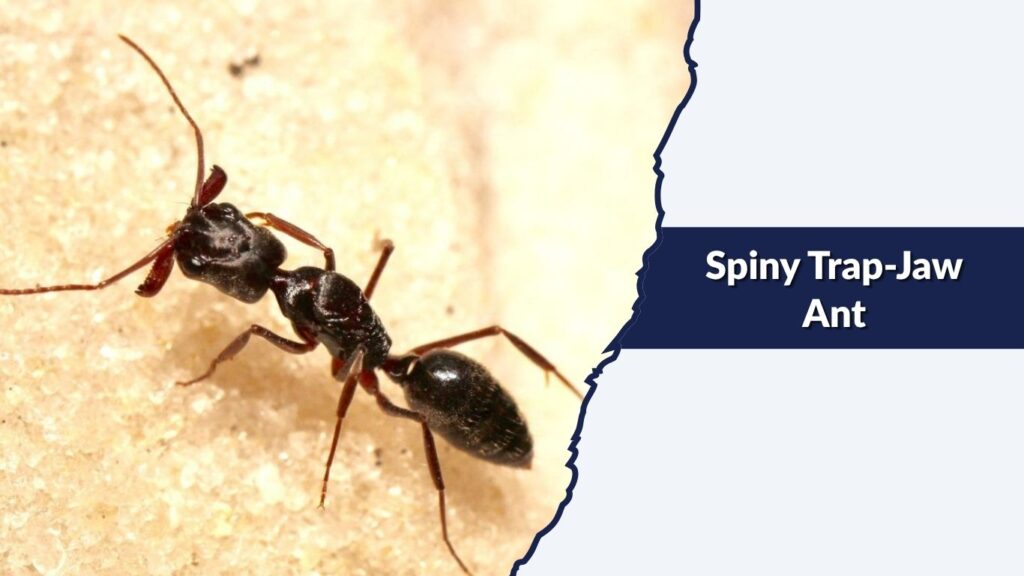
The Spiny Trap-Jaw Ant is a unique ant species recognized for the small spine-like structures on its body and its powerful snapping jaws. These ants are fast predators that use their mandibles to capture prey and defend themselves from threats. They are commonly found in tropical forests where moist soil and dense leaf litter provide ideal nesting conditions.
Identification
- Dark brown to black body color
- Small spine-like projections on the thorax or back
- Long trap-like mandibles with sharp edges
- Slender body with strong legs
- Large eyes with excellent vision
- Workers usually grow between 8 and 13 mm long
- Extremely quick jaw-snapping movement
Habitat and Distribution
Spiny Trap-Jaw Ants are mainly found in tropical and subtropical forests across Asia, Africa, and the Americas. They prefer humid habitats with loose soil, fallen leaves, and decaying wood. Their nests are usually hidden beneath rocks, logs, or deep leaf litter where moisture levels stay consistent.
Behavior and Diet
These ants are aggressive hunters that depend on speed and precision to catch prey. Their jaws snap shut instantly when stimulated by movement near the mandibles. Spiny Trap-Jaw Ants feed mainly on insects, spiders, larvae, and other small invertebrates found on the forest floor and among rotting vegetation.
Life Cycle
The queen lays eggs inside a protected underground nest. Worker ants care for the eggs and larvae until they develop into pupae and later emerge as adult ants. As the colony grows, workers continue hunting, expanding nest tunnels, and defending the colony from predators and rival ants.
13. Yellow Trap-Jaw Ant
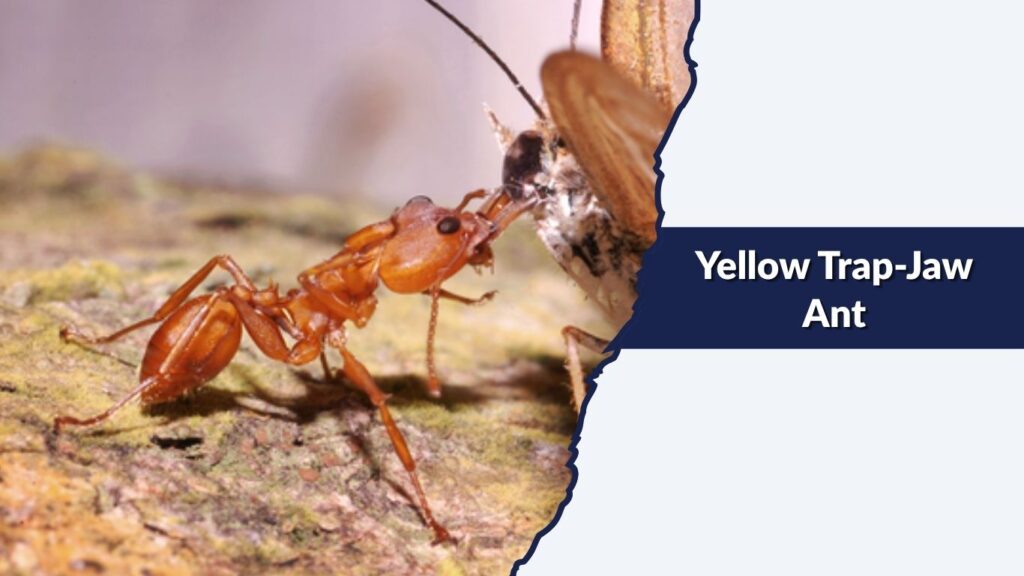
The Yellow Trap-Jaw Ant is a brightly colored predatory ant species known for its fast-snapping jaws and active hunting behavior. These ants use their powerful mandibles to catch prey and protect their colonies from danger. They are commonly found in warm tropical forests where leaf litter and moist soil provide excellent nesting conditions.
Identification
- Yellow to yellowish-brown body color
- Long straight mandibles with sharp inner edges
- Slender body with long legs
- Large eyes adapted for hunting
- Workers usually measure 7 to 12 mm long
- Smooth body surface with a narrow waist
- Quick movement and alert behavior
Habitat and Distribution
Yellow Trap-Jaw Ants are mainly found in tropical and subtropical forests across Asia, Africa, and the Americas. They prefer humid habitats with loose soil, decaying wood, and thick leaf litter. Their nests are often hidden underground, beneath stones, or inside rotting logs where conditions remain moist and protected.
Behavior and Diet
These ants are active predators that use their fast jaws to capture insects and defend themselves from threats. Their mandibles can snap shut instantly when triggered by nearby movement. Yellow Trap-Jaw Ants feed mainly on insects, larvae, spiders, and other small invertebrates living around the forest floor.
Life Cycle
The queen starts the colony by laying eggs inside a protected nest chamber underground. Worker ants care for the eggs and larvae until they become pupae and later develop into adult ants. Mature colonies may contain hundreds of workers that cooperate in hunting, nest maintenance, and colony defense.
14. Jungle Trap-Jaw Ant
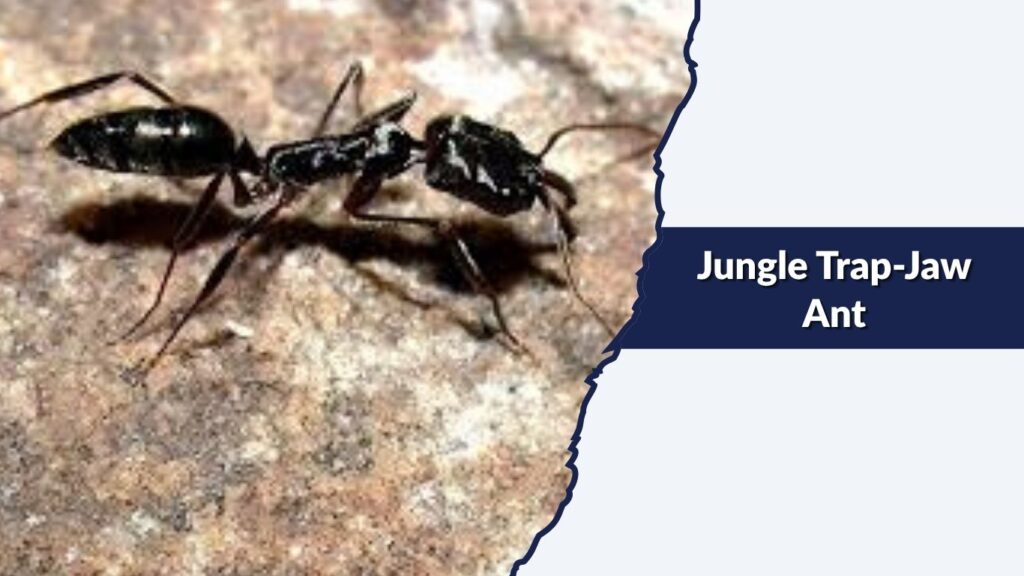
The Jungle Trap-Jaw Ant is a fierce predatory ant species that lives in dense tropical jungles and rainforest habitats. These ants are famous for their powerful snapping mandibles, which they use to catch prey and defend the colony. Their fast reflexes and aggressive nature make them highly effective hunters on the jungle floor.
Identification
- Dark reddish-brown to black body color
- Long trap-like mandibles with sharp tips
- Slender body with long strong legs
- Large eyes with excellent daytime vision
- Workers usually grow between 9 and 14 mm long
- Smooth body surface with a narrow waist
- Extremely fast jaw-snapping action
Habitat and Distribution
Jungle Trap-Jaw Ants are mainly found in tropical rainforests across Asia, Africa, Australia, and the Americas. They prefer humid jungle habitats with dense vegetation, thick leaf litter, and loose soil. Their nests are commonly hidden underground, beneath logs, or inside rotting wood on the forest floor.
Behavior and Diet
These ants are active hunters that depend on speed and precision to capture prey. Their jaws close instantly when triggered, helping them catch insects and escape predators. Jungle Trap-Jaw Ants mainly feed on insects, spiders, larvae, and other small invertebrates living among jungle debris and vegetation.
Life Cycle
The queen lays eggs inside a secure underground nest protected by worker ants. The eggs hatch into larvae, which are fed and cleaned by workers until they become pupae. Young adult ants later emerge and begin helping with hunting, tunnel maintenance, and colony defense. Mature colonies can contain hundreds of worker ants living together in organized groups.
15. Coastal Trap-Jaw Ant
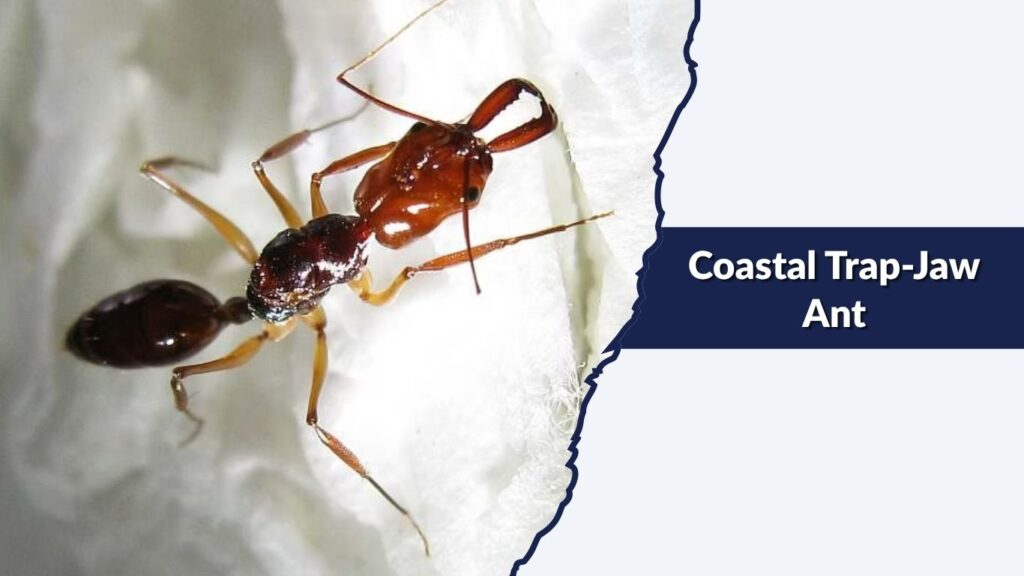
The Coastal Trap-Jaw Ant is a fast and aggressive ant species commonly found near coastal forests and humid shoreline habitats. These ants are known for their lightning-fast jaws, which they use for hunting and defense. Their ability to survive in warm coastal environments makes them well adapted to sandy soil and dense vegetation near the ocean.
Identification
- Dark brown to reddish-black body color
- Long snapping mandibles with pointed tips
- Slender body with strong legs for fast movement
- Large eyes adapted for daytime hunting
- Workers usually measure 8 to 13 mm long
- Smooth body surface with a narrow waist
- Extremely quick reaction when disturbed
Habitat and Distribution
Coastal Trap-Jaw Ants are mainly found in tropical and subtropical coastal regions across Asia, Africa, Australia, and the Americas. They prefer humid habitats with sandy soil, mangroves, coastal forests, and thick leaf litter. Their nests are usually hidden underground, beneath driftwood, rocks, or decaying coastal vegetation.
Behavior and Diet
These ants are active predators that rely on their powerful jaws to capture prey quickly. Their mandibles snap shut instantly when triggered by movement or touch. Coastal Trap-Jaw Ants feed mainly on insects, spiders, larvae, and other small invertebrates found around coastal forests and shoreline vegetation.
Life Cycle
The colony begins when a queen lays eggs inside a protected underground nest. Worker ants later hatch and care for the larvae until they become pupae and emerge as adults. As the colony grows, workers continue gathering food, expanding tunnels, and defending the nest from predators and rival ants.
FAQs
What are trap-jaw ants known for?
Trap-jaw ants are famous for their extremely fast mandibles that snap shut at incredible speed. They use these powerful jaws to catch prey, defend themselves, and sometimes launch their bodies backward to escape danger. Their jaw speed is among the fastest movements found in the animal world.
Are trap-jaw ants dangerous to humans?
Trap-jaw ants are generally not dangerous to humans, but they can deliver painful bites if disturbed. Their strong mandibles can pinch the skin quickly, and some species may sting as well. Most bites only cause mild pain or irritation that disappears after a short time.
Where do trap-jaw ants live?
Trap-jaw ants mainly live in tropical and subtropical regions around the world. They are commonly found in forests, jungles, woodlands, leaf litter, rotting wood, and underground nests. Many species prefer warm, humid environments with plenty of insects for food.
What do trap-jaw ants eat?
Trap-jaw ants are carnivorous predators that mainly feed on insects, spiders, larvae, and other small invertebrates. They use their fast jaws to capture prey quickly. Some species may also scavenge dead insects or feed on soft-bodied arthropods found on the forest floor.
How fast are trap-jaw ant jaws?
Trap-jaw ant jaws are incredibly fast and can close in less than a millisecond. Their mandibles snap shut with tremendous force, allowing them to catch prey instantly or propel themselves backward away from predators. Scientists consider them one of the fastest-moving insect body parts.