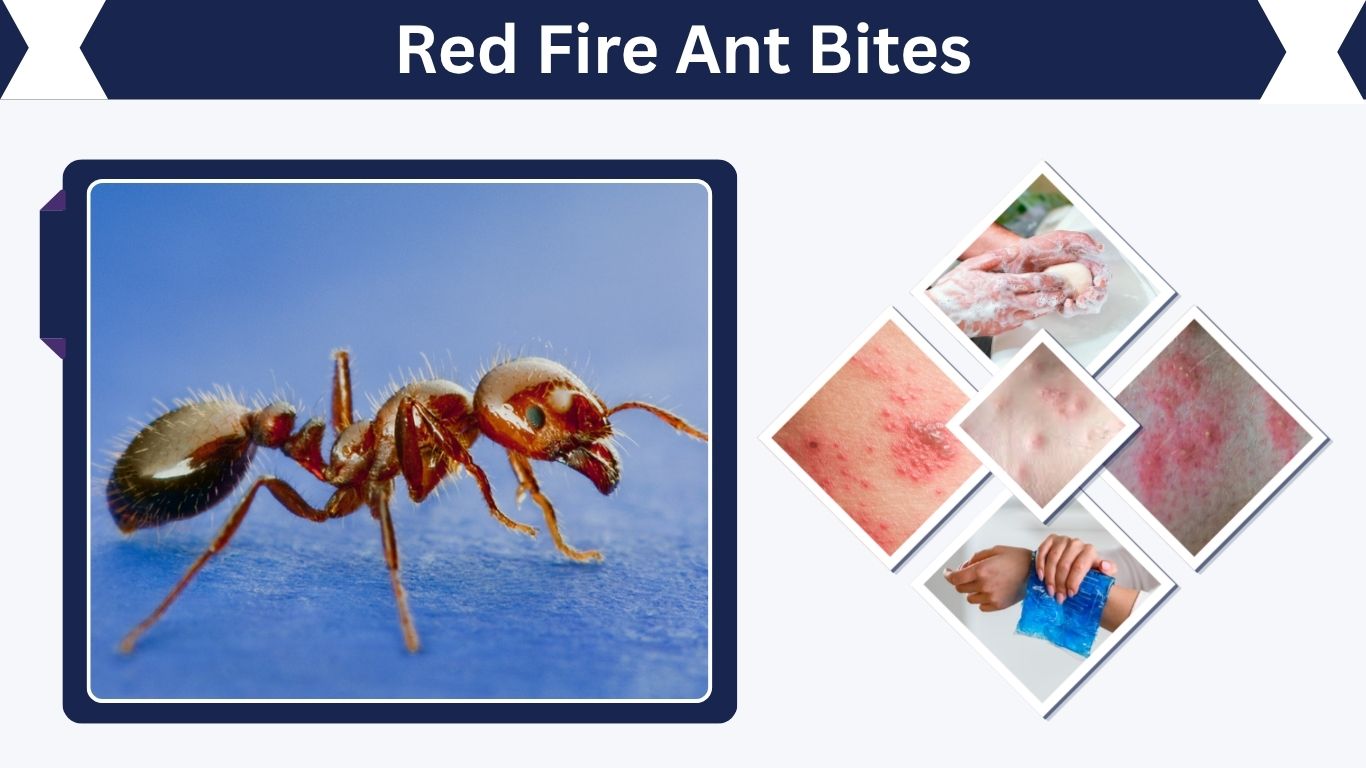
Red fire ant bites are painful stings caused by aggressive fire ants that defend their nests in large groups. Unlike many other ants, fire ants attach to the skin with their jaws and sting repeatedly, injecting venom that causes burning pain, redness, swelling, and itchy pustules. These bites commonly happen in lawns, gardens, parks, sidewalks, and outdoor work areas where fire ant mounds are hidden in the soil. Although many reactions remain mild, some people may experience severe allergic symptoms that require emergency medical treatment.
Because red fire ant bites can resemble other insect bites, learning how to identify their appearance and symptoms is important. Understanding proper treatment methods may help reduce pain, swelling, itching, and infection risks after being stung.
What Are Red Fire Ants?
Red fire ants are aggressive invasive ants known for their painful venomous stings. They live in large underground colonies and react quickly when their mound is disturbed. Fire ants often attack in groups, causing multiple painful stings at the same time.
Red Imported Fire Ant Overview
- Invasive ant species
- Reddish-brown body color
- Aggressive colony defense
- Large underground nests
- Venomous stinging behavior
Where Red Fire Ants Live
Red fire ants are commonly found in warm climates, grassy lawns, parks, farms, sidewalks, gardens, and open outdoor spaces. Their large dirt mounds are often built in sunny locations with loose soil and moisture nearby.
Why Fire Ants Attack
Fire ants defend their colony aggressively when disturbed. Once a mound is touched, workers swarm rapidly and sting repeatedly to protect the nest from perceived threats.
What Do Red Fire Ant Bites Look Like?
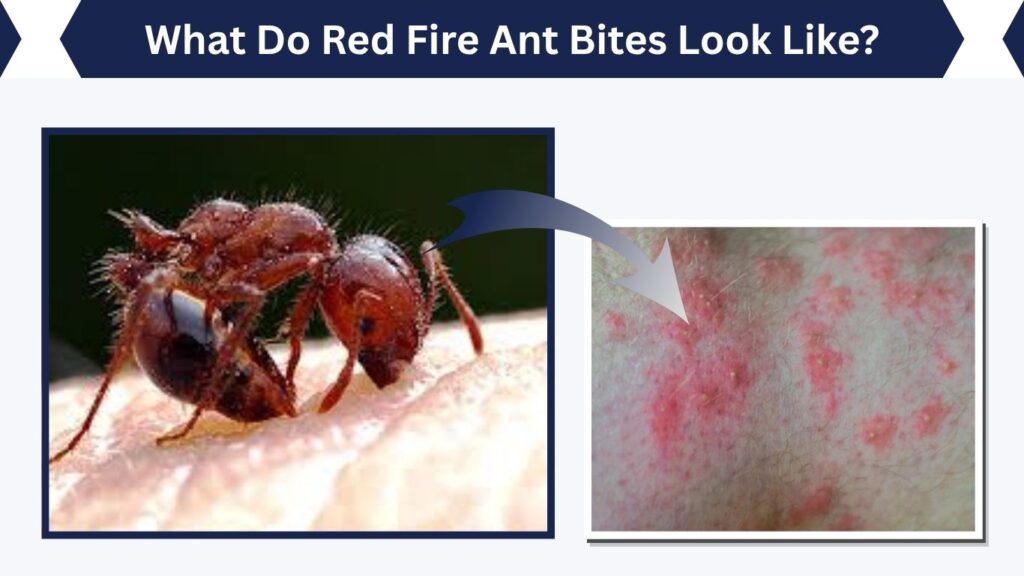
Red fire ant bites usually appear as small red bumps that quickly become swollen and painful. Within several hours, many bites develop white pus-filled pustules that are one of the most recognizable signs of fire ant stings.
Early Appearance of Fire Ant Bites
- Small red bumps
- Burning or stinging pain
- Swollen irritated skin
- Red circular areas
- Warm feeling around the sting
Fire Ant Bite Pustules
After several hours, many fire ant bites form small white pustules filled with sterile fluid. These bumps may itch strongly and remain visible for several days before drying and healing naturally.
Fire Ant Bite Pictures and Identification
Fire ant bites often appear in clusters because ants sting repeatedly during attacks. Common sting locations include feet, ankles, legs, hands, and arms after contact with disturbed fire ant mounds.
Red Fire Ant Bite Symptoms
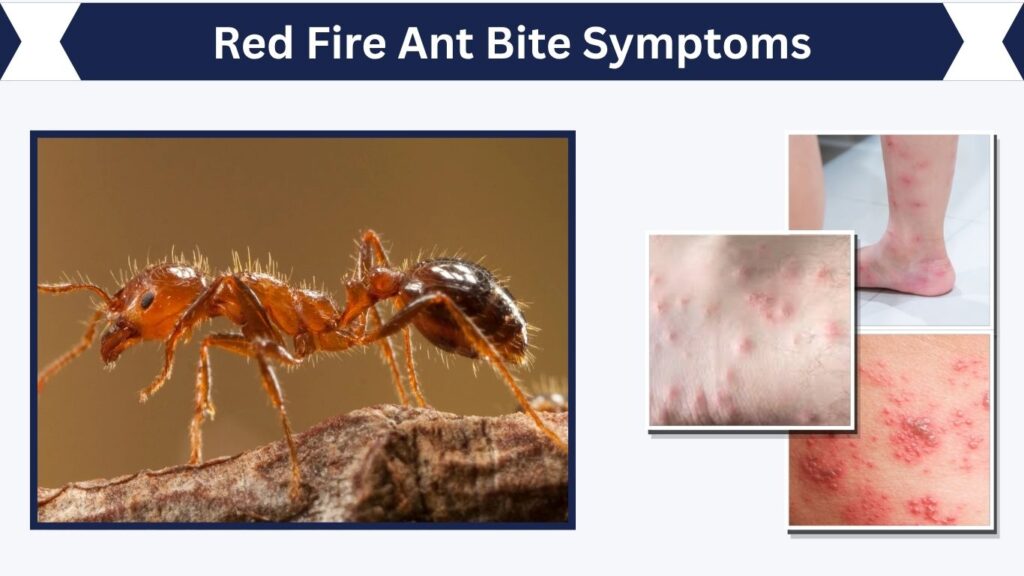
Symptoms of red fire ant bites vary depending on the number of stings, the person’s sensitivity, and their immune response to venom. Most people experience local irritation, but some develop larger reactions or allergic complications.
Mild Symptoms
- Red swollen bumps
- Burning pain
- Mild itching
- Skin tenderness
- Small pustules
Moderate Reactions
Moderate reactions may include larger swollen areas, intense itching, redness spreading beyond the sting site, and pain lasting several days. Sensitive individuals often experience stronger swelling around clusters of bites.
Severe Allergic Reactions
Severe allergic reactions may include trouble breathing, dizziness, swelling of the throat or face, chest tightness, and widespread hives. These symptoms require immediate emergency medical treatment.
Fire Ant Bite vs Red Ant Bite
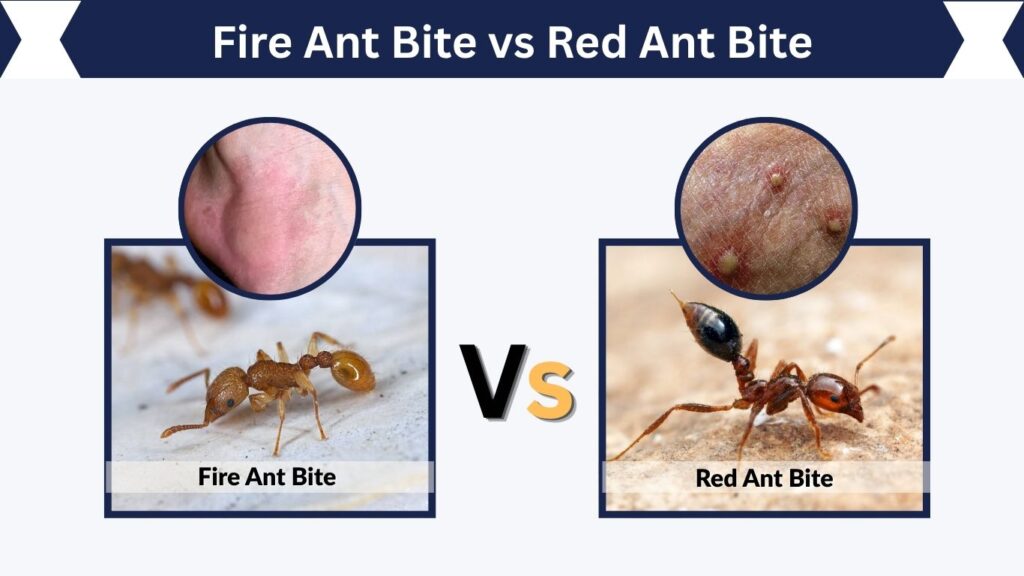
Many people confuse ordinary red ant bites with fire ant stings because both involve red-colored ants. However, fire ant stings are usually much more painful and produce distinctive pustules after several hours.
Fire Ant Sting Characteristics
- Multiple repeated stings
- Burning venom pain
- White pustule formation
- Rapid swelling
- Aggressive swarm attacks
Common Red Ant Bite Appearance
Ordinary red ant bites usually cause smaller bumps, mild irritation, and less swelling than fire ant stings. Most non-fire ant bites do not form the characteristic white pustules seen after fire ant attacks.
Which Bite Hurts More?
Fire ant stings are generally far more painful because the venom causes intense burning sensations and stronger inflammation. Regular red ant bites are often milder and heal more quickly.
Why Red Fire Ant Bites Swell
Swelling occurs because the body reacts to fire ant venom by releasing inflammatory chemicals into the skin. The immune response increases blood flow and fluid buildup around the sting site.
Venom Effects on Skin
- Histamine release in the skin
- Inflammation around the sting
- Tissue irritation
- Increased blood flow
- Burning pain sensations
Red Rings and Swollen Skin
Some fire ant bites develop large red rings or puffy swollen areas surrounding the pustules. Warmth, tight skin, and itching are common during the swelling stage, especially after multiple stings.
Why Some People React More
People with allergies, sensitive skin, or previous exposure to fire ant venom may develop stronger swelling and irritation. Children and individuals stung multiple times often experience more severe reactions.
Red Fire Ant Bite Treatment
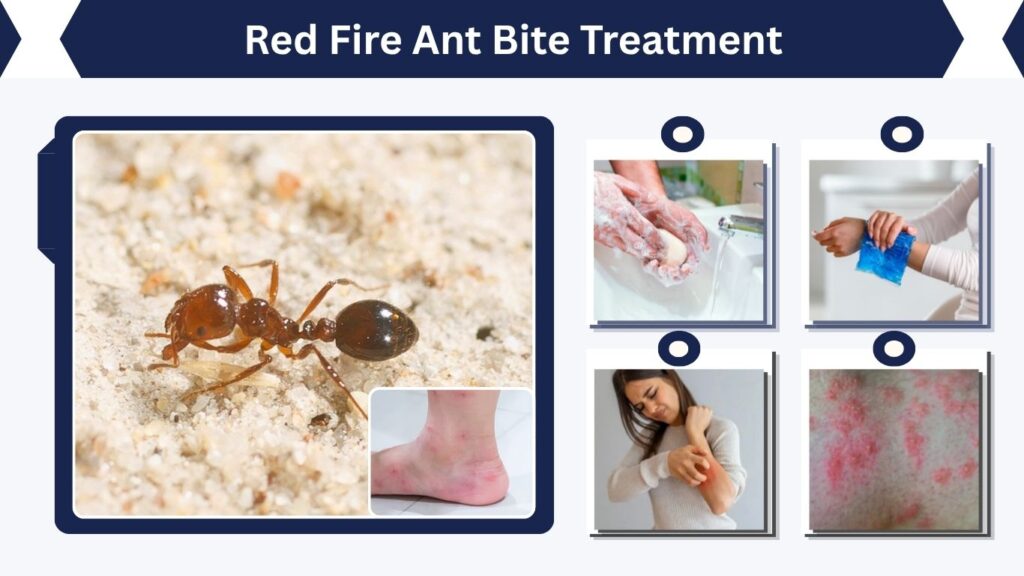
Most red fire ant bites can be treated safely at home using basic first-aid methods. Early treatment may help reduce pain, itching, swelling, and the risk of infection caused by scratching.
Immediate First Aid Steps
- Move away from the ant mound
- Wash the affected skin with soap and water
- Apply a cold compress or ice pack
- Avoid scratching the pustules
- Monitor for allergic symptoms
Home Remedies for Fire Ant Bites
Cold compresses, baking soda paste, aloe vera gel, and oatmeal baths are commonly used to soothe irritated skin and reduce itching caused by fire ant stings.
Over-the-Counter Treatments
Antihistamines, hydrocortisone cream, anti-itch lotions, and pain relievers may help reduce swelling, burning sensations, and irritation during recovery from fire ant bites.
Signs of an Infected Fire Ant Bite
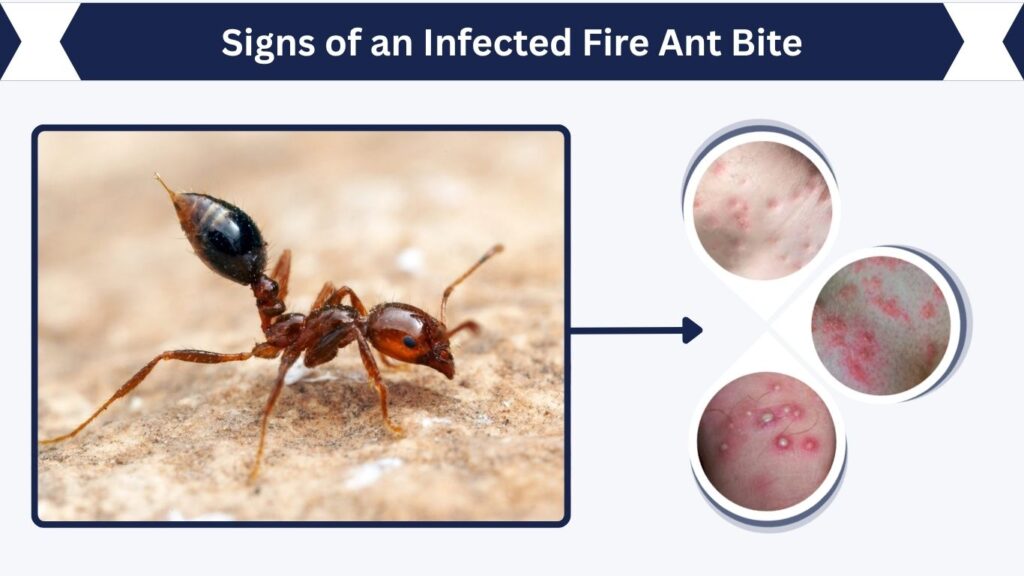
Although most fire ant bites heal naturally, scratching or damaging pustules may allow bacteria to enter the skin. Infected bites can become more painful and may require medical treatment.
Common Infection Symptoms
- Pus leakage
- Increased redness
- Heat around the bite
- Swelling worsening over time
- Pain becoming stronger
Scratching and Skin Damage
Scratching fire ant bites may break open the skin and increase the risk of bacterial infection. Keeping bites clean and avoiding picking at pustules helps support safer healing.
When to See a Doctor
Medical attention may be needed if redness spreads, fever develops, swelling becomes severe, or the bite area produces worsening pain and drainage instead of improving gradually.
Dangerous Reactions to Fire Ant Bites
Although many fire ant stings are mild, severe allergic reactions and multiple stings can become dangerous. Immediate emergency care may be necessary in some situations.
Anaphylaxis Warning Signs
- Trouble breathing
- Swollen throat or tongue
- Rapid heartbeat
- Dizziness or fainting
- Severe widespread swelling
Multiple Fire Ant Stings
Large numbers of stings expose the body to more venom and may trigger severe pain, swelling, nausea, or toxic reactions. Children, elderly individuals, and pets are especially vulnerable.
Fire Ant Bites in Children and Pets
Children and pets may experience stronger reactions because of their smaller body size and sensitive immune systems. Multiple stings can become especially dangerous if left untreated.
How Long Do Fire Ant Bites Last?
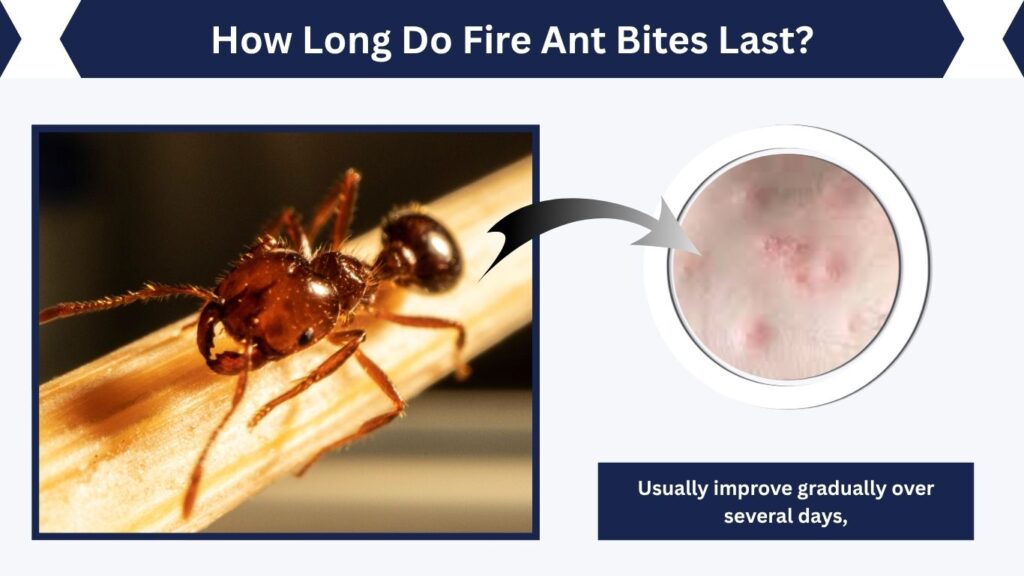
Fire ant bite symptoms usually improve gradually over several days, although itching and discoloration may continue longer in some individuals.
First 24 Hours
- Burning pain develops quickly
- Red swelling increases
- White pustules begin forming
- Itching becomes noticeable
- Skin remains tender
Healing Over Several Days
Most pustules dry out naturally within several days as swelling and redness slowly decrease. Itching often continues during healing but usually becomes less severe over time.
Lasting Skin Marks
Some people develop temporary dark spots, mild scarring, or skin discoloration after fire ant bites heal. Severe scratching may increase the chance of long-lasting skin marks.
How to Prevent Red Fire Ant Bites
Preventing fire ant stings is the best way to avoid painful reactions and allergic complications. Awareness of fire ant mounds and outdoor precautions can greatly reduce sting risks.
Avoiding Fire Ant Mounds
- Watch for loose dirt mounds
- Avoid disturbing nests
- Keep children away from colonies
- Stay alert in grassy areas
- Use caution while gardening
Protective Outdoor Clothing
Wearing closed shoes, socks, gloves, and long pants can help reduce skin exposure during outdoor work in areas where fire ants are common.
Fire Ant Control Around Homes
Professional pest control, mound treatments, and yard management may help reduce fire ant populations around homes, parks, sidewalks, and outdoor recreational spaces.
FAQs
What do red fire ant bites look like?
Red fire ant bites usually appear as small red swollen bumps that later develop white pus-filled pustules. The bites often occur in clusters because fire ants sting multiple times during an attack.
Why do fire ant bites form white bumps?
The white bumps are sterile pustules caused by the body’s reaction to fire ant venom. These pustules are a common symptom of fire ant stings and usually appear several hours after the bite.
How do you treat red fire ant bites?
Wash the area with soap and water, apply a cold compress, and avoid scratching the bites. Antihistamines, hydrocortisone cream, and anti-itch treatments may help reduce swelling and discomfort.
Are red fire ant bites dangerous?
Most fire ant bites are mild, but some people may develop severe allergic reactions such as trouble breathing, dizziness, or throat swelling. Multiple stings can also become dangerous, especially for children and pets.
How long do fire ant bites stay swollen?
Swelling from fire ant bites often lasts several days, while itching and skin irritation may continue longer. Mild discoloration or small marks can remain temporarily after the bites heal completely.