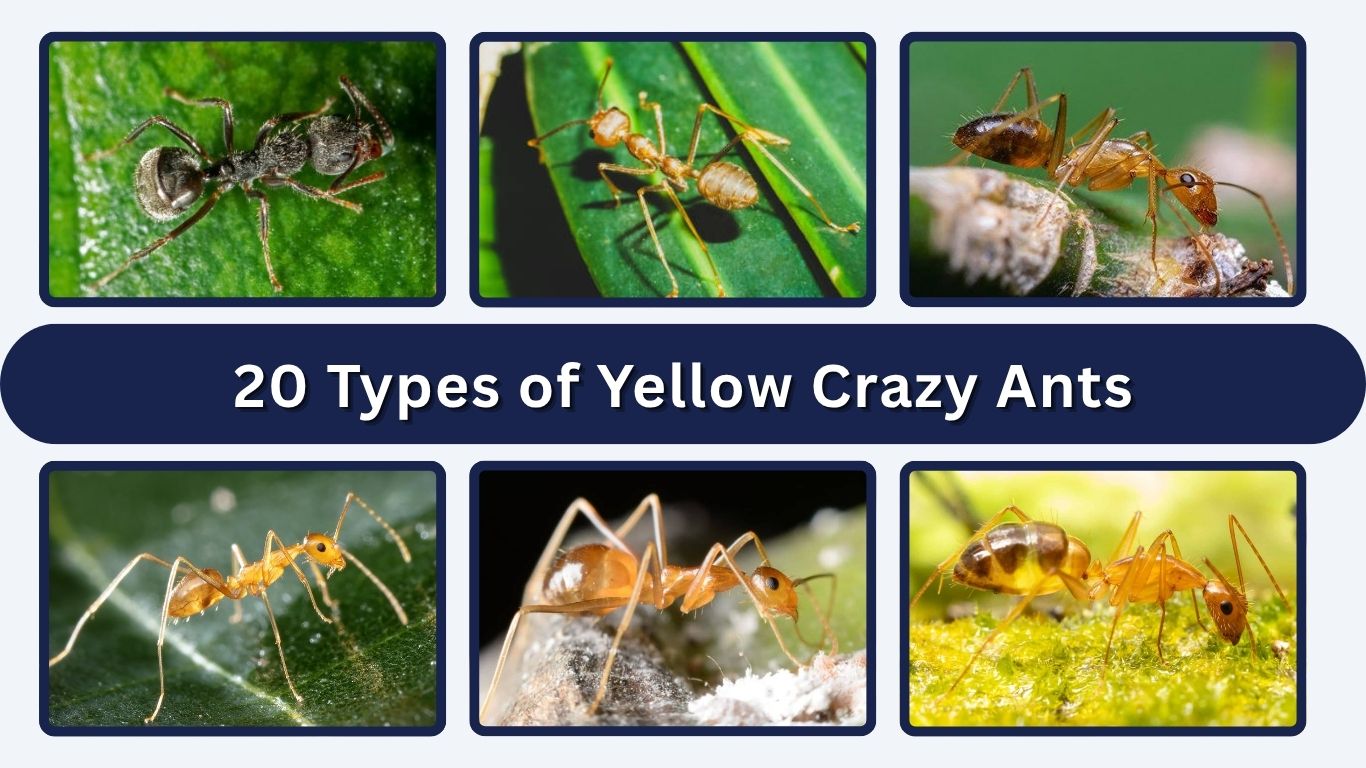
Yellow Crazy Ants are among the most fascinating and widely recognized ants in tropical and subtropical regions. Famous for their rapid, erratic movements and ability to form large colonies, these ants have successfully adapted to a wide range of environments, including forests, grasslands, coastal areas, farms, and urban landscapes. Some species are important scavengers and ecosystem engineers, while others are considered invasive pests due to their impact on native wildlife. In this guide, you’ll explore 20 types of Yellow Crazy Ants, including their identification features, habitats, behaviors, diets, and life cycles to better understand these remarkable social insects.
1. Yellow Crazy Ant (Anoplolepis gracilipes)
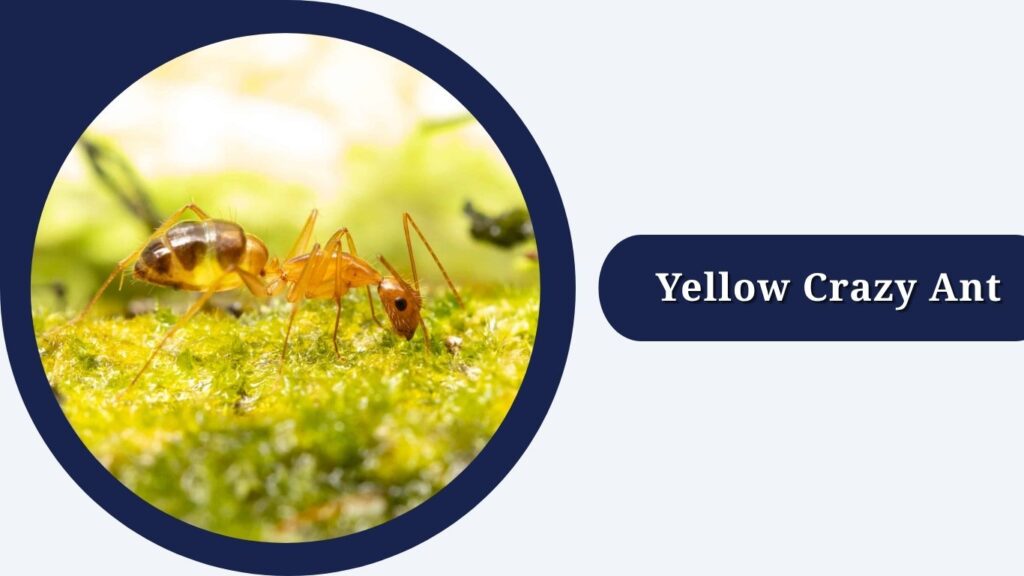
The Yellow Crazy Ant (Anoplolepis gracilipes) is one of the world’s most notorious invasive ant species. Known for its long legs, rapid movements, and ability to form enormous supercolonies, this ant has spread across tropical and subtropical regions worldwide. Its aggressive expansion can significantly impact native wildlife, making it an important species in ecological studies and pest management programs.
Identification
- Scientific Name: Anoplolepis gracilipes
- Common Name: Yellow Crazy Ant
- Color: Yellowish-brown to golden-yellow
- Worker Size: 4–5 mm (0.16–0.20 inches)
- Queen Size: 8–10 mm (0.31–0.39 inches)
- Body Shape: Slender body with exceptionally long legs and antennae
- Antennae: 11-segmented and highly flexible
- Wings: Present on reproductive males and queens
- Distinguishing Feature: Erratic, fast-moving behavior and unusually long legs
Habitat and Distribution
Yellow Crazy Ants are native to parts of Southeast Asia but have become established throughout tropical and subtropical regions around the world. They are commonly found on islands, coastal areas, rainforests, plantations, gardens, urban landscapes, and agricultural lands.
This species nests in a wide variety of locations, including leaf litter, soil, tree hollows, under logs, beneath rocks, and within man-made structures. Their adaptability allows them to thrive in both natural and disturbed habitats.
Behavior and Diet
Yellow Crazy Ants are famous for their frantic and unpredictable movements, which differ from the orderly trails followed by many other ant species. Colonies can grow into massive supercolonies containing millions of workers and multiple queens.
Their diet consists of honeydew from sap-feeding insects, nectar, fruits, dead insects, and small invertebrates. Workers actively protect aphids, scale insects, and mealybugs to maintain a steady supply of honeydew.
Unlike many ants, Yellow Crazy Ants use formic acid as a defense mechanism, spraying it at predators and competing species. Their large populations can overwhelm native wildlife and disrupt local ecosystems.
Life Cycle
The Yellow Crazy Ant undergoes complete metamorphosis through four stages: egg, larva, pupa, and adult. Colonies reproduce through both mating flights and colony budding, where groups of queens and workers establish new nests nearby.
Queens lay large numbers of eggs, and workers care for the developing larvae until they pupate and emerge as adults. The presence of multiple queens enables rapid colony growth and expansion.
As colonies mature, they continue spreading into neighboring areas, forming interconnected supercolonies that can dominate entire ecosystems. This reproductive strategy is one of the primary reasons for the species’ success as an invasive ant worldwide.
2. Long-Legged Crazy Ant (Anoplolepis longipes)
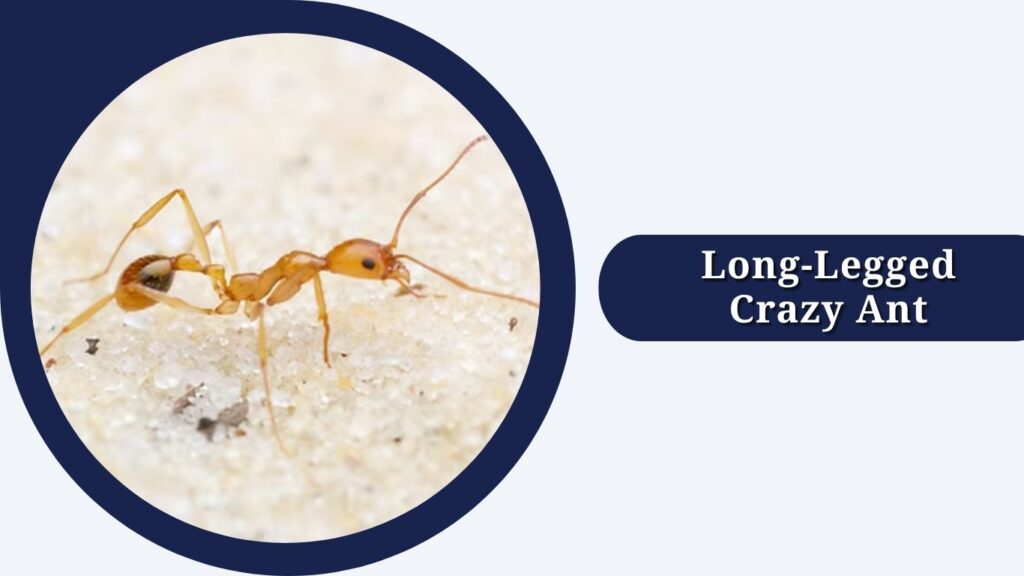
The Long-Legged Crazy Ant is a fast-moving ant known for its unusually long legs and antennae, which give it a distinctive appearance among crazy ant species. Its erratic movement patterns and ability to adapt to a variety of environments make it a successful forager and colony builder. This ant is commonly found in warm climates where it thrives in both natural and human-modified habitats.
Identification
- Scientific Name: Anoplolepis longipes
- Common Name: Long-Legged Crazy Ant
- Color: Yellowish-brown to light brown
- Worker Size: 4–6 mm (0.16–0.24 inches)
- Queen Size: 8–10 mm (0.31–0.39 inches)
- Body Shape: Slender body with exceptionally long legs
- Antennae: Long, flexible, and highly sensitive
- Wings: Present on reproductive males and queens
- Distinguishing Feature: Extremely long legs and rapid, erratic movements
Habitat and Distribution
Long-Legged Crazy Ants are typically found in tropical and subtropical environments. They inhabit forests, grasslands, agricultural areas, gardens, and urban landscapes where food and nesting sites are readily available.
Their nests are commonly located beneath rocks, within leaf litter, under logs, and in soil cavities. Colonies may also establish themselves in buildings, wall voids, and other sheltered human-made structures.
Behavior and Diet
This species is highly active and spends much of its time searching for food. Workers move quickly and seemingly without direction, a behavior that contributes to their “crazy ant” name.
Their diet includes honeydew, nectar, fruits, dead insects, and other organic matter. Colonies often maintain relationships with aphids and scale insects, protecting them in exchange for sugary honeydew secretions.
Long-Legged Crazy Ants rely heavily on teamwork and chemical communication to locate food and defend colony resources. Large colonies can dominate local food sources and outcompete smaller ant species.
Life Cycle
Like other ants, the Long-Legged Crazy Ant undergoes complete metamorphosis through four stages: egg, larva, pupa, and adult. Queens are responsible for laying eggs, while workers care for developing brood and maintain the nest.
Colonies grow rapidly when environmental conditions are favorable. Multiple queens may coexist within a single colony, increasing reproductive success and allowing populations to expand quickly.
As colonies mature, they produce reproductive males and queens that establish new colonies through mating flights or colony budding. This efficient reproductive strategy helps the species spread across suitable habitats.
3. Tawny Crazy Ant (Nylanderia fulva)
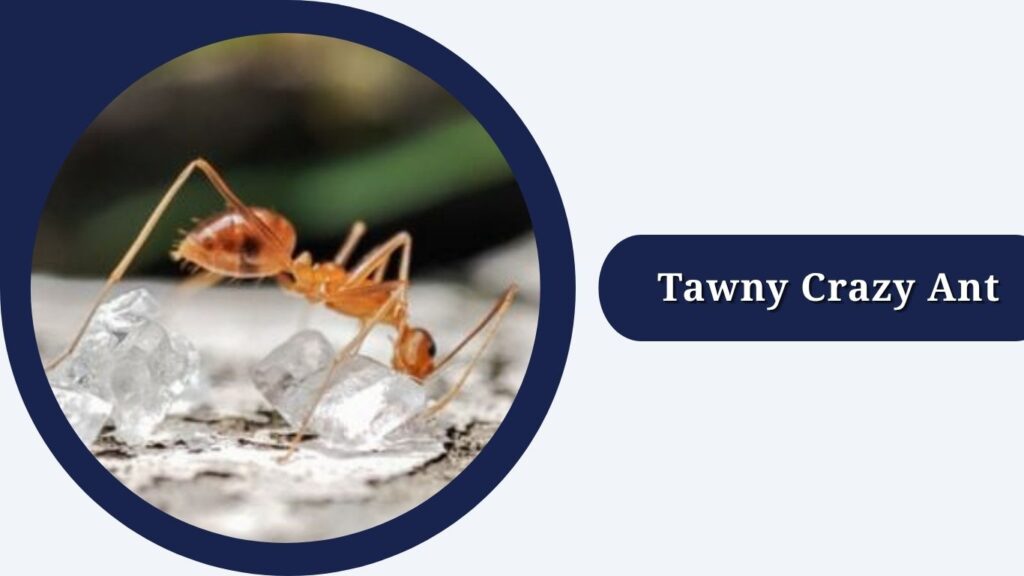
The Tawny Crazy Ant (Nylanderia fulva) is an invasive ant species known for its rapid population growth and erratic foraging behavior. Originally native to South America, it has spread to several regions around the world, particularly in the southern United States. This species is capable of forming enormous colonies that can displace native ants and become a significant nuisance in residential and agricultural areas.
Identification
- Scientific Name: Nylanderia fulva
- Common Name: Tawny Crazy Ant
- Color: Reddish-brown to tawny brown
- Worker Size: 2–3 mm (0.08–0.12 inches)
- Queen Size: 4–5 mm (0.16–0.20 inches)
- Body Shape: Slender body covered with fine hairs
- Antennae: Long and elbowed with 12 segments
- Wings: Present on reproductive males and queens
- Distinguishing Feature: Tawny coloration and rapid, erratic movement patterns
Habitat and Distribution
Tawny Crazy Ants are native to South America but have become established in parts of North America, particularly the Gulf Coast region of the United States. They thrive in warm, humid environments and are commonly found in forests, grasslands, parks, agricultural fields, and residential neighborhoods.
Their nests are usually temporary and can be located beneath rocks, logs, mulch, leaf litter, landscape materials, and building foundations. Colonies frequently relocate when conditions change or food becomes scarce.
Behavior and Diet
This species forms large interconnected colonies with multiple queens, allowing populations to grow rapidly. Workers move in unpredictable patterns and often appear disorganized compared to other ant species.
Their diet includes honeydew, nectar, fruits, dead insects, small arthropods, and household food items. Tawny Crazy Ants are known for protecting sap-feeding insects such as aphids and scale insects to secure a steady supply of honeydew.
One remarkable trait is their ability to detoxify venom from fire ants, enabling them to compete successfully against one of their most aggressive rivals.
Life Cycle
The Tawny Crazy Ant undergoes complete metamorphosis with four developmental stages: egg, larva, pupa, and adult. Colonies primarily spread through budding, where queens and groups of workers establish new nests near the original colony.
Queens lay large numbers of eggs throughout the year in favorable climates. Workers care for the larvae until they pupate and emerge as adults.
Because colonies contain multiple queens and interconnected nesting sites, population growth can be explosive. Mature colonies may cover vast areas and continue expanding, making the Tawny Crazy Ant one of the most successful invasive ant species in the world.
4. Rasberry Crazy Ant (Nylanderia fulva)
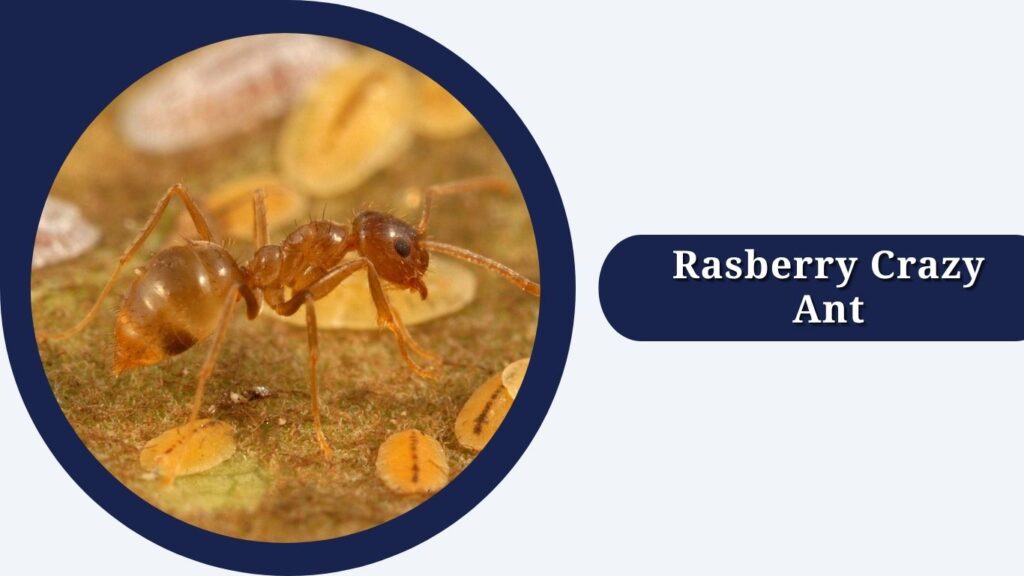
The Rasberry Crazy Ant (Nylanderia fulva) is an invasive ant species that gained attention after its rapid spread in parts of the United States. Named after exterminator Tom Rasberry, who first reported significant infestations in Texas, this ant is known for forming massive colonies and displaying the erratic movements typical of crazy ants. Its ability to thrive in a wide range of environments has made it a challenging pest in many regions.
Identification
- Scientific Name: Nylanderia fulva
- Common Name: Rasberry Crazy Ant
- Color: Golden-brown to reddish-brown
- Worker Size: 2–3 mm (0.08–0.12 inches)
- Queen Size: 4–5 mm (0.16–0.20 inches)
- Body Shape: Slender body covered with fine hairs
- Antennae: Long, 12-segmented, and highly flexible
- Wings: Present on reproductive males and queens
- Distinguishing Feature: Erratic running behavior and dense body hairs that give workers a slightly fuzzy appearance
Habitat and Distribution
Rasberry Crazy Ants are native to South America but have become established in parts of North America, particularly the southern United States. They prefer warm, humid environments and are commonly found in urban areas, forests, grasslands, parks, and agricultural landscapes.
Their nests are usually temporary and can be located beneath mulch, rocks, logs, leaf litter, potted plants, and building foundations. Colonies frequently relocate, allowing them to exploit changing environmental conditions and food sources.
Behavior and Diet
Rasberry Crazy Ants form large, interconnected colonies that may contain multiple queens. Workers move rapidly in unpredictable directions rather than following organized trails, making infestations appear chaotic.
Their diet includes honeydew, nectar, fruits, dead insects, small arthropods, and household food sources. Colonies often tend aphids and scale insects to harvest honeydew, which serves as an important energy source.
One of the species’ most notable traits is its ability to withstand and neutralize the venom of fire ants, allowing it to compete successfully with other invasive ant species.
Life Cycle
The Rasberry Crazy Ant undergoes complete metamorphosis through four stages: egg, larva, pupa, and adult. Colonies expand primarily through budding, where queens and groups of workers leave the original nest to establish new colonies nearby.
Queens produce large numbers of eggs, and workers care for the developing brood until adulthood. Because colonies contain multiple reproductive queens, population growth can occur rapidly under favorable conditions.
As colonies expand, they establish numerous interconnected nests across a landscape. This reproductive strategy enables the species to spread efficiently and maintain large populations in suitable habitats.
5. Caribbean Crazy Ant (Paratrechina pubens)
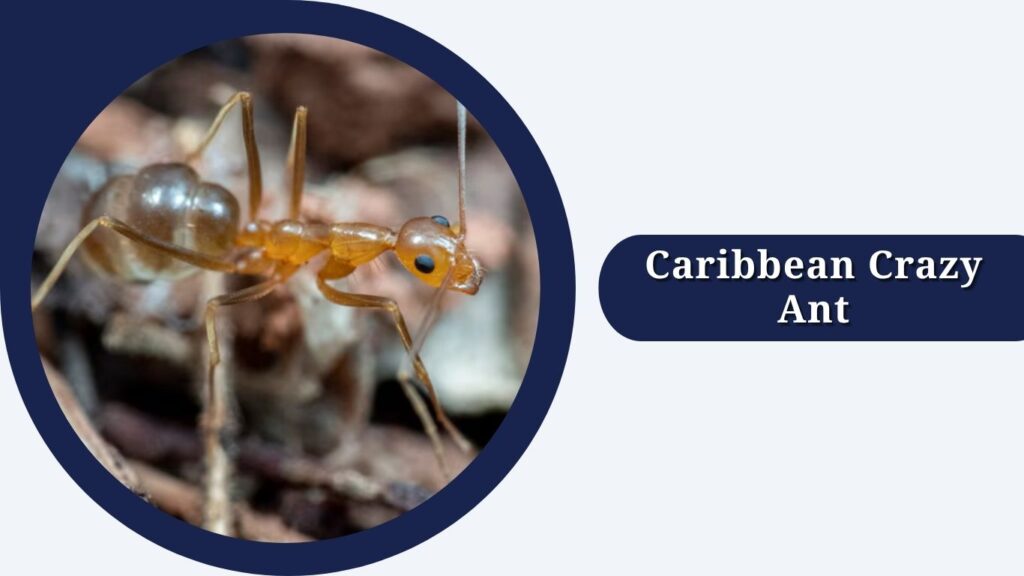
The Caribbean Crazy Ant (Paratrechina pubens) is a fast-moving invasive ant species commonly associated with tropical and subtropical regions. It gained attention for forming large populations that can overwhelm native insects and become a nuisance in residential areas. Like other crazy ants, this species is known for its unpredictable movements and ability to establish colonies in a wide range of habitats.
Identification
- Scientific Name: Paratrechina pubens
- Common Name: Caribbean Crazy Ant
- Color: Light brown to dark brown
- Worker Size: 2–3 mm (0.08–0.12 inches)
- Queen Size: 4–5 mm (0.16–0.20 inches)
- Body Shape: Slender body with long legs
- Antennae: Long, 12-segmented, and highly flexible
- Wings: Present on reproductive males and queens
- Distinguishing Feature: Rapid, erratic movement and dense populations in tropical environments
Habitat and Distribution
Caribbean Crazy Ants are primarily found throughout the Caribbean region and parts of Central and South America. They have also been reported in some subtropical areas where favorable environmental conditions allow colonies to thrive.
Their nests are commonly located in leaf litter, under rocks, beneath logs, within soil cavities, and around buildings. Colonies frequently establish themselves in gardens, parks, agricultural lands, and urban landscapes.
Behavior and Diet
This species is highly active and forages both day and night. Workers move rapidly and seemingly without direction, making them easy to recognize in the field.
Their diet includes honeydew, nectar, fruits, dead insects, and various organic materials. Colonies often tend aphids, mealybugs, and scale insects to obtain honeydew, which serves as an important food source.
Caribbean Crazy Ants can form large interconnected colonies with multiple queens, allowing populations to grow quickly and dominate local food resources.
Life Cycle
The Caribbean Crazy Ant undergoes complete metamorphosis through four developmental stages: egg, larva, pupa, and adult. Queens lay eggs continuously under favorable conditions, supporting rapid colony expansion.
Workers care for the developing brood and maintain nesting sites while foraging for food. Colonies commonly reproduce through budding, where groups of workers and queens establish new nests nearby.
As colonies mature, they may spread across large areas and create networks of interconnected nests. This reproductive strategy contributes to the species’ success in tropical and subtropical habitats.
6. Tropical Crazy Ant (Paratrechina tropicalis)
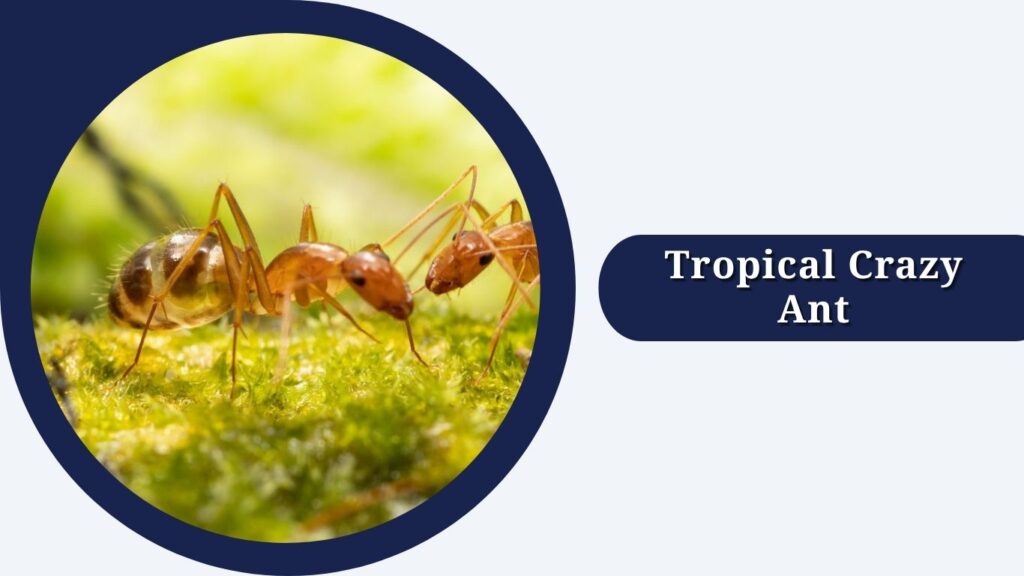
The Tropical Crazy Ant (Paratrechina tropicalis) is a warm-climate ant species known for its rapid, erratic movements and ability to establish large colonies in tropical environments. Like other crazy ants, it is highly adaptable and can thrive in both natural ecosystems and urban areas. Its flexible nesting habits and broad diet help it survive in a wide range of conditions.
Identification
- Scientific Name: Paratrechina tropicalis
- Common Name: Tropical Crazy Ant
- Color: Yellowish-brown to dark brown
- Worker Size: 2–4 mm (0.08–0.16 inches)
- Queen Size: 4–6 mm (0.16–0.24 inches)
- Body Shape: Slender body with long legs and antennae
- Antennae: 12-segmented and highly flexible
- Wings: Present on reproductive males and queens
- Distinguishing Feature: Fast, unpredictable movement and strong adaptation to tropical climates
Habitat and Distribution
Tropical Crazy Ants are commonly found throughout tropical and subtropical regions where warm temperatures and high humidity support colony growth. They inhabit rainforests, coastal areas, plantations, gardens, parks, and urban environments.
Their nests are typically located beneath leaf litter, logs, rocks, fallen branches, and within soil cavities. In developed areas, colonies may also occupy wall voids, landscaping materials, and other sheltered structures.
Behavior and Diet
This species is highly active and spends much of its time foraging. Workers move rapidly in irregular patterns rather than following neat trails, a characteristic behavior of crazy ants.
Their diet includes honeydew, nectar, fruits, dead insects, small arthropods, and various organic materials. Colonies often maintain mutualistic relationships with aphids and scale insects, protecting them in exchange for sugary honeydew.
Tropical Crazy Ants can form large colonies with multiple queens, allowing them to expand quickly and efficiently exploit available food sources.
Life Cycle
The Tropical Crazy Ant undergoes complete metamorphosis consisting of four stages: egg, larva, pupa, and adult. Queens lay eggs continuously when environmental conditions remain favorable.
Workers care for the developing brood, maintain the nest, and gather food for the colony. New colonies are often established through budding, where queens and groups of workers move to nearby locations and create additional nests.
As colonies mature, they may form interconnected nesting networks that support large populations. This reproductive strategy helps the species spread rapidly throughout suitable tropical habitats.
7. Asian Yellow Crazy Ant (Anoplolepis gracilipes)
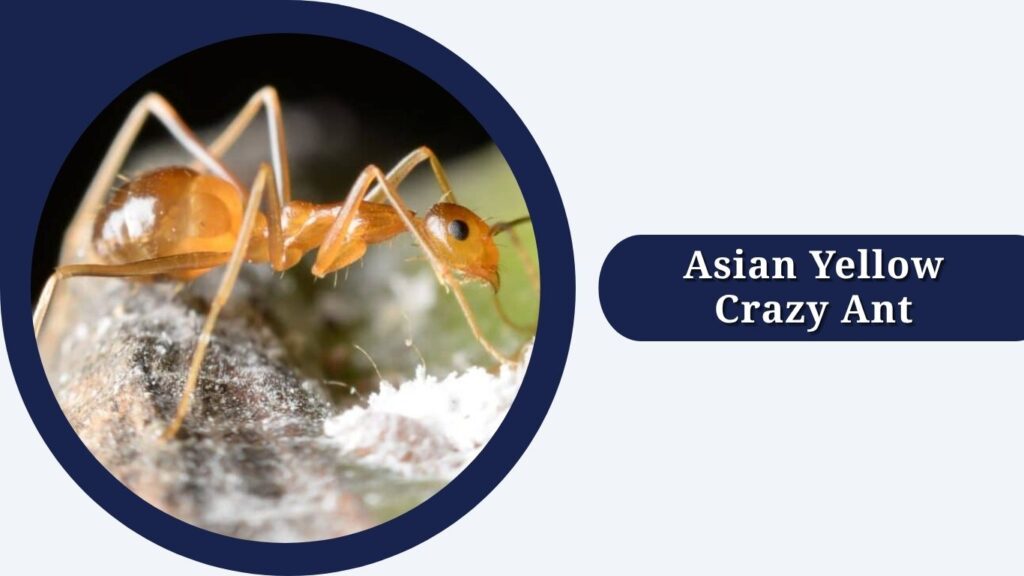
The Asian Yellow Crazy Ant (Anoplolepis gracilipes) is a highly adaptable ant species native to Southeast Asia. It is widely recognized for its invasive potential and its ability to form enormous supercolonies. Due to its rapid spread and aggressive behavior toward native wildlife, this species is considered one of the world’s most damaging invasive ants.
Identification
- Scientific Name: Anoplolepis gracilipes
- Common Name: Asian Yellow Crazy Ant
- Color: Yellowish-brown to golden-yellow
- Worker Size: 4–5 mm (0.16–0.20 inches)
- Queen Size: 8–10 mm (0.31–0.39 inches)
- Body Shape: Slender body with long legs and antennae
- Antennae: Long, flexible, and highly sensitive
- Wings: Present on reproductive males and queens
- Distinguishing Feature: Long-legged appearance and erratic, rapid movement patterns
Habitat and Distribution
Asian Yellow Crazy Ants are native to Southeast Asia but have spread throughout tropical and subtropical regions worldwide. They are commonly found in rainforests, coastal habitats, plantations, agricultural lands, urban parks, and residential areas.
Their nests can be established in soil, leaf litter, beneath rocks, under logs, inside tree cavities, and within human-made structures. The species thrives in environments with abundant moisture and food resources.
Behavior and Diet
This species is known for forming large colonies with multiple queens. Workers move rapidly and unpredictably while foraging, often covering large areas in search of food.
Their diet includes honeydew from aphids and scale insects, nectar, fruits, dead insects, and other organic materials. Colonies frequently protect honeydew-producing insects, creating mutually beneficial relationships that support colony growth.
Asian Yellow Crazy Ants are highly competitive and can overwhelm native ant species through sheer numbers. Their ability to spray formic acid helps them defend territory and subdue prey.
Life Cycle
The Asian Yellow Crazy Ant undergoes complete metamorphosis with four stages: egg, larva, pupa, and adult. Queens produce large numbers of eggs, enabling colonies to expand rapidly.
Workers care for developing larvae and pupae while maintaining the nest and collecting food. New colonies are commonly established through budding, where groups of workers and queens separate from the original colony and create new nesting sites.
As colonies mature, they may merge into extensive supercolonies containing millions of individuals. This remarkable reproductive capacity contributes to the species’ success across a wide geographic range.
8. Pacific Crazy Ant (Paratrechina oceanica)

The Pacific Crazy Ant (Paratrechina oceanica) is a tropical ant species commonly found on islands and coastal regions throughout the Pacific. Known for its rapid and erratic movements, this ant is highly adaptable and can establish colonies in a variety of habitats. Its ability to thrive in island ecosystems has made it an important species in studies of invasive ants and ecological interactions.
Identification
- Scientific Name: Paratrechina oceanica
- Common Name: Pacific Crazy Ant
- Color: Light brown to yellowish-brown
- Worker Size: 2–4 mm (0.08–0.16 inches)
- Queen Size: 4–6 mm (0.16–0.24 inches)
- Body Shape: Slender body with long legs and antennae
- Antennae: 12-segmented and highly flexible
- Wings: Present on reproductive males and queens
- Distinguishing Feature: Fast, irregular movement and strong association with coastal and island habitats
Habitat and Distribution
Pacific Crazy Ants are found across numerous Pacific islands and coastal tropical regions. They commonly inhabit forests, beaches, mangroves, plantations, gardens, and urban areas where warm temperatures and humidity support colony growth.
Their nests are usually located beneath leaf litter, logs, stones, tree roots, and other sheltered locations. Colonies may also establish themselves in wall voids, landscaping materials, and abandoned structures.
Behavior and Diet
This species is an active forager that moves rapidly and unpredictably while searching for food. Workers frequently travel long distances from the nest and can quickly recruit nestmates when valuable food sources are discovered.
Their diet includes honeydew, nectar, fruits, dead insects, small arthropods, and various organic materials. Colonies often tend aphids and scale insects to obtain honeydew, which serves as an important energy source.
Pacific Crazy Ants can form large colonies with multiple queens, allowing populations to expand rapidly and dominate local food resources.
Life Cycle
The Pacific Crazy Ant undergoes complete metamorphosis through four stages: egg, larva, pupa, and adult. Queens lay eggs throughout the year in favorable climates, supporting continuous colony growth.
Workers care for developing brood, maintain nest structures, and gather food for the colony. New colonies are commonly formed through budding, where groups of workers and queens leave the parent colony to establish nearby nests.
As colonies mature, they can develop into extensive networks of interconnected nests. This reproductive strategy helps the species spread efficiently across islands and coastal environments throughout the Pacific region.
9. Golden Crazy Ant (Anoplolepis aurea)
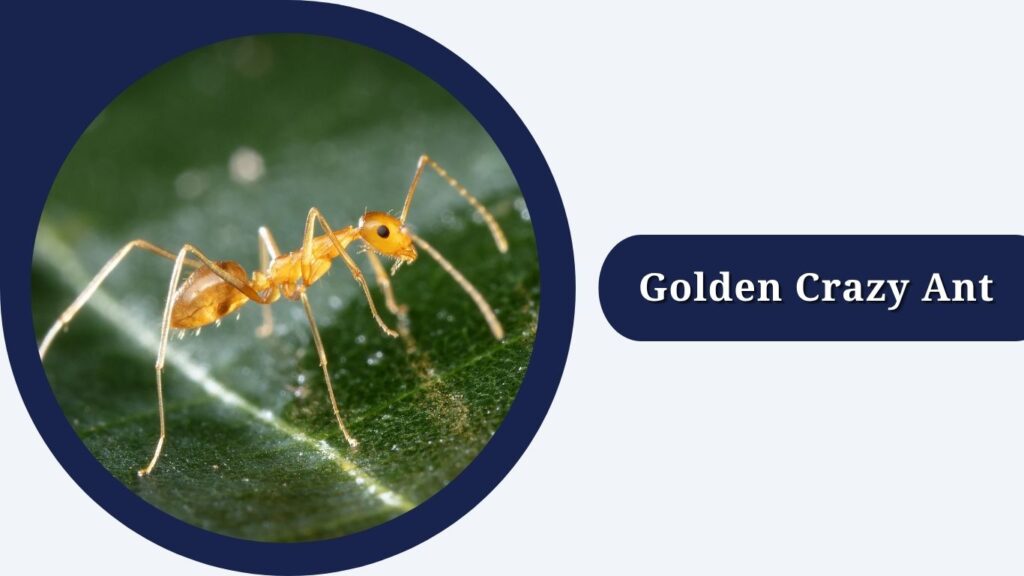
The Golden Crazy Ant (Anoplolepis aurea) is a tropical ant species recognized for its golden-yellow coloration and active foraging behavior. Like other crazy ants, it is known for its fast, erratic movements and ability to establish large colonies. Its adaptability allows it to thrive in a variety of habitats, from natural forests to human-modified environments.
Identification
- Scientific Name: Anoplolepis aurea
- Common Name: Golden Crazy Ant
- Color: Golden-yellow to light brown
- Worker Size: 3–5 mm (0.12–0.20 inches)
- Queen Size: 7–9 mm (0.28–0.35 inches)
- Body Shape: Slender body with long legs and antennae
- Antennae: Long, flexible, and highly sensitive
- Wings: Present on reproductive males and queens
- Distinguishing Feature: Golden coloration and rapid, unpredictable movement
Habitat and Distribution
Golden Crazy Ants are primarily found in tropical and subtropical regions where warm temperatures and abundant moisture support colony development. They inhabit forests, grasslands, coastal areas, plantations, gardens, and urban landscapes.
Their nests are commonly built beneath leaf litter, logs, rocks, tree roots, and within soil cavities. In developed areas, colonies may establish themselves around buildings, landscaping materials, and other sheltered locations.
Behavior and Diet
Golden Crazy Ants are highly active foragers that move quickly and erratically while searching for food. Workers often travel long distances and use chemical signals to communicate food discoveries to nestmates.
Their diet includes honeydew, nectar, fruits, dead insects, small arthropods, and organic debris. Colonies frequently tend aphids and scale insects, protecting them in exchange for honeydew production.
This species can form large colonies with multiple queens, enabling rapid population growth and efficient exploitation of available resources.
Life Cycle
The Golden Crazy Ant undergoes complete metamorphosis with four developmental stages: egg, larva, pupa, and adult. Queens lay eggs throughout the year when environmental conditions remain favorable.
Workers care for the developing brood, maintain the nest, and gather food for the colony. New colonies are often established through budding, where queens and groups of workers separate from the parent colony and create new nests nearby.
As colonies mature, they can expand into extensive networks of interconnected nests. This reproductive strategy allows the species to spread effectively throughout suitable tropical and subtropical habitats.
10. Coastal Crazy Ant (Paratrechina littoralis)
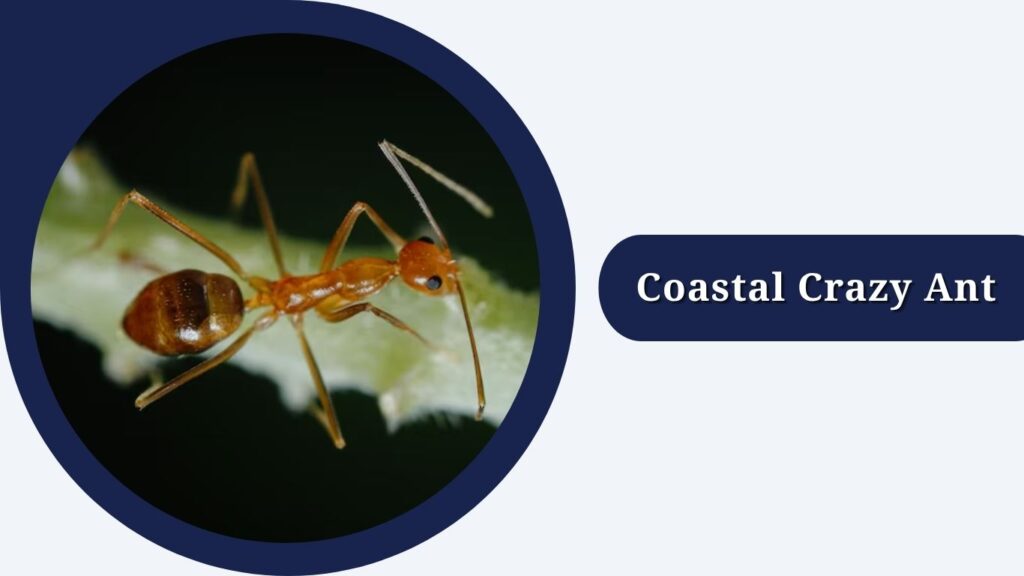
The Coastal Crazy Ant (Paratrechina littoralis) is a fast-moving ant species commonly associated with coastal habitats and tropical shorelines. Known for its erratic foraging behavior and adaptability, this species thrives in environments where moisture, vegetation, and food sources are abundant. Like many crazy ants, it can establish large colonies and quickly exploit available resources.
Identification
- Scientific Name: Paratrechina littoralis
- Common Name: Coastal Crazy Ant
- Color: Light brown to yellowish-brown
- Worker Size: 2–4 mm (0.08–0.16 inches)
- Queen Size: 4–6 mm (0.16–0.24 inches)
- Body Shape: Slender body with long legs and antennae
- Antennae: 12-segmented and highly flexible
- Wings: Present on reproductive males and queens
- Distinguishing Feature: Strong association with coastal habitats and rapid, irregular movement
Habitat and Distribution
Coastal Crazy Ants are primarily found in tropical and subtropical coastal regions. They inhabit beaches, dunes, mangroves, coastal forests, estuaries, and seaside gardens.
Their nests are commonly located beneath driftwood, rocks, leaf litter, coastal vegetation, and loose sandy soil. In developed coastal areas, colonies may also establish themselves around buildings, seawalls, and landscaped properties.
Behavior and Diet
This species is an active and opportunistic forager. Workers move quickly in unpredictable patterns while searching for food and can rapidly recruit nestmates when resources are discovered.
Their diet consists of honeydew, nectar, fruits, dead insects, marine-derived organic matter, and small arthropods. Colonies often tend aphids and scale insects to obtain sugary honeydew, which serves as an important energy source.
Coastal Crazy Ants are highly adaptable and can exploit a wide range of food resources, helping them thrive in dynamic shoreline environments.
Life Cycle
The Coastal Crazy Ant undergoes complete metamorphosis through four stages: egg, larva, pupa, and adult. Queens lay eggs throughout the year in favorable climates, allowing colonies to grow steadily.
Workers care for larvae and pupae while maintaining nest structures and gathering food. Colonies frequently expand through budding, where queens and groups of workers establish new nests close to the parent colony.
As colonies mature, they may develop interconnected nesting networks that cover extensive coastal areas. This reproductive strategy enables the species to spread efficiently along shorelines and occupy suitable habitats.
11. Island Crazy Ant (Paratrechina insularis)
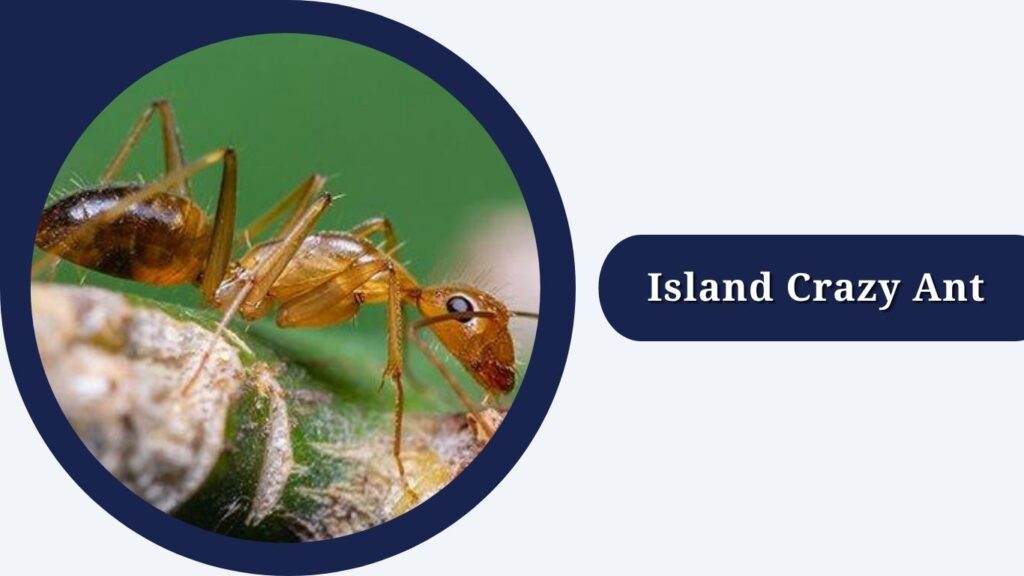
The Island Crazy Ant (Paratrechina insularis) is a tropical ant species commonly associated with island ecosystems and coastal habitats. Known for its rapid, erratic movements and adaptable nature, this ant thrives in environments where food and shelter are readily available. Its ability to establish large colonies makes it an important component of many island ecosystems, although it can also become invasive in certain regions.
Identification
- Scientific Name: Paratrechina insularis
- Common Name: Island Crazy Ant
- Color: Yellowish-brown to light brown
- Worker Size: 2–4 mm (0.08–0.16 inches)
- Queen Size: 4–6 mm (0.16–0.24 inches)
- Body Shape: Slender body with long legs and antennae
- Antennae: 12-segmented and highly flexible
- Wings: Present on reproductive males and queens
- Distinguishing Feature: Adaptation to island environments and fast, unpredictable running behavior
Habitat and Distribution
Island Crazy Ants are primarily found on tropical and subtropical islands throughout the Pacific, Indian Ocean, and Caribbean regions. They inhabit forests, coastal vegetation, mangroves, plantations, gardens, and urban landscapes.
Their nests are commonly located beneath rocks, logs, leaf litter, tree roots, and within soil cavities. In developed areas, colonies may establish themselves around buildings, landscaped gardens, and other sheltered locations.
Behavior and Diet
This species is highly active and spends much of its time foraging for food. Workers move rapidly and irregularly, making them easy to distinguish from ants that follow organized trails.
Their diet includes honeydew, nectar, fruits, dead insects, small arthropods, and organic debris. Colonies often tend aphids and scale insects to obtain honeydew, which serves as a major energy source.
Island Crazy Ants are capable of forming large colonies with multiple queens, allowing them to efficiently exploit resources and expand across suitable habitats.
Life Cycle
The Island Crazy Ant undergoes complete metamorphosis through four stages: egg, larva, pupa, and adult. Queens lay eggs continuously in favorable environmental conditions, supporting steady colony growth.
Workers care for developing brood, maintain the nest, and gather food for the colony. New colonies frequently form through budding, where queens and groups of workers leave the parent colony and establish nearby nests.
As colonies mature, they may develop extensive networks of interconnected nests. This reproductive strategy helps the species spread rapidly throughout island ecosystems and maintain large populations in suitable habitats.
12. Forest Crazy Ant (Paratrechina silvatica)
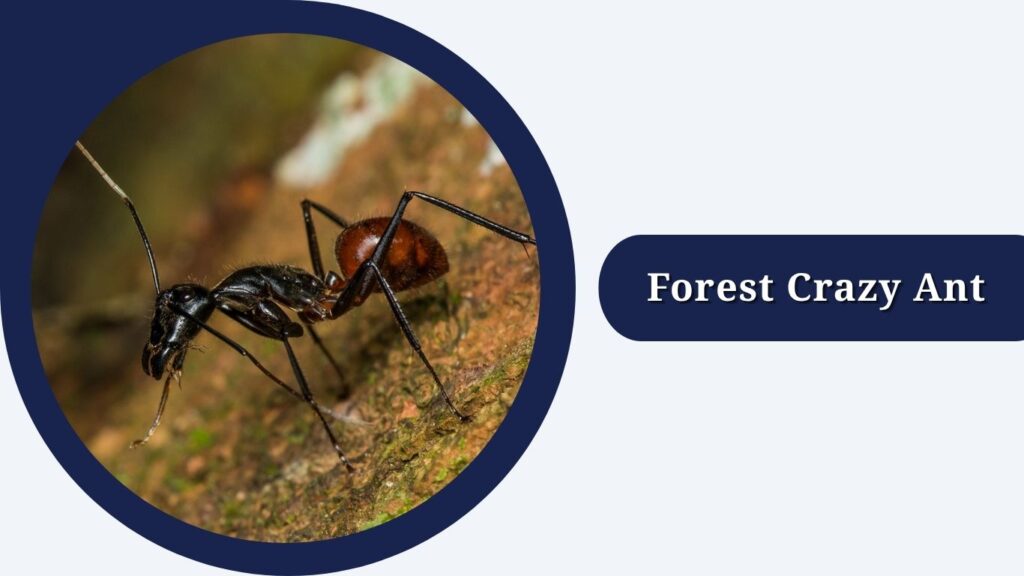
The Forest Crazy Ant (Paratrechina silvatica) is a woodland-dwelling ant species known for its fast, erratic movements and adaptability to forest ecosystems. It thrives in humid environments where leaf litter, decaying wood, and dense vegetation provide ideal nesting conditions. Like other crazy ants, it is an active forager and plays an important role in nutrient recycling within forest habitats.
Identification
- Scientific Name: Paratrechina silvatica
- Common Name: Forest Crazy Ant
- Color: Light brown to dark brown
- Worker Size: 2–4 mm (0.08–0.16 inches)
- Queen Size: 4–6 mm (0.16–0.24 inches)
- Body Shape: Slender body with long legs and antennae
- Antennae: 12-segmented and highly flexible
- Wings: Present on reproductive males and queens
- Distinguishing Feature: Preference for forest habitats and rapid, unpredictable movement patterns
Habitat and Distribution
Forest Crazy Ants are commonly found in tropical and subtropical forests, woodlands, and densely vegetated areas. They prefer environments with abundant moisture, shade, and organic material.
Their nests are typically located beneath leaf litter, inside decaying logs, under fallen branches, within tree root systems, and in soil cavities. Forest habitats provide both shelter and a steady supply of food resources.
Behavior and Diet
This species is an active forager that searches extensively across the forest floor. Workers move quickly and irregularly, allowing them to efficiently explore large areas while searching for food.
Their diet includes honeydew, nectar, fungi, dead insects, small arthropods, and organic debris. Colonies often maintain relationships with aphids and scale insects to obtain honeydew, an important source of carbohydrates.
Forest Crazy Ants contribute to decomposition processes by scavenging dead organisms and helping recycle nutrients within woodland ecosystems.
Life Cycle
The Forest Crazy Ant undergoes complete metamorphosis through four developmental stages: egg, larva, pupa, and adult. Queens lay eggs in protected nesting chambers where developing brood receive constant care from workers.
Workers feed larvae, maintain the nest, and gather food resources needed for colony growth. Colonies commonly expand through budding, with queens and groups of workers establishing new nests nearby.
As colonies mature, they may occupy multiple interconnected nesting sites throughout the forest. This growth strategy allows the species to efficiently utilize available resources and maintain stable populations within woodland habitats.
13. Brown-Yellow Crazy Ant (Paratrechina flavobrunnea)
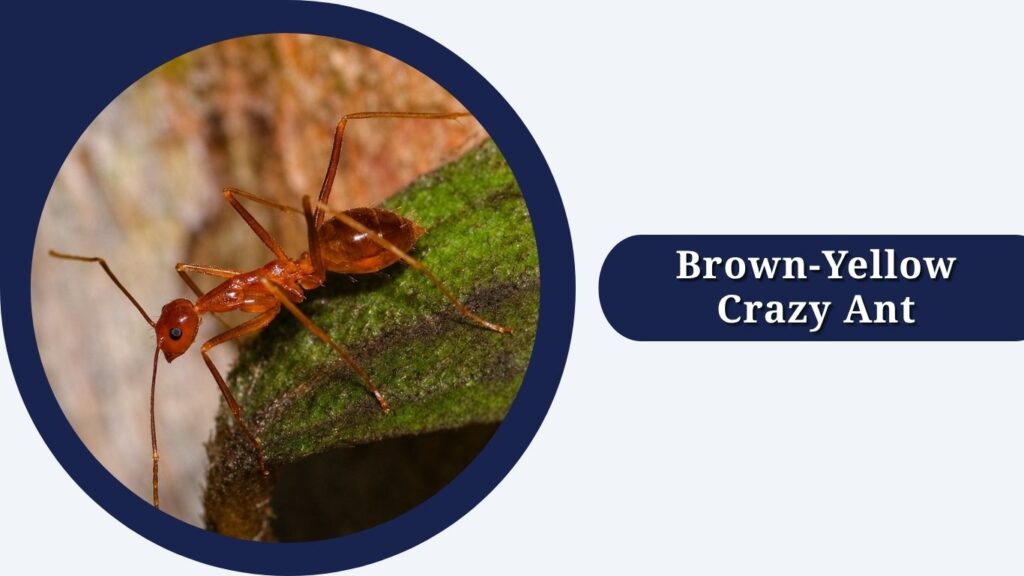
The Brown-Yellow Crazy Ant (Paratrechina flavobrunnea) is a small, fast-moving ant species recognized for its yellowish-brown coloration and characteristic erratic behavior. Like other crazy ants, it is highly adaptable and capable of thriving in a wide range of habitats. Its ability to establish large colonies and exploit diverse food sources contributes to its success in both natural and urban environments.
Identification
- Scientific Name: Paratrechina flavobrunnea
- Common Name: Brown-Yellow Crazy Ant
- Color: Yellow-brown to light brown
- Worker Size: 2–4 mm (0.08–0.16 inches)
- Queen Size: 4–6 mm (0.16–0.24 inches)
- Body Shape: Slender body with long legs and antennae
- Antennae: 12-segmented and highly flexible
- Wings: Present on reproductive males and queens
- Distinguishing Feature: Yellow-brown coloration and rapid, irregular foraging movements
Habitat and Distribution
Brown-Yellow Crazy Ants are commonly found in tropical and subtropical regions where warm temperatures and adequate moisture support colony development. They inhabit forests, grasslands, gardens, agricultural lands, parks, and urban areas.
Their nests are typically constructed beneath leaf litter, logs, stones, and tree roots. In developed environments, colonies may establish themselves around buildings, landscaping materials, and other sheltered locations.
Behavior and Diet
This species is highly active and spends much of its time searching for food. Workers move rapidly in unpredictable patterns rather than following organized trails, a hallmark characteristic of crazy ants.
Their diet includes honeydew, nectar, fruits, dead insects, small arthropods, and organic debris. Colonies frequently tend aphids and scale insects to harvest honeydew, which provides an important source of carbohydrates.
Brown-Yellow Crazy Ants are opportunistic feeders and can quickly exploit new food resources when they become available.
Life Cycle
The Brown-Yellow Crazy Ant undergoes complete metamorphosis through four stages: egg, larva, pupa, and adult. Queens continuously lay eggs during favorable conditions, allowing colonies to expand steadily.
Workers care for developing larvae, maintain nesting chambers, and forage for food. New colonies are often formed through budding, where queens and groups of workers leave the parent colony to establish nearby nests.
As colonies mature, they can expand into interconnected nesting networks that support large populations. This reproductive strategy enables the species to spread efficiently and maintain a strong presence in suitable habitats.
14. Giant Yellow Crazy Ant (Anoplolepis megacephala)
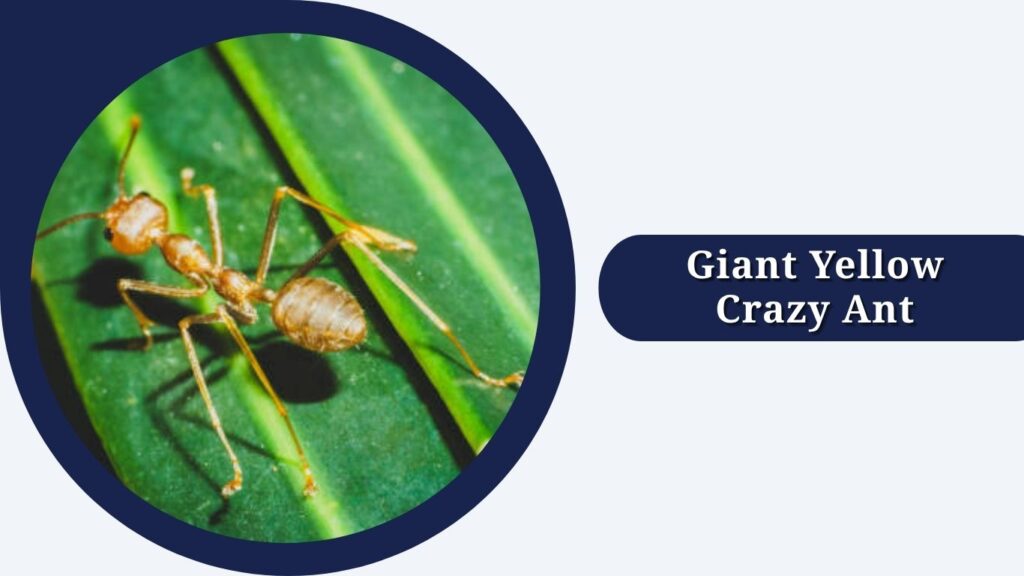
The Giant Yellow Crazy Ant (Anoplolepis megacephala) is a large and highly adaptable ant species known for its aggressive foraging behavior and ability to form expansive colonies. Its size, rapid movements, and strong colony structure make it one of the more noticeable members of the crazy ant group. This species thrives in warm climates and can successfully occupy both natural and urban environments.
Identification
- Scientific Name: Anoplolepis megacephala
- Common Name: Giant Yellow Crazy Ant
- Color: Yellowish-brown to golden-yellow
- Worker Size: 4–7 mm (0.16–0.28 inches)
- Queen Size: 9–12 mm (0.35–0.47 inches)
- Body Shape: Slender body with long legs and antennae
- Antennae: Long, flexible, and highly sensitive
- Wings: Present on reproductive males and queens
- Distinguishing Feature: Larger body size compared to many other crazy ant species and highly active foraging behavior
Habitat and Distribution
Giant Yellow Crazy Ants are commonly found in tropical and subtropical regions where warm temperatures support year-round activity. They inhabit forests, grasslands, plantations, gardens, parks, coastal areas, and urban landscapes.
Their nests are usually established beneath rocks, logs, leaf litter, tree roots, and within soil cavities. Colonies may also occupy wall voids, landscaping materials, and other protected structures in developed environments.
Behavior and Diet
This species is an aggressive and opportunistic forager. Workers move quickly and unpredictably while searching for food and can rapidly recruit nestmates when resources are discovered.
Their diet includes honeydew, nectar, fruits, dead insects, small arthropods, and organic debris. Colonies often protect aphids and scale insects to secure a reliable supply of honeydew.
Giant Yellow Crazy Ants are capable of forming large colonies with multiple queens, allowing populations to grow rapidly and dominate local food resources.
Life Cycle
The Giant Yellow Crazy Ant undergoes complete metamorphosis through four developmental stages: egg, larva, pupa, and adult. Queens lay eggs continuously under favorable environmental conditions.
Workers care for the developing brood, maintain nest structures, and gather food for the colony. New colonies are frequently established through budding, where queens and groups of workers leave the parent colony to create nearby nests.
As colonies mature, they can expand into extensive networks of interconnected nests. This reproductive strategy enables the species to spread efficiently and maintain large populations throughout suitable tropical and subtropical habitats.
15. Common Crazy Ant (Paratrechina communis)
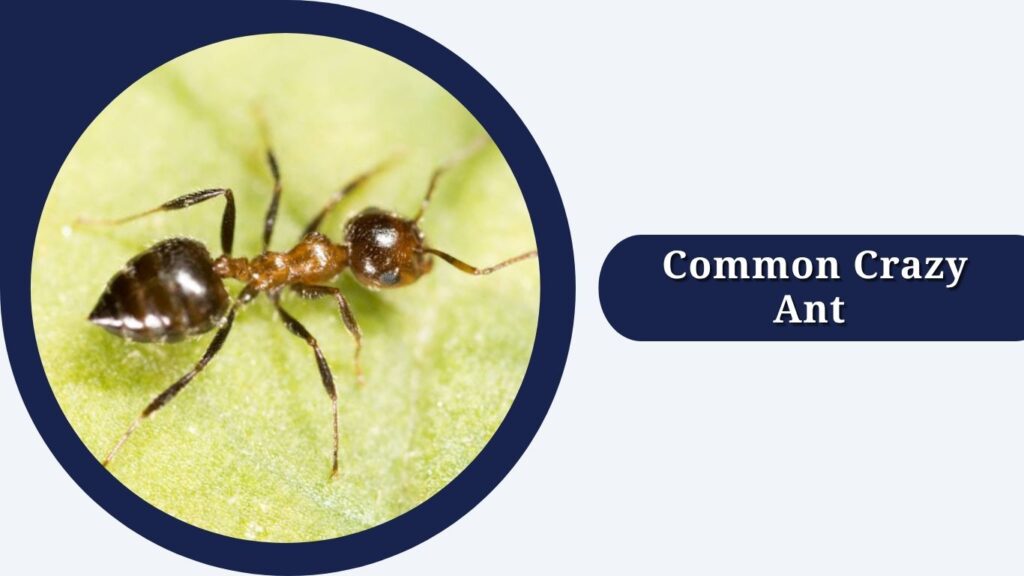
The Common Crazy Ant (Paratrechina communis) is a widely distributed ant species known for its erratic running behavior and remarkable adaptability. It can thrive in a variety of habitats, ranging from natural woodlands to urban environments. Like other crazy ants, this species forms active colonies that efficiently exploit food resources and suitable nesting sites.
Identification
- Scientific Name: Paratrechina communis
- Common Name: Common Crazy Ant
- Color: Light brown to yellowish-brown
- Worker Size: 2–4 mm (0.08–0.16 inches)
- Queen Size: 4–6 mm (0.16–0.24 inches)
- Body Shape: Slender body with long legs and antennae
- Antennae: 12-segmented and highly flexible
- Wings: Present on reproductive males and queens
- Distinguishing Feature: Rapid, unpredictable movement and ability to adapt to diverse environments
Habitat and Distribution
Common Crazy Ants are found in a variety of tropical, subtropical, and temperate regions. They inhabit forests, grasslands, gardens, agricultural lands, parks, and residential areas.
Their nests are commonly established beneath rocks, logs, leaf litter, mulch, tree roots, and within soil cavities. In urban settings, colonies may also occupy wall voids, landscaping materials, and cracks around buildings.
Behavior and Diet
This species is an active forager that spends much of its time searching for food. Workers move quickly in irregular patterns, often changing direction suddenly as they explore their surroundings.
Their diet consists of honeydew, nectar, fruits, dead insects, small arthropods, and organic debris. Colonies frequently tend aphids and scale insects to obtain honeydew, which provides a reliable carbohydrate source.
Common Crazy Ants are opportunistic feeders and can quickly take advantage of newly available food resources. Their flexible diet contributes significantly to their success in a wide range of habitats.
Life Cycle
The Common Crazy Ant undergoes complete metamorphosis through four stages: egg, larva, pupa, and adult. Queens lay eggs regularly under favorable environmental conditions, supporting continuous colony growth.
Workers care for developing larvae and pupae, maintain the nest, and gather food. Colonies often expand through budding, where queens and groups of workers establish new nests near the original colony.
As colonies mature, they may develop multiple interconnected nesting sites. This reproductive strategy enables the species to expand efficiently and maintain stable populations across diverse environments.
16. Invasive Yellow Crazy Ant (Anoplolepis gracilipes)
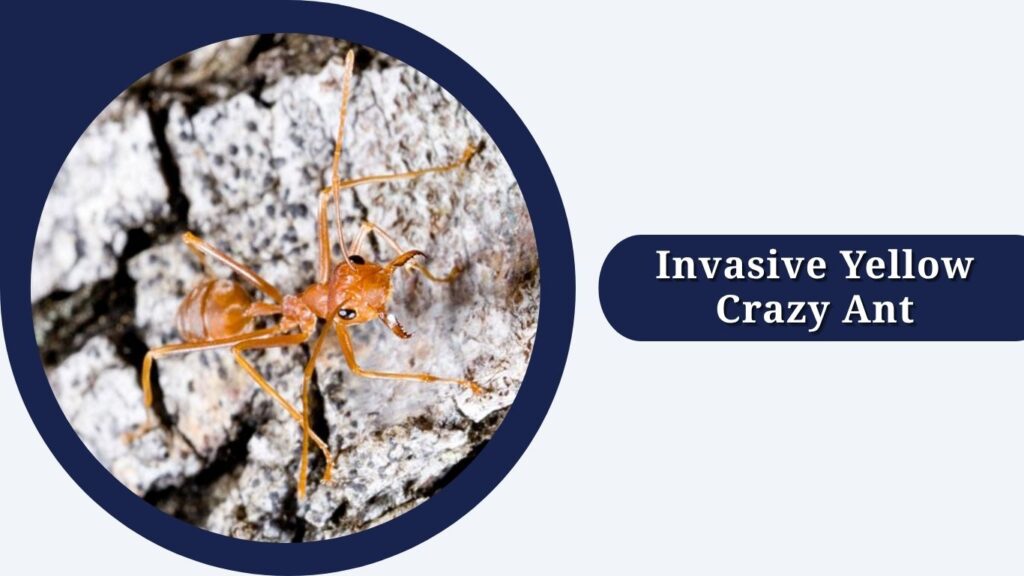
The Invasive Yellow Crazy Ant (Anoplolepis gracilipes) is one of the most destructive invasive ant species in the world. Famous for its ability to form massive supercolonies, this ant has spread across numerous tropical and subtropical regions, where it often disrupts native ecosystems. Its rapid reproduction, aggressive foraging behavior, and adaptability have made it a major ecological concern in many countries.
Identification
- Scientific Name: Anoplolepis gracilipes
- Common Name: Invasive Yellow Crazy Ant
- Color: Yellowish-brown to golden-yellow
- Worker Size: 4–5 mm (0.16–0.20 inches)
- Queen Size: 8–10 mm (0.31–0.39 inches)
- Body Shape: Slender body with exceptionally long legs and antennae
- Antennae: Long, flexible, and highly sensitive
- Wings: Present on reproductive males and queens
- Distinguishing Feature: Formation of enormous supercolonies and erratic running behavior
Habitat and Distribution
Invasive Yellow Crazy Ants are found throughout tropical and subtropical regions worldwide. They have established populations across Southeast Asia, Australia, Africa, the Pacific Islands, and parts of the Indian Ocean region.
Their nests are highly flexible and may be located beneath leaf litter, logs, rocks, tree roots, and within soil cavities. Colonies also readily establish themselves in plantations, gardens, urban landscapes, and disturbed habitats where food resources are abundant.
Behavior and Diet
This species is highly aggressive and forms interconnected colonies containing multiple queens. Workers move rapidly and unpredictably while searching for food, often overwhelming native insect populations through sheer numbers.
Their diet consists of honeydew, nectar, fruits, dead insects, small invertebrates, and organic matter. Colonies actively protect aphids, mealybugs, and scale insects to ensure a steady supply of honeydew.
Invasive Yellow Crazy Ants are also known for spraying formic acid, which they use to defend territory, subdue prey, and compete with other species. In some ecosystems, their large populations have caused significant declines in native wildlife.
Life Cycle
The Invasive Yellow Crazy Ant undergoes complete metamorphosis through four stages: egg, larva, pupa, and adult. Queens lay large numbers of eggs throughout the year in suitable climates, supporting rapid colony growth.
Workers care for the brood, maintain nesting sites, and forage continuously for food. Colonies often expand through budding, where queens and groups of workers establish new nests near existing colonies.
As populations increase, neighboring colonies may merge into extensive supercolonies that occupy vast areas. This highly effective reproductive strategy is a major factor behind the species’ global success as an invasive ant.
17. Equatorial Crazy Ant (Paratrechina aequatorialis)
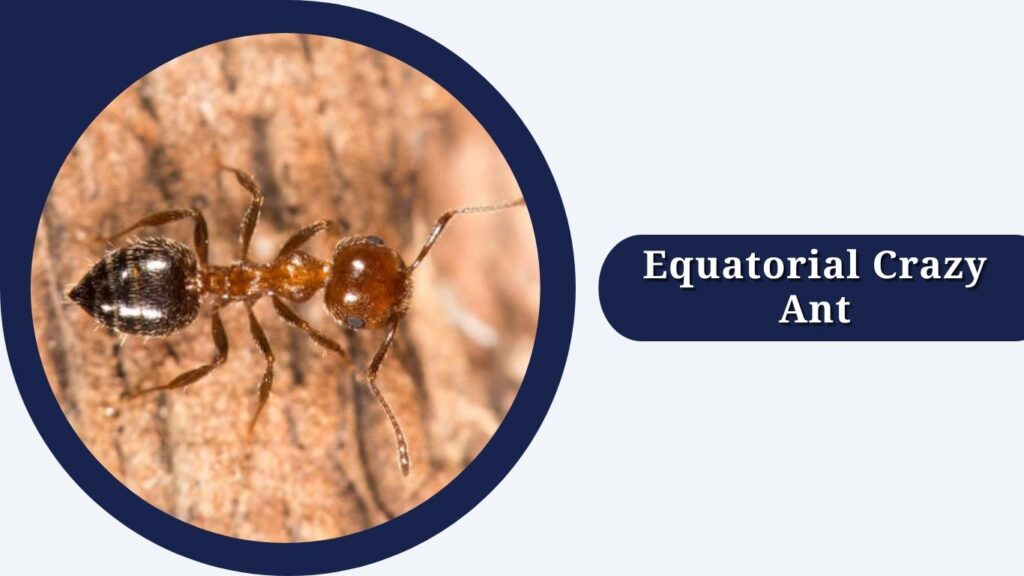
The Equatorial Crazy Ant (Paratrechina aequatorialis) is a tropical ant species associated with warm, humid regions near the equator. Like other crazy ants, it is recognized for its rapid, erratic movements and highly adaptable nature. This species thrives in environments with abundant vegetation and food resources, allowing colonies to grow and spread efficiently.
Identification
- Scientific Name: Paratrechina aequatorialis
- Common Name: Equatorial Crazy Ant
- Color: Light yellow-brown to reddish-brown
- Worker Size: 2–4 mm (0.08–0.16 inches)
- Queen Size: 4–6 mm (0.16–0.24 inches)
- Body Shape: Slender body with long legs and antennae
- Antennae: 12-segmented and highly flexible
- Wings: Present on reproductive males and queens
- Distinguishing Feature: Strong adaptation to humid equatorial climates and fast, unpredictable movement
Habitat and Distribution
Equatorial Crazy Ants are primarily found in tropical regions near the equator, including rainforests, tropical woodlands, agricultural areas, plantations, and urban green spaces. They prefer habitats with high humidity, stable temperatures, and abundant food sources.
Their nests are commonly established beneath leaf litter, logs, fallen branches, rocks, and tree roots. Colonies may also occupy soil cavities and sheltered spaces around buildings in developed areas.
Behavior and Diet
This species is a highly active forager that searches continuously for food. Workers move rapidly in irregular patterns and can quickly recruit nestmates when resources are located.
Their diet includes honeydew, nectar, fruits, dead insects, small arthropods, fungi, and organic debris. Colonies often maintain mutualistic relationships with aphids and scale insects, harvesting the honeydew they produce.
Equatorial Crazy Ants are opportunistic feeders and can take advantage of a wide variety of food resources, helping them thrive in competitive tropical environments.
Life Cycle
The Equatorial Crazy Ant undergoes complete metamorphosis through four stages: egg, larva, pupa, and adult. Queens lay eggs throughout the year due to the relatively stable climate found in equatorial regions.
Workers care for developing larvae and pupae, maintain the nest, and gather food. Colony expansion commonly occurs through budding, where queens and groups of workers establish new nests near the parent colony.
As colonies mature, they may form networks of interconnected nests that support large populations. This reproductive strategy allows the species to spread efficiently throughout suitable tropical habitats and maintain stable populations year-round.
18. Savannah Crazy Ant (Paratrechina savannensis)
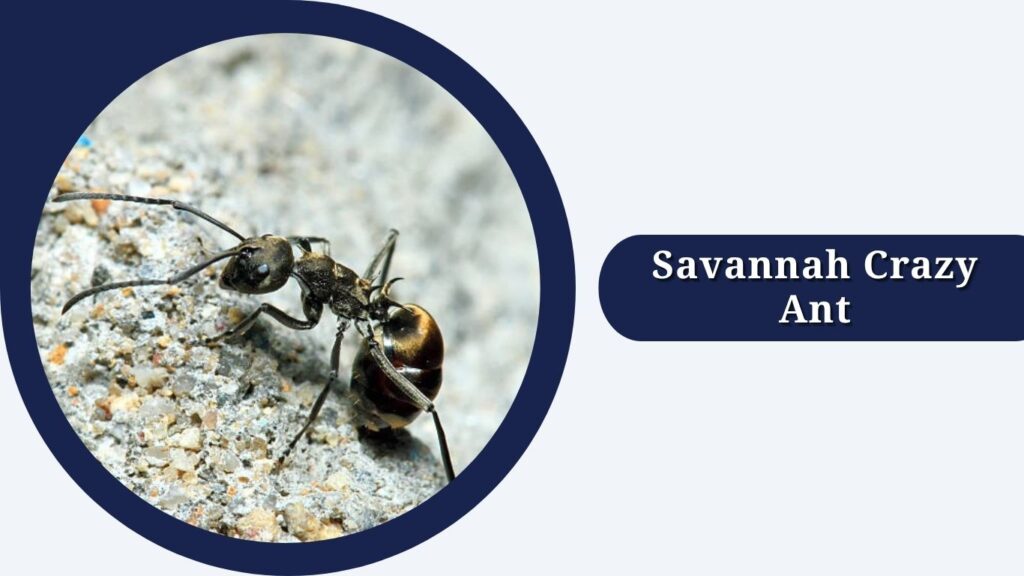
The Savannah Crazy Ant (Paratrechina savannensis) is a fast-moving ant species commonly associated with open grasslands and savannah ecosystems. Known for its erratic running behavior and adaptability, this species thrives in warm environments where food resources are abundant. Its active foraging habits and flexible nesting preferences allow it to successfully inhabit both natural and human-modified landscapes.
Identification
- Scientific Name: Paratrechina savannensis
- Common Name: Savannah Crazy Ant
- Color: Yellowish-brown to light brown
- Worker Size: 2–4 mm (0.08–0.16 inches)
- Queen Size: 4–6 mm (0.16–0.24 inches)
- Body Shape: Slender body with long legs and antennae
- Antennae: 12-segmented and highly flexible
- Wings: Present on reproductive males and queens
- Distinguishing Feature: Preference for open grassland habitats and rapid, unpredictable movement
Habitat and Distribution
Savannah Crazy Ants are primarily found in tropical and subtropical savannahs, grasslands, and open woodlands. They thrive in regions with warm temperatures, seasonal rainfall, and scattered vegetation.
Their nests are commonly established beneath rocks, logs, grass clumps, leaf litter, and within soil cavities. In agricultural and suburban areas, colonies may also occupy landscaped gardens, field margins, and areas surrounding buildings.
Behavior and Diet
This species is an active forager that spends much of the day searching for food. Workers move rapidly in irregular patterns and can quickly recruit nestmates when valuable resources are located.
Their diet includes honeydew, nectar, seeds, fruits, dead insects, small arthropods, and organic debris. Colonies often tend aphids and scale insects to obtain honeydew, which serves as an important energy source.
Savannah Crazy Ants are opportunistic feeders and can adapt their diet to seasonal changes in food availability, helping them survive in dynamic grassland environments.
Life Cycle
The Savannah Crazy Ant undergoes complete metamorphosis through four stages: egg, larva, pupa, and adult. Queens lay eggs throughout favorable periods of the year, supporting steady colony growth.
Workers care for developing brood, maintain nesting chambers, and gather food for the colony. Colonies frequently expand through budding, where queens and groups of workers establish new nests near the original colony.
As colonies mature, they may develop multiple interconnected nesting sites spread across grassland habitats. This reproductive strategy allows the species to expand efficiently and maintain healthy populations throughout its range.
19. Orchard Crazy Ant (Paratrechina pomaria)
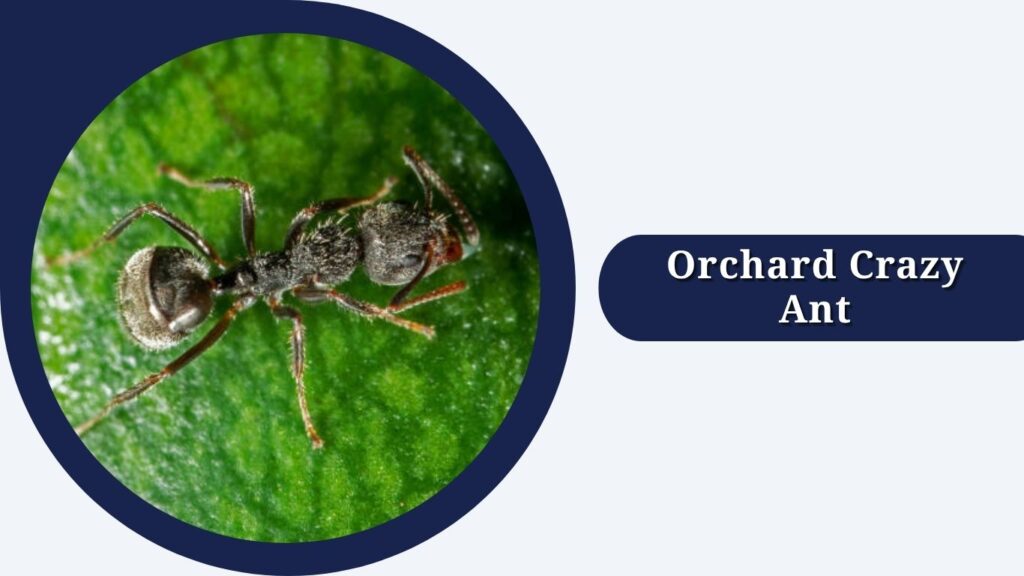
The Orchard Crazy Ant (Paratrechina pomaria) is a small, agile ant species commonly associated with orchards, fruit-growing regions, and agricultural landscapes. Known for its erratic movement and efficient foraging behavior, this ant thrives in environments rich in plant life and sugary food sources. Its adaptability allows it to establish colonies in both cultivated and natural habitats.
Identification
- Scientific Name: Paratrechina pomaria
- Common Name: Orchard Crazy Ant
- Color: Light brown to yellowish-brown
- Worker Size: 2–4 mm (0.08–0.16 inches)
- Queen Size: 4–6 mm (0.16–0.24 inches)
- Body Shape: Slender body with long legs and antennae
- Antennae: 12-segmented and highly flexible
- Wings: Present on reproductive males and queens
- Distinguishing Feature: Frequent association with fruit trees and orchard environments
Habitat and Distribution
Orchard Crazy Ants are commonly found in tropical and subtropical agricultural regions, especially areas with fruit trees and dense vegetation. They inhabit orchards, plantations, gardens, vineyards, parks, and nearby woodlands.
Their nests are typically established beneath leaf litter, fallen fruit, logs, rocks, tree roots, and within soil cavities. In managed agricultural landscapes, colonies often develop near irrigation systems and areas with abundant plant growth.
Behavior and Diet
This species is a highly active forager that spends much of its time searching for food among trees, shrubs, and ground vegetation. Workers move rapidly and unpredictably, a characteristic behavior shared by many crazy ants.
Their diet includes honeydew, nectar, fruit juices, ripe fruits, dead insects, and small arthropods. Colonies frequently tend aphids, mealybugs, and scale insects to harvest honeydew, which serves as a major source of carbohydrates.
Orchard Crazy Ants can become abundant in fruit-growing areas where food resources remain available throughout much of the year.
Life Cycle
The Orchard Crazy Ant undergoes complete metamorphosis through four developmental stages: egg, larva, pupa, and adult. Queens lay eggs regularly during favorable conditions, allowing colonies to expand steadily.
Workers care for developing brood, maintain nest structures, and gather food. Colonies often reproduce through budding, where queens and groups of workers establish new nests near the parent colony.
As colonies mature, they may spread throughout orchard systems and adjacent habitats. This reproductive strategy enables the species to efficiently exploit food-rich environments and maintain stable populations.
20. Yellow Longhorn Crazy Ant (Paratrechina longicornis)
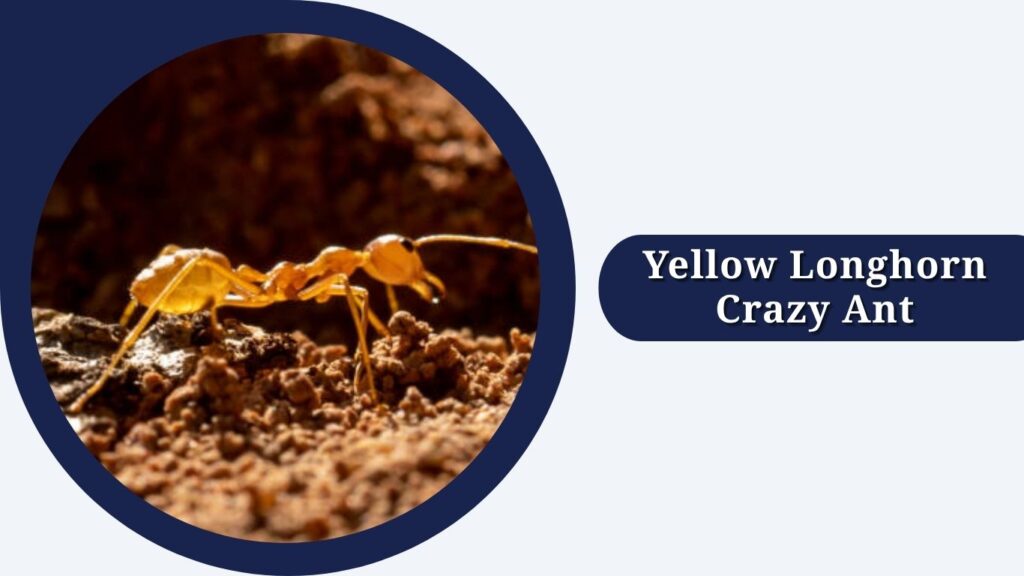
The Yellow Longhorn Crazy Ant (Paratrechina longicornis), more commonly known as the Longhorn Crazy Ant, is one of the most widespread crazy ant species in the world. It is famous for its extremely long antennae, rapid movements, and remarkable ability to adapt to different environments. This species is frequently encountered in tropical and subtropical regions and often becomes a nuisance in homes, businesses, and agricultural areas.
Identification
- Scientific Name: Paratrechina longicornis
- Common Name: Yellow Longhorn Crazy Ant
- Color: Yellowish-brown to dark brown
- Worker Size: 2.5–3 mm (0.10–0.12 inches)
- Queen Size: 4–5 mm (0.16–0.20 inches)
- Body Shape: Slender body with long legs
- Antennae: Exceptionally long, 12-segmented, and highly flexible
- Wings: Present on reproductive males and queens
- Distinguishing Feature: Extremely long antennae and erratic, fast-running behavior
Habitat and Distribution
Yellow Longhorn Crazy Ants are found throughout tropical, subtropical, and many temperate regions worldwide. They are commonly associated with urban environments, ports, agricultural areas, forests, coastal habitats, and islands.
Their nests are highly flexible and may be established beneath rocks, logs, leaf litter, potted plants, tree bark, wall voids, and other sheltered locations. This adaptability has contributed significantly to their global distribution.
Behavior and Diet
This species is a highly active forager that rarely follows straight trails. Workers move rapidly in seemingly random directions, making them easy to identify compared to more organized ant species.
Their diet includes honeydew, nectar, fruits, dead insects, small arthropods, food scraps, and sugary household products. Colonies frequently tend aphids and scale insects to obtain honeydew.
Yellow Longhorn Crazy Ants often form large colonies with multiple queens, allowing populations to increase rapidly. Their ability to exploit a wide variety of food sources helps them thrive in both natural and human-modified environments.
Life Cycle
The Yellow Longhorn Crazy Ant undergoes complete metamorphosis with four developmental stages: egg, larva, pupa, and adult. Queens lay eggs continuously under favorable conditions, supporting year-round colony growth in warm climates.
Workers care for the developing brood, maintain the nest, and gather food resources. New colonies are commonly formed through budding, where queens and groups of workers establish additional nests nearby.
As colonies mature, they can develop into extensive networks of interconnected nests. This reproductive strategy enables the species to spread efficiently and maintain stable populations across a wide range of habitats.
FAQs
What is a Yellow Crazy Ant?
The Yellow Crazy Ant (Anoplolepis gracilipes) is an invasive ant species known for its yellowish color, long legs, and erratic movement patterns. It is considered one of the world’s most destructive invasive ants due to its ability to form massive supercolonies.
Why are they called “crazy ants”?
Yellow Crazy Ants get their name from their rapid and unpredictable movements. Unlike many ant species that follow organized trails, these ants run in seemingly random directions while foraging.
Where are Yellow Crazy Ants found?
Yellow Crazy Ants are found throughout tropical and subtropical regions, including Southeast Asia, Australia, Africa, the Pacific Islands, and parts of the Americas. They thrive in forests, gardens, agricultural lands, coastal areas, and urban environments.
What do Yellow Crazy Ants eat?
Yellow Crazy Ants are omnivorous and feed on honeydew, nectar, fruits, dead insects, small invertebrates, and organic matter. They often protect aphids, scale insects, and mealybugs to harvest the honeydew these insects produce.
Are Yellow Crazy Ants harmful?
Yes, Yellow Crazy Ants can be harmful to ecosystems. Their large colonies can overwhelm native insects, reptiles, birds, and other wildlife. They may also become nuisance pests in homes, farms, and urban areas by invading buildings and disrupting local biodiversity.