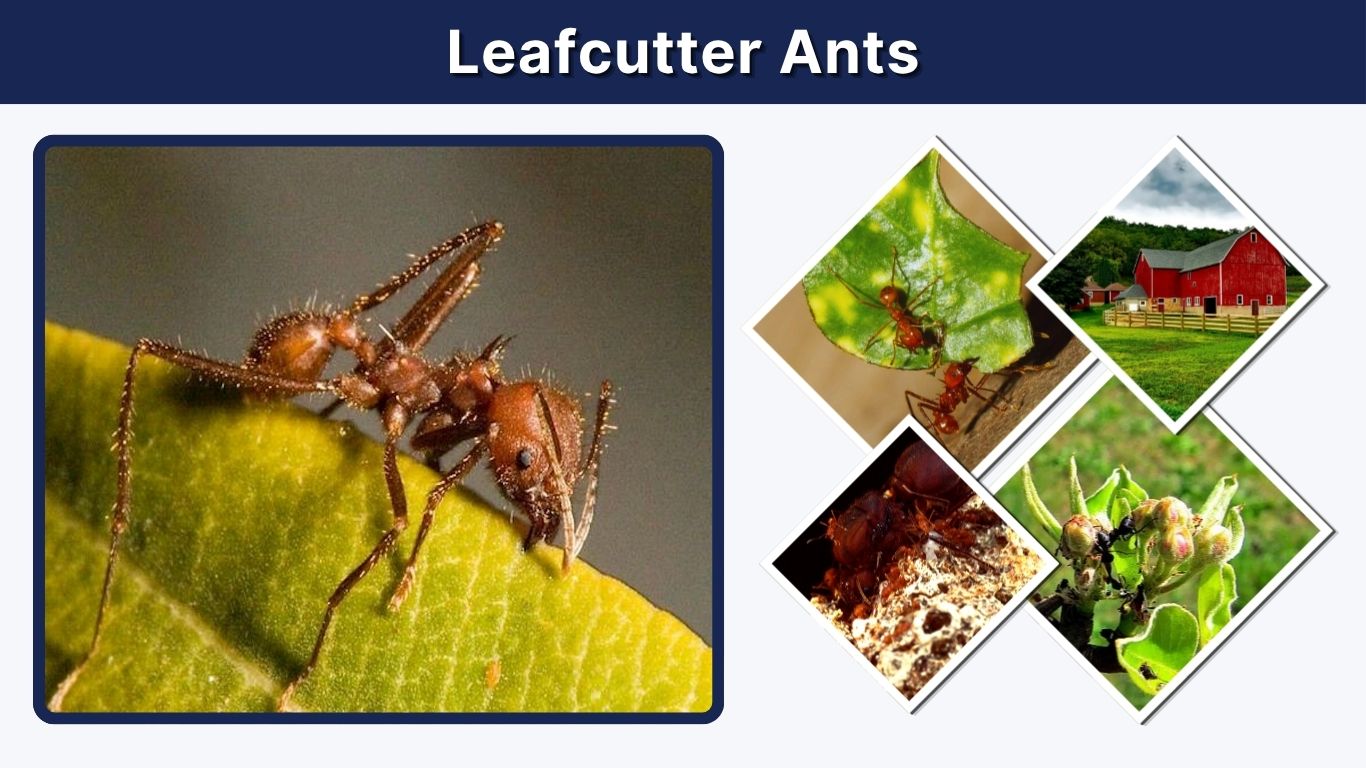
Leafcutter ants are among the most fascinating insects in the world. They are famous for cutting pieces of leaves and carrying them along busy trails, but they do not mainly eat the leaves. Instead, leafcutter ants use plant material to grow fungus inside their nests. This guide explains what leafcutter ants are, where they live, what they eat, and how their colonies work.
What Is a Leafcutter Ant?
Leafcutter ants are social ants known for cutting leaves, flowers, and other plant material. They belong mainly to the genera Atta and Acromyrmex. These ants live in large colonies with queens, workers, soldiers, and fungus gardens.
Why Are They Called Leafcutter Ants?
They are called leafcutter ants because workers cut small pieces from leaves and carry them back to the nest. A leafcutter ant trail can look like a moving green road because hundreds of ants may carry leaf pieces at the same time.
The leaves are not usually eaten directly. Instead, ants chew them into a pulp and use them to grow fungus.
Are Leafcutter Ants Social Insects?
Yes, leafcutter ants are highly social insects. A colony works like a living system where each ant has a specific job. Some cut leaves, some care for young ants, some protect the nest, and others tend the fungus garden.
This division of labor helps large colonies survive and grow.
Where Do Leafcutter Ants Live?
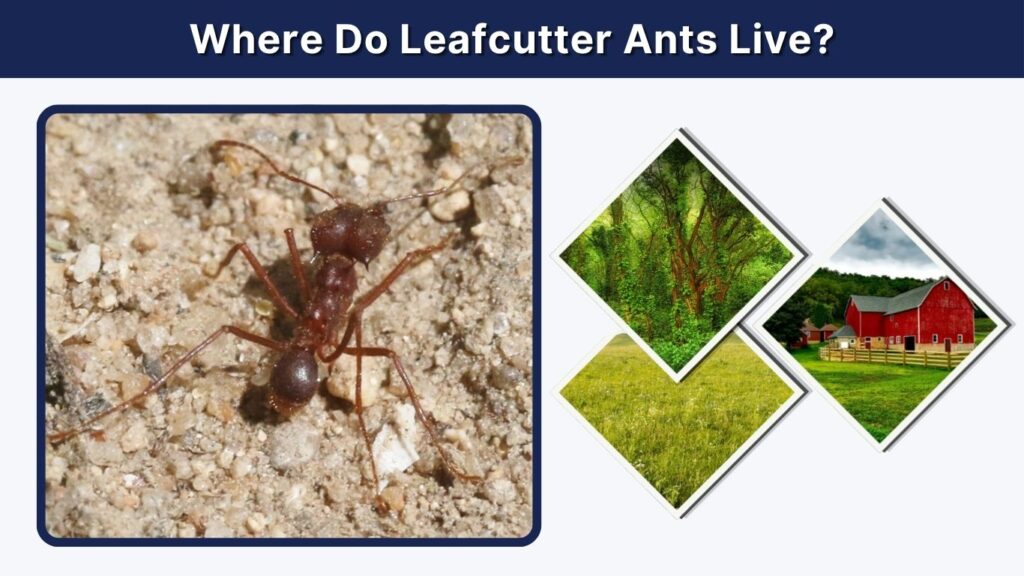
Leafcutter ants are mostly found in warm regions of the Americas. They are common in tropical and subtropical areas where plants are abundant and the soil is suitable for nesting.
Leafcutter Ant Range
Leafcutter ants live in parts of Central America, South America, Mexico, and the southern United States. Their range depends on the species.
Some species live in rainforests, while others survive in dry forests, grasslands, farms, and urban landscapes.
Texas Leafcutter Ant
The Texas leafcutter ant is one of the best-known leafcutter ants in the United States. It is found mainly in Texas and nearby areas. This species can become noticeable when colonies remove leaves from gardens, farms, and landscape plants.
Texas leafcutter ants build large underground nests and can create long foraging trails.
What Do Leafcutter Ants Eat?
Leafcutter ants are often misunderstood. They cut leaves, but the leaves are not their main food. Their real food source is a special fungus they grow underground.
Do Leafcutter Ants Eat Leaves?
Leafcutter ants do not usually eat the leaves directly. Workers cut leaves and carry them to the nest, where the plant material is used as a growing medium for fungus.
The fungus breaks down the plant material and becomes the main food for the colony.
Leafcutter Ant Fungus
The leafcutter ant fungus is essential to the colony. Workers carefully farm, clean, and protect the fungus from harmful microbes.
The ants and fungus depend on each other. The ants provide fresh plant material, and the fungus provides food. This relationship is one of the most impressive examples of insect farming.
What Color Is the Fungus?
The fungus fostered by leafcutter ants is usually pale, whitish, grayish, or cream-colored. Its exact appearance can vary depending on the species, age of the fungus garden, and growing conditions inside the nest.
A healthy fungus garden is carefully maintained by worker ants.
Leafcutter Ants and Fungus Symbiotic Relationship
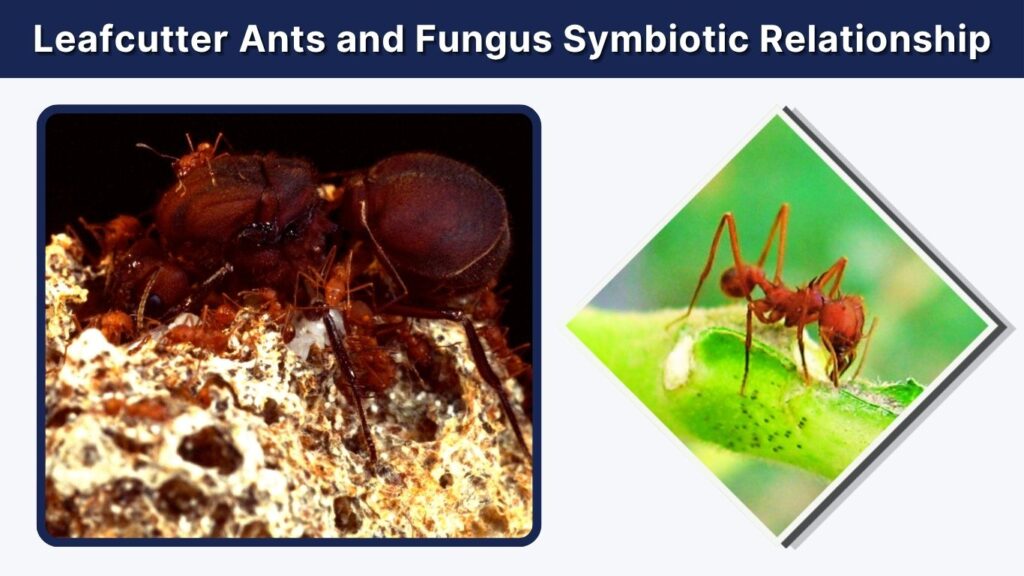
Leafcutter ants and fungus have a close symbiotic relationship. The ants farm the fungus, and the fungus feeds the ants. This relationship has developed over millions of years.
How Do Leafcutter Ants and Fungi Represent Coevolution?
Leafcutter ants and fungi represent coevolution because both organisms have changed over time in ways that support each other. The ants evolved behaviors for collecting leaves, preparing plant material, and protecting fungus. The fungus evolved to grow well inside ant nests.
This partnership is so specialized that many leafcutter ants cannot survive without their fungus.
Why the Fungus Garden Matters
The fungus garden is the center of the colony’s food system. Without it, the ants would not have enough nutrition to survive.
Workers protect the fungus by:
- Removing waste from the garden
- Adding fresh leaf material
- Controlling moisture and airflow
- Removing harmful mold
- Feeding fungus to larvae
- Keeping the garden clean
This careful farming system allows the colony to support thousands or even millions of ants.
Leafcutter Ant Colony Structure
A leafcutter ant colony is highly organized. Different ants have different roles based on size, age, and colony needs.
Leafcutter Ant Queen
The leafcutter ant queen is the reproductive female of the colony. Her main job is to lay eggs. A queen leafcutter ant is much larger than most workers and may live for many years.
After mating, a young queen starts a new colony by carrying a small piece of fungus from her original nest. This fungus becomes the beginning of the new colony’s food supply.
Leafcutter Ant Workers
Worker ants do most of the colony’s daily labor. They cut leaves, carry plant pieces, care for larvae, maintain the fungus garden, and clean the nest.
Worker ants can vary in size. Smaller workers often care for fungus and young ants, while larger workers cut and carry leaves.
Leafcutter Ant Soldiers
Leafcutter ant soldiers are large workers that defend the colony. They have bigger heads and powerful jaws.
Soldier leafcutter ants protect trails, nest entrances, and foraging workers from predators or threats. In some species, soldiers are much larger than ordinary workers.
Leafcutter Ant Colony Table
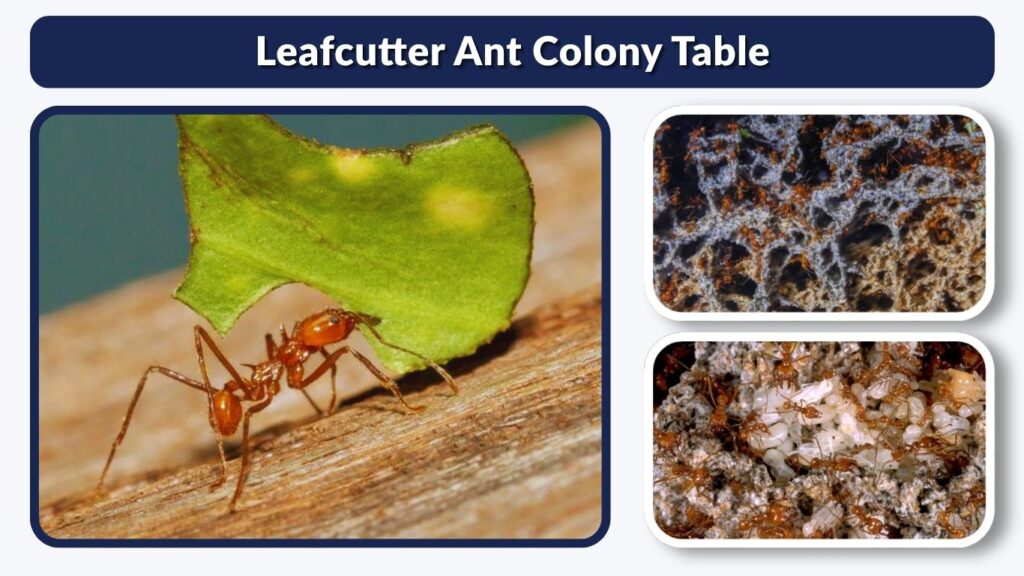
The table below shows the main members of a leafcutter ant colony and their roles.
| Colony Member | Main Role | Key Feature |
|---|---|---|
| Queen | Lays eggs and starts the colony | Largest reproductive female |
| Male ants | Mate with young queens | Usually short-lived |
| Small workers | Care for fungus and larvae | Work inside the nest |
| Medium workers | Cut and carry leaves | Common on trails |
| Soldiers | Defend the colony | Large head and strong jaws |
| Larvae | Developing young ants | Fed by workers |
Leafcutter Ant Nest
A leafcutter ant nest can be large and complex. Mature colonies may have many underground chambers connected by tunnels.
What Does a Leafcutter Ant Nest Look Like?
A leafcutter ant nest may have several surface openings, soil mounds, and underground chambers. The most important chambers hold fungus gardens, young ants, and the queen.
Some nests can extend deep underground and cover a large area, especially in mature colonies.
Leafcutter Ant Tunnels
Leafcutter ant tunnels connect nest chambers and surface entrances. They allow workers to move between the fungus gardens, waste areas, brood chambers, and foraging trails.
Good tunnel design helps the colony control temperature, humidity, and airflow.
Leafcutter Ant Trail
A leafcutter ant trail is a busy path used by workers to collect leaves. These trails can stretch long distances from the nest to nearby plants.
On a trail, some ants cut leaves while others carry pieces back. Smaller ants may ride on leaf fragments to protect workers from parasitic flies.
Leafcutter Ant Life Cycle
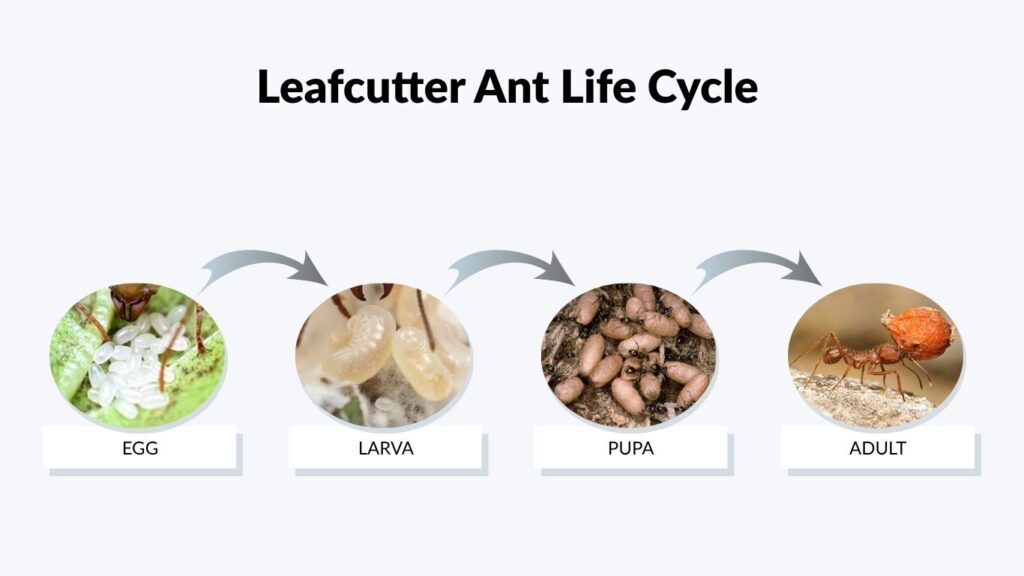
Leafcutter ants go through complete metamorphosis. This means they develop from egg to larva, then pupa, and finally adult.
From Egg to Adult Ant
The queen lays eggs, and workers care for them. The eggs hatch into larvae, which are fed and cleaned by worker ants. After the larval stage, they become pupae and eventually emerge as adult ants.
The type of ant that develops can depend on colony needs, genetics, nutrition, and environmental conditions.
How Long Do Leafcutter Ants Live?
Leafcutter ant lifespan depends on caste. Queens can live for many years. Workers usually live much shorter lives, especially if they forage outside the nest.
Soldiers and workers face more risks from predators, weather, and daily work.
Leafcutter Ant Size and Strength
Leafcutter ants are famous for carrying leaf pieces that look much larger than their bodies. Their strength makes them one of the most impressive insects to watch.
How Big Is a Leafcutter Ant?
Leafcutter ant size depends on the species and caste. Small workers may be only a few millimeters long, while larger soldiers and queens are much bigger.
A leafcutter ant queen is usually the largest ant in the colony. Soldiers are also large, with strong jaws for defense.
Leafcutter Ant Strength
Leafcutter ants can carry pieces of leaves that are many times their own body weight. This strength allows them to transport plant material from trees, shrubs, and garden plants back to the nest.
Their teamwork is just as important as their strength. Thousands of ants working together can remove large amounts of plant material quickly.
Are Leafcutter Ants Dangerous?
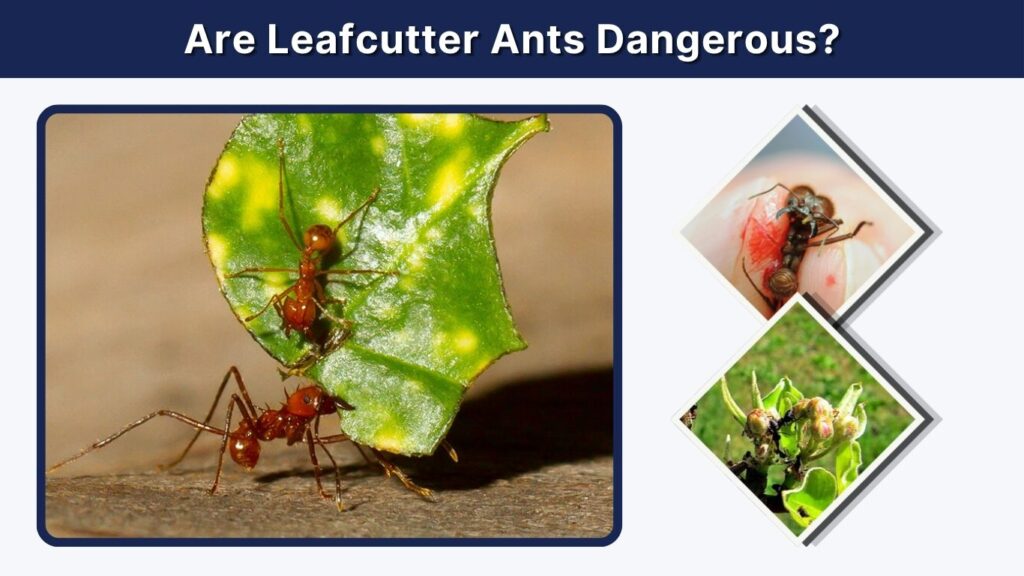
Leafcutter ants are not usually dangerous to humans, but they can bite if handled or disturbed. Their biggest impact is often plant damage.
Do Leafcutter Ants Bite or Sting?
Leafcutter ants can bite with their jaws. Larger soldiers can give a stronger bite than small workers. However, leafcutter ants do not usually sting like fire ants.
Most bites happen when someone disturbs the nest or handles the ants.
Leafcutter Ant Damage
Leafcutter ant damage can be serious in gardens, farms, orchards, and landscapes. A large colony can strip leaves from plants quickly.
They may cut leaves from:
- Fruit trees
- Garden vegetables
- Ornamental plants
- Shrubs
- Flowers
- Young trees
Because they harvest plant material for fungus, they may return repeatedly to the same plants.
Leafcutter Ant Control
Leafcutter ant control can be difficult because colonies are large and underground. Removing visible ants does not always solve the problem because the queen and fungus gardens remain inside the nest.
How to Get Rid of Leafcutter Ants
The best control method depends on the location, colony size, and local regulations. In serious cases, professional pest control may be needed.
Common management steps include:
- Identifying the nest location
- Protecting valuable plants
- Reducing access to preferred plants
- Avoiding disturbance that spreads activity
- Using control products labeled for leafcutter ants
- Contacting a pest control expert for large colonies
Always follow product labels and local safety rules when using any ant control treatment.
Leafcutter Ant Killer and Poison
Some people search for leafcutter ant killer or leafcutter ant poison, but these products should be used carefully. Leafcutter ant colonies are complex, and the wrong treatment may not reach the queen or fungus garden.
For large infestations, professional advice is often the safest and most effective option.
Interesting Facts About Leafcutter Ants
Leafcutter ants are more than garden pests. They are ecosystem engineers, fungus farmers, and highly organized insects.
Leafcutter Ant Facts
Here are some quick facts about leafcutter ants:
- They farm fungus for food.
- They do not mainly eat the leaves they cut.
- A queen can start a colony with a tiny fungus piece.
- Colonies can contain thousands or millions of ants.
- Soldiers defend the colony with strong jaws.
- Trails can be long and highly organized.
- Some workers ride leaf pieces to protect foragers.
- Their nests can have many underground chambers.
These ants are often studied because their farming behavior is so advanced.
FAQs
What is a leafcutter ant?
A leafcutter ant is a social ant that cuts pieces of leaves and carries them to its nest. The ants use the leaves to grow fungus, which becomes their main food source. Leafcutter ants live in organized colonies with queens, workers, and soldiers.
What do leafcutter ants eat?
Leafcutter ants mainly eat fungus that they grow inside their nests. They cut leaves and use the plant material to feed the fungus. Although they carry leaves, the leaves themselves are not usually their main food.
Where do leafcutter ants live?
Leafcutter ants live in warm regions of the Americas, including Central America, South America, Mexico, and parts of the southern United States. The Texas leafcutter ant is found in Texas and nearby areas.
Are leafcutter ants dangerous?
Leafcutter ants are not usually dangerous to people, but they can bite if disturbed. Their main problem is plant damage. Large colonies can remove leaves from gardens, farms, trees, and ornamental plants very quickly.
How do leafcutter ants and fungi represent coevolution?
Leafcutter ants and fungi represent coevolution because both have adapted to depend on each other. The ants collect leaves and protect the fungus, while the fungus provides food for the colony. Over time, their relationship became highly specialized.