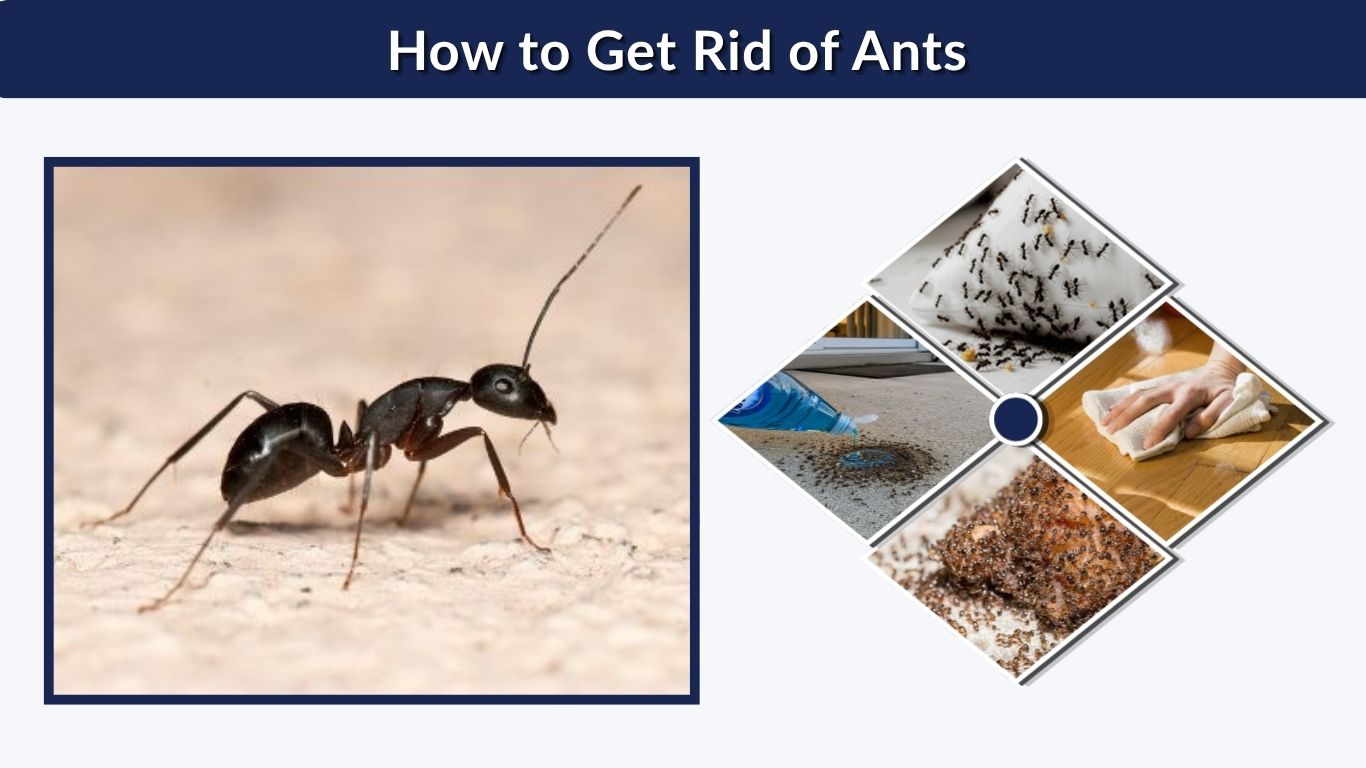
Ants can show up almost anywhere, from kitchen counters and bathroom sinks to yards, cars, gardens, and potted plants. Getting rid of ants starts with finding what attracts them, removing food and water sources, and targeting the colony instead of only killing the ants you see. This guide explains how to get rid of ants in the house, outside, and in problem areas for longer-lasting results.
Why Ants Keep Coming Back
Ants usually enter homes while searching for food, moisture, or shelter. Once one ant finds a food source, it leaves a scent trail for others to follow. That is why wiping away visible ants without removing the trail rarely solves the problem.
The key to permanent ant control is to treat the colony. Sprays may kill ants on contact, but baits are often more effective because worker ants carry the bait back to the nest. For carpenter ants, fire ants, pharaoh ants, or large infestations, you may need a more targeted plan.
Common Reasons Ants Enter the House
Ants are usually attracted by:
- Crumbs, sugar, grease, pet food, or spilled drinks
- Leaky pipes, damp wood, sinks, or condensation
- Gaps around windows, doors, pipes, and foundations
- Overgrown plants touching the house
- Trash cans, compost bins, or outdoor food sources
Before using any treatment, clean the area thoroughly. If ants cannot find food or water, your bait and prevention steps will work much better.
How to Get Rid of Ants in the House
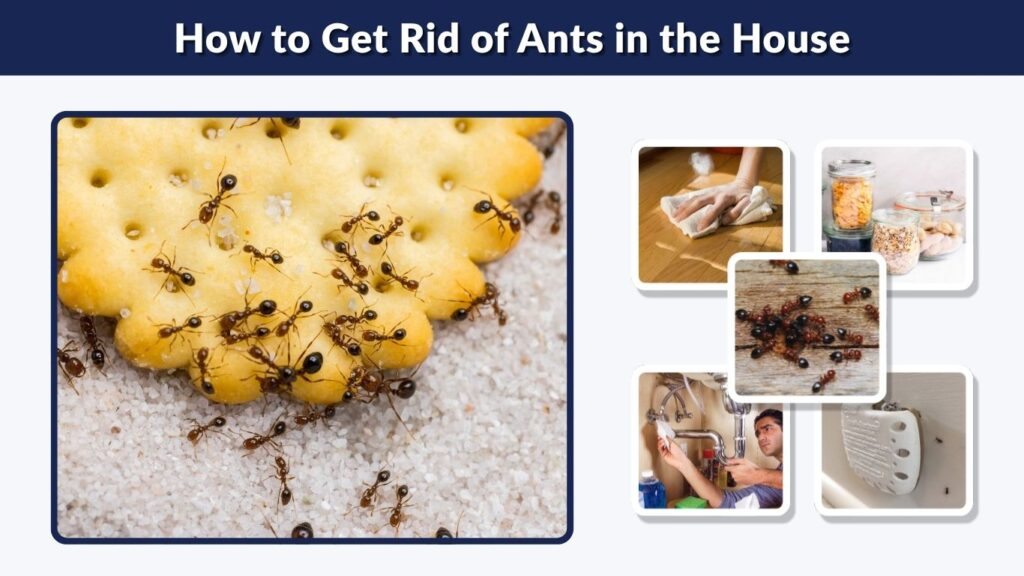
Indoor ant problems usually start in kitchens, bathrooms, bedrooms, or near windows and doors. The goal is to remove attractants, break scent trails, and use bait where ants are active.
Step-by-Step Indoor Ant Control
Follow these steps to get rid of ants in your house:
- Clean the trail. Wipe counters, floors, and entry points with soapy water or a vinegar-water solution.
- Remove food sources. Store sugar, cereal, snacks, and pet food in sealed containers.
- Fix moisture problems. Repair leaks and dry damp areas under sinks or around tubs.
- Use ant bait. Place bait near trails, corners, and entry points, but not directly on freshly cleaned surfaces.
- Seal entry points. Use caulk around cracks, windows, baseboards, and pipe openings.
- Avoid spraying near bait. Sprays can repel ants and stop them from carrying bait back to the colony.
For small ants in the house, baiting is usually better than spraying. Give the bait time to work because the ants need to bring it back to the nest.
How to Get Rid of Ants in the Kitchen
The kitchen is one of the most common places for ants because it has food, water, and warmth. Sugar ants, tiny ants, ghost ants, odorous house ants, and little black ants often appear around sinks, cabinets, trash cans, and pantry shelves.
Kitchen Ant Removal Tips
To get rid of ants in the kitchen:
- Clean crumbs, grease, and sticky spills immediately
- Rinse food containers before putting them in the trash or recycling
- Keep fruit, sweets, bread, and pet food covered
- Empty trash regularly and wash the bin if it smells
- Place ant bait near trails but away from food prep surfaces
- Check under appliances for crumbs or moisture
If you see tiny ants in the kitchen, do not only kill the visible ants. Watch where they are coming from and place bait near that trail. This helps reach the colony.
Best Methods for Different Types of Ants
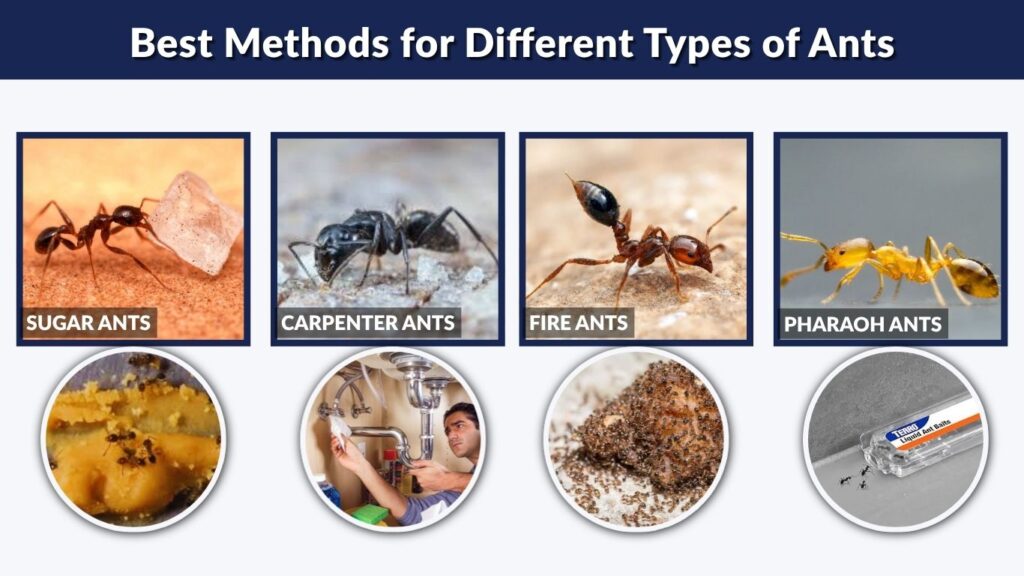
Different ants need different treatments. Some are mostly a nuisance, while others can damage wood, sting, or spread quickly through a home.
| Ant Type | Where They Appear | Best Control Method |
| Sugar ants | Kitchens, pantries, sinks | Sweet or protein-based bait |
| Carpenter ants | Damp wood, walls, attics, decks | Find nest, fix moisture, professional help if severe |
| Fire ants | Lawns, yards, mounds | Fire ant bait or mound treatment |
| Pharaoh ants | Apartments, kitchens, bathrooms | Slow-acting bait, avoid sprays |
| Ghost ants | Kitchens, bathrooms, wall voids | Baiting and moisture control |
| Little black ants | Indoors and outdoors | Bait trails and seal entry points |
| Pavement ants | Sidewalks, patios, foundations | Outdoor bait and crack sealing |
| Flying ants | Windows, lights, indoors during swarms | Identify nest and seal entry points |
How to Get Rid of Carpenter Ants
Carpenter ants are large black ants that can tunnel through damp or damaged wood. They do not eat wood like termites, but they can weaken structures over time. If you see big black ants indoors, especially near windows, walls, or damp wood, inspect for moisture damage.
To get rid of carpenter ants:
- Look for sawdust-like material near wood, walls, or baseboards
- Fix leaks and replace rotting wood
- Trim tree branches touching the house
- Use carpenter ant bait near active trails
- Check crawl spaces, decks, attics, and wall voids
- Call a professional if you suspect a nest inside the structure
Natural methods may reduce activity, but carpenter ants often require nest-level treatment.
How to Get Rid of Sugar Ants
Sugar ants are attracted to sweets, syrup, fruit, crumbs, and spilled drinks. They are common in kitchens and pantries.
To get rid of sugar ants, clean all sugary residue, seal food containers, and use sweet ant bait. Do not wipe bait away too soon. The ants need time to carry it back to the colony.
How to Get Rid of Fire Ants
Fire ants are aggressive and can sting repeatedly. They usually build mounds in lawns, gardens, and yards. Avoid disturbing the mound because they may swarm quickly.
Use fire ant bait around the yard or apply a labeled mound treatment directly to the ant hill. Keep children and pets away from treated areas according to product directions. For large fire ant infestations, professional treatment may be safer and more effective.
How to Get Rid of Pharaoh Ants
Pharaoh ants are tiny yellowish ants that often appear in apartments, hospitals, kitchens, and bathrooms. Spraying them can make the problem worse because colonies may split and spread.
Use slow-acting bait and avoid repellent sprays. In apartment buildings, coordinated treatment may be needed because colonies can move between units.
How to Get Rid of Ants Naturally
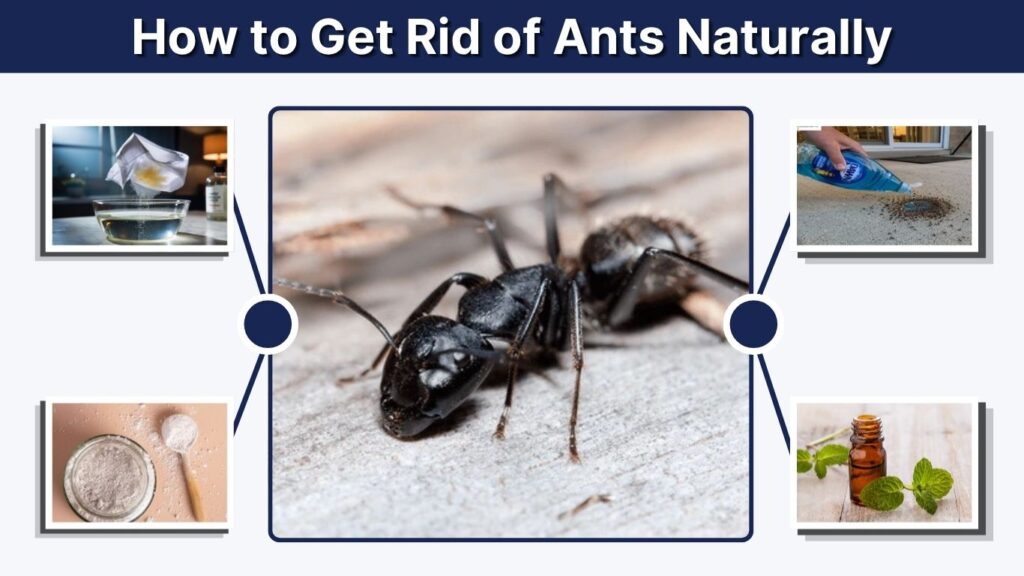
Natural methods can help with small ant problems, especially when combined with cleaning and sealing entry points. However, natural repellents may not eliminate the colony.
Natural Ant Control Options
Try these natural ant control methods:
- Vinegar and water: Wipe trails to remove scent marks.
- Soapy water: Kills visible ants and cleans surfaces.
- Diatomaceous earth: Use food-grade powder in dry cracks and entry points.
- Peppermint oil: May repel ants near windows and doors.
- Cinnamon or coffee grounds: May discourage ants in small areas.
- Borax bait: Can work when mixed carefully with sugar water or another attractant.
Borax can be effective, but it must be used carefully. Keep it away from children, pets, and food surfaces. Too much borax can kill ants before they carry it back to the colony, so bait needs to be slow-acting.
How to Get Rid of Ants Outside
Outdoor ants can build hills in lawns, gardens, patios, flower pots, and around foundations. Not every outdoor ant nest needs treatment, but ants near the house can eventually move inside.
Yard and Lawn Ant Control
To get rid of ants in the yard:
- Remove food waste, fallen fruit, and open trash
- Keep grass trimmed and reduce mulch against the foundation
- Place outdoor ant bait near trails and mounds
- Treat ant hills only when necessary
- Seal cracks around the foundation
- Keep firewood and debris away from the house
For ant hills in the yard, use bait around the mound rather than only flooding or flattening it. Destroying the mound without killing the colony may cause ants to rebuild nearby.
How to Get Rid of Ant Hills
Ant hills are visible signs of underground colonies. For small mounds, outdoor bait may work well. For fire ant mounds, use a product labeled specifically for fire ants.
Do not pour gasoline, bleach, or harsh chemicals into ant hills. These methods are unsafe, can damage soil, and may not eliminate the colony.
How to Get Rid of Ants in Special Areas
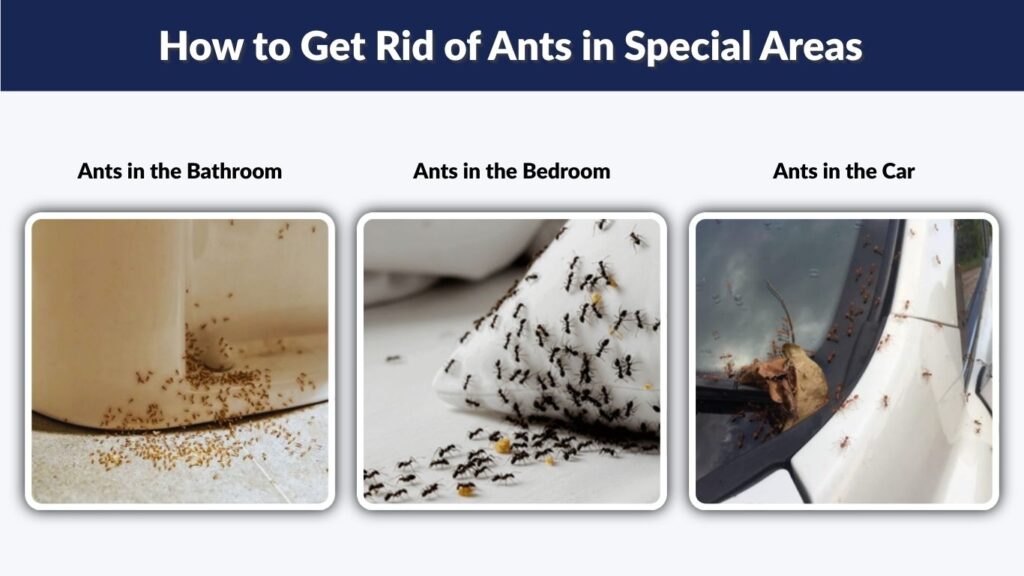
Ants can appear in unexpected places, including cars, bathrooms, bedrooms, gardens, and potted plants. Each situation needs a slightly different approach.
Ants in the Bathroom
Bathroom ants are often looking for water. Check for leaky faucets, wet bath mats, damp wood, and moisture around tubs or sinks. Clean trails, fix leaks, and use bait near entry points.
Ants in the Bedroom
Ants in the bedroom may be attracted to snacks, drinks, pet food, or moisture. Remove food, vacuum thoroughly, wash sticky surfaces, and inspect windows, baseboards, and electrical outlets for trails.
Ants in the Car
To get rid of ants in your car, remove food wrappers, vacuum seats and carpets, clean cup holders, and check the trunk. Park away from ant hills or overhanging branches. Use bait outside the car if ants are coming from a nearby nest.
Ants in Potted Plants
Ants in flower pots or house plants may be nesting in dry soil or farming aphids. Water the plant properly, check for aphids, and remove the plant from areas where ants are active. For outdoor pots, move them away from walls and ant trails.
Flying Ants in the House
Flying ants are reproductive ants that swarm when colonies mature. A few flying ants near a window may come from outside, but repeated swarms indoors can mean a nest inside the home. Seal entry points, inspect damp wood, and consider professional inspection if swarms continue.
How to Get Rid of Ants Permanently
Permanent ant control means making your home less attractive and blocking access. Even after ants disappear, prevention matters because new colonies can move in later.
Long-Term Ant Prevention
For lasting results:
- Store all food in airtight containers
- Clean kitchen counters and floors daily
- Fix leaks and reduce moisture
- Seal cracks around doors, windows, pipes, and foundations
- Trim plants and branches away from the house
- Keep mulch, wood, and debris away from exterior walls
- Use bait early when you see new trails
- Inspect outdoor mounds before they spread
If ants return every few weeks, the colony may not be fully eliminated, or there may be multiple nests. Recheck moisture, food sources, and entry points.
How to Treat Ant Bites
Ant bites and stings can cause redness, itching, swelling, and discomfort. Fire ant stings may form small blisters and can be painful.
Wash the area with soap and water, apply a cold compress, and avoid scratching. Over-the-counter anti-itch cream or oral antihistamines may help with itching. Seek medical help immediately if there are signs of a severe allergic reaction, such as trouble breathing, dizziness, swelling of the face or throat, or widespread hives.
When to Call a Professional
Some ant problems are difficult to solve with home methods. Professional pest control may be needed when ants are nesting inside walls, damaging wood, spreading through apartments, or returning after repeated treatments.
Call a pest control expert if you have:
- Carpenter ants inside the house
- Fire ants across the yard
- Pharaoh ants in an apartment or multi-unit building
- Large black ants appearing daily
- Ants coming from walls, outlets, or ceilings
- Repeated infestations despite baiting and sealing
- Ant activity near damaged or damp wood
A professional can identify the species, locate nests, and choose the right treatment.
FAQs
How do I get rid of ants in the house quickly?
Clean the ant trail with soapy water, remove food sources, and place ant bait near the trail. Avoid spraying around the bait because it may stop ants from carrying it back to the colony. Quick cleaning helps immediately, but baiting gives better long-term control.
What is the best way to get rid of ants permanently?
The best long-term method is to eliminate food and water sources, seal entry points, and use bait that reaches the colony. Killing only the ants you see rarely solves the problem. Permanent control depends on removing what attracts ants and blocking future access.
How do I get rid of tiny ants in the kitchen?
Wipe counters, clean spills, seal sugar and pantry foods, empty trash, and place bait near active trails. Tiny kitchen ants are often attracted to sweets, grease, or moisture. Watch where they enter and seal cracks after the bait has reduced activity.
How do I get rid of carpenter ants naturally?
You can reduce carpenter ants by fixing leaks, removing damp wood, trimming branches, and using bait near trails. Natural repellents may help with minor activity, but they often do not reach hidden nests. If carpenter ants are inside walls or structural wood, professional treatment is usually safer.
How do I get rid of ants outside without harming plants?
Use targeted outdoor ant bait near trails or mounds rather than spreading harsh chemicals over the whole garden. Keep soil healthy, remove fallen fruit, control aphids, and avoid disturbing beneficial insects. For potted plants, check for aphids and avoid overwatering or letting soil stay too dry.