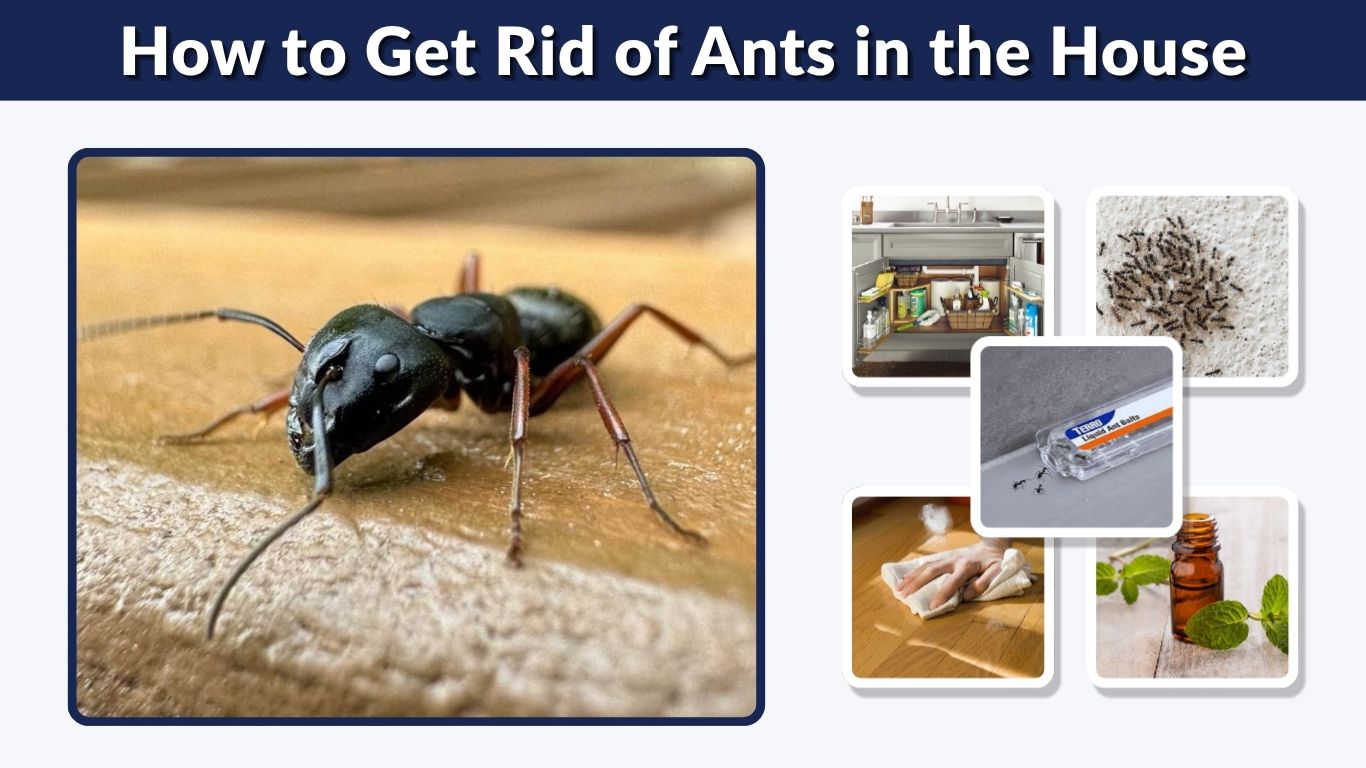
Ants in the house are frustrating because they often appear suddenly and keep returning after you wipe them away. The best way to get rid of ants indoors is to remove what attracts them, clean their scent trails, use bait correctly, and seal the places where they enter. This guide explains how to get rid of ants in the house quickly, naturally, and more permanently.
Why Ants Are Coming Into Your House
Ants usually enter a house because they are searching for food, water, or shelter. Even a few crumbs, a sticky spill, pet food, or a small leak can attract them. Once worker ants find a source, they leave a scent trail that other ants follow.
That is why killing the ants you see is not enough. If the colony remains active and the trail is still there, more ants will return.
Common Indoor Ant Attractants
Ants are most often attracted to:
- Sugar, syrup, honey, fruit, and sweet drinks
- Grease, oil, meat scraps, and crumbs
- Pet food and dirty food bowls
- Open trash cans or recycling bins
- Leaky pipes, damp sinks, and wet bathrooms
- Cracks around doors, windows, and baseboards
If ants keep appearing in the same place, follow their trail. It usually leads to food, moisture, or an entry point.
How to Get Rid of Ants in the House Quickly
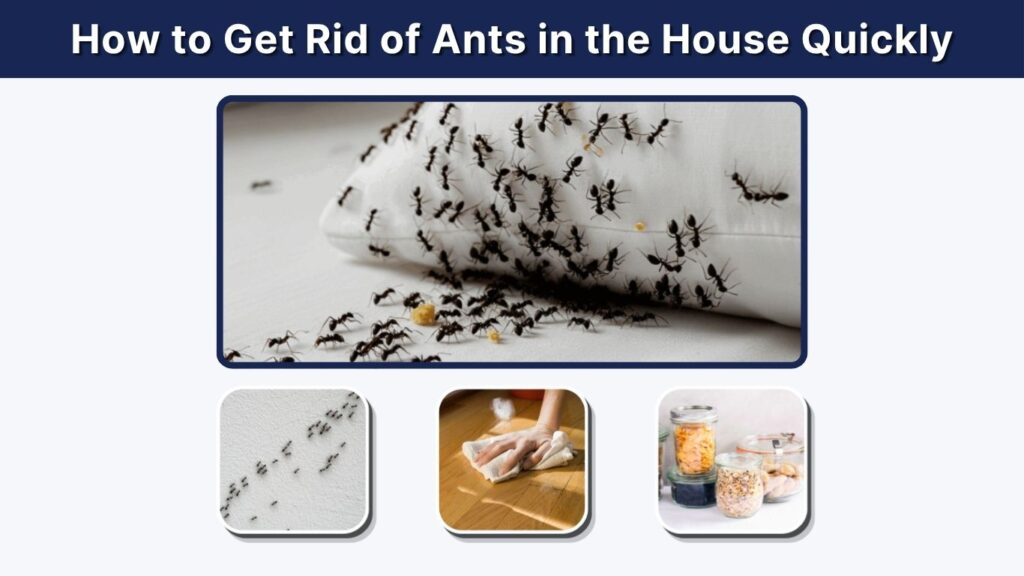
To remove ants quickly, combine cleaning with baiting. Cleaning gives immediate relief, while baiting helps reach the colony. Spraying only the ants you see may look effective at first, but it often fails because it does not eliminate the nest.
Step-by-Step Indoor Ant Removal
Use this simple process:
- Find the ant trail. Watch where the ants are coming from and where they are going.
- Clean the area. Wipe counters, floors, and baseboards with soapy water.
- Remove food sources. Put open food in sealed containers and clean crumbs.
- Place ant bait near trails. Put bait close to where ants are active, but not directly on food surfaces.
- Do not spray near bait. Sprays can repel ants and stop them from carrying bait back.
- Seal entry points after activity slows. Caulk cracks, gaps, and holes once the bait has worked.
If you need to get rid of ants in the house overnight, cleaning and baiting are still the best first steps. You may see fewer ants quickly, but full colony control can take longer.
Best Treatments for Different Indoor Ants
Not all ants behave the same way. Tiny ants in the kitchen may need a different approach from carpenter ants, fire ants, or flying ants. Identifying the type of ant helps you choose the right treatment.
| Type of Ant | Common Indoor Signs | Best Treatment |
| Tiny ants | Small trails near sinks, counters, or windows | Clean trails and use indoor ant bait |
| Black ants | Trails in kitchens, bathrooms, or near doors | Bait near entry points and seal cracks |
| Sugar ants | Activity around sweets, fruit, or pantry food | Use sweet bait and remove sugary spills |
| Carpenter ants | Large black ants near damp wood or walls | Find the nest, fix moisture, consider a pro |
| Fire ants | Painful stings, red ants entering from outside | Use caution, bait outdoors, treat source mound |
| Flying ants | Winged ants near windows or lights | Identify whether they came from inside or outside |
| Pharaoh ants | Very small ants in kitchens or bathrooms | Use slow-acting bait and avoid sprays |
Tiny Ants and Little Ants
Tiny ants in the house usually appear around kitchens, bathrooms, windows, and baseboards. They may be looking for sugar, grease, or water. Start by cleaning the trail and placing bait near the activity.
Avoid using strong repellent sprays. Tiny ants can scatter and create new trails, making the problem harder to control.
Black Ants in the House
Black ants are often found near food sources or outdoor entry points. If you see black ants indoors, inspect door frames, window sills, foundation cracks, and kitchen areas.
Use bait near trails and seal cracks once the activity slows. If the ants are large black ants, check for carpenter ants.
Sugar Ants Indoors
Sugar ants are drawn to sweet foods, fruit, syrup, juice, and sticky spills. To get rid of sugar ants in the house, clean all sweet residue, store food tightly, and use sweet ant bait.
Do not leave fruit bowls, open drink cans, or sugary snacks uncovered while treating the problem.
Carpenter Ants in the House
Carpenter ants are larger than many household ants and are often black. They can tunnel through damp or damaged wood. Unlike termites, they do not eat wood, but they can still weaken wooden structures over time.
Signs of carpenter ants may include large ants indoors, rustling sounds in walls, sawdust-like material, or activity near damp wood. Fix leaks, replace rotting wood, and call a pest control professional if you suspect a nest inside walls, floors, or ceilings.
How to Get Rid of Ants Naturally in the House
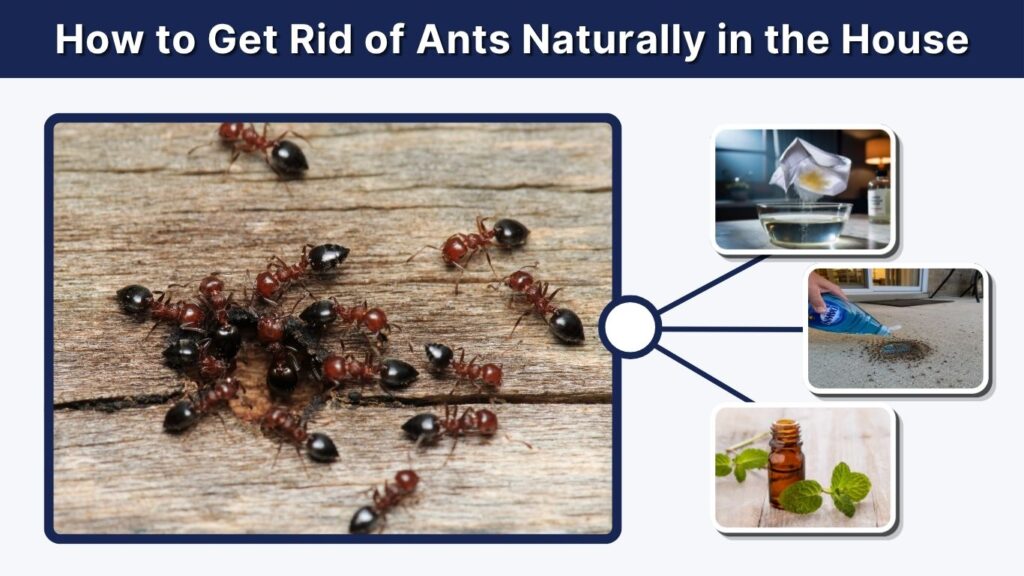
Natural ant control can help with small indoor problems. These methods work best when combined with cleaning, baiting, and sealing entry points. Natural repellents may reduce activity, but they do not always eliminate the colony.
Safe DIY Ant Control Methods
You can try:
- Soapy water: Wipes away ants and removes scent trails.
- Vinegar and water: Helps clean surfaces and disrupt trails.
- Food-grade diatomaceous earth: Can be placed in dry cracks and hidden entry points.
- Peppermint oil: May help repel ants near windows and doors.
- Borax bait: Can work when mixed with sugar, but it must be used carefully.
Borax should be kept away from children, pets, and food preparation areas. Use only a small amount in bait because too much can kill ants before they carry it back to the colony.
Does Vinegar Get Rid of Ants?
Vinegar can help remove scent trails and discourage ants from using the same path. However, vinegar usually does not kill the colony. Use it for cleaning trails, then place bait nearby after the surface dries.
Does Borax Get Rid of Ants?
Borax can help eliminate ants when used as a slow-acting bait. Ants take the bait back to the colony, where it can affect more ants. The key is using the right amount and placing it where ants are already active.
How to Permanently Get Rid of Ants in the House
Permanent ant control depends on prevention. If food, moisture, and entry points remain, ants can return even after successful treatment. The goal is to make your home harder for ants to enter and less attractive once they get inside.
Long-Term Prevention Checklist
To keep ants from coming back:
- Store pantry food in airtight containers
- Wipe counters and dining areas daily
- Sweep or vacuum crumbs from floors
- Wash pet bowls and avoid leaving food out overnight
- Take out trash regularly
- Fix leaks under sinks and around bathrooms
- Seal gaps around windows, doors, pipes, and baseboards
- Trim branches and plants touching the house
- Keep mulch, firewood, and debris away from the foundation
If ants are coming in from outside, sealing entry points is just as important as indoor cleaning.
Where Ants Hide Inside the House
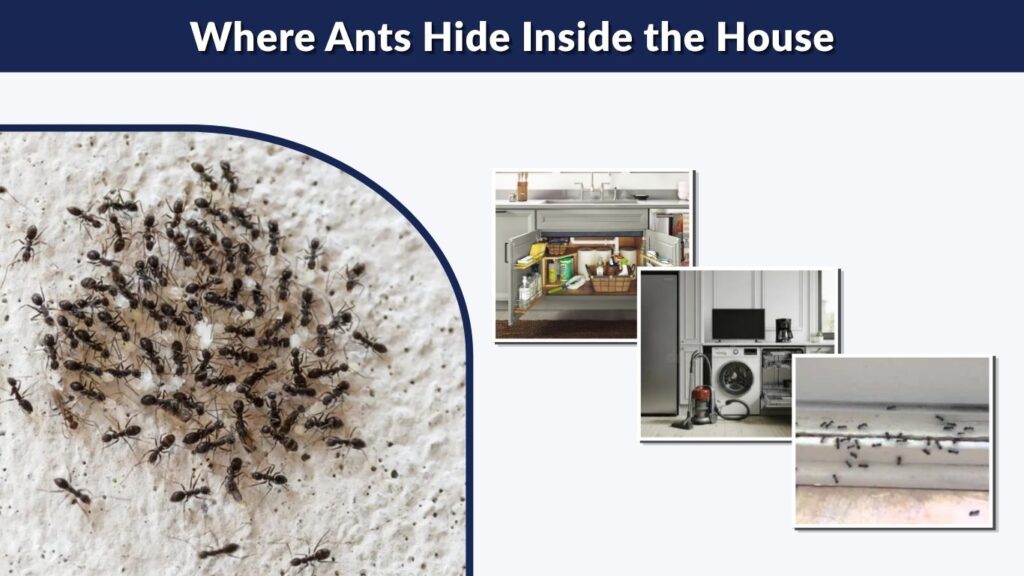
Ants can nest or travel through hidden spaces, especially if there is moisture or easy access to food. If you only treat open surfaces, you may miss the source of the infestation.
Common Indoor Hiding Spots
Check these areas:
- Under kitchen sinks
- Behind dishwashers and refrigerators
- Around windows and sliding doors
- Inside wall voids
- Behind baseboards
- Near bathroom pipes
- Around pet feeding areas
- In pantry shelves
- Under carpets near food spills
If ants are coming from outlets, walls, ceilings, or cracks in large numbers, the colony may be inside the structure.
How to Handle an Ant Infestation
A few ants may be easy to control, but a full infestation needs a more careful plan. The more trails you see, the more likely there is a strong food source, moisture issue, or nearby nest.
Signs of a Serious Ant Problem
You may have an infestation if:
- Ants return after repeated cleaning
- You see several trails in different rooms
- Ants appear from walls, outlets, or ceilings
- You find large numbers of winged ants indoors
- You see carpenter ants near damp wood
- Bait disappears quickly but ants keep coming back
For a serious ant infestation in the house, use bait consistently and avoid disturbing trails too early. If activity continues after treatment, professional help may be needed.
How to Get Rid of Ants Safely
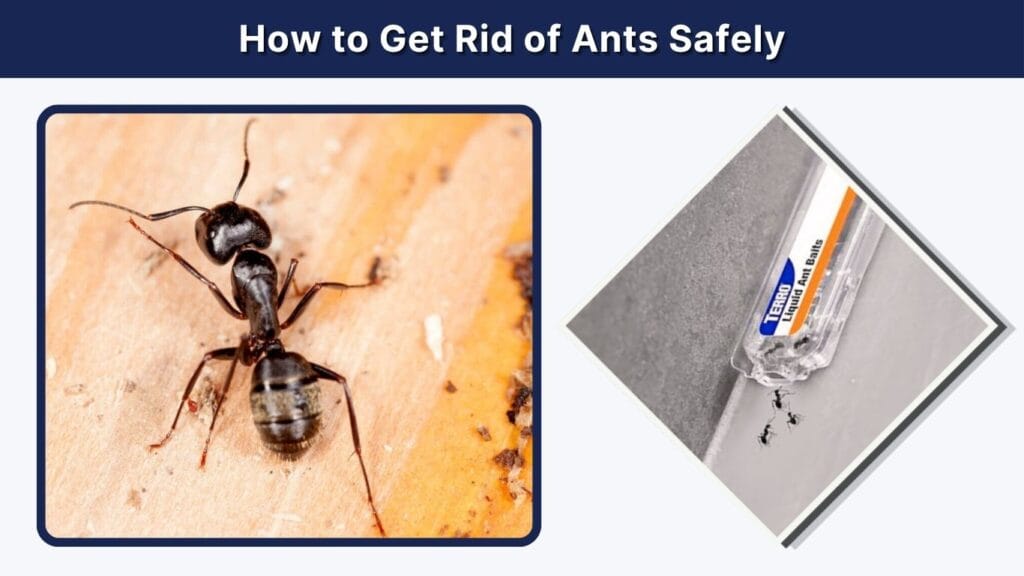
Safety matters, especially in kitchens, bedrooms, apartments, and homes with children or pets. Always read product labels and avoid placing bait or treatments where they can contaminate food.
Safer Treatment Tips
Use bait stations instead of open bait when possible. Place treatments behind appliances, under sinks, or near entry points where children and pets cannot reach them. Avoid applying pesticides to countertops, dishes, food storage areas, or pet bowls.
For apartments, tell your landlord or property manager if ants keep returning. Ants may be moving between units, walls, or shared plumbing areas.
When to Call a Pest Control Professional
Home methods can work for many common ants, but some problems need expert treatment. This is especially true when ants are nesting inside walls or damaging wood.
Call a professional if you have carpenter ants, fire ants indoors, repeated infestations, ants coming from electrical outlets, or large numbers of winged ants inside the house. You should also get help if you live in an apartment and ants keep returning from shared walls or plumbing.
A professional can identify the ant species, locate the nest, and use targeted treatment that reaches the colony.
FAQs
What is the fastest way to get rid of ants in the house?
The fastest approach is to clean the ant trail with soapy water, remove food sources, and place ant bait near the active trail. This gives quick relief while helping target the colony. Avoid spraying near bait because it can repel ants and reduce the bait’s effectiveness.
How do I get rid of ants in the house naturally?
Use soapy water or vinegar to clean scent trails, store food in sealed containers, and seal entry points. Food-grade diatomaceous earth may help in dry cracks. Natural methods work best for small problems, but bait may be needed if ants keep returning.
Why do ants keep coming back after I kill them?
Ants come back because the colony is still active and the scent trail may remain. Killing visible ants does not remove the nest. Clean the trail, remove food and water sources, and use bait so worker ants can carry treatment back to the colony.
How do I get rid of tiny ants in the kitchen?
Clean sticky spills, crumbs, grease, and food containers. Store sugar, cereal, fruit, and snacks in airtight containers. Place ant bait near the trail but away from food prep areas. Watch where ants enter, then seal cracks after the activity slows.
When should I worry about ants in the house?
You should worry if ants keep returning, appear from walls or outlets, show up in several rooms, or look like large carpenter ants. Winged ants indoors can also signal a nest. In these cases, inspect for moisture, damaged wood, and consider professional pest control.