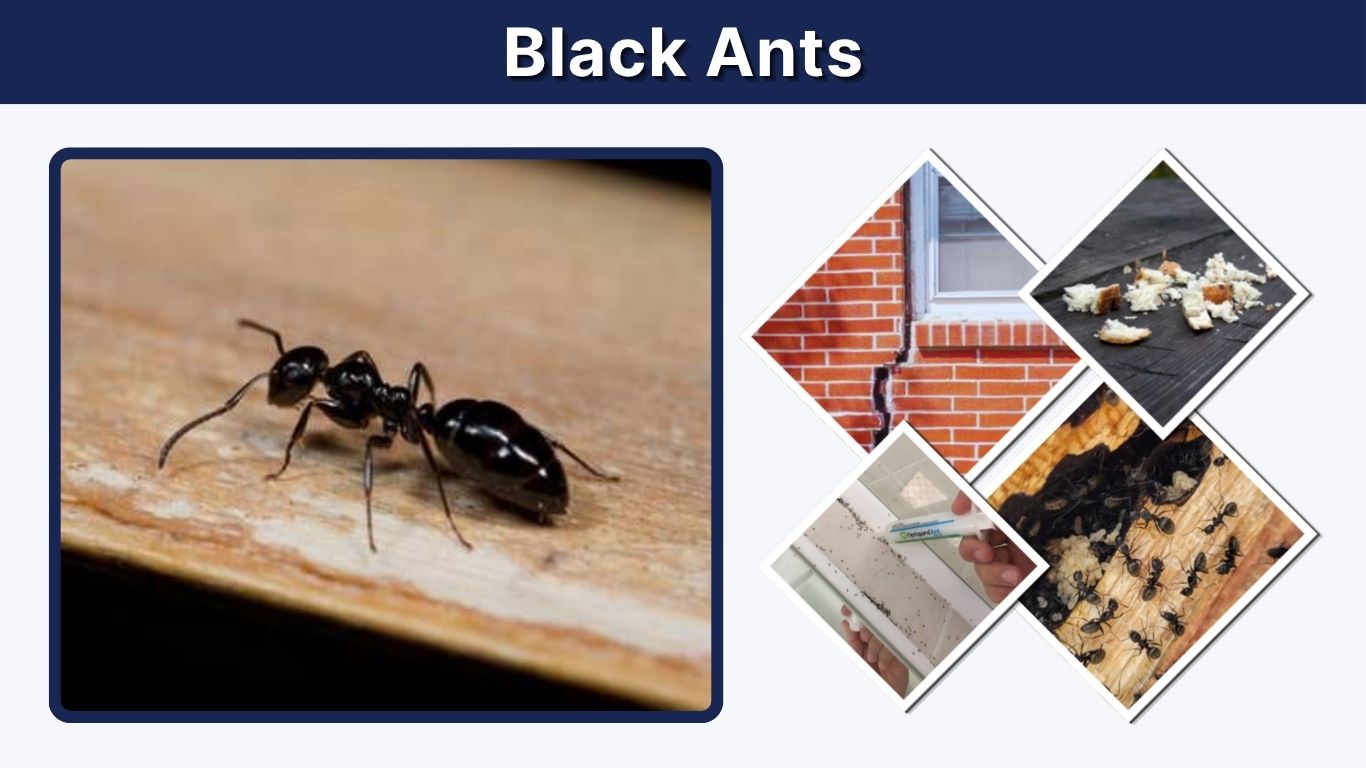
Black ants are common around gardens, kitchens, bathrooms, patios, and wall gaps. While many black ants are harmless outdoors, they can become frustrating when they enter your home looking for food, water, or shelter. Some large black ants may also be carpenter ants, which can signal moisture problems or wood damage. This guide explains how to identify black ants, why they appear indoors, whether they bite, and how to get rid of them safely.
What Are Black Ants?
Black ants are not one single species. The phrase usually describes several dark-colored ant species that may appear in homes, gardens, yards, or wooden structures. Some are tiny sugar-feeding ants, while others are larger ants that nest in damp wood or soil.
Most black ants live in organized colonies with workers, queens, and sometimes winged reproductive ants. Worker ants are the ones people usually notice crawling across floors, countertops, window sills, or garden paths. They leave scent trails that help other ants follow the same route to food or water.
Common Types of Black Ants
Several ants may be described as black ants, including:
- Little black ants: Small, dark ants often found near kitchens, bathrooms, and food crumbs.
- Black garden ants: Common outdoor ants that nest in soil, lawns, and garden beds.
- Carpenter ants: Larger black ants that nest in damp or damaged wood.
- Crazy ants: Fast-moving ants that may appear indoors or around electrical areas.
- Flying black ants: Winged reproductive ants that leave colonies during mating season.
Correct identification matters because treatment depends on the species. A few tiny ants near a sink may require sanitation and baiting, while large black ants near wood may need a closer inspection for carpenter ant activity.
Why Are Black Ants in the House?
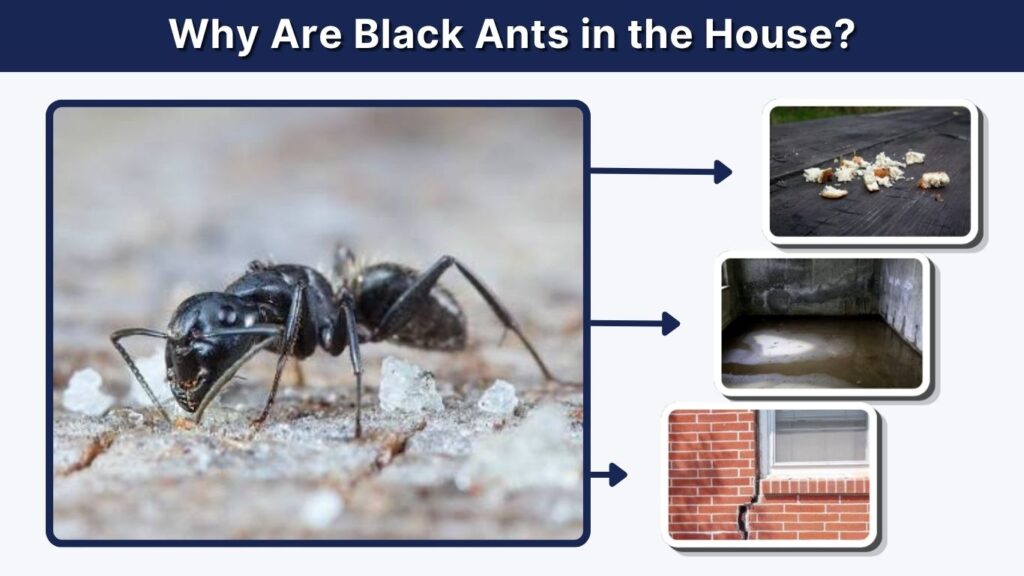
Black ants usually enter homes because they have found something useful. Even a small amount of food, moisture, or shelter can attract them. Once one ant finds a source, it can leave a chemical trail for the rest of the colony.
Main Reasons Black Ants Come Indoors
Black ants may enter your house because of:
- Food crumbs, grease, sugar, pet food, or spilled drinks
- Leaky pipes, damp sinks, wet basements, or bathroom moisture
- Gaps around doors, windows, vents, pipes, and foundation cracks
- Outdoor nests close to the home’s foundation
- Tree branches, shrubs, or mulch touching the house
- Damp or decaying wood that attracts carpenter ants
Kitchens are one of the most common places to find black ants because food and water are usually easy to access. Bathrooms, laundry rooms, and basements can also attract ants because of moisture.
Tiny Black Ants vs Large Black Ants
Tiny black ants and large black ants can mean different things. Small ants are often searching for sweets, grease, or water. Large black ants may be carpenter ants, especially if they are seen near windows, walls, wood trim, or damp areas.
| Feature | Tiny Black Ants | Large Black Ants |
| Common location | Kitchens, bathrooms, counters | Walls, windows, wood, basements |
| Main attraction | Food, sugar, grease, water | Damp wood, shelter, food |
| Damage risk | Usually low | Higher if carpenter ants |
| Best first step | Clean, seal, and bait | Inspect wood and moisture areas |
| Warning sign | Many ants following trails | Sawdust-like debris or repeated activity |
Size alone does not confirm the species, but it gives an important clue. If the ants are large, active at night, or appearing around wood, you should check for carpenter ant signs.
Do Black Ants Bite?
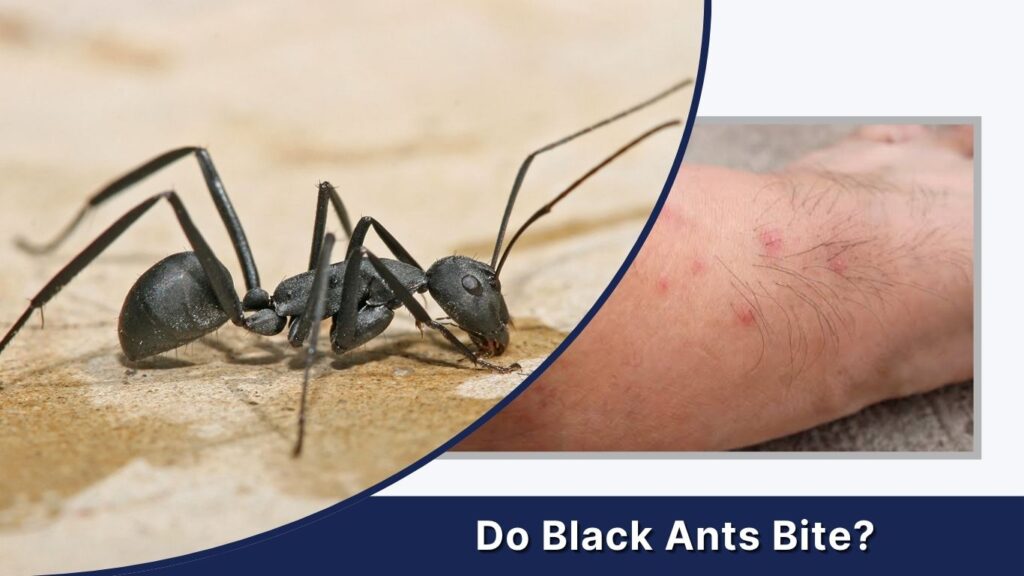
Yes, some black ants can bite, but most common household black ants are not dangerous. Their bites may feel like a small pinch and can leave mild redness, itching, or irritation. Many black ants do not aggressively bite unless disturbed, trapped, or handled.
What Black Ant Bites Look Like
A black ant bite may cause:
- A small red bump
- Mild swelling
- Itching or burning
- Temporary tenderness
- Slight irritation around the bite area
Most bites improve on their own. Washing the area with soap and water, using a cold compress, and avoiding scratching can help reduce discomfort. Anyone who experiences severe swelling, trouble breathing, dizziness, or a spreading reaction should seek medical help quickly.
Black Ants vs Carpenter Ants
Many people search for “black ants vs carpenter ants” because carpenter ants are often large and black. However, not every large black ant is a carpenter ant. Carpenter ants are important to identify because they do not eat wood like termites, but they tunnel through damp or damaged wood to build nests.
Signs You May Have Carpenter Ants
You may be dealing with carpenter ants if you notice:
- Large black ants indoors, especially at night
- Ants near windows, baseboards, or wooden beams
- Small piles of sawdust-like material
- Rustling sounds inside walls
- Winged ants inside the home
- Moisture damage near the activity area
Carpenter ants often indicate a moisture problem. Fixing leaks, replacing damaged wood, and reducing damp conditions are essential parts of long-term control.
How to Get Rid of Black Ants
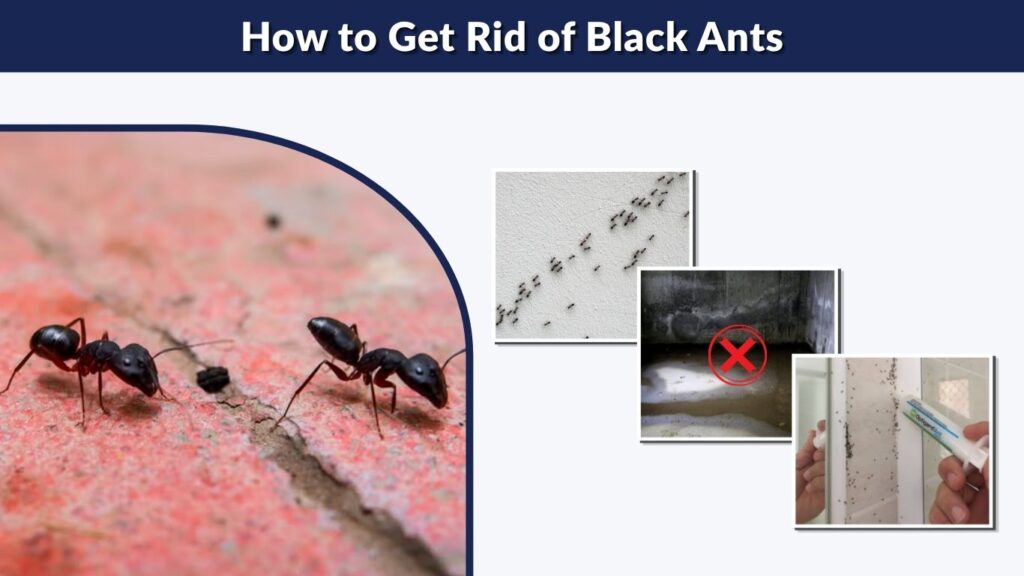
Getting rid of black ants works best when you target the colony, not just the ants you see. Spraying visible ants may provide quick relief, but it often fails to solve the source of the problem. Baits, sanitation, exclusion, and moisture control are more effective.
Step 1: Find the Ant Trail
Watch where the ants are coming from and where they are going. Follow their trail to locate entry points, food sources, or possible nesting areas. Common entry points include window frames, door gaps, plumbing openings, foundation cracks, and baseboards.
Do not wipe away the trail immediately if you plan to place bait. Ant bait works best when workers carry it back to the colony.
Step 2: Remove Food and Water Sources
Clean areas where ants are active. Store food in sealed containers and wipe up spills quickly. Pay attention to sticky spots under appliances, pet feeding areas, trash bins, and pantry shelves.
Helpful cleaning steps include:
- Wipe counters and floors daily
- Seal sugar, cereal, flour, and snacks
- Rinse food containers before throwing them away
- Empty trash regularly
- Clean grease near stoves and ovens
- Pick up pet food after feeding time
Water is another major attractant. Repair leaky faucets, dry wet sinks, and improve ventilation in damp bathrooms or basements.
Step 3: Use Ant Bait Correctly
Ant bait is often better than spray because worker ants carry the bait back to the colony. This helps reach ants hidden inside walls, soil, or other nesting areas.
Place bait near ant trails, but keep it away from children and pets. Avoid spraying insecticide near bait because it can repel ants and stop them from feeding. Give the bait time to work, as activity may increase at first before the colony declines.
Step 4: Seal Entry Points
Once activity decreases, seal the gaps ants use to enter. Use caulk around window frames, door trim, plumbing lines, and cracks. Install door sweeps if ants enter under exterior doors.
Outside the home, trim branches and shrubs away from walls. Keep mulch, firewood, and dense vegetation away from the foundation. These steps reduce ant bridges and nesting areas near the house.
How to Get Rid of Tiny Black Ants in the Kitchen
Tiny black ants in the kitchen are often drawn to sugar, grease, crumbs, and water. The key is to remove attractants and use bait along their trails.
Start by cleaning the entire area, including under the toaster, behind appliances, around trash cans, and inside cabinets. Then place ant bait near the trail, not directly on food preparation surfaces. Keep the kitchen dry at night and avoid leaving dirty dishes in the sink.
Kitchen Prevention Tips
To prevent tiny black ants from returning:
- Store sweet foods in airtight containers
- Wipe jars, bottles, and condiment containers
- Sweep floors after meals
- Clean under appliances regularly
- Fix dripping faucets
- Take trash out before it overflows
- Seal cracks near counters and windows
Small changes can make a big difference because ants need very little food to keep returning.
How to Handle Large Black Ants in the House
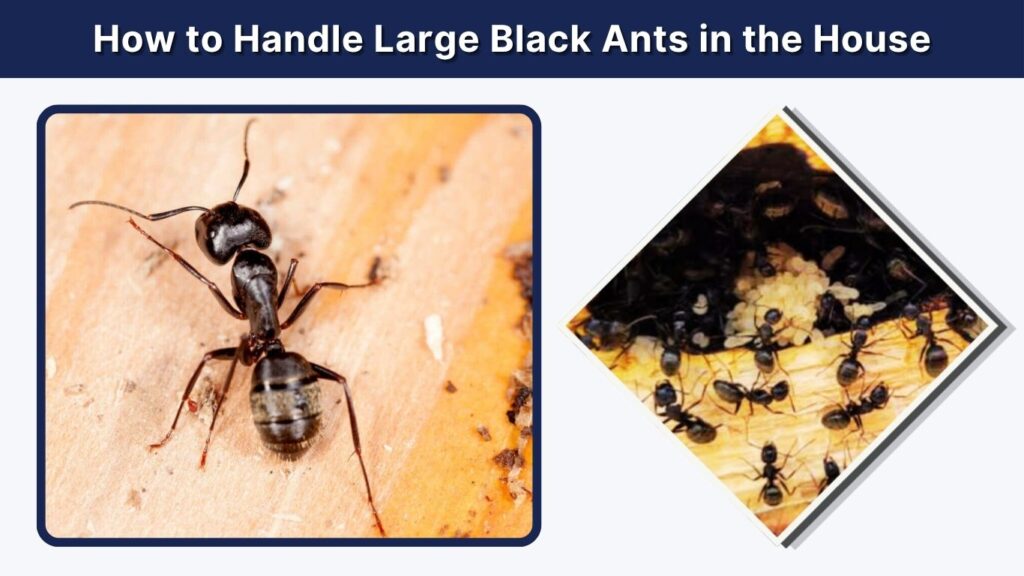
Large black ants deserve extra attention because they may be carpenter ants. If you only see one or two, they may have wandered inside. But repeated sightings can mean a nest is nearby.
Check damp wood, window frames, crawl spaces, decks, roof leaks, and basement areas. Look for sawdust-like debris, moisture stains, or wood that feels soft. If you suspect carpenter ants, avoid relying only on surface sprays. The hidden nest must be located and treated.
Professional inspection may be necessary when large black ants keep appearing, especially if the home has moisture damage or structural wood concerns.
Are Black Ants Harmful?
Most black ants are more annoying than harmful. They can contaminate food, invade kitchens, and create trails across surfaces. However, carpenter ants can be more serious because they tunnel through wood and may worsen existing moisture-damaged areas.
Black ants may also bite in some cases, although most bites are mild. The biggest concern is usually the source of the infestation. Ants entering indoors often mean food, moisture, or access points need attention.
How to Prevent Black Ants from Coming Back
Long-term prevention is easier than repeated treatment. The goal is to make your home less attractive and harder to enter.
Outdoor Prevention
Keep the outside of your home ant-resistant by:
- Trimming plants away from exterior walls
- Moving firewood away from the house
- Keeping mulch several inches from the foundation
- Repairing cracks in the foundation
- Cleaning gutters to reduce moisture
- Removing rotting wood and yard debris
Outdoor nests near the foundation can lead to indoor ant trails. Reducing shelter and moisture around the house lowers the chance of repeat infestations.
Indoor Prevention
Inside the home, focus on food control, moisture control, and sealing. Store food properly, clean often, and inspect areas where ants have entered before. Small cracks and gaps can become repeat entry points if left open.
Check bathrooms, kitchens, laundry rooms, and basements regularly. These rooms often provide water, warmth, and hiding places.
When to Call Pest Control
You may be able to manage a small black ant problem yourself. However, professional help is a good idea when the infestation is large, recurring, or linked to carpenter ants.
Call pest control if:
- Large black ants keep appearing indoors
- You see winged ants inside
- Ant bait does not reduce activity
- You find sawdust-like debris near wood
- Ants return every few weeks
- You suspect nests inside walls
- There is moisture-damaged wood in the home
A professional can identify the species, locate nests, and recommend a treatment plan based on the source of the problem.
FAQs
Do black ants bite humans?
Yes, some black ants can bite humans, but most common household black ant bites are mild. A bite may cause a small red bump, itching, or slight swelling. Serious reactions are uncommon, but anyone with severe swelling, breathing trouble, or unusual symptoms should seek medical attention.
Why do I have black ants in my house?
Black ants usually enter homes to find food, water, or shelter. Crumbs, sugar, grease, pet food, leaky pipes, damp areas, and small entry gaps can attract them. Once ants find a source, they leave scent trails that guide more ants indoors.
Are large black ants always carpenter ants?
No, large black ants are not always carpenter ants, but they should be checked carefully. Carpenter ants are usually larger and may appear near damp wood, windows, walls, or basements. Repeated sightings of large black ants indoors can signal a hidden nest or moisture issue.
What is the best way to get rid of black ants?
The best method is to remove food and water sources, follow ant trails, place ant bait near activity areas, and seal entry points after activity decreases. Bait is often more effective than spray because worker ants can carry it back to the colony.
How can I keep black ants out of my kitchen?
Keep counters clean, store food in sealed containers, wipe spills quickly, remove trash regularly, and clean under appliances. Fix leaks and avoid leaving dirty dishes overnight. If ants are already active, place bait near their trail and avoid spraying around the bait.