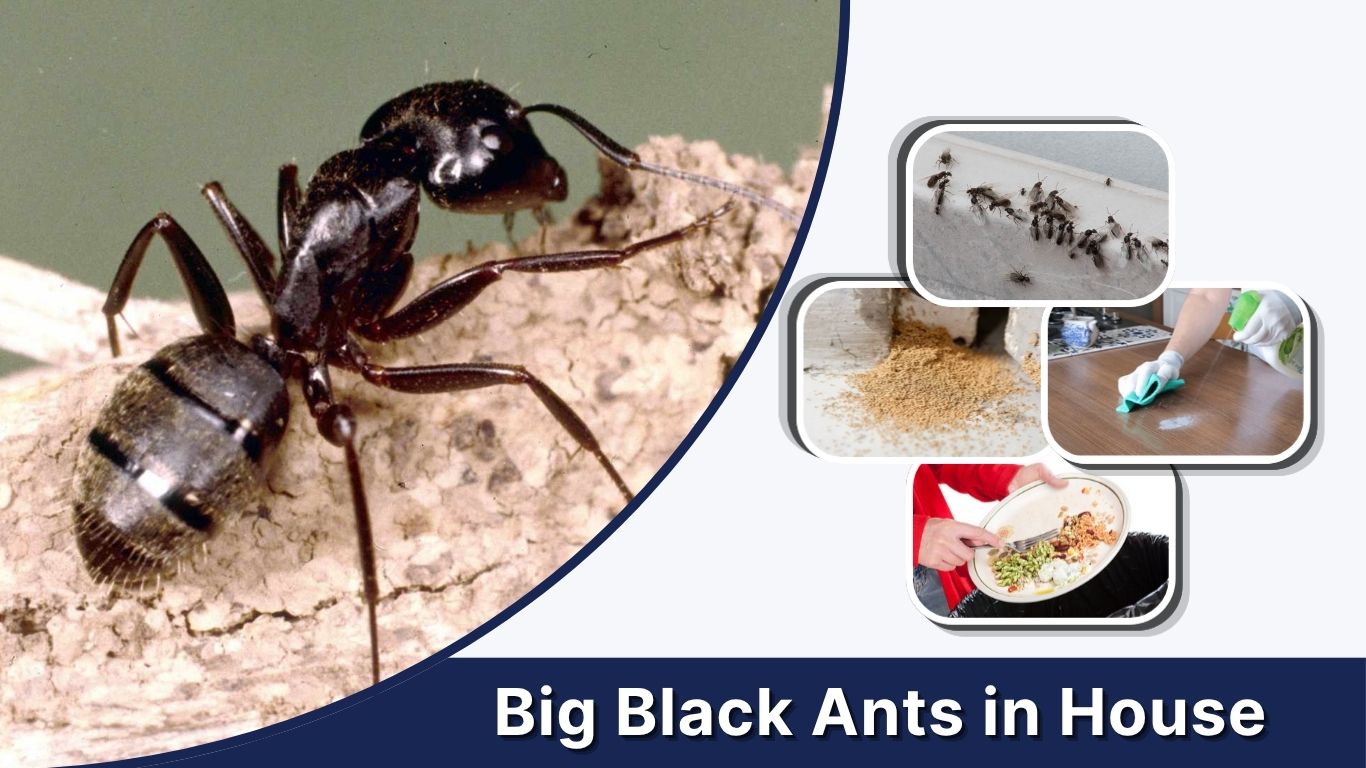
Seeing big black ants in your house can be alarming, especially when they appear near windows, bathrooms, kitchens, or wood structures. While some may simply be outdoor ants searching for food, others could be carpenter ants, which may indicate moisture problems or damaged wood. Understanding what attracts them, how to identify them, and how to remove them properly can help protect your home.
What Are Big Black Ants?
Big black ants are usually larger ant species that appear dark brown to black. Many homeowners use this phrase to describe carpenter ants, but not every large black ant is a carpenter ant. Some may be harmless outdoor ants that accidentally enter the home, while others may be nesting nearby.
The key is to look at their size, activity pattern, nesting area, and whether they keep returning. A single big black ant may not mean much. However, repeated sightings indoors can point to a larger colony or a hidden nesting site.
Common Types of Big Black Ants
Several ants may look like big black ants, including:
- Carpenter ants
- Field ants
- Pavement ants
- Odorous house ants that appear larger than expected
- Winged reproductive ants during swarming season
Carpenter ants are the most concerning because they can tunnel through damp or damaged wood. They do not eat wood like termites, but they remove wood to create nesting galleries. Over time, this can worsen existing structural problems if the colony is ignored.
Why Are Big Black Ants in My House?
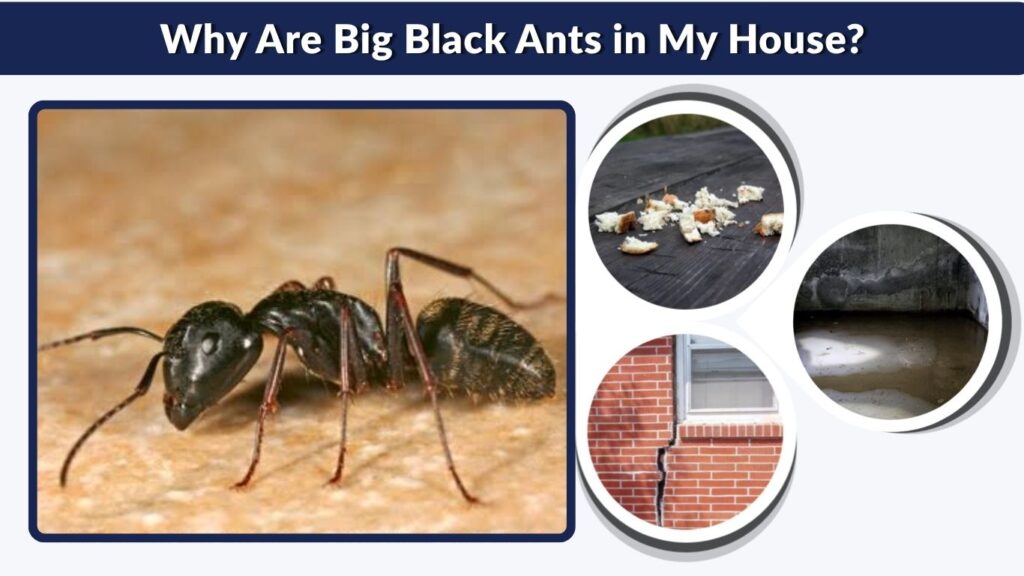
Big black ants usually enter homes for food, water, warmth, or shelter. In some cases, they are coming from an outdoor nest and foraging indoors. In other cases, they may already have a satellite nest inside a wall, crawl space, attic, or damp wooden area.
Common Reasons They Come Inside
Big black ants may enter your home because of:
- Food crumbs, grease, sugar, or pet food
- Leaky pipes or damp areas
- Cracks around windows, doors, and foundations
- Tree branches touching the roof or siding
- Firewood stored too close to the house
- Moisture-damaged wood
- Outdoor colonies near the foundation
Bathrooms and kitchens are common problem areas because they provide both water and food. Basements, crawl spaces, and window frames are also common because they may have moisture or softened wood.
Are Big Black Ants Carpenter Ants?
Many big black ants are carpenter ants, but you should not assume without checking. Carpenter ants are often larger than common household ants and may appear black, reddish black, or dark brown. They are usually active at night and may be seen moving along baseboards, window frames, sinks, or exterior walls.
Big Black Ants vs Carpenter Ants
| Feature | Big Black Ants | Carpenter Ants |
| Meaning | General term for large dark ants | Specific ant species group |
| Size | Medium to large | Usually large |
| Color | Black, brown, or reddish black | Often black or black/red |
| Damage risk | Depends on species | Can tunnel through damp wood |
| Nesting area | Soil, walls, outdoors, cracks | Damp wood, wall voids, insulation |
| Main warning sign | Repeated indoor sightings | Frass, moisture damage, winged ants |
If you see large black ants repeatedly, especially near wood, it is smart to inspect for carpenter ant signs.
Signs of Carpenter Ant Activity
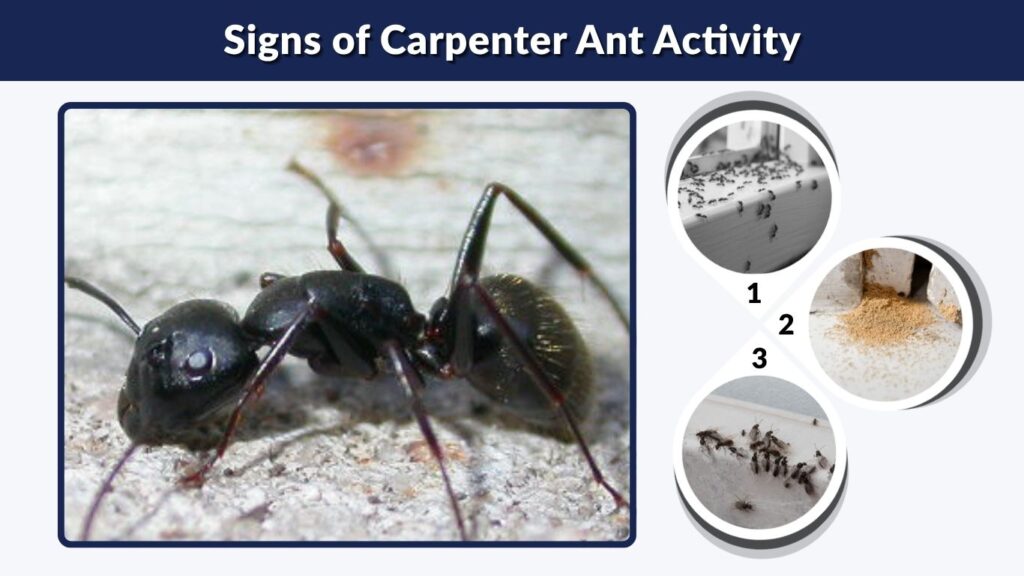
Carpenter ants can be difficult to detect because much of their activity happens inside walls or hidden wood. However, they often leave clues.
Warning Signs to Look For
You may have carpenter ants if you notice:
- Big black ants inside the house at night
- Ants near windows, doors, baseboards, or wooden trim
- Small piles of sawdust-like material called frass
- Rustling sounds inside walls
- Winged ants indoors
- Soft, damp, or damaged wood
- Ant trails leading from trees or decks into the home
Frass is one of the most important signs. It may look like tiny wood shavings, dirt, insect parts, or fine debris. Carpenter ants push this material out while building tunnels.
Do Big Black Ants Bite?
Yes, big black ants can bite, including carpenter ants. However, they are not usually aggressive unless disturbed, trapped, or threatened. A bite may feel like a sharp pinch and can cause mild redness, swelling, or irritation.
Some carpenter ants may also spray formic acid into the bite area, which can create a brief burning feeling. For most people, symptoms are minor and go away with basic care.
What to Do for a Big Black Ant Bite
If a big black ant bites you:
- Wash the area with soap and water
- Apply a cold compress to reduce swelling
- Avoid scratching the bite
- Use an over-the-counter anti-itch cream if needed
- Watch for unusual allergic symptoms
Seek medical help if you experience severe swelling, dizziness, breathing trouble, or symptoms that spread beyond the bite area.
Are Big Black Ants Harmful?
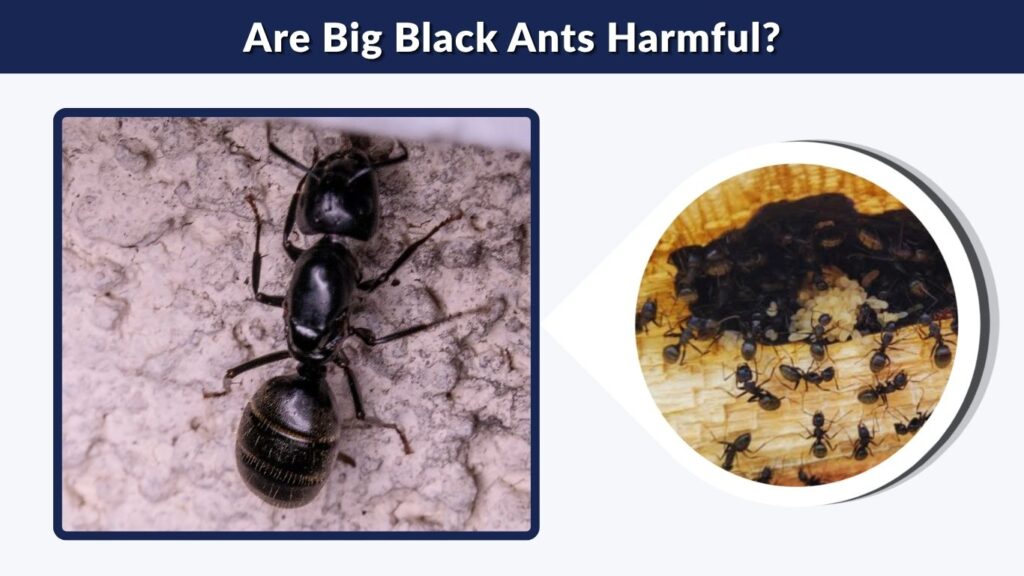
Big black ants are not always harmful, but they should not be ignored. The level of concern depends on the species and where they are nesting.
If they are simply foraging from outside, the issue may be solved with cleaning, sealing entry points, and baiting. If they are carpenter ants nesting inside wood, the problem can become more serious.
Possible Problems They Cause
Big black ants may cause problems by:
- Contaminating food surfaces
- Creating indoor trails
- Nesting in wall voids or insulation
- Indicating moisture problems
- Damaging damp or weakened wood
- Returning repeatedly if the colony is not treated
The biggest risk is not always the ants themselves. Sometimes their presence points to a hidden moisture issue, such as a roof leak, plumbing leak, or damp crawl space.
Where Do Big Black Ants Come From?
Big black ants can come from outdoors or from a nest already inside the house. Outdoor colonies may live in soil, logs, stumps, mulch, firewood, or trees. From there, workers may travel indoors through tiny openings.
Indoor nests are more likely when ants are seen regularly, especially during colder months or at night. Carpenter ants often create satellite nests indoors while maintaining a main colony outside.
Common Entry Points
Check these areas carefully:
- Gaps around windows and doors
- Cracks in the foundation
- Utility line openings
- Plumbing penetrations
- Roofline gaps
- Vents and crawl space openings
- Tree branches touching the home
Sealing entry points is important, but it works best after the colony or trail has been treated. If you seal too early without addressing the nest, ants may find another route inside.
How to Get Rid of Big Black Ants
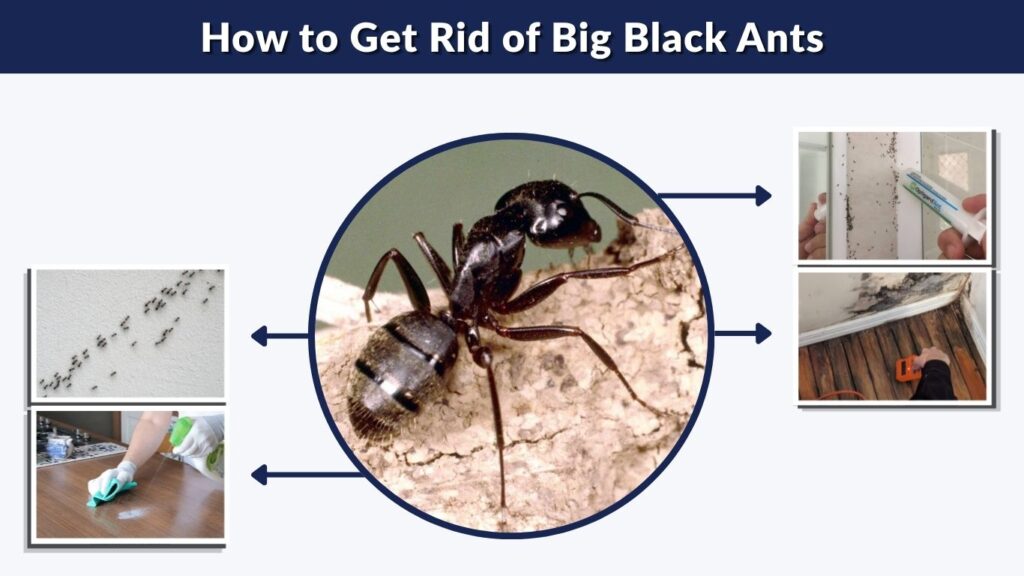
Getting rid of big black ants requires more than killing the ants you see. The goal is to locate the source, remove attractants, use the right treatment, and prevent future access.
Step 1: Identify the Ants
Before choosing a treatment, observe the ants. Look at their size, color, trail pattern, and where they appear. If they are large, black, and active around wood or moisture, carpenter ants should be suspected.
Try to find where they are entering. Follow trails along baseboards, windows, plumbing lines, or exterior walls.
Step 2: Remove Food and Water
Clean areas where ants are active. Big black ants may feed on sweets, proteins, grease, pet food, and other household scraps.
Useful steps include:
- Wipe counters and floors
- Store food in sealed containers
- Clean behind appliances
- Empty trash regularly
- Pick up pet food after meals
- Fix dripping faucets
- Dry damp sinks and bathrooms
Moisture control is especially important for carpenter ants. If damp wood remains, ants may continue to return.
Step 3: Use Ant Bait
Ant bait is often more effective than sprays because workers carry it back to the colony. Place bait near active trails, but do not block the trail completely. Let the ants feed and return to the nest.
Avoid spraying near bait because sprays can repel ants and stop them from taking the bait. It may take several days or longer to see full results.
Step 4: Inspect Wood and Moisture Areas
If you suspect carpenter ants, inspect damp or damaged wood around:
- Window frames
- Door frames
- Decks and porches
- Basements
- Crawl spaces
- Attics
- Roof leaks
- Bathroom walls
- Kitchen plumbing areas
Fix leaks and replace damaged wood when necessary. Treatment will not work long term if the moisture problem remains.
Step 5: Seal Entry Points
After ant activity decreases, seal cracks and gaps. Use caulk around windows, doors, pipes, and foundation openings. Install door sweeps and repair damaged screens.
Outside, trim vegetation away from the house and move firewood away from exterior walls. Keep mulch from touching siding, and remove old stumps or rotting wood near the foundation.
How to Get Rid of Big Black Ants Naturally
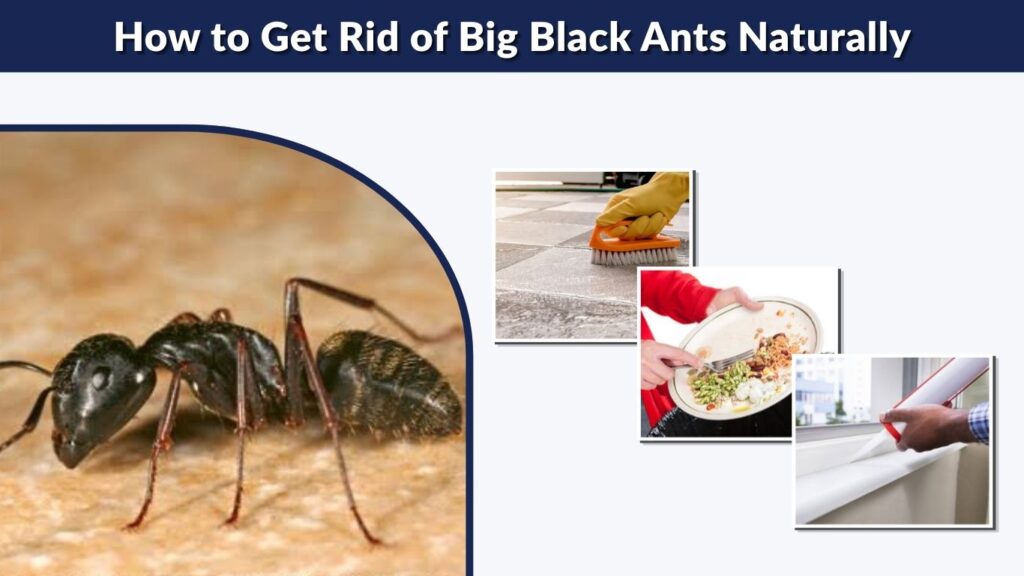
Natural methods may help with mild ant activity, especially when ants are only foraging indoors. However, natural methods may not eliminate a hidden carpenter ant nest.
Natural Prevention Methods
You can reduce activity by:
- Cleaning trails with soap and water
- Removing food sources
- Sealing entry gaps
- Reducing moisture
- Moving wood piles away from the home
- Trimming plants and branches
- Keeping outdoor trash sealed
Some people use vinegar or essential oil sprays to disrupt trails, but these usually provide short-term relief. They may hide the trail temporarily without eliminating the colony.
Big Black Ants with Wings
Big black ants with wings are usually reproductive ants, also called swarmers. They leave mature colonies to mate and start new colonies. Seeing a few outside may be normal during swarming season. Seeing many winged ants inside can be a warning sign.
Winged carpenter ants indoors may mean a colony is nesting inside the structure. This is especially concerning if you find them near windows, lights, or walls.
What to Do If You See Winged Ants Indoors
Do not ignore winged ants inside the house. Vacuum them up, note where they appeared, and inspect nearby wood or moisture areas. If they return or appear in large numbers, contact a pest control professional.
When to Call a Pest Control Professional
You can often manage a small ant problem with cleaning, baiting, and sealing. However, big black ants may require professional inspection if carpenter ants are involved.
Call a professional if:
- Big black ants keep returning
- You see winged ants indoors
- You find sawdust-like debris
- Ants appear near damp or damaged wood
- Bait does not reduce activity
- You hear rustling in walls
- You suspect a nest inside the structure
A professional can identify the ant species, locate hidden nests, and treat the colony more effectively.
How to Prevent Big Black Ants
Prevention is the best long-term strategy. Big black ants are less likely to enter a clean, dry, sealed home.
Indoor Prevention
Keep your home less attractive by:
- Cleaning food spills quickly
- Storing pantry items securely
- Reducing clutter near walls
- Fixing leaks
- Drying damp areas
- Checking under sinks regularly
Outdoor Prevention
Protect the exterior by keeping trees, shrubs, mulch, and wood piles away from the home. Remove rotting logs, repair damaged siding, and keep gutters clean so water does not collect near wood.
FAQs
What are big black ants called?
Many big black ants are commonly called carpenter ants, but not all large black ants belong to that group. Some may be field ants or other outdoor species. If they appear indoors repeatedly, especially near wood or moisture, carpenter ants should be considered.
Why do I have big black ants in my house?
Big black ants enter homes for food, water, shelter, or nesting opportunities. They may be attracted to crumbs, grease, pet food, leaks, damp wood, or small entry gaps. Repeated sightings can mean a nearby outdoor colony or an indoor nest.
Do big black ants bite?
Yes, big black ants can bite, but they usually do so only when disturbed or threatened. The bite may feel like a pinch and cause mild redness, swelling, or itching. Most bites are minor and improve with simple cleaning and cold compresses.
Are big black ants harmful?
They can be harmful if they are carpenter ants nesting in damp or damaged wood. While they do not eat wood like termites, they tunnel through it to build nests. Other big black ants may mainly be a nuisance rather than a structural threat.
How do I get rid of big black ants?
Start by identifying the ants, cleaning food sources, fixing moisture issues, and placing ant bait near trails. Seal entry points after activity drops. If you suspect carpenter ants, winged ants, frass, or hidden wall nests, professional pest control is recommended.