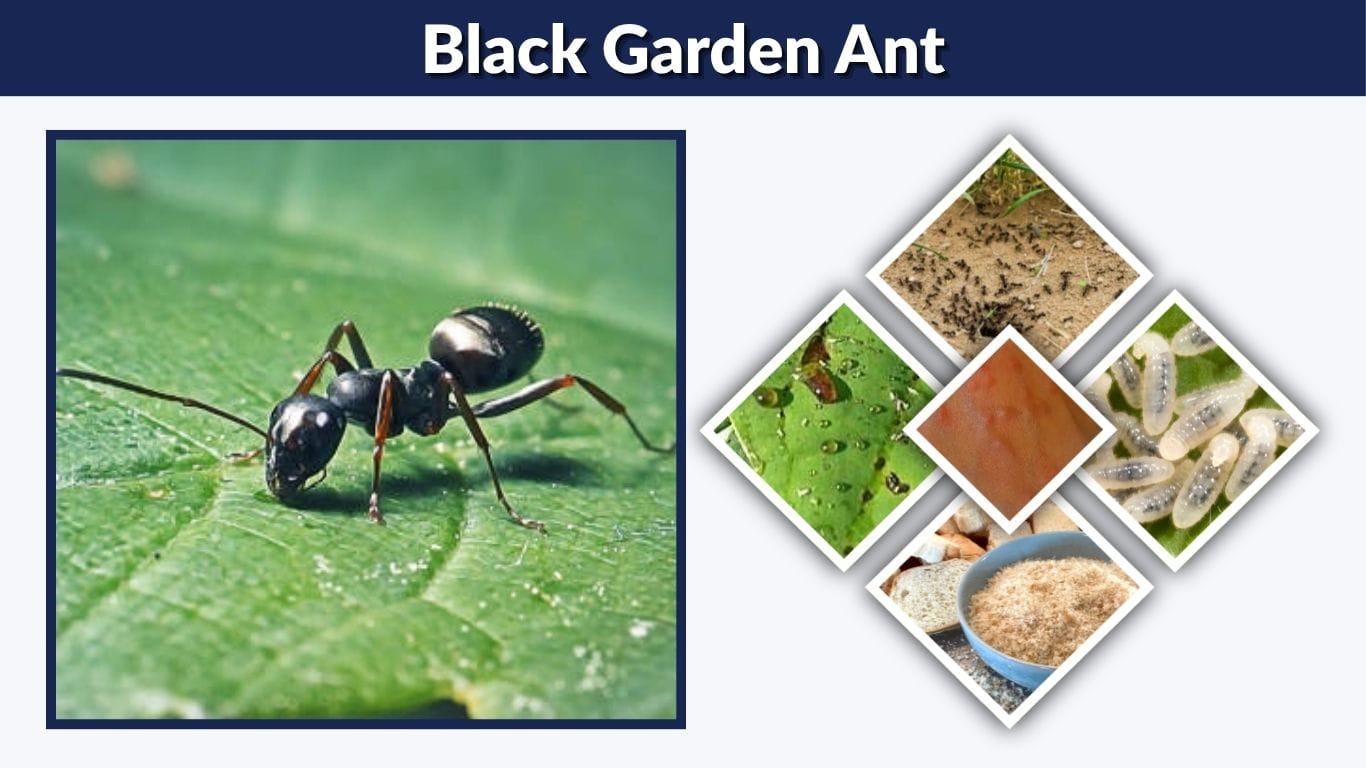
Black garden ants are among the most common ants found in lawns, garden beds, patios, and sometimes homes. These small black ants are usually harmless outdoors, but they can become frustrating when they build nests near plants, enter kitchens, or appear in large numbers. Understanding their species, habits, diet, life cycle, and control methods can help you manage them safely and effectively.
What Is a Black Garden Ant?
The black garden ant is a common ant species often found in gardens, lawns, sidewalks, and around homes. It is best known for its dark body, organized colonies, and habit of nesting in soil. While these ants may seem like pests, they also play a role in the garden ecosystem.
Black Garden Ant Scientific Name
The scientific name of the black garden ant is Lasius niger. It belongs to the ant family Formicidae. This species is commonly found across Europe and parts of North America, especially in gardens, grasslands, urban areas, and near buildings.
Black garden ants are social insects. This means they live in colonies with a queen, workers, males, larvae, and eggs. Each ant has a role that helps the colony survive and grow.
Common Black Garden Ant Characteristics
Black garden ants are usually easy to recognize once you know what to look for. Their bodies are typically dark brown to black, and workers are much smaller than queens.
Key characteristics include:
- Small black or dark brown body
- Narrow waist between body sections
- Six legs and bent antennae
- Workers that move in trails
- Nests commonly found in soil, lawns, cracks, and under stones
- Strong attraction to sugary foods and honeydew from aphids
They are often confused with other black ants, including carpenter ants, but black garden ants are usually smaller and less destructive.
Black Garden Ant Size and Appearance
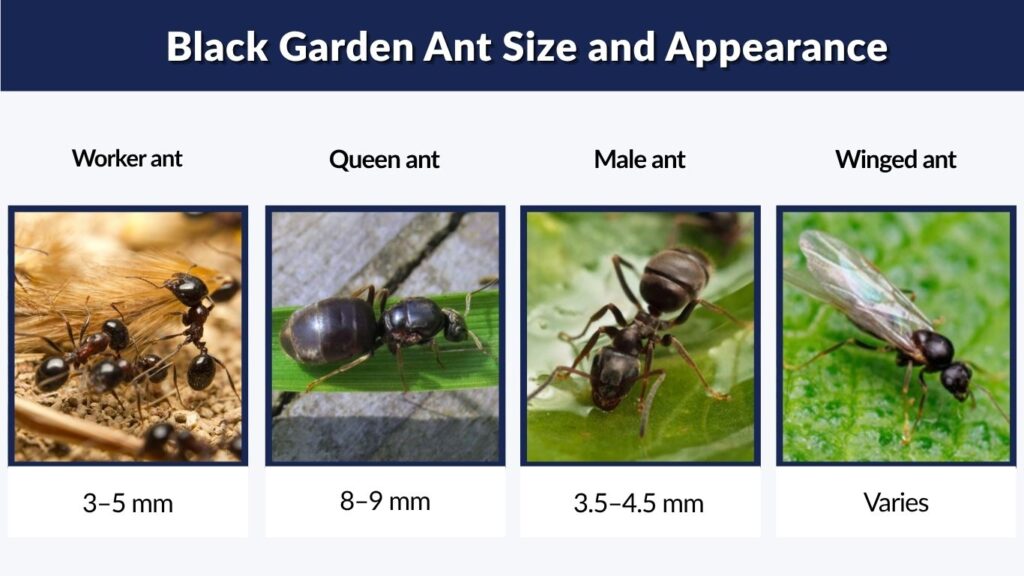
Black garden ants are small, but their size varies depending on their role in the colony. Workers, queens, and males do not all look the same. Queens are much larger, especially before and after mating flights.
| Type of Black Garden Ant | Average Size | Main Role | Appearance |
| Worker ant | 3–5 mm | Foraging, nest care, colony work | Small, dark brown to black |
| Queen ant | 8–9 mm | Lays eggs and starts colonies | Larger body, may have wings before mating |
| Male ant | 3.5–4.5 mm | Mating during nuptial flights | Slim body, wings present |
| Winged ant | Varies | Reproduction | Has wings, appears during mating season |
Black Garden Ant Queen
The black garden ant queen is the most important member of the colony. Her main job is to lay eggs. A healthy queen can live for many years and produce thousands of workers during her lifetime.
A queen black garden ant is much larger than worker ants. Before mating, she has wings. After the nuptial flight, she usually removes her wings and begins searching for a safe nesting place. Once settled, she starts laying eggs and building a new colony.
Black Garden Ant Worker
Worker ants are the ants most people see in gardens and homes. They are sterile females that search for food, protect the nest, care for larvae, and maintain tunnels.
Workers usually travel in trails. When one ant finds food, it leaves a scent trail for others to follow. That is why a few ants in the kitchen can quickly turn into a long moving line.
Black Garden Ant Species and Habitat
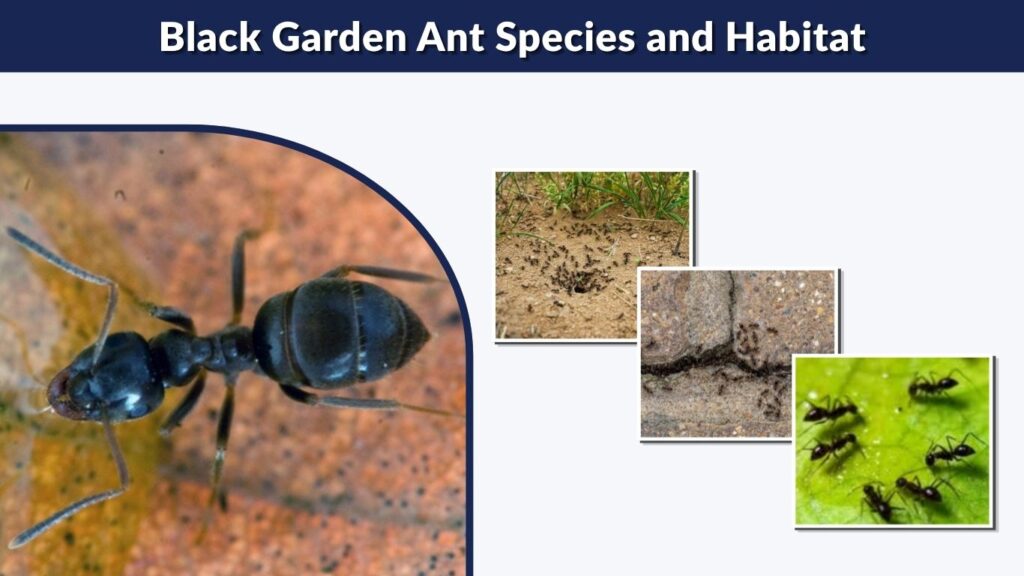
Black garden ants prefer soil-based nesting areas. They are very adaptable and can survive in gardens, yards, lawns, pavement cracks, plant pots, and near house foundations.
Where Do Black Garden Ants Live?
Black garden ants commonly nest in:
- Garden soil
- Lawn edges
- Under rocks, bricks, and paving slabs
- Cracks in sidewalks or driveways
- Raised garden beds
- Around tree roots
- Under plant pots
- Near house foundations
They prefer places that offer protection, moisture, and access to food. In dry weather, they may move closer to watered garden beds or outdoor taps.
Black Ants in Garden Soil
Finding black ants in garden soil is common. In many cases, they are not directly harmful to plants. Their tunnels can help aerate soil, and they may feed on dead insects or organic matter.
However, large colonies can disturb seedbeds, loosen soil around young plants, or protect aphids because aphids produce honeydew, a sugary liquid ants love. When ants protect aphids, the aphid population may increase and damage plants.
Are Black Garden Ants Good or Bad for the Garden?
Black garden ants can be both helpful and annoying. Their effect depends on colony size, location, and whether they are protecting aphids on your plants.
Benefits of Black Ants in the Garden
Black garden ants can help the garden in several ways:
- They aerate compacted soil through tunneling
- They help break down dead insects and organic matter
- They can improve soil movement
- They serve as food for birds and other animals
- They may prey on some small pests
A small number of ants in the garden is usually not a serious problem.
Problems Caused by Black Garden Ants
Black garden ants can become a problem when they appear in large numbers or nest in inconvenient locations.
Common issues include:
- Ant trails entering the home
- Nests under paving stones causing loose surfaces
- Soil disturbance around seedlings
- Protection of aphids on plants
- Ant mounds in lawns or garden beds
- Large numbers around patios, doors, and windows
They rarely damage wood or structures. If you see large black ants damaging wood, you may be dealing with carpenter ants instead.
Black Garden Ant vs Carpenter Ant
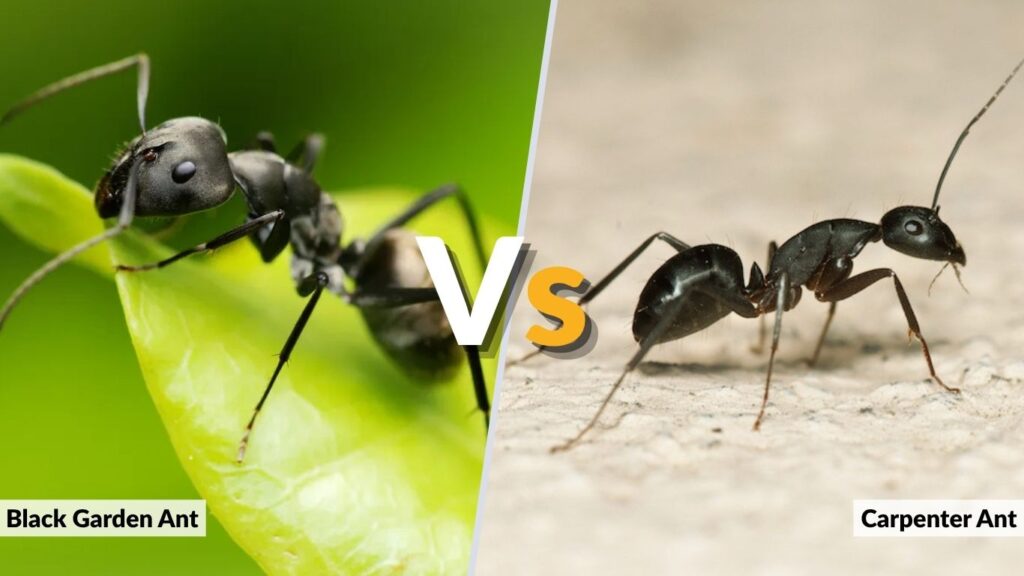
Black garden ants and carpenter ants are often confused because both can be black. However, they are very different in size, nesting behavior, and risk level.
Key Differences
Black garden ants are smaller and usually nest in soil. Carpenter ants are larger and may nest inside damp or decaying wood. Carpenter ants do not eat wood like termites, but they tunnel through it to build nests.
Black garden ants are mostly a garden and nuisance pest. Carpenter ants can be a structural concern if they nest inside wooden parts of a home.
How to Tell Them Apart
Look for these differences:
- Size: Carpenter ants are usually much larger than black garden ants.
- Nest location: Black garden ants prefer soil; carpenter ants prefer wood.
- Damage: Black garden ants do not damage wood; carpenter ants can create wood galleries.
- Body shape: Carpenter ants often have a more rounded thorax and larger body.
- Indoor signs: Sawdust-like material near wood may suggest carpenter ants.
If you are unsure whether you have black garden ants or carpenter ants, inspect the nest location and ant size carefully.
Do Black Garden Ants Bite?
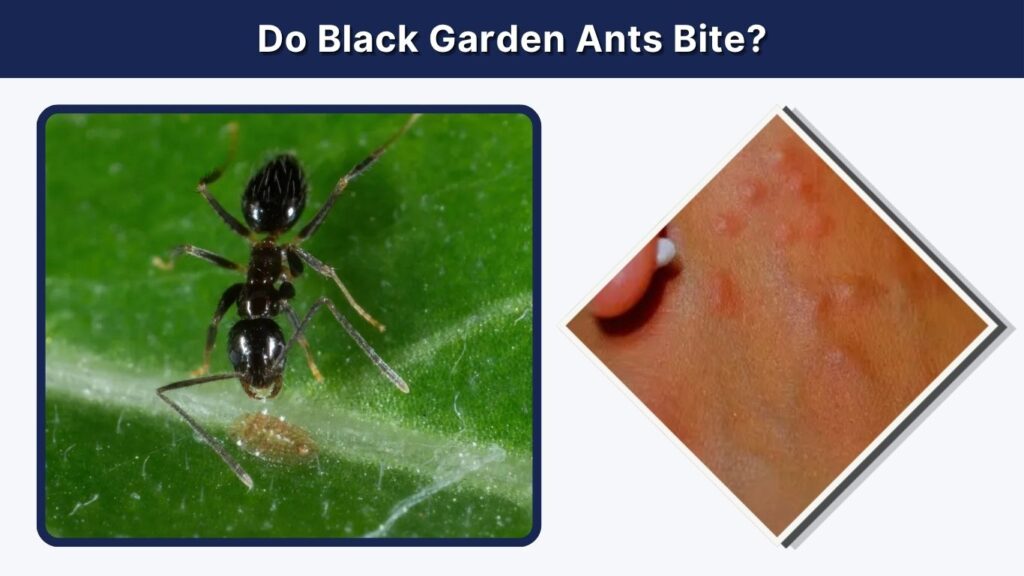
Black garden ants can bite, but their bites are usually mild. They do not have a painful sting like some other ant species. Most bites feel like a small pinch and may cause minor redness or irritation.
Are Black Garden Ants Dangerous?
Black garden ants are not considered dangerous to most people. They are not aggressive unless disturbed. They do not spread major diseases in the way some pests can, but ants walking through dirty surfaces and then onto food can still be unsanitary.
For most people, black garden ant bites cause only temporary discomfort.
Black Garden Ant Bite Treatment
If a black garden ant bites you, basic care is usually enough.
You can:
- Wash the area with soap and water
- Apply a cold compress to reduce swelling
- Avoid scratching the bite
- Use an anti-itch cream if needed
- Monitor for unusual allergic reactions
Seek medical advice if swelling becomes severe, breathing problems occur, or the area shows signs of infection. These reactions are uncommon but should not be ignored.
What Do Black Garden Ants Eat?
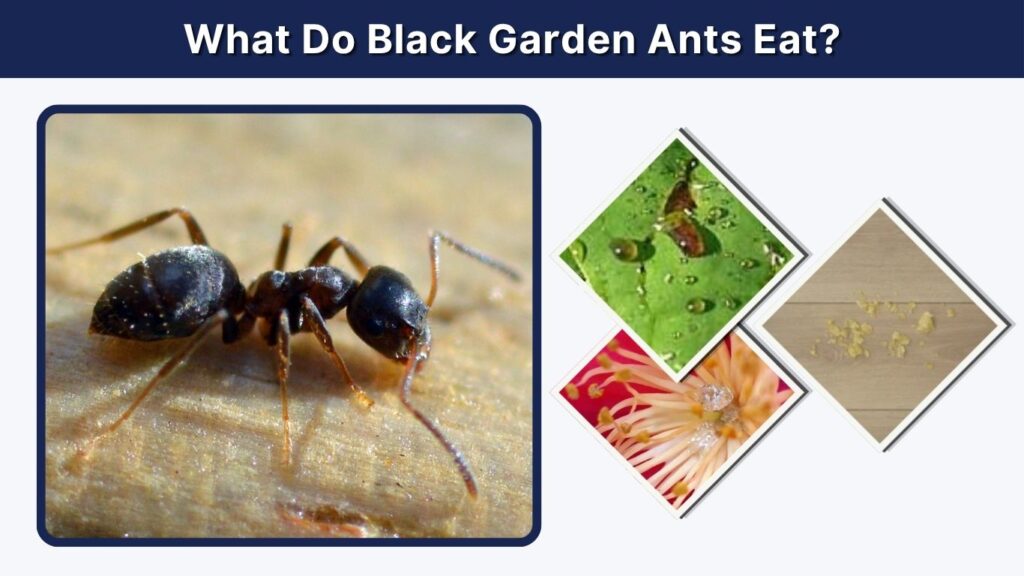
Black garden ants have a varied diet. They are attracted to sweet foods, proteins, dead insects, nectar, and honeydew from aphids. This flexible diet is one reason they survive well around gardens and homes.
Black Garden Ant Diet
Their diet commonly includes:
- Honeydew from aphids
- Nectar from flowers
- Sugary spills and crumbs
- Fruit juices
- Dead insects
- Small live insects
- Seeds and organic matter
- Grease or protein-based food scraps
In homes, they are often drawn to sugar, syrup, fruit, pet food, and crumbs. Outdoors, they often visit plants where aphids are present.
Why Ants Protect Aphids
Aphids produce honeydew, which ants collect as food. Because of this, black garden ants may protect aphids from predators like ladybugs. This relationship can make aphid problems worse on garden plants.
If you see ants constantly climbing plant stems, check the leaves and new growth for aphids.
Black Garden Ant Life Cycle
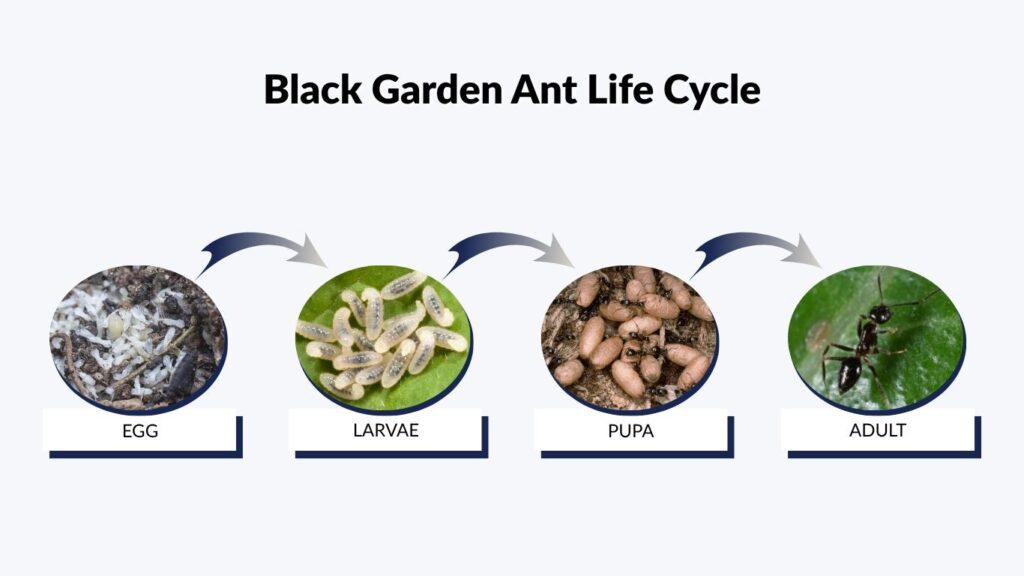
The black garden ant life cycle includes four main stages: egg, larva, pupa, and adult. Like other ants, they go through complete metamorphosis.
Eggs and Larvae
The queen lays tiny white eggs. These eggs hatch into larvae, which look like small pale grubs. Worker ants feed and care for the larvae until they develop into pupae.
Larvae need protein-rich food to grow. Workers bring food back to the nest and distribute it among the developing ants.
Pupae and Adults
After the larval stage, ants become pupae. During this stage, they transform into adult ants. Once fully developed, they emerge as workers, males, or new queens depending on colony needs and environmental conditions.
Worker ants maintain the nest and gather food. Males and new queens are produced mainly for reproduction.
Black Garden Ant Lifespan
Worker black garden ants may live for several months. Males usually live for a short time and die after mating. Queens can live much longer, often several years under suitable conditions.
A strong colony can survive year after year if the queen remains healthy and the nest is protected.
Black Garden Ants With Wings
Seeing black garden ants with wings can be surprising, especially when many appear at once. Winged ants are reproductive ants, usually males and young queens.
Why Do Black Garden Ants Have Wings?
Black garden ants grow wings during the reproductive stage. These winged ants leave the nest during a mating event known as a nuptial flight. After mating, males die, and fertilized queens look for places to start new colonies.
Winged ants do not mean the species is different. They are still black garden ants, but they are in a reproductive phase.
Black Garden Ant Nuptial Flight
A nuptial flight usually happens during warm, humid weather. Large numbers of winged ants may appear suddenly from nests. This can happen in gardens, lawns, patios, or near windows.
After mating, queens remove their wings and search for nesting sites. That is why you may find wingless large queen ants walking on the ground after a flight.
Black Garden Ants in the House
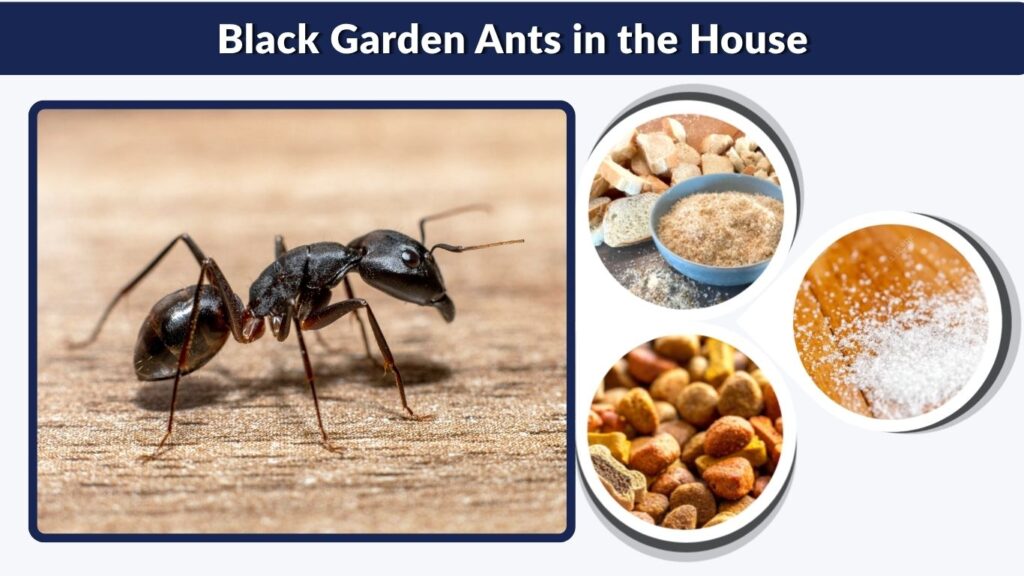
Black garden ants usually live outdoors, but they may enter homes while searching for food or water. Kitchens, bathrooms, laundry rooms, and pet feeding areas are common places to find them.
Why Black Garden Ants Enter Homes
They may come indoors because of:
- Food crumbs
- Sugar spills
- Open food containers
- Pet food
- Moisture sources
- Gaps around doors and windows
- Outdoor nests close to the foundation
A few ants inside often means workers are scouting for food. If they find a reliable source, more ants may follow the scent trail.
How to Prevent Black Garden Ants Indoors
To reduce indoor ant activity:
- Store food in sealed containers
- Wipe counters and floors regularly
- Clean up sugary spills quickly
- Rinse recycling bins
- Seal cracks around doors and windows
- Remove pet food after feeding
- Fix leaks and moisture problems
- Trim plants touching the house
Prevention works best when combined with outdoor nest management.
How to Get Rid of Black Garden Ants
Getting rid of black garden ants depends on where they are nesting and whether they are causing real problems. In many gardens, complete removal is unnecessary. Control is usually needed when ants enter the house, disturb plants, or form large colonies near living areas.
Natural Control Methods
For mild ant problems, natural methods may help reduce activity.
Try these options:
- Pour boiling water carefully into outdoor nests away from plants
- Use soapy water on ant trails and entry points
- Remove aphids from plants
- Keep garden beds clean of fallen fruit
- Move plant pots that hide nests
- Disturb small nests regularly
- Use barriers around entry points
Be careful with boiling water because it can damage plant roots, grass, and beneficial soil life.
Black Garden Ant Bait
Ant bait is often more effective than simply spraying visible ants. Worker ants carry bait back to the nest, where it can affect the queen and colony.
For best results:
- Place bait near ant trails
- Do not spray ants near bait stations
- Keep bait away from children and pets
- Follow product label instructions
- Give the bait time to work
- Replace bait when needed
Baits work slowly, but they often provide better colony control than contact sprays.
Black Garden Ant Killer and Repellent
Ant killers may provide fast results, but they do not always solve the nest problem. Repellents can move ants away temporarily, but the colony may relocate nearby.
Use chemical products carefully and only as directed. Avoid applying insecticides directly to vegetable crops, pollinator-friendly flowers, or areas where children and pets play unless the product label clearly allows it.
How to Get Rid of Black Ants in Garden Beds
Garden beds need careful treatment because plants, pollinators, and soil organisms can be affected. The goal is to reduce ant problems without damaging the garden.
Safe Garden Bed Control Tips
Use these steps when ants are active in garden beds:
- Identify where the nest is located
- Check plants for aphids
- Spray aphids off with water
- Remove weeds and plant debris
- Avoid leaving ripe fruit on the ground
- Use ant bait around the bed, not directly on edible plant parts
- Water dry soil if ants are nesting in very dry areas
If ants are not harming plants or entering your home, it may be better to leave the colony alone.
Black Ants in Vegetable Garden
Black ants in a vegetable garden are not always bad. They may improve soil structure and clean up organic matter. The bigger concern is their relationship with aphids.
If your vegetables have curled leaves, sticky residue, or clusters of small insects, aphids may be the real problem. Controlling aphids often reduces ant activity naturally.
Black Garden Ant Infestation Signs
A black garden ant infestation usually means a colony has become large or ants are entering spaces where they are unwanted.
Common Signs of Activity
Watch for:
- Frequent ant trails
- Small soil mounds
- Ants entering through cracks
- Ants around sweet foods
- Winged ants appearing in large numbers
- Nests under paving stones
- Ants climbing plants with aphids
- Indoor ants returning after cleaning
The more consistent the activity, the more likely there is a nearby nest.
When to Call a Professional
You may need professional pest control if ants keep coming back, nests are hard to locate, or you suspect carpenter ants instead of black garden ants. A professional can identify the species and recommend treatment based on the nest location.
This is especially important if you see large black ants indoors near wood, moisture damage, or sawdust-like debris.
FAQs
Are black garden ants harmful?
Black garden ants are usually not harmful to people, pets, or homes. They may bite if disturbed, but the bite is usually mild. In gardens, they can be helpful, but large colonies may disturb soil, protect aphids, or become a nuisance when they enter the house.
Do black garden ants bite or sting?
Black garden ants can bite, but they do not have a serious sting. Their bite usually feels like a tiny pinch and may cause minor redness or itching. Washing the area and applying a cold compress is usually enough for simple bite treatment.
Are black ants bad for your garden?
Black ants are not always bad for your garden. They can aerate soil and clean up organic matter. However, they may protect aphids, disturb seedlings, or create soil mounds. If plants are healthy and ants are not entering your home, control may not be necessary.
How do I get rid of black garden ants naturally?
You can reduce black garden ants naturally by removing food sources, cleaning ant trails, controlling aphids, disturbing small nests, and sealing home entry points. Boiling water may work on outdoor nests, but it should be used carefully because it can damage nearby plants and soil life.
What is the difference between black garden ants and carpenter ants?
Black garden ants are smaller and usually nest in soil, lawns, or garden beds. Carpenter ants are larger and may nest in damp or damaged wood. Black garden ants are mostly a nuisance pest, while carpenter ants can become a structural concern if they nest inside a home.