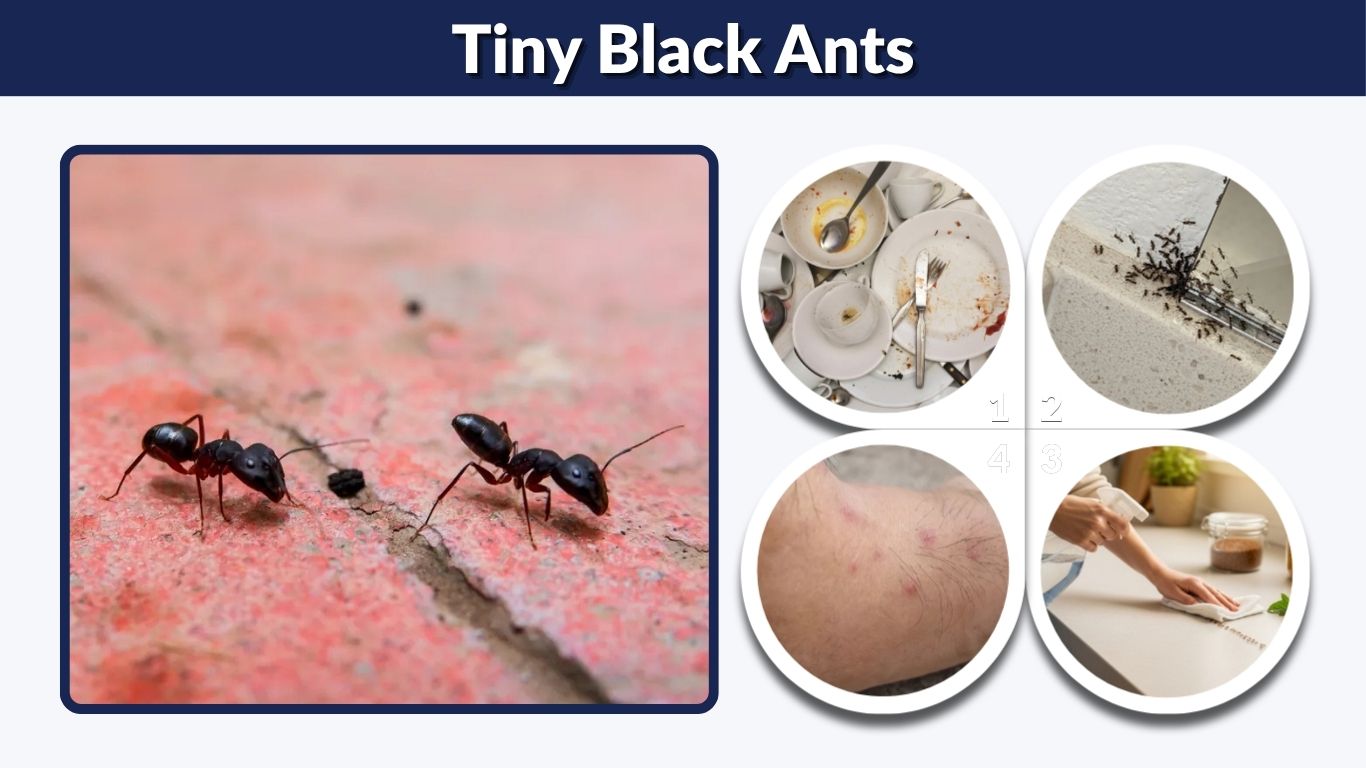
Tiny black ants are one of the most common household pest problems, especially in kitchens, bathrooms, bedrooms, and around sinks. They may look harmless, but once they find food or moisture, they can form long trails and keep returning. The good news is that tiny black ants can usually be controlled by identifying the source, removing attractants, sealing entry points, and using the right ant bait.
What Are Tiny Black Ants?
Tiny black ants are small ants that homeowners often notice crawling along counters, floors, windowsills, sinks, or baseboards. The phrase “tiny black ants” can describe several small ant species, including little black ants, odorous house ants, pavement ants, thief ants, and sugar-seeking household ants.
What Are Tiny Black Ants Called?
Many people use the term “tiny black ants” as a general name, but the exact species depends on size, location, odor, nesting habits, and behavior. Some common possibilities include little black ants, pavement ants, odorous house ants, and thief ants.
Because many small ants look similar, identification can be difficult without a close inspection. However, you can often narrow it down by looking at where they appear, what they are eating, and whether they are coming from indoors or outdoors.
What Do Tiny Black Ants Look Like?
Tiny black ants are usually dark brown to black and much smaller than carpenter ants. Most are only a few millimeters long. They have narrow waists, bent antennae, and move in organized trails when foraging.
You may notice them near sweet spills, crumbs, pet food, trash cans, wet areas, or cracks around windows and doors.
| Common Sign | What It May Mean | Where You May Notice It |
| Ant trails | Workers found food or water | Kitchen, bathroom, floor edges |
| Ants near sink | Moisture is attracting them | Kitchen sink, bathroom sink |
| Ants near sweets | They are feeding on sugar | Counters, pantry, trash |
| Tiny ants with wings | Reproductive ants may be swarming | Windows, lights, walls |
| Ants in winter | A nest may be indoors or close to warmth | Walls, cabinets, bathrooms |
| Ants with no visible food | Moisture, grease, or hidden crumbs may be present | Bathroom, bedroom, appliances |
Why Are Tiny Black Ants in the House?
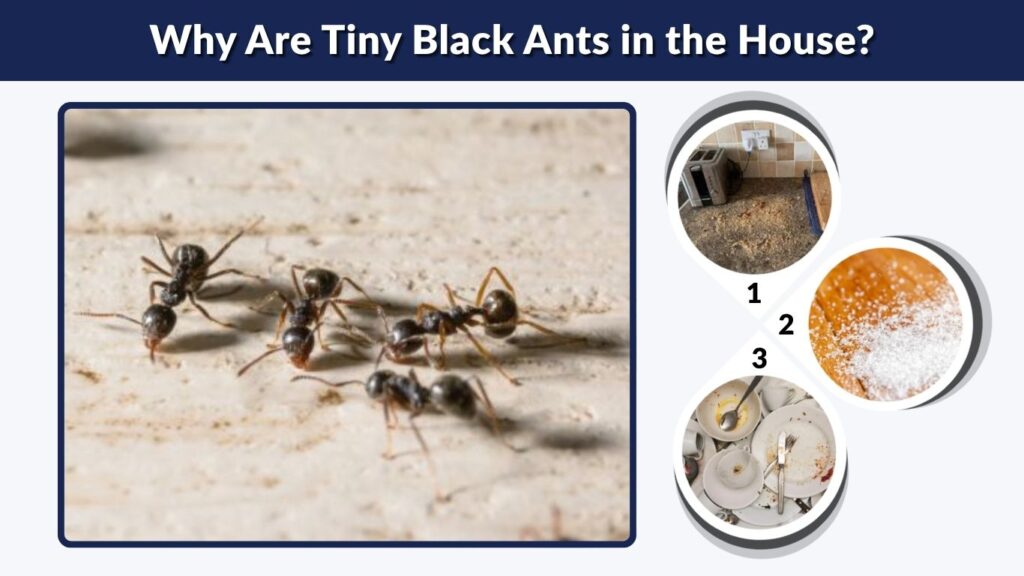
Tiny black ants usually enter homes while searching for food, water, or shelter. Even a small crumb, sticky spill, or damp area can attract them. Once one worker ant finds a good source, it leaves a scent trail that other ants follow.
Common Reasons They Come Indoors
Tiny black ants may enter your house because of:
- Crumbs under appliances
- Sugar, syrup, honey, or juice spills
- Open food containers
- Pet food bowls
- Dirty dishes
- Trash bins
- Moisture around sinks or pipes
- Gaps around doors and windows
- Outdoor nests near the foundation
A few ants may not seem serious at first, but if the food source remains, more ants can appear quickly.
Where Do Tiny Black Ants Come From?
Tiny black ants often come from outdoor nests in soil, mulch, sidewalk cracks, wall gaps, or areas near the foundation. They can enter through very small openings around doors, windows, utility lines, vents, and baseboards.
Sometimes, they may already be nesting inside wall voids, under floors, behind cabinets, or near moisture-damaged areas. Indoor nesting is more likely if ants appear during cold weather or keep returning after repeated cleaning.
Tiny Black Ants in the Kitchen
The kitchen is one of the most common places to find tiny black ants. This is because kitchens provide food, moisture, warmth, and hiding places.
Why They Love Kitchens
Tiny black ants are attracted to many kitchen items, including sugar, fruit, syrup, grease, crumbs, bread, pet food, and dirty dishes. They may also gather near sinks, dishwashers, refrigerator drip pans, or trash cans.
Even if your kitchen looks clean, ants can find tiny food particles behind appliances, under cabinets, or along baseboards.
How to Get Rid of Tiny Black Ants in the Kitchen
To remove tiny black ants from the kitchen, focus on cleaning, baiting, and blocking entry points.
Start with these steps:
- Wipe counters and floors daily
- Clean under the toaster, stove, and refrigerator
- Store sugar, cereal, snacks, and pet food in sealed containers
- Rinse sticky bottles before putting them away
- Empty trash regularly
- Fix leaks around the sink
- Place ant bait near trails, not directly on food surfaces
- Avoid spraying ants near bait
Spraying visible ants may kill a few workers, but it often fails to reach the colony. Bait works better because ants carry it back to the nest.
Tiny Black Ants in the Bathroom
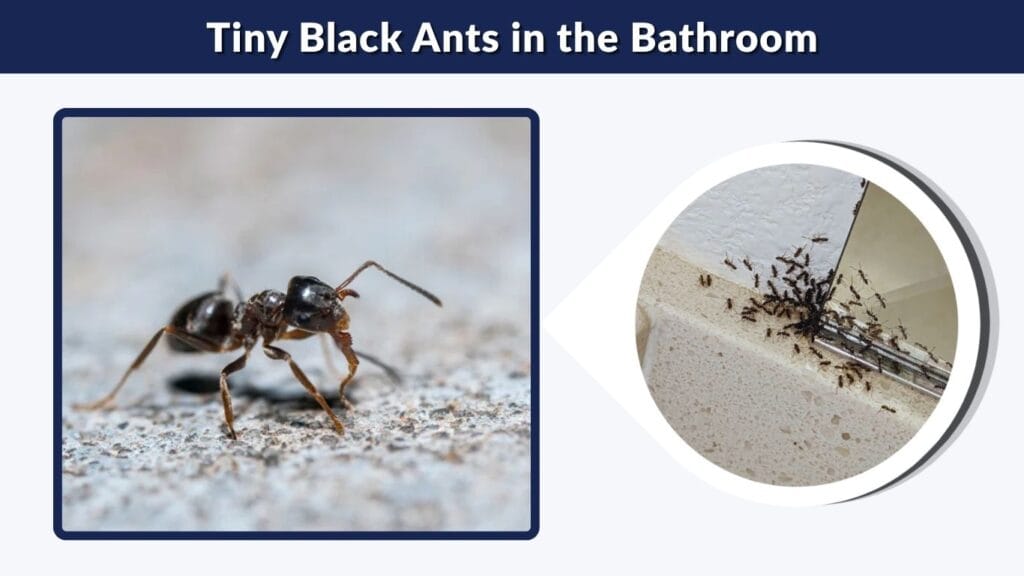
Bathrooms attract tiny black ants because they provide water. Ants do not always need obvious food to survive indoors. Moisture from sinks, tubs, showers, leaks, and condensation can be enough to draw them in.
Tiny Black Ants in Bathroom Meaning
If you see tiny black ants in the bathroom, it may mean they are looking for water or nesting close to a moist area. Check around pipes, drains, windows, baseboards, and wall cracks.
Ants in the bathroom may also be entering from outside through gaps around plumbing or foundation cracks.
Bathroom Ant Control Tips
To reduce tiny black ants in the bathroom:
- Wipe standing water from sinks and counters
- Fix dripping faucets or leaking pipes
- Seal gaps around pipes and baseboards
- Keep bathroom trash covered
- Clean soap residue and toothpaste spills
- Use bait near ant trails
- Improve ventilation if the room stays damp
If ants keep returning to the bathroom, moisture may be the main reason.
Do Tiny Black Ants Bite?
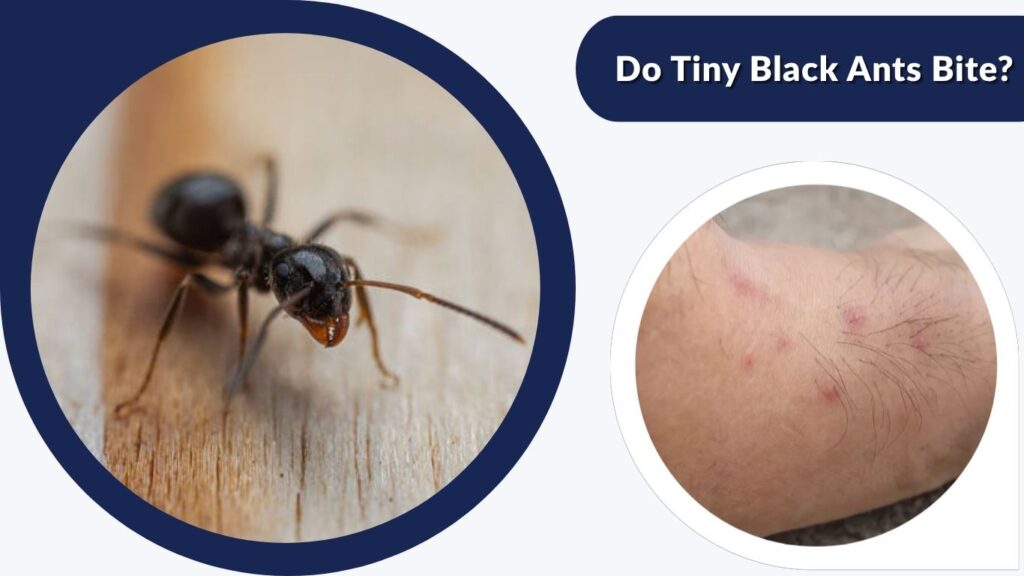
Tiny black ants can bite, but most bites are mild. Many small household ants are more of a nuisance than a health threat. A bite may feel like a tiny pinch and may cause a small red spot, itching, or minor irritation.
Tiny Black Ant Bites
Tiny black ant bites are usually not dangerous for most people. However, sensitive individuals may experience more redness, swelling, or itching. Scratching the area can also increase the risk of irritation or infection.
If you are bitten, wash the area with soap and water. A cold compress can help reduce swelling. An over-the-counter anti-itch cream may help if the area feels itchy.
Are Tiny Black Ants Harmful?
Tiny black ants are not usually harmful, but they can contaminate food by crawling through dirty areas and then onto counters, dishes, or pantry items. They can also become stressful when they appear in large numbers or keep returning after cleaning.
If you notice painful bites, aggressive ants, or red-and-black ants, you may be dealing with another species, such as fire ants, rather than ordinary tiny black household ants.
Tiny Black Ants With Wings
Tiny black ants with wings can be alarming, especially when they appear indoors. Winged ants are usually reproductive ants. They leave the colony to mate and start new colonies.
Why Do Tiny Black Ants Have Wings?
Some ants grow wings during the reproductive stage. These ants are often called swarmers or alates. Their job is to mate and spread the colony.
Winged ants may appear near windows, lights, walls, or doors. They are often attracted to light, which is why people sometimes notice them around windows or lamps.
Tiny Black Flying Ants vs Termites
Winged ants are sometimes mistaken for termites. Ants usually have bent antennae, a narrow waist, and front wings that are longer than the back wings. Termites have straight antennae, a thicker waist, and wings that are more equal in size.
If you see large numbers of winged insects indoors, especially near wood, moisture, or damaged areas, proper identification is important.
Tiny Black Ant Infestation Signs
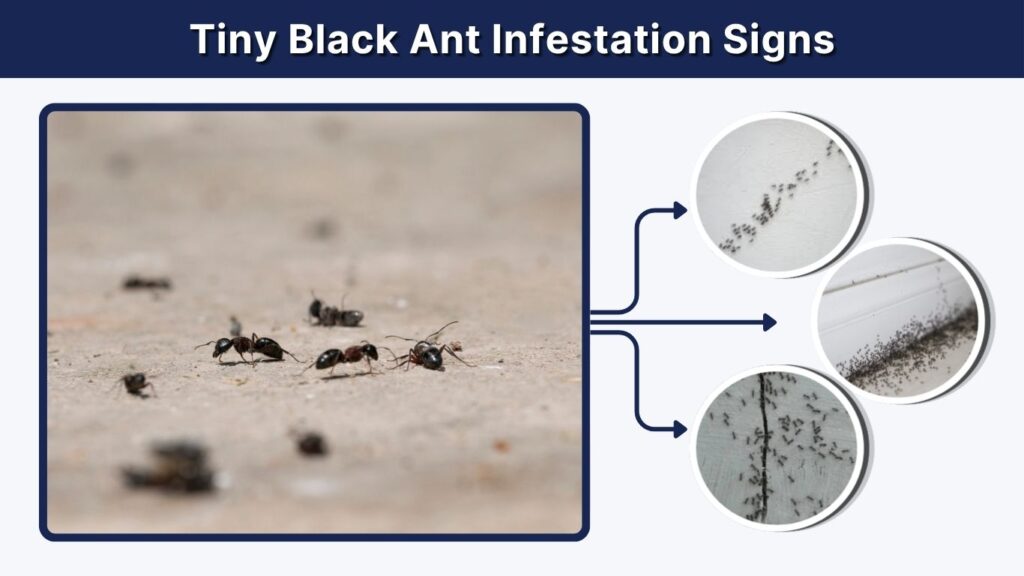
A tiny black ant infestation often starts with a few scouts. If they find food or water, the number of ants can increase quickly.
Common Infestation Signs
Look for these signs:
- Long ant trails on counters or floors
- Ants around sinks or tubs
- Ants entering through cracks
- Ants near pet food
- Ants in pantry items
- Ants around trash bins
- Winged ants indoors
- Ants returning after cleaning
If ants appear in the same area every day, there is likely a nest nearby or a reliable food or moisture source.
Tiny Black Ants in House With No Food
Sometimes ants appear even when no food is visible. In this case, they may be attracted to water, grease, hidden crumbs, dead insects, or food residue behind appliances.
Check under refrigerators, stoves, dishwashers, cabinets, and trash cans. Also inspect bathrooms, laundry rooms, and utility areas for moisture.
How to Get Rid of Tiny Black Ants
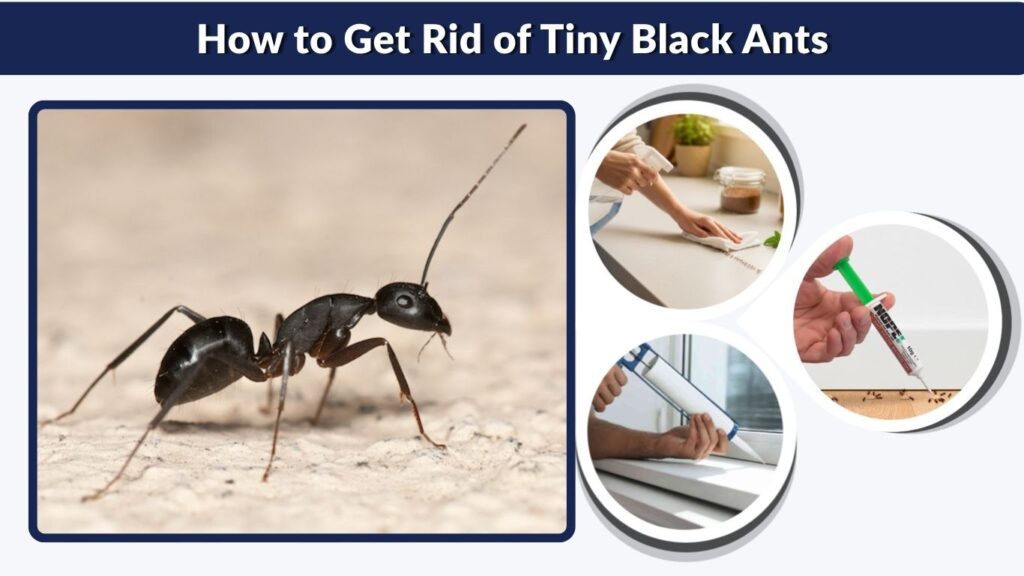
Getting rid of tiny black ants requires more than wiping away the ants you see. You need to remove attractants, break scent trails, seal entry points, and target the colony.
Step 1: Find the Trail
Follow the ants to see where they are coming from and where they are going. Their trail may lead to a window, door, wall crack, baseboard, sink, or food source.
Do not disturb the trail too much before placing bait. You want ants to find the bait and carry it back to the nest.
Step 2: Clean the Area
Clean food and moisture sources thoroughly. Use soap and water to wipe counters, floors, and ant trails. This helps remove scent trails that guide other ants.
Focus on:
- Countertops
- Pantry shelves
- Pet feeding areas
- Trash bins
- Sink edges
- Stove and refrigerator areas
- Sticky bottles and jars
- Cracks along baseboards
Cleaning alone may not eliminate the colony, but it makes your home less attractive.
Step 3: Use Ant Bait
Ant bait is one of the best ways to control tiny black ants because workers take the bait back to the colony. The bait must work slowly enough for ants to share it with other ants and the queen.
Place bait near ant trails, but keep it away from children, pets, and food-preparation surfaces. Follow the product label carefully.
Do not spray ants while using bait. Sprays can repel ants away from the bait or kill workers before they carry it back to the nest.
Step 4: Seal Entry Points
After ant activity slows down, seal entry points to prevent future problems. Use caulk or weatherstripping around gaps.
Pay attention to:
- Window frames
- Door thresholds
- Baseboard cracks
- Pipe openings
- Utility line gaps
- Foundation cracks
- Vents and screens
Sealing is especially important if ants keep coming in from outdoor nests.
Home Remedies for Tiny Black Ants
Some home remedies can help reduce ant activity, especially when the problem is small. However, home remedies may not eliminate the full colony.
Natural Methods That May Help
You can try:
- Washing trails with soap and water
- Removing food and water sources
- Using vinegar-water spray on trails
- Sealing cracks and gaps
- Keeping pet food sealed
- Cleaning trash bins
- Removing outdoor debris near the house
These methods work best when combined with bait and prevention.
What Kills Tiny Black Ants?
Ant bait is usually more effective than killing visible ants one by one. Contact sprays may provide quick results, but they often fail to reach the nest. If the queen survives, the colony can continue producing workers.
For long-term control, use bait, sanitation, moisture control, and exclusion together.
How to Prevent Tiny Black Ants From Coming Back
Prevention is the best long-term solution. Tiny black ants are persistent, but you can make your home less inviting.
Prevention Checklist
Use these tips regularly:
- Keep counters clean
- Store food in airtight containers
- Clean crumbs under appliances
- Empty trash often
- Rinse recycling items
- Fix plumbing leaks
- Reduce moisture in bathrooms
- Seal cracks around windows and doors
- Trim plants touching the house
- Move mulch away from the foundation
- Keep pet food bowls clean
Small daily habits can prevent a small ant problem from becoming a full infestation.
When to Call Pest Control
You may need professional help if ants keep returning, you cannot find the nest, bait does not work, or you see winged ants indoors repeatedly. Professional help is also important if you suspect carpenter ants, termites, or another wood-related pest.
Call a pest control professional if:
- Ants return after several treatments
- You see large black ants indoors
- You notice sawdust-like material near wood
- Winged insects appear inside
- Ants are nesting in walls
- You have a large recurring infestation
- You are unsure what species you have
Correct identification matters because different ants require different control methods.
FAQs
What are tiny black ants called?
Tiny black ants may be little black ants, odorous house ants, pavement ants, thief ants, or another small household ant species. The exact name depends on size, nesting behavior, smell, location, and food preference. A close inspection is often needed for accurate identification.
Why do I have tiny black ants in my house?
Tiny black ants usually enter homes to find food, water, or shelter. They may be attracted to crumbs, sugar, pet food, trash, moisture, or leaks. Once ants find a reliable source, they leave scent trails that guide more ants inside.
How do I get rid of tiny black ants fast?
Clean food sources, wipe ant trails, fix moisture problems, and place ant bait near active trails. Avoid spraying ants near bait because workers need to carry the bait back to the colony. Sealing entry points helps prevent new ants from coming inside.
Do tiny black ants bite humans?
Some tiny black ants can bite humans, but bites are usually mild. A bite may feel like a small pinch and cause minor redness or itching. Wash the area with soap and water and avoid scratching. Seek medical help if swelling or allergic symptoms occur.
Why are tiny black ants in my bathroom?
Tiny black ants often enter bathrooms because they are looking for water. Leaky pipes, dripping faucets, damp walls, and standing water can attract them. Cleaning, fixing leaks, improving ventilation, and sealing gaps around plumbing can help reduce bathroom ants.