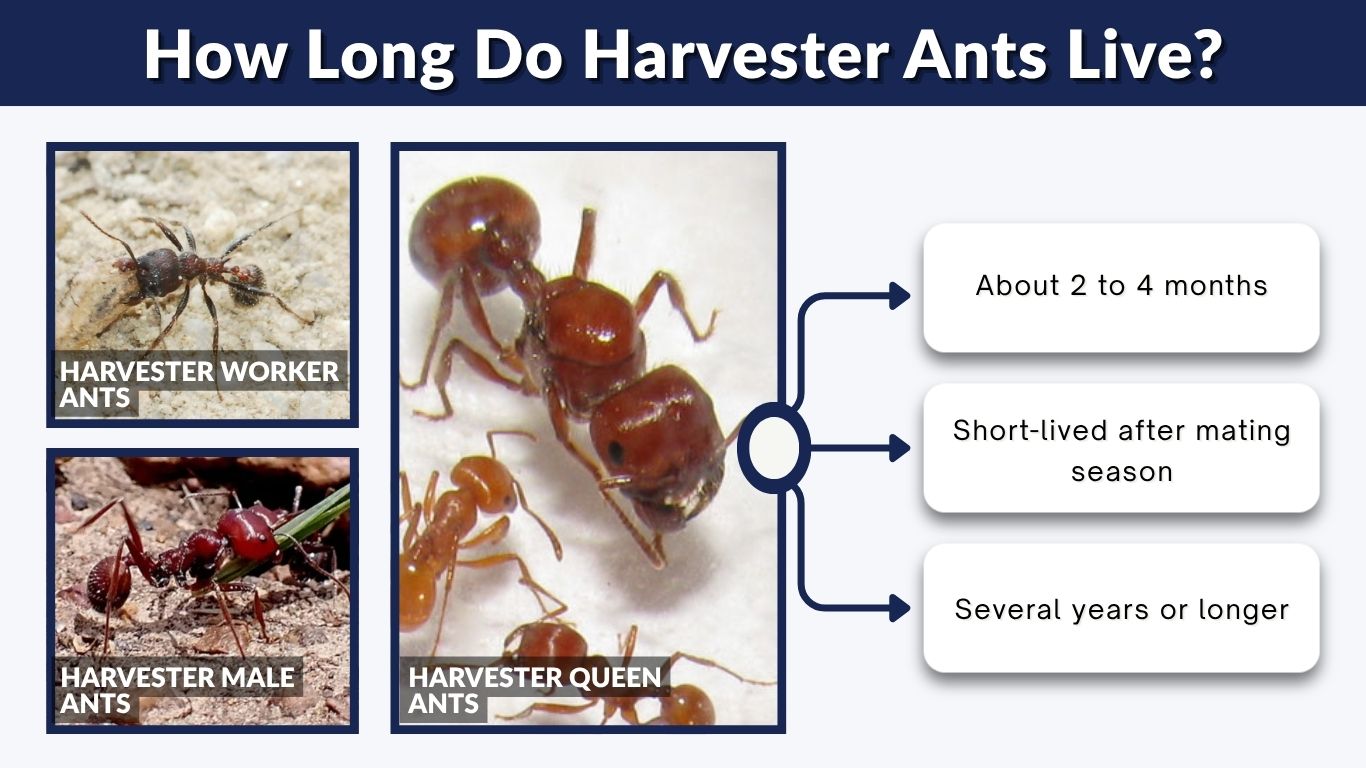
Harvester ants can live for very different lengths of time depending on whether they are workers, queens, males, or ants kept in an ant farm. A worker may live only a few months in a small educational habitat, while a queen in a natural colony can live for years. Their lifespan depends on caste, species, food, temperature, moisture, and whether the colony has a queen.
What Are Harvester Ants?
Harvester ants are seed-collecting ants known for gathering, storing, and processing seeds. Many belong to the genus Pogonomyrmex, including red harvester ants and western harvester ants. They are common in dry, open, sunny habitats where seeds are available.
These ants are easy to notice because they often clear vegetation around their nest entrances. Some species build visible mounds or cleared circular areas on the ground. Workers leave the nest to collect seeds, carry them back, and store them underground.
Harvester ants are social insects. Their colonies include different types of ants, called castes. Each caste has a different job and a different lifespan. This is why there is no single answer to how long harvester ants live.
How Long Do Harvester Ants Live?
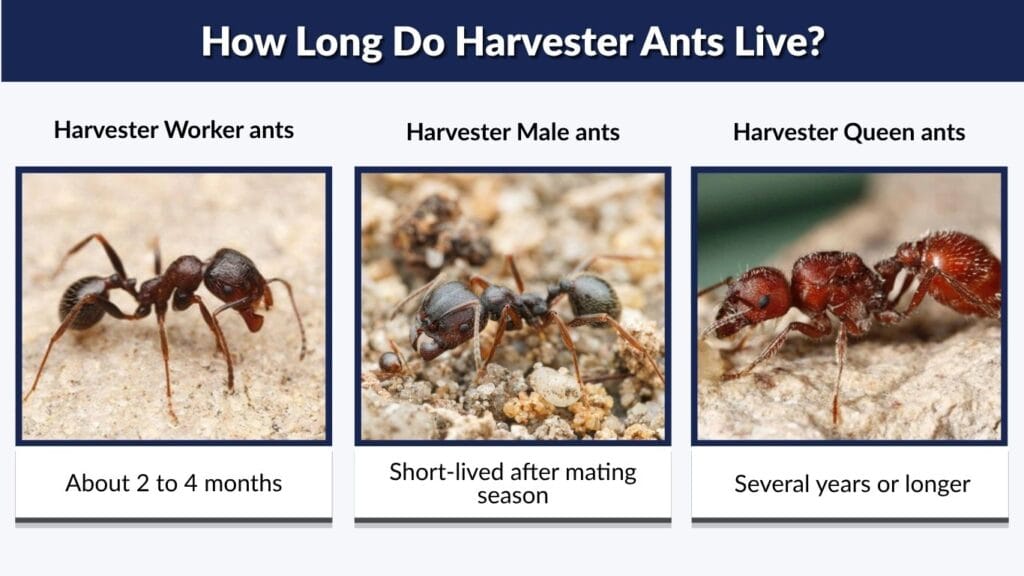
The lifespan of harvester ants depends mainly on their role in the colony. Workers usually live much shorter lives than queens. Males often live the shortest lives because their main role is mating. Queens live the longest because they produce the eggs that keep the colony going.
| Harvester Ant Type | Typical Lifespan | Main Role |
|---|---|---|
| Worker ants in ant farms | About 2 to 4 months | Digging, foraging, tunnel care |
| Worker ants in natural colonies | Several months to longer, depending on conditions | Food collection and colony maintenance |
| Male ants | Short-lived after mating season | Mating with queens |
| Queen ants | Several years or longer | Egg-laying and colony growth |
These numbers are general because harvester ant species vary. A red harvester ant, western harvester ant, and other Pogonomyrmex species may not all live exactly the same amount of time.
How Long Do Harvester Ants Live in an Ant Farm?
Most live harvester ants sold for ant farms are worker ants without a queen. In this type of setup, they often live around two to four months when cared for properly. Some may die sooner if the habitat is too dry, too wet, too hot, too cold, or lacks suitable food.
Ant farms are designed for observation, not long-term colony growth. Without a queen, workers can dig tunnels, collect food, and interact, but they cannot produce a new generation of workers. Over time, the group naturally becomes smaller.
Factors That Affect Ant Farm Lifespan
Several care conditions can affect how long live harvester ants survive in an ant farm:
- Moisture level in the sand or gel habitat
- Access to small amounts of food
- Stable room temperature
- Avoiding direct sunlight
- Clean habitat conditions
- Proper ventilation
- Low stress during shipping and setup
Too much food can spoil and harm the ants. Too little moisture can dry them out. Direct sunlight can quickly overheat a small ant farm, even if the room feels comfortable.
Can Harvester Ants Live Without a Queen?
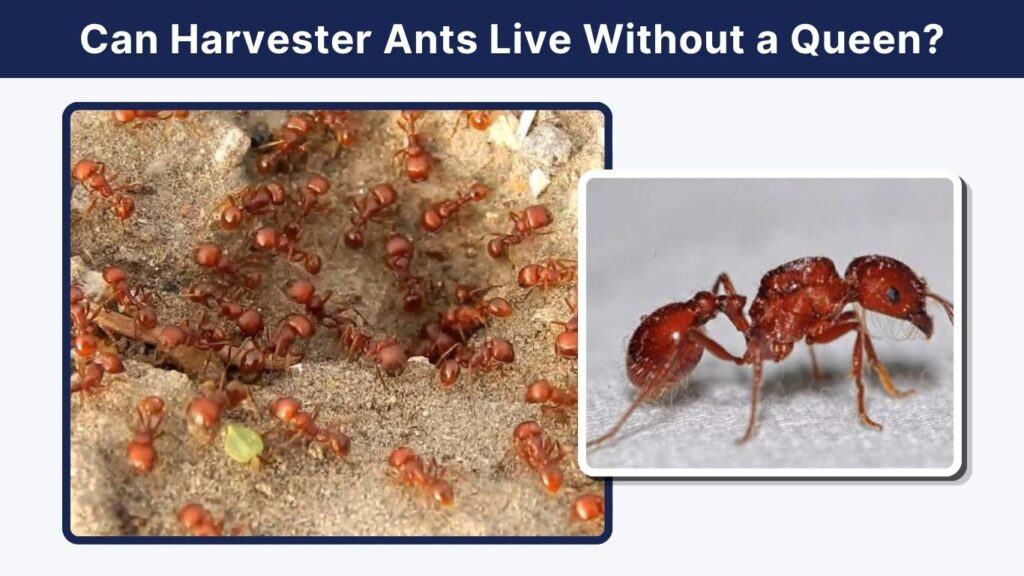
Harvester worker ants can live without a queen for a limited time, especially in an educational ant farm. They will still dig, move soil, groom each other, and search for food. However, they cannot replace the colony population because they do not lay fertilized eggs that become new workers.
A queenless group is not a true growing colony. It is a temporary worker group. Once the workers age and die, there are no young ants to replace them.
In nature, a colony without a queen usually declines over time. The queen is essential because she is the reproductive center of the colony. Without her, the colony loses its ability to maintain itself long term.
How Long Do Harvester Ants Live Without Food?
Harvester ants are adapted to collect and store seeds, so they can sometimes survive short periods without fresh food if they have stored resources. However, ants in an ant farm should not be left without food for long periods.
In a small habitat, food and moisture are limited. Workers may survive for a while, but their health will decline if they cannot access suitable nutrition. Seeds, tiny grain pieces, and small bits of fruit or vegetable may be used in some ant farm setups, depending on the care instructions.
Safe Feeding Tips
For a basic ant farm, follow these practical feeding ideas:
- Offer only tiny amounts of food
- Remove uneaten fresh food before it molds
- Use small seeds or crushed grains
- Avoid sticky, oily, or salty foods
- Do not overfeed
- Follow the supplier’s care guide
- Keep water or moisture available as instructed
The goal is to feed enough for survival without creating mold, bacteria, or excess waste inside the habitat.
Where Do Harvester Ants Live?
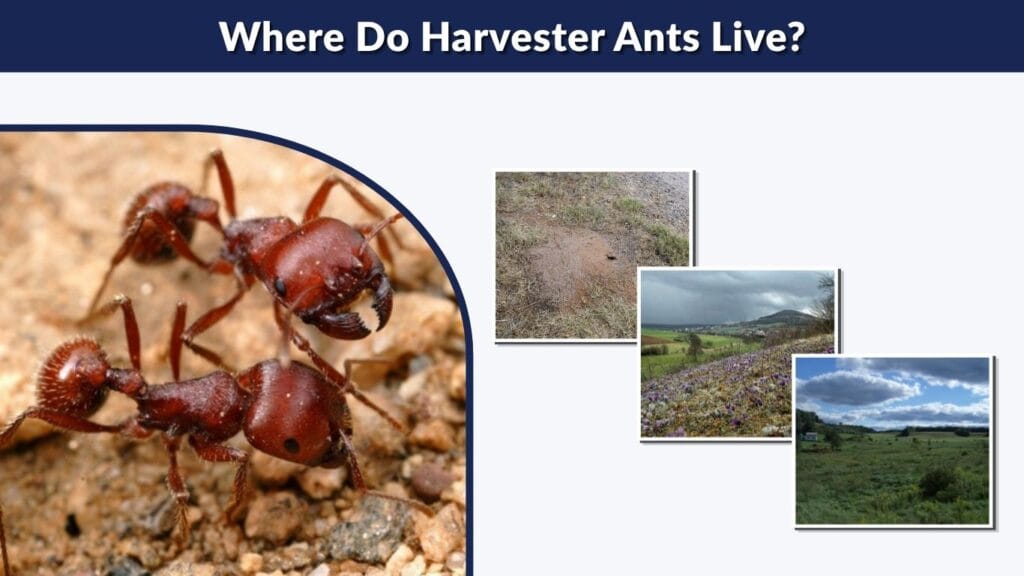
Harvester ants usually live in warm, dry, open areas where seeds are easy to collect. Many species are found in deserts, grasslands, prairies, open fields, scrublands, and dry soils. Red harvester ants are well known in parts of the southern and southwestern United States, including Texas and nearby regions.
Western harvester ants are also associated with dry western habitats. Some species build pebble-covered mounds or cleared areas that can remain visible for a long time.
Common Harvester Ant Habitats
Harvester ants may live in:
- Dry grasslands
- Open fields
- Desert edges
- Sandy or gravelly soil
- Rangeland and prairie
- Roadsides and open sunny spaces
- Areas with plenty of seed-producing plants
They usually avoid very wet environments. Their nests are underground, where chambers protect the colony from heat, cold, and predators.
How Do Harvester Ant Colonies Survive?
A harvester ant colony survives through teamwork. Workers collect seeds, maintain tunnels, care for larvae, defend the nest, and manage stored food. The queen lays eggs, and new workers develop through the ant life cycle.
Ant development includes egg, larva, pupa, and adult stages. Temperature, food, and moisture affect how quickly young ants grow. In a healthy natural colony, new workers replace older workers, allowing the colony to continue for years.
Harvester ants are also important in ecosystems. By collecting seeds, moving soil, and building underground nests, they affect plant communities and soil structure. Some animals, such as horned lizards, also depend heavily on harvester ants as food.
How Long Do Red Harvester Ants Live?
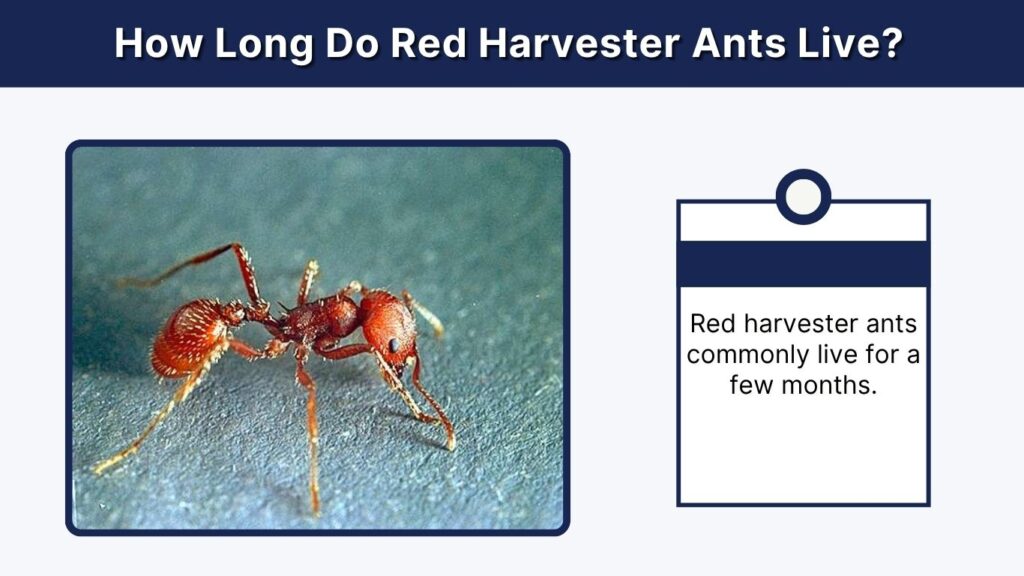
Red harvester ants follow the same general pattern as other harvester ants. Workers live much shorter lives than queens. In ant farms, worker red harvester ants commonly live for a few months. In a natural colony, workers may survive longer depending on the environment and their duties.
Foraging workers face more risks than ants that remain deeper inside the nest. They may die from predators, heat, dehydration, fights with other ants, or natural aging. Queens have a safer life underground and can survive far longer than workers.
How Long Do Western Harvester Ants Live?
Western harvester ants also have workers, males, and queens with different lifespans. Workers handle digging, foraging, seed storage, and nest defense. Queens are responsible for reproduction and live much longer than ordinary workers.
Western harvester ant colonies can create noticeable nests and may persist in the same area for many years when conditions are good. Their long-term success depends on the queen, worker population, seed availability, soil conditions, and climate.
Should You Buy Live Harvester Ants?
Many people buy live harvester ants for ant farms, classrooms, and educational observation. This can be a good way to learn about insect behavior, tunneling, and social organization. However, buyers should understand that most ant farm shipments contain workers only, not queens.
That means the ants are temporary. They may be active and interesting for several months, but they will not form a permanent colony. Buying a queen or collecting ants may also be restricted in some places, so local rules matter.
Before Ordering Live Harvester Ants
Before buying, check:
- Whether the seller ships to your location
- If the ants are workers only or include a queen
- Local laws about live ant shipment
- Care instructions for the species
- Temperature requirements during shipping
- Whether the habitat is escape-resistant
Harvester ants can sting, and some species have painful stings. They should be handled carefully and kept in a secure enclosure.
FAQs
How long does a harvester ant live?
A harvester ant’s lifespan depends on its role. Worker ants in ant farms often live around two to four months, while workers in natural colonies may live longer under good conditions. Queens live much longer than workers because their job is to produce eggs and maintain the colony.
How long do harvester ants live in an ant farm?
In a typical ant farm, live harvester worker ants often live about two to four months. Their survival depends on moisture, temperature, food, ventilation, and stress from shipping. Since most ant farms do not include a queen, the workers cannot produce new ants to replace those that die.
Can harvester ants live without a queen?
Yes, worker harvester ants can live without a queen for a limited time. They can still dig tunnels, gather food, groom each other, and behave normally. However, they cannot build a lasting colony because no new workers will be produced once the existing workers age and die.
Where do harvester ants live?
Harvester ants usually live in warm, dry, open habitats with plenty of seeds. They are common in grasslands, deserts, prairies, scrublands, open fields, and sandy or gravelly soils. Many red and western harvester ants are found in the southern and western parts of the United States.
Do harvester ants need food every day?
Harvester ants do not need large meals every day, especially in a small ant farm. Tiny amounts of seeds, grains, or approved food are usually enough. Overfeeding can cause mold and waste problems, so it is better to provide small portions and remove uneaten fresh food quickly.