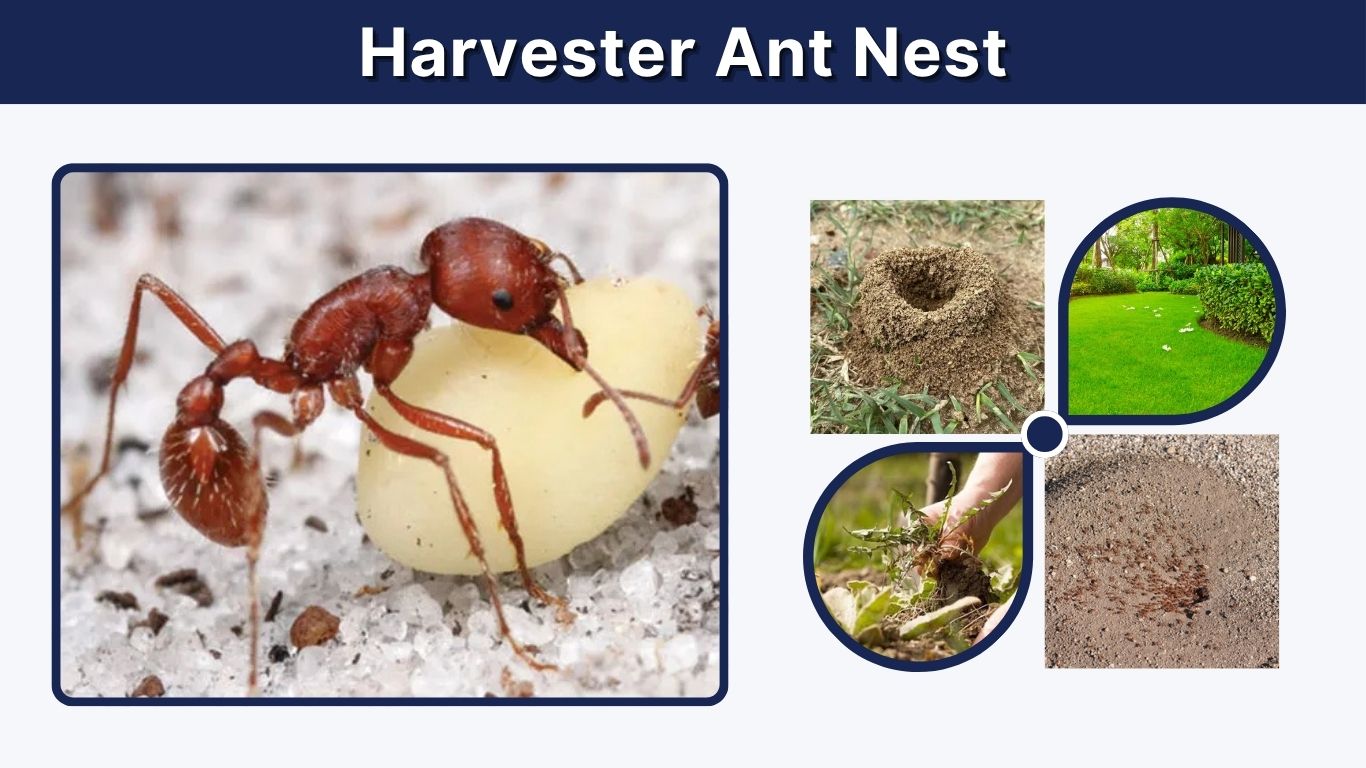
A harvester ant nest is usually easy to notice once you know what to look for. These ants often create bare, open patches of soil with one or more nest openings and visible foraging trails. While harvester ants play a useful role in nature by collecting seeds and improving soil movement, their nests can become a problem in lawns, yards, pastures, playgrounds, and areas where people or pets may step too close.
What Is a Harvester Ant Nest?
A harvester ant nest is the underground home of a harvester ant colony. These ants are known for collecting seeds, carrying them back to the nest, and storing them in underground chambers. The nest protects the queen, workers, eggs, larvae, pupae, and stored food.
Most harvester ant nests are built in open, sunny soil. The surface may look like a flat, cleared circle where grass and small plants have been removed. In some areas, the nest may look like a low mound. In others, it may appear as a bare patch with a central hole and small pebbles or seed husks nearby.
Harvester ants are social insects. A mature colony usually has a queen and many workers. Workers maintain the nest, collect food, defend the entrance, and care for young ants. Because they can sting painfully, nests near walkways, yards, or play areas should be treated carefully.
What Does a Harvester Ant Nest Look Like?
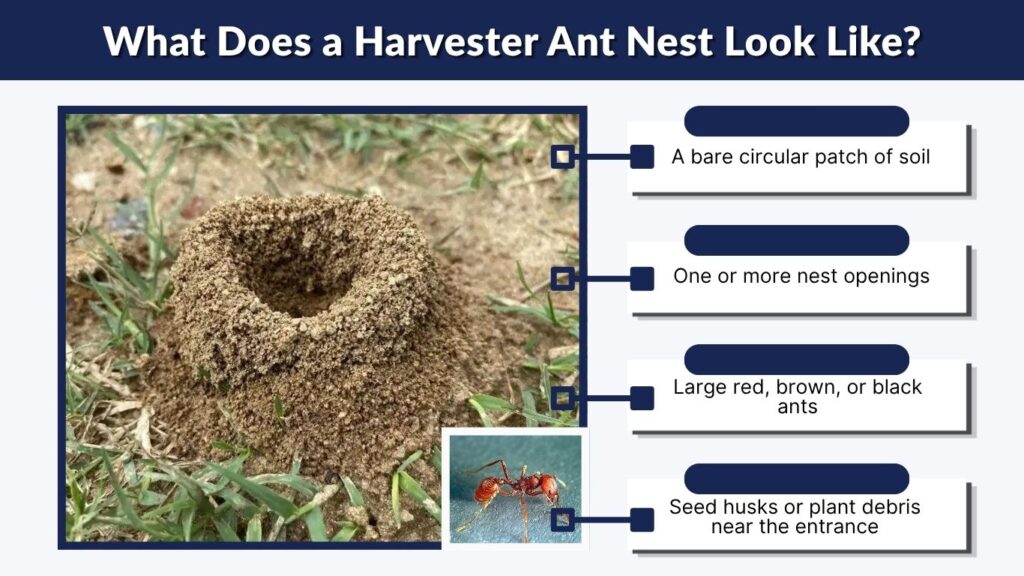
Harvester ant nests vary by species and soil type, but they often share several visible signs. Many nests have a clear, open area where the ants have removed grass, weeds, and loose plant material. This bare patch helps warm the soil and keeps the entrance clear.
Some nests have small gravel, seed hulls, or bits of plant material around the entrance. You may also see worker ants traveling along narrow trails that lead away from the nest. These trails are used for foraging and may connect the colony to seed-rich areas.
Common Nest Signs
You may be looking at a harvester ant nest if you see:
- A bare circular patch of soil
- One or more nest openings
- Large red, brown, or black ants
- Seed husks or plant debris near the entrance
- Ant trails leading away from the nest
- Little or no grass growing around the mound
- Ants carrying seeds or dry plant material
The bare patch is one of the most recognizable features. Unlike some ants that hide under stones, wood, or pavement, harvester ants often create very visible nesting areas in open ground.
Harvester Ant Nest Architecture
Harvester ant nest architecture is more complex than the surface suggests. What you see above ground is only a small part of the colony. Underground, the nest may include tunnels, chambers, food storage areas, brood chambers, and deeper spaces that help protect the colony from heat, cold, and drought.
The nest entrance connects to tunnels that lead downward. Chambers may be used for storing seeds, raising young ants, or sheltering workers and the queen. Temperature and moisture inside the nest are important because eggs and larvae need stable conditions to develop.
| Nest Feature | Purpose |
|---|---|
| Bare soil patch | Keeps the nest entrance clear and may help warm the area |
| Entrance hole | Main access point for workers |
| Foraging trails | Routes used to collect seeds and food |
| Underground tunnels | Connect different nest chambers |
| Storage chambers | Hold seeds and other food material |
| Brood chambers | Protect eggs, larvae, and pupae |
| Deeper chambers | Provide shelter from heat, cold, and dry conditions |
This underground design allows harvester ants to survive in dry and hot environments. It also makes complete removal harder because the colony is not limited to the surface.
How Deep Is a Harvester Ant Nest?
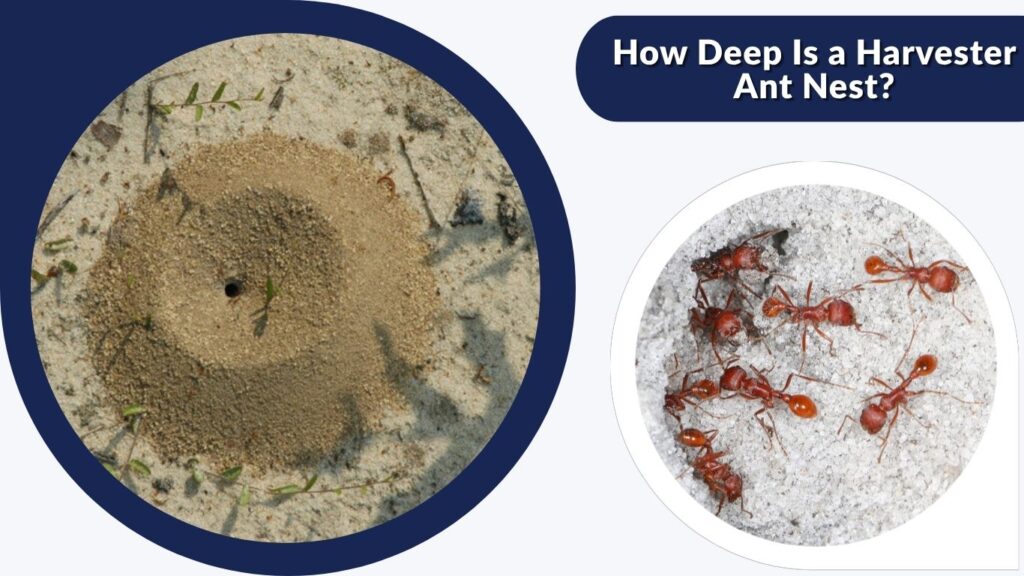
Harvester ant nest depth depends on the species, soil, colony age, and local climate. Some nests may extend several feet into the ground. Deeper nests help protect the colony from extreme surface temperatures and dry weather.
In hot, dry regions, depth is especially useful. Surface soil can become too hot or too dry, while deeper soil remains cooler and more stable. The ants may move brood and workers to different depths depending on temperature and humidity.
This depth is one reason simple surface disturbance may not always eliminate a colony. Knocking down the top of a mound may remove the visible entrance, but the ants can often reopen it if the queen and main chambers remain alive underground.
Red Harvester Ant Nest
A red harvester ant nest is often found in open, sunny places such as dry lawns, fields, rangeland, roadsides, and sandy or gravelly soil. Red harvester ants are larger than many common household ants and may be reddish-brown to reddish-orange.
These ants are important in some ecosystems because they collect seeds and serve as food for wildlife, including horned lizards in parts of the southwestern United States. However, they can become a concern when their nests are close to people, pets, or livestock.
Red Harvester Ant Nest Clues
Look for these signs:
- Large reddish ants moving around open soil
- A bare cleared area around the entrance
- Seed husks or small debris near the nest
- Strong ant activity during warm parts of the day
- Painful stings if the nest is disturbed
- Trails leading outward from the nest
Red harvester ants are not the same as fire ants, although people sometimes confuse them. Fire ant mounds and behavior can differ, so correct identification is important before choosing a control method.
Do Harvester Ants Change Nest Locations?
Harvester ants may change nest locations under certain conditions, but established colonies often remain in one area if the site is suitable. A good nest site offers stable soil, access to seeds, proper drainage, and protection from repeated disturbance.
A colony may decline, abandon a nest, or shift activity if the area becomes unsuitable. Flooding, heavy disturbance, lack of food, competition, or control efforts may affect nest survival. In some cases, new queens may establish colonies nearby after mating flights.
If a nest seems inactive, observe carefully before assuming it is abandoned. Harvester ants may reduce surface activity during cold, wet, extremely hot, or dry conditions.
Are Harvester Ant Nests Dangerous?
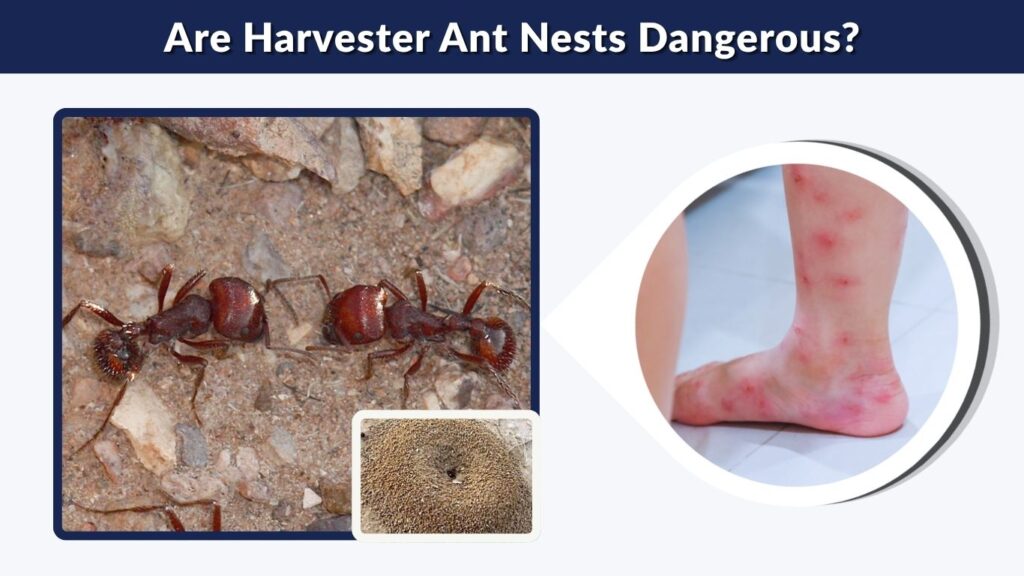
A harvester ant nest can be risky if it is located where people or animals may disturb it. Harvester ants can sting, and some species have painful stings. A person may be stung after stepping on or near a nest, sitting close to a mound, or trying to dig it up.
Pets may also be stung if they sniff, paw, or lie near an active nest. Livestock can be affected if nests are common in grazing areas, though harvester ants are also part of natural grassland ecosystems.
The level of concern depends on nest location. A nest in a remote natural area may not need control. A nest beside a walkway, playground, patio, dog area, or schoolyard may need management.
Should You Get Rid of Harvester Ants?
You do not always need to get rid of harvester ants. They collect seeds, move soil, and support wildlife. If a nest is far from human activity, leaving it alone may be the best option.
Control becomes more reasonable when the nest creates a direct safety problem. For example, nests near children’s play areas, pet spaces, garden paths, patios, driveways, or work areas may need attention.
When Control May Be Needed
Consider control if:
- The nest is near a walkway or entrance
- Children or pets play nearby
- Ants are stinging people or animals
- The nest is damaging a lawn area
- The colony is in a high-traffic yard space
- Multiple nests are spreading across managed land
- Ants are interfering with outdoor work
Before treating, identify the ants correctly. Many ant species look similar, and the best control method depends on the species and nest location.
How to Get Rid of Harvester Ants Naturally
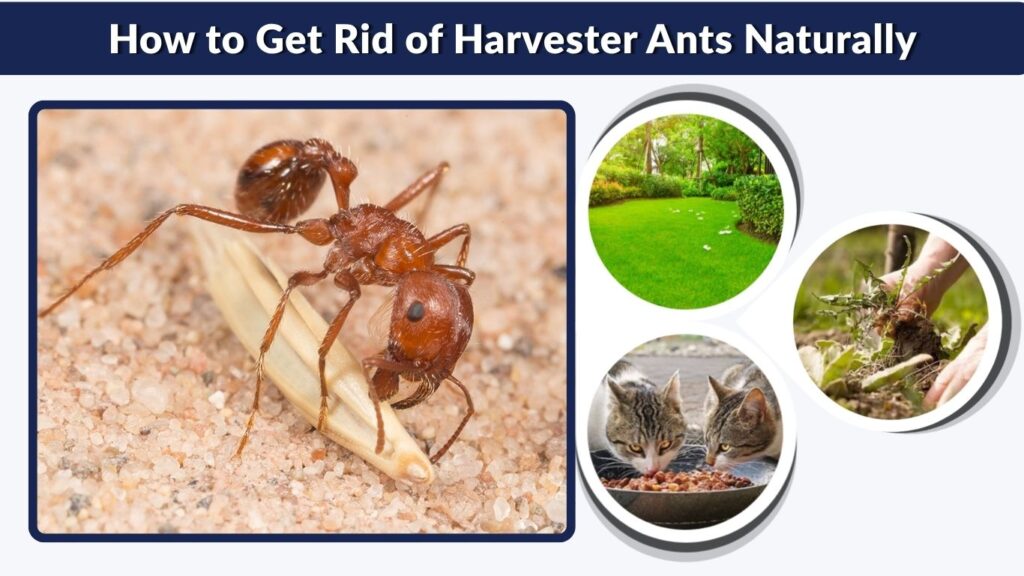
Natural control focuses on reducing nest suitability and limiting disturbance risks. It may not work as quickly as bait or professional treatment, but it can help in low-risk areas.
Regular mowing and soil disturbance can make some areas less suitable for harvester ant nesting. Removing seed-heavy weeds and managing vegetation may also reduce food availability. However, avoid reckless digging into an active nest because workers may swarm and sting.
Some people try boiling water, vinegar, or homemade mixtures, but these methods are not always reliable and may harm grass, soil life, or nearby plants. They can also increase sting risk if you stand close to the nest.
Natural Management Options
Safer natural steps include:
- Keep grass maintained in managed lawn areas
- Reduce weeds that produce many seeds
- Remove outdoor food scraps and spilled seed
- Avoid leaving pet food outdoors
- Improve soil coverage in bare problem spots
- Keep children and pets away from active nests
- Mark nest locations before yard work
Natural methods are best for prevention and low-level management. For active nests in risky areas, targeted control may be needed.
Harvester Ant Control Methods
Harvester ant control should be targeted rather than random. The goal is to reduce risk while avoiding unnecessary harm to beneficial insects and wildlife. In many cases, the best method is treating the nest area directly or using a bait labeled for ants and suitable for lawns or outdoor sites.
Granular ant baits can be useful because worker ants carry the bait back to the colony. This may affect the queen and brood over time. Baits are usually slower than direct sprays, but they can be more effective for colony-level control when used correctly.
Always read and follow the pesticide label. The label explains where the product can be used, how much to apply, whether it is safe for lawns, and how to protect people, pets, and the environment.
How to Get Rid of Red Harvester Ants
Red harvester ant control should begin with nest identification. Do not treat every ant you see. Find the active nest and determine whether it truly needs control.
If the nest is in a remote part of the property, you may choose to leave it alone. If it is near people, pets, or outdoor work areas, control may be justified. Use a product labeled for outdoor ant control, preferably one that specifically mentions harvester ants or lawn ant control.
Apply treatments around the nest according to label directions, not directly with guesswork. Some products should be placed around the entrance, while others are used as mound treatments. Keep children and pets away from the area until the label says it is safe.
Mistakes to Avoid
Harvester ant nests can be frustrating, but poor control methods may make the situation worse or put you at risk. Avoid disturbing the nest without a plan.
Common Control Mistakes
Do not:
- Dig into an active nest with bare hands
- Pour random chemicals into the ground
- Use indoor ant sprays outdoors without checking the label
- Stand directly on the mound while treating
- Let children or pets near a treated nest
- Assume all red ants are fire ants
- Treat nests that are not causing any problem
The safest approach is correct identification, targeted control, and careful label-following.
Preventing Harvester Ant Nests in the Yard
Prevention is about making high-use yard areas less attractive. Harvester ants like open, sunny soil and seed-rich surroundings. You may not be able to stop every colony, but you can reduce the chance of nests developing in sensitive areas.
Maintain healthy turf where possible, cover bare soil, reduce seed-producing weeds, and clean up spilled birdseed. If you keep bird feeders, place them away from patios and play areas and clean spilled seed often.
For large properties, regular mowing or discing may discourage nests in managed zones. In natural areas, however, harvester ants may be worth protecting unless they create a direct hazard.
FAQs
What does a harvester ant nest look like?
A harvester ant nest often looks like a flat, bare circular patch of soil with one or more entrance holes. You may see large red, brown, or black ants moving around the opening. Seed husks, small pebbles, and clear foraging trails may also appear around the nest area.
How deep is a harvester ant nest?
A harvester ant nest can extend several feet underground, depending on species, soil, age, and climate. The deeper chambers help protect the queen, brood, workers, and stored seeds from heat, cold, and dry surface conditions. This depth makes surface-only disturbance unreliable for complete control.
How do you get rid of harvester ants?
Start by confirming that the nest is active and located where control is truly needed. For risky areas, use a labeled outdoor ant bait or mound treatment according to directions. Avoid digging into the nest or using random chemicals. Keep people and pets away during treatment.
Can you get rid of harvester ants naturally?
Natural control may help by reducing bare soil, mowing regularly, limiting seed-heavy weeds, and removing spilled birdseed or outdoor food. These steps make the area less attractive. However, natural methods may not eliminate an active nest quickly, especially if the colony is large and well established.
Should harvester ant nests always be removed?
No, harvester ant nests do not always need removal. These ants play ecological roles by collecting seeds, moving soil, and supporting wildlife. Control is mainly needed when nests are close to walkways, playgrounds, pet areas, patios, or other places where people or animals may be stung.