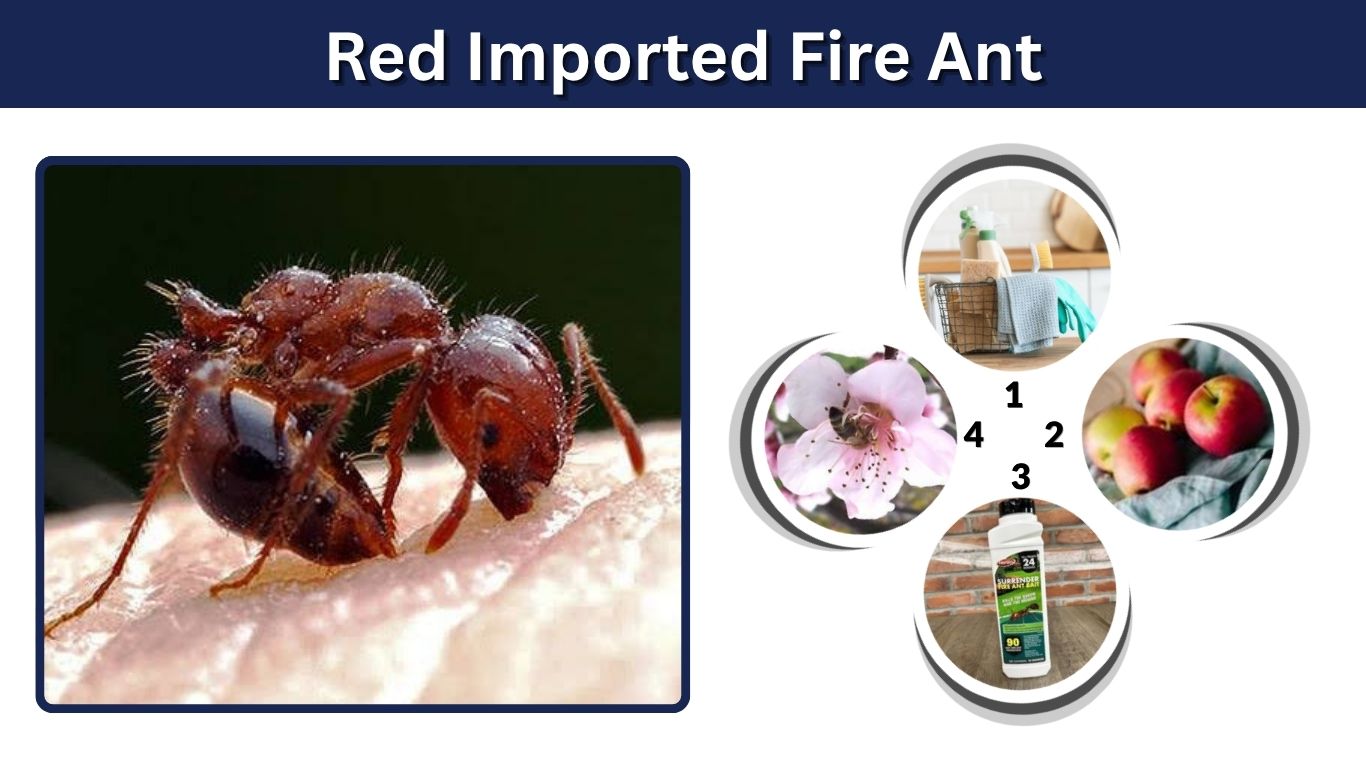
The red imported fire ant is a small but highly aggressive invasive ant known for building soil mounds and delivering painful stings. Its scientific name is Solenopsis invicta. Native to South America, it has spread to the United States, Australia, parts of Asia, and other warm regions. Colonies can contain more than 200,000 ants, allowing the species to affect people, pets, agriculture, electrical equipment, and native wildlife.
Red Imported Fire Ant Quick Facts
| Feature | Description |
| Scientific name | Solenopsis invicta |
| Family | Formicidae |
| Order | Hymenoptera |
| Worker size | Approximately 2–6 mm |
| Color | Coppery reddish-brown with a darker abdomen |
| Native range | South America |
| Nest | Underground colony with a soil mound |
| Diet | Insects, seeds, fruit, nectar, honeydew, and carrion |
| Defense | Bites to grip and then stings repeatedly |
| Colony size | Tens of thousands to over 200,000 ants |
The abbreviation RIFA is commonly used for red imported fire ant. It is called “imported” in the United States and Australia because it arrived from another continent rather than occurring there naturally.
What Does a Red Imported Fire Ant Look Like?
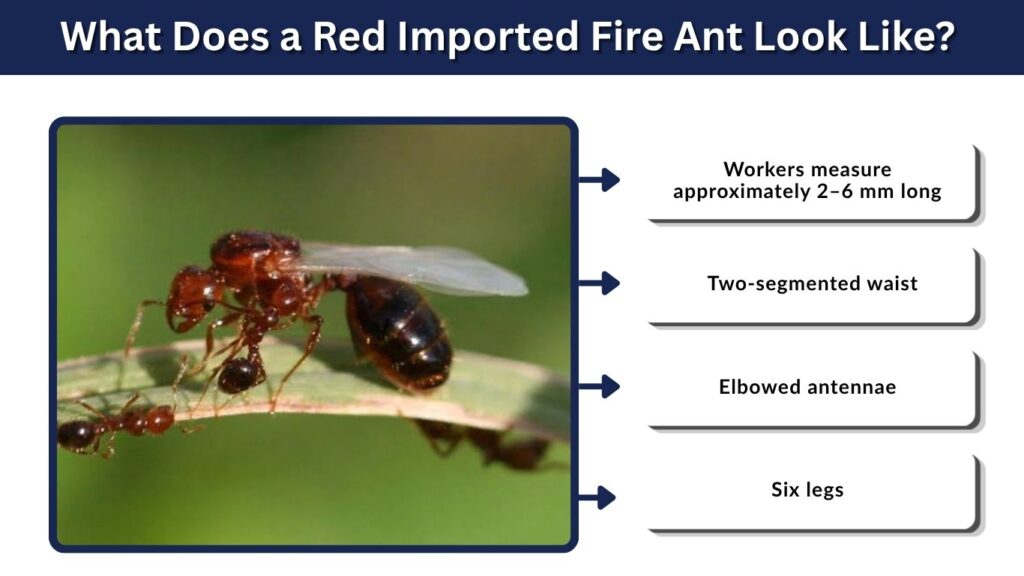
Red imported fire ants are reddish-brown ants with darker, shiny abdomens. Workers from the same colony vary noticeably in size, which is one of their most useful identification features.
Key Identification Characteristics
- Workers measure approximately 2–6 mm long
- Copper-brown head and thorax
- Darker reddish-brown or blackish abdomen
- Two-segmented waist
- Elbowed antennae
- Six legs
- Workers of several sizes within one colony
- Aggressive swarming when the mound is disturbed
Many small household ants have workers that are almost identical in size. A group containing both tiny and considerably larger workers is therefore more likely to be an imported fire ant colony. Identification should not rely on color alone because several native and introduced ants are reddish-brown.
What Does a Red Imported Fire Ant Mound Look Like?
A mature nest often appears as a dome-shaped mound of loose soil in a lawn, pasture, roadside, garden, park, or other sunny area. New nests may resemble flat patches or small piles of freshly disturbed soil.
Unlike many ordinary anthills, a fire ant mound usually lacks an obvious entrance hole in its center. Workers travel through underground tunnels and reach the surface some distance from the visible mound. Nest appearance changes with soil type, colony age, rainfall, and temperature. Australian authorities report that visible mounds are commonly around 30 cm wide and 10 cm high, although their dimensions vary considerably.
Never kick, stand on, or disturb a suspected mound. Hundreds of workers can rush to the surface within seconds and climb onto shoes or skin before beginning to sting.
Red Imported Fire Ant Queen and Colony
A colony contains a queen, developing brood, sterile female workers, and seasonally produced reproductive males and females. Some colonies have one queen, while others contain multiple queens.
The Queen
A young queen initially has wings. After mating in the air, she lands, removes her wings, and searches for a suitable place to begin a nest. She raises the first small group of workers using stored nutrients. Once these workers mature, they obtain food, enlarge the nest, and care for later offspring while the queen concentrates on laying eggs.
Queens and reproductive females are much larger than workers. Removing only the ants visible above ground will not eliminate a colony if the queen remains alive deep within the nest.
Do Red Imported Fire Ants Have Wings?
Ordinary workers do not have wings. Mature colonies produce winged males and females called alates or swarmers. They leave the nest for mating flights, often after warm, humid, or rainy weather.
After mating, males die and fertilized females shed their wings before attempting to establish new colonies. Fire ants can also spread through floods and the movement of infested soil, mulch, turf, hay, potted plants, and machinery.
Where Did Red Imported Fire Ants Come From?
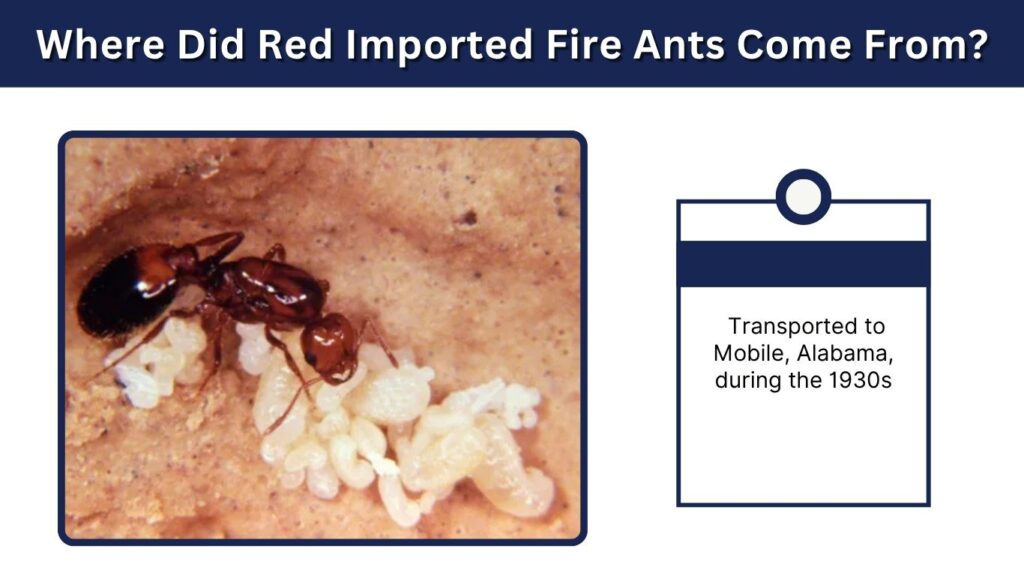
The species is native to South America. Genetic evidence points to northern Argentina and the surrounding floodplain region as a probable source of the population introduced into the United States.
Red imported fire ants were accidentally transported to Mobile, Alabama, during the 1930s, probably in ship cargo, soil, or ballast material. They subsequently spread across much of the southern United States and into other suitable areas. The USDA maintains a federal quarantine map because affected boundaries can change as new infestations are detected.
Red Imported Fire Ants in Australia
Australia is attempting to eradicate red imported fire ants through a nationally funded program focused largely on Queensland. Treatment, surveillance, movement controls, and public reporting remain active, and official detection maps are updated frequently. The program’s stated national eradication target is 2032.
What Do Red Imported Fire Ants Eat?
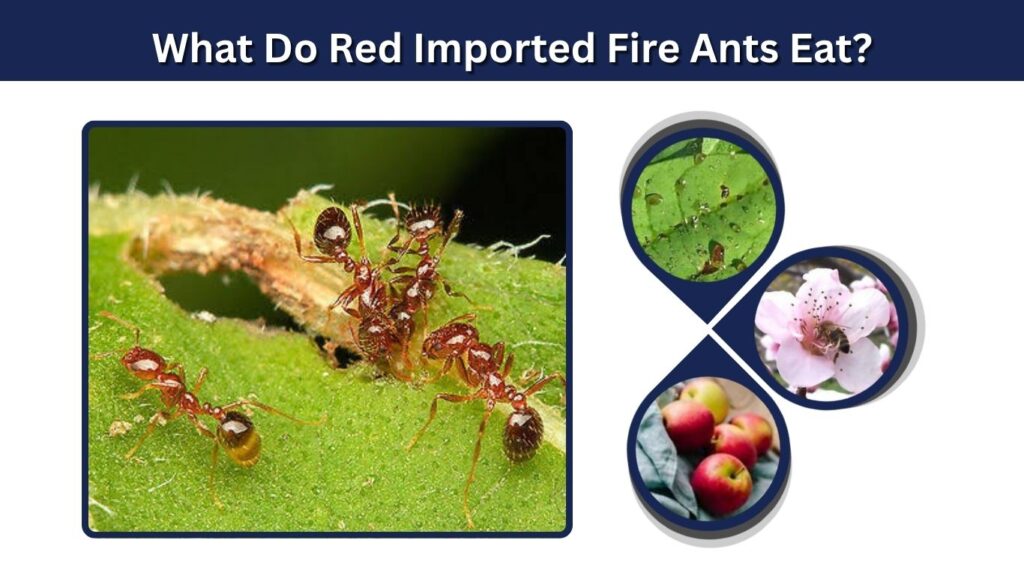
Red imported fire ants are omnivores and opportunistic scavengers. Their diet includes:
- Insects and other arthropods
- Seeds and germinating plants
- Fruit
- Plant nectar
- Honeydew produced by sap-feeding insects
- Dead animals
- Greasy human or pet food
Workers cannot swallow large solid pieces. They carry solid food to older larvae, which digest it and return it in liquid form. That liquid is then shared throughout the colony.
Their broad diet helps them survive in farms, gardens, parks, lawns, roadsides, and urban areas. They may occasionally enter buildings in search of moisture, pet food, or other oily foods, but their main colonies are normally outdoors.
Red Imported Fire Ant Life Cycle
Red imported fire ants undergo complete metamorphosis:
- Egg: The queen produces tiny eggs inside the protected nest.
- Larva: Legless larvae hatch and are fed and moved by workers.
- Pupa: The developing ant transforms into its adult form.
- Adult: It emerges as a worker, reproductive male, or future queen.
Under favorable warm conditions, development from egg to adult may take approximately 22–38 days. Colony growth continues for several months before a young nest produces a clearly visible mound.
Why Are Red Imported Fire Ants Invasive?
They reproduce quickly, accept a wide range of food, defend nests aggressively, and spread through both natural and human-assisted movement. In invaded areas, their populations can become much denser than populations in their native South American range.
Environmental and Economic Damage
Red imported fire ants may:
- Reduce populations of native ants and ground-dwelling animals
- Attack insects, reptiles, young birds, and other small wildlife
- Sting pets, livestock, and people
- Damage seedlings, fruit, and newly planted seeds
- Interfere with harvesting and agricultural work
- Nest around electrical equipment and cause malfunctions
- Create mounds that interfere with mowing and recreation
Their effects vary between habitats. They may consume certain crop pests, but this limited benefit does not outweigh their wider health, agricultural, and ecological problems.
Red Imported Fire Ant Sting or Bite
Fire ants both bite and sting, but the venomous sting causes the burning pain. A worker grips the skin with its jaws and pivots its abdomen to sting repeatedly. Because its stinger is not barbed, the same ant can sting more than once.
What Does the Sting Look Like?
Initial symptoms commonly include:
- Sudden burning or stinging pain
- Redness and swelling
- Itching
- Several closely grouped marks
- Small fluid-filled bumps
- White pustules that may form later
Avoid scratching or breaking the pustules because damaged skin can become infected.
Basic Sting Treatment
Wash the skin with soap and water and apply a wrapped ice pack to reduce pain and swelling. An appropriate over-the-counter pain reliever or antihistamine may help, provided it is safe for the affected person.
Seek emergency assistance immediately if the person develops breathing difficulty, dizziness, collapse, widespread hives, vomiting, or swelling of the tongue, lips, face, or throat. These may indicate a severe allergic reaction.
How to Get Rid of Red Imported Fire Ants
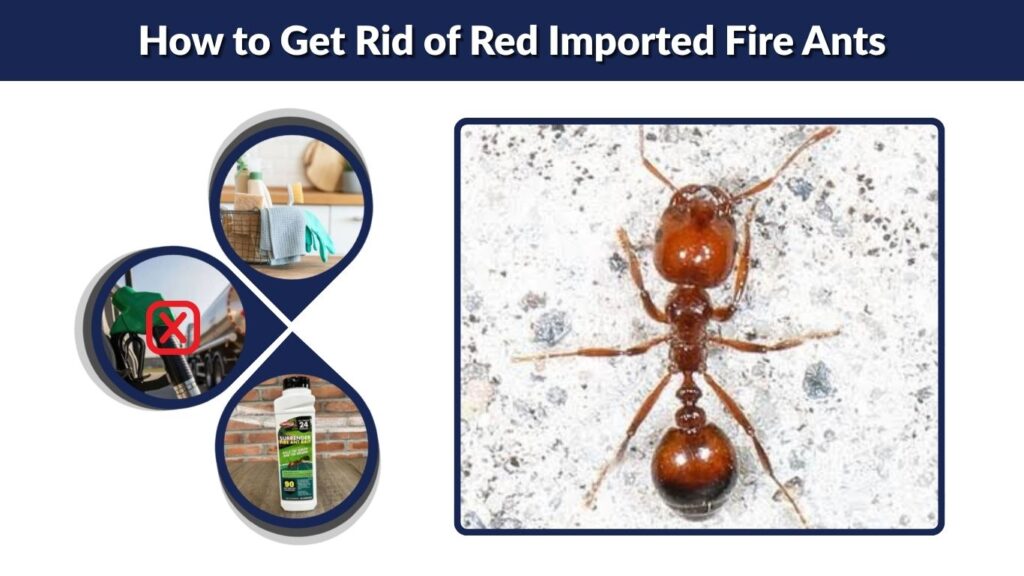
Effective control must reach the queen and the rest of the underground colony. Killing only visible workers provides temporary relief.
Broadcast Fire Ant Bait
A labeled granular fire ant bait can be distributed across an infested lawn when ants are actively foraging. Workers collect the granules and carry them into the nest, allowing a slow-acting ingredient or growth regulator to spread through the colony.
Individual Mound Treatment
Remaining problem mounds can be treated individually using a product specifically labeled for fire ants. Mound treatments generally work faster than bait but do not prevent untreated or newly arriving colonies.
Using broadcast bait followed by targeted treatment of surviving mounds is commonly called the two-step method. Always follow the product label and local pesticide regulations. Do not apply fuel, bleach, household cleaners, or unregistered chemicals to a mound.
In areas covered by an eradication or quarantine program, report suspected fire ants before disturbing or treating the nest. Movement of soil, turf, mulch, plants, or equipment may also be restricted.
Red Imported Fire Ant vs Argentine Ant
| Feature | Red Imported Fire Ant | Argentine Ant |
| Worker size | Noticeably variable | Workers are similar in size |
| Color | Reddish-brown with dark abdomen | Light to dark brown |
| Mound | Often forms visible soil mounds | Usually lacks large dome-shaped mounds |
| Sting | Painful and repeated | Does not normally cause a serious sting |
| Response to disturbance | Aggressively swarms | Trails rapidly but is less defensive |
Both species are invasive in many regions, but the red imported fire ant presents the greater immediate stinging hazard.
FAQs
Can red imported fire ants kill people?
Deaths are rare, but red imported fire ant stings can trigger a severe allergic reaction called anaphylaxis. Anyone experiencing breathing difficulty, facial swelling, dizziness, widespread hives, or fainting after being stung needs emergency medical care immediately.
How long does a red imported fire ant queen live?
A red imported fire ant queen may live for several years under favorable conditions. During that time, she can lay large numbers of eggs and support a colony containing tens or even hundreds of thousands of workers.
Why do fire ants come out after rain?
Rain softens the soil, raises underground moisture, and often encourages colonies to repair or rebuild their mounds. Warm, humid conditions following rainfall can also trigger mating flights by winged males and females.
Can red imported fire ants live inside a house?
They usually build colonies outdoors, but workers may enter homes searching for food, water, or warmth. They may also nest near foundations, wall voids, electrical equipment, or other protected areas when conditions are suitable.
What animals eat red imported fire ants?
Predators include birds, spiders, lizards, frogs, armadillos, and other insects. Certain phorid flies also parasitize fire ants. However, natural predators rarely provide enough control to eliminate a large established colony.