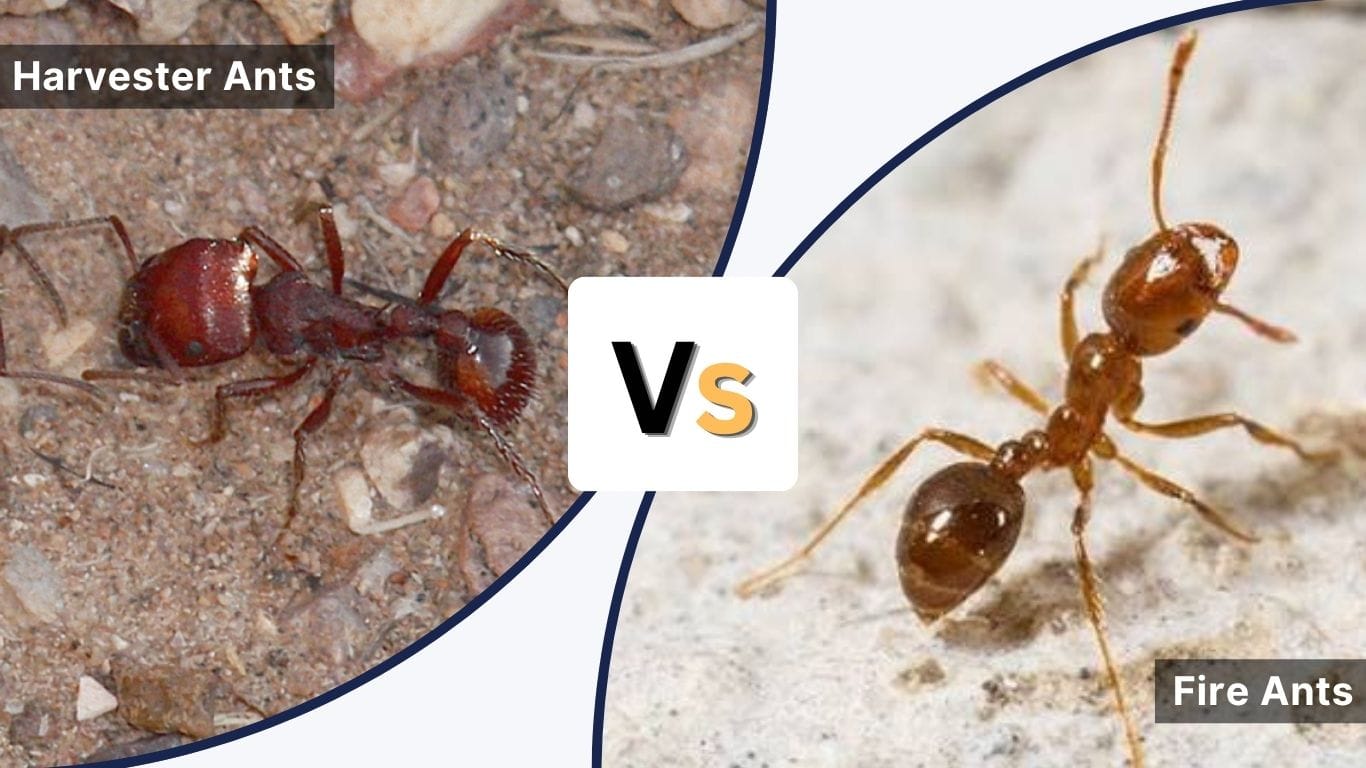
Harvester ants and fire ants are often confused because both can be reddish, live in soil, build mounds, and deliver painful stings. However, they are not the same ant. Harvester ants are usually larger, seed-collecting ants with open, bare nesting areas. Fire ants are usually smaller, more aggressive, and known for swarming quickly when their mound is disturbed. This guide compares harvester ants vs fire ants by identification, mound style, behavior, sting, habitat, and control.
Are Harvester Ants Fire Ants?
No, harvester ants are not fire ants. They belong to different ant groups. Harvester ants are usually in the genus Pogonomyrmex, while imported fire ants are in the genus Solenopsis.
Both can sting, and both may be called “red ants” in casual language. That is why many people confuse them. Utah State University Extension notes that imported fire ants can be confused with native harvester ants, which also bite and sting with painful venom.
Harvester Ants vs Fire Ants: Quick Comparison
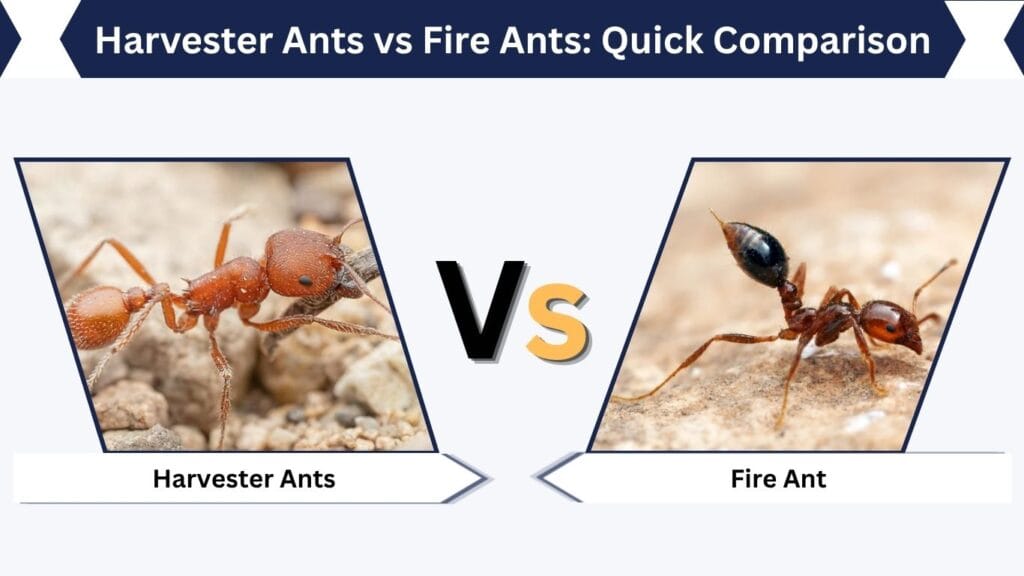
The fastest way to separate them is to look at size, mound, behavior, and how the colony reacts when disturbed.
| Feature | Harvester Ants | Fire Ants |
| Common color | Red, reddish-brown, dark red, or brown | Reddish-brown with darker abdomen |
| Size | Usually larger | Usually smaller |
| Worker size | Often similar-sized workers | Workers vary in size |
| Diet | Mostly seeds | Omnivorous: insects, oils, sweets, seeds, dead animals |
| Mound | Often bare, open area with visible entrance | Soft soil mound, often no obvious entrance |
| Behavior | Defensive near nest | Very aggressive when disturbed |
| Sting | Very painful | Painful, often leaves pustules |
| Habitat | Dry, open, sandy, or bare soil areas | Lawns, pastures, disturbed soil, moist sunny areas |
| Main concern | Painful sting, bare spots, seed harvesting | Swarming stings, people/pets, lawns, equipment |
What Are Harvester Ants?
Harvester ants are seed-gathering ants. They collect seeds from grasses and other plants and store them in underground chambers. Many species live in dry, open habitats, deserts, grasslands, and sandy soils.
Harvester Ant Identification
Harvester ants are usually larger and more robust than fire ants. Many red harvester ants are reddish or orange-red, though color varies by species. They often move in visible trails while collecting seeds.
Look for these signs:
- Large red, reddish-brown, or brown ants
- Workers often similar in size
- Bare circular area around the nest
- Visible nest entrance in many species
- Seed husks or plant debris near the mound
- Slower colony response than fire ants, but still defensive
- Common in dry, open areas
University of Nevada Extension says harvester ants are often confused with fire ants, but fire ants are much smaller and usually have a darker abdomen compared with the head.
What Are Fire Ants?
Fire ants are aggressive stinging ants. The most famous species in the United States is the red imported fire ant, Solenopsis invicta. Fire ants are well known for building mounds in lawns, fields, roadsides, parks, pastures, and disturbed areas.
Fire Ant Identification
Fire ants are usually smaller than harvester ants. Red imported fire ant workers are reddish-brown with a darker abdomen. One important clue is that fire ant workers in the same colony vary in size.
Look for these signs:
- Small to medium reddish-brown ants
- Darker abdomen
- Workers of different sizes
- Soft soil mounds
- No clear central entrance on many mounds
- Rapid swarming when disturbed
- Painful stings that may form white pustules
Texas A&M says red imported fire ants build mounds of soft soil, emerge aggressively when disturbed, and their sting commonly leaves a white pustule on the skin.
Red Harvester Ant vs Fire Ant
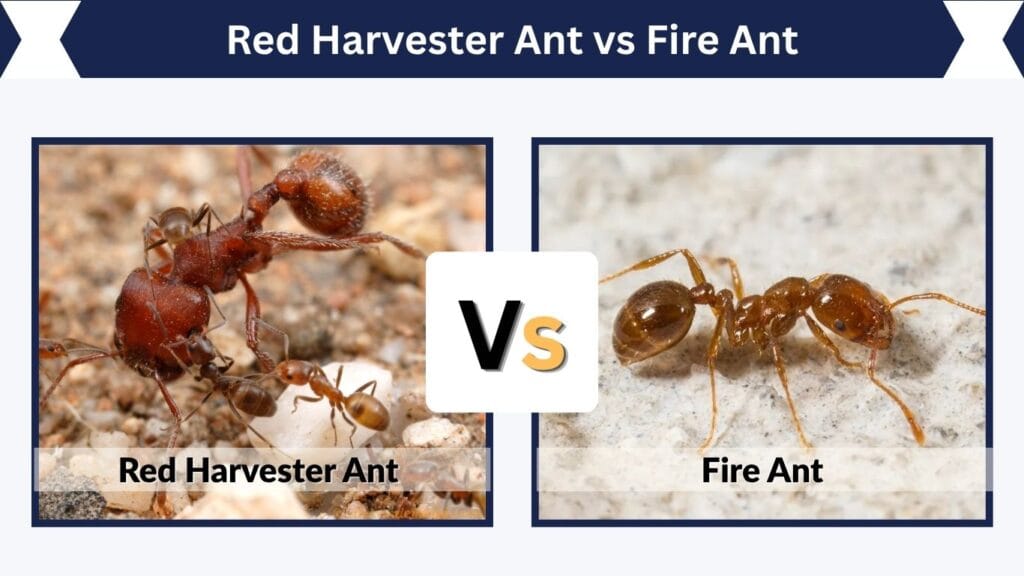
The red harvester ant and red imported fire ant are commonly confused because both can look reddish and both can sting. But they are easy to separate once you compare size and mound style.
| Feature | Red Harvester Ant | Red Imported Fire Ant |
| Scientific group | Pogonomyrmex species | Solenopsis invicta |
| Size | Larger | Smaller |
| Worker sizes | Mostly similar | Mixed sizes |
| Color | Often red to reddish-orange | Reddish-brown with darker abdomen |
| Nest area | Often bare, cleared soil | Soft mound, often in turf or disturbed soil |
| Diet | Seeds | Omnivorous |
| Sting | Very painful | Painful and often repeated |
| Swarming | Defensive near nest | Fast, aggressive swarming |
University of California IPM says red imported fire ant workers vary in size from about 1/16 to 1/5 inch, while California harvester ant workers are all the same size and about 1/5 inch long.
Harvester Ant vs Fire Ant Mound
Mound style is one of the best clues. Harvester ants often clear vegetation around their nest, creating a bare patch. Fire ant mounds often look like soft, fluffy soil pushed upward from underground tunnels.
Harvester Ant Mound
A harvester ant mound may have:
- Bare ground around the entrance
- Small pebbles, sand, or soil particles
- Seed husks near the nest
- A visible central hole
- Open sunny location
- Dry or sandy soil
University of Arizona describes harvester ant mounds as smoother, rounded toward the top, gently sloping inward at the hole, and often built in dry bare areas. It also notes that seed husks may be deposited outside the mound.
Fire Ant Mound
A fire ant mound may have:
- Loose, soft, fluffy soil
- Dome-shaped or flat mound
- No obvious entrance hole
- Moist sunny lawn or disturbed area
- Many ants emerging quickly when disturbed
- Mounds appearing after rain
Fire ant nest appearance can vary with weather, age, soil type, and colony size. Fire ant nests may look like dome-shaped mounds or flat patches of loose soil, and entry holes are not always obvious.
Harvester Ant Sting vs Fire Ant Sting
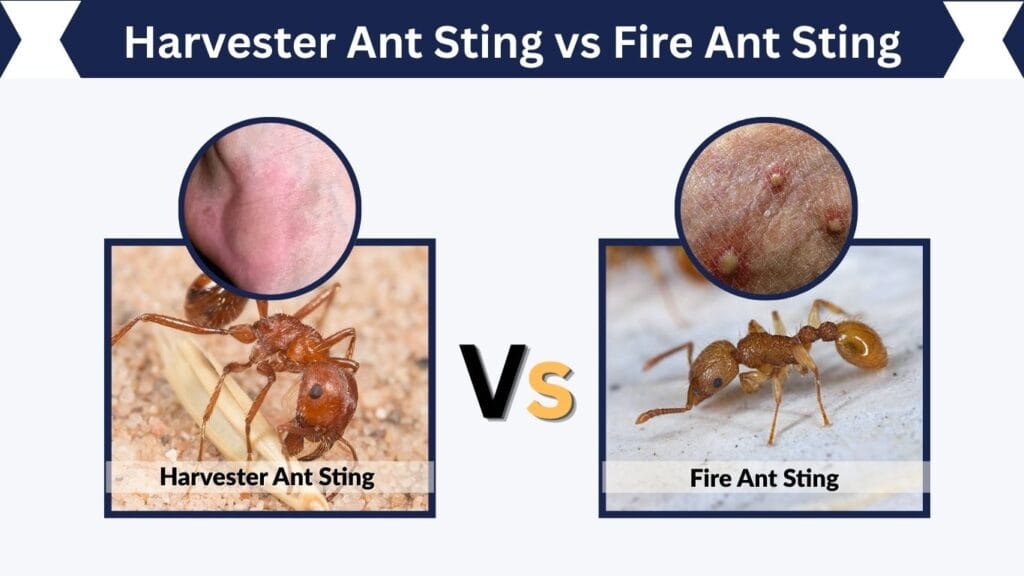
Both harvester ants and fire ants can sting, but the experience can differ. Harvester ant stings are often described as very painful. Fire ant stings are also painful and commonly happen in groups because many workers swarm and sting at once.
Harvester Ant Sting
A harvester ant sting may cause:
- Sharp burning pain
- Redness
- Swelling
- Itching
- Local tenderness
- Rare allergic reaction
Harvester ants can also bite to hold onto the skin before stinging. Their venom is strong, so avoid disturbing nests.
Fire Ant Sting
A fire ant sting may cause:
- Sudden burning pain
- Red bumps
- Itching
- Swelling
- White pustules after several hours
- Multiple stings in clusters
- Allergic reaction in sensitive people
Fire ants often climb quickly onto feet, ankles, hands, or legs before stinging. That is why people may receive many stings at once.
Which Sting Is Worse?
It depends on the situation. A single harvester ant sting can be extremely painful. Fire ant stings are dangerous because many ants may attack together, causing multiple stings. Fire ant stings also commonly form pustules.
People with insect-sting allergies should treat both ants seriously. Seek medical help if there is trouble breathing, throat swelling, dizziness, widespread hives, or severe reaction.
Harvester Ant Bite vs Fire Ant Bite
People often say “ant bite,” but both harvester ants and fire ants mainly hurt people through stinging. Fire ants bite first to grip the skin, then sting repeatedly. Harvester ants may also bite and sting.
So, “bite vs sting” is not the most useful difference. The better question is whether the ant is larger and seed-focused like a harvester ant or smaller and swarm-aggressive like a fire ant.
Ant Mound Styles: Harvester vs Fire Ant vs Thatch Ant
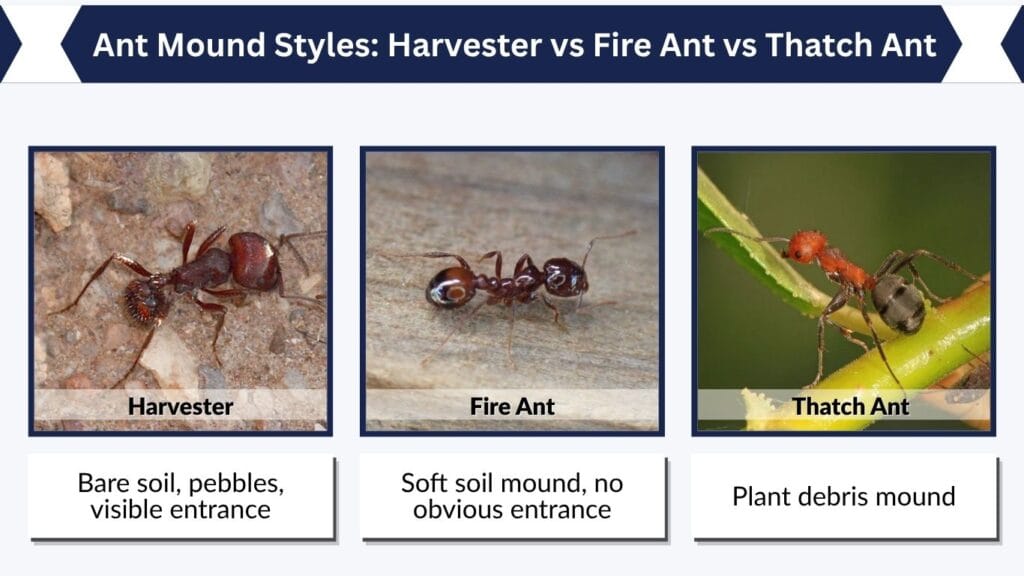
Some people also confuse thatch ants with harvester ants and fire ants. Thatch ants often build mounds from plant material, pine needles, twigs, or thatch-like debris.
| Ant Type | Mound Style | Main Clue |
| Harvester ant | Bare soil, pebbles, visible entrance | Cleared area and seed husks |
| Fire ant | Soft soil mound, no obvious entrance | Fast swarming when disturbed |
| Thatch ant | Plant debris mound | Looks like a pile of thatch or needles |
Do not touch a mound to identify it. Observe from a safe distance.
Are Fire Ants and Harvester Ants Related?
They are related in the broad sense that both are ants in the family Formicidae, but they are not the same type of ant. Harvester ants and fire ants have different genera, nesting habits, diets, and colony behavior.
Fire ants are often more associated with moist, disturbed areas and lawns. Harvester ants are more strongly associated with dry, open ground and seed harvesting.
Florida Harvester Ant vs Fire Ant
In Florida and other southeastern states, fire ants are much more commonly discussed because red imported fire ants are widespread and aggressive. Harvester ants may exist in some areas, but many red ants in lawns are fire ants or native fire ants rather than harvester ants.
If you are in Florida and see a soft soil mound in a lawn with ants that swarm quickly, treat it as possible fire ants. For exact identification, contact a local extension office or pest professional.
Western Harvester Ant vs Red Imported Fire Ant
In western states, harvester ants are common in dry, open habitats. Red imported fire ants are more limited but may occur in some disturbed or irrigated areas depending on the state.
Western harvester ants are usually larger and make more obvious cleared nest areas. Red imported fire ants are smaller, more aggressive, and often create soft mounds without a central opening.
Maricopa Harvester Ant vs Fire Ant
The Maricopa harvester ant is known for a powerful sting and occurs in the southwestern United States. It is not a fire ant, even though its sting can be very painful. Compared with fire ants, Maricopa harvester ants are generally larger and more connected to dry, open desert or grassland habitats.
Will Fire Ant Killer Kill Harvester Ants?
Some fire ant products may kill harvester ants, but that does not mean they should be used carelessly. Harvester ants are native in many areas and can be important seed dispersers and soil engineers. Killing them may not be necessary unless they are nesting in a high-risk area such as a playground, walkway, dog run, or patio.
If treatment is needed:
- Identify the ant first.
- Follow the label exactly.
- Use bait or mound treatment only where needed.
- Keep pets and children away during treatment.
- Avoid broad pesticide use in natural areas.
How to Tell the Difference Fast
Use this quick field checklist:
- Large red ants with a cleared bare area: likely harvester ants.
- Small reddish ants swarming from a soft mound: likely fire ants.
- Visible central entrance and seed husks: likely harvester ants.
- No obvious entrance and many ants attacking fast: likely fire ants.
- Painful sting from one large ant: possibly harvester ant.
- Many stings with white pustules: likely fire ants.
FAQs
Are harvester ants the same as fire ants?
No, harvester ants and fire ants are not the same. Harvester ants are usually larger seed-collecting ants, while fire ants are smaller, more aggressive ants that swarm quickly when disturbed.
Are red harvester ants fire ants?
No, red harvester ants are not fire ants. They may look reddish and can sting, but they belong to a different ant group and usually have different mound styles, diets, and behavior.
What is the difference between harvester ants and fire ants?
Harvester ants are usually larger, collect seeds, and often build nests with bare cleared areas. Fire ants are smaller, more aggressive, omnivorous, and build soft soil mounds that may not have visible entrance holes.
Which is worse, harvester ant sting or fire ant sting?
A single harvester ant sting can be very painful, but fire ants often sting in groups, causing many painful spots and sometimes white pustules. Both can be serious for people with allergies.
Will fire ant killer kill harvester ants?
Some fire ant killers may also kill harvester ants, but you should identify the ant first and use pesticides only when needed. Harvester ants are native and beneficial in many places, so unnecessary treatment is not recommended.