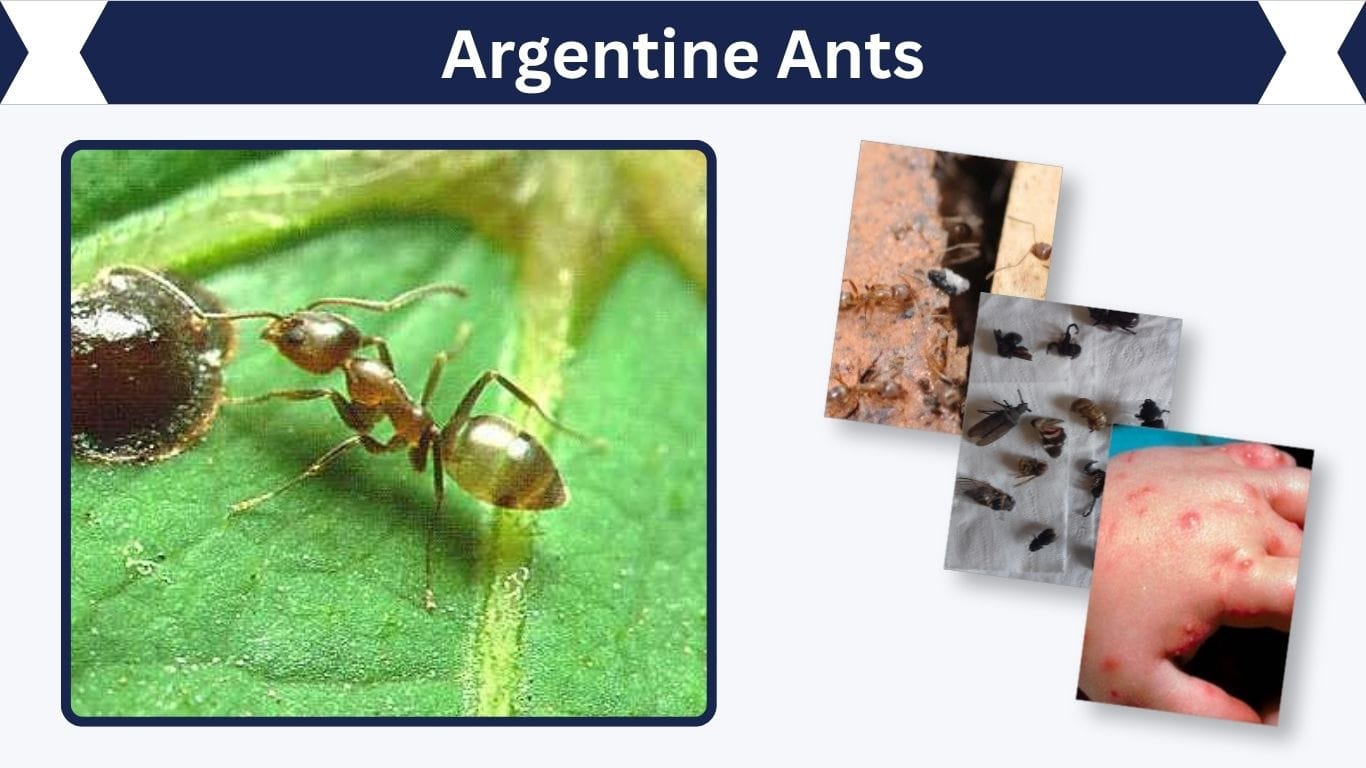
Argentine ants are small brown ants known for forming huge colonies, invading homes, and spreading quickly through warm urban areas. Their scientific name is Linepithema humile. They are native to northern Argentina but have become invasive in many parts of the world, including California, Florida, Texas, Europe, Australia, and other mild-climate regions. Argentine ants do not usually cause structural damage like carpenter ants, but they can become serious nuisance pests because of their large colonies, many queens, and persistent indoor trails.
What Are Argentine Ants?
Argentine ants are invasive ants that live in large, flexible colonies. Unlike many ant species that fight neighboring colonies, Argentine ants often cooperate with nearby nests. This allows them to form massive connected colonies with many queens and many nest sites.
The University of California Riverside Center for Invasive Species Research describes the Argentine ant as a globally distributed invasive pest in urban, natural, and agricultural habitats. It also notes that unusually low aggression between workers helps them establish extremely large colonies.
Argentine Ant Identification
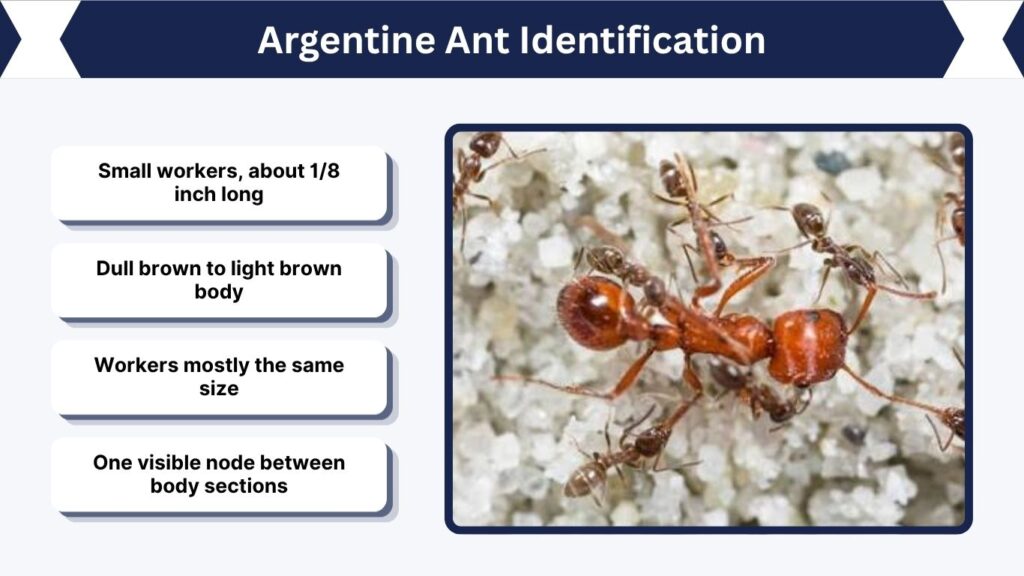
Argentine ants are easy to miss because they are small and plain-looking. They are usually dull brown and move in narrow trails along walls, foundations, pipes, sidewalks, trees, and kitchen surfaces.
What Do Argentine Ants Look Like?
Look for these features:
- Small workers, about 1/8 inch long
- Dull brown to light brown body
- Workers mostly the same size
- One visible node between body sections
- Uneven-looking thorax from the side
- Long trails with many workers
- Musty odor when crushed
UC IPM lists Argentine ant workers as small, uniformly dull brown, about 1/8 inch long, all the same size, with one erect node and a musty odor when crushed.
Argentine Ant Size
Argentine ants are smaller than many common house ants. Their small size helps them enter homes through tiny cracks, gaps, window frames, door seals, pipe openings, and foundation spaces.
| Ant Type | Typical Size | Main Difference |
| Argentine ant | About 1/8 inch | Small, brown, same-size workers |
| Carpenter ant | Often 1/4–1/2 inch | Much larger, may nest in wood |
| Fire ant | About 1/16–1/4 inch | Reddish, aggressive, stings |
| Odorous house ant | About 1/8 inch | Smells rotten/coconut-like when crushed |
| Pharaoh ant | Very tiny | Yellowish, indoor nesting pest |
Because Argentine ants are small and brown, they are often confused with sugar ants or odorous house ants.
Argentine Ant Scientific Name
The scientific name of the Argentine ant is Linepithema humile. It was formerly known as Iridomyrmex humilis in older references. It belongs to the ant family Formicidae.
Argentine Ant Queen
Argentine ant colonies are difficult to control because they often have many queens. This is called a polygynous colony structure. A colony with many queens can recover quickly after part of the nest is disturbed or killed.
Argentine Ant Queen Size
Argentine ant queens are larger than workers, but they are still small compared with queens of some other ant species. Queens stay hidden inside nests and are not usually seen indoors unless a nest is disturbed.
Do Argentine Ant Queens Have Wings?
Young reproductive ants may have wings during mating periods. After mating, queens may lose their wings. If you see Argentine ants with wings, they may be reproductive males or females.
Winged ants indoors do not always mean termites. Ants have narrow waists and elbowed antennae, while termites have thicker waists and straight antennae.
Argentine Ant Colony
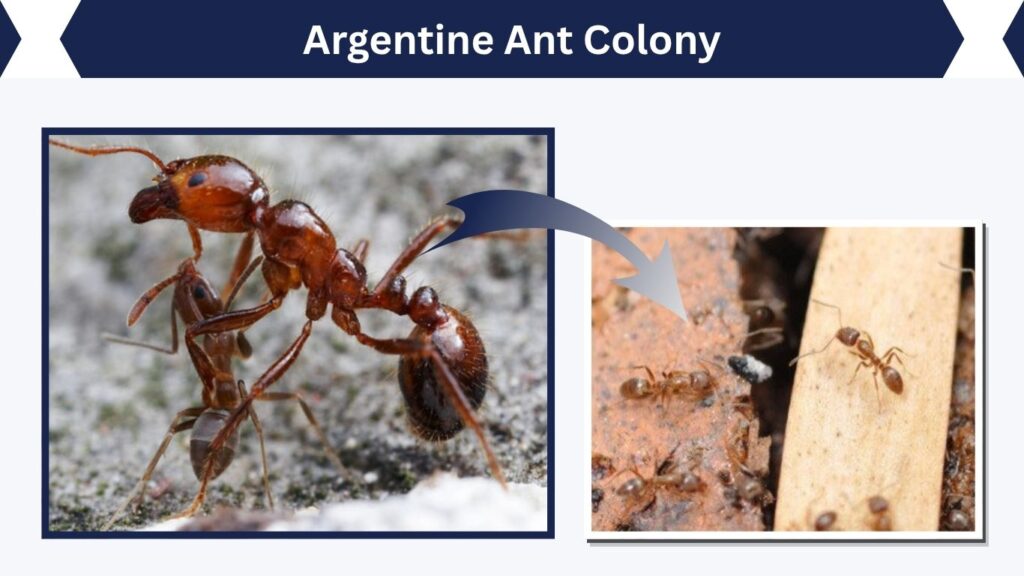
Argentine ant colonies are not simple single-mound colonies. They often have many nest sites connected by trails. Colonies may move when conditions change, especially after rain, drought, heat, cold, or disturbance.
Argentine Ant Colony Characteristics
- Many queens
- Many workers
- Multiple nest sites
- Strong trail behavior
- Fast relocation
- Large seasonal population growth
- Low aggression with nearby related colonies
- Frequent indoor invasions during weather changes
This multi-nest system is one reason sprays often fail. Killing visible workers does not kill the hidden queens and brood.
Argentine Ant Supercolony
An Argentine ant supercolony is a huge network of related colonies that cooperate instead of fighting. These supercolonies can cover large areas and contain millions or even billions of ants.
Research published through NIH describes Argentine ants as highly invasive, established on six continents and many oceanic islands, with the ability to reach high population densities and outcompete native ants.
Argentine Ant Supercolony Map
People often search for Argentine ant supercolony maps because the species is famous for large connected populations. In California, Argentine ants are especially well established in coastal and urban areas. In other parts of the world, introduced populations also form large cooperative networks.
A supercolony map can change by region, survey method, and year, so local university extension or invasive species sources are the best references for updated distribution.
Argentine Ants in California
Argentine ants are one of the most common invasive ants in California. They are especially common in irrigated urban areas, coastal neighborhoods, gardens, orchards, and landscaped yards.
In California, Argentine ants often invade homes during hot, dry weather when they search for water, and during rainy periods when nests flood. UC IPM notes that borate-based baits are among the most effective consumer baits for Argentine ants, especially when used correctly.
Argentine Ants in Florida and Texas
Argentine ants also occur in parts of Florida and Texas, especially in warm, humid, landscaped, or urban habitats. They may compete with other invasive ants, including fire ants and crazy ants, depending on the location.
In these states, correct identification matters because treatment can differ between Argentine ants, fire ants, carpenter ants, pharaoh ants, and crazy ants.
Argentine Ants in House
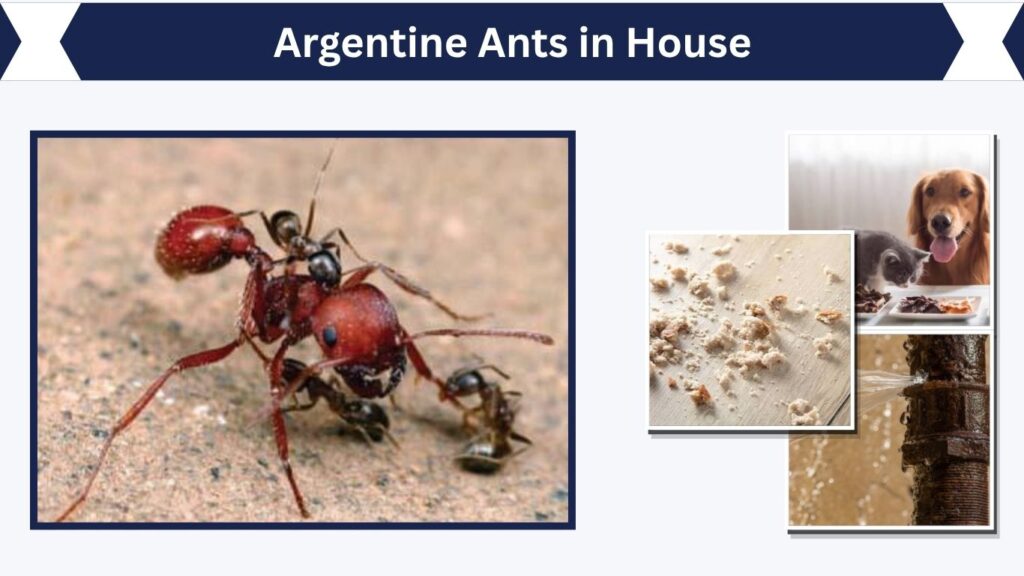
Argentine ants often enter homes in long trails. They are usually searching for sweet foods, grease, pet food, crumbs, or water. They may appear in kitchens, bathrooms, laundry rooms, pantries, sinks, dishwashers, and around pet bowls.
Why Argentine Ants Come Indoors
Common reasons include:
- Outdoor drought
- Heavy rain
- Nest flooding
- Food crumbs
- Pet food
- Leaking pipes
- Dirty trash cans
- Sweet spills
- Aphids or honeydew-producing insects near the house
- Gaps around doors and windows
Argentine ants do not usually nest deep inside wood like carpenter ants, but they may nest in wall voids, potted plants, insulation, or moist areas.
Argentine Ant Nest
Argentine ant nests are usually shallow and hidden. They may nest under mulch, boards, stones, logs, pavers, leaf litter, irrigation lines, potted plants, or foundation edges.
Common Nest Sites
- Mulch beds
- Soil under rocks
- Potted plants
- Irrigated lawns
- Tree bases
- Wall voids
- Under sidewalks
- Around sprinkler systems
- Under landscape fabric
- Near leaking pipes
Argentine ants prefer moist areas, so reducing moisture around the home can help reduce activity.
What Do Argentine Ants Eat?
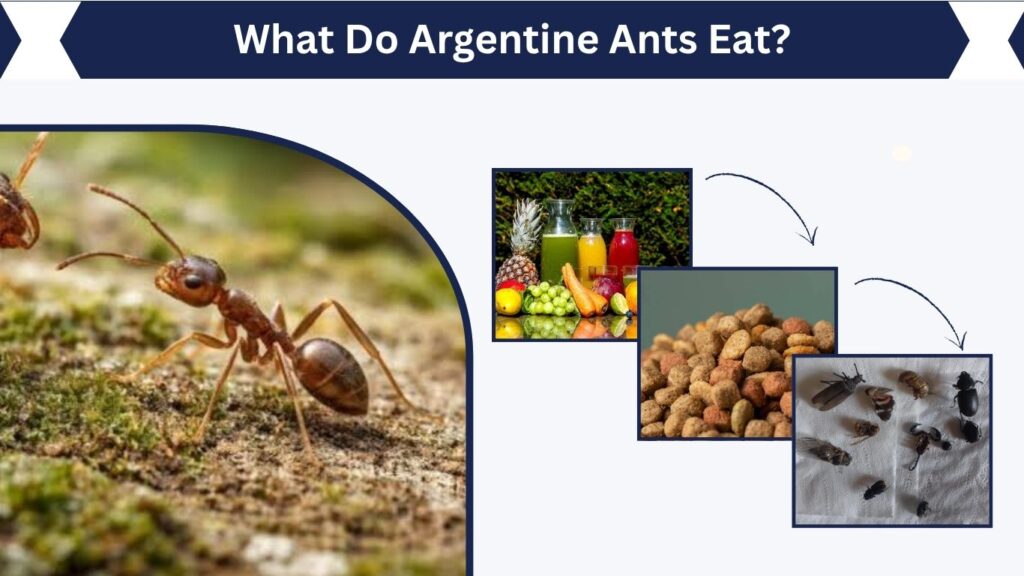
Argentine ants are omnivores. They eat sweets, proteins, grease, dead insects, fruit, nectar, and honeydew from aphids, scale insects, and mealybugs.
Argentine Ant Diet
They may feed on:
- Sugar
- Syrup
- Fruit juice
- Honeydew
- Pet food
- Grease
- Meat scraps
- Dead insects
- Seeds
- Plant nectar
- Household crumbs
Argentine ants protect honeydew-producing insects such as aphids and scale. This can make garden pest problems worse because ants defend these insects from predators.
Do Argentine Ants Bite?
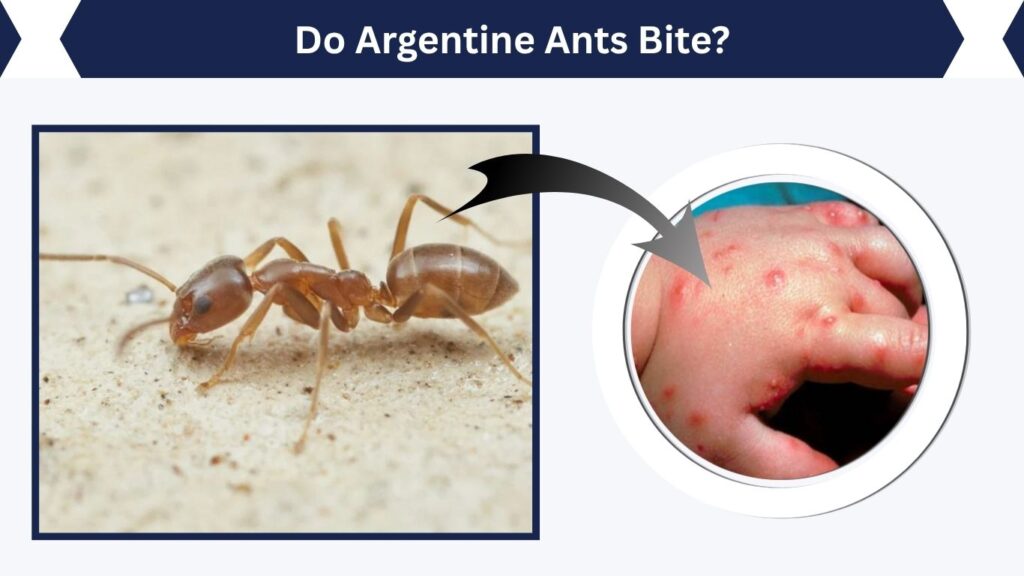
Argentine ants can bite, but they are not known for painful stings like fire ants. They do not have the same medical importance as red imported fire ants. A bite may feel like a tiny pinch and usually causes little reaction.
Argentine Ant Bite Symptoms
Possible symptoms include:
- Mild pinch
- Small red mark
- Slight itching
- Minor irritation
Severe reactions are uncommon, but anyone with strong swelling, hives, breathing trouble, or unusual symptoms should seek medical advice.
Are Argentine Ants Dangerous?
Argentine ants are not highly dangerous to people, but they are serious nuisance and invasive pests. They can contaminate food, invade kitchens, protect aphids, displace native ants, and disturb ecosystems.
They are also difficult to control because of their colony structure. Killing trails with spray often makes the problem worse by scattering colonies or leaving queens alive.
Argentine Ants vs Fire Ants
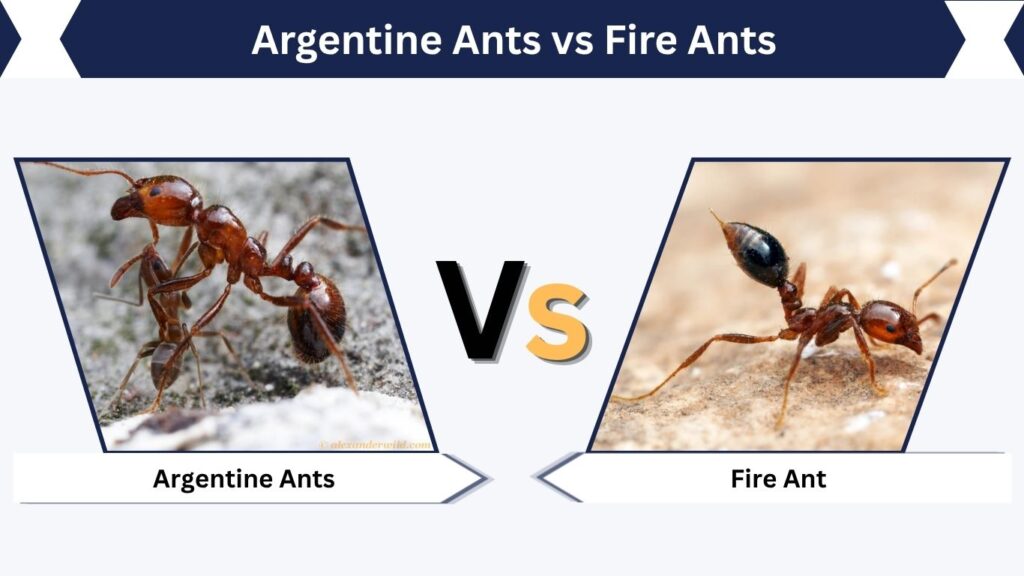
Argentine ants and fire ants are very different. Fire ants are aggressive stinging ants that build mounds and swarm when disturbed. Argentine ants are smaller, brown, trail-forming ants that usually invade homes for food and water.
| Feature | Argentine Ants | Fire Ants |
| Color | Dull brown | Reddish-brown, darker abdomen |
| Size | Small, same-size workers | Workers vary in size |
| Sting | No major sting | Painful sting |
| Nest | Shallow hidden nests | Soil mounds |
| Behavior | Long trails | Aggressive swarming |
| Indoor issue | Food and water trails | Less common indoors |
Argentine Ants vs Carpenter Ants
Carpenter ants are much larger and can nest in damp or damaged wood. Argentine ants are smaller and do not excavate structural wood.
| Feature | Argentine Ants | Carpenter Ants |
| Size | About 1/8 inch | Often much larger |
| Color | Brown | Black, red-black, or brown |
| Wood damage | No major wood tunneling | Can tunnel in wood |
| Trails | Strong outdoor/indoor trails | Often active at night |
| Nest | Soil, mulch, walls, potted plants | Moist wood, voids, insulation |
If you see large ants and sawdust-like material, consider carpenter ants instead.
Argentine Ants vs Sugar Ants
“Sugar ants” is a casual name used for many ants attracted to sweets. Argentine ants are one of the ants people often call sugar ants because they love sugary liquids and honeydew.
The difference is that Argentine ants form huge trails and large multi-queen colonies. If the ants are small, brown, same-sized, and appear in heavy trails, Argentine ants are likely.
Argentine Ant Control
Argentine ant control works best when you use bait and reduce the conditions that support colonies. Spraying visible ants may kill some workers but often does not reach queens.
How to Get Rid of Argentine Ants
Use these steps:
- Clean food crumbs and sweet spills.
- Store food in sealed containers.
- Remove pet food after feeding.
- Fix leaking pipes and irrigation.
- Reduce mulch against foundations.
- Trim plants touching the house.
- Seal cracks around doors, windows, and pipes.
- Use slow-acting ant bait near trails.
- Place bait outdoors when possible.
- Avoid spraying trails before baiting.
UC IPM recommends placing baits near trails and nest openings outdoors, and notes that liquid borate baits at low concentrations can be useful for severe Argentine ant infestations.
Best Ant Bait for Argentine Ants
Argentine ants often prefer sweet liquid baits. Low-concentration borate sugar baits are commonly recommended because workers can carry bait back to the colony before dying.
UC IPM says sweet sugar baits with low boric acid concentrations are highly attractive to Argentine ants throughout the year, while protein baits can be attractive in spring when colonies are producing offspring.
Baiting Tips
- Use slow-acting bait.
- Place bait near active trails.
- Keep bait away from children and pets.
- Do not spray near bait.
- Refresh bait as needed.
- Expect control to take time.
- Use outdoor baiting to reduce indoor trails.
If the infestation is severe, a licensed pest professional may be needed.
Argentine Ant Extermination
Complete extermination is difficult because Argentine ants can have many queens and many nest sites. The goal is usually management, not instant elimination.
Professional control may include:
- Inspection and identification
- Outdoor baiting
- Perimeter treatment
- Moisture correction
- Nest-site reduction
- Follow-up visits
For best results, combine baiting with sanitation and moisture control.
FAQs
What are Argentine ants?
Argentine ants are small brown invasive ants with the scientific name Linepithema humile. They form large colonies, often with many queens, and commonly invade homes for food and water.
Do Argentine ants bite?
Yes, Argentine ants can bite, but their bites are usually mild and not like fire ant stings. They are more of a nuisance pest than a medically dangerous ant.
How do you get rid of Argentine ants?
Use slow-acting ant bait, especially sweet liquid bait, and place it near trails. Also clean food sources, fix leaks, reduce mulch, seal entry points, and avoid spraying trails before baiting.
Are Argentine ants dangerous?
Argentine ants are not highly dangerous to people, but they can contaminate food, invade homes, protect aphids, and displace native ants. Their large colonies make them difficult to control.
What is an Argentine ant supercolony?
An Argentine ant supercolony is a huge connected network of nests that cooperate instead of fighting. These supercolonies can spread over large areas and contain many queens and workers.