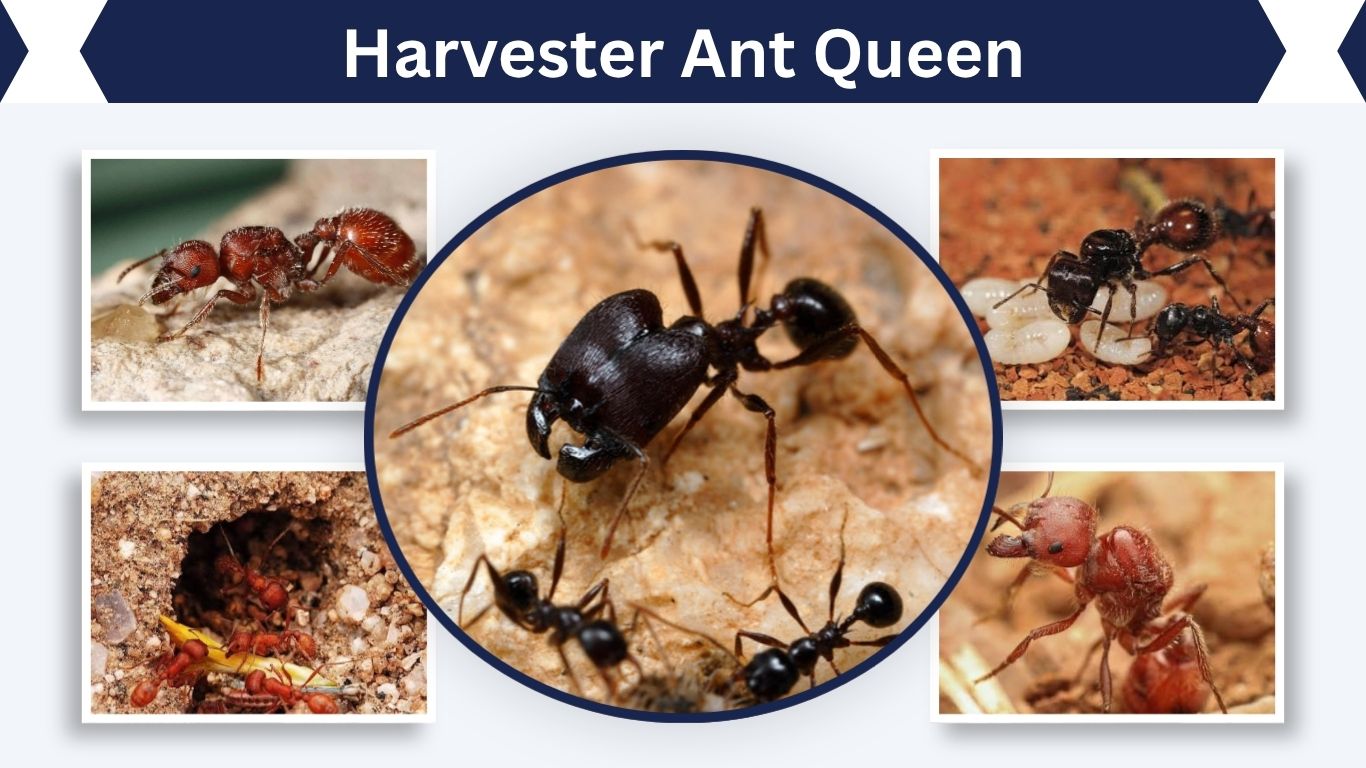
A harvester ant queen is the most important ant in a harvester ant colony. She is responsible for laying eggs and keeping the colony population growing. Many people search for harvester ant queens because they want to identify one, understand how colonies work, or learn whether a colony can survive without a queen. Some also look for red harvester ant queens, western harvester ant queens, or harvester ants with queens for ant farms. This guide explains queen appearance, size, lifespan, eggs, care, and what happens when the queen dies.
What Is a Harvester Ant Queen?
A harvester ant queen is a reproductive female ant that starts or maintains a colony. Unlike worker ants, she can lay fertilized eggs that become workers and future reproductive ants.
Harvester Ant Queen Overview
Harvester ants are seed-collecting ants found in dry grasslands, deserts, open fields, and sandy soils. Many belong to the genus Pogonomyrmex, such as red harvester ants and western harvester ants. These ants collect seeds, store them underground, and live in organized colonies.
The queen’s main job is reproduction. After mating, she may start a new nest, lay eggs, and raise the first workers. Once workers develop, they take over foraging, nest care, seed collection, and colony defense.
Do Harvester Ants Have a Queen?
Yes, most harvester ant colonies have at least one queen. In many species, a colony is usually centered around one main egg-laying queen. Some ant species can have multiple queens, but many harvester ant colonies are single-queen colonies.
Without a healthy queen, a colony usually cannot replace its worker population long term.
What Does a Harvester Ant Queen Look Like?

A harvester ant queen looks larger and heavier than worker ants. She often has a bigger thorax because queens are winged before mating flights. After mating, the queen usually removes her wings, leaving small wing scars.
Harvester Ant Queen Identification
A queen may be hard to identify if you are not used to ant body shapes. However, she usually stands out because of her size and body structure.
Key identification features include:
- Larger body than workers
- Bigger, thicker thorax
- Wider abdomen
- Wing scars after mating
- May have wings before mating flight
- Slower movement than workers
- Often found inside or near the nest
- May be protected by workers
A queen is not simply the biggest worker. Her body is built differently because she was originally a reproductive ant with wings.
Harvester Ant Queen vs Worker Ant
| Feature | Harvester Ant Queen | Worker Ant |
| Main role | Lays eggs | Forages, defends, builds nest |
| Size | Larger | Smaller |
| Thorax | Large and muscular | Smaller and flatter |
| Wings | Has wings before mating | Wingless |
| Abdomen | Usually larger | Smaller |
| Lifespan | Much longer | Shorter |
| Fertility | Reproductive | Usually sterile |
Worker ants are the ants most people see outside the nest. Queens usually stay hidden underground after the colony is established.
Harvester Ant Queen Size
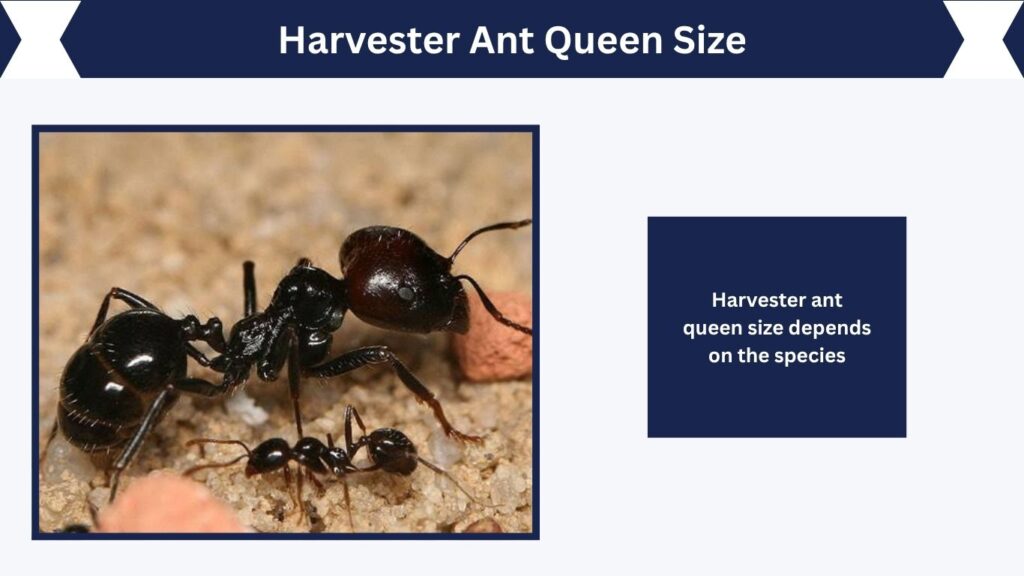
Harvester ant queen size depends on the species. In general, queens are larger than workers and have a more robust body.
How Big Is a Harvester Ant Queen?
A harvester ant queen may be medium to large compared with many other ants. Red harvester ant queens and western harvester ant queens are usually noticeably bigger than their workers. Their larger abdomen helps them produce eggs, while their larger thorax comes from wing muscles used during mating flights.
The queen’s size is one reason people sometimes mistake her for a different ant species. When found alone after a mating flight, she may look like a large red or dark ant searching for soil to dig into.
Red Harvester Ant Queen Size
A red harvester ant queen is usually larger than red harvester ant workers. She often has a fuller abdomen and thicker body. Workers are built for carrying seeds and defending the nest, while queens are built for reproduction.
The exact size can vary by species, nutrition, age, and region.
Harvester Ant Queen Lifespan
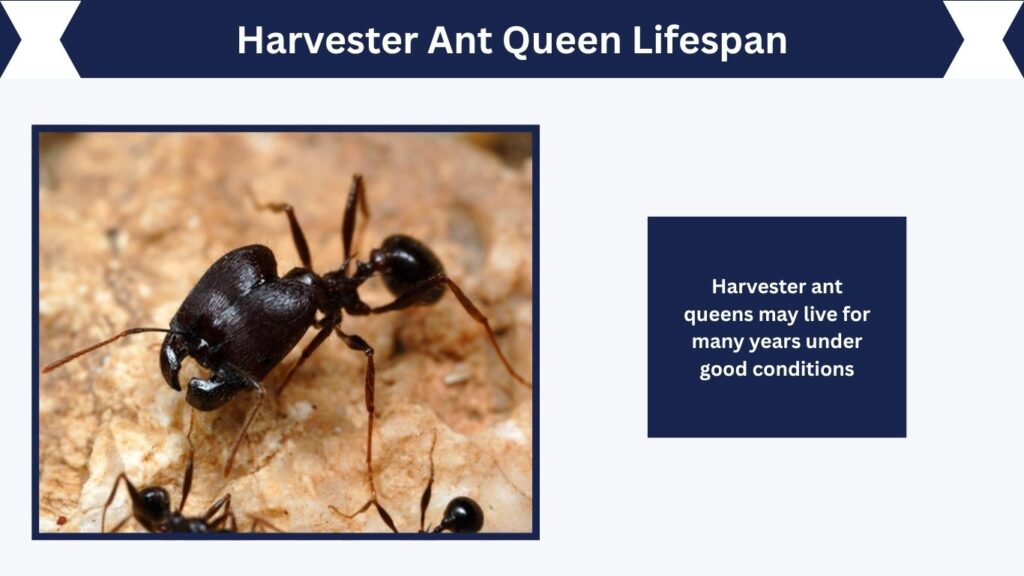
A harvester ant queen can live much longer than worker ants. This long lifespan allows the colony to survive for years if the nest remains healthy.
How Long Does a Harvester Ant Queen Live?
Harvester ant queens may live for many years under good conditions. Some ant queens can live over a decade, though lifespan depends on species, predators, disease, weather, and colony success.
A queen in the wild faces many dangers during the founding stage. Newly mated queens may be eaten by birds, lizards, spiders, other ants, or fail to start a colony. Once protected by workers, the queen has a better chance of long-term survival.
Harvester Ant Queen Life Cycle
| Stage | What Happens |
| Winged queen | Leaves parent colony during mating flight |
| Mating | Mates with male ants, called drones |
| Nest founding | Finds soil and starts a new chamber |
| Egg laying | Produces first eggs |
| First workers | Small workers emerge and begin helping |
| Mature colony | Queen focuses mainly on laying eggs |
| Old colony | Colony declines if queen weakens or dies |
The earliest stage is the most dangerous because the queen must survive alone until her first workers mature.
Harvester Ant Queen Eggs
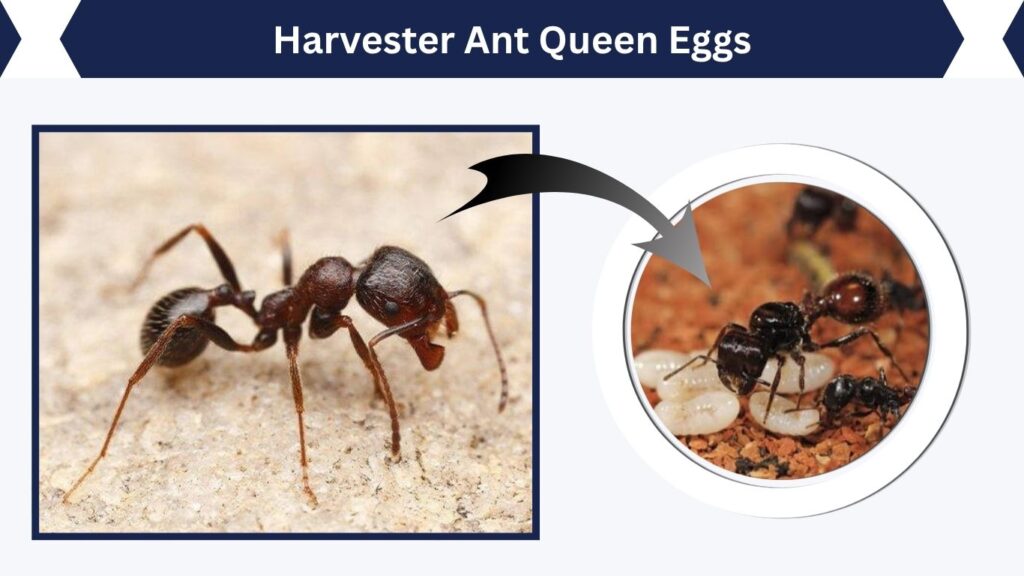
A queen lays eggs that develop into larvae, pupae, and adult ants. These eggs are essential for colony growth.
Harvester Ant Queen With Eggs
A harvester ant queen with eggs is usually starting or maintaining a colony. In a founding setup, eggs may appear as tiny white grains clustered near the queen. The queen tends them carefully until larvae hatch.
Once workers are present, they help care for the brood. Workers move eggs and larvae to the best temperature and humidity areas inside the nest.
What Do Harvester Ant Eggs Become?
Harvester ant eggs can become different colony members depending on species, season, nutrition, and colony needs.
Possible colony members include:
- Worker ants
- Future queens
- Male ants or drones
- Larvae and pupae before adulthood
Workers are the most common. Future queens and drones are usually produced when the colony is mature enough for reproduction.
Harvester Ant Colony Roles
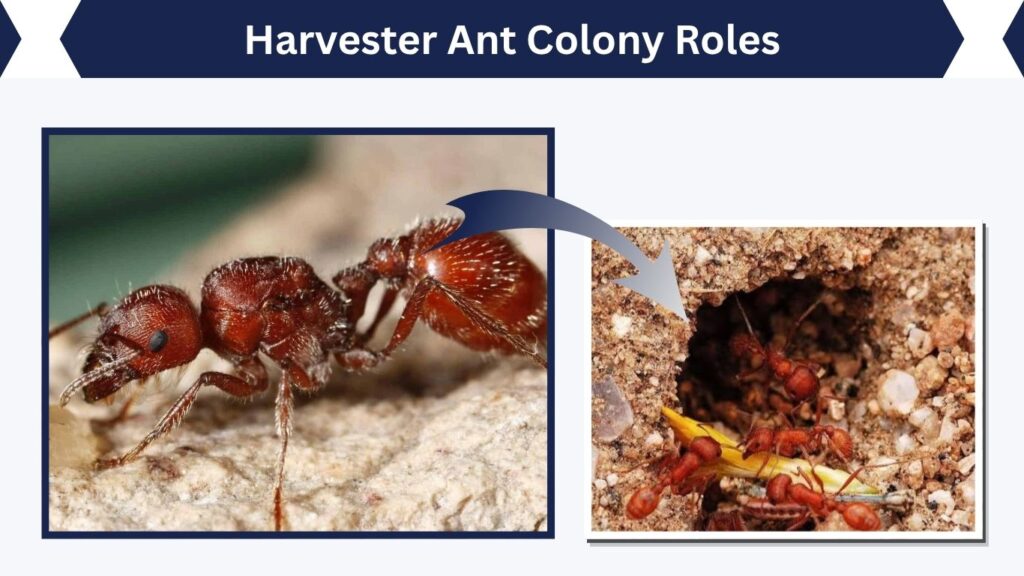
A harvester ant colony has different types of ants with different jobs. The queen is important, but she cannot run the colony alone.
Queen, Worker, Soldier, and Drone
Many people search for “harvester ants queen drone worker soldier.” In simple terms, the colony includes reproductive ants and non-reproductive workers.
| Colony Member | Main Role |
| Queen | Lays eggs |
| Workers | Forage, clean, feed larvae, defend nest |
| Soldiers | Larger defensive workers in some species |
| Drones | Male ants that mate with queens |
| Larvae | Growing young ants |
| Pupae | Development stage before adult ant |
Not every harvester ant species has a clear soldier caste. In many colonies, larger workers may defend the nest, while smaller workers handle other tasks.
What Do Worker Harvester Ants Do?
Workers collect seeds, remove waste, dig tunnels, defend the nest, care for eggs, and feed larvae. They are the ants seen moving across the ground near the nest entrance.
Workers may sting or bite if the nest is disturbed. Some harvester ants have painful stings, so colonies should be observed from a safe distance.
Can Harvester Ants Live Without a Queen?
A queenless harvester ant colony can survive for a while, but it usually cannot grow or last long. Without a queen, no new workers are produced.
How Long Do Harvester Ants Live Without a Queen?
If a colony loses its queen, the remaining workers may continue living for weeks or months, depending on species and conditions. However, the colony will slowly decline as workers age and die.
A queenless colony may still forage, defend the nest, and care for existing brood for a time. But once an existing brood matures and workers die, the colony usually disappears.
What Happens If the Harvester Ant Queen Dies?
When the queen dies, the colony loses its main reproductive source. In many harvester ant species, workers cannot simply create a new mated queen. If no replacement queen exists, the colony eventually fails.
Signs of queen loss may include fewer eggs, reduced worker numbers, less activity, and a gradual decline in nest strength.
Harvester Ant Queen Care
Harvester ant queen care is a topic many ant keepers search for. However, caring for a queen ant requires patience, legal awareness, and proper species knowledge.
Basic Queen Care Needs
A newly mated harvester ant queen needs a secure, escape-proof setup with correct moisture, temperature, and low stress. Many ant keepers use a test tube setup for founding queens, but harvester ant species may have different needs.
Basic needs may include:
- Safe enclosed founding chamber
- Proper humidity
- Stable temperature
- Low vibration and disturbance
- Clean environment
- Correct food after workers appear
- Escape-proof container
- Species-specific care research
Do not handle the queen directly unless absolutely necessary. Stress can cause a founding queen to eat her eggs or fail to settle.
What to Feed a Queen Harvester Ant
Some newly mated queens rely on stored energy at first, while others may accept food. Once workers appear, harvester ant colonies usually need seeds and occasional protein.
Common foods for captive harvester ants may include:
- Small seeds
- Grass seeds
- Crushed seeds
- Tiny insect pieces
- Sugar water in very small safe amounts
- Protein sources for larvae
Food should not mold. Remove old food and avoid flooding the nest.
Red Harvester Ant Queen
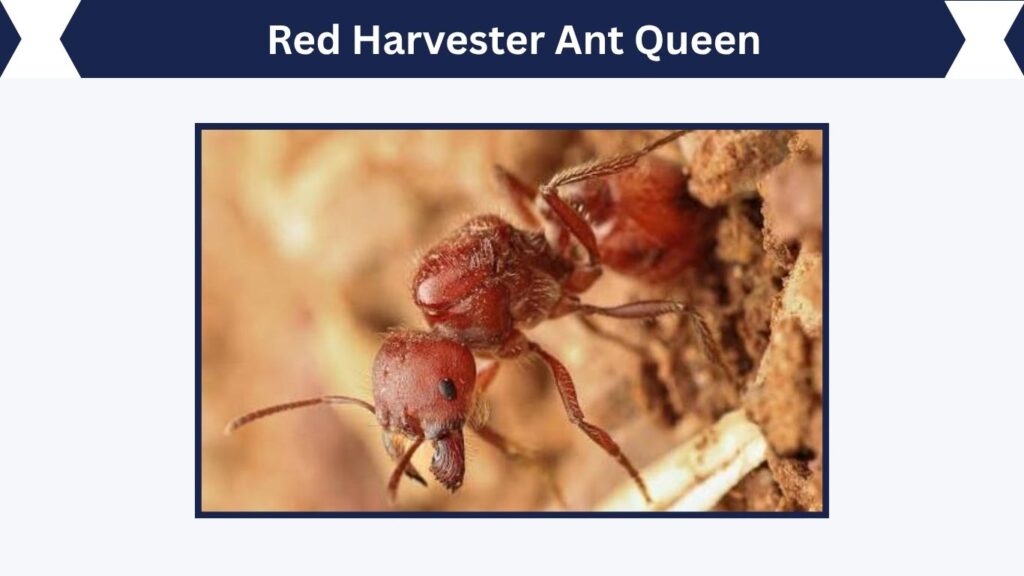
The red harvester ant queen is one of the most searched types because red harvester ants are common in ant farms and educational setups.
What Is a Red Harvester Ant Queen?
A red harvester ant queen is the reproductive female of a red harvester ant colony. She is larger than workers and is responsible for laying eggs. Red harvester ants are often reddish or reddish-brown and are known for seed collection and strong nest defense.
In the wild, red harvester ants build underground nests and forage for seeds. Their colonies may create visible cleared areas around nest entrances.
Red Harvester Ant Queen Care
Red harvester ant queen care should be species-specific. These ants often need dry nesting areas with controlled moisture zones. They also need suitable seeds and protein sources once workers appear.
Because some harvester ants can sting painfully, ant keepers should use secure containers and avoid handling workers.
Western Harvester Ant Queen
Western harvester ants are another common group people search for, especially in the western United States.
Western Harvester Ant Queen Facts
A western harvester ant queen is the egg-laying female of a western harvester ant colony. Like other harvester ant queens, she begins life with wings, mates during a flight, then starts a new colony after shedding her wings.
Western harvester ants often live in open dry habitats. Their colonies collect seeds and can play an important role in soil movement and seed dispersal.
Western Harvester Ant Queen vs Red Harvester Ant Queen
| Feature | Western Harvester Ant Queen | Red Harvester Ant Queen |
| Role | Egg-laying queen | Egg-laying queen |
| Habitat | Often western dry habitats | Dry grasslands/desert areas |
| Diet | Seeds and protein | Seeds and protein |
| Size | Larger than workers | Larger than workers |
| Care | Species-specific | Species-specific |
| Sting | Can sting depending on species | Can sting painfully |
Exact differences depend on the specific species being compared.
Harvester Ant Queen for Sale
Many people search for “harvester ant queen for sale,” “red harvester ant queen for sale,” and “harvester ants with queen for sale.” This topic needs caution because ant sales can be regulated.
Can You Buy a Harvester Ant Queen?
In some places, ant queens can be legally bought from licensed sellers. In other places, moving queen ants across state or country borders may be restricted or illegal because ants can become invasive or spread disease.
Before buying, check local laws. In the United States, shipping live ant queens across state lines can involve regulations. Never release captive ants into the wild.
Buying Tips and Warnings
- Check local laws before buying
- Buy only from responsible sellers
- Confirm the exact species
- Avoid wild release
- Ask whether the queen is fertile
- Make sure the colony has workers if you are a beginner
- Use an escape-proof setup
- Learn sting risk before handling
Buying a queen without understanding care can lead to colony failure.
How to Find a Harvester Ant Queen
Some people want to catch a harvester ant queen after a mating flight. This should be done legally and responsibly.
When Queens Are Found
Harvester ant queens are most often found after nuptial flights, usually following warm seasonal conditions and sometimes after rain, depending on species and region. Newly mated queens may be seen walking on the ground looking for a place to dig.
Responsible Collection
Only collect where legal. Do not dig up established wild colonies just to remove the queen. Digging colonies can damage local ecosystems and may expose you to painful stings.
Safer observation is often better than collection.
Common Problems With Harvester Ant Queens
A queen may fail to start a colony for several reasons. This is common in nature and captivity.
Why a Queen May Not Lay Eggs
Possible reasons include stress, wrong temperature, lack of privacy, poor humidity, infertility, or recent disturbance. Some queens also need time before laying eggs.
If a queen has wings and never mated, she may not produce worker ants. A wingless queen is more likely to be mated, but not always guaranteed.
Queen With Eggs but No Workers
Eggs take time to develop into workers. If the eggs disappear, the queen may have eaten them because of stress, infertility, poor conditions, or lack of energy.
Keep the queen in a quiet place and avoid checking too often.
FAQs
Do harvester ants need a queen?
Yes, a harvester ant colony needs a queen for long-term survival. The queen lays eggs that replace old workers and allow the colony to grow.
What does a harvester ant queen look like?
A harvester ant queen is usually larger than workers, with a thicker thorax, wider abdomen, and wing scars if she has mated. Before mating, she may have wings.
How long does a harvester ant queen live?
A harvester ant queen can live for many years if the colony survives and conditions are good. Her exact lifespan depends on species, health, predators, and environment.
Can harvester ants live without a queen?
Harvester ants can live for a short time without a queen, but the colony usually declines because no new workers are produced.
Can you buy a harvester ant queen?
You may be able to buy a harvester ant queen in some places, but laws vary. Always check local regulations, buy from responsible sellers, and never release captive ants into the wild.