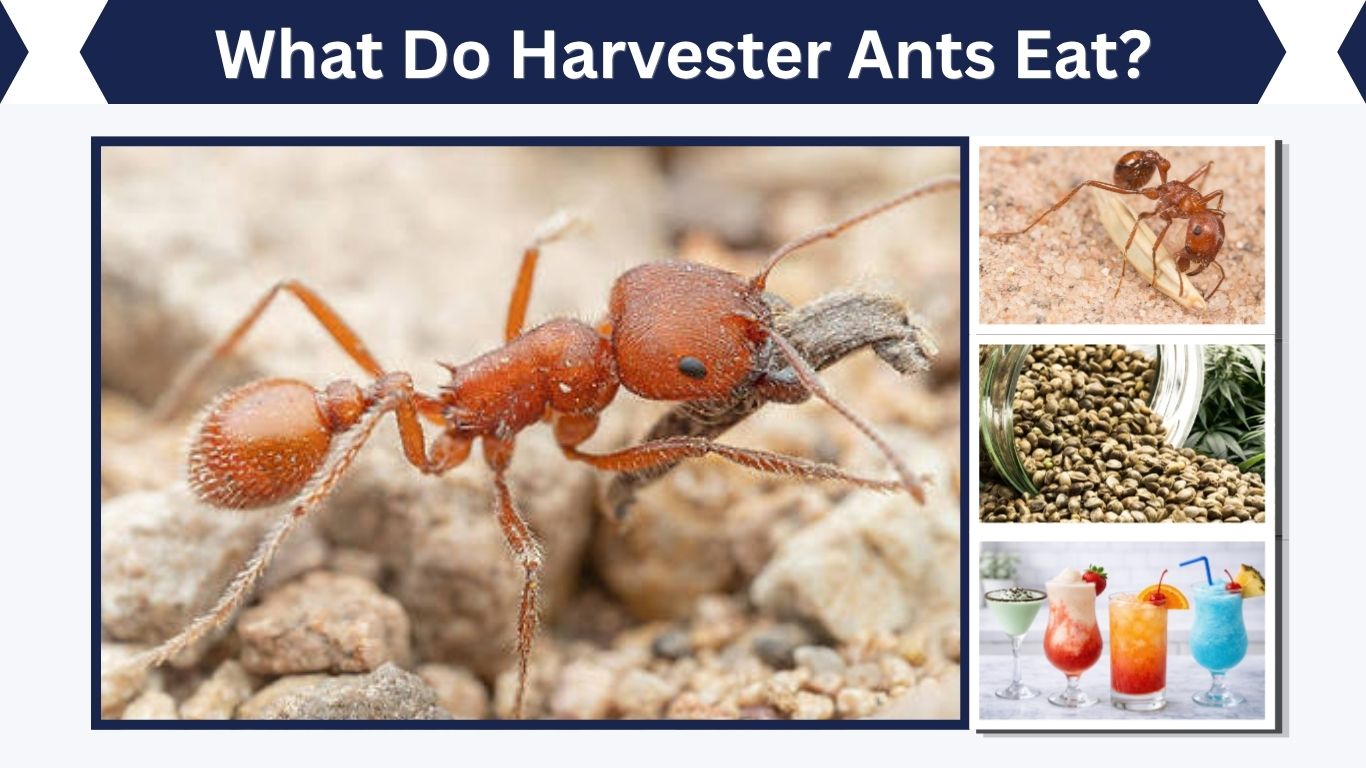
Harvester ants are best known for collecting seeds, carrying them back to their nests, and storing them in underground chambers. Their diet is different from many household ants because they rely heavily on seeds from grasses, weeds, and desert plants. However, seeds are not the only thing they eat. Depending on the species, habitat, and season, harvester ants may also eat insects, plant material, nectar, and small bits of animal protein. Understanding what harvester ants eat helps explain their behavior, their role in nature, and how to care for them in an ant farm.
What Do Harvester Ants Eat?
Harvester ants mainly eat seeds. They collect seeds from grasses, wildflowers, weeds, and other plants around their nest. After finding seeds, worker ants carry them back to the colony and store them underground. These stored seeds help the colony survive during dry seasons or times when food is harder to find.
Harvester ants are common in dry grasslands, deserts, fields, and open areas. Because these habitats often have seasonal food supplies, seed storage is very important for their survival.
Main Foods Harvester Ants Eat
Harvester ants may eat:
- Grass seeds
- Weed seeds
- Wildflower seeds
- Small grains
- Plant fragments
- Dead insects
- Small live insects
- Nectar or sugary liquids
- Crushed seeds in ant farms
- Occasional protein-based foods
Their exact diet depends on the species. For example, red harvester ants and western harvester ants are strongly seed-focused, but they may still collect insects when available.
Why Do Harvester Ants Collect Seeds?
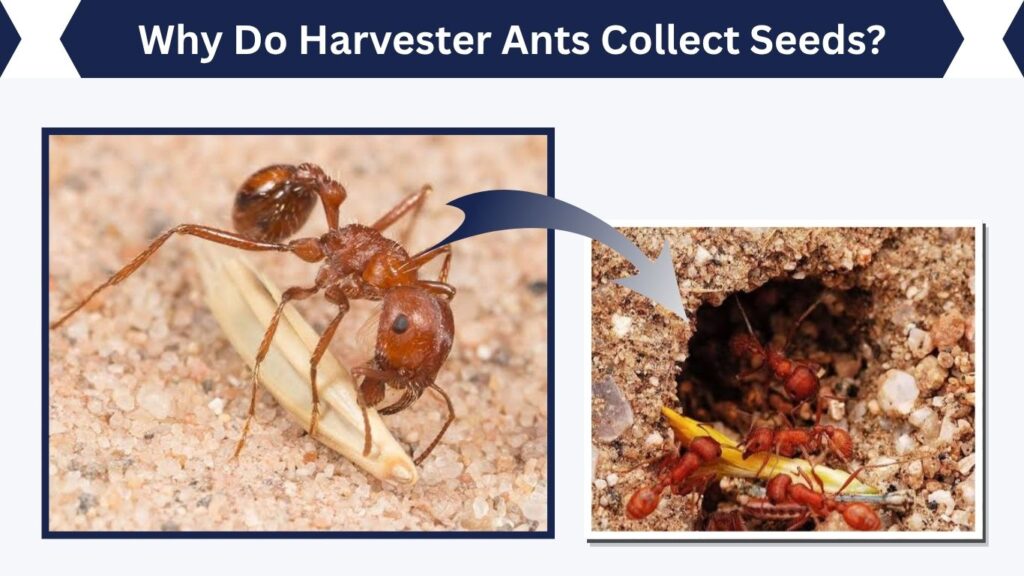
Harvester ants collect seeds because seeds are rich in nutrients and can be stored for later. A seed contains carbohydrates, fats, and proteins that help feed the colony. Unlike nectar or soft food, dry seeds can last for a long time underground if they are kept in the right conditions.
Worker ants search the ground around the nest and bring suitable seeds back to the colony. Inside the nest, the ants may remove the outer shell, crush the seed, or store it until the colony needs it.
Harvester ants are called “harvester” ants because this seed-gathering behavior looks like harvesting crops. Their trails often lead from the nest entrance to areas where seeds are scattered.
What Seeds Do Harvester Ants Eat?
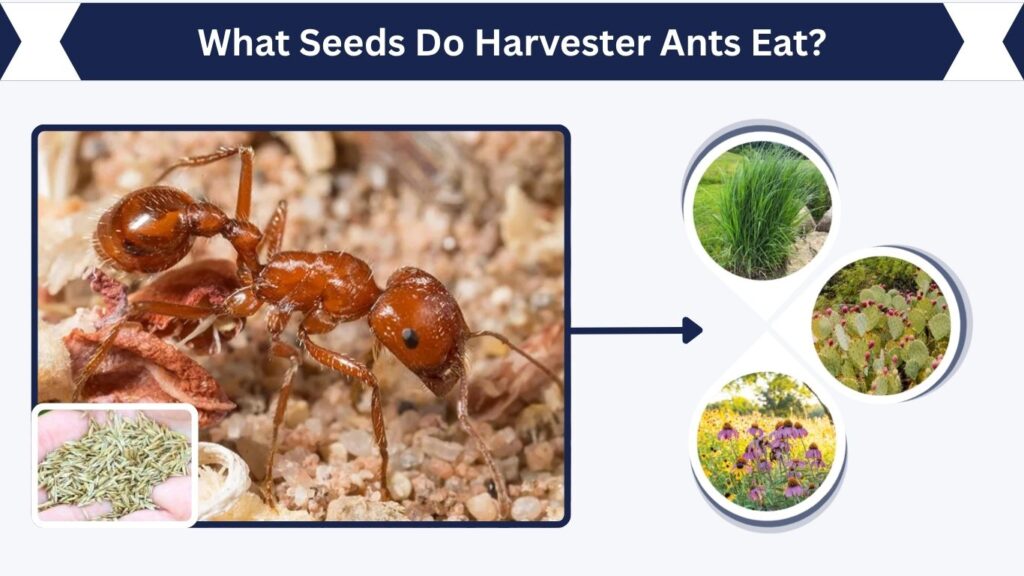
Harvester ants eat many types of small seeds. They are especially attracted to seeds from grasses and low-growing plants. In deserts and dry grasslands, they may collect seeds from native plants that grow near their nests.
Some harvester ants prefer certain seed sizes. Very large seeds may be too heavy, while very tiny seeds may not provide enough food. Worker ants often choose seeds that are easy to carry and useful for the colony.
Common Types of Seeds They May Eat
Harvester ants may eat seeds from:
- Grasses
- Desert plants
- Weeds
- Wildflowers
- Small grains
- Forbs
- Native prairie plants
- Dry seed mixes in captivity
In an ant farm, they may accept small seeds such as grass seed, chia seed, millet, or crushed grain. However, food should be offered in small amounts so it does not mold.
Do Harvester Ants Eat Insects?
Yes, harvester ants can eat insects, but insects are usually not their main food. Seeds are the biggest part of their diet, but insects provide protein. Protein is especially useful for larvae, queens, and growing colonies.
Harvester ants may collect dead insects or attack very small insects if they can overpower them. They may also scavenge pieces of grasshoppers, termites, flies, or other arthropods found near the nest.
This does not mean harvester ants are mainly predators. They are mostly seed collectors, but they are flexible feeders when protein is available.
Do Harvester Ants Eat Meat or Dead Ants?
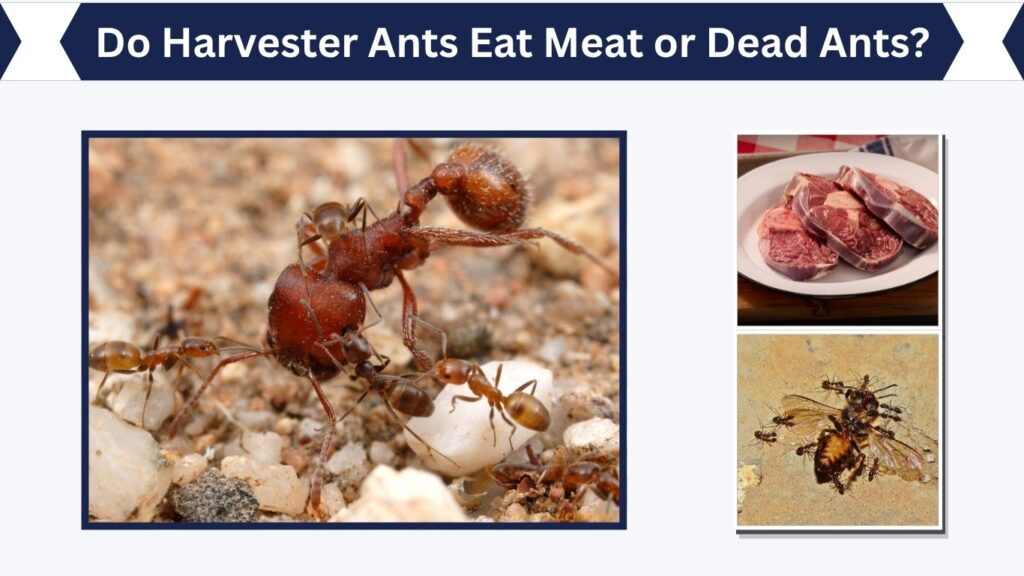
Harvester ants may eat small pieces of meat or dead insects, especially when they need protein. In nature, they often scavenge dead insects rather than hunting large prey. In captivity, a small amount of protein food may be accepted, but it should be used carefully.
Harvester ants may also remove dead ants from the colony. Many ant species carry dead nestmates away from the nest to keep the colony clean. They do not usually depend on their dead as a major food source, but in some situations, ants may recycle nutrients from dead insects or dead colony members.
If you keep harvester ants in an ant farm, avoid feeding raw meat because it can spoil quickly. Safer protein options include tiny pieces of dried insect, freeze-dried mealworm, or a very small amount of cooked egg.
What Do Harvester Ants Eat in an Ant Farm?
In an ant farm, harvester ants need a simple diet that matches their natural feeding habits. Seeds should be the main food. You can give them small seeds and occasional protein. They may also need a small source of moisture, depending on the ant farm setup.
Do not overfeed them. Extra food can mold, attract mites, or make the ant farm unhealthy. Give only a small amount and remove old food when possible.
Good Ant Farm Foods for Harvester Ants
You can offer:
- Grass seed
- Chia seed
- Millet
- Crushed oats
- Small birdseed pieces
- Tiny pieces of dried insects
- Freeze-dried mealworm pieces
- Small drops of sugar water
- Fresh water source if the setup allows
Avoid sticky, greasy, salty, or moldy foods. Do not give large chunks of fruit or meat because they can rot quickly.
Do Harvester Ants Eat Sugar?
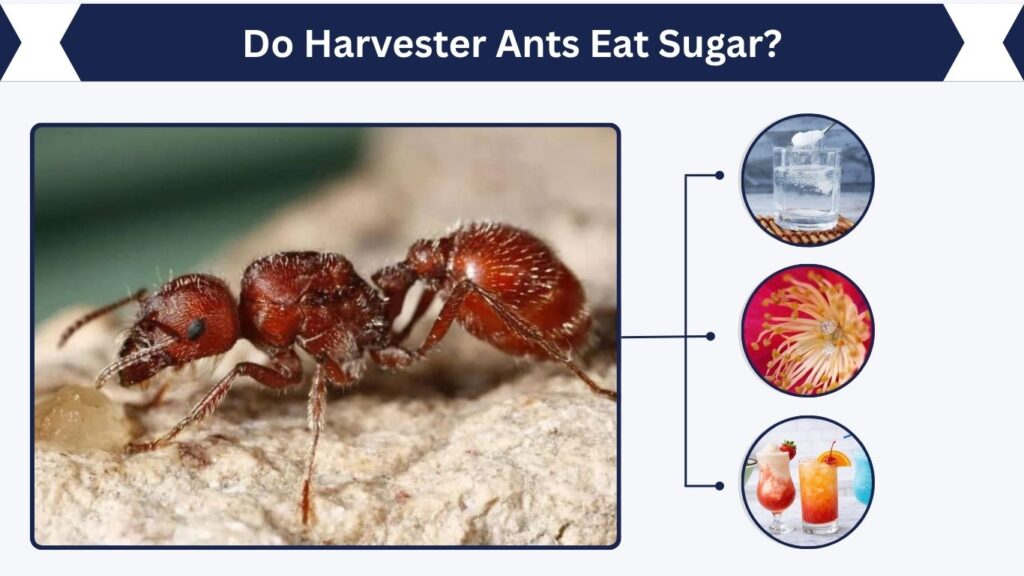
Harvester ants may accept sugar water, nectar, or other sweet liquids, but sugar is not their main natural food. Seeds are more important because they provide long-term nutrition and can be stored.
In captivity, a tiny drop of sugar water can give worker ants quick energy. However, it should not replace seeds. Too much sugar water can also make the ant farm sticky or messy.
If you offer sugar water, place only a very small drop on foil, cotton, or a feeding surface. Remove it if it dries out or becomes dirty.
What Do Red Harvester Ants Eat?
Red harvester ants eat mostly seeds. They are well known for clearing vegetation around their nests and collecting seeds from nearby plants. They may also eat dead insects, small arthropods, and occasional sweet liquids.
Red harvester ants are common in dry, open habitats. Their diet helps them survive in places where food can be seasonal and unpredictable. Their seed-collecting behavior also affects plant communities because they move and consume many seeds.
What Do Western Harvester Ants Eat?
Western harvester ants also eat mainly seeds. Like red harvester ants, they collect seeds from grasses and other plants. They store these seeds inside the nest and feed them to colony members when needed.
Western harvester ants may also collect insects for protein. In dry environments, this mixed diet gives them a survival advantage. Seeds provide steady food, while insects provide extra nutrients when available.
What Eats Harvester Ants?
Harvester ants are food for several desert and grassland animals. One of their most famous predators is the horned lizard. Some horned lizards depend heavily on harvester ants and may eat many of them in one day.
Other animals may also eat harvester ants when they can avoid the ants’ painful sting. Birds, spiders, lizards, toads, and some insects may prey on them.
| Predator | Relationship With Harvester Ants |
|---|---|
| Horned lizards | Major predator of many harvester ant species |
| Birds | May eat ants from the ground |
| Spiders | Can catch individual ants |
| Other insects | Some predators attack ants or larvae |
| Toads and lizards | May eat ants when available |
Harvester ants defend themselves with strong mandibles and painful stings, so not every animal can easily eat them.
Do Chickens or Bearded Dragons Eat Harvester Ants?
Chickens may eat ants they find while scratching the ground, including harvester ants. However, harvester ants can sting, so chickens may avoid large numbers of them.
Bearded dragons may eat some ants, but harvester ants are not usually recommended as a regular feeder insect. Their stings can be painful, and wild ants may carry pesticides, parasites, or harmful substances. Safer feeder insects for bearded dragons include crickets, dubia roaches, and mealworms from trusted sources.
Horned lizards are different because many species naturally eat harvester ants and are adapted to this diet.
How Often Do Harvester Ants Eat?
Harvester ants forage when conditions are suitable. They may collect food daily during warm seasons, especially when seeds are available. In very hot, cold, or dry weather, they may reduce activity and rely more on stored food.
Inside the nest, food is shared among workers, larvae, and the queen. The colony does not eat in the same way a single pet does. Instead, workers gather food as needed and store extra seeds for later use.
In an ant farm, small amounts of food once or twice a week may be enough, depending on the size of the colony. Always watch how much they consume and remove uneaten food before it spoils.
FAQs
What is the main food of harvester ants?
The main food of harvester ants is seeds. They collect seeds from grasses, weeds, wildflowers, and other plants, then store them inside underground nest chambers.
Do harvester ants eat insects?
Yes, harvester ants can eat insects. They often eat dead insects or small pieces of insects for protein, but seeds are usually the main part of their diet.
What do harvester ants eat in the desert?
In the desert, harvester ants eat seeds from desert grasses, weeds, and native plants. They may also eat dead insects and other small sources of protein when available.
Can harvester ants eat flaxseed?
Harvester ants may eat flaxseed if the seeds are small enough for them to handle. In an ant farm, it is better to offer only a small amount and remove any uneaten seeds if they become damp or moldy.
Do horned lizards eat harvester ants?
Yes, horned lizards are well-known predators of harvester ants. Some horned lizards rely heavily on harvester ants as a major part of their diet.