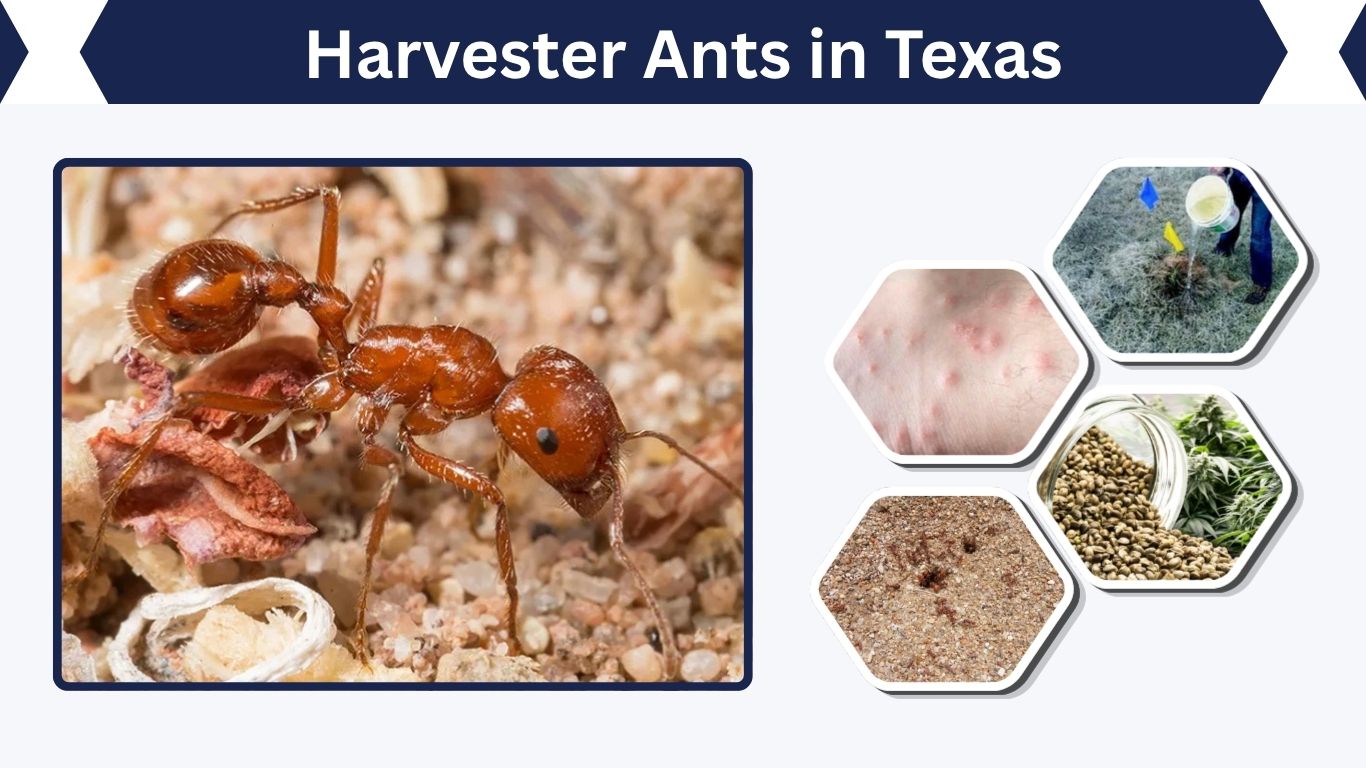
Harvester ants are common in many parts of Texas, especially in dry, open areas with sandy soil, grasslands, pastures, roadsides, and rangelands. The best-known species is the Texas red harvester ant, a large reddish ant famous for collecting seeds and building wide, cleared nest areas. These ants can sting, but they also play an important role in the ecosystem. This guide explains where harvester ants live in Texas, how to identify them, what they eat, their bite or sting risk, and how to manage them safely.
Are There Harvester Ants in Texas?
Yes, harvester ants live in Texas. They are especially common in western, central, northern, and southern parts of the state where open land, dry soil, and native grasses provide the right habitat. The red harvester ant is one of the most recognized harvester ants in Texas because of its large size, reddish color, and noticeable nest mounds.
Harvester ants are not the same as fire ants. Fire ants usually build soft soil mounds and are aggressive around the nest. Harvester ants often make flatter nest openings surrounded by a cleared area, where plants and grass have been removed.
Common Places to Find Harvester Ants in Texas
You may find harvester ants in:
- Dry grasslands
- Pastures and ranchlands
- Roadsides
- Open fields
- Sandy soil areas
- Desert and semi-desert habitats
- Prairie edges
- Rural yards
- Vacant lots
- Trails and natural areas
They prefer open spaces where they can forage for seeds and keep their nest entrance clear.
Texas Red Harvester Ant Identification
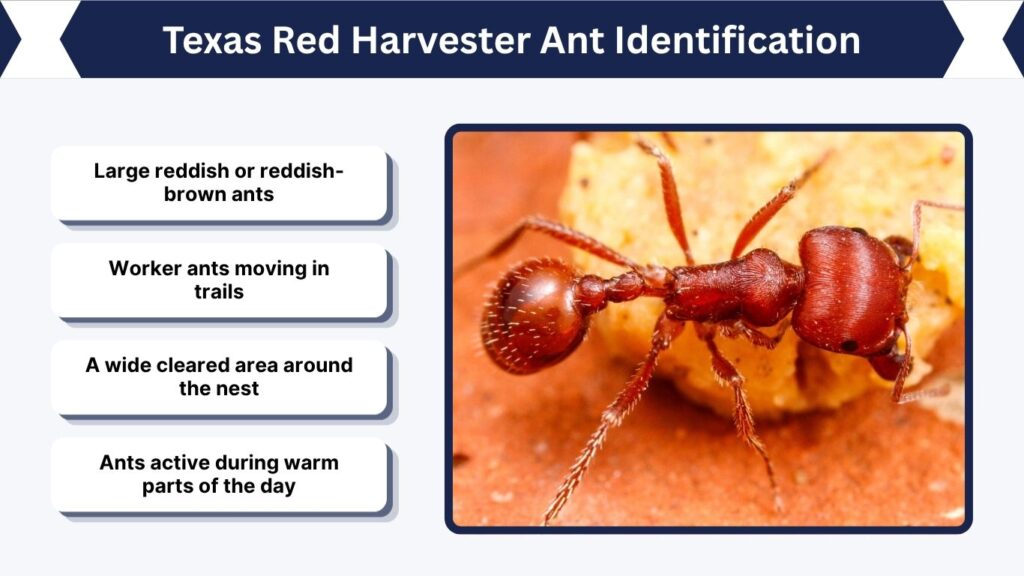
The Texas red harvester ant is usually larger than many common household ants. Workers are reddish to reddish-brown and have strong jaws. They often move in visible trails as they collect seeds and return to the nest.
A mature colony may have a large cleared circle around the nest entrance. This cleared area can be several feet wide. The ants remove plants and debris around the nest, which makes the colony easy to spot in open ground.
How to Identify Texas Red Harvester Ants
Look for these signs:
- Large reddish or reddish-brown ants
- Worker ants moving in trails
- A flat or slightly raised nest opening
- A wide cleared area around the nest
- Seeds, seed husks, or plant debris near the entrance
- Ants active during warm parts of the day
- Open habitat instead of damp indoor areas
Harvester ants usually do not invade kitchens or bathrooms like some pest ants. They are mostly outdoor ants.
Texas Harvester Ant Habitat
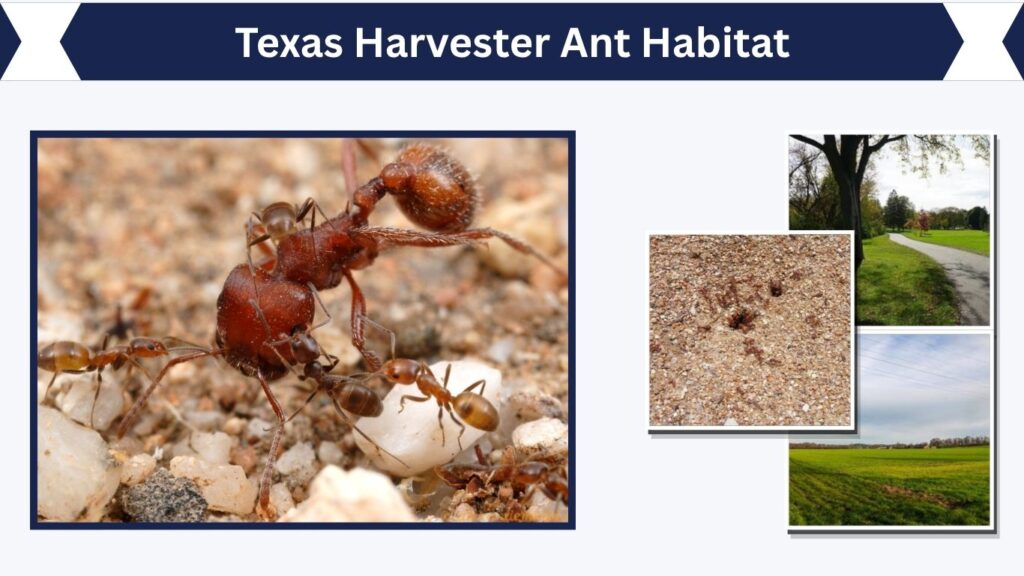
Harvester ants in Texas are strongly connected to open, dry habitats. They do best in areas where seeds are easy to find and the ground is suitable for nesting. Their nests are usually underground and can contain chambers for food storage, brood, workers, and the queen.
They are less common in heavily shaded, wet, or highly disturbed urban areas. However, they may appear in yards, ranch properties, school grounds, parks, and fields if the conditions are right.
In North Texas, harvester ants may be found in prairie-like areas, dry lawns, and open fields. In West Texas, they are common in arid and semi-arid landscapes. In South Texas, they may live in dry brushland and open sandy soil.
What Do Harvester Ants Eat in Texas?
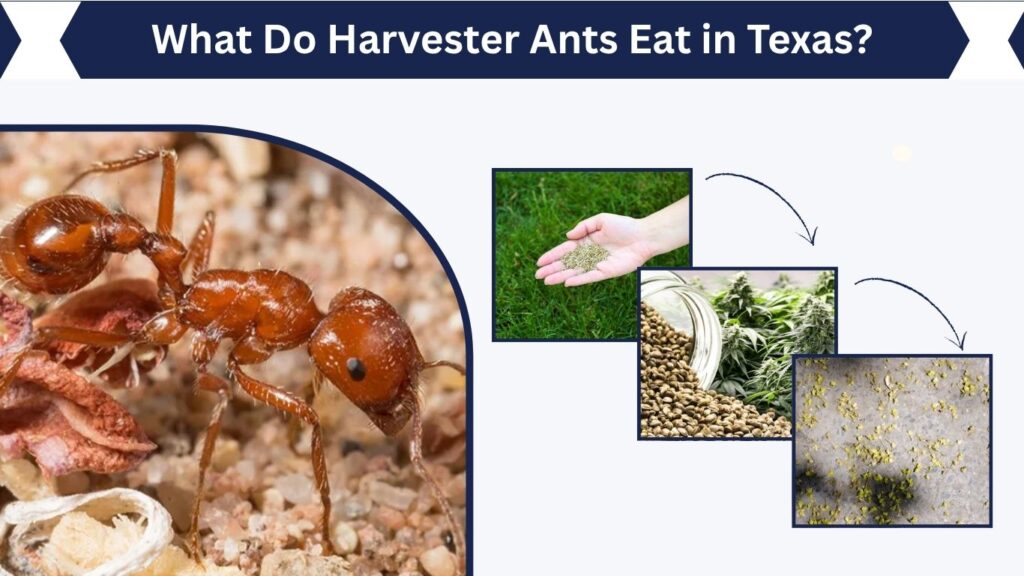
Texas harvester ants mainly eat seeds. Worker ants collect seeds from grasses, weeds, wildflowers, and other plants. They carry the seeds back to the nest and store them underground.
Seeds are important because they can last a long time and provide energy for the colony. Harvester ants may also eat dead insects or small arthropods when they need extra protein.
Common Foods Texas Harvester Ants Eat
Their diet may include:
- Grass seeds
- Weed seeds
- Wildflower seeds
- Native plant seeds
- Small grains
- Plant fragments
- Dead insects
- Small live insects
- Occasional sugary liquids
Because they collect and move seeds, harvester ants can influence plant growth around their colonies. Some seeds are eaten, while others may be dropped or moved to new places.
Texas Red Harvester Ant Bite or Sting
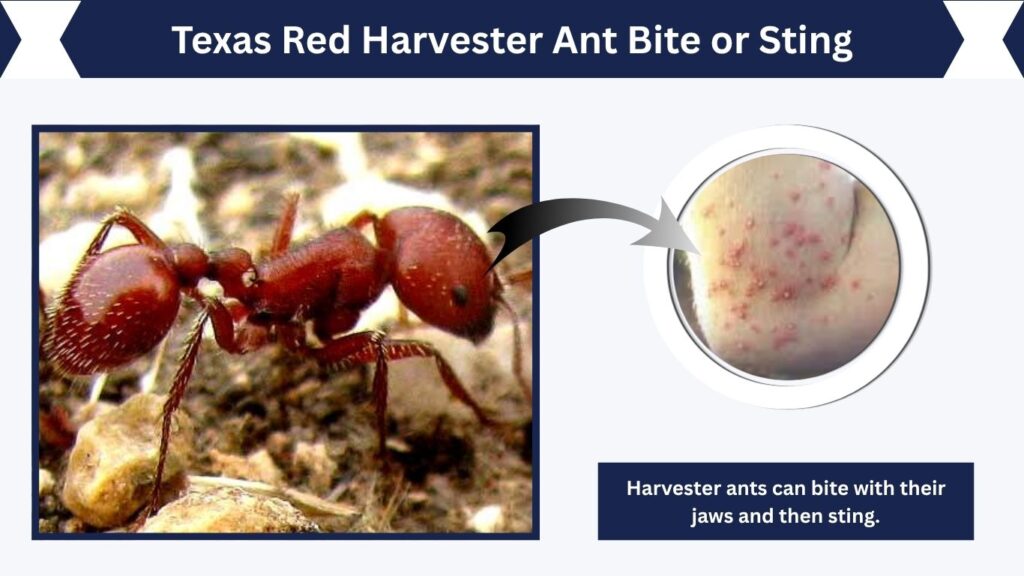
Many people say “harvester ant bite,” but the painful part usually comes from the sting. Harvester ants can bite with their jaws and then sting. Their sting can be painful and may cause redness, swelling, burning, or itching.
Most stings are not serious for healthy adults, but some people may have stronger reactions. Anyone with signs of an allergic reaction, such as trouble breathing, dizziness, swelling of the face or throat, or widespread hives, should seek emergency medical help.
What to Do After a Harvester Ant Sting
If you are stung:
- Move away from the nest area
- Wash the sting site with soap and water
- Apply a cold compress
- Avoid scratching the area
- Use an over-the-counter anti-itch cream if needed
- Watch for allergic reaction symptoms
- Get medical help for severe swelling or breathing problems
Do not disturb a nest with bare hands or open shoes. Harvester ants defend their colonies when threatened.
Harvester Ants vs Fire Ants in Texas
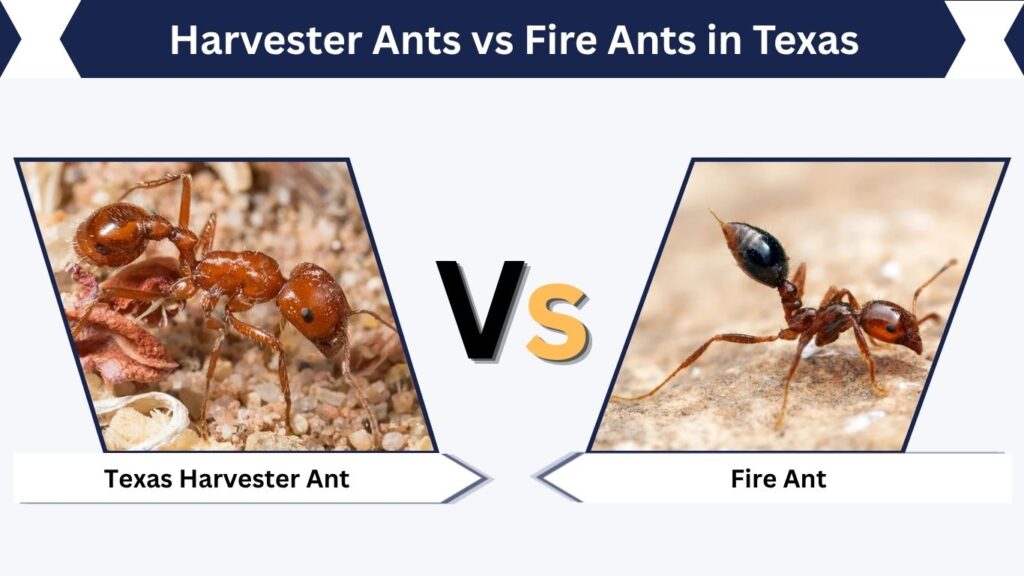
Harvester ants and fire ants can both sting, but they are different ants with different habits. Fire ants are often considered more aggressive around yards, parks, and lawns. Harvester ants are usually more connected to dry open ground and seed gathering.
| Feature | Texas Harvester Ant | Fire Ant |
|---|---|---|
| Color | Reddish to reddish-brown | Reddish-brown with darker abdomen |
| Nest | Cleared area with central opening | Soft mound of loose soil |
| Diet | Mainly seeds | Insects, oils, sweets, proteins |
| Habitat | Open dry areas | Lawns, parks, fields, disturbed soil |
| Indoor problem | Rare | Sometimes enters structures |
| Sting | Painful | Painful, often multiple stings |
Correct identification matters because control methods and ecological value can be different.
Winged Harvester Ants in Texas
Winged harvester ants may appear during mating season. These winged ants are reproductive males and females, not a separate species. They leave the colony during a mating flight, often after weather conditions become favorable.
Some people notice winged harvester ants in Texas near lights, windows, porches, or outdoor buildings. Winged ants can be attracted to light, especially at night or around dusk.
After mating, queens may try to start new colonies. The males usually die after mating. Seeing winged ants does not always mean there is an indoor infestation. In many cases, they came from outdoor colonies nearby.
Texas Horned Lizard and Harvester Ants
Harvester ants are closely connected to the Texas horned lizard. These lizards are famous for eating harvester ants, especially red harvester ants. In many areas, the decline of native harvester ants has affected horned lizard populations.
Harvester ants are not without predators, but the Texas horned lizard is one of their most well-known natural predators. Other animals may eat harvester ants too, including birds, spiders, and other reptiles.
Because harvester ants are part of the natural food web, it is not always best to kill every colony, especially in rural or natural areas where they are not causing problems.
Are Texas Harvester Ants Good or Bad?
Texas harvester ants can be both helpful and problematic. In natural areas, they are beneficial because they move seeds, aerate soil, and provide food for wildlife. They are part of Texas grassland and desert ecosystems.
However, they can be a problem when nests are located in yards, playgrounds, walkways, livestock areas, or places where people or pets may step on them. Their sting can be painful, so colonies near high-traffic areas may need management.
| Benefit or Problem | Explanation |
|---|---|
| Seed movement | They collect and spread seeds |
| Soil aeration | Their underground tunnels loosen soil |
| Wildlife food | Horned lizards and other animals may eat them |
| Painful stings | They can sting people and pets |
| Yard conflict | Nests may appear in lawns or paths |
| Bare patches | Colonies clear vegetation around nests |
The best approach depends on where the nest is and whether it creates a safety risk.
How to Get Rid of Texas Red Harvester Ants
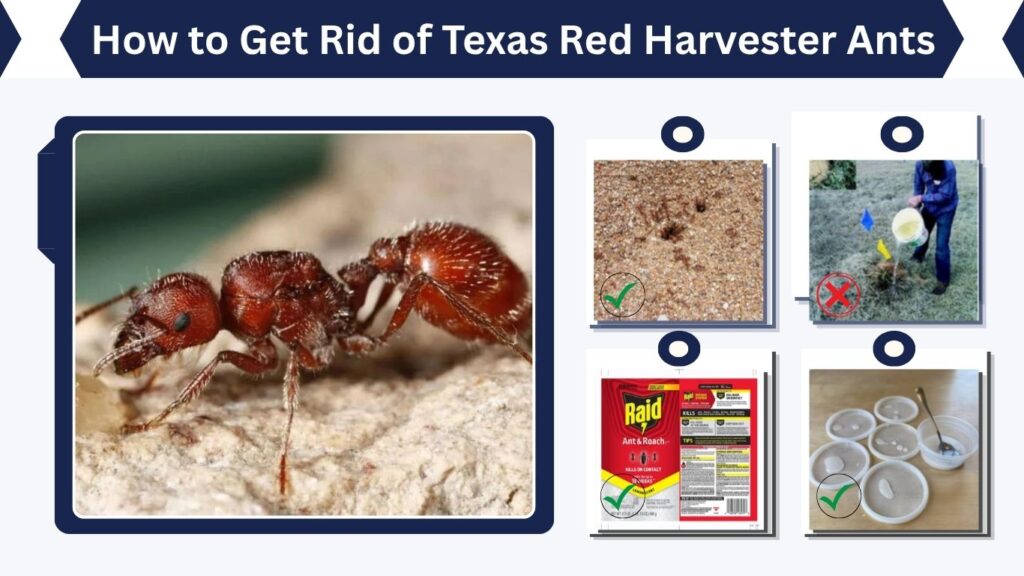
If a harvester ant nest is far from people, pets, and walkways, leaving it alone may be the best option. But if the colony is in a dangerous location, you may need to control it.
Start by confirming that the ants are harvester ants, not fire ants or another species. Then choose the safest control method. Avoid disturbing the nest directly because the ants may swarm and sting.
Safe Control Steps
Follow these steps:
- Identify the nest clearly
Look for the cleared area, central opening, and large reddish ants. - Keep people and pets away
Mark the area if the nest is near a walkway, yard, or play space. - Avoid flooding the nest
Pouring water into the nest may not kill the colony and can make ants spread. - Use labeled ant bait or dust
Choose a product labeled for the ant species and location. - Apply treatment carefully
Follow the label exactly. Do not overapply pesticides. - Check the nest after several days
Activity may take time to decline, especially with bait. - Call a professional if needed
Large colonies, multiple nests, or nests near children and pets may require expert help.
Never use gasoline, bleach, or homemade chemical mixtures on ant nests. These methods are unsafe and can damage soil, plants, pets, and people.
How to Kill Harvester Ants in Texas Safely
For control, use products specifically labeled for outdoor ant control. Baits may work when ants carry the food back to the colony. Dusts or mound treatments may also be used around the nest entrance if the label allows it.
The safest treatment depends on the location. A nest in a pasture may require a different approach than a nest beside a home, school, or sidewalk. Always read the pesticide label before use.
If harvester ants are near a protected wildlife area, native habitat, or a place with horned lizards, consider whether control is truly necessary. Removing harvester ants can affect local wildlife food sources.
Can You Buy Harvester Ants in Texas?
Some people buy live harvester ants for ant farms. In Texas, availability can depend on local rules, suppliers, and whether the ants are shipped legally. Many ant farms are sold with worker ants only, not queens. A colony without a queen will not reproduce long-term, but workers can still be observed for a period of time.
Buying a queen harvester ant may be restricted depending on species and location. Moving ants across state lines or collecting queens from the wild may also be regulated. Before buying live ants, check local and state rules and buy only from responsible suppliers.
How to Avoid Harvester Ant Stings
The easiest way to avoid stings is to avoid stepping on or disturbing their nests. Wear closed shoes when walking in dry fields, ranchland, or natural areas. Teach children not to poke ant nests with sticks or hands.
If a nest is near your home, mark it until you decide whether to leave it alone or treat it. Pets should also be kept away from active colonies.
FAQs
Do harvester ants live in Texas?
Yes, harvester ants live in Texas. They are common in dry, open areas such as grasslands, pastures, roadsides, ranches, and sandy soil regions.
What does a Texas red harvester ant look like?
A Texas red harvester ant is usually large and reddish to reddish-brown. It often has strong jaws and lives in an outdoor nest with a cleared area around the entrance.
Are Texas harvester ants dangerous?
They are not usually dangerous if left alone, but they can sting painfully when disturbed. People with insect sting allergies should be especially careful around them.
How do you get rid of Texas red harvester ants?
Identify the nest, keep people and pets away, and use a labeled outdoor ant bait or treatment if control is necessary. For large or risky colonies, contact a pest control professional.
Do Texas horned lizards eat harvester ants?
Yes, Texas horned lizards are well-known for eating harvester ants. Red harvester ants are an important food source for many horned lizards.