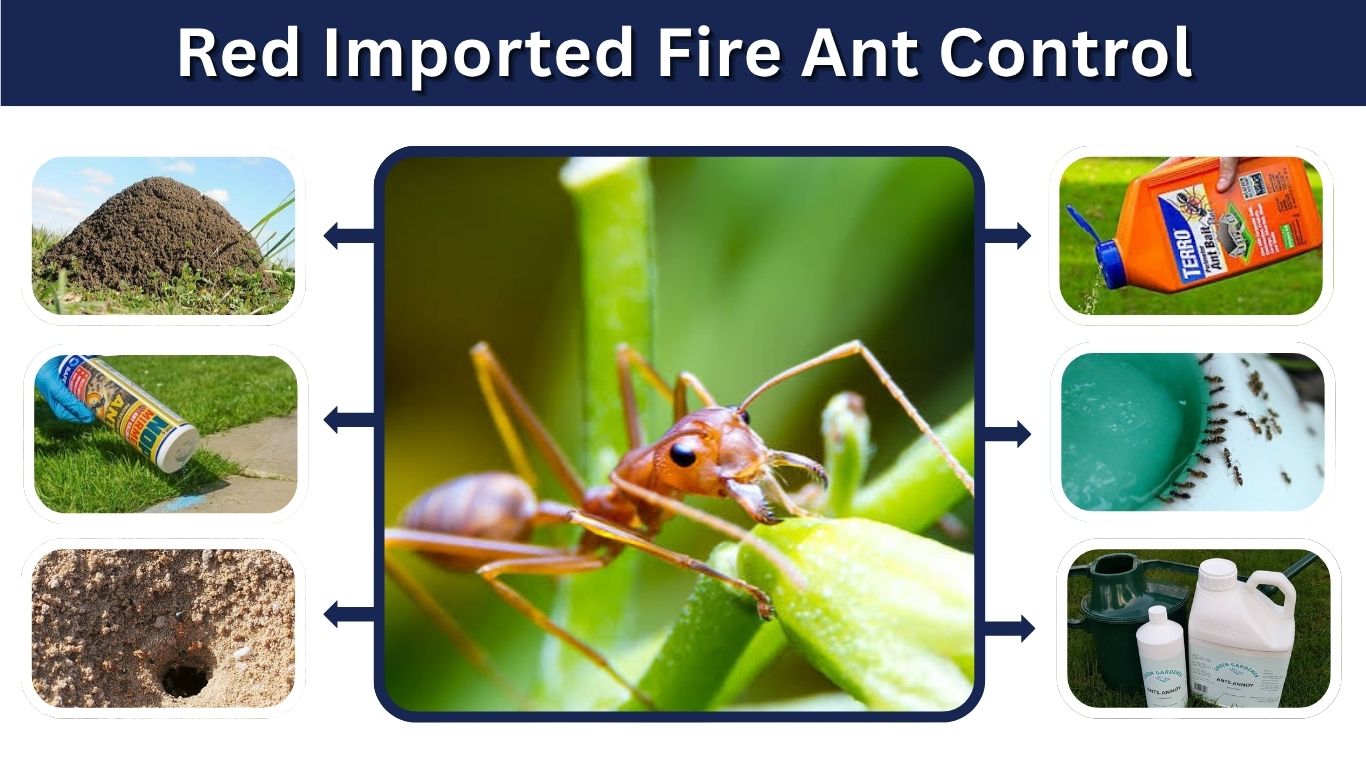
Red imported fire ants can quickly establish multiple colonies across lawns, pastures, parks, and agricultural land. Their painful stings make active mounds especially hazardous around children, pets, livestock, and high-traffic areas. Eliminating only visible ants rarely solves the problem because the queen and most workers remain protected underground. Effective control requires a method that reaches the entire colony and a maintenance plan that limits reinfestation.
Identify Red Imported Fire Ants Before Treatment
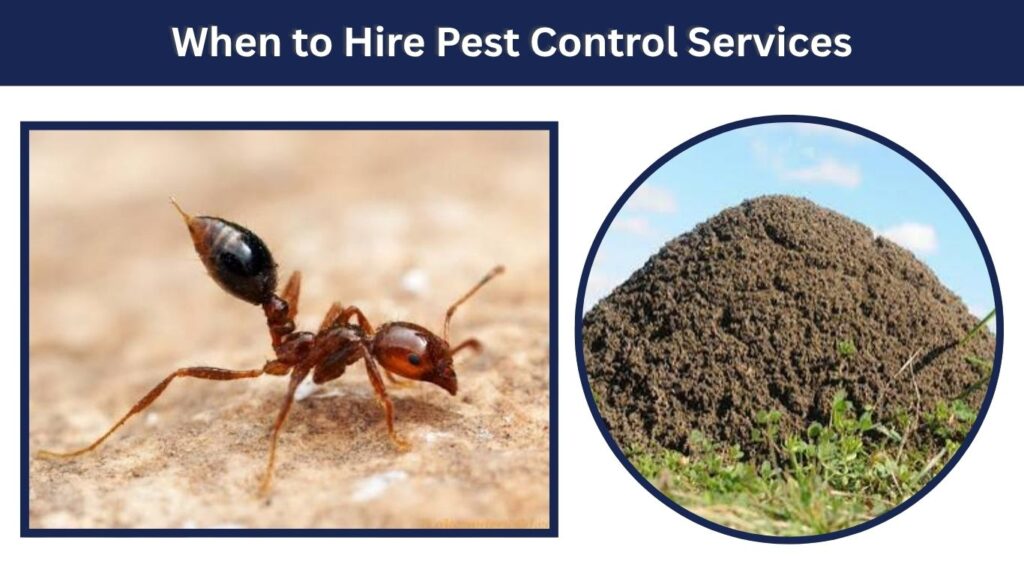
The red imported fire ant, Solenopsis invicta, commonly builds loose, dome-shaped soil mounds. Established mounds may have no obvious central entrance because workers use underground tunnels extending away from the colony.
When disturbed, numerous aggressive ants quickly emerge and climb onto nearby objects. Workers vary in size and are usually reddish brown with darker abdomens.
Correct identification matters because other ants may respond differently to treatment. Avoid disturbing a mound with bare hands or standing directly over it during inspection.
Best Method for Long-Term Fire Ant Control
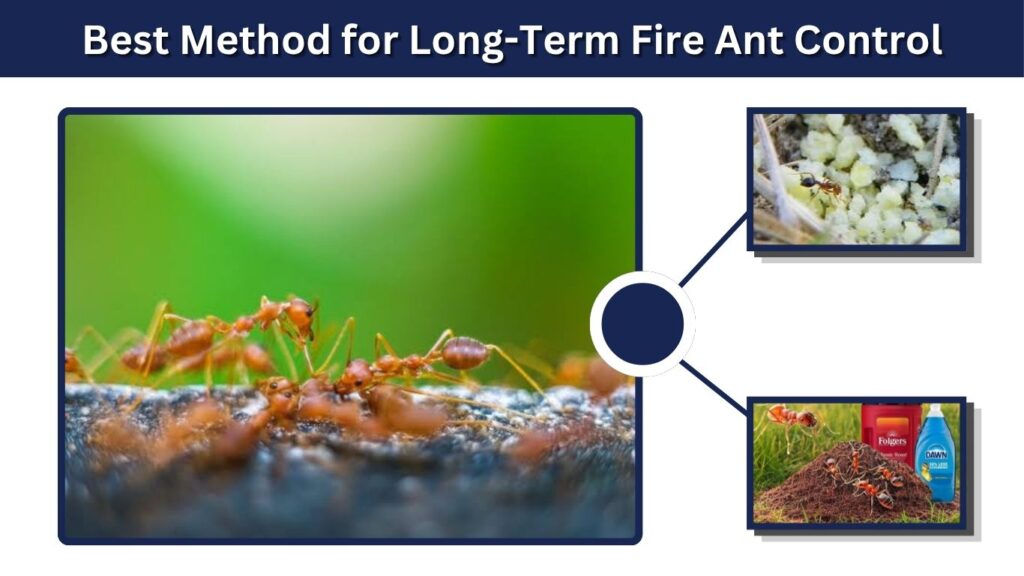
For properties containing numerous mounds, one of the most practical long-term approaches is the two-step method:
- Broadcast a fire ant bait over the infested area.
- Treat remaining high-risk mounds individually.
Broadcast bait targets colonies across the entire property, including young or hidden colonies that have not produced visible mounds. Individual mound treatments then provide faster control where ants present an immediate danger.
University of Florida guidance recommends this combination for medium and large areas because it reduces fire ant populations while limiting the need to treat every mound separately. However, reinvasion remains possible, so periodic monitoring and retreatment are necessary.
Step 1: Broadcast Fire Ant Bait
Fire ant bait consists of an attractive food combined with a small amount of insecticide or insect growth regulator. Foraging workers collect the granules and carry them into the colony, where the material is shared with other workers, developing ants, and the queen.
Baits generally work more slowly than contact insecticides, but they have a greater chance of affecting the entire colony.
How to Apply Bait Correctly
Follow these basic practices:
- Use a product labeled for red imported fire ants.
- Confirm that the site—such as a lawn, pasture, garden, or recreational area—is listed on the label.
- Apply bait when the ground and grass are dry.
- Choose a period when rain is not expected soon after application.
- Apply when ants are actively searching for food.
- Use fresh bait that has not developed a rancid odor.
- Distribute it evenly at the exact labeled rate.
- Keep people and pets away as directed by the label.
Test whether ants are foraging by placing a small amount of suitable food near a mound and checking it after several minutes. Bait works only when workers find and carry it back to their colony. Extension guidance recommends applying baits during dry conditions when fire ants are actively foraging.
Do not apply extra bait in an attempt to obtain faster results. Excessive application increases cost and environmental exposure without necessarily improving control.
Step 2: Treat Dangerous Mounds Individually
Wait several days after broadcasting bait before treating individual colonies unless a mound presents an immediate safety risk. Treat mounds beside playgrounds, sidewalks, doors, kennels, electrical equipment, or animal enclosures first.
Mound Drenches
A mound drench uses a labeled liquid solution to soak the colony. Enough mixture must enter the mound and surrounding soil to reach ants below the surface.
Apply it gently to an undisturbed mound. Pouring too quickly may cause the liquid to run away rather than penetrate the tunnels. Never guess the concentration or application volume.
Granules and Dusts
Some contact insecticides are available as granules or dusts for direct mound treatment. Depending on the product, granules may need to be watered into the soil.
Treating only the visible mound surface may kill exposed workers without reaching the queen. Follow the complete directions rather than sprinkling a small, unmeasured amount on top.
Individual Bait Treatment
Fire ant bait may also be placed around individual mounds when only a few colonies are present. Do not mix bait into the mound or disturb the soil first. Foraging workers must collect it naturally.
The pesticide label determines where, how, how much, and how often a product can legally and safely be applied.
Control Methods for Different Situations
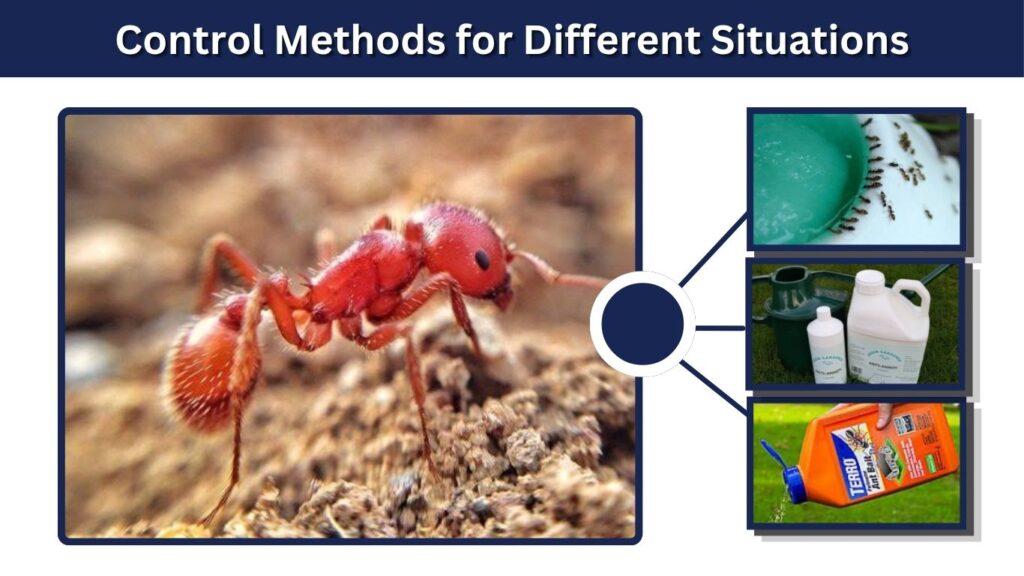
The right method depends on the number and location of colonies.
| Situation | Suitable approach |
| One or two isolated mounds | Individual bait, drench, granules, or dust |
| Numerous mounds across a lawn | Broadcast bait followed by mound treatment |
| Playground or high-traffic area | Fast mound treatment plus wider bait program |
| Pasture or livestock area | Product specifically labeled for pasture use |
| Vegetable garden | Only products labeled for edible-garden sites |
| Large commercial property | Coordinated professional treatment program |
Products approved for lawns are not automatically permitted around vegetables, livestock, wells, schools, or waterways. Always check the use-site restrictions.
Can Hot Water Control Fire Ant Mounds?
Very hot water may kill a colony if enough reaches the queen and deeper tunnels. However, the method can burn the applicator, damage surrounding grass and plants, and fail when the water does not penetrate the complete nest.
It is more appropriate for a small number of isolated mounds than a widespread infestation. University of Florida guidance lists hot water as a lower-pesticide mound option but warns that it must be handled carefully.
Avoid unproven remedies such as club soda, gasoline, bleach, or household cleaners. Some merely disturb the colony and cause it to relocate, while others can injure people, kill plants, contaminate soil, or create a fire hazard.
How to Prevent Reinfestation
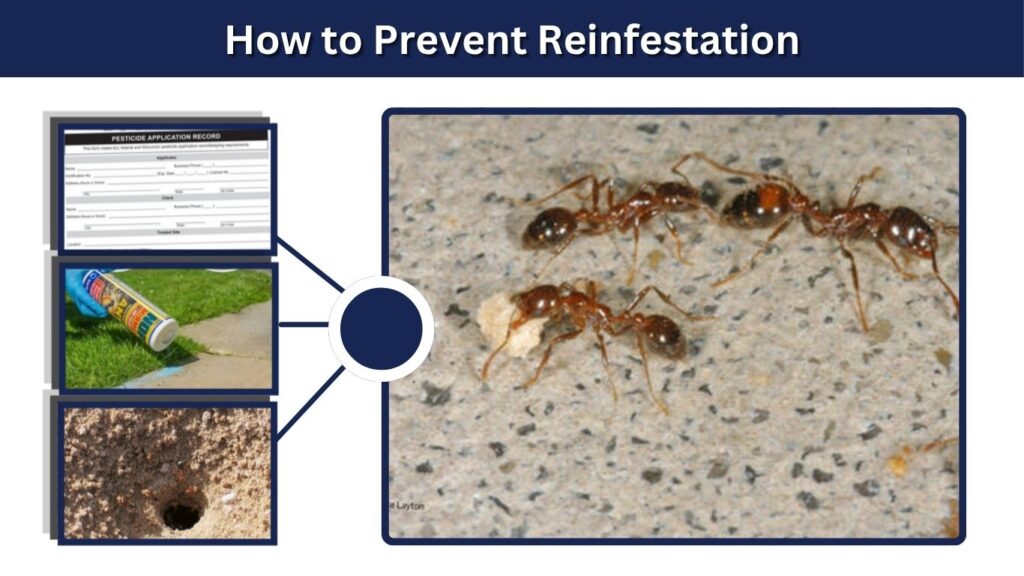
No treatment can permanently prevent red imported fire ants from returning. Newly mated queens can fly into treated areas, and established colonies may migrate from neighboring land.
For longer-lasting suppression:
- Inspect the property regularly for new mounds.
- Broadcast bait when colony numbers rise again.
- Treat dangerous new mounds promptly.
- Coordinate treatments with nearby property owners.
- Avoid transporting infested soil, sod, hay, plants, or equipment.
- Maintain records of application dates and products.
- Follow label limits on retreatment frequency.
Fire ant populations can recover after treatment when surrounding colonies or newly mated queens reinvade. Treating connected properties together may reduce movement from untreated areas.
What Is Being Done to Control Imported Fire Ants?
Complete eradication is not considered practical across heavily infested regions, so management programs focus on suppression and preventing human-assisted spread.
The USDA Animal and Plant Health Inspection Service maintains federal quarantine areas and regulates high-risk materials such as nursery plants, sod, hay, soil, and soil-moving equipment. Federal and state agencies also conduct surveys, establish approved treatments, and update quarantine boundaries when infestations change.
Property owners should check local regulations before moving soil, plants, or agricultural materials out of an infested area.
Red Imported Fire Ant Control Cost
There is no single standard cost. The total depends on:
- Property size
- Number of active mounds
- Product and application method
- Need for repeated treatment
- Lawn, pasture, or commercial use
- Accessibility of infested areas
- Local labor and service rates
Individual mound treatment may cost less when only a few colonies exist. Broadcast bait is usually more efficient across larger areas because one application targets visible and hidden colonies. Professional service may cost more initially but can be appropriate for schools, livestock facilities, extensive acreage, or recurring severe infestations.
When to Hire Pest Control Services
Professional help may be appropriate when:
- Mounds cover a large property.
- Ants repeatedly enter buildings or electrical equipment.
- Colonies occur near wells, ponds, or sensitive habitats.
- Children, pets, or livestock face frequent exposure.
- Previous treatments have failed.
- The site requires specialized or restricted-use products.
- Someone on the property has a history of severe sting reactions.
Ask the provider what treatment method will be used, which areas are included, how reinfestation is handled, and whether follow-up visits are part of the service.
FAQs
What is the most effective red imported fire ant control method?
For properties with many colonies, broadcast bait followed by targeted treatment of surviving or dangerous mounds is often the most practical approach. Bait reaches colonies that may not be visible, while mound treatments provide faster control in sensitive locations.
How long does fire ant bait take to work?
Results depend on the active ingredient and application conditions. Some baits begin reducing colonies within days, while insect growth regulator products may require several weeks or months. Continue monitoring and do not disturb treated mounds unless the label instructs otherwise.
Should I destroy a mound before applying treatment?
Usually not. Disturbing the mound can cause workers to move the queen or relocate part of the colony. Apply bait around an undisturbed mound or use a drench, dust, or granular product exactly as directed on its label.
Can fire ants return after professional treatment?
Yes. Treatment can suppress or eliminate existing colonies, but it cannot prevent winged queens or neighboring colonies from entering later. Long-term management requires inspections, timely retreatment, and ideally coordinated control across nearby properties.
Is it safe to use fire ant products around pets?
Safety depends on the product and how it is used. Select a product labeled for the treatment site, follow all precautions, and keep pets away for the period stated on the label. Never place pesticide in pet food, water, bedding, or accessible containers.