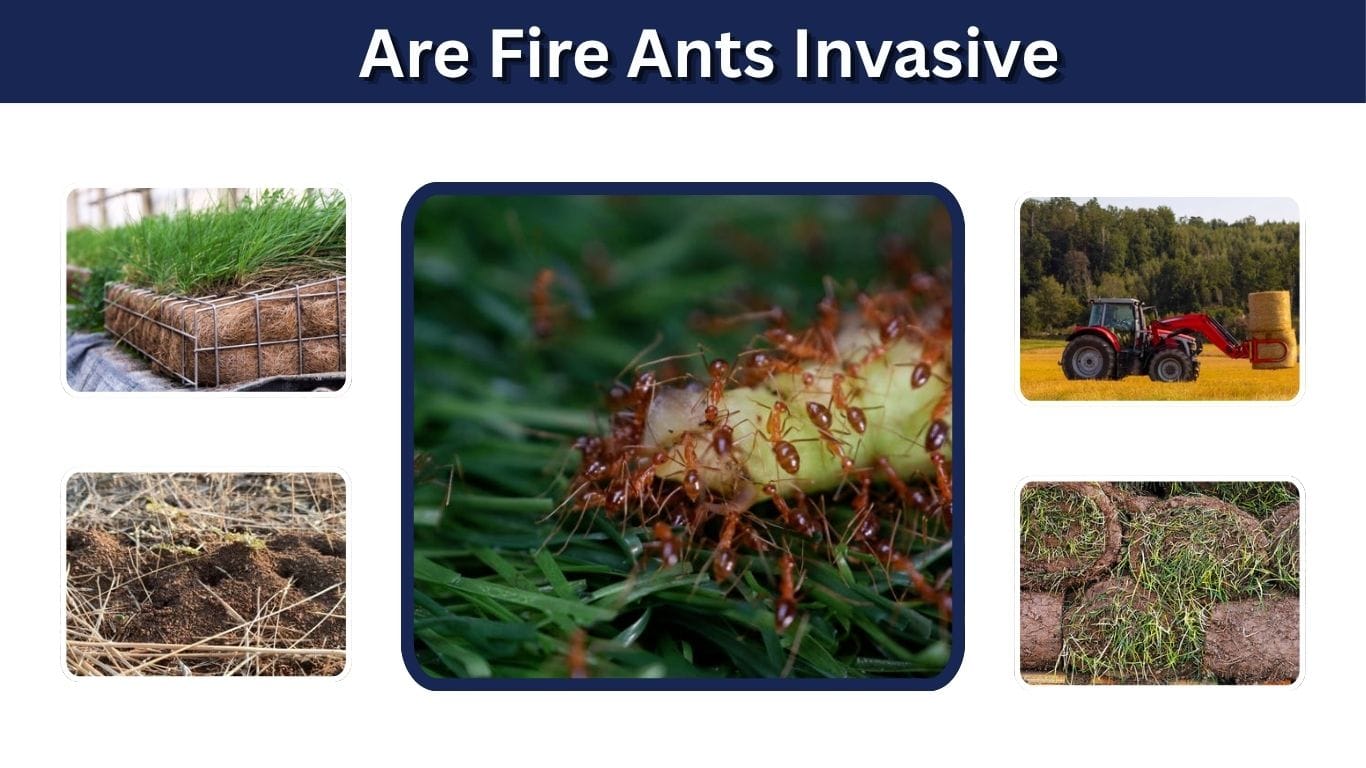
Some fire ants are invasive, but not every fire ant species is. In the United States, the red imported fire ant, Solenopsis invicta, the black imported fire ant, Solenopsis richteri, and their hybrids are invasive pests introduced from South America. They spread rapidly, displace native insects, damage crops, interfere with outdoor activities, and deliver painful venomous stings. Other native ants may resemble them, so identification should come before treatment.
Fire Ant Invasive Species Quick Facts
| Feature | Details |
| Main invasive species | Red and black imported fire ants |
| Scientific names | Solenopsis invicta and Solenopsis richteri |
| Native region | South America |
| U.S. introduction | Accidentally transported in cargo and soil |
| Primary habitat | Lawns, fields, parks, pastures, roadsides |
| Main effects | Stings, crop damage, wildlife loss, equipment problems |
| Current U.S. infestation | More than 367 million acres |
| Main spread pathway | Soil, plants, hay, equipment, and natural flights |
Which Fire Ants Are Invasive?
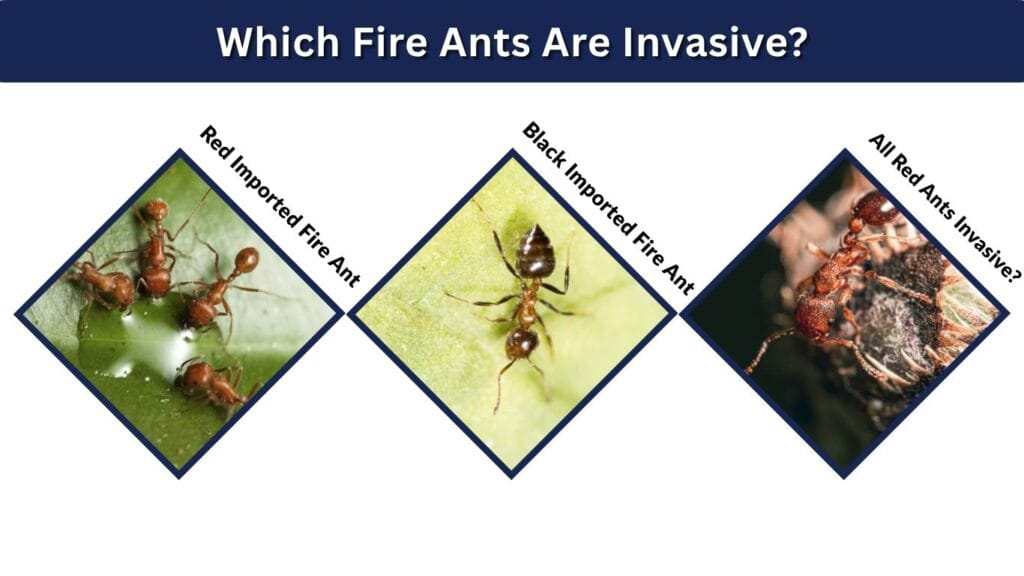
The two major invasive fire ants in the United States are the red imported fire ant and the black imported fire ant. Their hybrid populations are also treated as invasive. These ants are called “imported” because they arrived unintentionally from South America rather than evolving naturally in the United States.
Red Imported Fire Ant
The red imported fire ant, Solenopsis invicta, is the most widespread invasive fire ant in the United States. Workers range from reddish brown to dark brown and vary noticeably in size within the same colony. Large colonies may contain tens of thousands of workers and aggressively defend their nests.
Black Imported Fire Ant
The black imported fire ant, Solenopsis richteri, is darker and has a more restricted U.S. distribution. It occurs mainly in parts of Mississippi, Alabama, and Tennessee. Where the red and black species meet, they may produce hybrid populations.
Are All Red Ants Invasive?
No. Color alone cannot identify an imported fire ant. Native ants, carpenter ants, and several other species may appear reddish brown. Imported fire ants are better recognized through their variable worker sizes, aggressive swarming response, mound structure, and sting. Expert confirmation is recommended outside their established range.
How Did Invasive Fire Ants Reach the United States?
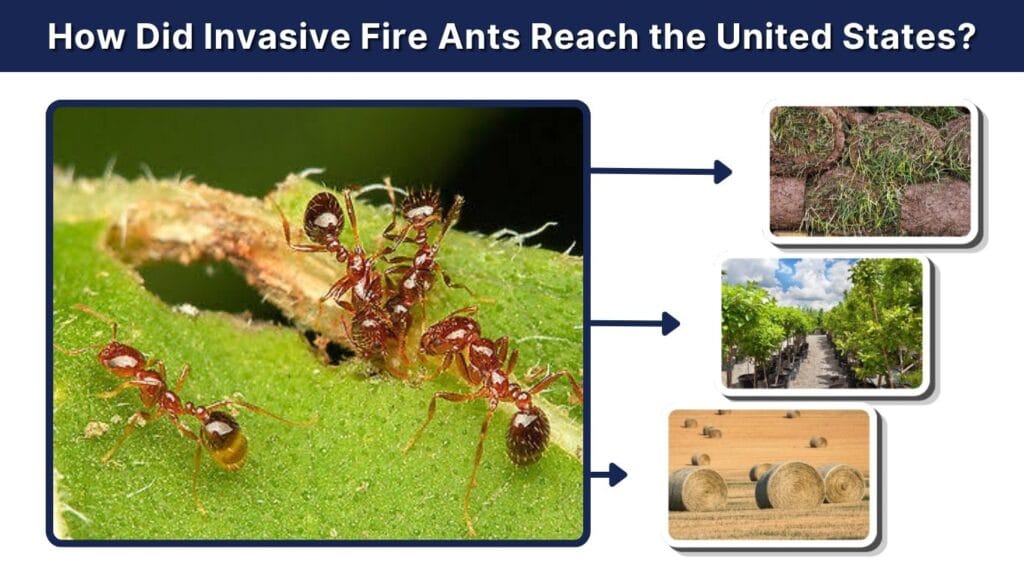
Imported fire ants were accidentally carried from South America, probably in soil used as ballast or cargo on ships entering the Port of Mobile, Alabama. After becoming established, they spread naturally through mating flights and human activities.
Fire ants can hitchhike in:
- Potted plants and nursery stock
- Grass sod
- Soil and fill material
- Baled hay
- Soil-moving machinery
- Tractors, trucks, and outdoor equipment
Newly mated queens can also fly or be carried by wind before establishing colonies in new locations.
Where Are Invasive Fire Ants Found?
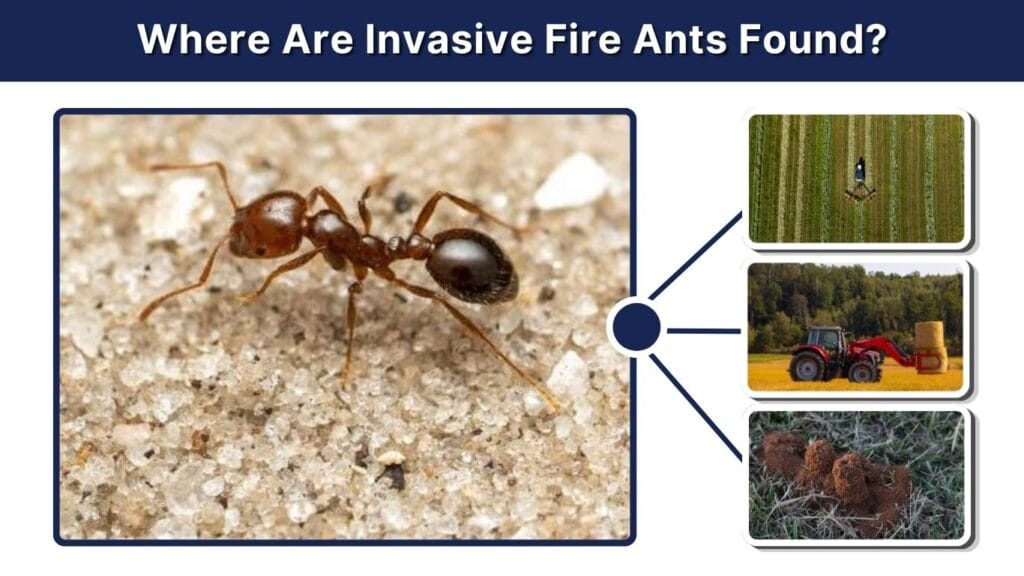
As of February 2026, USDA APHIS reported imported fire ants across more than 367 million acres. Federal quarantine areas occur in parts of Alabama, Arkansas, California, Florida, Georgia, Louisiana, Mississippi, North Carolina, Oklahoma, South Carolina, Tennessee, Texas, Virginia, and Puerto Rico.
They favor warm, sunny, disturbed habitats, including:
- Lawns and gardens
- Parks and playgrounds
- Pastures and crop fields
- Roadsides and construction sites
- Golf courses
- Meadows and open woodland edges
They are less strongly associated with heavily shaded, undisturbed forests than with open ground.
Effects of Invasive Fire Ants
Invasive fire ants affect ecosystems, agriculture, public health, animals, and property. Their impact becomes especially severe where colonies reach high densities.
Effects on Native Wildlife
Imported fire ants compete with native ants and other ground-dwelling insects for food and nesting space. High populations can reduce native ant diversity and remove insects that normally serve as food for reptiles, amphibians, birds, and other wildlife.
They also attack vulnerable animals, including newly hatched reptiles, ground-nesting bird chicks, amphibians, and newborn mammals. Research has connected red imported fire-ant invasion with lower abundance and diversity among some amphibian and reptile communities.
Effects on Agriculture
Imported fire ants feed on germinating seeds, young plants, fruits, buds, and crops such as corn, sorghum, small grains, forage grasses, and citrus seedlings. They may also protect aphids, scales, and other sap-feeding pests in exchange for sugary honeydew.
Large mounds interfere with planting, mowing, harvesting, and livestock management. Farm equipment can be damaged when it strikes hard nests, while repeated stings may stress livestock and reduce workers’ ability to enter infested fields safely.
Effects on People
Fire ants grip the skin with their jaws and sting repeatedly, injecting venom that causes immediate burning. Red bumps commonly develop and may become white, fluid-filled pustules within one or two days.
Most stings cause local pain and itching, but some people develop severe allergic reactions. Trouble breathing, major swelling, chest pain, faintness, nausea, or slurred speech requires immediate medical care.
Effects on Pets and Livestock
Dogs, cats, horses, cattle, poultry, wildlife, and newborn animals may be stung when they disturb a mound or lie on infested ground. Young and immobile animals are particularly vulnerable because many ants can attack before the animal escapes.
How to Identify an Imported Fire-Ant Mound
Imported fire-ant nests usually form dome-shaped mounds of loose soil in sunny areas. Large nests may reach approximately 18–24 inches high, although many are much smaller. Unlike some ant nests, a fresh mound may not have an obvious central entrance.
Identification Signs
- Workers ranging from about ⅛ to ¼ inch long
- Several worker sizes within one colony
- Reddish-brown, dark-brown, or black coloration
- Loose, dome-shaped soil mound
- Hundreds of ants rapidly emerging when disturbed
- Ants climbing vertical objects to sting
- Burning stings followed by itchy pustules
Do not disturb an unidentified mound merely to test the ants. Photograph it from a safe distance or contact a local agricultural or extension office for identification.
Why Are Fire Ants Successful Invaders?
Imported fire ants reproduce quickly, eat a wide range of plant and animal material, defend their colonies aggressively, and thrive in disturbed habitats. Their natural South American enemies are less abundant in introduced areas, allowing populations to become much denser.
Colonies can also recover after incomplete treatments. New queens may recolonize cleared land, while multi-queen colonies can spread through nearby soil. These traits make permanent eradication difficult once fire ants become widely established.
How to Prevent Their Spread
USDA quarantines restrict human-assisted movement of imported fire ants from infested areas. Before transporting soil, hay, plants, sod, or soil-moving machinery, check whether the area is under federal or state quarantine.
Helpful precautions include:
- Inspecting nursery plants and root balls
- Removing soil from machinery before transport
- Buying certified fire-ant-free hay or sod
- Avoiding movement of untreated soil
- Reporting suspicious colonies outside known infestations
- Never transporting live ants to another location
Managing Invasive Fire Ants
Complete eradication is rarely realistic across a large infested region. Management generally aims to suppress colonies around homes, farms, schools, parks, and environmentally sensitive areas.
Baits can be effective because foraging workers carry the treatment into the colony. Individual mound treatments act more quickly but may miss nearby hidden colonies. Only products labeled for fire ants and the intended treatment site should be used, especially around vegetable gardens, animals, playgrounds, and water.
Avoid widespread, unnecessary pesticide use. Preserving native ants can increase competition for food and nesting locations, while indiscriminate insecticide applications may remove those natural competitors.
FAQs
Are red fire ants an invasive species?
The red imported fire ant, Solenopsis invicta, is invasive in the United States and many other regions outside South America. However, not every reddish ant is a red imported fire ant.
Why are invasive fire ants harmful?
They displace native ants, attack wildlife, damage crops, protect some plant pests, interfere with machinery, sting people and animals, and require expensive long-term management.
Are black fire ants invasive?
The black imported fire ant, Solenopsis richteri, is invasive in the United States. However, many naturally black ant species are native and harmless, so appearance alone is insufficient for identification.
Can invasive fire ants be eradicated?
Small, isolated infestations may sometimes be eliminated. Eradication becomes extremely difficult after ants spread across a wide region because colonies reproduce rapidly and repeatedly reinvade treated land.
Should fire ants be reported?
Report suspicious imported fire ants when they appear outside established infestation or quarantine areas. Contact a state agricultural agency, plant health official, or local extension office rather than transporting specimens yourself.