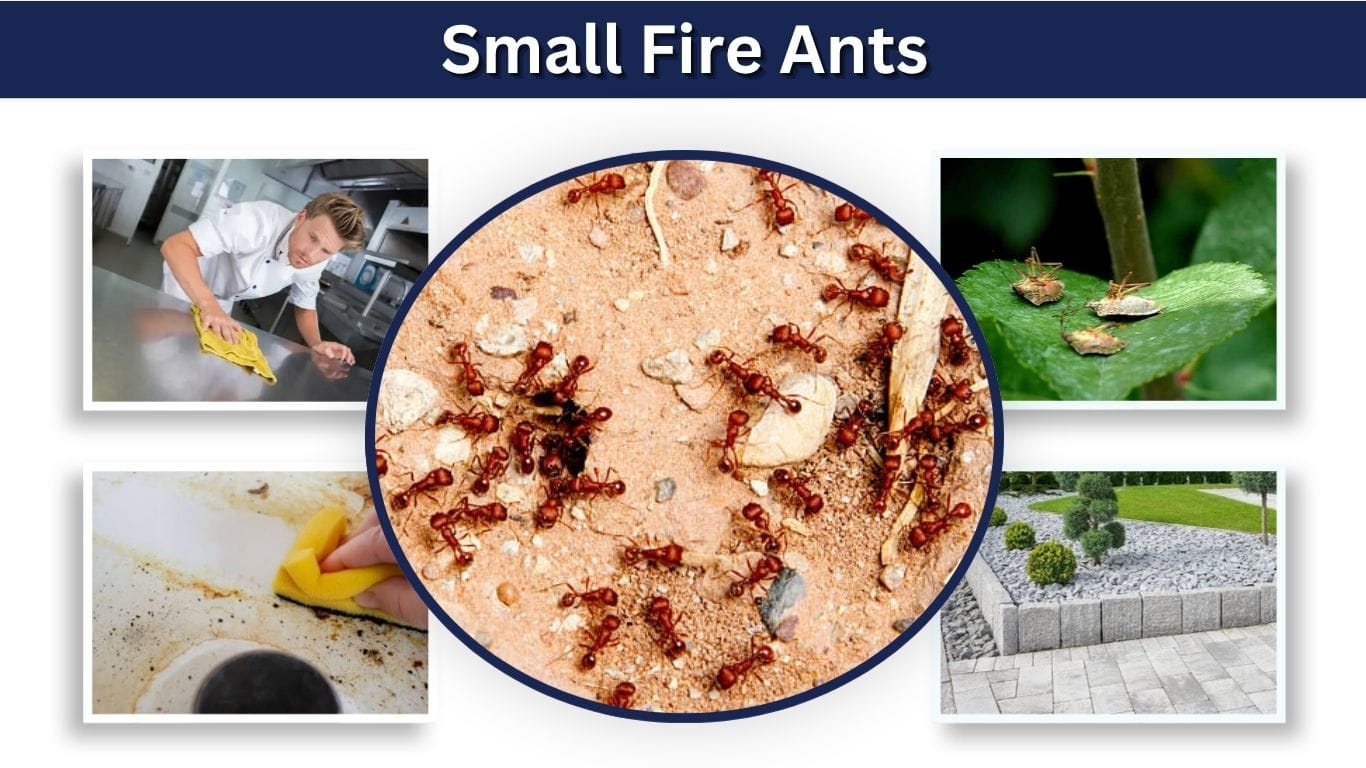
Small fire ants can be difficult to identify because several tiny red, brown, or dark-colored ants look similar. True fire ants are known for their aggressive behavior and painful stings, but not every small red ant is a fire ant. Their size can vary depending on species and colony role, and some workers may look extremely tiny. Understanding their appearance, nesting habits, bites, food preferences, and behavior can help you distinguish small fire ants from harmless household ants and decide when control may be necessary.
What Are Small Fire Ants?
Small fire ants are members of several fire ant species within the genus Solenopsis. Some species are noticeably smaller than others, and even within one colony, worker ants may vary considerably in size. Fire ants usually build colonies in soil and can become aggressive when their nest is disturbed. Correct identification matters because their sting is one of their most recognizable characteristics.
How Small Are Fire Ants?
Depending on the species, fire ant workers may range from roughly 1.5 mm to more than 6 mm long. Smaller workers can look like tiny moving dots when seen from a distance.
Typical features include:
- Small to medium body size
- Reddish, reddish-brown, brown, or darker coloration
- Narrow waist between body sections
- Elbowed antennae
- Workers of different sizes in some species
- Aggressive behavior near disturbed nests
- A functional stinger
Not every worker inside a fire ant colony is identical in size.
Are Fire Ants Smaller Than Regular Ants?
Some fire ants are smaller than many common household ants, while others are similar in size or larger.
The term “regular ant” includes thousands of species, so size alone is not a reliable way to identify fire ants.
A colony may contain both very small workers and noticeably larger workers, which can make identification more confusing.
Are All Small Red Ants Fire Ants?
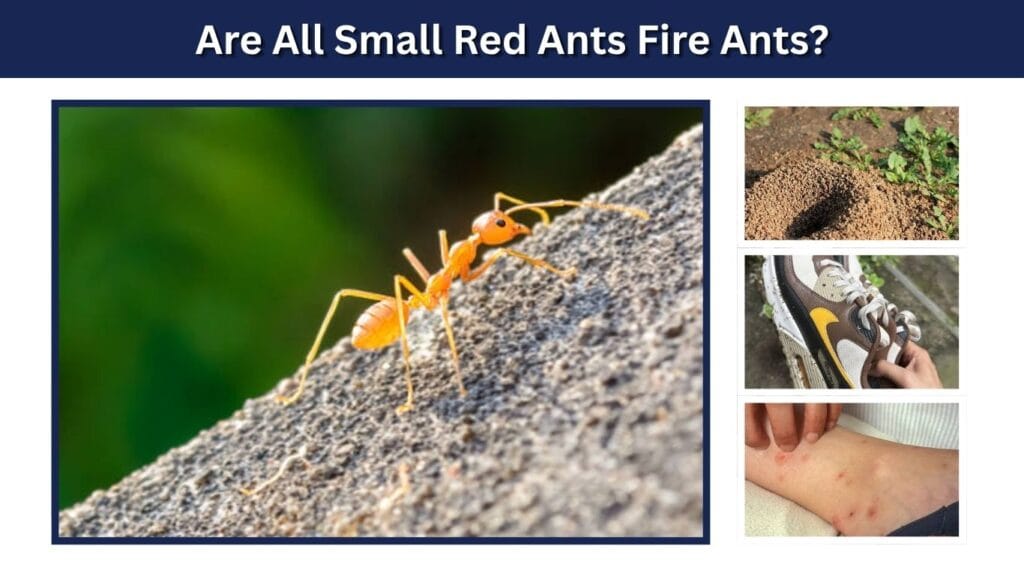
Many people assume that every tiny red ant around a yard or home is a fire ant. This is not accurate. Several ant species can appear red, orange, brown, or reddish-black without belonging to the fire ant group. Behavior, body structure, nesting habits, and geographical location should all be considered before identifying an ant as a fire ant.
Small Red Fire Ants vs. Other Red Ants
Small red ants can belong to several different groups.
Fire ants are more likely when the ants:
- Become aggressive when the nest is disturbed
- Rapidly swarm onto shoes or skin
- Sting repeatedly
- Build nests in soil
- Have workers of noticeably different sizes
- Produce painful burning sensations after stinging
Other red ants may behave much less aggressively and may bite without producing the characteristic burning sting associated with fire ants.
Small Black or Brown Fire Ants
Fire ants are not always bright red.
Some may appear:
- Red-brown
- Dark reddish-brown
- Brown
- Nearly black in certain lighting
Color can also differ between the head, thorax, and abdomen. Therefore, identifying a suspected small black fire ant or small brown fire ant based only on color can lead to mistakes.
Small Fire Ant Bites and Stings
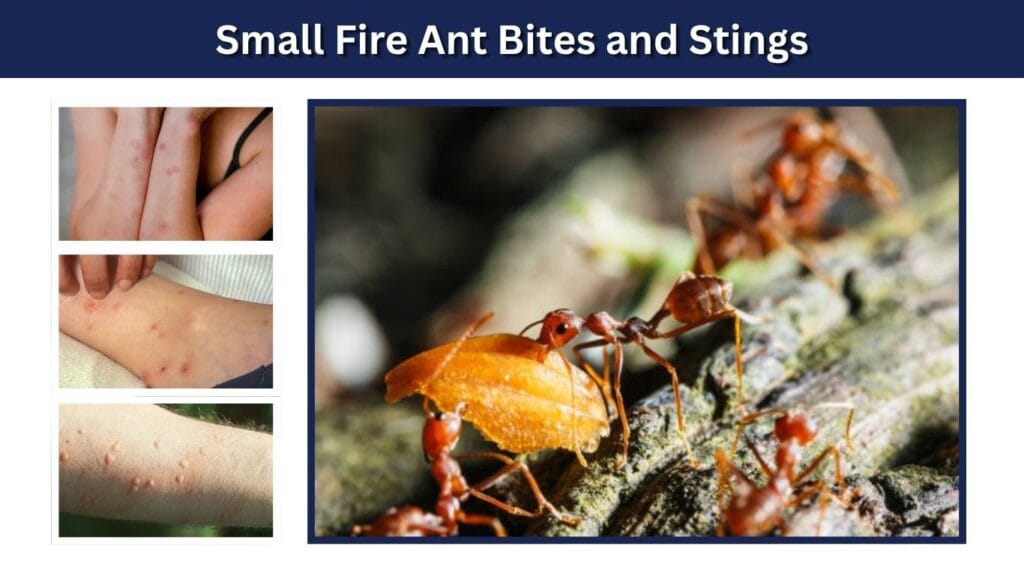
People often describe the injury as a small fire ant bite, but fire ants usually use both their jaws and stinger during an attack. The ant grips the skin with its mandibles and then curves its abdomen to inject venom through the stinger. It may sting several times before releasing its grip, which explains why one ant can leave multiple painful marks.
What Does a Small Fire Ant Sting Feel Like?
The first sensation is often a sudden burning or sharp pain.
Typical reactions may include:
- Immediate burning
- Local redness
- Swelling
- Intense itching
- Tenderness
- Small raised bumps
- White pustule-like spots appearing later
A single encounter can produce several sting marks if multiple ants attack or one ant stings repeatedly.
How Long Do Small Fire Ant Bites Last?
Pain may decrease relatively quickly, but itching and skin irritation can remain for several days.
Small pustules sometimes develop after the sting and may remain visible longer than the initial redness.
Scratching these spots can damage the skin and increase the chance of infection, so it is better to leave them intact whenever possible.
When a Fire Ant Sting Is Serious
Most reactions stay near the sting site, but some people can develop severe allergic reactions.
Seek urgent medical care if symptoms include:
- Trouble breathing
- Swelling of the lips or tongue
- Throat tightness
- Widespread hives
- Severe dizziness
- Fainting
- Rapidly worsening swelling
A severe systemic allergic reaction can become life-threatening and should not be treated as a normal local sting reaction.
Where Do Very Small Fire Ants Live?
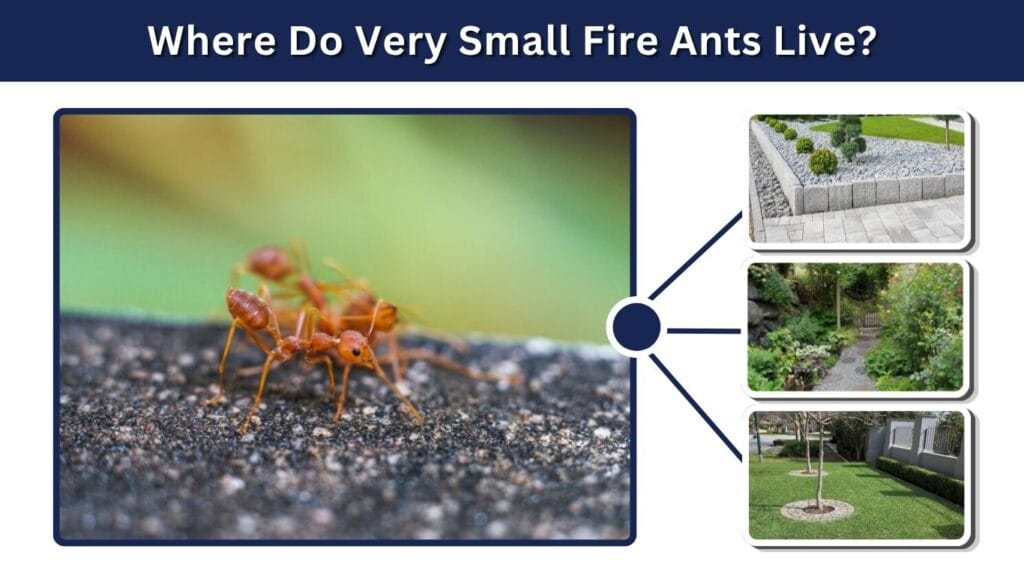
Fire ants usually prefer warm environments and often establish colonies in soil, lawns, gardens, agricultural fields, roadsides, and disturbed ground. Some species can also move into buildings while searching for food or shelter. Very small fire ants may be difficult to notice until a colony becomes established or workers begin appearing around food and moisture.
Small Fire Ants in Lawns and Gardens
Fire ant colonies commonly develop outdoors where soil conditions allow them to create underground tunnels.
They may occur around:
- Lawns
- Garden beds
- Sidewalk edges
- Tree bases
- Pastures
- Fields
- Driveways
- Utility boxes
Some fire ant nests form obvious mounds, but others may have little or no visible mound.
Small Fire Ants in Hawaii
The phrase small fire ant Hawaii often refers to the little fire ant, Wasmannia auropunctata. Despite its common name, the little fire ant is not a member of the genus Solenopsis that contains many well-known fire ants.
Little fire ants are extremely small and can deliver painful stings. They may live in trees, vegetation, yards, and around structures, making them particularly difficult to manage once established.
What Do Small Fire Ants Eat?
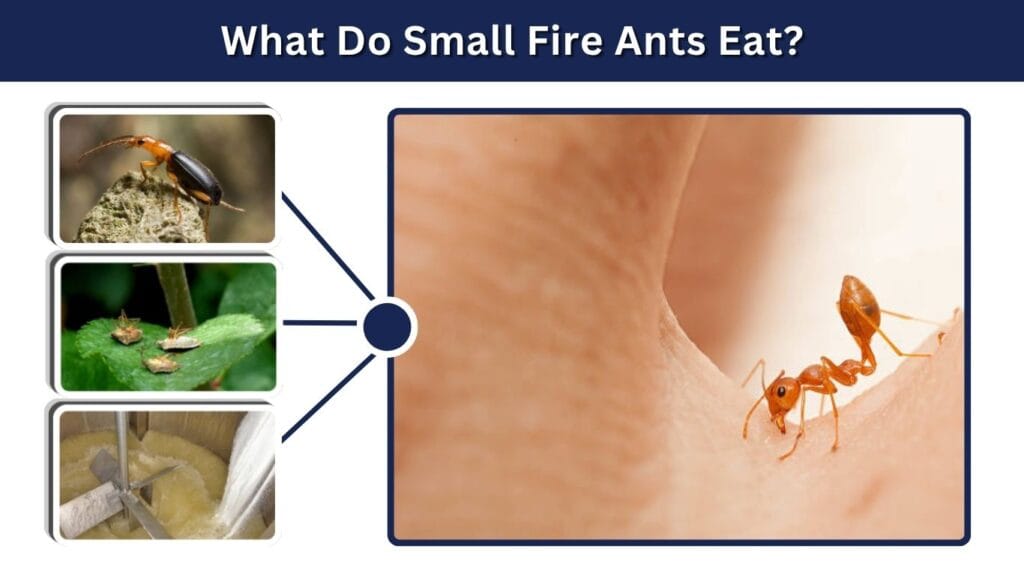
Small fire ants are opportunistic feeders. They can consume both animal and plant-based material and may quickly recruit colony members when a useful food source is discovered. Their broad diet helps colonies survive in many different environments.
Common Fire Ant Foods
Fire ants may feed on:
- Small insects
- Dead insects
- Sugary liquids
- Honeydew from sap-feeding insects
- Seeds
- Grease
- Meat
- Pet food
- Food scraps
Protein-rich food is especially useful for developing larvae, while adult workers often seek carbohydrates for energy.
Why Fire Ants Enter Homes
Fire ants may move indoors when they find accessible food, water, or shelter.
Kitchens, pet feeding stations, cracks near foundations, and plumbing areas may attract workers.
Indoor sightings do not always mean the entire colony is inside the house. In many cases, workers are traveling from a nest outside.
How to Get Rid of Small Fire Ants
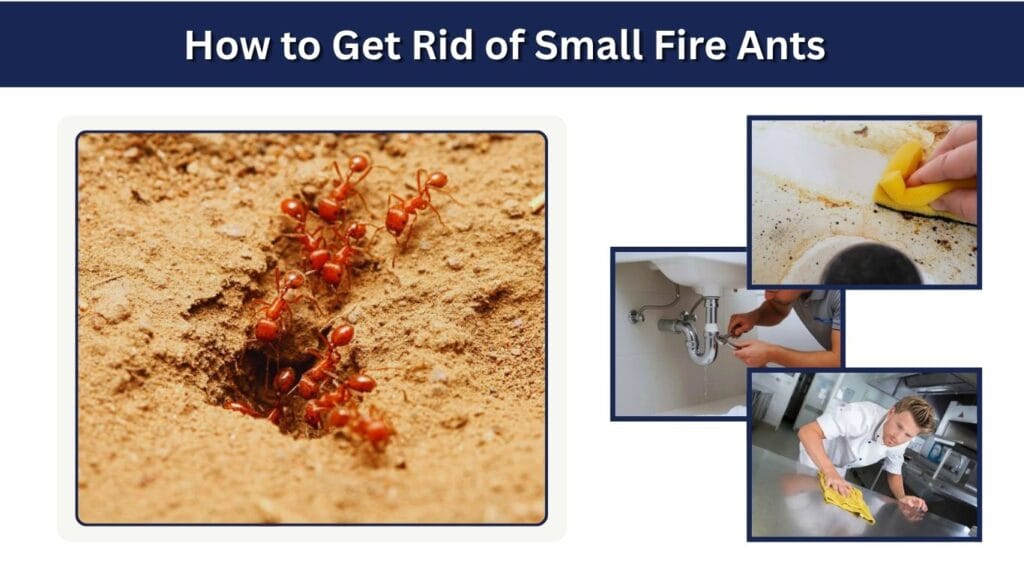
Successful fire ant control should target the colony rather than only killing the workers visible above ground. Spraying individual ants can reduce activity temporarily, but surviving queens and workers inside the nest can continue producing new ants. The most suitable method depends on whether the ants are outdoors, indoors, or spread across a large property.
Remove Food and Water Sources
Start by reducing anything that encourages ants to remain near the home.
Important steps include:
- Clean food spills
- Store pet food securely
- Keep garbage containers closed
- Repair leaking pipes
- Remove standing water
- Seal food containers
- Clean sugary residues
- Remove unnecessary outdoor debris
Good sanitation will not always eliminate a colony, but it can reduce the number of workers entering buildings.
Use Fire Ant Baits
Fire ant baits are designed to be carried back to the colony by foraging workers.
When used correctly, bait can reach ants underground and may eventually affect queens and developing colony members.
Follow the product label carefully and make sure the product is labeled for the specific location where it will be applied.
Treat Individual Mounds Carefully
Some treatments are designed specifically for individual fire ant mounds.
Avoid disturbing the mound unnecessarily before treatment because aggressive workers may rapidly emerge and sting.
People with known severe insect allergies should avoid approaching active fire ant nests and may want professional assistance instead.
Can Small Fire Ants Harm Pets?
Small dogs and other animals can be vulnerable because they are closer to the ground and may accidentally stand, sit, or lie on a fire ant nest. Large numbers of ants can sting rapidly, especially around the feet, nose, belly, or other areas with less hair.
Fire Ant Stings on Small Dogs
Possible signs include:
- Sudden jumping or agitation
- Licking or chewing the feet
- Red bumps
- Facial swelling
- Paw swelling
- Whining
- Multiple pustules
Remove the animal from the ants immediately and brush off remaining ants while protecting yourself from stings.
Veterinary care is important if a dog develops severe swelling, breathing difficulty, weakness, vomiting, or numerous stings.
FAQs
Are fire ants big or small?
Fire ants vary in size. Some workers are only a few millimeters long, while larger workers can be considerably bigger. A single colony may contain workers of different sizes, so seeing very small ants does not rule out fire ants.
Are all small red ants fire ants?
No. Many ant species are reddish or brown without being fire ants. Fire ants are better identified using a combination of body features, aggressive colony behavior, nesting habits, and their ability to deliver painful stings.
What does a small fire ant bite look like?
A fire ant sting usually begins as a painful red or swollen spot. It may later develop into a small white pustule-like bump surrounded by itching and redness. Multiple stings can occur close together when several ants attack.
What do small fire ants eat?
Small fire ants eat insects, dead animals, seeds, sugary liquids, grease, food scraps, and honeydew produced by sap-feeding insects. Their flexible diet allows them to survive in yards, agricultural areas, and around human structures.
How do you kill small fire ants?
The most effective control generally targets the entire colony. Fire ant baits and properly labeled mound treatments are common methods. Removing food sources and sealing entry points can also reduce indoor activity. Always follow pesticide label directions and avoid disturbing active nests unnecessarily.