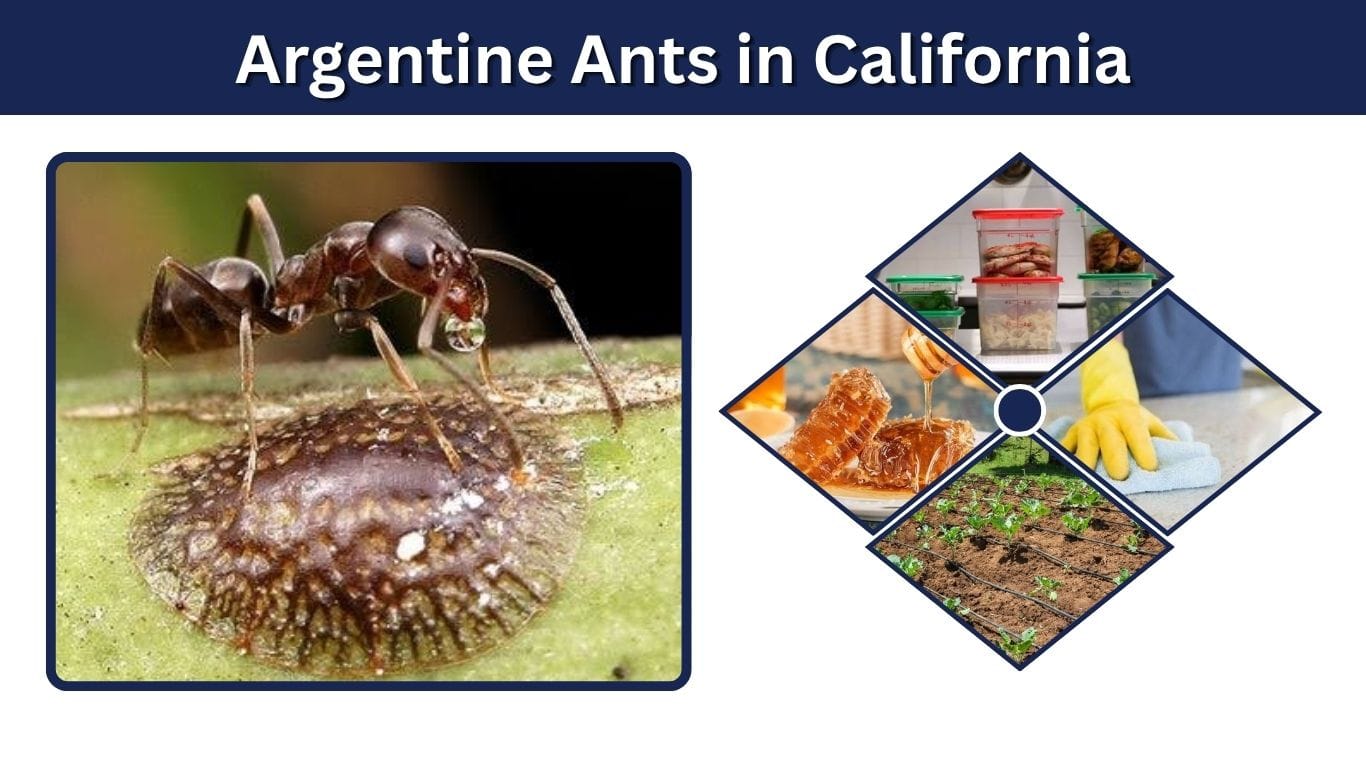
Argentine ants in California are among the most common nuisance ants found around homes, gardens, landscaped areas, and agricultural properties. These tiny brown ants often form long trails and can invade kitchens in large numbers while searching for water and sugary foods. They are especially widespread in coastal and Southern California, where mild weather and irrigated landscapes provide favorable conditions. Argentine ants do not normally sting people, but their enormous colonies, multiple queens, and persistent indoor invasions can make them difficult to eliminate.
What Are Argentine Ants?
The Argentine ant, Linepithema humile, is an invasive ant originally from South America. It was first recorded in California in 1907 and has since become widely established, particularly in coastal, urban, and southern parts of the state. Colonies contain many workers and multiple queens, allowing populations to grow rapidly and occupy large areas.
Argentine Ant Identification
Argentine ant workers are small and fairly uniform in size. They are usually around 1/10 to 1/8 inch long and range from light brown to dark brown or grayish-black.
Common characteristics include:
- Small, slender body
- Brown to grayish-black coloration
- Workers approximately 2.5–3 mm long
- One noticeable node at the waist
- Long antennae
- Long, organized foraging trails
- Workers similar in size
- No functional sting
They can easily be confused with other small household ants, so behavior and trail patterns can provide useful identification clues.
Do Argentine Ants Bite or Sting?
Argentine ants are not considered dangerous to people. Unlike fire ants, they do not have a painful defensive sting and are primarily nuisance pests.
Their biggest problem is their ability to enter buildings in extremely large numbers, contaminate food areas, and repeatedly return when the colony outside remains active.
Why Are Argentine Ants So Common in California?
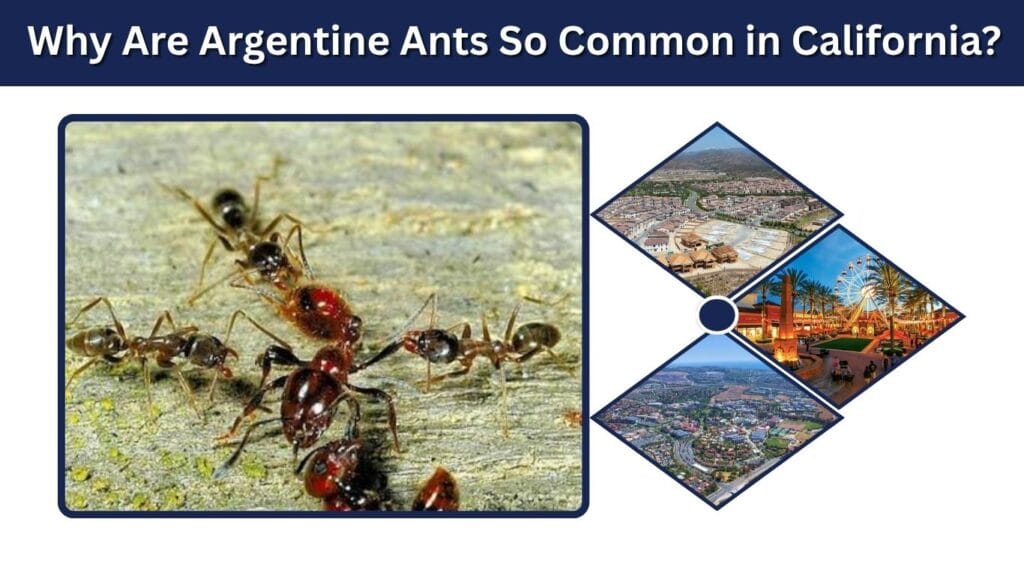
California provides many of the environmental conditions Argentine ants need. Mild winters, warm summers, urban irrigation, gardens, moisture around buildings, and abundant food allow colonies to survive and expand. They are particularly abundant around coastal areas, rivers, and urban landscapes where moisture remains available during otherwise dry periods.
Argentine Ants in Southern California
Southern California is particularly favorable for Argentine ants.
They are frequently encountered around:
- Los Angeles
- Orange County
- Irvine
- Riverside
- San Diego
- Coastal communities
- Irrigated residential neighborhoods
Landscaped yards provide water, plant-feeding insects, mulch, stones, and vegetation that create protected nesting areas.
Argentine ants can therefore remain abundant even during California’s dry summer months when natural moisture is limited.
Are Argentine Ants Common in Irvine, California?
Yes. Argentine ants are commonly encountered throughout urban Southern California, including communities such as Irvine and Orange County.
Irvine’s extensive landscaping, irrigated lawns, ornamental plants, patios, and residential developments can provide excellent habitat. Ants often establish nests outdoors and then enter townhouses, apartments, and houses through tiny openings while searching for food or moisture.
Argentine Ant Supercolonies in California
One reason Argentine ants are so successful is their unusual colony structure. Rather than maintaining strongly defended territories like many native ants, neighboring Argentine ant nests can cooperate. Multiple interconnected nests, each containing queens and workers, may effectively function as an enormous colony spread across a broad area.
What Is an Argentine Ant Supercolony?
A supercolony consists of many cooperating nests whose workers show little aggression toward one another.
This allows Argentine ants to:
- Maintain many queens
- Establish numerous nests
- Share food resources
- Form extensive trails
- Reach very high population densities
- Expand across large areas
- Recover after localized control
Killing ants around one house therefore does not necessarily eliminate the surrounding population.
The California Argentine Ant “War”
Searches for the Argentine ant war in California generally refer to competition between enormous Argentine ant populations or between Argentine ants and native ant species.
Argentine ants can aggressively dominate food and nesting resources. Their enormous numbers allow them to displace many native ants and other small arthropods.
In Southern California ecosystems, their spread has even affected wildlife indirectly by reducing native ant populations that certain animals use as food.
Where Do Argentine Ants Nest in California?
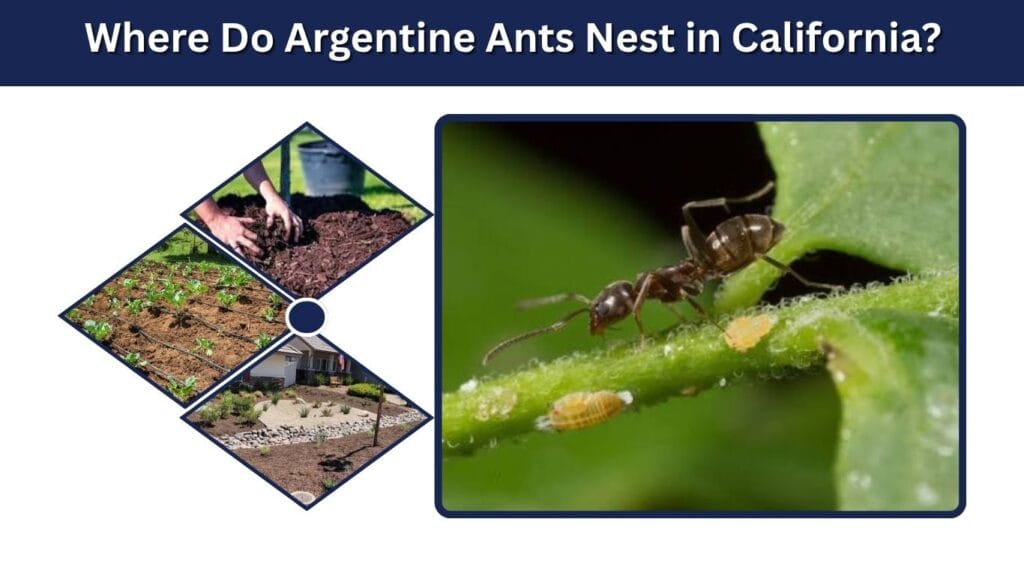
Argentine ants do not necessarily build large, obvious mounds. Their nests are often shallow and located wherever moisture and protection are available. Colonies frequently relocate when temperature, soil moisture, or food conditions change, making permanent elimination more difficult.
Common Nesting Locations
Look for Argentine ant activity around:
- Beneath landscape stones
- Mulch
- Potted plants
- Irrigation lines
- Tree bases
- Sidewalk cracks
- Patio edges
- Beneath boards
- Moist soil
- Building foundations
- Utility boxes
- Areas around leaking faucets
They are particularly attracted to landscaping that provides consistent moisture.
Why Do Argentine Ants Enter California Homes?
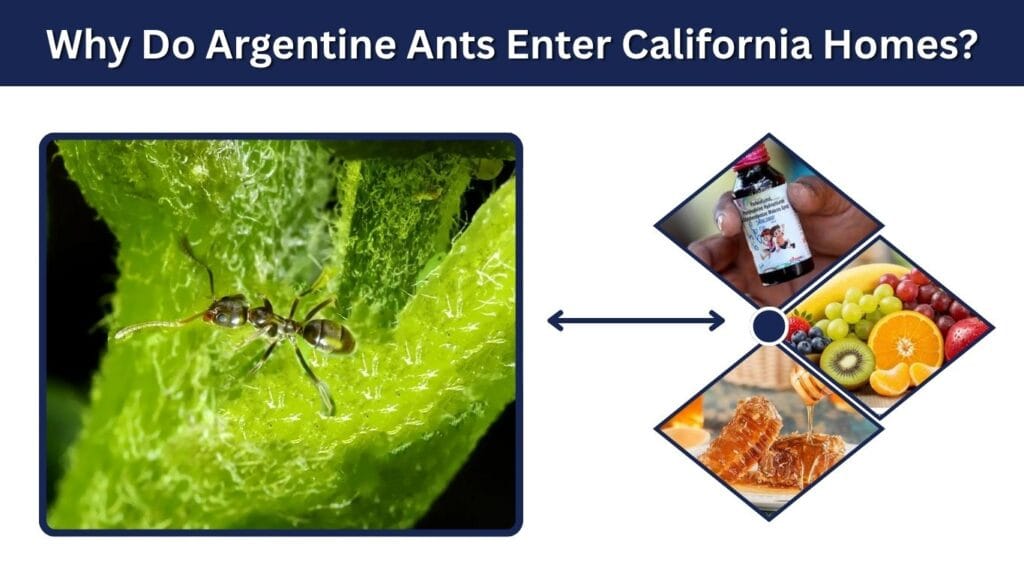
Outdoor colonies commonly send workers indoors in search of food and water. Activity may become especially noticeable when outdoor conditions become excessively dry, hot, cold, or wet. A tiny opening around a window, foundation, plumbing line, or door can provide access for thousands of workers.
What Attracts Them Indoors?
Argentine ants are particularly attracted to:
- Sugar
- Syrup
- Honey
- Fruit
- Soft drinks
- Food crumbs
- Pet food
- Grease
- Water
- Moisture around sinks
They also feed heavily on honeydew, a sugary substance produced by aphids, scales, mealybugs, and similar plant pests.
Argentine ants may protect these insects from natural predators so they can continue harvesting their honeydew.
Are Argentine Ants Seasonal in California?
Argentine ants can remain active for much of the year in mild California climates, but visible activity changes with temperature and moisture. Populations and outdoor foraging can become particularly noticeable during warmer months, while extreme weather may push workers indoors.
Why Ants Suddenly Appear Indoors
Indoor invasions frequently occur when outdoor conditions change.
Possible triggers include:
- Hot, dry weather
- Heavy rain
- Soil drying
- Excessive irrigation
- Changes in food availability
- Landscaping disturbance
A sudden trail inside does not necessarily mean a new colony formed indoors. Workers may simply be coming from a large outdoor colony nearby.
How to Get Rid of Argentine Ants in California
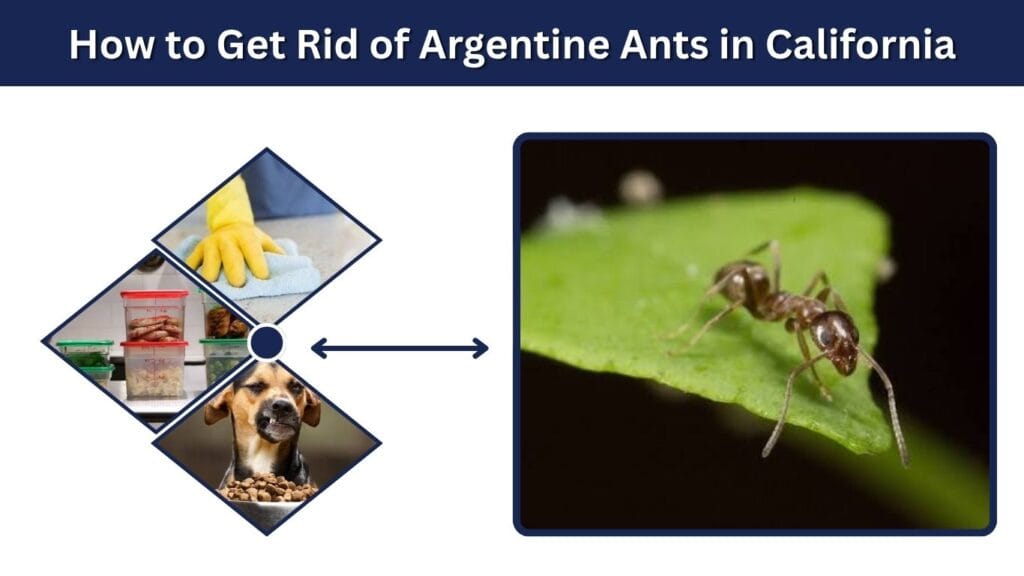
Controlling Argentine ants requires targeting the colony rather than simply killing visible workers. Because colonies can contain multiple queens and interconnected nests, spraying individual trails may provide only temporary relief. UC guidance emphasizes sanitation, exclusion, moisture reduction, and appropriately used ant baits.
Remove Food and Water
Make the property less attractive by:
- Cleaning sugary spills
- Storing food in sealed containers
- Removing pet food after feeding
- Fixing leaking faucets
- Emptying standing water
- Cleaning garbage containers
- Controlling aphids and scale insects
- Reducing excessive irrigation
Moisture management around landscaping can be particularly important in California.
Seal Their Entry Points
Follow ant trails to determine where workers are entering.
Seal gaps around:
- Windows
- Doors
- Plumbing
- Foundations
- Utility lines
- Baseboards
Caulk can help close small cracks used by ants.
Use Slow-Acting Ant Baits
Ant baits can be more effective than simply spraying visible workers because foraging ants carry bait back toward the colony.
Place appropriately labeled bait near active trails and allow workers to feed without disturbing them. Control can take time because the objective is to affect ants throughout the colony rather than immediately kill individual foragers.
Always follow the pesticide label and use only products approved for the intended location.
Argentine Ants vs. Carpenter Ants in California
Argentine and carpenter ants can both occur around California homes, but they look very different.
| Feature | Argentine Ant | Carpenter Ant |
| Size | About 2.5–3 mm | Usually much larger |
| Color | Brown to dark brown | Black, brown or reddish |
| Trail | Often very dense | Usually fewer workers |
| Nest | Soil and moist protected sites | Often wood cavities |
| Sting | No | No functional sting in common pest species |
| Main Concern | Massive colonies | Possible nesting in wood |
Seeing very small ants traveling in dense trails strongly favors Argentine ants over carpenter ants.
FAQs
Are Argentine ants common in California?
Yes. Argentine ants are among California’s most common household and garden ants. They are particularly widespread in coastal and Southern California and thrive around irrigated residential landscaping, gardens, agricultural areas, and other locations where moisture is consistently available.
Are Argentine ants common in Irvine, California?
Argentine ants are commonly encountered throughout Southern California, including Irvine and Orange County. Irrigated lawns, ornamental landscaping, mild weather, moisture, and densely developed residential areas provide favorable conditions for colonies to survive and continually send workers into homes.
Do Argentine ants bite people?
Argentine ants are not considered biting or stinging pests of humans. They are primarily nuisance ants. Their main problems are extremely large populations, persistent indoor trails, food contamination, and ecological impacts on native ants and other organisms.
Why are Argentine ants so hard to get rid of?
Colonies can contain multiple queens and many interconnected nests. Killing workers along one trail therefore removes only a small portion of the population. Effective management typically combines baiting, sanitation, moisture reduction, exclusion, and removal of favorable nesting conditions.
What is the California Argentine ant supercolony?
Argentine ants can form enormous cooperative populations consisting of numerous interconnected nests. Workers from compatible nests show little aggression toward each other, allowing populations to spread across large areas and maintain extremely high densities. This supercolony behavior is an important reason Argentine ants are so successful in California.