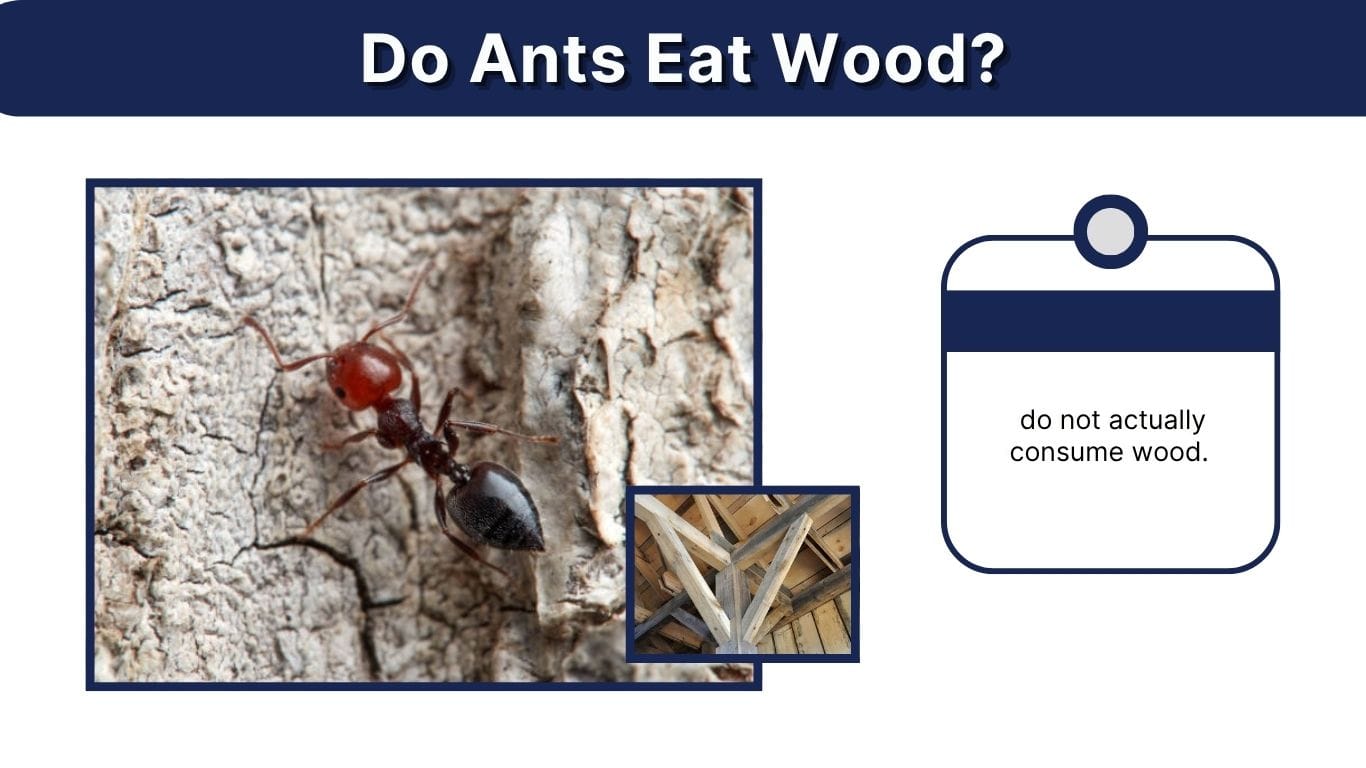
Finding ants crawling from a wooden floor, deck, wall, or beam can make it look as if they are eating the wood. However, most ants do not actually consume wood. Carpenter ants are the main ants associated with structural wood because they excavate galleries inside it to create nesting space. This behavior can still cause significant damage over time, especially when colonies occupy damp or decaying lumber. Understanding the difference between wood ants, carpenter ants, and termites can help you identify the problem and choose the right treatment.
Do Ants Eat Wood?
In general, ants do not digest wood as a primary food source. Most species eat sugary liquids, nectar, honeydew, insects, and other protein-rich foods.
Carpenter ants are often described as “wood-eating ants,” but this description is misleading. They chew and remove wood rather than eat it. Their strong jaws excavate tunnels and chambers where the colony can live.
The removed material is commonly pushed outside the nest as small piles of wood fragments known as frass.
Termites are different because they can obtain nutrition from cellulose in wood. This distinction is one of the easiest ways to understand the difference between a carpenter ant infestation and a termite infestation.
What Are Wood Ants?
The term wood ant can have different meanings. True wood ants commonly belong to the genus Formica and are especially well known in Europe. Many construct large mound nests from soil, pine needles, twigs, leaves, and other plant material.
In homes, however, people frequently use “wood ants” to describe carpenter ants simply because carpenter ants nest inside wood.
What Do Wood Ants Look Like?
Appearance varies depending on the species, but wood-associated ants may show the following characteristics:
- Six legs and elbowed antennae
- Narrow waist between the thorax and abdomen
- Black, brown, reddish, or combinations of these colors
- Workers of different sizes within some colonies
- Winged reproductive ants during mating periods
- Larger bodies in many carpenter ant species
Color alone should not be used for identification because many unrelated ant species can appear black or reddish.
Do Carpenter Ants Eat Wood?
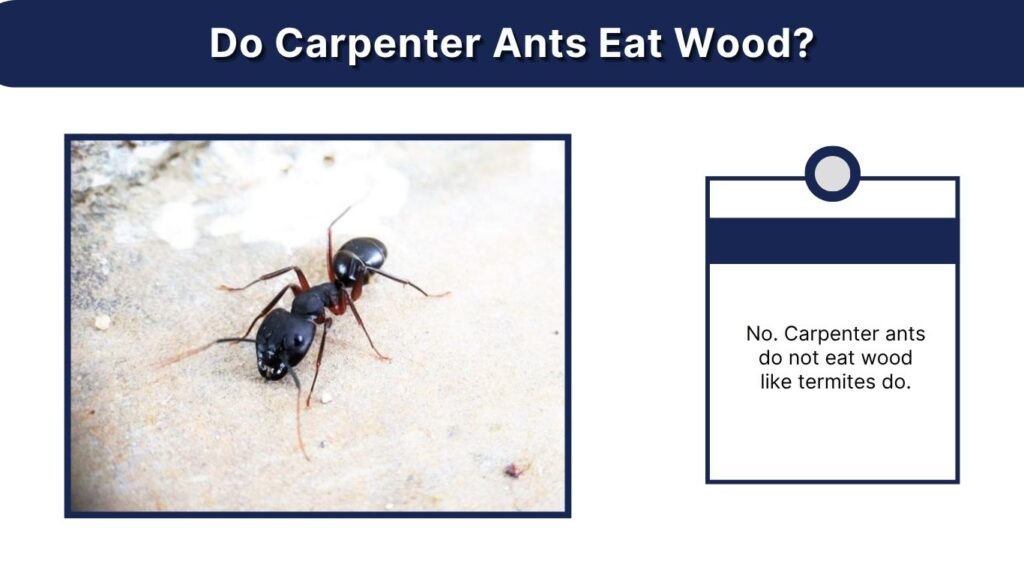
No. Carpenter ants do not eat wood like termites do.
Instead, they use their mandibles to remove wood and create smooth nesting galleries. They usually prefer wood that has already been weakened by moisture, rot, fungal decay, or water damage.
Once established, however, colonies may expand their galleries into nearby sound wood.
What Do Carpenter Ants Actually Eat?
Carpenter ants obtain nutrition from other sources. Their diet commonly includes sugary substances and proteins.
Outdoors, workers may feed on honeydew produced by aphids and other insects, flower nectar, plant fluids, and dead or living insects. Indoors, they may forage for sweet liquids, grease, pet food, crumbs, and other accessible foods.
Wood provides a nesting location—not their primary meal.
Signs of Carpenter Ants in Wood
Carpenter ants can remain hidden inside walls, floors, roofs, or wooden structures for long periods. Recognizing the early signs can prevent a colony from expanding.
Common Signs of an Infestation
Watch for:
- Large ants regularly appearing indoors
- Ants entering cracks or gaps in wooden structures
- Small piles of coarse wood shavings
- Ant parts mixed into the debris
- Rustling sounds coming from walls or wood
- Winged ants emerging indoors
- Ant activity around damp window frames
- Ants around leaking roofs or plumbing
- Galleries discovered inside damaged wood
The wood debris produced by carpenter ants can resemble sawdust, but it is often coarser and may contain insect remains.
Carpenter Ant Wood Damage
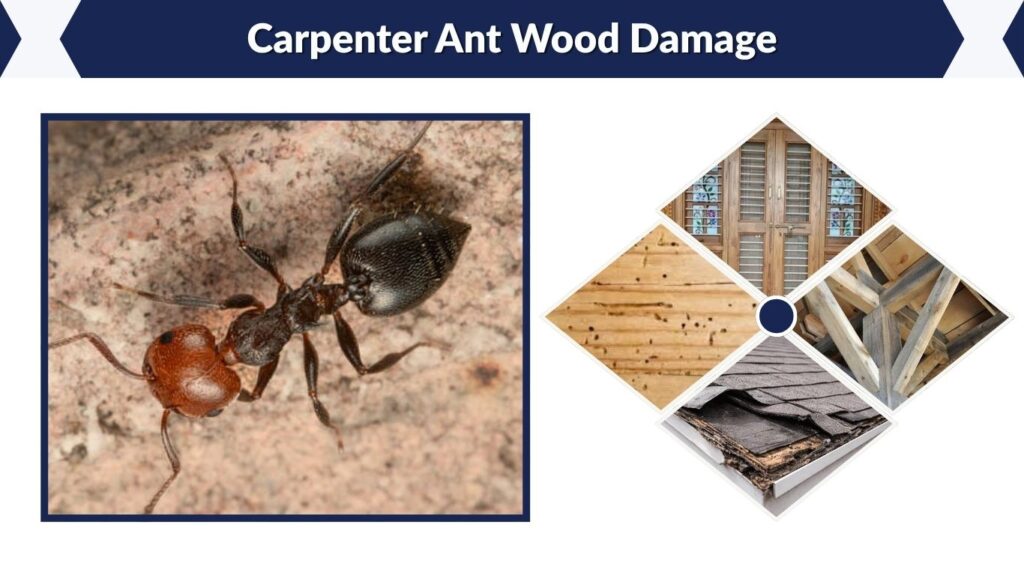
Carpenter ants can damage wood because a growing colony continually enlarges its nesting galleries.
Unlike termites, carpenter ants usually leave the surface of the wood relatively intact while excavating the interior. Their galleries are generally smooth and clean because the ants remove loose material from the nest.
A small colony may cause limited damage, but a mature infestation that remains untreated for years can weaken structural components.
What Wood Do Carpenter Ants Prefer?
They are commonly associated with moisture-damaged or decaying wood.
Problem areas may include:
- Window and door frames
- Roof edges
- Decks and porches
- Bathroom walls
- Areas around plumbing leaks
- Crawl spaces
- Wooden beams
- Fence posts
- Firewood
- Tree stumps
- Dead tree limbs
Finding carpenter ants can therefore be a warning sign that the building also has a moisture problem.
Wood Ants vs Termites
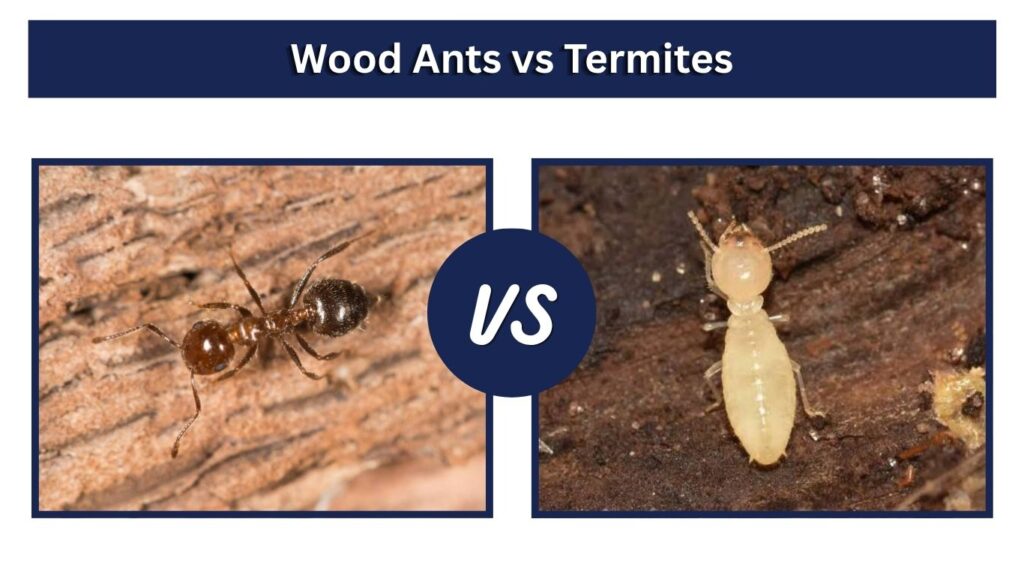
Ants and termites can both occur around wood, but they have very different biology.
| Feature | Carpenter Ants | Termites |
| Eat wood | No | Yes |
| Why they enter wood | Build nests | Food and nesting |
| Antennae | Elbowed | Usually straight |
| Waist | Narrow | Broad |
| Wing size | Front and rear wings differ | Wings are similar in length |
| Wood galleries | Smooth and clean | Often rougher or contain soil |
| Wood debris | Often pushed outside | Usually not sawdust-like piles |
One particularly confusing phrase is “white ants.” White ants are not true ants; the term is commonly used for termites.
Do Flying Ants Eat Wood?
Winged ants do not suddenly begin eating wood because they have wings.
Flying ants are reproductive males and females produced by established colonies. Their purpose is to leave the nest, mate, and potentially establish new colonies.
If large winged ants repeatedly emerge from inside a home, especially near wooden walls or window frames, the colony may be nesting somewhere within the structure.
Flying termites can look similar, so identifying the antennae, waist, and wings can help distinguish them.
Do Black Ants Eat Wood?
Seeing black ants near wood does not automatically mean you have carpenter ants.
Many ant species are black and have no interest in excavating structural timber. Carpenter ants themselves can also be black, reddish, brown, or multicolored depending on the species.
Instead of relying on color, look at their size, nesting location, debris, activity patterns, and other identifying characteristics.
Tiny black ants coming from a wooden area may simply be using cracks as pathways rather than nesting inside the wood.
Can Carpenter Ants Damage Treated Wood?
Pressure-treated lumber is generally less attractive to many wood-infesting organisms, particularly when it remains dry and in good condition. However, treated wood should not be considered completely immune to carpenter ants.
If moisture, deterioration, cracks, or untreated sections provide a suitable nesting area, ants may still establish themselves nearby or exploit vulnerable spaces.
Keeping wood dry is therefore just as important as choosing resistant building materials.
How to Get Rid of Ants in Wood
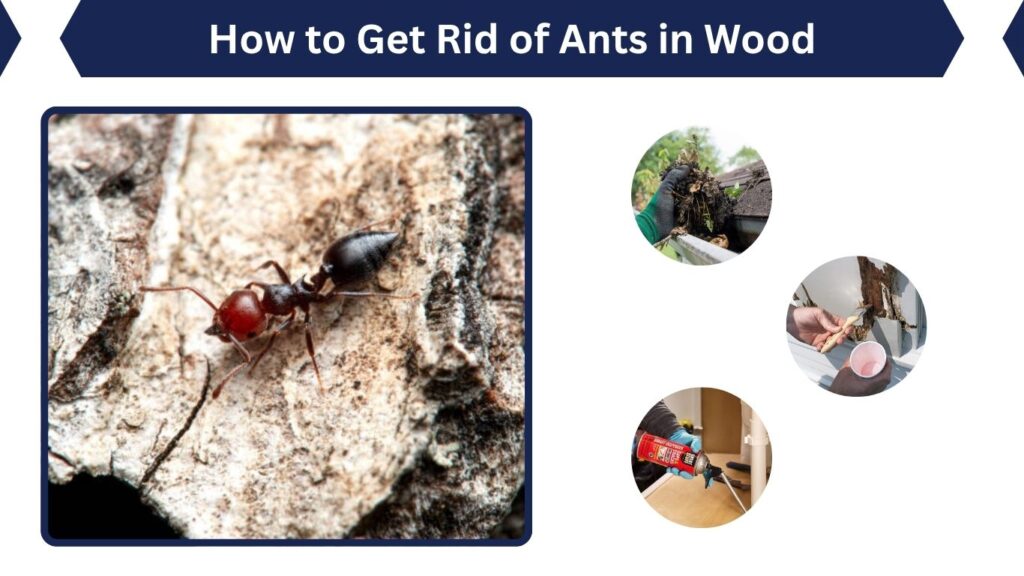
Successful control requires locating the colony rather than simply killing the workers you see.
Find the Source
Follow active trails when possible and inspect areas with excessive moisture. Look around plumbing, roof leaks, windows, bathrooms, crawl spaces, decks, tree branches touching the building, and damaged exterior wood.
Correct Moisture Problems
Repair leaking pipes, roofs, gutters, and poorly sealed windows. Replace severely rotted lumber when necessary.
Dry wood is generally much less suitable for carpenter ant nesting.
Remove Outdoor Nesting Sites
Keep firewood away from the house and avoid storing it directly against exterior walls. Remove rotting logs, stumps, and damaged branches close to the structure where practical.
Trim vegetation that provides ants with easy access to roofs or walls.
Seal Entry Points
Seal cracks and openings around:
- Windows
- Doors
- Utility lines
- Foundations
- Roof edges
- Siding
Reducing access helps prevent new colonies from moving into the building.
Large or persistent infestations inside structural wood may require professional pest control because simply spraying visible workers often fails to eliminate the hidden nest.
Can Ants Destroy a House?
Most household ants cannot destroy wooden structures.
Carpenter ants are more concerning because established colonies can gradually enlarge galleries inside structural wood. Serious damage normally develops over time rather than overnight.
Their presence should therefore be investigated rather than ignored, especially when ants are accompanied by wood shavings or moisture damage.
Termites generally present a different and potentially more direct structural threat because wood itself serves as food.
FAQs
What type of ants eat wood?
No common household ant truly eats structural wood in the way termites do. Carpenter ants are usually called wood-eating ants because they chew wood to create nesting galleries.
Why are ants coming out of my wood floor?
They may be nesting beneath or inside the floor, traveling through an existing crack, or using the area as a route to food. Carpenter ants become more likely when moisture damage and coarse wood debris are also present.
Do tiny ants eat wood?
Most tiny ants do not eat or excavate wood. Small ants found around timber may simply be using cracks and gaps as shelter or travel routes.
Are carpenter ants as bad as termites?
Both can be problematic, but they damage wood differently. Termites consume cellulose, while carpenter ants excavate wood for nesting. A long-established carpenter ant colony can still cause meaningful structural damage.
Does sawdust mean I have carpenter ants?
Sawdust-like material can be an important clue, particularly when it is coarse and appears beneath holes or cracks in wood. However, other insects and woodworking activity can produce similar debris, so additional evidence should be considered before identifying the pest.