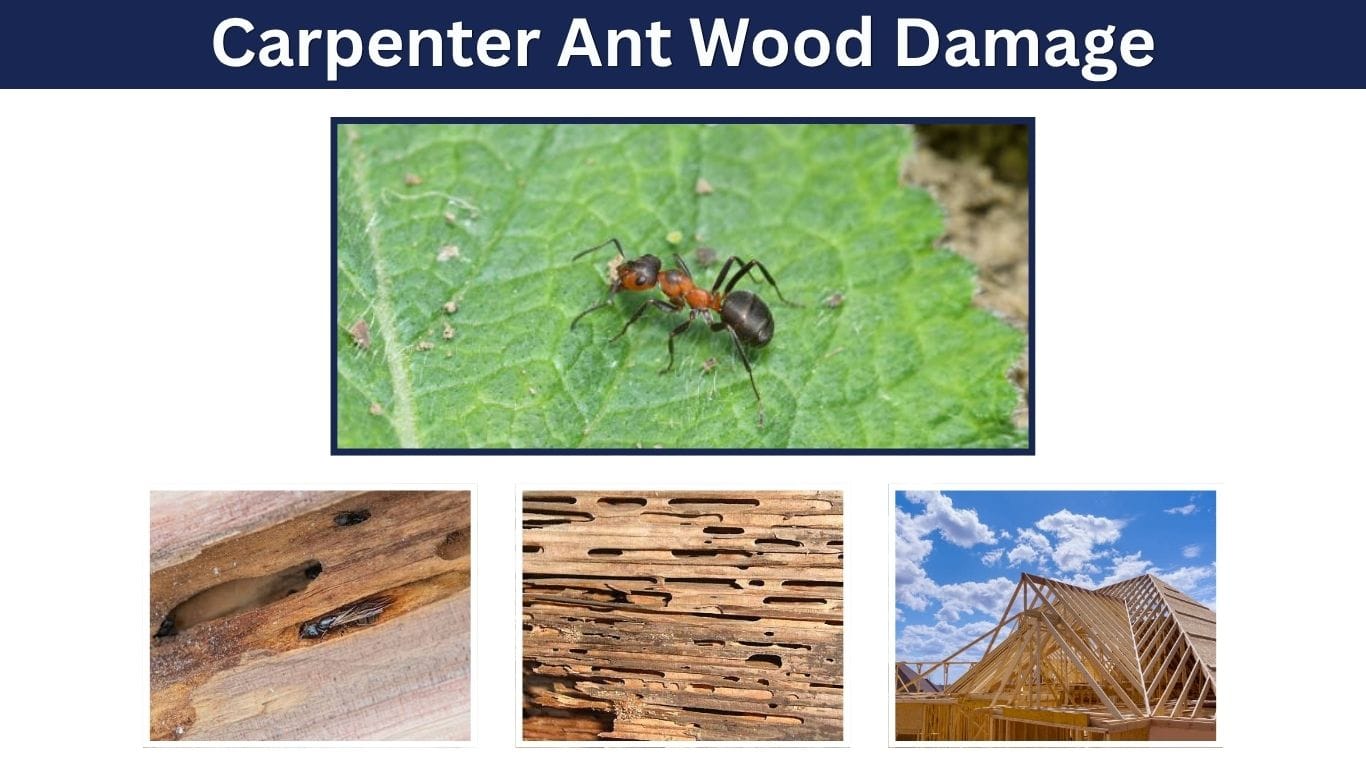
Carpenter ants can cause significant wood damage when a colony establishes itself inside a home. Unlike termites, carpenter ants do not eat wood. Instead, they excavate it to create smooth tunnels and nesting galleries. They often begin in damp, decaying, or water-damaged wood but may eventually expand into sound structural lumber. Recognizing carpenter ant frass, small openings, hollow wood, and hidden galleries early can prevent more serious damage to floors, walls, beams, and framing.
Do Carpenter Ants Damage Wood?
Yes. Carpenter ants can damage wood, but their behavior differs from wood-eating insects. Workers use their strong mandibles to remove small pieces of wood while constructing tunnels for the colony. Over time, repeated excavation can weaken structural components if a large colony remains untreated.
Do Carpenter Ants Eat Wood?
Carpenter ants do not digest wood for nutrition. They feed on substances such as:
- Sugary liquids and honeydew
- Insects and other arthropods
- Protein-rich foods
- Sweet household foods
- Plant secretions
The sawdust around a carpenter ant nest is discarded wood rather than food waste.
How Do Carpenter Ants Damage Wood?
Workers excavate galleries inside wood to provide space for adults, eggs, larvae, and pupae. They usually follow the grain of the wood and remove material until relatively smooth tunnels are formed.
Damage may begin slowly, but a mature colony with thousands of workers can gradually enlarge its nesting area.
What Does Carpenter Ant Damage Look Like?
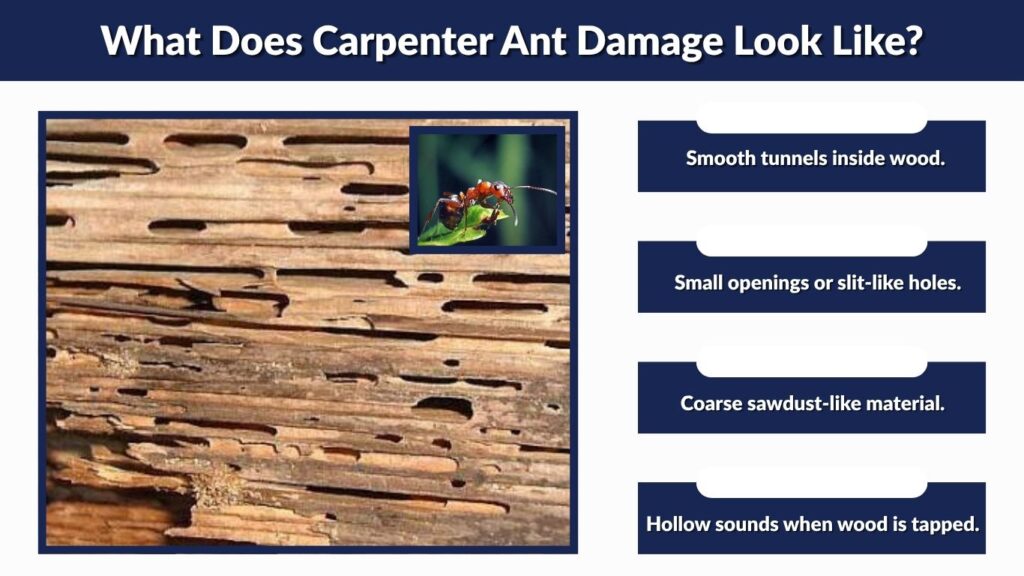
Carpenter ant damage is often hidden inside walls, floors, roof structures, or wooden beams. Visible evidence may therefore appear only after the colony has been active for some time. The most recognizable signs are smooth internal galleries, small openings, and piles of coarse wood debris known as frass.
Signs of Carpenter Ant Wood Damage
Look for:
- Smooth tunnels inside wood
- Small openings or slit-like holes
- Coarse sawdust-like material
- Hollow sounds when wood is tapped
- Ants repeatedly entering the same crack
- Winged carpenter ants indoors
- Soft or moisture-damaged wood
- Rustling sounds inside walls
- Damaged window or door frames
Finding several of these signs together increases the likelihood of an active carpenter ant nest.
Carpenter Ant Frass and Sawdust
Frass is one of the most useful clues.
Carpenter ant frass may contain:
- Coarse wood shavings
- Sawdust-like particles
- Dead ants
- Insect body parts
- Soil or other debris
Workers often push this material from small openings called “windows” or kick-out holes.
A fresh pile may reappear after cleaning if the colony remains active.
Carpenter Ant Damage vs. Termite Damage
Carpenter ants and termites can both weaken wooden structures, but they damage wood differently. Correct identification is important because treatment methods are not the same.
Carpenter Ant vs. Termite Wood Damage
Carpenter ant damage:
- Galleries are generally smooth and clean
- Tunnels often follow the wood grain
- Coarse frass may appear outside the nest
- Wood is excavated rather than eaten
- Ants are often visible foraging nearby
Termite damage:
- Termites consume cellulose in the wood
- Galleries may contain soil or mud
- Subterranean termites often build mud tubes
- Damaged wood can appear layered or honeycombed
- Termite fecal material differs according to species
If the infestation is extensive, professional identification can prevent treating the wrong pest.
Flying Ants vs. Flying Termites
Winged carpenter ants are reproductive ants that leave established colonies to mate and start new colonies.
A flying carpenter ant generally has:
- Elbowed antennae
- A narrow waist
- Front wings longer than rear wings
Winged termites typically have straighter antennae, a broader waist, and two pairs of wings that are closer to equal length.
Repeatedly finding large winged carpenter ants indoors can indicate a mature nest within or close to the structure.
Where Carpenter Ants Damage Wood
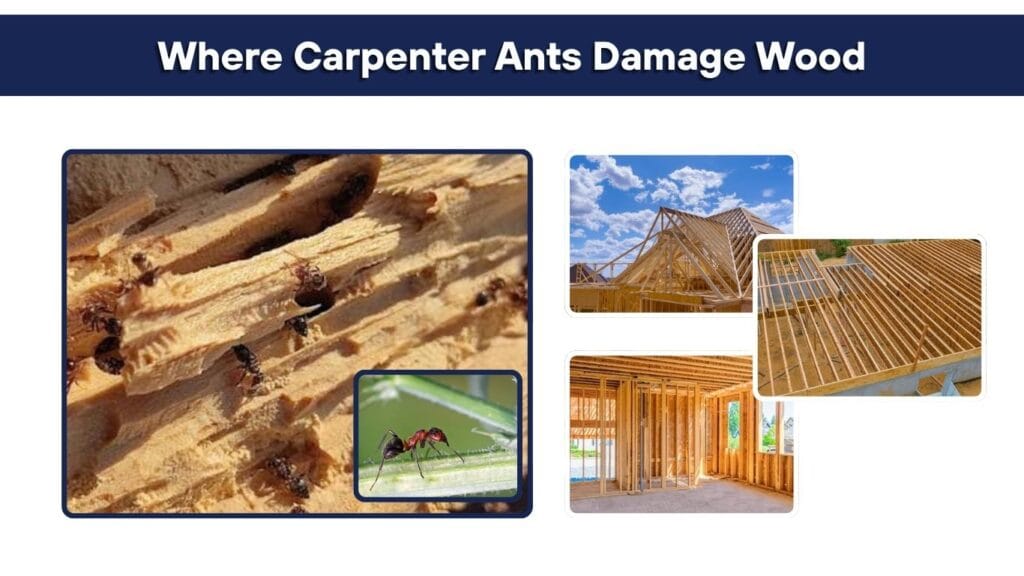
Carpenter ants strongly prefer locations where moisture has softened wood. Roof leaks, plumbing leaks, condensation, and poor ventilation frequently create ideal nesting conditions. However, colonies can expand from damaged areas into drier structural lumber.
Common Damage Locations
Carpenter ants may nest in:
- Wall studs
- 2×4 framing lumber
- Roof beams
- Floor joists
- Subfloors
- Hardwood flooring
- Window frames
- Door frames
- Porch posts
- Deck boards
- Attic wood
- Areas around plumbing
- Wood beneath leaking roofs
They may also establish satellite colonies in dry areas away from the primary nest.
Carpenter Ant Damage to Wood Floors
Ants beneath a wooden floor may use damp subflooring or joists as nesting material.
Possible signs include ants emerging around baseboards, cracks, floor edges, heating vents, or plumbing penetrations. Severe damage may eventually contribute to weak or uneven flooring, although other moisture-related problems can produce similar symptoms.
Why Carpenter Ants Are Attracted to Water-Damaged Wood
Moist, decaying wood is easier for carpenter ants to excavate than hard, dry lumber. For this reason, an infestation can sometimes reveal an underlying moisture problem that has not yet been noticed.
Moisture Problems to Check
Inspect for:
- Roof leaks
- Plumbing leaks
- Damaged gutters
- Poor drainage
- Window leaks
- Bathroom moisture
- Condensation
- Rotting deck or porch wood
Fixing the moisture source is a critical part of long-term carpenter ant control.
Simply killing visible workers without correcting the damp conditions may leave the property vulnerable to another infestation.
Can Small or Black Ants Damage Wood?
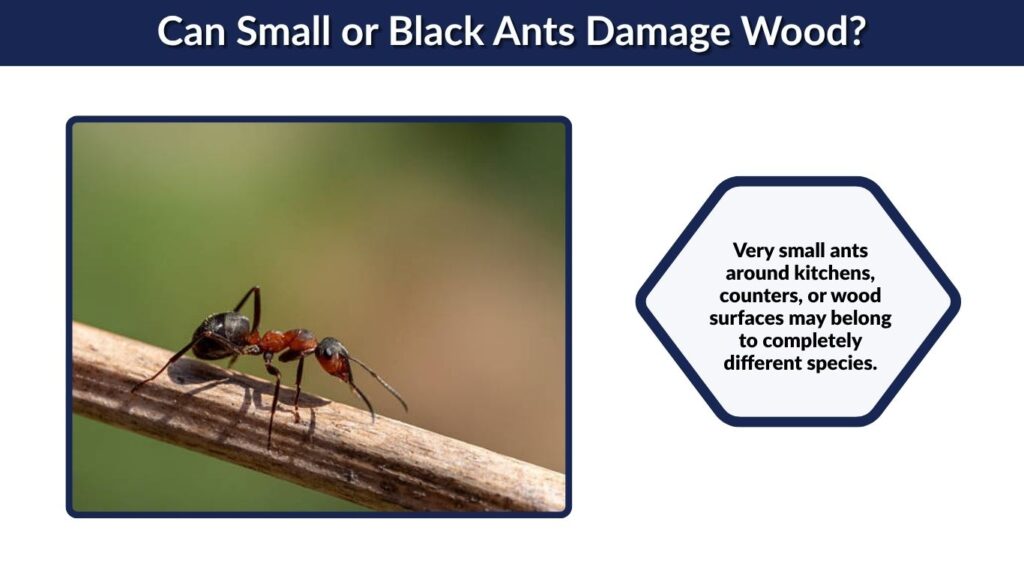
Not every ant seen on wood is a carpenter ant. Many small household ants walk across lumber while searching for food but do not excavate structural wood.
What Ants Cause Wood Damage?
Carpenter ants are among the most important structural wood-excavating ants. They are often relatively large, although size varies among workers within the same colony.
Very small ants around kitchens, counters, or wood surfaces may belong to completely different species.
Color is also unreliable. Carpenter ants can be:
- Black
- Red
- Brown
- Red and black
- Yellowish in some species
Identification should consider body shape, size, behavior, and nesting evidence rather than color alone.
How Serious Is Carpenter Ant Wood Damage?
The seriousness depends on colony size, location, moisture conditions, and how long the infestation has been present.
A recently established colony may cause limited cosmetic damage, while a colony occupying structural beams or joists for years can create a more serious problem.
Can Carpenter Ants Damage Structural Beams?
Yes. They can excavate:
- 2×4 framing
- Floor joists
- Rafters
- Beams
- Porch supports
- Wall studs
However, severe structural failure does not normally happen overnight. Damage generally accumulates over time.
Early detection provides the best chance to eliminate the colony before costly repairs become necessary.
How to Stop Carpenter Ant Wood Damage
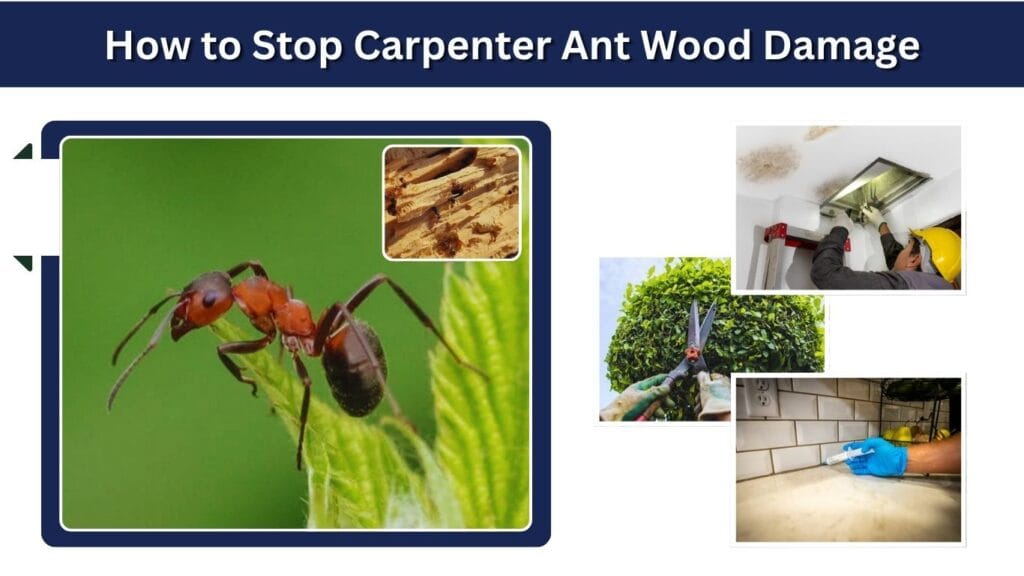
Successful control requires more than killing ants seen walking around the house. The colony, satellite nests, entry routes, and moisture problems should all be addressed.
Steps for Carpenter Ant Control
- Locate active ant trails
- Identify possible nesting areas
- Repair plumbing and roof leaks
- Replace severely rotted wood
- Seal cracks and exterior openings
- Trim branches touching the house
- Move firewood away from the structure
- Eliminate food sources
- Use appropriately labeled ant baits or treatments
- Consider professional treatment for hidden structural nests
Avoid repeatedly spraying visible workers if it prevents you from locating the main colony.
Repairing Wood Damaged by Carpenter Ants
Wood should generally be repaired after the active infestation and moisture source have been addressed. Otherwise, ants may continue damaging replacement material or establish another nest nearby.
When Does Damaged Wood Need Replacement?
Minor superficial galleries may not significantly affect structural strength. More extensive damage requires careful assessment.
Replace or reinforce wood when it is:
- Severely hollowed
- Soft from rot
- Structurally weakened
- Cracked or sagging
- Extensively tunneled
- Part of a critical load-bearing structure
A carpenter, contractor, pest-management professional, or structural specialist may be needed when joists, beams, roof supports, or other load-bearing components are involved.
FAQs
Do carpenter ants eat wood?
No. Carpenter ants excavate wood to create nests and tunnels, but they do not digest it as food. The removed material is often pushed outside as a frass.
What does carpenter ant damage look like?
Damage usually consists of smooth, clean galleries running through the wood. You may also notice coarse sawdust-like frass, small openings, hollow-sounding wood, or ants emerging from cracks.
Can carpenter ants damage a 2×4?
Yes. Carpenter ants can excavate 2×4 framing and other structural lumber, particularly when moisture or decay makes the wood easier to tunnel through.
How can you tell termite damage from carpenter ant damage?
Carpenter ant galleries are typically smooth and clean, with coarse frass nearby. Termites actually consume wood and may leave muddy galleries, mud tubes, or layered internal damage.
Can regular small ants damage wood?
Most small household ants do not excavate structural wood. If tiny ants are present on wood, their presence alone does not prove wood damage. Proper species identification is important before deciding on treatment.