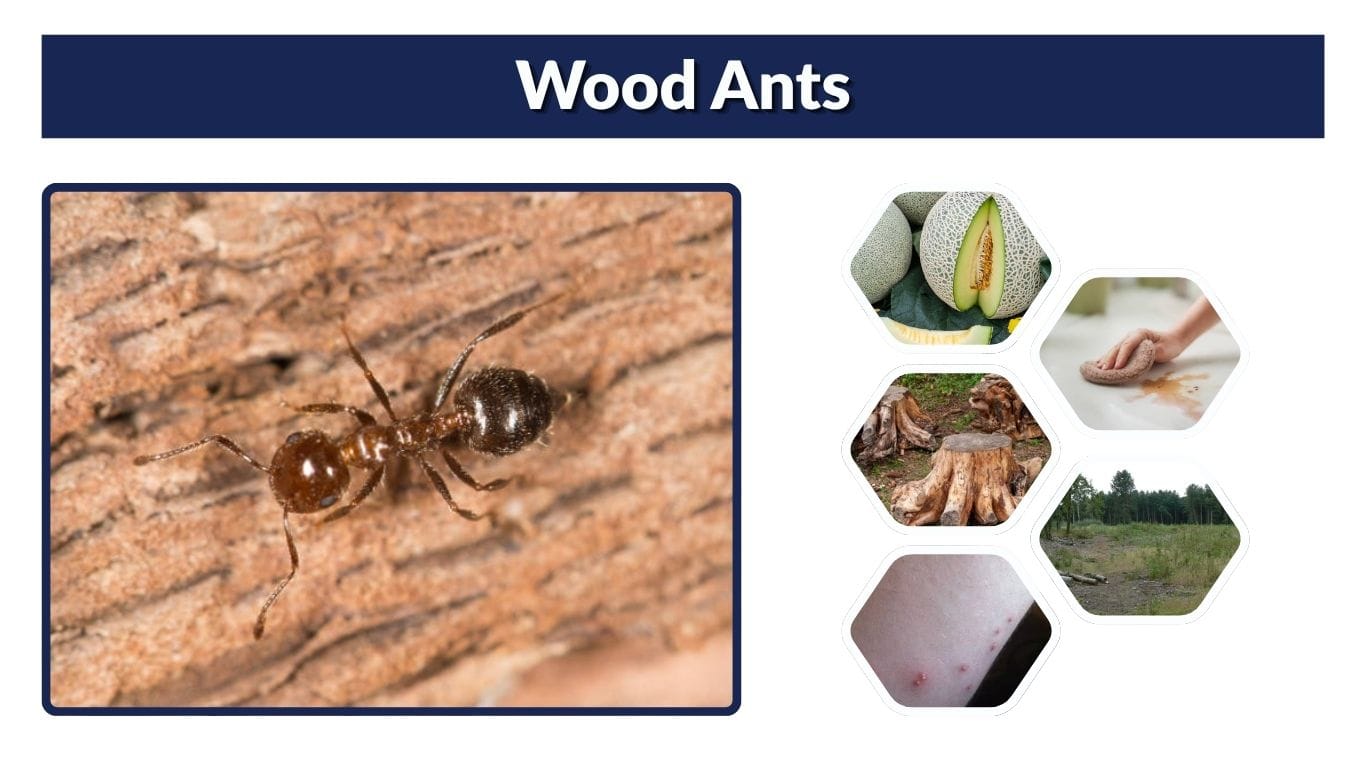
Wood ants are large, active ants commonly associated with forests, trees, logs, and other wooded habitats. The name usually refers to several Formica species, particularly the red and black wood ants found across Europe and parts of the UK. However, homeowners sometimes use “wood ants” when referring to carpenter ants living inside structural wood. Despite the name, true wood ants do not eat wood. This guide explains what wood ants look like, where they live, whether they bite, how they differ from termites and carpenter ants, and what to do if ants appear around your home.
What Are Wood Ants?
True wood ants belong mainly to the genus Formica. They are social insects that establish large colonies and are especially associated with forests, woodland edges, and areas containing plenty of trees.
Many species build highly visible mound nests using soil, twigs, pine needles, grass, and other plant material. A mature nest can contain thousands of workers.
Wood ants are ecologically important because they prey on other insects, scavenge dead organisms, disperse seeds, and interact with aphids to collect sugary honeydew.
What Do Wood Ants Look Like?
Typical wood ant characteristics include:
- Medium to relatively large ant size
- Six long legs
- Clearly elbowed antennae
- Narrow waist
- Reddish-brown, dark brown, black, or mixed coloration
- Workers often showing a reddish thorax and darker abdomen
- Strong mandibles
- Winged males and queens appearing during reproductive periods
Appearance varies among species, so color alone is not enough for identification.
Black Wood Ants vs Red Wood Ants
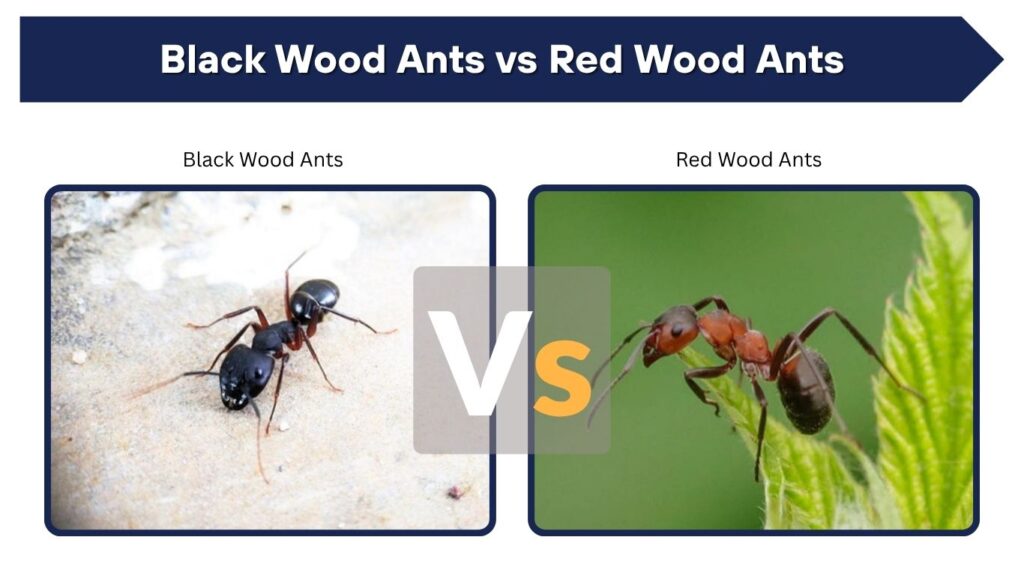
Wood ants can appear red, black, reddish-black, or brown depending on the species.
Red wood ants are among the best-known European species. They commonly build large mound nests in forests, often using pine needles and other vegetation.
The term “black wood ant” can be more confusing because several dark-colored ant species may be described that way. In North America, people searching for black wood ants may actually be encountering black carpenter ants rather than true Formica wood ants.
What Are Tiny Wood Ants?
True wood ants are generally not extremely tiny. If very small ants are coming from cracks in wooden floors or walls, they may be another household ant species using the wood simply as shelter or a pathway.
Size, nesting behavior, location, and debris around the nest provide better identification clues than color alone.
Do Wood Ants Eat Wood?
No. True wood ants do not eat wood.
They may live around logs, trees, forest debris, and wooden structures, which creates the impression that they feed on timber. Their actual diet consists primarily of insects, other small invertebrates, nectar, honeydew, and other sugary substances.
Even carpenter ants, which excavate wood, do not actually digest it.
Wood Ants vs Carpenter Ants
Wood ants and carpenter ants are not necessarily the same thing.
True wood ants generally belong to Formica, while carpenter ants belong to Camponotus.
Carpenter ants are especially important around homes because they can excavate galleries inside damp or damaged wood. True wood ants more commonly establish outdoor nests in soil or mound structures.
If ants are repeatedly emerging from wooden beams, walls, floors, window frames, or other structural timber, carpenter ants may be a more likely explanation.
Wood Ants vs Termites
Wood ants and termites are completely different insects.
The biggest difference is that termites actually consume cellulose in wood, while ants generally do not.
| Feature | Wood Ants | Termites |
| Eat wood | No | Yes |
| Antennae | Elbowed | Straight or bead-like |
| Waist | Narrow | Broad |
| Body color | Often red, brown, or black | Workers often pale |
| Wings | Front wings usually larger | Four similar-sized wings |
| Nest | Soil, mounds, trees, or cavities | Soil or wood |
| Wood damage | True wood ants usually minimal | Can be severe |
The phrase “white ants” is also misleading. White ants are actually termites, not ants.
Where Do Wood Ants Live?
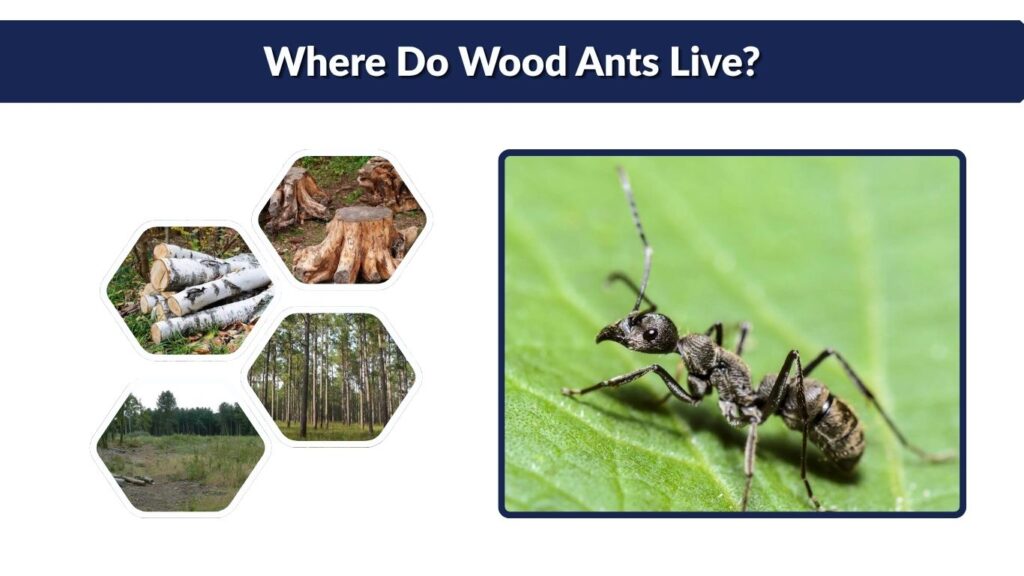
True wood ants are strongly associated with wooded environments.
Common habitats include forests, woodland clearings, forest edges, grasslands near trees, tree stumps, fallen logs, and areas containing abundant plant debris.
Some species prefer sunny areas where their nests can receive warmth.
Wood Ant Nests
A typical wood ant nest may look like a mound constructed from:
- Pine needles
- Twigs
- Grass
- Leaves
- Small pieces of bark
- Soil
- Other forest debris
Part of the colony may extend underground beneath the visible mound.
Large colonies can contain interconnected nests, allowing workers to travel between different parts of their territory.
Wood Ants in the House
True wood ants are mainly outdoor insects, so large numbers living permanently inside a house are less common than carpenter ant infestations.
Individual workers may occasionally wander indoors while searching for food.
However, regular activity from the same wall, wooden floor, window frame, or roof area deserves closer inspection.
Signs of Wood-Associated Ants Indoors
Look for:
- Ant trails entering wall gaps
- Ants repeatedly appearing near wood
- Winged ants emerging indoors
- Activity around wet or decaying timber
- Ants near plumbing leaks
- Wood shavings beneath cracks or holes
- Ants entering around windows and doors
Coarse wood shavings are particularly suggestive of carpenter ants rather than true wood ants.
Do Wood Ants Bite?
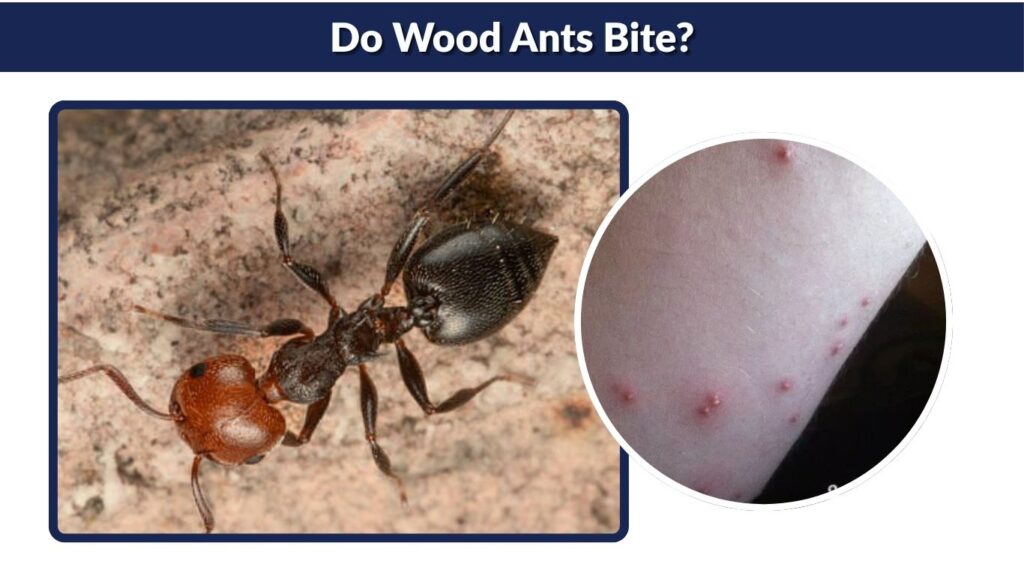
Yes. Wood ants can bite with their mandibles when threatened.
Some species also defend themselves using formic acid. Rather than possessing a bee-like stinger, many Formica wood ants can spray formic acid toward threats.
Their defenses are especially noticeable when someone disturbs an active nest.
Are Wood Ants Dangerous?
For most people, wood ants are more of a nuisance than a serious danger.
A bite or exposure to defensive secretions may cause temporary irritation, burning, or discomfort. Reactions vary by person.
Large nests should nevertheless be left undisturbed, especially around children and pets, because many workers may respond when the colony is threatened.
Do Wood Ants Have Wings?
Worker wood ants do not have wings, but reproductive males and young queens do.
Winged ants usually appear during mating periods. After mating, queens shed their wings and attempt to establish or join colonies depending on the species.
Finding a few flying ants outdoors can therefore be normal.
Repeatedly seeing winged ants emerging from inside a building may indicate that an ant colony is established somewhere in or near the structure.
What Do Wood Ants Eat?
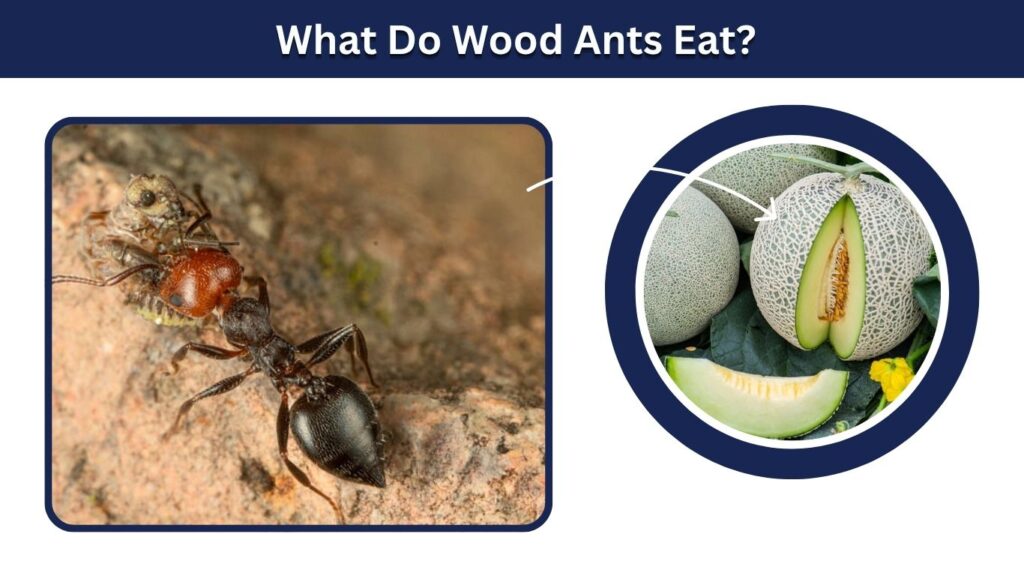
Wood ants have a varied diet.
They commonly feed on insects and other small invertebrates, helping regulate insect populations around their colonies. They also consume sugary substances.
One particularly important food is honeydew, a sweet liquid produced by aphids and related sap-feeding insects.
Wood ants may protect aphid colonies from predators in exchange for access to this sugar-rich food source.
They may also visit flowers and forage on dead insects.
How to Get Rid of Wood Ants
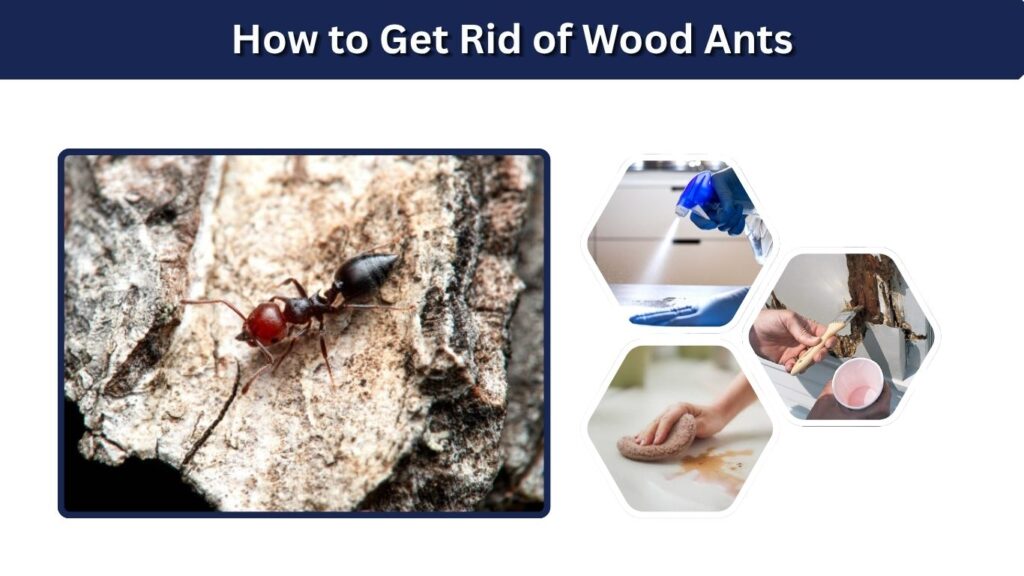
Before treating ants, determine whether you are dealing with true outdoor wood ants, carpenter ants, or another household species.
Destroying every outdoor wood ant colony is usually unnecessary. Treatment becomes more reasonable when ants repeatedly enter buildings or establish nests in locations where they create problems.
Remove Food Sources
Clean up sweet spills, crumbs, pet food, and other accessible foods. Store food in sealed containers and keep kitchen surfaces clean.
Reducing food availability can discourage indoor foraging.
Seal Entry Points
Inspect the exterior of the building and seal cracks around:
- Doors
- Windows
- Foundations
- Utility lines
- Siding
- Roof edges
Tree branches touching the building should also be trimmed when they provide an obvious ant route.
Correct Moisture Problems
Moisture is particularly important if the ants are actually carpenter ants.
Repair leaking pipes, damaged gutters, roof leaks, and poorly sealed windows. Replace severely decayed wood where necessary.
Manage Outdoor Nesting Areas
Move firewood away from exterior walls and keep it raised from the soil. Remove rotting logs, dead branches, and unnecessary wood debris near the foundation.
However, large true wood ant nests in natural woodland should not automatically be destroyed. Some wood ant species are ecologically valuable and may receive legal protection in certain regions.
Use Ant Baits When Appropriate
Slow-acting ant baits can sometimes be more effective than simply spraying visible workers because foragers may carry bait back toward the colony.
The correct bait depends on the species and its current food preferences.
For a large indoor infestation or a nest hidden inside structural wood, professional pest control may be the most reliable option.
How to Get Rid of Wood Ants Naturally
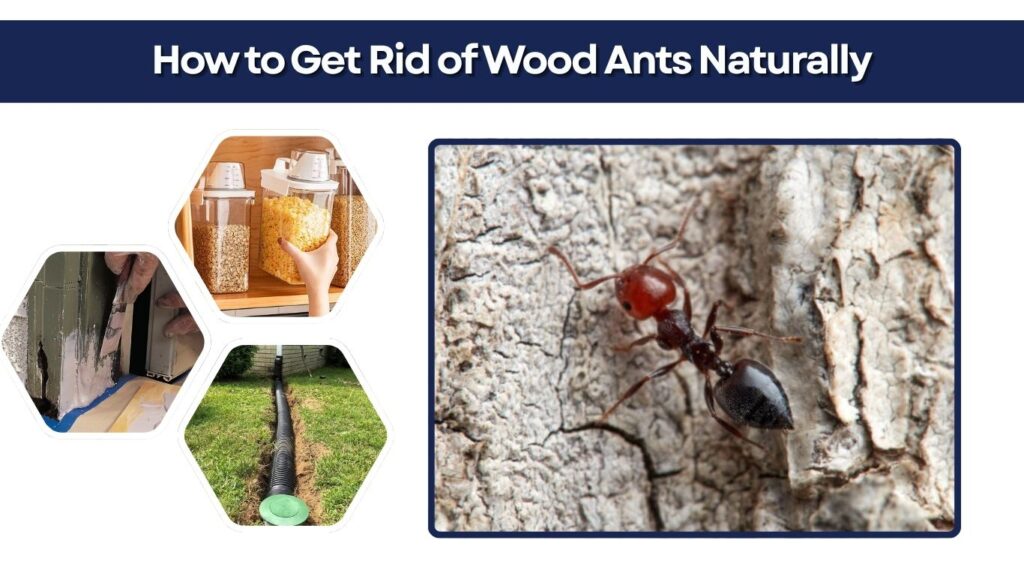
Home maintenance is usually the best starting point for non-chemical control.
Keep food sealed, eliminate standing moisture, repair damaged wood, seal entry points, trim vegetation away from the house, and relocate firewood.
Vacuuming individual ants can reduce temporary indoor activity, but it will not eliminate an established colony.
Avoid pouring boiling water or homemade chemicals into an unidentified outdoor nest, particularly if the colony is in a natural habitat where wood ants may be beneficial.
Wood Ants in the UK, Texas, and Florida
Wood ants are particularly well known in Europe and the UK, where species such as the red wood ant inhabit suitable woodland.
Searches for “wood ants” in Texas or Florida often refer more broadly to ants associated with trees or timber. Carpenter ants are common concerns in warmer parts of the United States and are more relevant when ants are actually nesting inside a home’s wooden structure.
Geographic location therefore matters when interpreting the name “wood ant.”
FAQs
Are wood ants and carpenter ants the same?
Not necessarily. True wood ants generally belong to the genus Formica, whereas carpenter ants belong to Camponotus. The terms are sometimes used interchangeably by homeowners, which causes confusion.
Do wood ants damage houses?
True wood ants normally cause little structural wood damage. If ants are excavating galleries inside wooden walls or beams, carpenter ants are a more likely culprit.
What kills wood ants?
Ant baits and appropriately labeled ant-control products can control nuisance colonies, but identification should come first. Outdoor woodland colonies may be beneficial and do not always require treatment.
Can wood ants spray formic acid?
Yes. Many Formica wood ants use formic acid as a defensive chemical and can direct it toward threats when their nest is disturbed.
How can I tell wood ants from termites?
Look at the body shape. Ants have elbowed antennae and narrow waists, while termites have broader waists and straighter antennae. Winged termites also have four wings of roughly equal length, whereas winged ants have larger front wings.