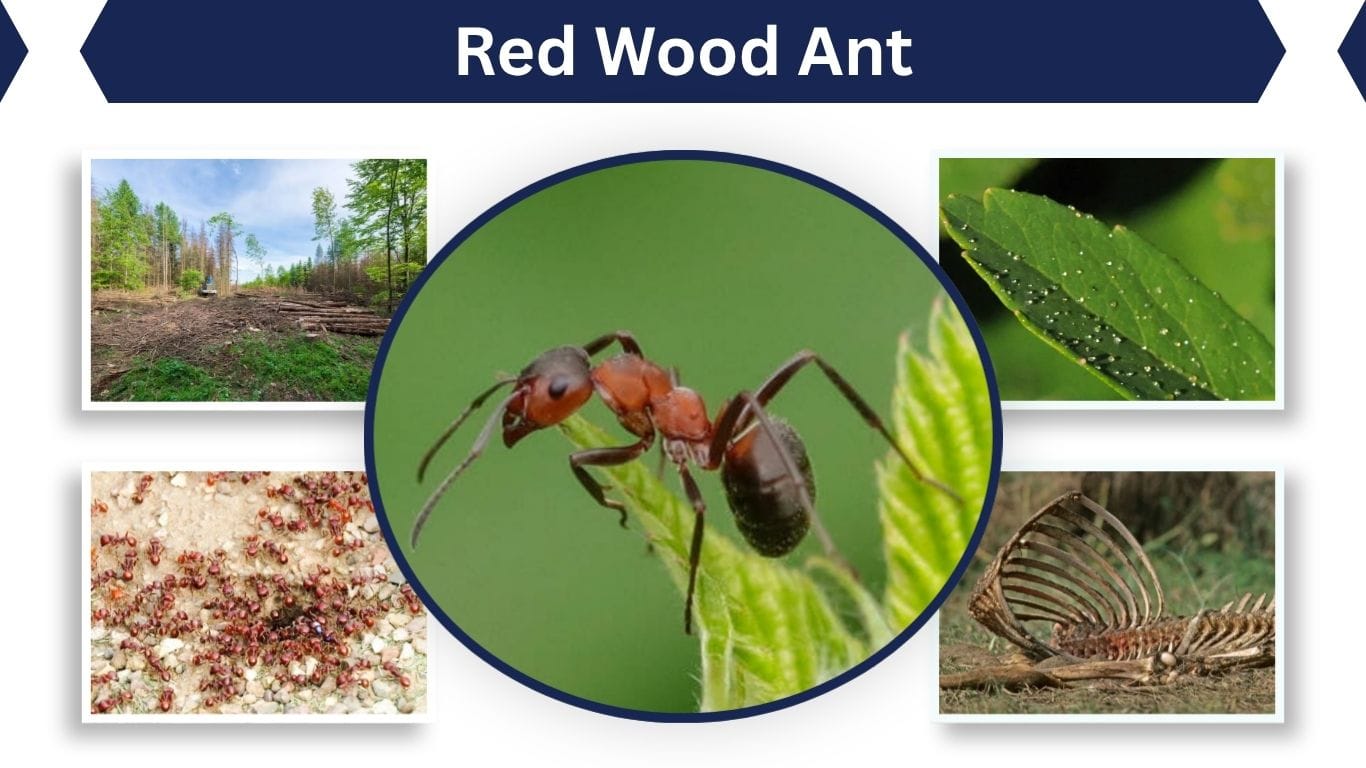
The red wood ant is a large, highly social forest ant best known for building impressive mound-shaped nests from twigs, pine needles, leaves, and other plant material. In Europe, the name commonly refers to Formica rufa and closely related species in the red wood ant group. These ants are important forest predators and scavengers that can form colonies containing thousands of workers. Despite their name, red wood ants do not eat wood like termites. They can, however, bite and spray defensive formic acid when disturbed.
What Is a Red Wood Ant?
Red wood ants belong to the genus Formica, a group containing many fast-moving, mound-building ants. The European red wood ant, Formica rufa, is one of the best-known species. Related red-and-black wood ants occur throughout Europe and parts of Asia, while North America has several similar-looking Formica species.
Red Wood Ant Identification
Typical red wood ant characteristics include:
- Reddish-brown thorax and parts of the head
- Dark brown or black abdomen
- Long legs
- Elbowed antennae
- Relatively large worker ants
- Strong mandibles
- Fast movement when disturbed
- Large mound nests near woodland
Workers vary in size, but many are approximately 4–9 mm long. Queens are considerably larger and have thicker bodies designed for reproduction.
The combination of reddish and black coloration explains why they are sometimes called red-and-black wood ants.
Red Wood Ant Habitat and Range
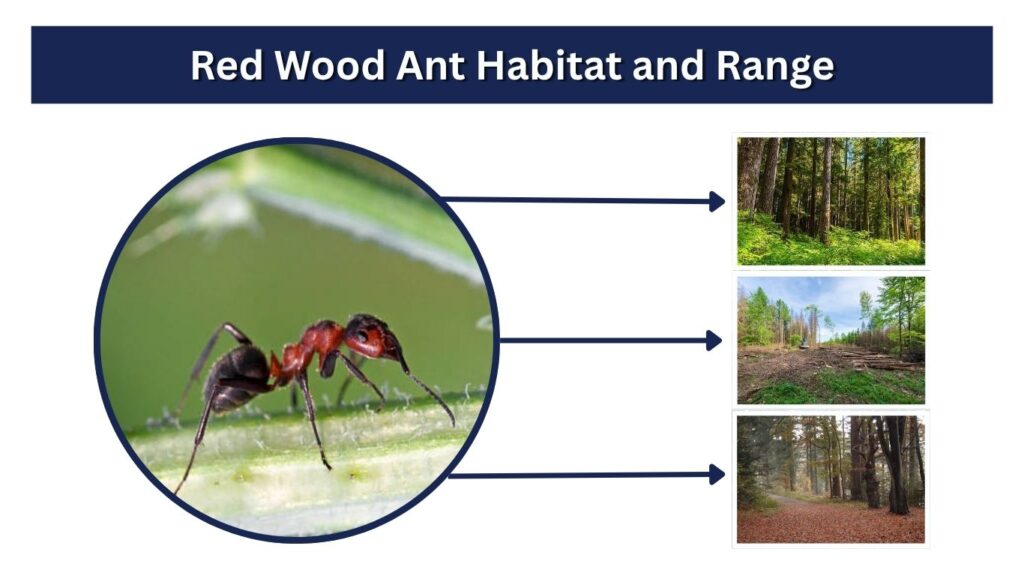
Red wood ants are strongly associated with forests, woodland edges, and sunny clearings. Their colonies often need both warmth and access to nearby trees, shrubs, and ground vegetation. Nest mounds are frequently positioned where sunlight can warm the surface during part of the day.
Where Do Red Wood Ants Live?
European red wood ants occur in suitable habitats across parts of Europe and northern Eurasia. They can be found in areas such as:
- Coniferous forests
- Mixed woodland
- Forest clearings
- Woodland edges
- Heathland near trees
- Sunny forest roadsides
Red wood ants also occur in the United Kingdom, although their distribution is localized. Scotland supports important populations of several wood-ant species.
In North America, ants called red wood ants in casual conversation may actually be related Formica species rather than the European Formica rufa.
Red Wood Ants in North America
North America has several red-and-black mound-building ants. One example is the western thatching ant (Formica obscuripes), which constructs large nests from plant material.
Because common names overlap, identifying an ant by color alone can be misleading. Location, nest structure, body characteristics, and species range should all be considered.
Red Wood Ant Nest and Colony
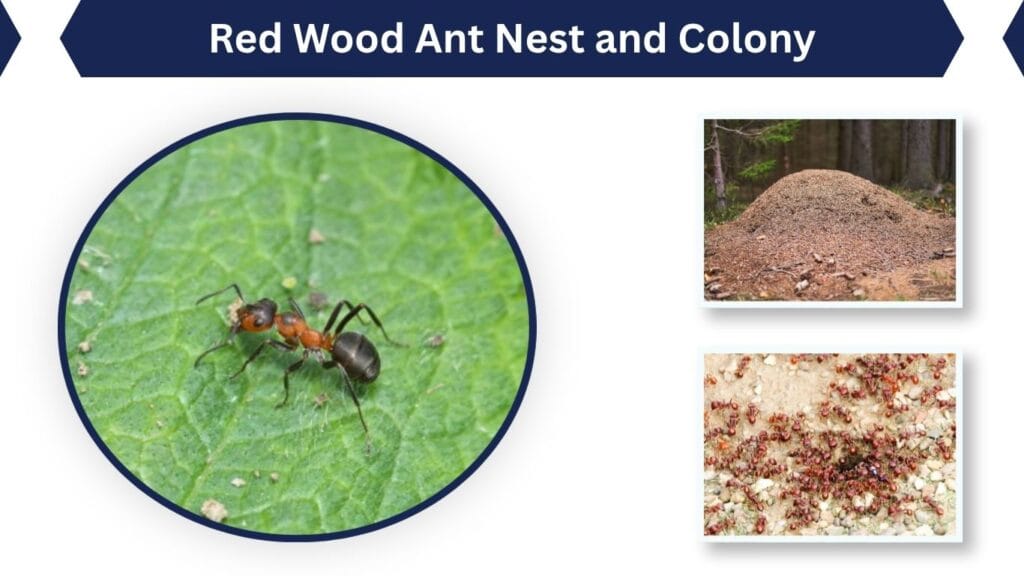
Perhaps the most noticeable feature of red wood ants is their nest. Instead of building a simple underground entrance, many species construct conspicuous mounds containing enormous quantities of plant material.
What Does a Red Wood Ant Nest Look Like?
A typical mound may contain:
- Pine needles
- Small twigs
- Dry grass
- Leaves
- Bark fragments
- Soil particles
- Other forest debris
Much of the colony extends underground beneath the visible mound.
The surface material helps regulate temperature and moisture. Workers continually rearrange nesting material, allowing the colony to maintain suitable conditions for developing eggs, larvae, and pupae.
Large colonies may contain tens of thousands of workers, and some populations form networks of interconnected nests.
Red Wood Ant Queen
The queen’s main function is reproduction. Depending on species and colony structure, a nest may contain one queen or multiple queens.
Young queens develop from fertilized eggs and leave the colony during reproductive flights. After mating, a queen must establish herself within a suitable colony system before beginning sustained egg production.
Workers protect queens, feed larvae, maintain the nest, and collect food.
Do Red Wood Ants Eat Wood?
Despite the name, red wood ants do not consume wood as food. They are called wood ants because they are strongly associated with wooded habitats and often build nests using forest materials.
Why Are Red Ants Found on Wood?
Red wood ants may frequently walk over:
- Fallen logs
- Tree trunks
- Wood piles
- Stumps
- Wooden fences
- Dead branches
They may be searching for insects, collecting honeydew, traveling along established trails, or gathering nesting materials.
Their presence on wood does not necessarily mean they are eating or destroying it.
If ants are actually excavating structural wood inside a building, carpenter ants are a more likely concern. Carpenter ants do not digest wood either; instead, they remove it to create nesting galleries.
What Do Red Wood Ants Eat?
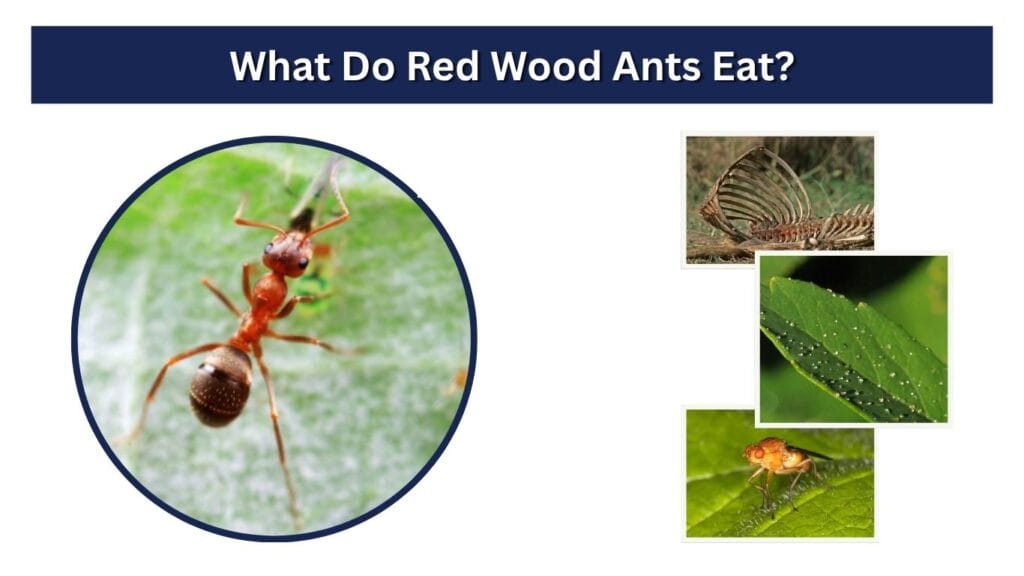
Red wood ants are active predators, scavengers, and collectors of sugary liquids. Their feeding habits make them important members of forest ecosystems.
Red Wood Ant Diet
Their diet may include:
- Caterpillars
- Flies
- Beetles
- Small insects
- Dead arthropods
- Aphid honeydew
- Other sugary secretions
- Occasional plant-derived liquids
Workers frequently climb trees to collect honeydew produced by aphids and related sap-feeding insects.
They may even protect honeydew-producing insects from predators because those insects provide an important source of carbohydrates.
Why Red Wood Ants Are Important
A large colony can capture substantial numbers of forest insects. This predatory behavior may influence local insect populations and help control some species that feed heavily on trees.
Red wood ants are also prey for other animals, making them part of a wider woodland food web.
Do Red Wood Ants Bite or Sting?
Red wood ants can bite, but they do not have a functional stinger like many wasps or fire ants. Their primary defense combines strong mandibles with the ability to release formic acid.
Red Wood Ant Bite and Formic Acid
When disturbed, a worker may:
- Grip the skin with its mandibles.
- Curl its abdomen forward.
- Spray formic acid toward the threat.
This can cause temporary:
- Burning
- Stinging sensations
- Redness
- Mild irritation
- Local discomfort
Red wood ants may also spray formic acid without biting if they feel their nest is threatened.
Are Red Wood Ants Dangerous?
For most people, red wood ants are more unpleasant than dangerous. However, disturbing a large colony can cause many workers to rush out defensively.
People should avoid deliberately opening or damaging active mounds. Sensitive individuals may experience stronger reactions following contact with defensive secretions or bites.
Red Wood Ant Life Cycle
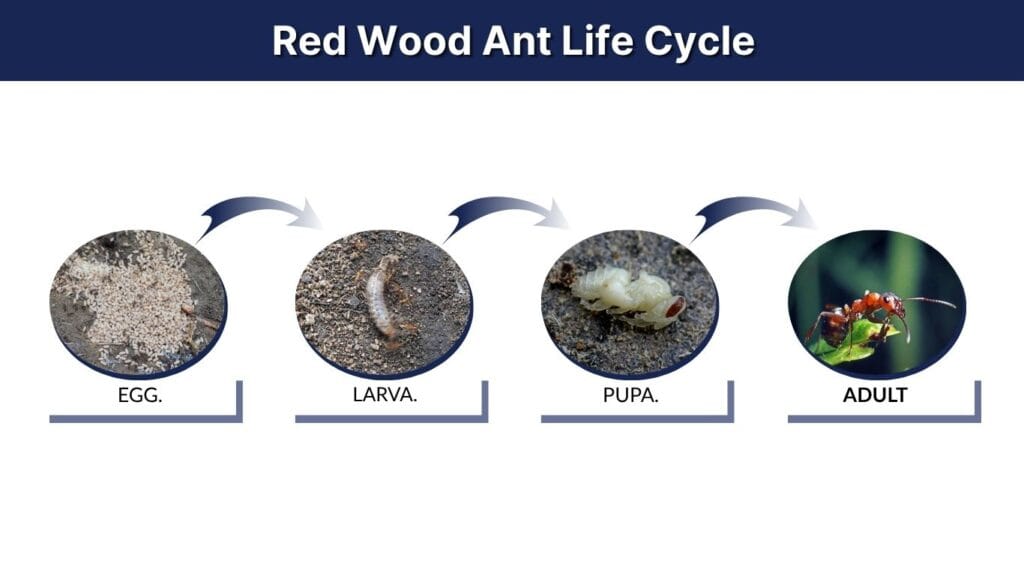
Like other ants, red wood ants undergo complete metamorphosis. Their development passes through egg, larva, pupa, and adult stages.
From Egg to Adult
The life cycle includes:
- Egg: Laid by a queen inside the nest
- Larva: Legless young fed and cared for by workers
- Pupa: Transformation into the adult form occurs
- Adult: Develops into a worker, male, or reproductive female
Workers carry brood between different areas of the nest to maintain suitable temperatures.
During colder seasons, colony activity decreases significantly. Activity increases again as temperatures rise.
Red Wood Ant Behavior
Red wood ants are mainly active during daylight, particularly under favorable warm conditions. Workers follow established routes between the nest, trees, feeding locations, and neighboring colonies.
Colony Defense and Communication
Workers communicate primarily through chemical signals.
When danger appears, alarm pheromones can rapidly recruit additional defenders. The colony may then become extremely active around the disturbed section of the mound.
Red wood ants can also establish long trails leading from their nests to reliable food sources.
Their organized behavior makes large colonies appear almost like a single coordinated organism.
How to Get Rid of Red Wood Ants
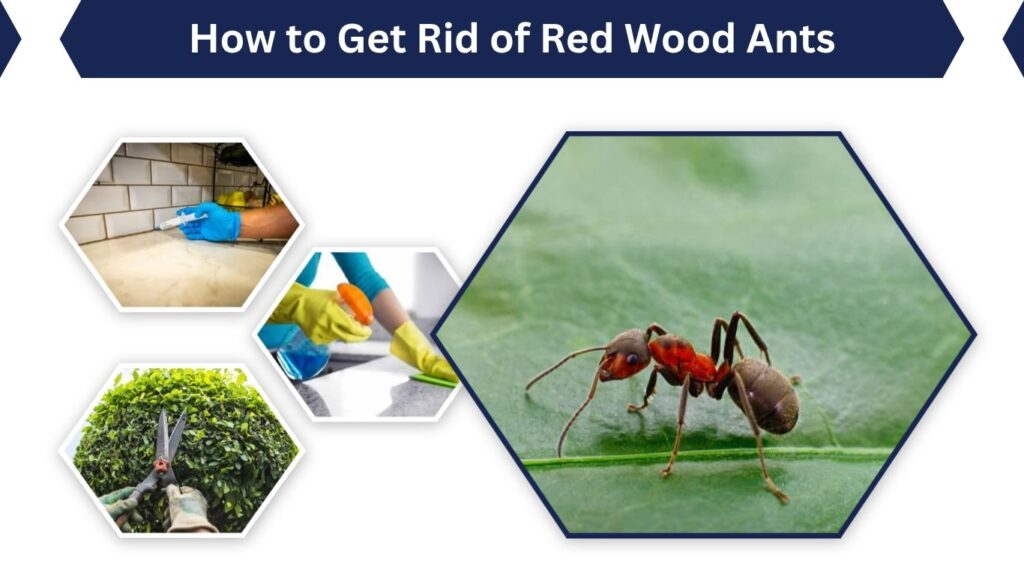
Red wood ants living naturally in forests usually do not require control. In some regions, native wood-ant populations are protected or considered ecologically valuable, so destroying wild nests should be avoided.
Red Wood Ants Around Homes
If ants appear near a building:
- Remove accessible food sources
- Seal cracks and entry points
- Trim vegetation touching the structure
- Store outdoor food securely
- Identify the ant species before treatment
- Avoid disturbing large natural woodland mounds
If ants are nesting inside structural wood, confirm whether they are actually carpenter ants rather than true red wood ants.
For a large colony in a problematic location, professional identification is preferable to randomly applying insecticide.
Red Wood Ant Predators
Despite their strong colony defenses, red wood ants have several natural enemies.
What Eats Red Wood Ants?
Potential predators include:
- Woodpeckers
- Other insect-eating birds
- Spiders
- Predatory insects
- Amphibians
- Some mammals
Woodpeckers can feed heavily on ants and their developing brood. Other predators may capture individual workers away from the protection of the nest.
Can Red Wood Ants Predict Earthquakes?
Claims that red wood ants can predict earthquakes have received attention because researchers have examined behavioral changes near geological faults.
However, there is not enough reliable evidence to use red wood ants as dependable earthquake predictors. Changes in ant activity can also result from temperature, weather, season, food availability, disturbance, and other environmental factors.
Red wood ants are fascinating indicators of forest conditions, but they should not be considered an earthquake warning system.
FAQs
Do red wood ants eat wood?
No. Red wood ants do not digest or consume wood. They live in woodland habitats and use twigs, needles, and other plant material to build their nests.
Do red wood ants bite?
Yes. They can bite with their mandibles and may spray formic acid at the same time, producing temporary burning or irritation.
Where do red wood ants live?
They primarily inhabit forests, woodland edges, and clearings. European species occur across parts of Europe and Eurasia, while related Formica ants occur in North America.
How big are red wood ants?
Workers are commonly around 4–9 mm long, depending on species and individual caste. Queens are substantially larger than workers.
Are red wood ants dangerous?
They are generally not considered highly dangerous to humans. However, colonies defend their nests aggressively, and multiple bites combined with formic acid can be painful and irritating.