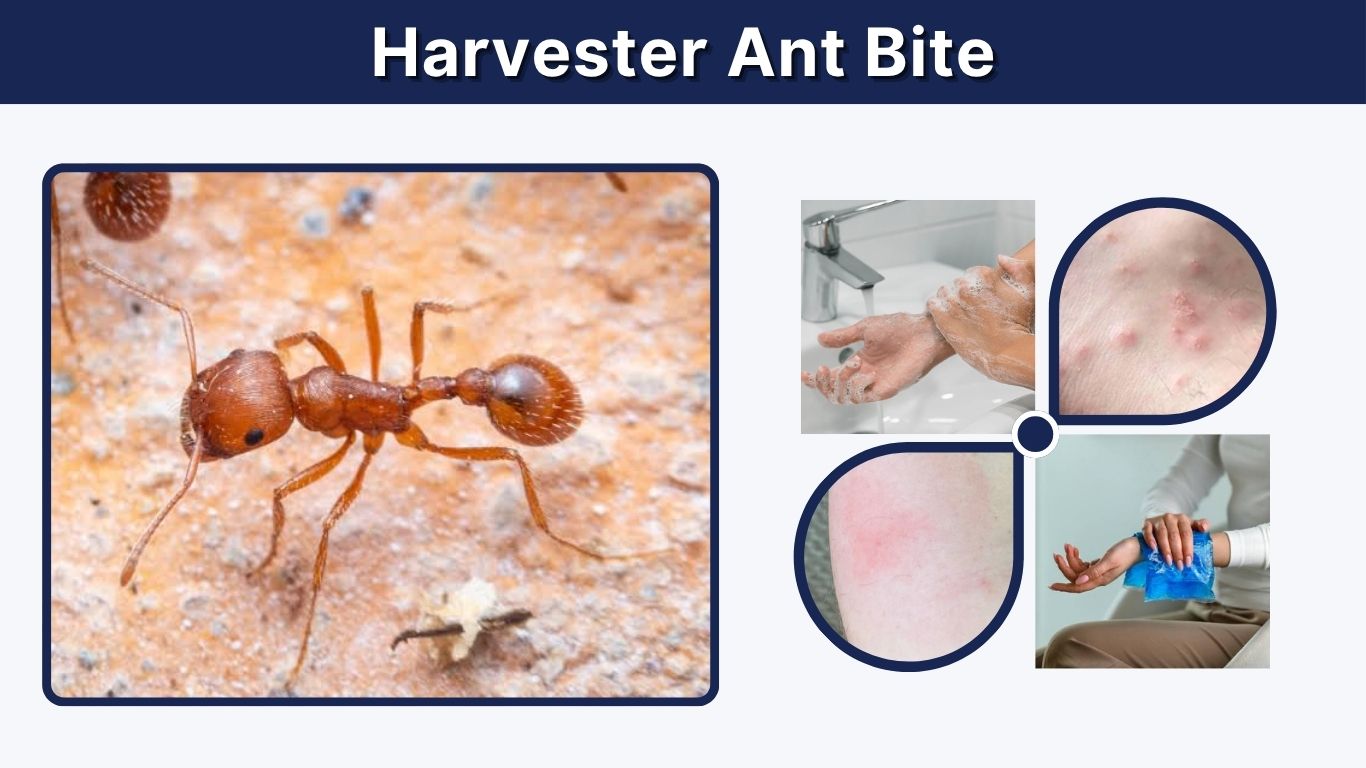
A harvester ant bite can be surprisingly painful, especially if the ant also stings and injects venom. Many people search for harvester ant bite pictures after noticing redness, swelling, or a burning sensation on the skin. This guide explains what harvester ant bites look like, why they hurt, how to treat them at home, and when an allergic reaction needs urgent medical care.
Do Harvester Ants Bite or Sting?
Harvester ants can bite, but the most painful part is usually the sting. They may grab the skin with their jaws and then use a stinger to inject venom. That is why people often call it a “harvester ant bite,” even though the reaction may come mostly from the sting.
Harvester ants are usually found outdoors in dry, open areas. They often build nests in soil, gravel, lawns, fields, or desert-like landscapes. Most stings happen when someone steps near a nest, sits on the ground, gardens, walks barefoot, or accidentally disturbs the colony.
Common Harvester Ants That May Bite or Sting
Different species can cause painful reactions, including:
- Red harvester ants
- Western harvester ants
- Maricopa harvester ants
- California harvester ants
- Rough harvester ants
- Black harvester ants in some regions
The exact species matters less than the reaction. If the sting causes severe pain, swelling, breathing trouble, dizziness, or widespread hives, treat it seriously.
What Does a Harvester Ant Bite Look Like?
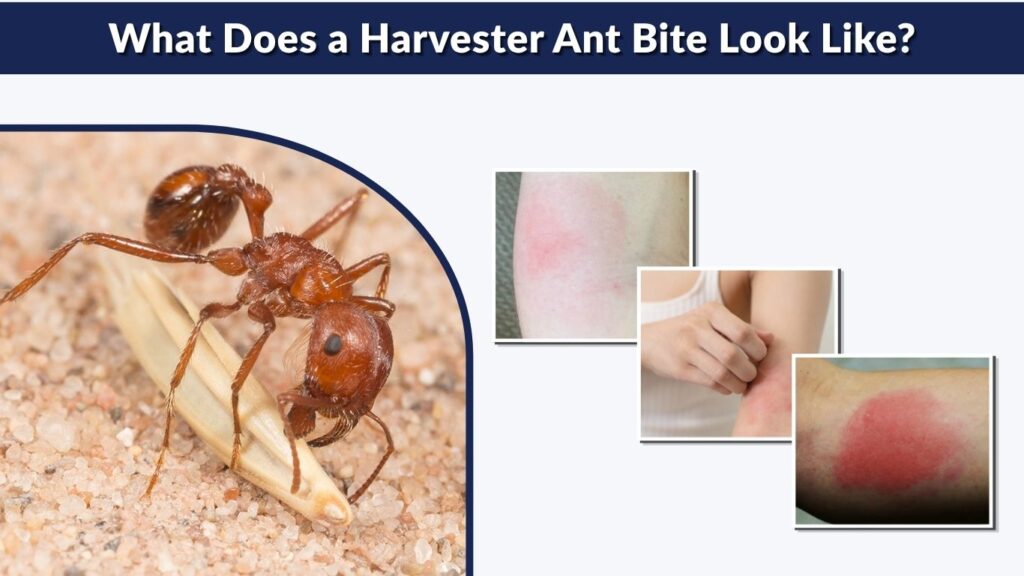
Harvester ant bite pictures often show a small red bump, swelling, or an irritated spot where the ant contacted the skin. The area may look similar to other ant bites at first, but the pain can feel much stronger.
Typical Appearance
A mild harvester ant bite or sting may include:
- A red raised bump
- Burning or sharp pain
- Itching after the pain fades
- Mild swelling around the sting site
- Tenderness when touched
- A small mark where the skin was punctured
Some people may develop a larger swollen area, especially if they are sensitive to insect venom. The swelling may spread a few inches from the bite site and feel warm, tight, or itchy.
Harvester Ant Bite Pictures: What to Look For
When comparing your skin to harvester ant bite pictures, look for the pattern. A single sting may cause one painful red bump. Multiple stings may appear as several red spots grouped around the ankles, legs, hands, or feet.
However, pictures alone cannot confirm the insect. Fire ant stings, wasp stings, bee stings, spider bites, and other skin reactions can look similar. Focus on symptoms, exposure, and whether you were near an ant mound or outdoor nest.
Harvester Ant Bite Symptoms
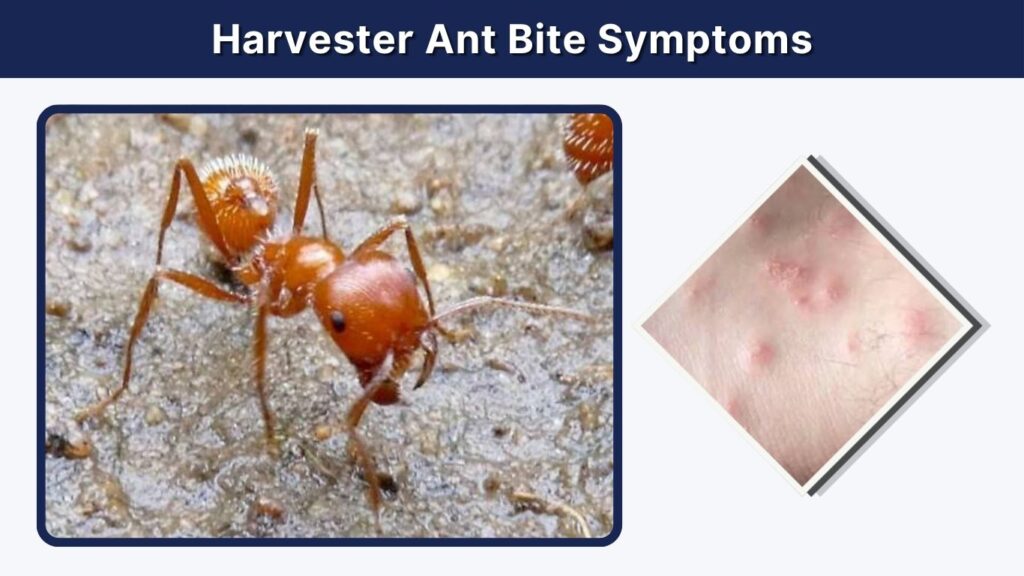
Most harvester ant bites cause local symptoms near the sting site. These symptoms may start quickly and change over the next few hours.
| Symptom | What It May Mean |
|---|---|
| Sharp burning pain | Common venom reaction |
| Redness and swelling | Local skin inflammation |
| Itching | Normal healing response after the pain fades |
| Warmth or tenderness | Common after an insect sting |
| Large swelling | Possible strong local reaction |
| Hives, wheezing, dizziness | Possible allergic reaction needing urgent care |
Mild Symptoms
Mild symptoms usually stay close to the bite area. You may feel intense pain at first, followed by redness, swelling, and itching. The discomfort may improve within several hours, although tenderness can last longer.
Strong Local Reaction
A stronger local reaction can cause swelling that spreads beyond the original bite site. For example, a sting on the hand may cause swelling across the fingers or wrist. This can be uncomfortable, but it is not always a medical emergency unless symptoms worsen or affect breathing, circulation, or movement.
Signs of Infection
A harvester ant bite can become infected if the skin is scratched open. Watch for increasing redness, pus, worsening pain, red streaks, fever, or swelling that continues to expand after the first day or two. These signs may need medical attention.
How Painful Is a Harvester Ant Bite?
Harvester ant bite pain can be intense. Many people describe it as sharp, burning, or electric. Some species, especially the Maricopa harvester ant, are known for very painful venom.
The pain level depends on:
- The species of harvester ant
- How many ants stung you
- Where the sting happened
- Your personal sensitivity
- Whether you have an allergy
- How quickly you clean and cool the area
A single sting may hurt badly but remain manageable at home. Multiple stings or a sting in a sensitive area can be more serious.
Harvester Ant Bite Treatment
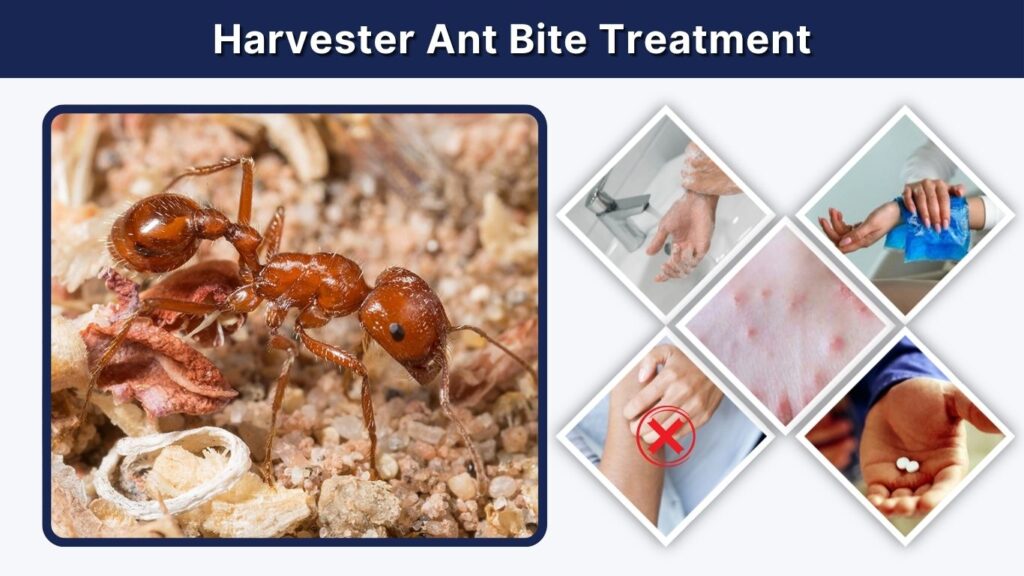
Most mild harvester ant bites can be treated at home with basic first aid. The goal is to reduce pain, swelling, itching, and infection risk.
First Aid Steps
- Move away from the nest immediately so you are not stung again.
- Brush ants off your skin and clothing. Do not slap them against the skin.
- Wash the bite area with soap and water.
- Apply a cold compress for 10 to 15 minutes at a time.
- Keep the area clean and avoid scratching.
- Use an over-the-counter pain reliever if you can take it safely.
- For itching, consider an oral antihistamine or anti-itch cream according to the label.
Harvester Ant Bite Remedy at Home
A cold compress is one of the simplest remedies for pain and swelling. You can also elevate the affected limb if the bite is on your hand, foot, arm, or leg. Calamine lotion or hydrocortisone cream may help itching, but avoid applying creams to broken or infected skin unless a healthcare professional says it is safe.
Do not cut the bite, squeeze it, burn it, or apply harsh chemicals. These methods can irritate the skin and raise the risk of infection.
Harvester Ant Bite Allergic Reaction
A harvester ant bite allergic reaction can be mild or severe. Mild allergy-like symptoms may include itching, swelling, or hives near the sting. A severe reaction can affect the whole body and may become life-threatening.
Emergency Warning Signs
Get emergency help right away if a bite or sting causes:
- Trouble breathing
- Wheezing
- Throat, tongue, lip, or face swelling
- Dizziness or fainting
- Chest tightness
- Confusion
- Rapid heartbeat
- Widespread hives
- Vomiting with weakness or breathing symptoms
People with known insect sting allergies should follow their allergy action plan and use prescribed emergency medicine as directed.
Harvester Ant vs Fire Ant Bite
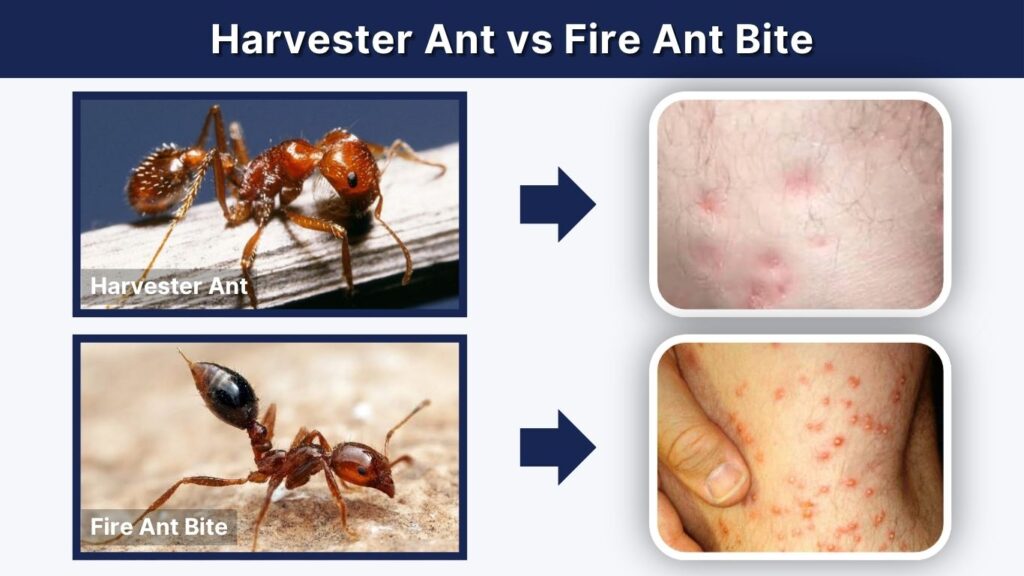
Harvester ant and fire ant stings can both hurt, but they are not exactly the same. Fire ants are famous for aggressive swarming and repeated stings, often leaving pustule-like bumps. Harvester ants can also sting painfully, but they are often encountered near dry ground nests and may not invade homes the same way some pest ants do.
Key Differences
- Fire ants often attack in groups when a mound is disturbed.
- Harvester ants may sting when their nest area is threatened.
- Fire ant stings often form small pustules.
- Harvester ant stings are known for strong burning pain.
- Both can trigger allergic reactions in sensitive people.
If you are not sure which ant stung you, treat the symptoms and watch for allergic warning signs.
Harvester Ant Bite on Dogs
Dogs can also be bitten or stung by harvester ants, especially on the paws, nose, mouth, or belly. A dog may limp, lick the area, whine, paw at the face, or develop swelling.
What to Do for Dogs
Move your dog away from the ants, check the fur and paws, and gently remove any remaining ants. Call a veterinarian if your dog has facial swelling, vomiting, weakness, breathing trouble, repeated stings, or signs of severe pain. Do not give human medications to a dog unless a vet approves them.
How to Prevent Harvester Ant Bites
Prevention is the best way to avoid painful stings, especially in yards, fields, trails, and dry outdoor areas.
Useful prevention tips include:
- Watch for bare circular nest areas in soil or gravel.
- Wear closed-toe shoes outdoors.
- Use gloves when gardening or moving rocks.
- Avoid sitting directly on the ground near ant activity.
- Teach children not to disturb ant nests.
- Keep pets away from visible ant colonies.
- Contact a pest professional if nests are close to play areas or walkways.
Avoid pouring random chemicals on ant nests, especially near pets, children, gardens, or water sources. Proper identification and targeted control are safer.
FAQs
Do harvester ants bite?
Yes. Harvester ants can bite with their jaws, but the most painful reaction usually comes from their sting. Many people still call it a harvester ant bite because the bite and sting may happen together.
Do harvester ant bites hurt?
Yes, harvester ant bites or stings can hurt a lot. The pain is often described as sharp, burning, or intense. A mild reaction may improve within hours, but swelling or itching can last longer.
How do you treat a harvester ant bite?
Wash the area with soap and water, apply a cold compress, avoid scratching, and use over-the-counter pain or itch relief if safe for you. Seek medical help for severe swelling, infection signs, multiple stings, or allergy symptoms.
Can a harvester ant bite kill you?
A single bite is unlikely to kill a healthy person, but a severe allergic reaction can be dangerous. Multiple stings may also be more serious. Breathing trouble, throat swelling, dizziness, or widespread hives need emergency care.
Are harvester ant bite pictures enough to identify the sting?
Not always. Harvester ant bite pictures can help you compare redness, swelling, and bite patterns, but many insect bites look similar. The best clues are where you were, whether ants were present, and how your symptoms develop.