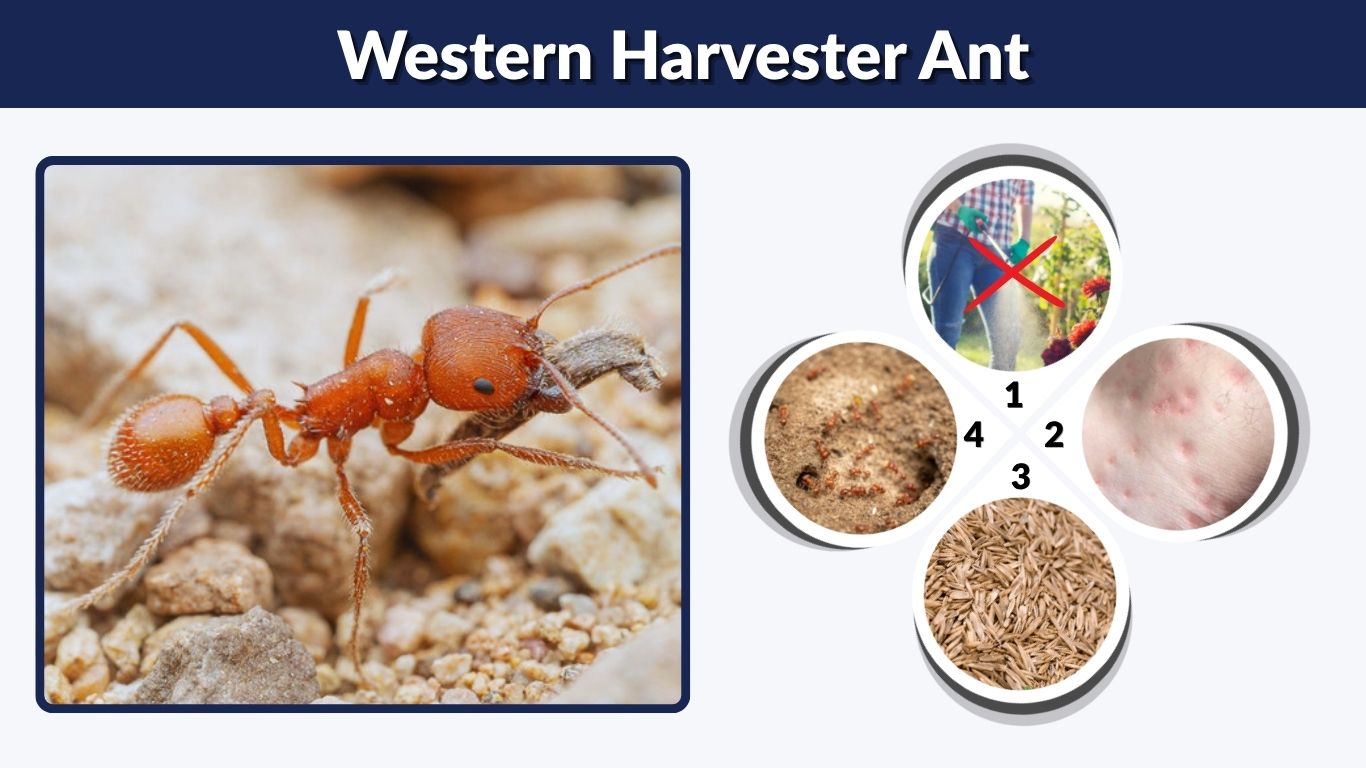
The western harvester ant is a seed-collecting ant known for its large mounds, painful sting, and important role in dry western ecosystems. Often found in open grasslands, deserts, and rangelands, this ant is fascinating but should be approached with care. Whether you are identifying one outdoors, researching ant farms, or dealing with a mound near your home, proper information matters.
What Is a Western Harvester Ant?
The western harvester ant is a ground-nesting ant commonly found in the western United States. Its scientific name is Pogonomyrmex occidentalis. Like other harvester ants, it gets its name from its habit of collecting seeds and storing them inside underground nest chambers.
These ants are best known for building noticeable mounds in open areas. Their nests are often surrounded by a cleared patch of ground where vegetation has been removed. This gives the mound a distinct look compared with many other ant nests.
Western Harvester Ant Scientific Name
The western harvester ant belongs to the genus Pogonomyrmex. The species name is Pogonomyrmex occidentalis. The word “occidentalis” refers to the West, which fits the ant’s strong association with western North American habitats.
People may also search for it as:
- Western harvest ant
- Western red harvester ant
- Western harvester ants
- Pogonomyrmex occidentalis
- Harvester ant in Utah or western states
These names often refer to the same general ant, though local species can vary depending on region.
What Do Western Harvester Ants Look Like?
Western harvester ants are usually medium to large ants compared with many common household ants. Workers are often reddish brown to dark red, though color can vary. They have strong jaws, a narrow waist, and a sturdy body built for outdoor foraging.
They are not tiny kitchen ants. Most people notice them outdoors because of their nest mounds, active trails, and defensive behavior near the colony.
Common signs include:
- Reddish or reddish-brown workers
- Large workers compared with many house ants
- Open, cleared ground around the nest
- Pebble or soil mound structure
- Foraging trails leading away from the mound
- Painful sting when disturbed
Where Do Western Harvester Ants Live?
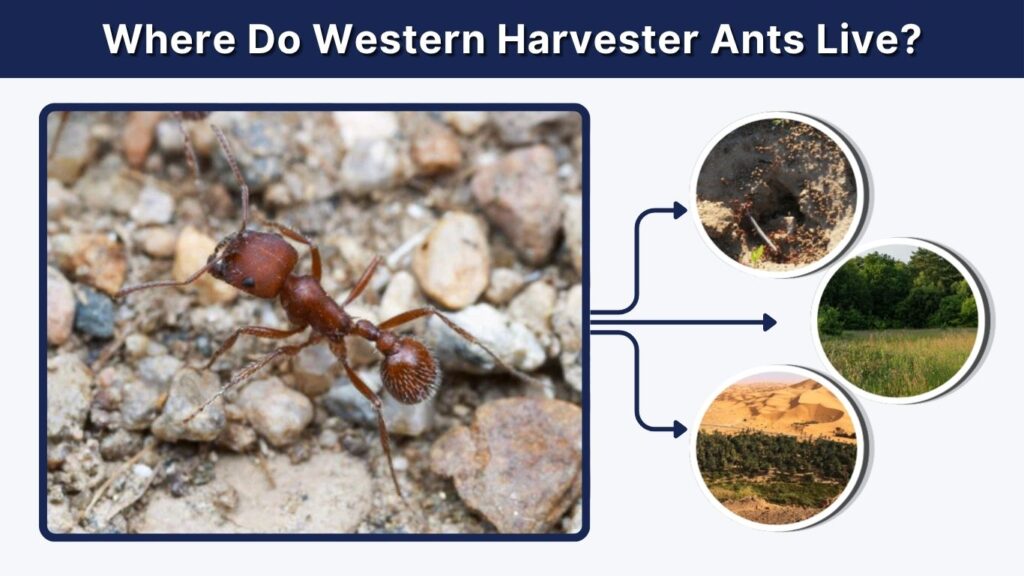
Western harvester ants are mostly found in dry, open habitats. They prefer places where they can collect seeds, build deep nests, and maintain open ground around their mounds.
Western Harvester Ant Range
Western harvester ants are associated with the western United States. They are often found in grasslands, shrublands, desert edges, rangelands, and open dry soil. They are especially noticeable in places with sparse vegetation where their mounds stand out clearly.
They may be found in states such as Utah, Colorado, Wyoming, Idaho, Nevada, Arizona, New Mexico, and surrounding western regions. However, exact distribution can depend on elevation, soil, moisture, vegetation, and local conditions.
Western Harvester Ants in Utah and Desert Areas
Searches for western harvester ants in Utah are common because these ants are often seen in dry western landscapes. In desert and semi-desert environments, their cleared nest areas can be easy to spot.
Their mounds may appear in:
- Open rangeland
- Dry fields
- Desert grasslands
- Roadside soil
- Trailsides
- Sparse yards
- Natural open spaces
They usually do not prefer damp, shaded, heavily landscaped areas. Their success depends on dry ground, available seeds, and suitable nesting soil.
Western Harvester Ant Mounds and Colonies
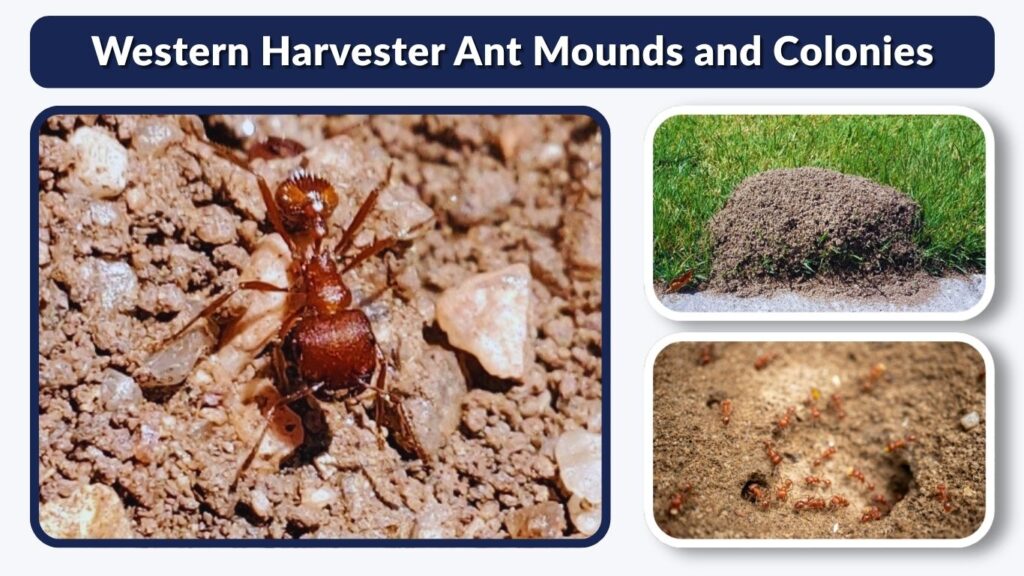
Western harvester ant colonies are known for large, visible nests. A colony may contain thousands of workers, one queen, brood, stored seeds, and underground chambers.
What a Western Harvester Ant Hill Looks Like
A western harvester ant hill often appears as a raised mound of soil, gravel, or small pebbles. Around the mound, the ants may clear away plants, leaving a bare circular area. This bare zone is one of the easiest ways to recognize a harvester ant nest.
| Feature | Western Harvester Ant |
|---|---|
| Scientific name | Pogonomyrmex occidentalis |
| Common color | Reddish brown to dark red |
| Main food | Seeds, plant material, and some insects |
| Nest type | Ground nest with mound and cleared area |
| Habitat | Dry grasslands, deserts, rangelands, open soil |
| Defense | Painful sting when disturbed |
| Colony structure | Queen, workers, brood, and stored food |
Western Harvester Ant Colony Structure
A western harvester ant colony usually has one queen. The queen lays eggs, while workers care for the young, maintain the nest, defend the colony, and collect food.
Inside the nest, there may be tunnels, chambers, brood areas, and seed storage spaces. The nest can extend deep underground, helping the colony survive heat, cold, and dry conditions.
Workers often adjust where brood and food are kept depending on temperature and moisture. This helps protect the colony during changing weather.
What Do Western Harvester Ants Eat?
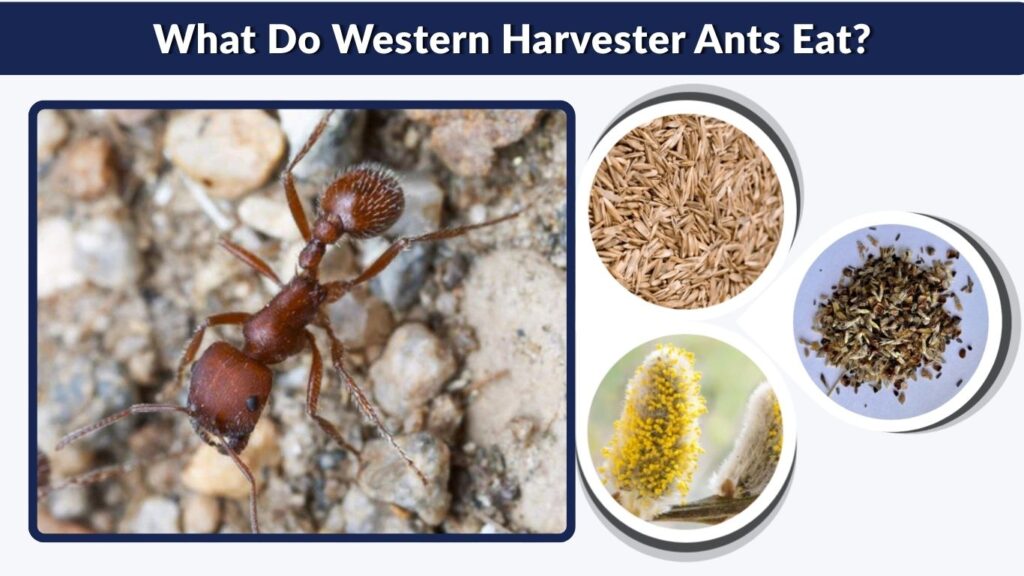
Western harvester ants mainly eat seeds. Workers collect seeds from the ground and nearby plants, then bring them back to the nest. These seeds may be stored underground and used when fresh food is less available.
Western Harvester Ant Diet
Their diet can include:
- Grass seeds
- Wildflower seeds
- Weed seeds
- Pollen
- Small plant material
- Dead insects
- Occasional protein sources
Seeds are their most important food source, but protein is also valuable, especially for growing larvae. Larvae need nutrients to develop, so workers may bring insects or other protein-rich food into the nest.
What to Feed Western Harvester Ants
For ant-keeping, western harvester ants are usually fed a mix of seeds and protein. Small seeds are useful because they match the natural diet. Protein may include small insects or prepared feeder insects, depending on the keeper’s setup and local rules.
Possible foods include:
- Small grass seeds
- Kentucky bluegrass seed
- Dandelion seed
- Chia or similar small seeds
- Small pieces of dead insects
- Occasional sugar water in tiny amounts
- Clean water source
Overfeeding can cause mold, mites, and waste buildup. Food should be offered in small amounts and removed if it spoils. A clean, dry setup is important for colony health.
Do Western Harvester Ants Bite or Sting?
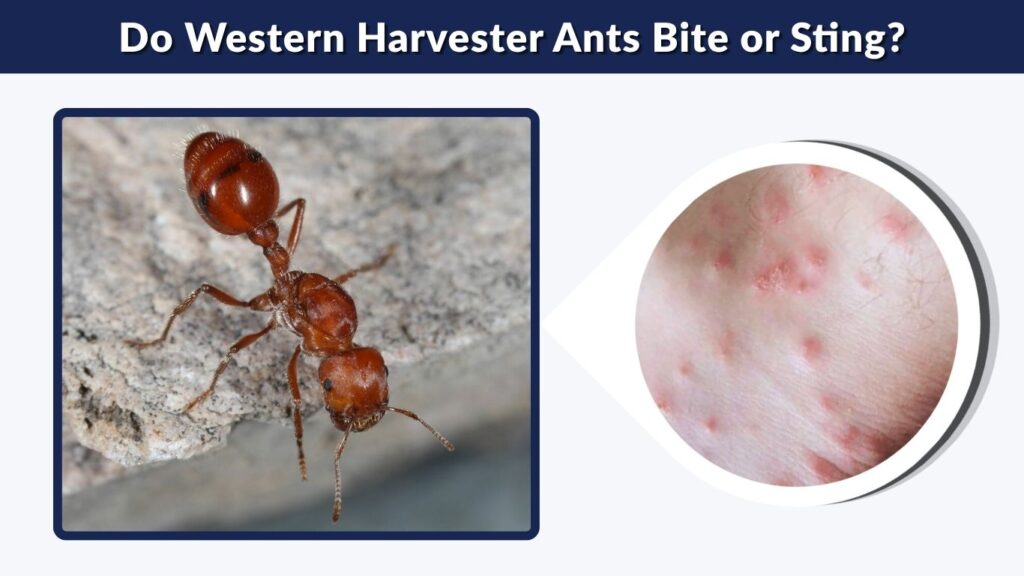
Many people ask whether western harvester ants bite. They can bite with their jaws, but the main concern is their sting. Like other Pogonomyrmex ants, western harvester ants can deliver a painful venomous sting.
Western Harvester Ant Bite
A bite may happen when the ant grips the skin. However, the sharper pain usually comes from the sting. People often call it a bite because they see the ant attached to the skin, but the burning pain is usually caused by venom from the stinger.
Western Harvester Ant Sting
A western harvester ant sting can be very painful. Symptoms may include immediate burning, redness, swelling, itching, and tenderness. The pain can last for hours, while irritation may last longer depending on the person’s reaction.
Common sting symptoms include:
- Sharp pain
- Burning sensation
- Redness
- Swelling
- Itching
- Raised welt
- Skin tenderness
Most stings are not deadly, but allergic reactions are possible. Anyone who develops breathing trouble, swelling of the face or throat, dizziness, vomiting, widespread hives, or weakness after a sting should seek emergency medical help.
Are Western Harvester Ants Dangerous?
Western harvester ants can be dangerous if their mound is disturbed. They are not usually looking to attack people far away from the nest, but they will defend the colony when threatened.
Are Western Harvester Ants Poisonous?
Western harvester ants are venomous, not poisonous. Venom is injected through a sting. Poison usually harms when touched, eaten, or absorbed. The sting is the reason these ants should be handled with caution.
For most people, a sting is painful but not life-threatening. However, people with insect-sting allergies, young children, pets, or anyone receiving multiple stings may face higher risk.
Are Western Harvester Ants Deadly?
Western harvester ants are not usually deadly to healthy adults after a single sting. Still, severe allergic reactions can happen with many stinging insects. Multiple stings may also be more serious.
Avoid walking barefoot in areas with harvester ant mounds. Keep children and pets away from active nests, and never poke or disturb a mound for curiosity.
Western Harvester Ant Queen and Life Cycle
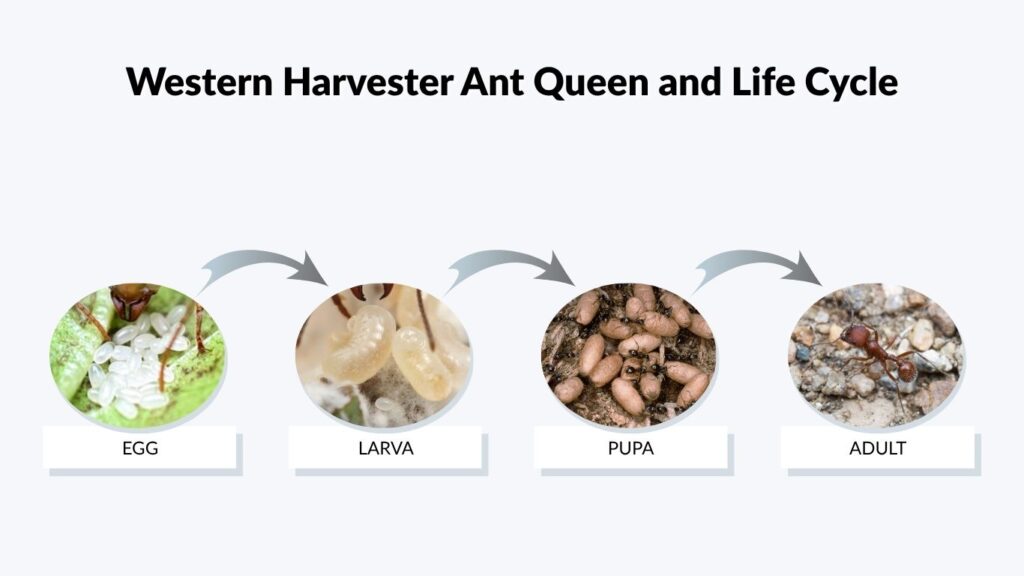
The queen is the reproductive center of the colony. After mating, a queen starts a new nest and lays eggs. If the colony survives the early stage, it may grow into a mature colony with many workers.
Western Harvester Ant Queen
A western harvester ant queen is larger than a worker. Her main job is to lay eggs. She usually stays deep within the nest, protected by workers. Because the queen is essential to colony survival, eliminating only surface workers will not usually remove the colony.
Some people search for western harvester ant queens for sale because they are interested in ant keeping. However, buying, selling, shipping, or releasing live ants may be regulated. Ant species should never be released into the wild outside their proper location.
Western Harvester Ant Eggs
Eggs are small and delicate. Workers care for eggs, larvae, and pupae in brood chambers. The developing ants are moved within the nest to suitable temperature and humidity zones.
The life cycle includes:
- Egg
- Larva
- Pupa
- Adult worker, male, or queen
The time needed for development depends on temperature, food, season, and colony health.
Western Harvester Ant Nuptial Flight
A nuptial flight is when winged reproductive ants leave mature colonies to mate. After mating, males die, and fertilized queens look for places to start new colonies.
Nuptial flights usually happen when weather conditions are favorable. Rain, temperature, humidity, and seasonal timing may all play a role.
How Long Do Western Harvester Ants Live?
The lifespan of a western harvester ant depends on its role. Workers live much shorter lives than queens. A worker may live for months, while a queen can live for many years under good conditions.
Western Harvester Ant Lifespan
In a mature colony, workers are constantly replaced as the queen lays new eggs. The colony itself may persist much longer than individual workers. Long-lived queens and deep nests allow successful colonies to survive through difficult seasons.
General lifespan patterns:
- Workers: usually months
- Males: short-lived after mating
- Queens: many years
- Colonies: potentially many years if successful
This long colony life is one reason western harvester ant mounds may remain visible in the same area for a long time.
Western Harvester Ant Care in Ant Farms
Western harvester ants are popular in ant farms because they are active, visible, and interesting to observe. However, they are not harmless. Their sting makes them unsuitable for careless handling or escape-prone setups.
Are Western Harvester Ants Appropriate for Kids?
They can be used in educational ant farms, but adult supervision is important. Children should not handle live western harvester ants directly. The container must be secure, escape-proof, and kept away from areas where ants could fall, break out, or be disturbed.
Basic Care and Feeding
Western harvester ants need a dry nesting area, some humidity control, proper food, and a secure enclosure. They should not be overwatered. Too much moisture can lead to mold or colony stress.
Basic care tips include:
- Use an escape-proof ant farm.
- Provide small seeds as the main food.
- Offer protein in small amounts.
- Remove uneaten food before it molds.
- Provide water safely without drowning ants.
- Keep the setup away from direct overheating.
- Do not shake or disturb the nest.
Can I Release Western Harvester Ants?
You should not release captive western harvester ants unless they were collected legally from the same local area and release is allowed. Releasing ants can spread pests, diseases, or nonlocal genetics. In many cases, it is better to keep them contained for their lifespan or consult local rules.
How to Get Rid of Western Harvester Ants
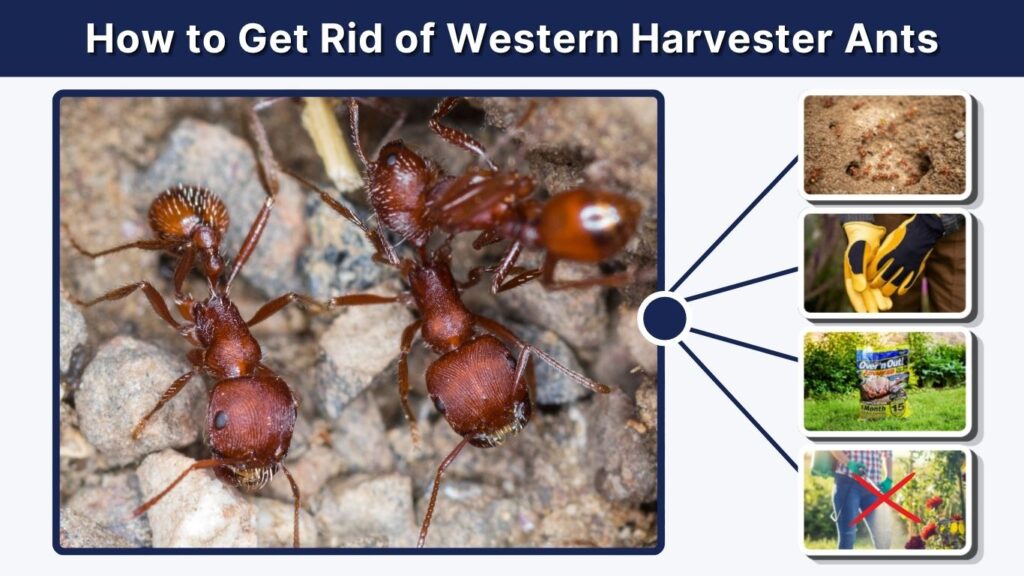
Western harvester ants are native and ecologically useful, so control is not always necessary. If the mound is in a natural area away from people and pets, leaving it alone may be the best choice.
Control may be needed when mounds are close to homes, playgrounds, patios, walkways, livestock areas, or pet spaces.
Western Harvester Ant Control
The best approach is targeted mound control. Broad pesticide use is usually unnecessary and may harm beneficial insects. If the nest is in a high-risk area, use a product labeled for outdoor ant mound treatment or contact a pest control professional.
Safe control practices include:
- Identify the ant before treating.
- Treat only problem mounds.
- Follow all label directions.
- Keep kids and pets away during treatment.
- Wear shoes, socks, gloves, and long pants.
- Avoid unsafe home remedies.
- Do not pour gasoline, bleach, or boiling chemicals into nests.
Western Harvester Ant vs Red Imported Fire Ant
Western harvester ants and red imported fire ants are different ants. Both can sting, but their habits and nests are not the same.
Western harvester ants mainly collect seeds and build open mounds with cleared ground. Red imported fire ants are aggressive, swarm quickly, and often build soft dome-shaped mounds in lawns and disturbed soil. Fire ants also tend to sting repeatedly in groups when a mound is disturbed.
Correct identification helps you choose the right control method.
Western Harvester Ant Facts
Western harvester ants are more than just stinging insects. They are important parts of western ecosystems.
Interesting facts include:
- They collect and store seeds underground.
- Their mounds can change soil structure.
- They create cleared areas around nests.
- They are prey for some wildlife.
- They help move and redistribute seeds.
- Colonies may survive for many years.
- Their sting is painful but usually avoidable.
- They are most active near their nests and foraging trails.
Because they influence seeds, soil, and wildlife, they can be considered ecologically important. In natural areas, they should usually be respected rather than removed.
FAQs
What do western harvester ants eat?
Western harvester ants mainly eat seeds from grasses, weeds, and other plants. Workers collect seeds and store them inside the nest. They may also eat dead insects or other protein sources, especially when feeding larvae. In ant farms, small seeds and occasional protein are commonly used.
Do western harvester ants bite?
Western harvester ants can bite with their jaws, but their sting is the main concern. They may grip the skin and then sting, causing sharp pain, burning, redness, and swelling. Many people call it a bite, but the strongest reaction usually comes from venom injected by the stinger.
Are western harvester ants dangerous?
Western harvester ants can be dangerous if their nest is disturbed because they have a painful venomous sting. Most stings cause local pain and swelling, but allergic reactions are possible. Children, pets, and people with insect-sting allergies should avoid active mounds and seek help after serious symptoms.
How long do western harvester ants live?
Worker western harvester ants usually live for months, while queens can live for many years. A successful colony may survive much longer than individual workers because the queen continues producing new ants. Colony lifespan depends on food, climate, predators, disease, and environmental disturbance.
How do you get rid of western harvester ants?
Only control western harvester ants when they create a real risk near walkways, homes, play areas, or pet spaces. Use targeted mound treatment labeled for outdoor ants, and follow directions carefully. Avoid unsafe remedies like gasoline or bleach. When possible, leave native colonies alone in low-traffic natural areas.