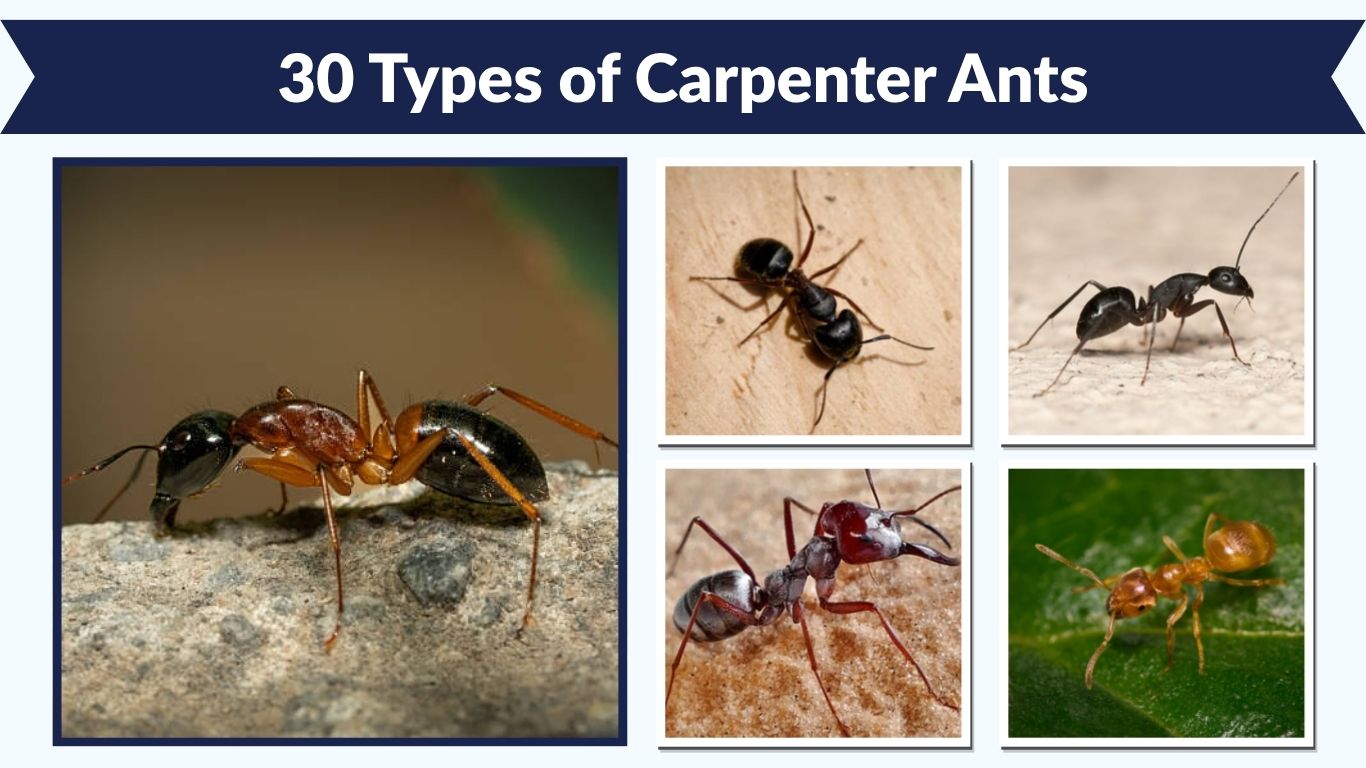
Carpenter ants are among the most fascinating and sometimes destructive ants found across the world. With over 30 distinct types, they vary in color, size, and habitat preferences, from black and red species to golden and subterranean types. These ants prefer nesting in moist or decaying wood, including trees, stumps, and sometimes homes. Understanding their identification, behavior, and nesting habits is crucial for prevention and control. This guide explores each type in detail, helping homeowners and enthusiasts recognize and manage carpenter ant activity effectively.
1. Black Carpenter Ant
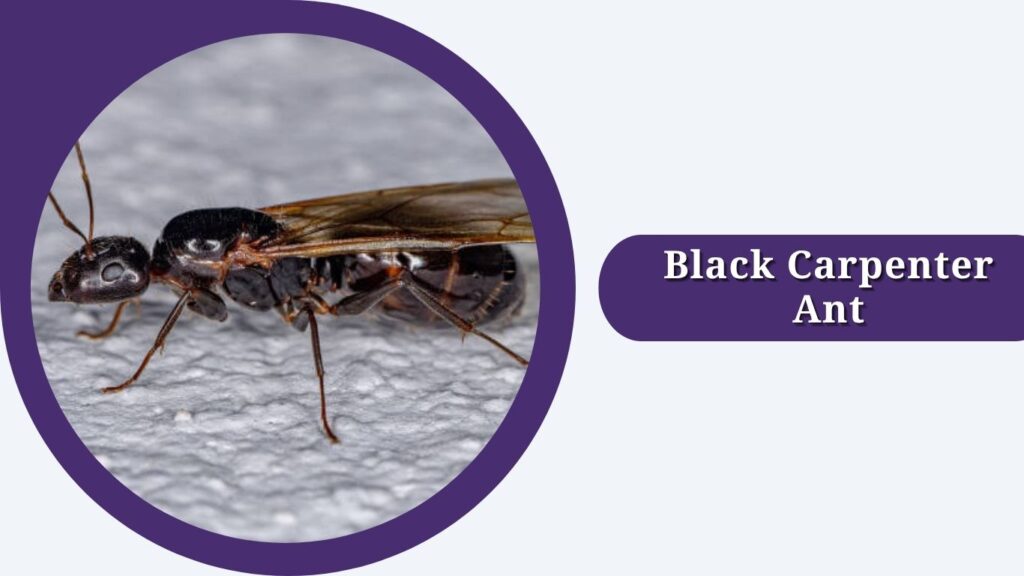
Black carpenter ants are among the most common carpenter ants found across North America. They are known for their large size and glossy black appearance. These ants prefer to nest in moist or decaying wood, often causing damage to structures if left untreated. Understanding their behavior and identifying features is key for proper management.
Identification
- Color: Glossy black
- Size: Workers 6–12 mm, queens up to 20 mm
- Body: Three distinct body segments with a narrow “waist”
- Antennae: Elbowed, with 12 segments
- Habitat: Moist wood, hollow trees, or structural timber
Behavior
Black carpenter ants are primarily nocturnal and forage for food at night. They feed on sweets, proteins, and other insects. Colonies can become quite large, containing thousands of workers, which makes them persistent once established.
Habitat and Nesting
They prefer damp or rotting wood but can expand into sound wood if colonies grow. They are often found in tree stumps, logs, and sometimes in houses, especially around windows, roofs, and attics where moisture is present.
Life Cycle
The colony starts with a mated queen who lays eggs. These develop into larvae, pupae, and then adult workers. Colonies can survive for several years, gradually expanding their tunnels and creating satellite nests.
2. Red Carpenter Ant
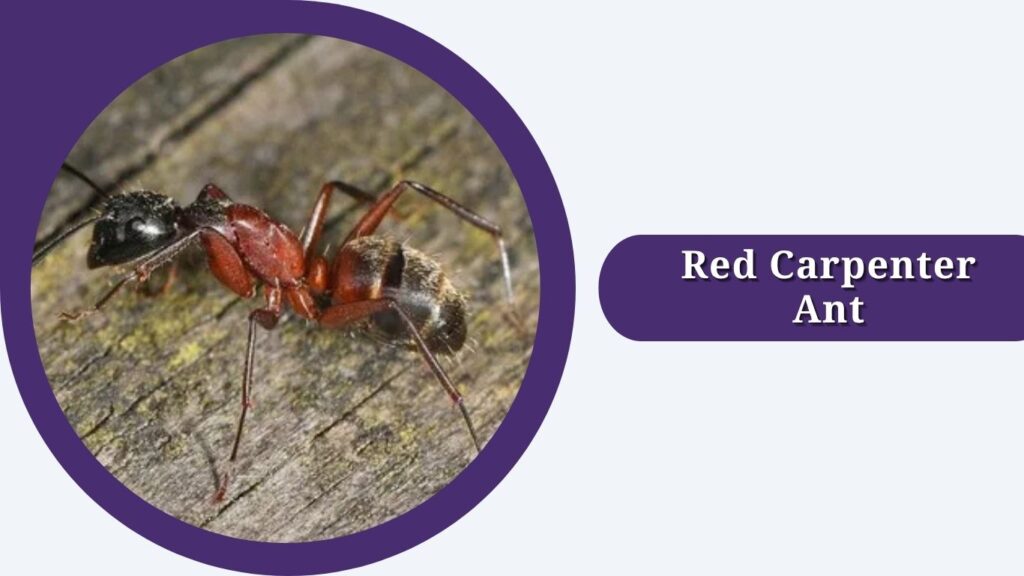
Red carpenter ants are slightly smaller than black carpenter ants but are similarly destructive when nesting in wood. They are recognized by their reddish-brown color and are commonly found in the eastern and southern regions of North America. These ants prefer damp, decaying wood but can also infest homes, particularly in areas with water damage.
Identification
- Color: Reddish-brown
- Size: Workers 6–12 mm, queens up to 18 mm
- Body: Narrow waist with three segments
- Antennae: Elbowed with 12 segments
- Habitat: Rotten logs, tree stumps, and wooden structures
Behavior
Red carpenter ants are nocturnal foragers that search for sugars and proteins. They can aggressively defend their nests if disturbed, and their large colonies can include several thousand workers.
Habitat and Nesting
These ants are typically found in dead or decaying trees, stumps, and logs. Inside buildings, they prefer damp wood near foundations, roofs, or plumbing leaks, often creating extensive galleries in the wood.
Life Cycle
The queen lays eggs that hatch into larvae, then pupae, and finally adult workers. Colonies can live for several years, expanding their tunnels and sometimes establishing satellite nests to accommodate growing populations.
3. Yellow Carpenter Ant
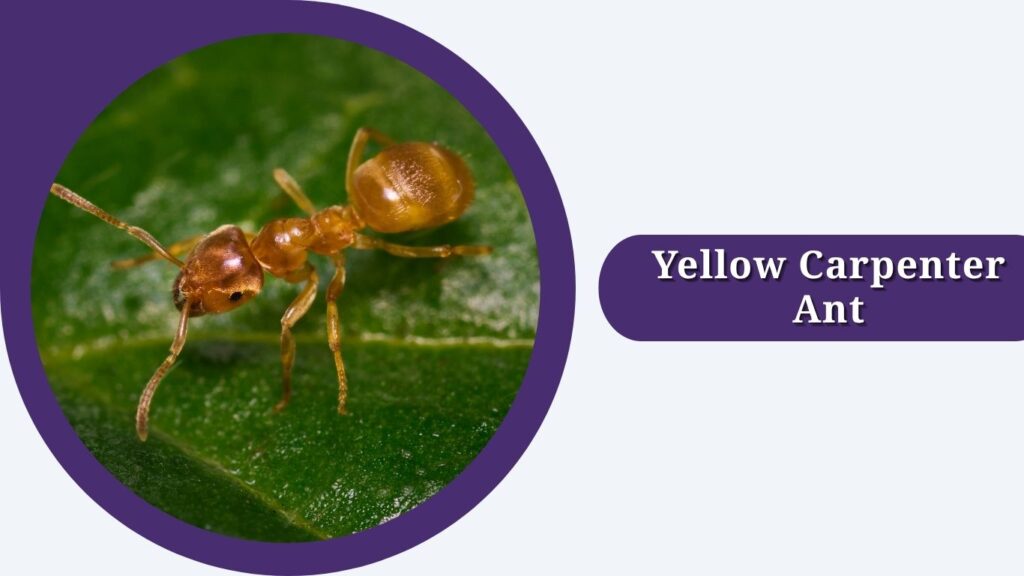
Yellow carpenter ants are less common than their black and red counterparts but are notable for their distinctive yellowish or golden hue. They are mostly found in western and southern regions and prefer to nest in soft or decaying wood. While they are less aggressive than other carpenter ants, they can still cause structural damage if a colony establishes in a home.
Identification
- Color: Pale yellow to golden
- Size: Workers 5–10 mm, queens up to 18 mm
- Body: Three distinct body segments with a narrow “waist”
- Antennae: Elbowed, with 12 segments
- Habitat: Decaying wood, logs, stumps, and occasionally structural timber
Behavior
Yellow carpenter ants are mostly nocturnal and forage for sweets, honeydew, and proteins. They are less aggressive but will defend their nests when threatened. Colonies are moderately sized but can still expand significantly over time.
Habitat and Nesting
These ants favor soft or decaying wood in forests, tree stumps, and fallen logs. In homes, they are often found in attics, wall voids, or areas with moisture damage, creating smooth galleries in the wood.
Life Cycle
The queen starts the colony by laying eggs that develop into larvae, pupae, and then adult workers. Colonies can last several years, with workers maintaining and expanding tunnels and creating satellite nests if space becomes limited.
4. Florida Carpenter Ant
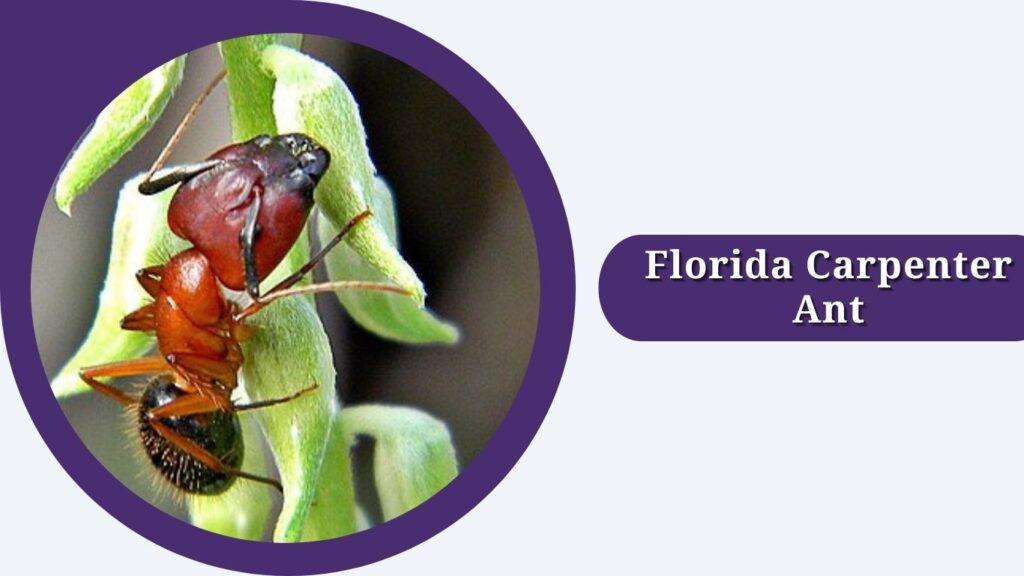
Florida carpenter ants are commonly found in the southeastern United States, particularly in Florida’s humid and subtropical environments. They are medium to large in size, with a dark brown to black coloration, and prefer moist or decaying wood for nesting. These ants are capable of causing structural damage if they establish colonies in homes or wooden structures.
Identification
- Color: Dark brown to black
- Size: Workers 6–12 mm, queens up to 20 mm
- Body: Three segmented body with a narrow waist
- Antennae: Elbowed with 12 segments
- Habitat: Moist wood, tree stumps, logs, and structural timber
Behavior
Florida carpenter ants are mostly nocturnal, foraging at night for sweet substances and proteins. They can form large colonies and will aggressively defend their nests when disturbed.
Habitat and Nesting
They favor damp or rotting wood in natural settings like stumps and fallen trees. Inside buildings, they seek wood affected by moisture, such as window frames, door sills, and attics.
Life Cycle
The queen lays eggs that hatch into larvae, then pupae, and finally adult workers. Colonies can survive for multiple years, gradually enlarging galleries and establishing satellite nests if the main nest becomes crowded.
5. California Carpenter Ant
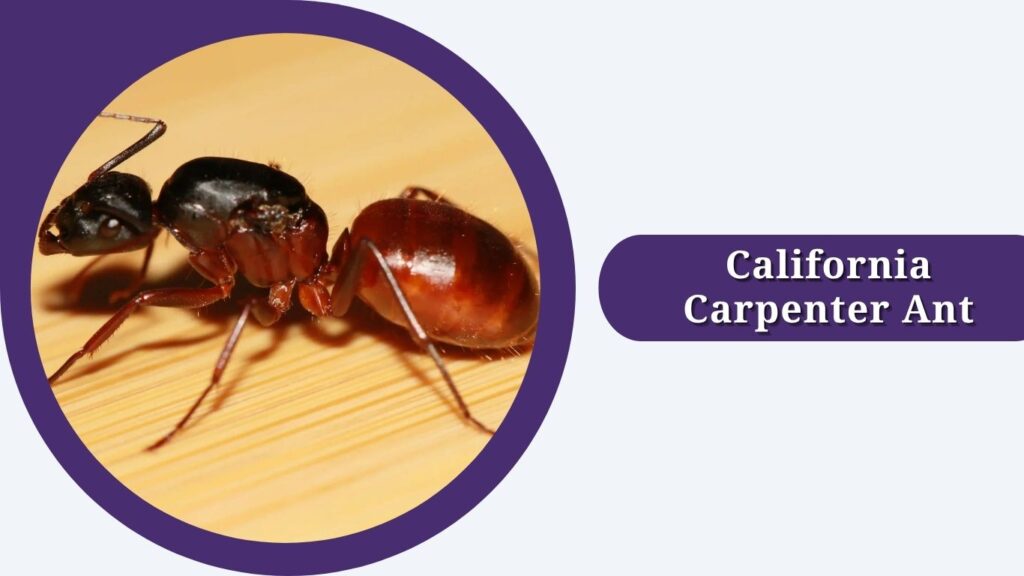
California carpenter ants are primarily found along the western coast of the United States. They are medium to large ants with a dark brown to black coloration and are known for nesting in both natural and man-made wooden structures. These ants are particularly attracted to moist or decaying wood, making homes with water-damaged areas susceptible to infestations.
Identification
- Color: Dark brown to black
- Size: Workers 6–12 mm, queens up to 20 mm
- Body: Three body segments with a narrow “waist”
- Antennae: Elbowed with 12 segments
- Habitat: Rotten logs, stumps, and damp structural wood
Behavior
California carpenter ants are nocturnal foragers, feeding on sugars, honeydew, and proteins. They can defend their nests aggressively and maintain colonies of several thousand workers.
Habitat and Nesting
They nest in damp or decaying wood in forests, fallen logs, and stumps. In homes, they target water-damaged wood such as window frames, door sills, and attic beams, gradually creating smooth galleries in the wood.
Life Cycle
The queen lays eggs that hatch into larvae, pupae, and adult workers. Colonies can survive multiple years, expanding tunnels and occasionally creating satellite nests to accommodate the growing population.
6. Western Carpenter Ant
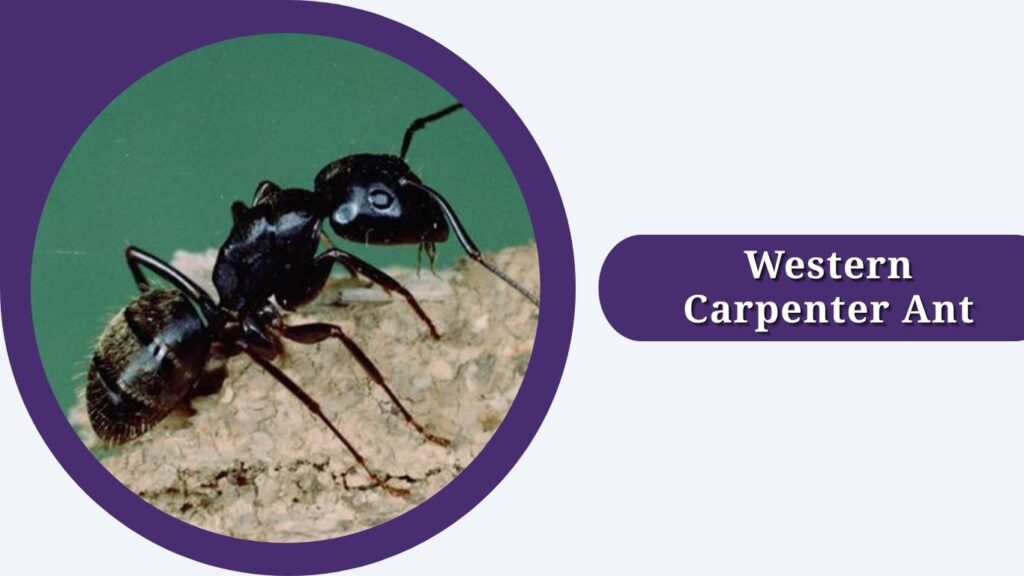
Western carpenter ants are widespread in the western regions of North America. They are large ants with a dark brown or black body and are often found in forests, nesting in both live and dead wood. These ants prefer moist or decaying timber, but they can infest homes with water-damaged or rotting wooden structures, causing structural damage over time.
Identification
- Color: Dark brown to black
- Size: Workers 6–13 mm, queens up to 22 mm
- Body: Three distinct body segments with a narrow “waist”
- Antennae: Elbowed, 12 segments
- Habitat: Tree stumps, logs, hollow trees, and structural wood
Behavior
Western carpenter ants are mostly nocturnal and forage for sugary foods and proteins. They can form large colonies of several thousand workers and will defend their nests if disturbed.
Habitat and Nesting
These ants prefer moist or decaying wood in forests and occasionally in urban areas. In buildings, they infest water-damaged wood in attics, wall voids, and window frames, carving smooth galleries as they expand their nests.
Life Cycle
The colony begins with a queen laying eggs that hatch into larvae, then pupae, and finally adult workers. Colonies may persist for several years, expanding tunnels and sometimes creating satellite nests to accommodate growth.
7. Eastern Carpenter Ant
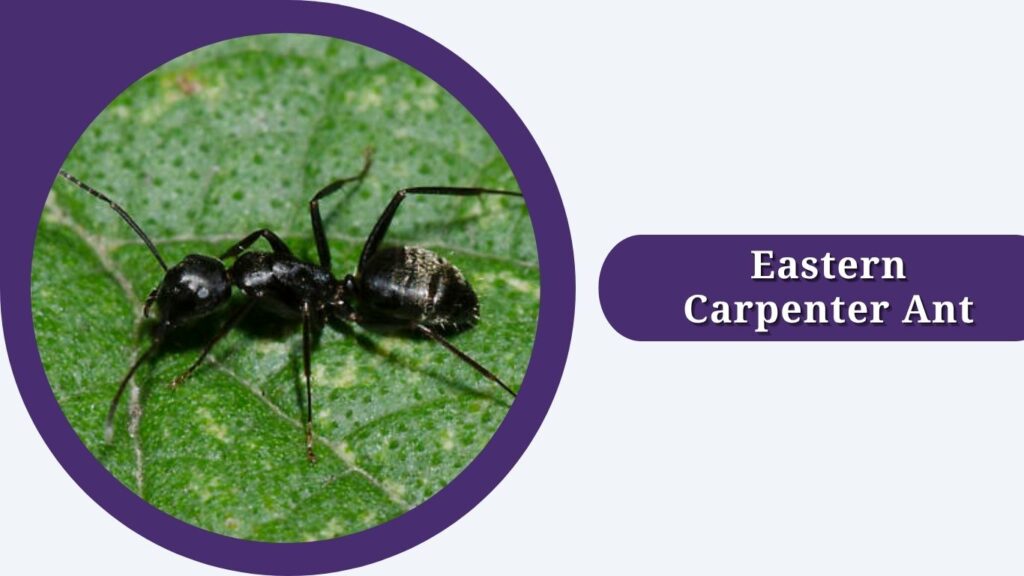
Eastern carpenter ants are one of the most common carpenter ants in the eastern United States. They are large, black or dark brown ants that nest primarily in decaying or moist wood. They are a significant concern for homeowners because colonies can establish inside structures, leading to wood damage over time.
Identification
- Color: Black to dark brown
- Size: Workers 6–13 mm, queens up to 25 mm
- Body: Three distinct body segments with a narrow waist
- Antennae: Elbowed with 12 segments
- Habitat: Dead trees, stumps, logs, and wooden structures
Behavior
Eastern carpenter ants are mostly nocturnal, foraging for sweet foods, proteins, and honeydew. Colonies can include thousands of workers, and ants will aggressively protect their nest if threatened.
Habitat and Nesting
These ants prefer moist or decaying wood outdoors but can infest homes, particularly around roofs, windows, and wall voids where water damage exists. They create smooth galleries within the wood as they expand their nests.
Life Cycle
A mated queen lays eggs that develop into larvae, pupae, and adult workers. Colonies can live several years, gradually expanding tunnels and sometimes forming satellite nests to accommodate colony growth.
8. Southern Carpenter Ant
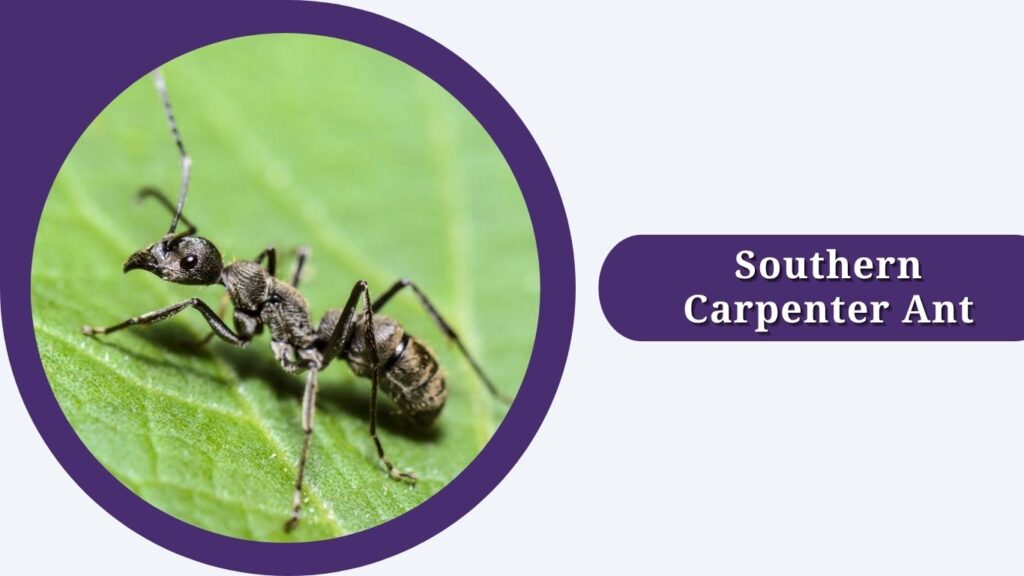
Southern carpenter ants are commonly found in the southeastern United States, thriving in warm and humid climates. They are large ants with a black or dark brown body and prefer nesting in moist or decaying wood. These ants can infest homes, particularly areas affected by water damage, and their tunneling can weaken wooden structures over time.
Identification
- Color: Black to dark brown
- Size: Workers 6–12 mm, queens up to 22 mm
- Body: Three body segments with a narrow waist
- Antennae: Elbowed, 12 segments
- Habitat: Rotten logs, tree stumps, hollow trees, and structural wood
Behavior
Southern carpenter ants are mostly nocturnal foragers seeking sugars, honeydew, and proteins. Colonies can be large, and workers defend the nest if disturbed.
Habitat and Nesting
They nest in moist or decaying wood outdoors in forests, stumps, and logs. Inside homes, they prefer damp wooden structures like attics, window frames, and door sills, carving smooth galleries as they expand.
Life Cycle
The queen lays eggs that hatch into larvae, then pupae, and finally adult workers. Colonies can survive for several years, expanding tunnels and creating satellite nests to accommodate growth.
9. Giant Carpenter Ant
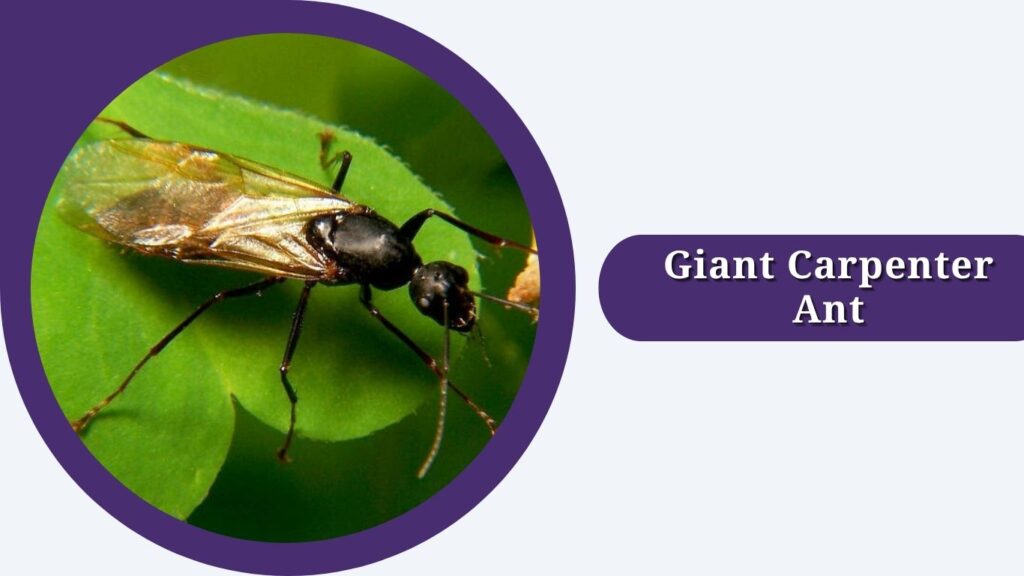
Giant carpenter ants are among the largest carpenter ant species, commonly found in North America. They are typically black or dark brown and are known for their size and strength. These ants prefer to nest in decaying or moist wood but can occasionally invade homes, particularly in areas with water-damaged timber.
Identification
- Color: Black or dark brown
- Size: Workers 10–15 mm, queens up to 25 mm
- Body: Three distinct segments with a narrow waist
- Antennae: Elbowed with 12 segments
- Habitat: Tree stumps, logs, fallen trees, and structural wood
Behavior
Giant carpenter ants are mostly nocturnal, foraging for sweet substances, proteins, and other insects. They can form large colonies and will aggressively defend their nests if disturbed.
Habitat and Nesting
These ants prefer decaying or moist wood outdoors but can infest homes with damaged or damp timber. They create smooth galleries as they tunnel, sometimes forming satellite nests nearby.
Life Cycle
The queen lays eggs that develop into larvae, pupae, and adult workers. Colonies can persist for several years, gradually expanding galleries and sometimes establishing additional nests to accommodate colony growth.
10. Hairy Carpenter Ant
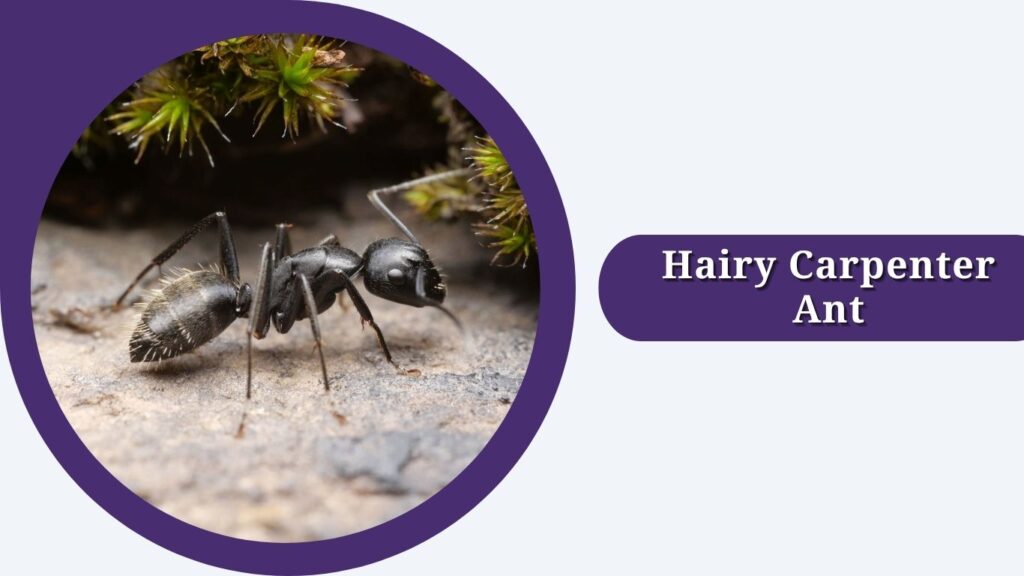
Hairy carpenter ants are a distinct carpenter ant species recognized by tiny hairs covering their bodies, giving them a slightly fuzzy appearance. They are medium to large ants and are commonly found in moist, decaying wood. Though less aggressive than some other carpenter ants, they can still damage wooden structures if colonies are established indoors.
Identification
- Color: Dark brown to black
- Size: Workers 6–12 mm, queens up to 20 mm
- Body: Three segments with a narrow waist; fine hairs covering the body
- Antennae: Elbowed with 12 segments
- Habitat: Rotten logs, stumps, hollow trees, and structural wood
Behavior
Hairy carpenter ants are primarily nocturnal, foraging for sugary foods and proteins. Colonies are moderate in size but can grow significantly over time if food sources are abundant.
Habitat and Nesting
They favor damp, decaying wood outdoors in forests and stumps. In homes, they infest areas with moisture damage, such as attics, wall voids, and window frames, gradually creating smooth galleries in the wood.
Life Cycle
The queen lays eggs that hatch into larvae, then pupae, and finally adult workers. Colonies can last several years, expanding tunnels and sometimes forming satellite nests to support colony growth.
11. Golden Carpenter Ant
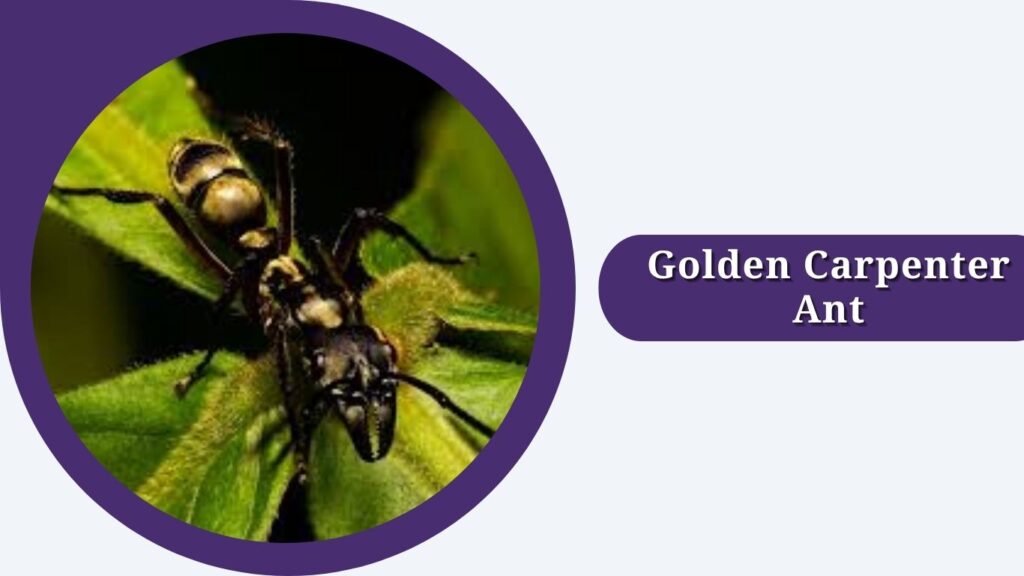
Golden carpenter ants are notable for their shiny, yellowish-golden coloration, which makes them distinct from other carpenter ants. They are medium to large in size and prefer moist, decaying wood for nesting. While less aggressive than black or red carpenter ants, they can still damage wooden structures if they establish colonies indoors.
Identification
- Color: Yellowish-golden
- Size: Workers 5–11 mm, queens up to 18 mm
- Body: Three distinct segments with a narrow waist
- Antennae: Elbowed with 12 segments
- Habitat: Rotten logs, tree stumps, and occasionally structural wood
Behavior
Golden carpenter ants are primarily nocturnal and forage for sugars, honeydew, and proteins. They are less aggressive but will defend their nests when disturbed.
Habitat and Nesting
These ants prefer decaying wood in forests, stumps, and fallen logs. In homes, they are usually found in damp wood such as window frames, door sills, and attic beams, creating smooth galleries as they expand.
Life Cycle
The queen lays eggs that develop into larvae, then pupae, and finally adult workers. Colonies can survive for several years, gradually enlarging tunnels and establishing satellite nests if needed.
12. Brown Carpenter Ant
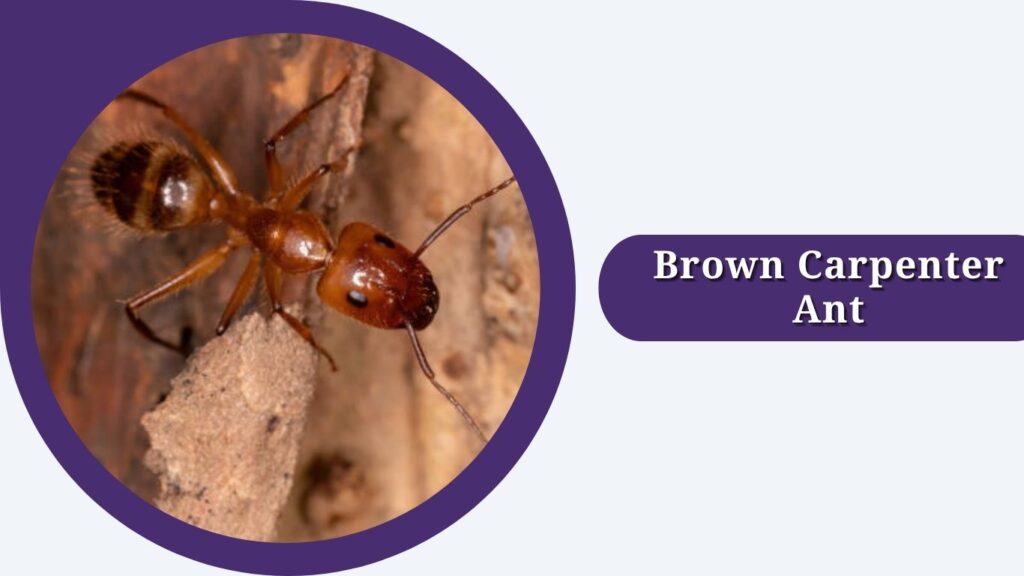
Brown carpenter ants are medium to large ants commonly found in North America. They have a brown to reddish-brown coloration and prefer nesting in moist or decaying wood. While not as aggressive as black carpenter ants, they can still cause structural damage when they establish colonies in homes or other wooden structures.
Identification
- Color: Brown to reddish-brown
- Size: Workers 6–12 mm, queens up to 20 mm
- Body: Three body segments with a narrow waist
- Antennae: Elbowed with 12 segments
- Habitat: Rotten logs, tree stumps, hollow trees, and structural wood
Behavior
Brown carpenter ants are mostly nocturnal foragers seeking sugars, proteins, and honeydew. Colonies can become large and will defend their nests if disturbed.
Habitat and Nesting
They prefer damp, decaying wood outdoors in forests, stumps, and fallen logs. In buildings, they are found in water-damaged wood such as attics, wall voids, and door frames, carving smooth galleries as they expand.
Life Cycle
The queen lays eggs that hatch into larvae, then pupae, and finally adult workers. Colonies may last several years, expanding tunnels and sometimes creating satellite nests to accommodate growth.
13. Himalayan Carpenter Ant
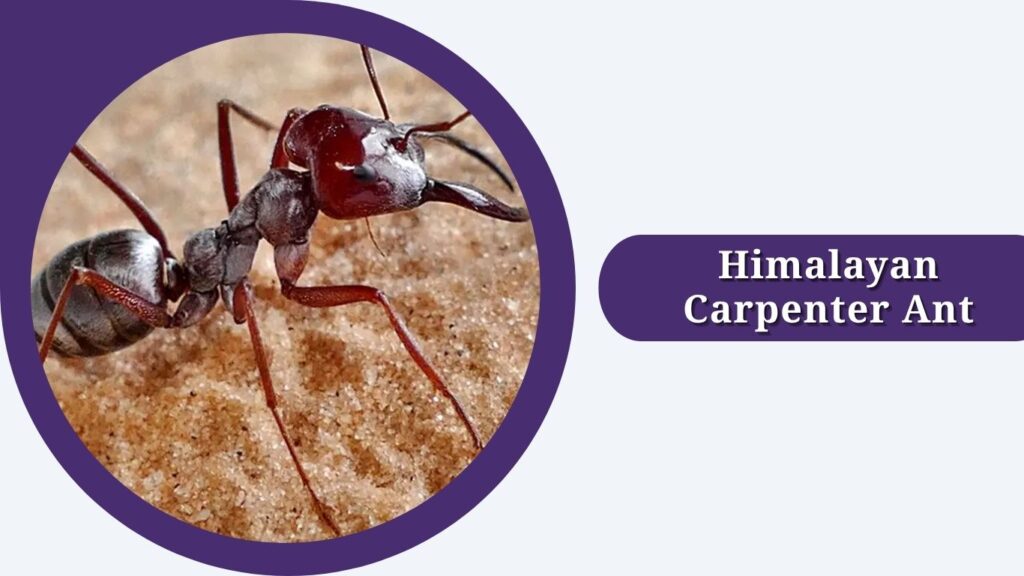
Himalayan carpenter ants are native to the mountainous regions of the Himalayas. They are medium to large ants with dark brown to black bodies and are adapted to cooler, forested environments. These ants typically nest in dead or decaying wood and, while less common in human structures, they can still infest wooden buildings in high-altitude settlements.
Identification
- Color: Dark brown to black
- Size: Workers 6–12 mm, queens up to 22 mm
- Body: Three segments with a narrow waist
- Antennae: Elbowed with 12 segments
- Habitat: Dead logs, tree stumps, and rotting timber in forested areas
Behavior
Himalayan carpenter ants are mostly nocturnal and forage for sweets, proteins, and insects. They are moderately aggressive and will defend their nests if threatened.
Habitat and Nesting
These ants prefer moist, decaying wood in forests, tree stumps, and fallen logs. In human structures, they may invade wooden beams or attics in areas with high moisture content.
Life Cycle
The queen lays eggs that develop into larvae, then pupae, and finally adult workers. Colonies can survive for multiple years, gradually expanding tunnels and occasionally forming satellite nests.
14. Formosan Carpenter Ant
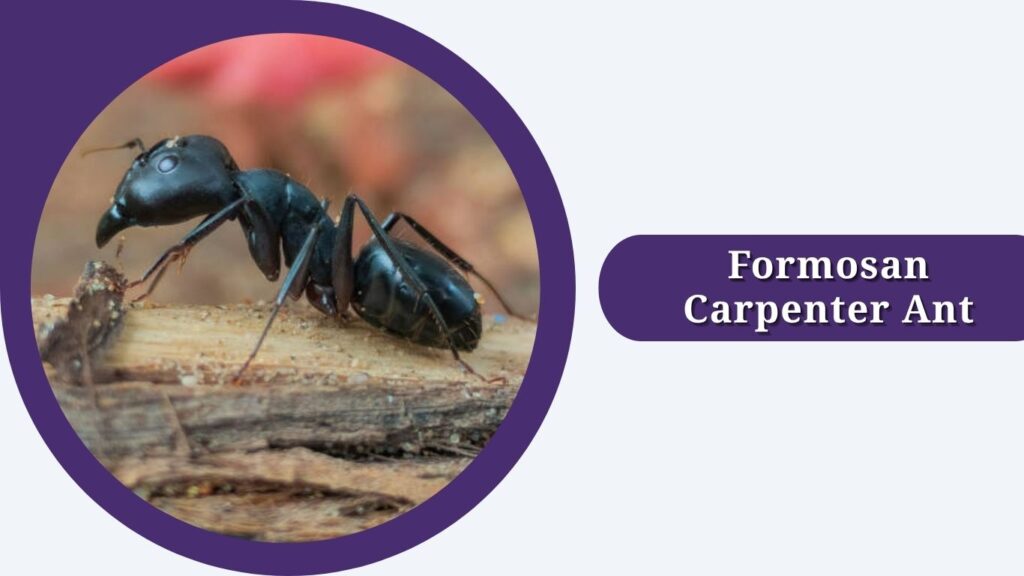
Formosan carpenter ants are an invasive species originally from East Asia but now found in parts of the United States. They are large, aggressive ants that are highly adaptable and capable of forming extensive colonies. They prefer moist or decaying wood but can also establish nests in structural timber, posing a significant threat to homes and buildings.
Identification
- Color: Dark brown to black
- Size: Workers 6–12 mm, queens up to 25 mm
- Body: Three distinct segments with a narrow waist
- Antennae: Elbowed, 12 segments
- Habitat: Decaying logs, stumps, hollow trees, and structural wood
Behavior
Formosan carpenter ants are highly aggressive and mostly nocturnal. They forage for sweets, proteins, and honeydew and can form very large colonies with multiple queens, increasing their invasive potential.
Habitat and Nesting
They nest in damp or decaying wood outdoors, such as tree stumps and logs, but also infest homes and buildings, particularly in water-damaged wood. Their tunnels are smooth and extensive, often creating satellite nests.
Life Cycle
A queen starts the colony by laying eggs that develop into larvae, pupae, and adult workers. Colonies can survive for several years, expanding tunnels and satellite nests to accommodate rapid population growth.
15. Shiny Carpenter Ant
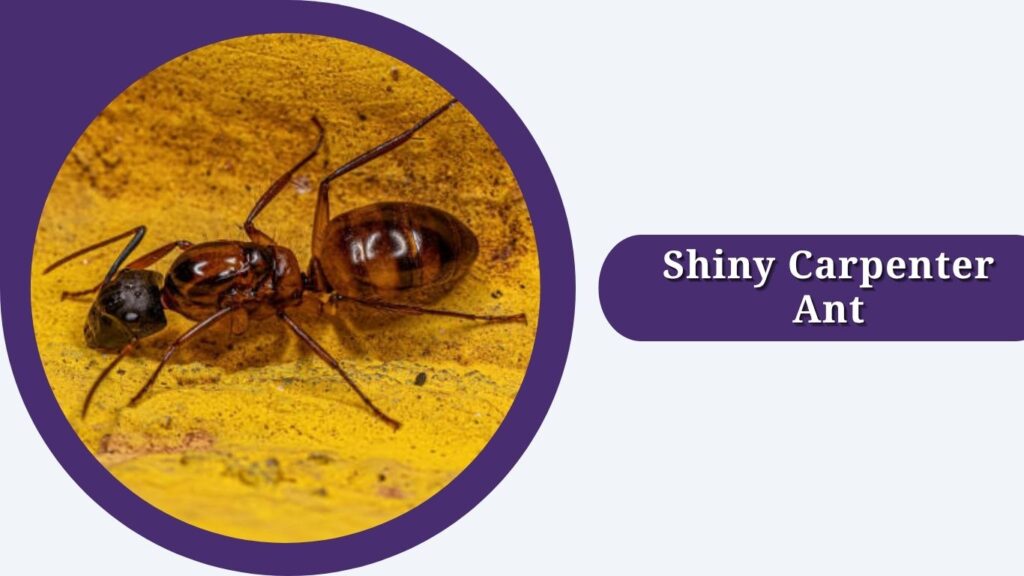
Shiny carpenter ants are medium to large ants recognized for their glossy, reflective exoskeleton. They are found in various regions of North America and prefer nesting in moist or decaying wood. While not as aggressive as some carpenter ants, their nesting habits can lead to significant structural damage over time if colonies establish in homes.
Identification
- Color: Glossy black or dark brown
- Size: Workers 6–12 mm, queens up to 20 mm
- Body: Three body segments with a narrow waist
- Antennae: Elbowed with 12 segments
- Habitat: Rotten logs, stumps, hollow trees, and structural wood
Behavior
Shiny carpenter ants are primarily nocturnal, foraging for sweets, honeydew, and proteins. Colonies can grow moderately large and will defend their nests if disturbed.
Habitat and Nesting
These ants prefer moist or decaying wood outdoors in forests, stumps, and fallen logs. In buildings, they target damp wood, such as attics, window frames, and door sills, creating smooth galleries as they expand.
Life Cycle
The queen lays eggs that develop into larvae, pupae, and adult workers. Colonies may last several years, gradually enlarging tunnels and establishing satellite nests to support colony growth.
16. Smooth Carpenter Ant
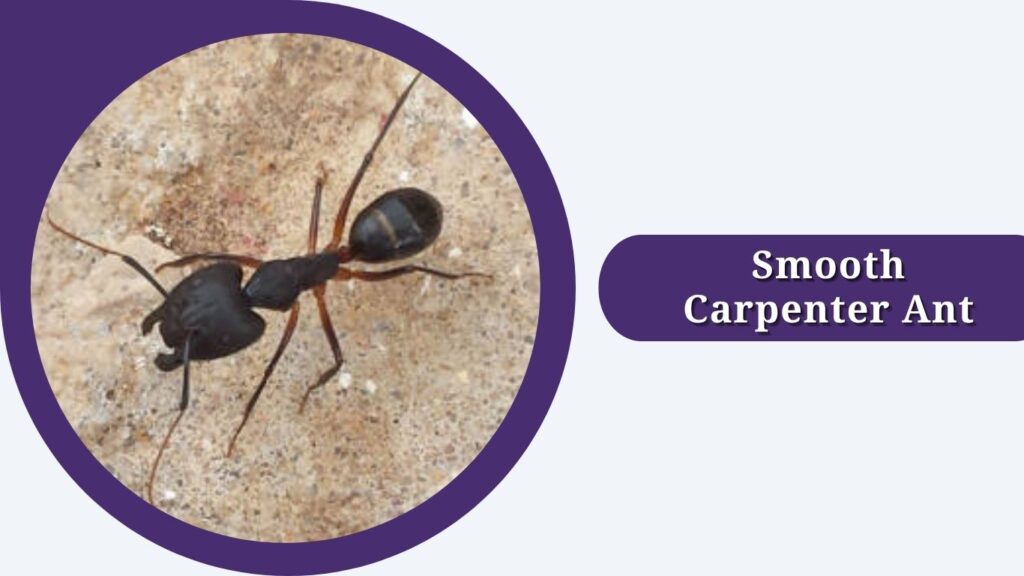
Smooth carpenter ants are medium to large ants distinguished by their sleek, shiny exoskeleton without noticeable hairs. They are commonly found in North American forests and are known for nesting in moist or decaying wood. Although less aggressive than some carpenter ants, they can still damage structural timber if colonies establish indoors.
Identification
- Color: Dark brown to black
- Size: Workers 6–12 mm, queens up to 20 mm
- Body: Three body segments with a narrow waist, smooth glossy exoskeleton
- Antennae: Elbowed with 12 segments
- Habitat: Rotten logs, stumps, hollow trees, and structural wood
Behavior
Smooth carpenter ants are nocturnal foragers, feeding on sugars, proteins, and honeydew. Colonies can grow moderately large and workers defend the nest when threatened.
Habitat and Nesting
They nest in moist or decaying wood outdoors in forests and stumps. In homes, they are often found in damp wooden structures, including attics, window frames, and door sills, where they carve smooth galleries.
Life Cycle
The queen lays eggs that develop into larvae, then pupae, and finally adult workers. Colonies can survive multiple years, gradually expanding tunnels and sometimes forming satellite nests for the growing population.
17. Large Carpenter Ant
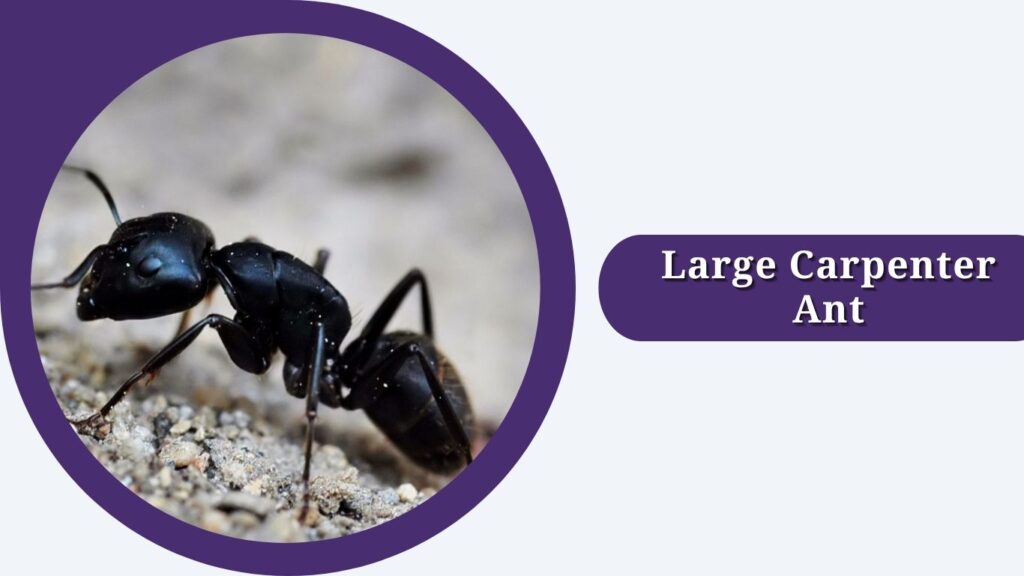
Large carpenter ants are among the biggest species of carpenter ants found in North America. They are dark brown to black and prefer nesting in moist or decaying wood. Due to their size and strong mandibles, they can carve extensive galleries, causing notable damage to wooden structures if colonies establish indoors.
Identification
- Color: Dark brown to black
- Size: Workers 10–15 mm, queens up to 25 mm
- Body: Three segments with a narrow waist
- Antennae: Elbowed with 12 segments
- Habitat: Tree stumps, logs, hollow trees, and structural timber
Behavior
Large carpenter ants are nocturnal foragers, searching for sweets, proteins, and honeydew. Colonies are large, and workers aggressively defend their nests when disturbed.
Habitat and Nesting
They prefer moist or decaying wood outdoors, such as stumps, logs, and fallen trees. Inside homes, they infest water-damaged wood like attic beams, window frames, and door sills, creating smooth galleries as they expand.
Life Cycle
A mated queen lays eggs that develop into larvae, pupae, and adult workers. Colonies can survive several years, gradually expanding tunnels and sometimes forming satellite nests.
18. Small Carpenter Ant
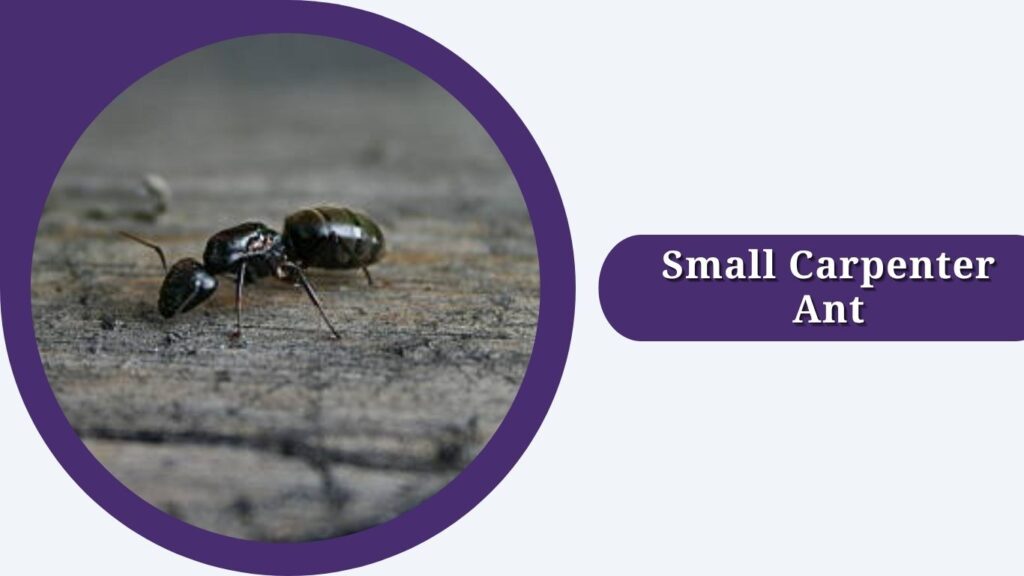
Small carpenter ants are smaller in size compared to other carpenter ant species, making them less conspicuous. They are usually dark brown or black and prefer nesting in moist or decaying wood. Despite their size, they can still damage wooden structures if colonies establish indoors over time.
Identification
- Color: Dark brown to black
- Size: Workers 4–8 mm, queens up to 15 mm
- Body: Three segments with a narrow waist
- Antennae: Elbowed with 12 segments
- Habitat: Rotten logs, stumps, hollow trees, and structural timber
Behavior
Small carpenter ants are primarily nocturnal, foraging for sweets, proteins, and honeydew. Colonies are moderate in size and workers will defend the nest if threatened.
Habitat and Nesting
They prefer damp or decaying wood outdoors in forests, stumps, and fallen logs. In homes, they target water-damaged wood, such as attics, wall voids, and window frames, gradually creating smooth galleries.
Life Cycle
The queen lays eggs that develop into larvae, pupae, and adult workers. Colonies may persist for several years, expanding tunnels and sometimes creating satellite nests to accommodate colony growth.
19. Coastal Carpenter Ant
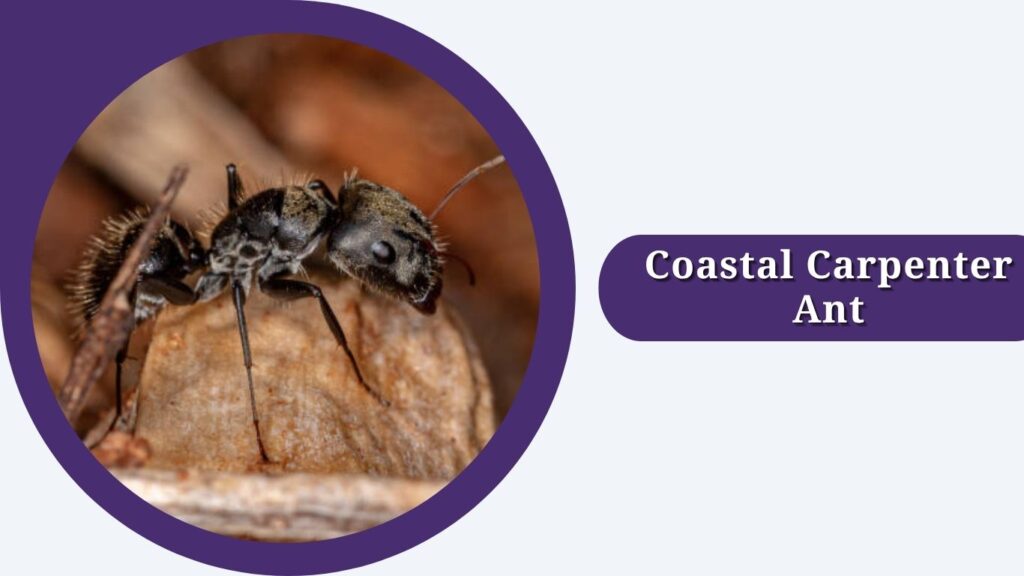
Coastal carpenter ants are typically found in humid, coastal regions where moisture is abundant. They are medium to large ants, usually dark brown to black, and prefer nesting in decaying or damp wood. Their presence near homes and structures with water-damaged wood can result in structural damage over time.
Identification
- Color: Dark brown to black
- Size: Workers 6–12 mm, queens up to 20 mm
- Body: Three segments with a narrow waist
- Antennae: Elbowed with 12 segments
- Habitat: Moist logs, stumps, and structural wood near coastal areas
Behavior
Coastal carpenter ants are mostly nocturnal and forage for sugars, proteins, and honeydew. Colonies can grow moderately large and workers defend the nest when threatened.
Habitat and Nesting
These ants nest in damp or decaying wood outdoors, such as fallen logs and stumps near the coast. In buildings, they target water-damaged wood in attics, wall voids, and door frames, carving smooth galleries.
Life Cycle
The queen lays eggs that hatch into larvae, then pupae, and finally adult workers. Colonies can last several years, gradually expanding tunnels and establishing satellite nests as needed.
20. Mountain Carpenter Ant
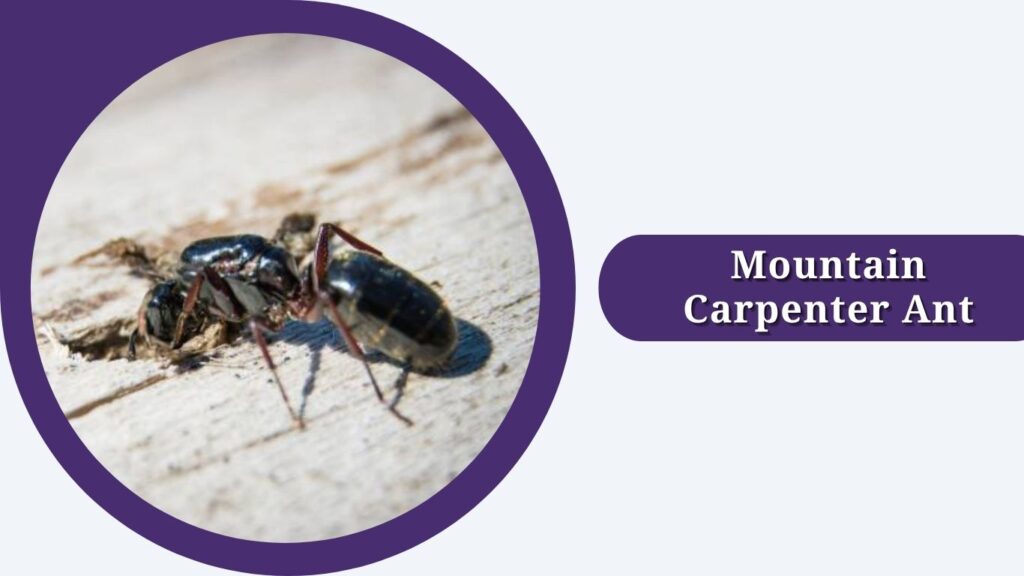
Mountain carpenter ants are commonly found in higher elevation forests and mountainous regions. They are medium to large ants with dark brown or black coloration. These ants prefer moist, decaying wood in natural settings but can occasionally invade homes with water-damaged timber, causing structural damage.
Identification
- Color: Dark brown to black
- Size: Workers 6–12 mm, queens up to 22 mm
- Body: Three distinct segments with a narrow waist
- Antennae: Elbowed with 12 segments
- Habitat: Rotten logs, tree stumps, and hollow trees in mountainous areas
Behavior
Mountain carpenter ants are primarily nocturnal, foraging for sugars, proteins, and honeydew. Colonies can be moderately large, and workers will defend their nest if disturbed.
Habitat and Nesting
They nest in damp or decaying wood in forests and mountainous areas. In homes, they target water-damaged wood such as attics, window frames, and wall voids, carving smooth galleries as they expand.
Life Cycle
The queen lays eggs that develop into larvae, pupae, and adult workers. Colonies can survive for several years, expanding tunnels and forming satellite nests when the colony grows.
21. Woodland Carpenter Ant
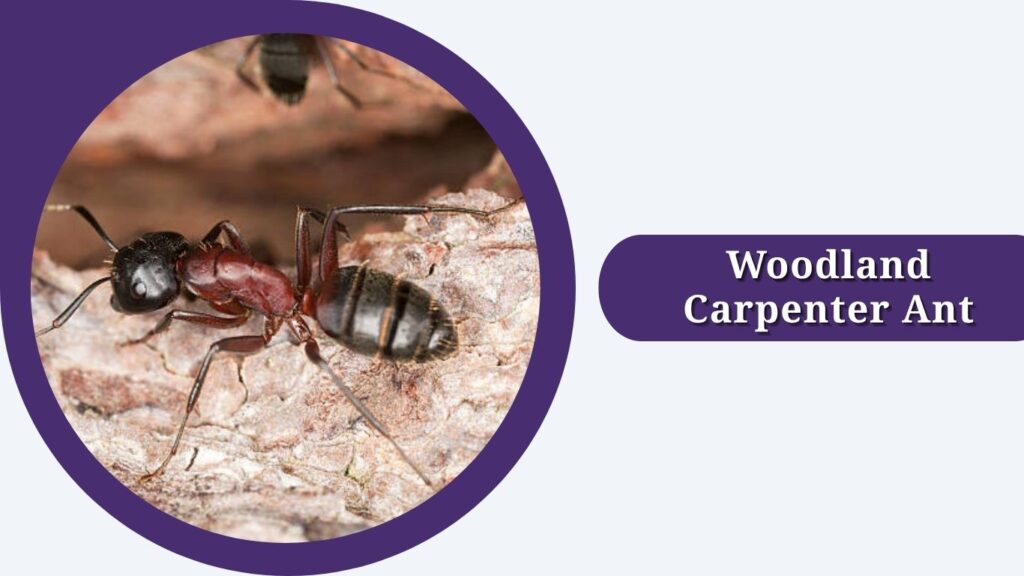
Woodland carpenter ants are commonly found in forested areas, preferring moist or decaying wood in trees, logs, and stumps. They are medium to large ants, typically dark brown or black, and while they primarily inhabit natural environments, they can occasionally infest homes, especially where water damage exists.
Identification
- Color: Dark brown to black
- Size: Workers 6–12 mm, queens up to 20 mm
- Body: Three body segments with a narrow waist
- Antennae: Elbowed with 12 segments
- Habitat: Rotten logs, stumps, hollow trees, and structural wood in wooded areas
Behavior
Woodland carpenter ants are nocturnal, foraging for sugars, proteins, and honeydew. Colonies are moderately sized and will defend their nests if threatened.
Habitat and Nesting
They prefer damp, decaying wood outdoors in forests, stumps, and fallen logs. Inside homes, they may infest attics, window frames, or wall voids with water-damaged wood, creating smooth galleries as they expand.
Life Cycle
The queen lays eggs that develop into larvae, pupae, and adult workers. Colonies can survive for several years, gradually expanding tunnels and forming satellite nests to support the growing population.
22. Garden Carpenter Ant
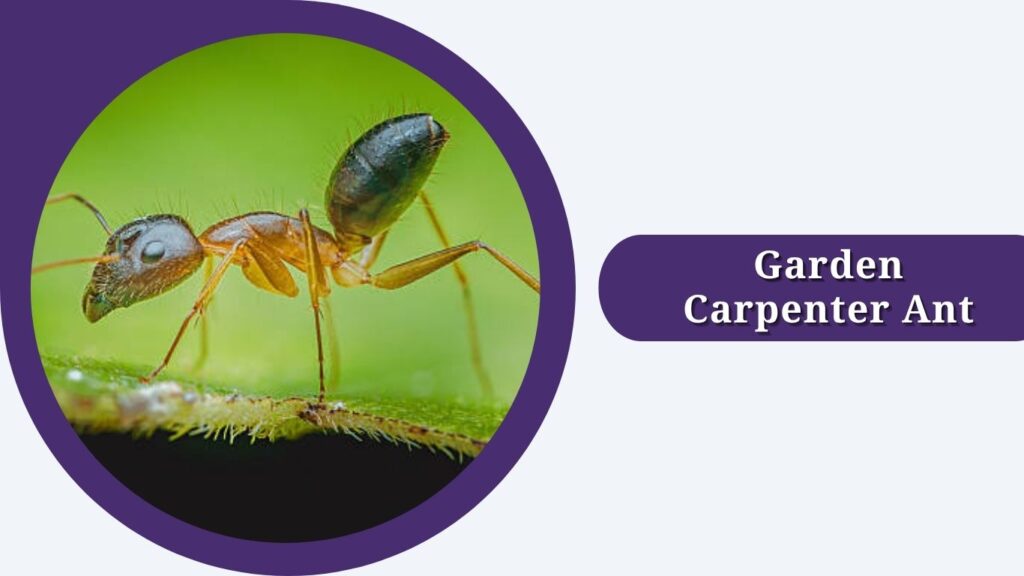
Garden carpenter ants are commonly found in gardens, parks, and landscaped areas with plenty of trees, shrubs, and decaying wood. They are medium-sized ants with dark brown or black coloration and can occasionally infest homes if wooden structures are damp. These ants are known for nesting in decaying wood or garden timbers, which can lead to localized structural damage.
Identification
- Color: Dark brown to black
- Size: Workers 6–10 mm, queens up to 18 mm
- Body: Three body segments with a narrow waist
- Antennae: Elbowed with 12 segments
- Habitat: Garden logs, mulch, stumps, and wooden garden structures
Behavior
Garden carpenter ants are mostly nocturnal and forage for sweets, proteins, and honeydew. They are moderately aggressive and will defend their nests if disturbed.
Habitat and Nesting
They prefer decaying wood in garden environments, such as logs, mulch, and stumps. In homes, they may infest garden structures or nearby water-damaged wooden areas, creating smooth galleries.
Life Cycle
The queen lays eggs that develop into larvae, pupae, and adult workers. Colonies can survive for several years, gradually expanding tunnels and sometimes establishing satellite nests to accommodate growth.
23. Tree Carpenter Ant
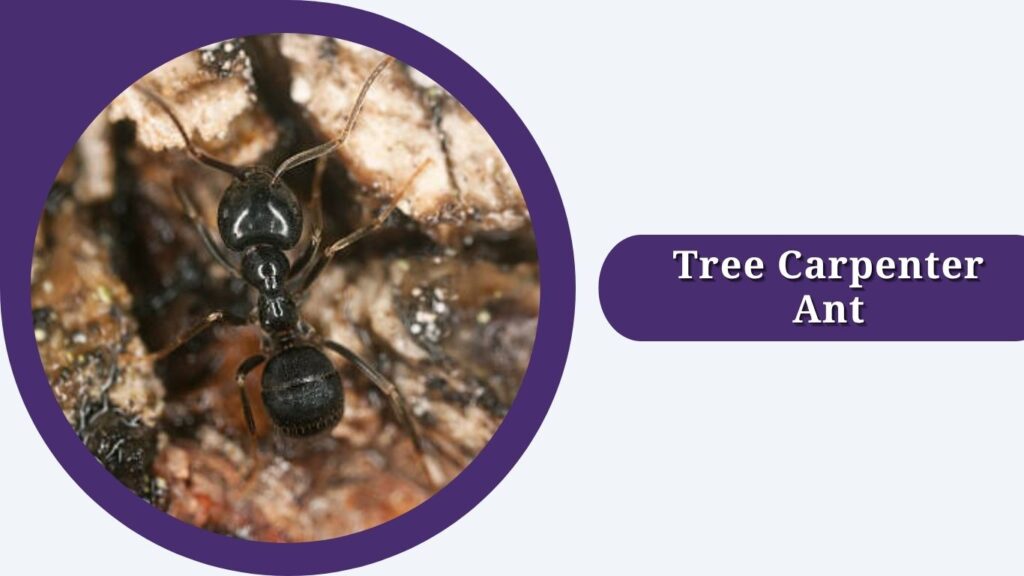
Tree carpenter ants are specialized ants that primarily nest in living or dead trees. They are medium to large in size, usually dark brown to black, and are commonly found in forested areas. While they mostly inhabit natural trees, they can occasionally invade wooden structures if nearby timber is damp or decaying.
Identification
- Color: Dark brown to black
- Size: Workers 6–12 mm, queens up to 22 mm
- Body: Three segments with a narrow waist
- Antennae: Elbowed with 12 segments
- Habitat: Dead or living trees, tree stumps, and hollow wood
Behavior
Tree carpenter ants are nocturnal foragers, feeding on sugars, proteins, and honeydew. Colonies can grow moderately large and will defend the nest if disturbed.
Habitat and Nesting
They nest in trees, often in decaying or hollow sections, creating smooth galleries. In buildings, they may infest wooden structures near trees with moisture damage.
Life Cycle
The queen lays eggs that develop into larvae, pupae, and adult workers. Colonies can survive for several years, expanding tunnels and occasionally establishing satellite nests to accommodate growth.
24. House Carpenter Ant
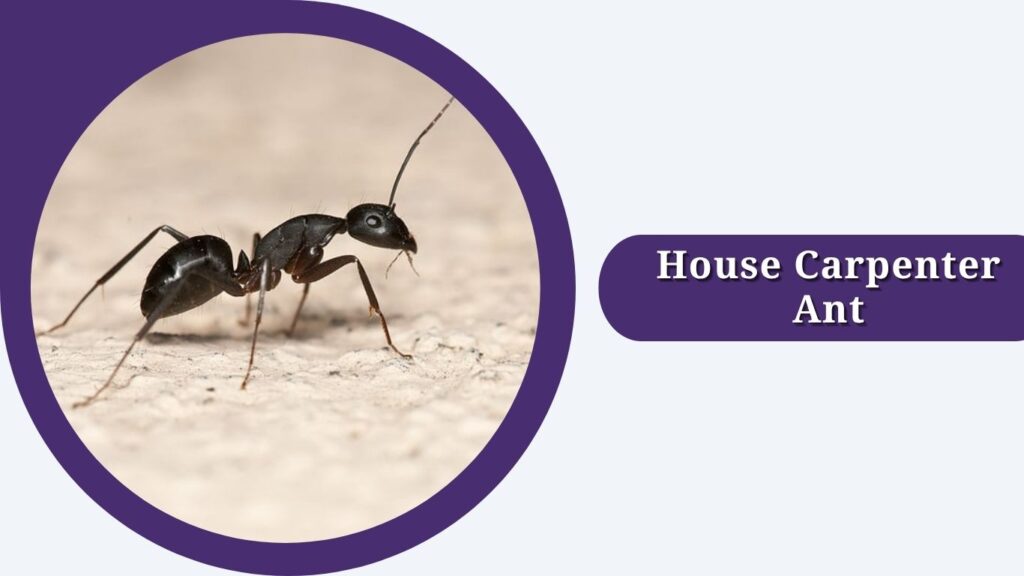
House carpenter ants are a common species that frequently infest human dwellings. They prefer moist or water-damaged wood in attics, wall voids, and window frames. Medium to large in size and dark brown to black in color, these ants can cause significant structural damage if colonies are established inside homes.
Identification
- Color: Dark brown to black
- Size: Workers 6–12 mm, queens up to 22 mm
- Body: Three segments with a narrow waist
- Antennae: Elbowed with 12 segments
- Habitat: Structural wood, window frames, door sills, and attics
Behavior
House carpenter ants are nocturnal foragers, feeding on sugars, proteins, and honeydew. Colonies can become large and will defend their nests if disturbed.
Habitat and Nesting
They nest in damp or water-damaged wood indoors. Outside, they may inhabit decaying logs, stumps, or tree bases. Their galleries are smooth and can expand over time, often creating satellite nests.
Life Cycle
The queen lays eggs that develop into larvae, pupae, and adult workers. Colonies can survive for several years, gradually expanding tunnels and forming satellite nests if needed.
25. Rusty Carpenter Ant
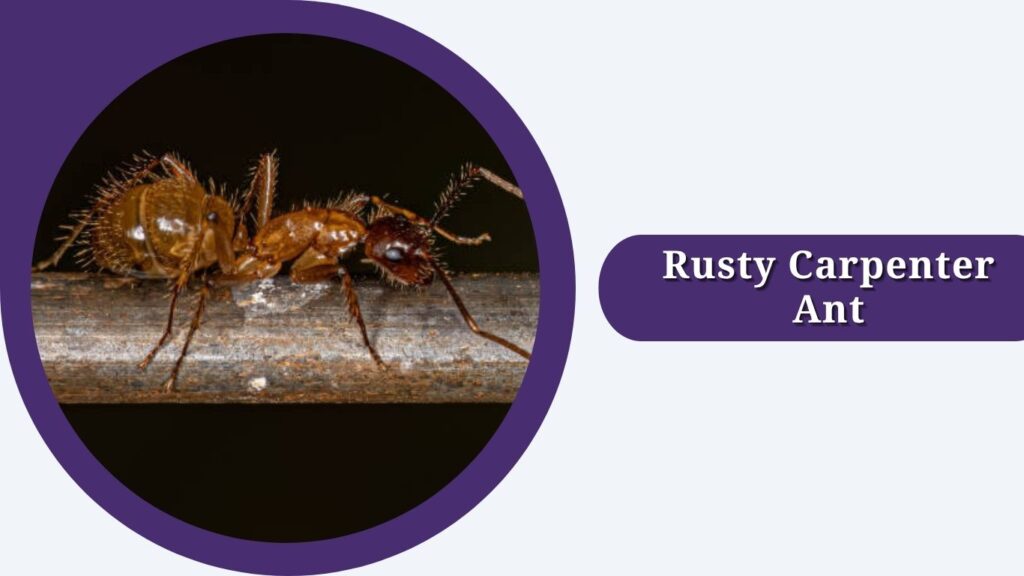
Rusty carpenter ants are medium-sized ants recognized by their reddish-brown or rusty-colored body. They are typically found in forests, gardens, and areas with decaying wood. While less aggressive than black carpenter ants, they can still infest wooden structures with moisture damage, causing localized structural issues.
Identification
- Color: Reddish-brown or rusty
- Size: Workers 6–11 mm, queens up to 20 mm
- Body: Three segments with a narrow waist
- Antennae: Elbowed with 12 segments
- Habitat: Rotten logs, stumps, garden timbers, and structural wood
Behavior
Rusty carpenter ants are primarily nocturnal foragers, feeding on sugars, proteins, and honeydew. Colonies are moderate in size and workers will defend the nest if threatened.
Habitat and Nesting
They nest in decaying wood outdoors in forests, gardens, and stumps. In homes, they are found in water-damaged wood like attics, door frames, and window sills, carving smooth galleries.
Life Cycle
The queen lays eggs that develop into larvae, pupae, and adult workers. Colonies can survive for several years, gradually expanding tunnels and establishing satellite nests.
26. Dark Carpenter Ant
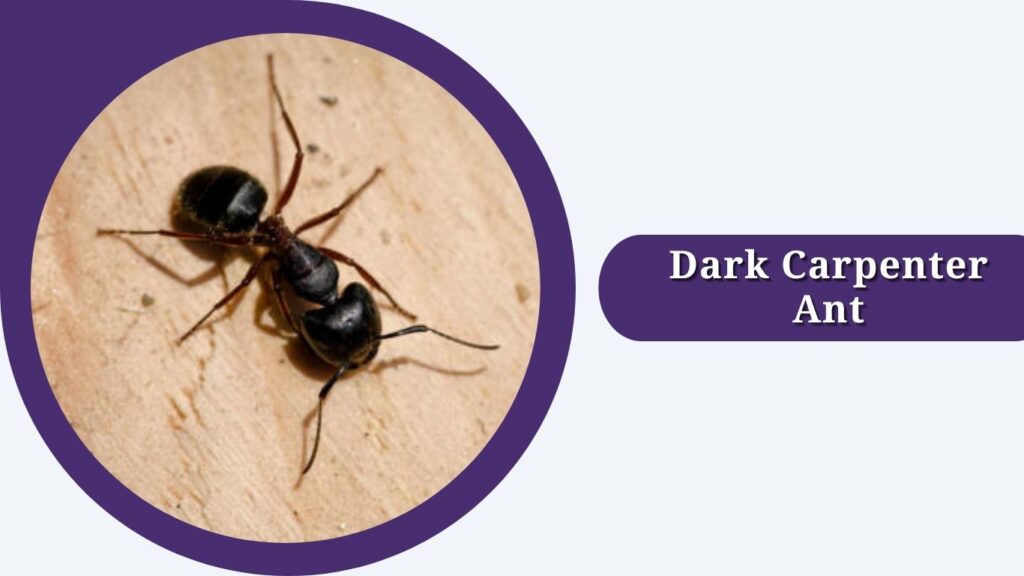
Dark carpenter ants are medium to large ants with a deep black or very dark brown coloration. They are common in forests and occasionally in human structures, especially where wood is moist or decaying. Their tunneling can cause damage to structural timber if colonies establish indoors.
Identification
- Color: Deep black to very dark brown
- Size: Workers 6–12 mm, queens up to 22 mm
- Body: Three body segments with a narrow waist
- Antennae: Elbowed with 12 segments
- Habitat: Rotten logs, tree stumps, hollow trees, and structural wood
Behavior
Dark carpenter ants are nocturnal, foraging for sugars, proteins, and honeydew. Colonies are moderately large and workers will defend the nest if disturbed.
Habitat and Nesting
They nest in decaying wood outdoors, such as fallen logs, stumps, and forest trees. Inside buildings, they target damp or water-damaged wood like attics, door frames, and wall voids, carving smooth galleries.
Life Cycle
The queen lays eggs that develop into larvae, pupae, and adult workers. Colonies can survive for several years, gradually expanding tunnels and sometimes forming satellite nests.
27. Northern Carpenter Ant
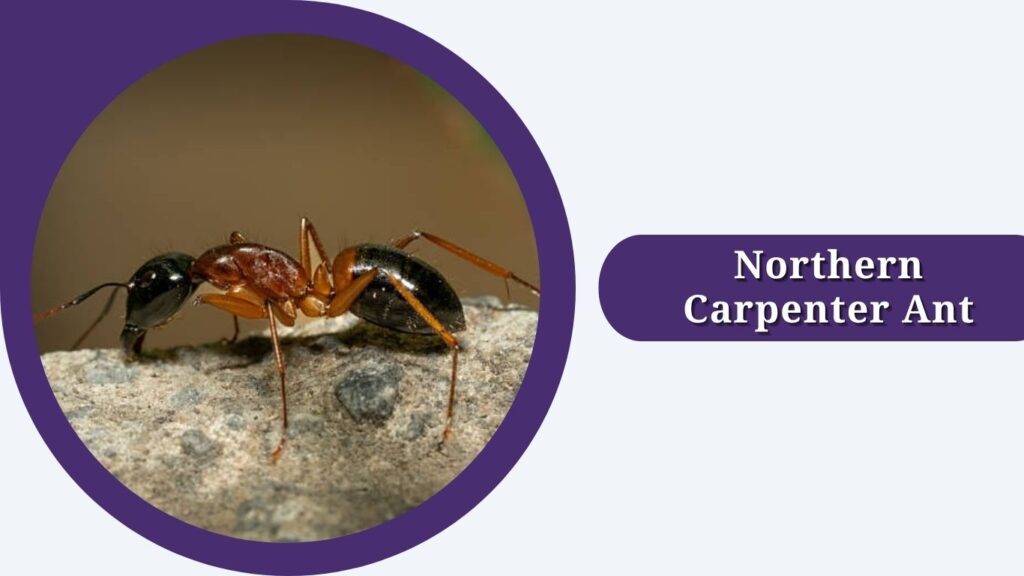
Northern carpenter ants are commonly found in the northern regions of North America. They are medium to large ants with black or dark brown bodies and prefer moist or decaying wood. These ants can infest homes, particularly in areas with water-damaged timber, causing structural damage over time.
Identification
- Color: Black to dark brown
- Size: Workers 6–12 mm, queens up to 22 mm
- Body: Three segments with a narrow waist
- Antennae: Elbowed with 12 segments
- Habitat: Dead trees, stumps, logs, and structural wood
Behavior
Northern carpenter ants are nocturnal foragers that search for sugars, proteins, and honeydew. Colonies can grow moderately large, and workers will defend the nest if disturbed.
Habitat and Nesting
They nest in moist or decaying wood outdoors in forests, stumps, and fallen logs. In homes, they target damp wood such as attics, wall voids, and window frames, creating smooth galleries.
Life Cycle
The queen lays eggs that develop into larvae, pupae, and adult workers. Colonies can persist for several years, expanding tunnels and forming satellite nests to accommodate growth.
28. Southern Dark Carpenter Ant
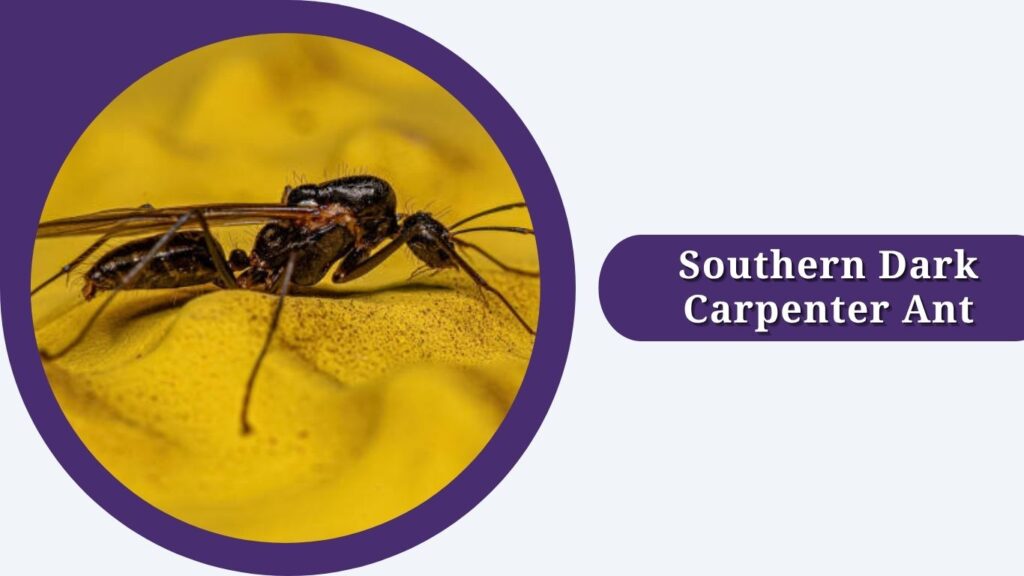
Southern dark carpenter ants are common in the southeastern United States, thriving in warm and humid climates. They are medium to large ants with a deep black or dark brown coloration. These ants prefer nesting in moist or decaying wood and can infest homes, especially in areas affected by water damage, posing a risk of structural damage.
Identification
- Color: Deep black to dark brown
- Size: Workers 6–12 mm, queens up to 22 mm
- Body: Three segments with a narrow waist
- Antennae: Elbowed with 12 segments
- Habitat: Rotten logs, stumps, hollow trees, and structural wood
Behavior
Southern dark carpenter ants are primarily nocturnal, foraging for sugars, proteins, and honeydew. Colonies can grow moderately large and workers will defend the nest when threatened.
Habitat and Nesting
They prefer decaying or damp wood outdoors in forests, stumps, and logs. Inside homes, they target water-damaged timber in attics, wall voids, and window frames, creating smooth galleries as they expand.
Life Cycle
The queen lays eggs that develop into larvae, pupae, and adult workers. Colonies can survive for several years, gradually expanding tunnels and forming satellite nests to accommodate growth.
29. Desert Carpenter Ant
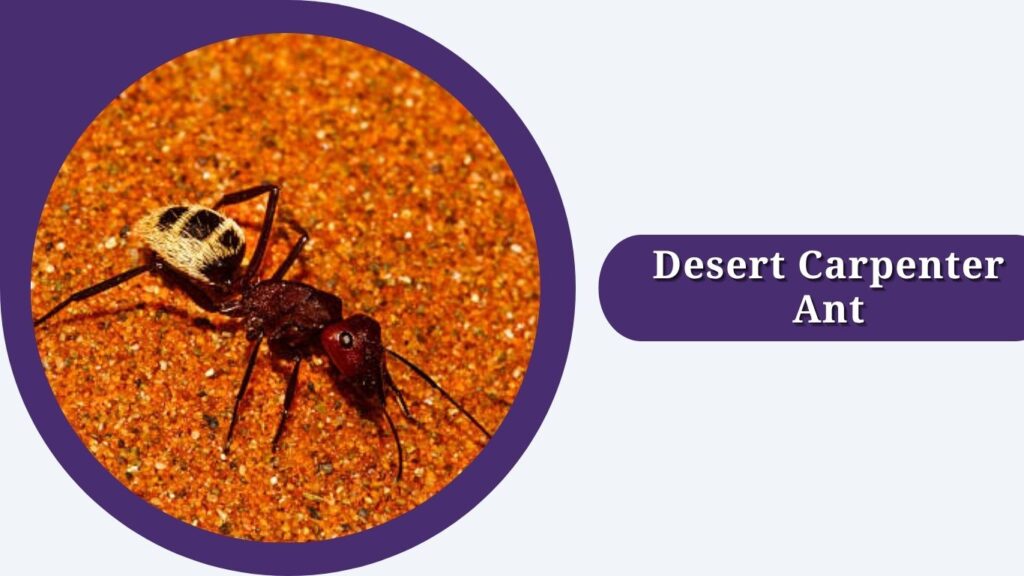
Desert carpenter ants are adapted to arid and semi-arid environments, commonly found in deserts and dry scrublands. They are medium-sized ants with dark brown to black coloration. While they prefer nesting in decaying wood outdoors, they can occasionally infest wooden structures near desert habitats, causing localized damage.
Identification
- Color: Dark brown to black
- Size: Workers 5–10 mm, queens up to 18 mm
- Body: Three body segments with a narrow waist
- Antennae: Elbowed with 12 segments
- Habitat: Dead wood, desert shrubs, and timber near arid areas
Behavior
Desert carpenter ants are mostly nocturnal and forage for sugars, proteins, and honeydew. Colonies are moderate in size, and workers will defend the nest if disturbed.
Habitat and Nesting
They nest in dry, decaying wood in desert environments. In homes or structures near desert areas, they may invade water-damaged wood or garden timbers, creating smooth galleries.
Life Cycle
The queen lays eggs that develop into larvae, pupae, and adult workers. Colonies can persist for several years, expanding tunnels and occasionally forming satellite nests to accommodate growth.
30. Subterranean Carpenter Ant
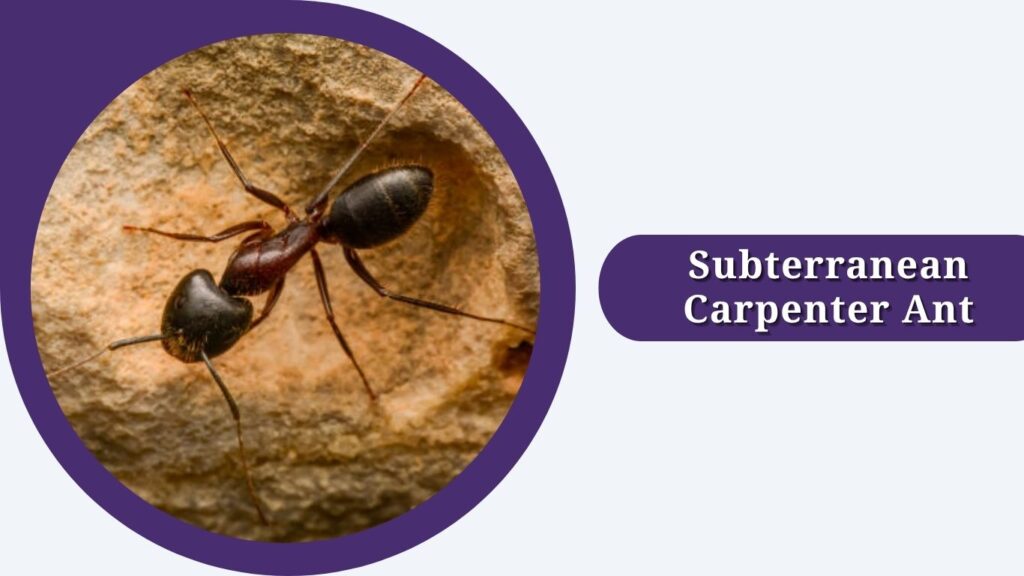
Subterranean carpenter ants are unique among carpenter ants because they often nest underground or in soil near decaying wood. They are medium to large ants with dark brown to black coloration. While they primarily inhabit natural environments, they can invade homes if wood is in contact with the ground, leading to structural damage over time.
Identification
- Color: Dark brown to black
- Size: Workers 6–12 mm, queens up to 22 mm
- Body: Three body segments with a narrow waist
- Antennae: Elbowed with 12 segments
- Habitat: Underground tunnels, soil, decaying wood, and wooden structures in contact with the ground
Behavior
Subterranean carpenter ants are nocturnal foragers that search for sugars, proteins, and honeydew. Colonies can be large, and workers aggressively defend their nests if disturbed.
Habitat and Nesting
They nest underground near decaying wood, stumps, or logs. In homes, they can infest wooden structures in contact with soil, such as basement beams or floor joists, carving smooth galleries.
Life Cycle
The queen lays eggs that develop into larvae, pupae, and adult workers. Colonies can survive for several years, gradually expanding tunnels and forming satellite nests to support colony growth.
FAQs
What is the difference between carpenter ants and regular ants?
Carpenter ants differ from regular ants because they do not eat wood but excavate it to create nests. Their large size, smooth galleries in wood, and preference for moist or decaying wood distinguish them from typical ants that primarily forage for food.
Can carpenter ants damage a house?
Yes, carpenter ants can damage wooden structures by tunneling through them to build nests. While they do not eat the wood, their galleries weaken beams, door frames, and other structural components over time, especially in areas with water damage.
How can I identify a carpenter ant infestation?
Signs include seeing large black, red, or golden ants, small piles of sawdust near wooden structures, hollow-sounding wood when tapped, and ant trails inside or around your home. Nocturnal foraging is another indicator.
How do carpenter ants choose their nesting site?
Carpenter ants prefer damp, decaying, or hollow wood. They often choose tree stumps, logs, or wooden structures with water damage. Moisture is critical for their nest development and survival.
What is the life cycle of a carpenter ant?
A carpenter ant colony begins with a mated queen laying eggs, which hatch into larvae, then pupae, and finally adult workers. Colonies can survive for several years, expanding tunnels and occasionally forming satellite nests to accommodate growth.