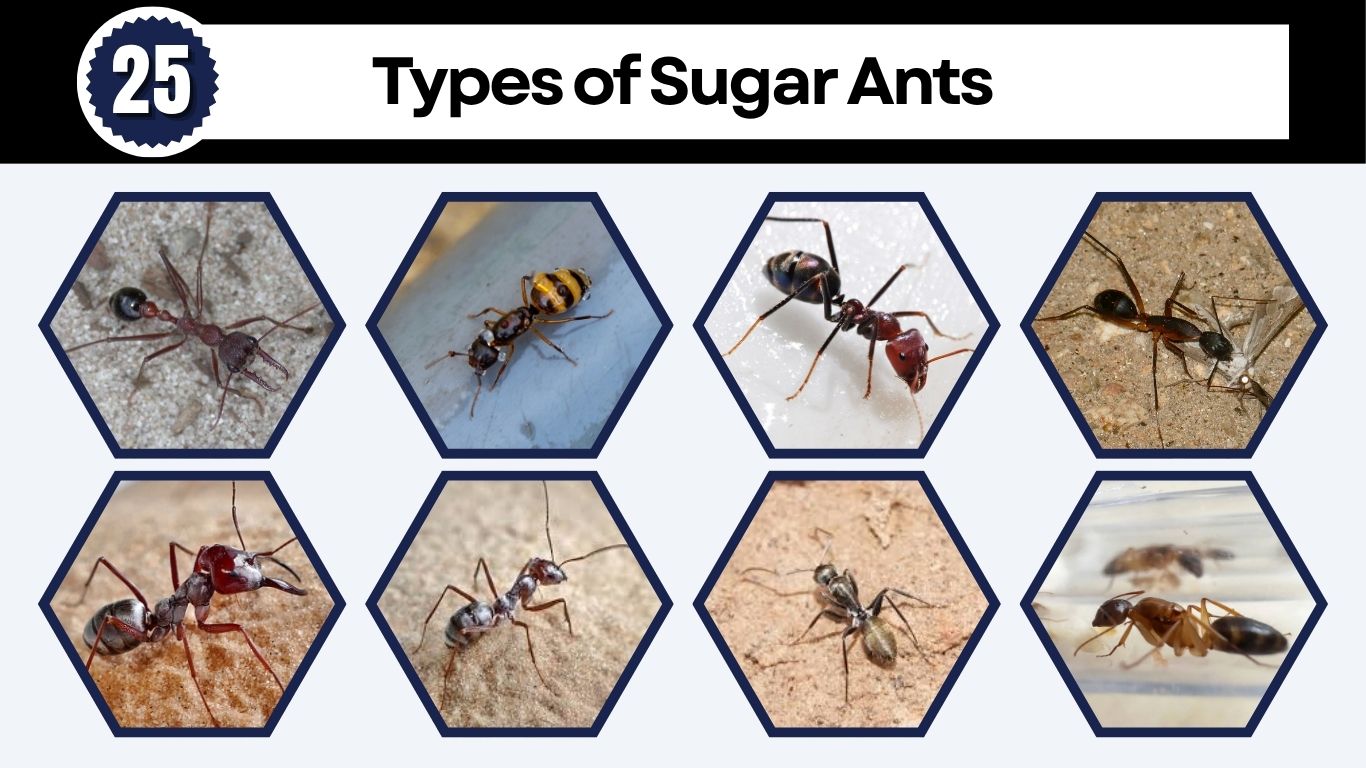
Sugar ants are fascinating insects known for their attraction to sweet foods and their highly organized colonies. These ants can be found in forests, gardens, deserts, and even inside homes searching for sugary substances, nectar, and food scraps. Some species are tiny and difficult to notice, while others are large carpenter ants with powerful jaws and striking colors. From the Banded Sugar Ant to the Australian Sugar Ant, each species has unique behaviors, habitats, and physical traits. Learning about different types of sugar ants helps nature enthusiasts better understand their role in ecosystems and everyday environments.
1. Banded Sugar Ant
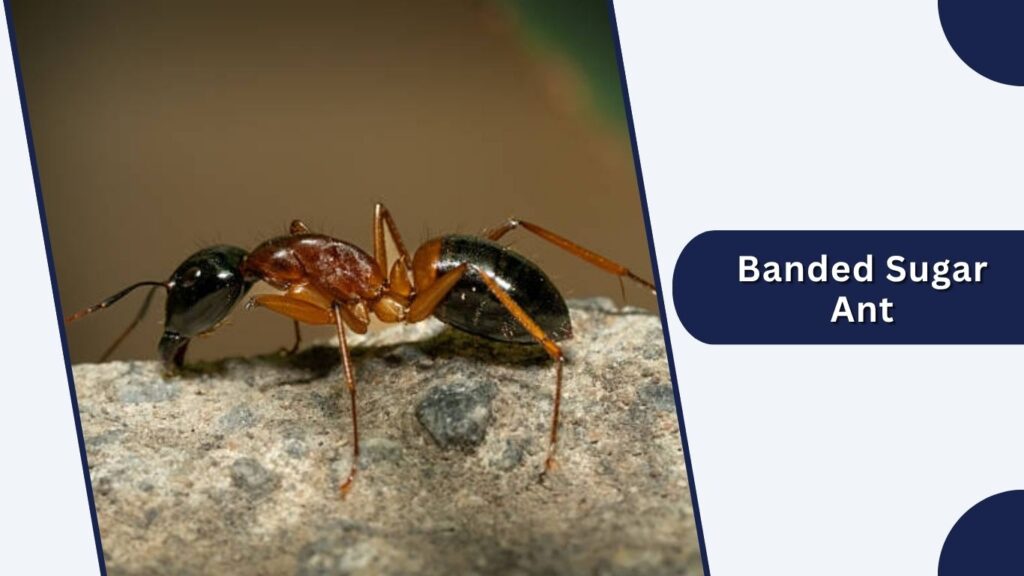
The Banded Sugar Ant is a large and colorful ant species commonly found in Australia. It belongs to the carpenter ant group and is known for its orange-brown body with darker bands across the abdomen. These ants are active foragers and are often seen searching for sweet foods around homes and gardens.
Identification
- Workers grow between 5 and 15 mm long
- Body color ranges from orange-brown to black
- Abdomen has noticeable dark bands
- Legs are long and strong
- Antennae are slightly curved and segmented
Habitat and Distribution
Banded Sugar Ants are widely distributed across Australia, especially in forests, woodlands, gardens, and suburban areas. They often build nests in soil, under rocks, inside logs, or in decaying wood. Colonies can become very large when food sources are plentiful.
Behavior and Diet
These ants are mostly active during the evening and nighttime hours. They feed on sugary liquids, nectar, dead insects, and plant materials. Banded Sugar Ants are strong foragers and may travel long distances from their nests while searching for food.
Lifecycle
Queens lay eggs deep inside protected nest chambers. The eggs hatch into larvae, which are fed by worker ants until pupation occurs. Adult ants emerge after completing metamorphosis and begin working within the colony. Established colonies may survive for many years under suitable conditions.
2. Black Sugar Ant
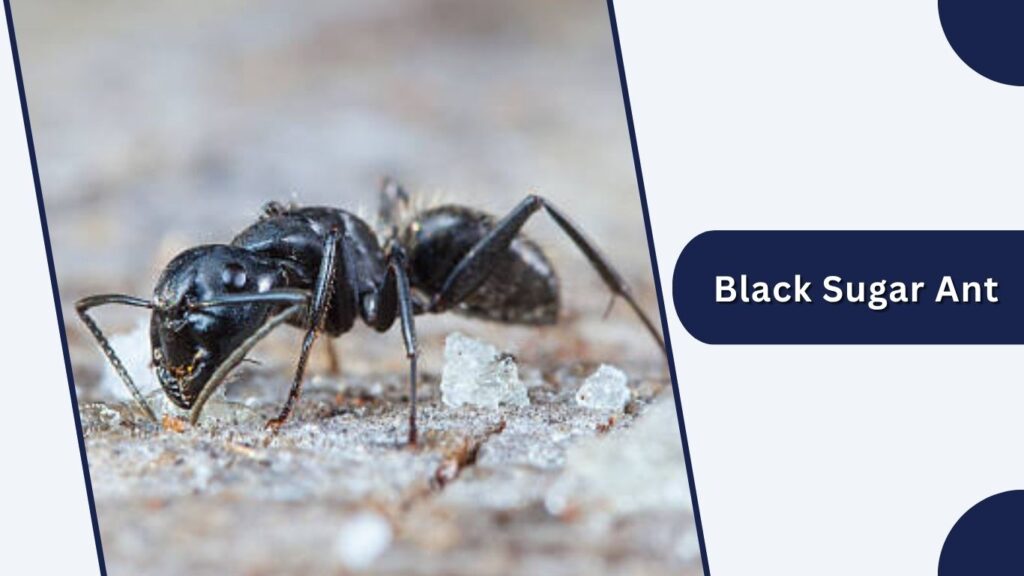
The Black Sugar Ant is a common ant species known for its shiny dark body and attraction to sweet foods. These ants are highly adaptable and are frequently found in homes, gardens, parks, and forests. They are social insects that live in organized colonies with thousands of workers.
Identification
- Workers usually measure 4 to 12 mm long
- Body color is glossy black or dark brown
- Antennae are long and segmented
- Legs are slender and strong
- Abdomen appears rounded and smooth
Habitat and Distribution
Black Sugar Ants are widely distributed across Australia and nearby regions. They inhabit forests, grasslands, urban gardens, and residential areas. Nests are commonly built underground, beneath stones, inside rotting wood, or within wall cracks near food sources.
Behavior and Diet
These ants are active both day and night depending on temperature and food availability. They feed on sugary liquids, nectar, fruits, dead insects, and household crumbs. Worker ants create visible foraging trails and communicate using chemical scents to guide nestmates toward food.
Lifecycle
Queens lay eggs inside protected nest chambers where workers care for developing larvae. The larvae pass through several growth stages before pupating. Adult ants emerge fully formed and quickly begin helping maintain the colony. Mature colonies can continue expanding for many years.
3. Coastal Brown Sugar Ant
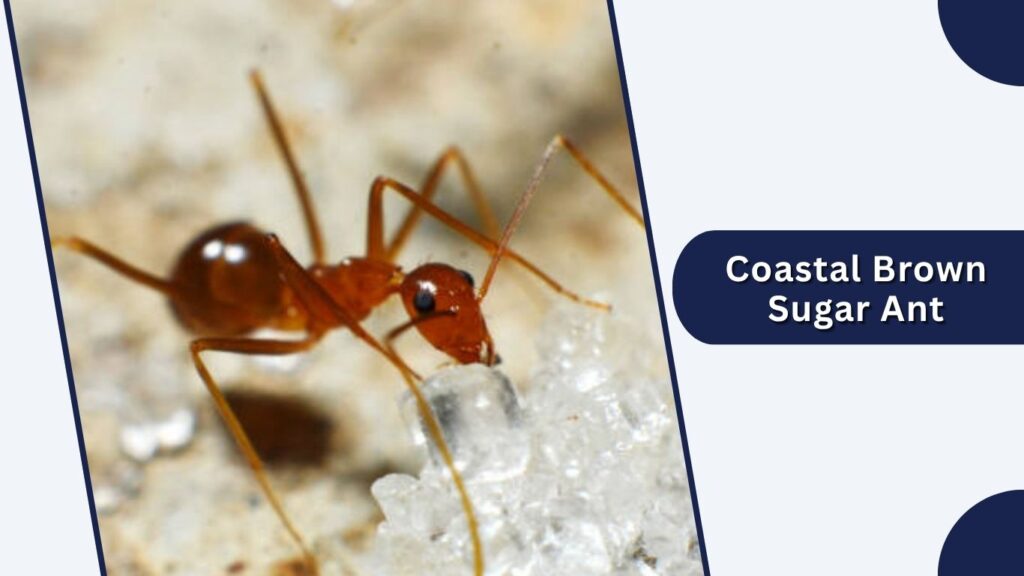
The Coastal Brown Sugar Ant is a medium-sized ant species commonly found in warm coastal regions. It is known for its brown coloration, fast-moving behavior, and strong attraction to sugary foods. These ants often form large colonies and may enter homes while searching for food and water.
Identification
- Workers grow between 5 and 10 mm long
- Body color ranges from light brown to dark brown
- Abdomen is smooth and slightly shiny
- Legs are long and thin
- Antennae are segmented with curved tips
Habitat and Distribution
Coastal Brown Sugar Ants are mainly found in coastal areas of Australia and nearby islands. They inhabit sandy soils, gardens, forests, parks, and urban environments. Colonies are usually built underground, beneath rocks, under logs, or near tree roots.
Behavior and Diet
These ants are active foragers that travel in organized trails while searching for food. They feed on nectar, sugary liquids, insects, seeds, and food scraps. Coastal Brown Sugar Ants are most active during warm weather and may become household pests when food is easily available.
Lifecycle
Queens lay eggs within protected underground chambers. Worker ants care for the eggs and larvae until they develop into pupae. After completing metamorphosis, adult ants emerge and begin colony duties such as foraging and nest maintenance. Colonies can grow rapidly under favorable conditions.
4. Camponotus Consobrinus
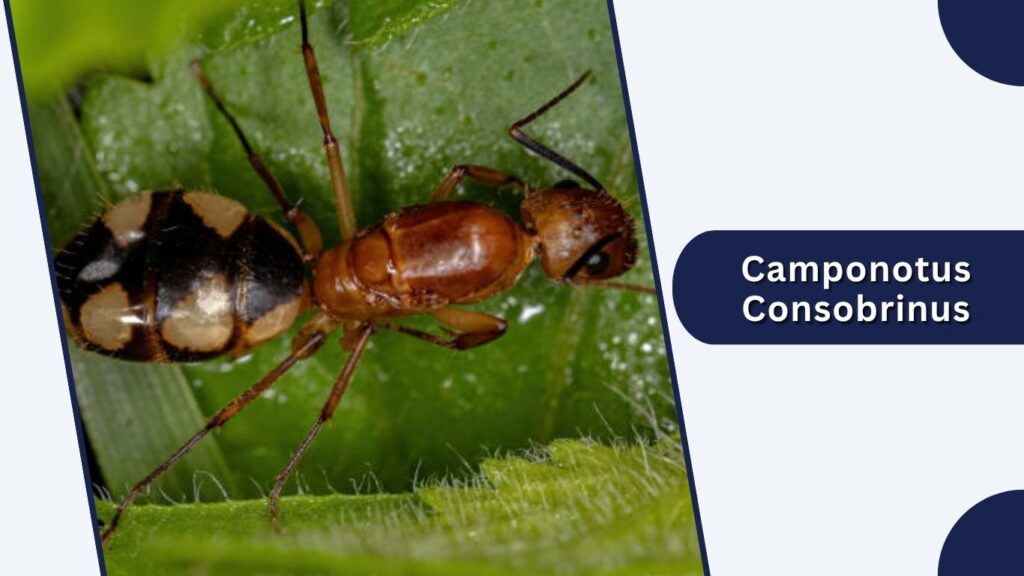
Camponotus Consobrinus, commonly called the Banded Sugar Ant, is one of Australia’s largest and most recognizable ant species. It belongs to the carpenter ant group and is known for its orange thorax and dark striped abdomen. These ants are active nighttime foragers and are often attracted to sweet substances.
Identification
- Workers range from 6 to 15 mm long
- Head and abdomen are black with pale bands
- Thorax is orange or reddish-brown
- Legs are long and powerful
- Antennae are dark and segmented
Habitat and Distribution
Camponotus Consobrinus is widely distributed across Australia in forests, grasslands, gardens, and suburban areas. Colonies are commonly built in soil, under rocks, within logs, or inside decaying wood. The species adapts well to both natural and urban environments.
Behavior and Diet
These ants are mostly nocturnal and become very active after sunset. They feed on nectar, honeydew, dead insects, and sugary household foods. Workers travel long distances while foraging and use chemical trails to communicate with other colony members.
Lifecycle
Queens establish nests after mating flights and begin laying eggs inside protected chambers. Larvae are cared for by worker ants until they pupate. Adult ants emerge fully developed and take on different colony tasks. Mature colonies may contain thousands of individuals and survive for many years.
5. Camponotus Nigriceps
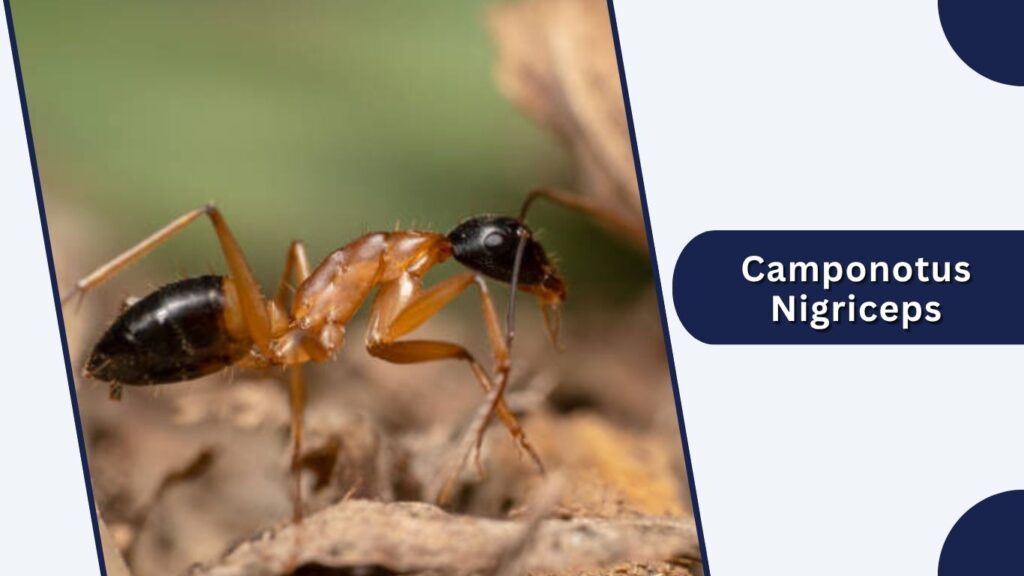
Camponotus Nigriceps is a large sugar ant species recognized for its dark head and reddish-brown body. It belongs to the carpenter ant group and is commonly seen foraging around trees, gardens, and homes. These ants are active scavengers and play an important role in breaking down organic material.
Identification
- Workers grow between 7 and 14 mm long
- Head is shiny black or dark brown
- Thorax and legs are reddish-brown
- Abdomen is smooth and oval-shaped
- Antennae are long and segmented
Habitat and Distribution
Camponotus Nigriceps is found across many parts of Australia in forests, woodlands, parks, and urban gardens. Colonies usually nest in dead wood, tree stumps, soil, or beneath rocks. The species prefers warm environments with access to both shelter and food sources.
Behavior and Diet
These ants are mainly active during the evening and nighttime hours. They feed on sweet liquids, nectar, dead insects, and plant materials. Workers often climb trees to collect honeydew produced by sap-feeding insects such as aphids and scale insects.
Lifecycle
Queens lay eggs in protected nest chambers where worker ants care for the developing brood. Larvae pass through several stages before pupating. Adult ants emerge fully formed and begin helping with nest defense, food collection, and colony maintenance. Large colonies may remain active for many years.
6. Camponotus Aeneopilosus
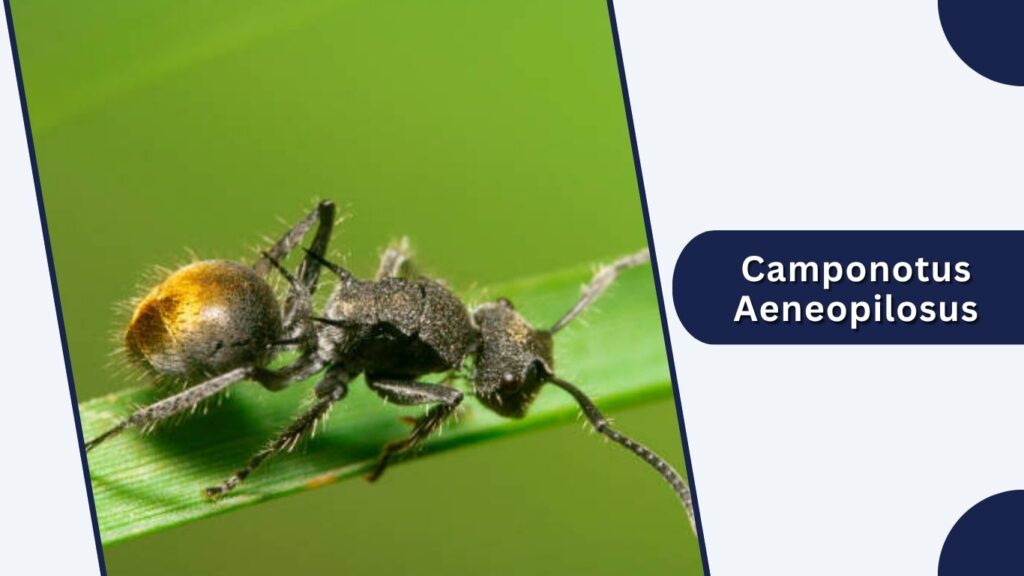
Camponotus Aeneopilosus is a striking sugar ant species often called the Golden-Tailed Sugar Ant because of the golden hairs covering its abdomen. This large carpenter ant is commonly seen in Australia and is known for its active foraging behavior and impressive colony organization.
Identification
- Workers measure between 6 and 14 mm long
- Body is mostly black or dark brown
- Abdomen is covered with golden or yellow hairs
- Legs are long and slender
- Antennae are segmented and slightly curved
Habitat and Distribution
Camponotus Aeneopilosus is widely distributed throughout Australia in woodlands, forests, grasslands, and suburban gardens. Colonies are usually built underground, beneath stones, inside rotting wood, or near tree roots where shelter and moisture are available.
Behavior and Diet
These ants are active foragers that search for food during the day and night. They feed on nectar, sugary liquids, dead insects, and honeydew from sap-feeding insects. Workers often travel along tree trunks and branches while collecting food for the colony.
Lifecycle
Queens establish nests after mating flights and begin laying eggs in protected chambers. Worker ants care for larvae by feeding and cleaning them until pupation occurs. Adult ants emerge after metamorphosis and immediately begin colony duties such as foraging and nest maintenance.
7. Camponotus Claripes
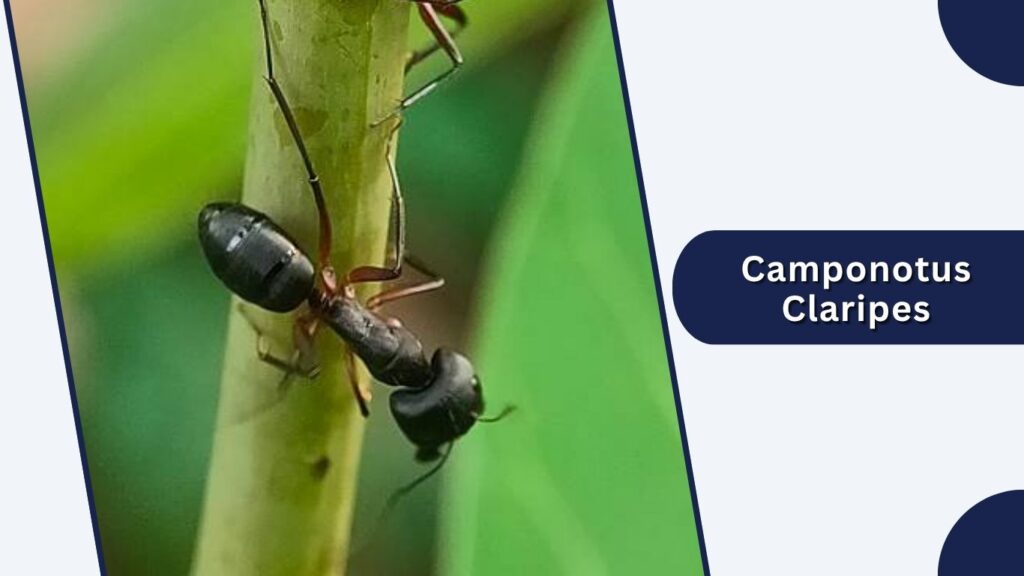
Camponotus Claripes is a medium to large sugar ant species known for its long legs and smooth dark body. As a member of the carpenter ant group, it is highly adaptable and commonly seen foraging on trees, fences, and around homes in search of sweet foods.
Identification
- Workers range from 6 to 13 mm long
- Body color is dark brown to black
- Legs are unusually long and slender
- Abdomen appears smooth and shiny
- Antennae are long and clearly segmented
Habitat and Distribution
Camponotus Claripes occurs in forests, woodland edges, gardens, and suburban environments across parts of Australia. Colonies are commonly found in soil, dead wood, hollow logs, or beneath rocks. The species prefers warm habitats with access to trees and vegetation.
Behavior and Diet
These ants are active scavengers and foragers that feed on nectar, sugary liquids, honeydew, and dead insects. Workers often travel in visible trails and may climb trees while searching for food. They are most active during warmer periods of the day and evening.
Lifecycle
Queens begin new colonies after mating flights and lay eggs inside sheltered nest chambers. Larvae are fed and protected by worker ants until they develop into pupae. Adult ants emerge fully developed and quickly join colony activities including nest expansion and food collection.
8. Camponotus Intrepidus
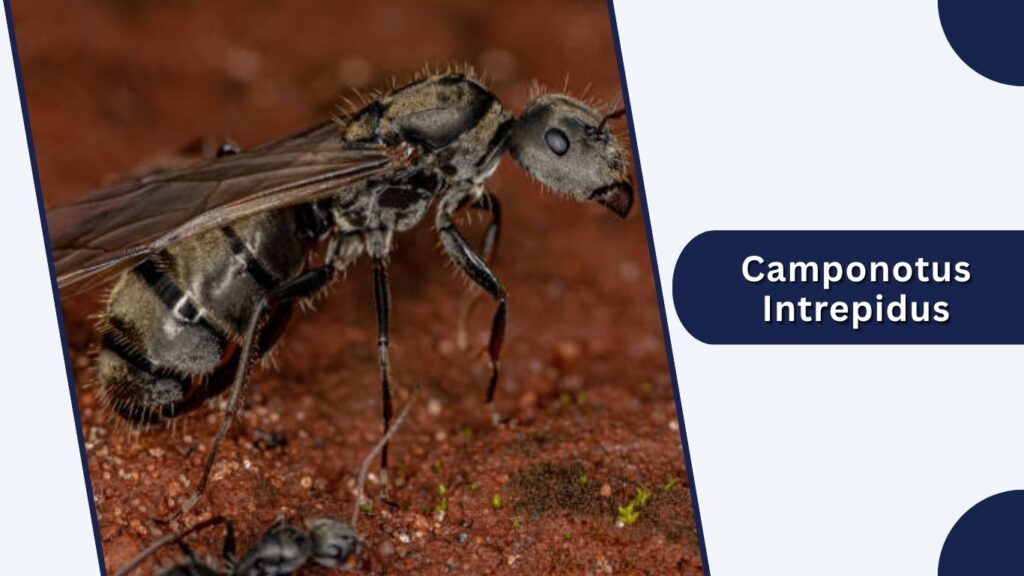
Camponotus Intrepidus is a large and hardy sugar ant species commonly found in dry and semi-arid regions of Australia. It is known for its powerful build, active foraging behavior, and ability to survive in harsh environments. Like other carpenter ants, it often nests in soil or decaying wood.
Identification
- Workers grow between 7 and 15 mm long
- Body color ranges from dark brown to black
- Thorax may appear reddish-brown in sunlight
- Legs are thick and strong
- Abdomen is smooth with a slight shine
Habitat and Distribution
Camponotus Intrepidus is widely distributed across Australian grasslands, woodlands, deserts, and rural areas. Colonies are usually built underground, beneath stones, or inside old logs. The species adapts well to hot climates and dry conditions.
Behavior and Diet
These ants are active foragers that search widely for food during the evening and nighttime hours. They feed on nectar, dead insects, sugary substances, and plant materials. Workers often defend their trails aggressively when threatened by predators or rival ants.
Lifecycle
Queens establish nests after mating flights and lay eggs deep within protected chambers. Worker ants raise the larvae by feeding and cleaning them until pupation occurs. Adult ants emerge fully developed and begin performing colony tasks such as nest maintenance and food gathering.
9. Camponotus Suffusus
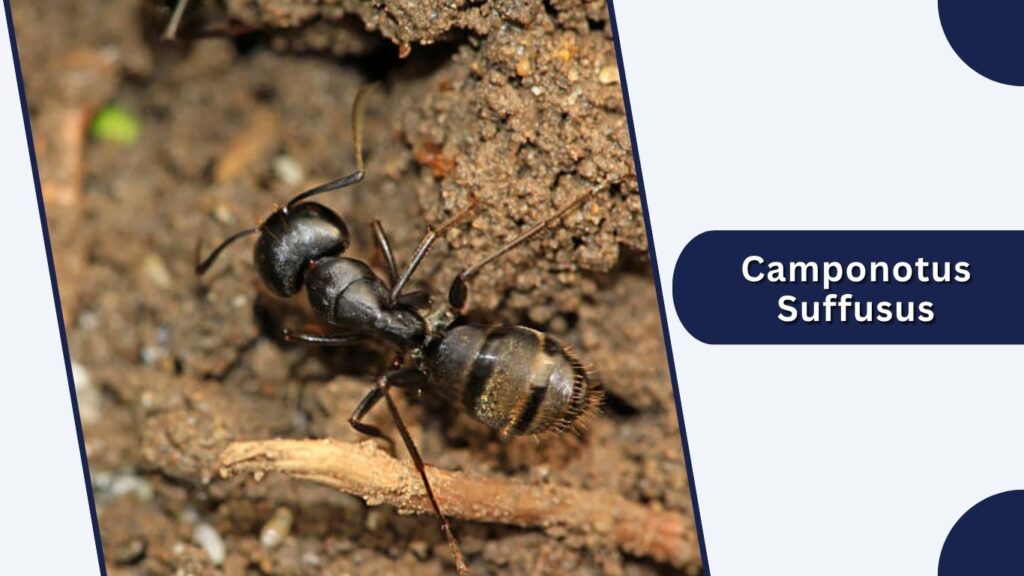
Camponotus Suffusus is a large sugar ant species recognized for its dark body and strong colony structure. This carpenter ant is commonly seen foraging around trees, gardens, and open woodland areas. It is an adaptable species that thrives in both natural and urban environments.
Identification
- Workers range from 6 to 14 mm long
- Body color is dark brown to black
- Abdomen is rounded and slightly glossy
- Legs are long and sturdy
- Antennae are segmented and gently curved
Habitat and Distribution
Camponotus Suffusus is found in many parts of Australia, especially in forests, grasslands, parks, and suburban gardens. Colonies are often built underground, beneath stones, inside rotting wood, or near tree roots where moisture and shelter are available.
Behavior and Diet
These ants are active scavengers and foragers that feed on nectar, sugary liquids, insects, and honeydew. Workers often travel in organized trails while searching for food. They are mainly active during warm evenings and nighttime hours when temperatures are cooler.
Lifecycle
Queens begin new colonies after mating flights and lay eggs inside secure nest chambers. Worker ants care for the larvae until they pupate and transform into adults. Newly emerged ants quickly join colony activities such as foraging, nest defense, and brood care.
10. Camponotus Variegatus
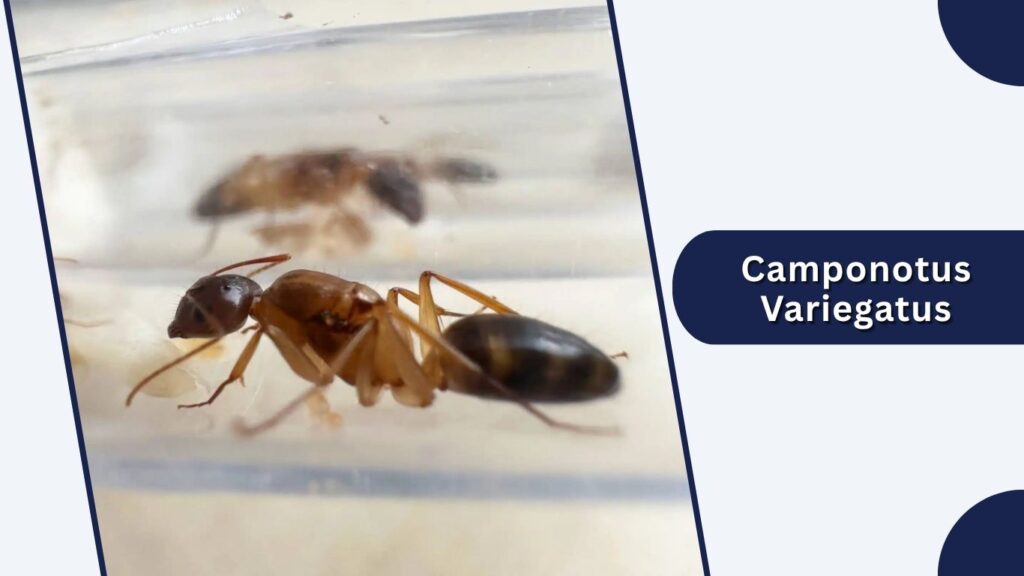
Camponotus Variegatus is a colorful sugar ant species known for its mixed body tones and active behavior. It belongs to the carpenter ant group and is commonly observed moving along tree trunks and garden paths while searching for food. The species is highly adaptable and forms organized colonies.
Identification
- Workers measure between 5 and 13 mm long
- Body displays mixed brown, reddish, and black shades
- Abdomen is smooth with faint lighter markings
- Legs are long and slender
- Antennae are segmented and flexible
Habitat and Distribution
Camponotus Variegatus is found across various parts of Australia in forests, woodlands, parks, gardens, and suburban areas. Colonies are usually established in soil, dead wood, hollow branches, or beneath rocks where conditions remain sheltered and moist.
Behavior and Diet
These ants are active foragers that feed on nectar, sugary substances, honeydew, and dead insects. Workers often climb trees to collect food and communicate using chemical trails. They are most active during warm evenings and may occasionally enter homes in search of sweets.
Lifecycle
Queens start colonies after mating flights by laying eggs inside protected nest chambers. The larvae are fed and cared for by worker ants until they pupate. Adult ants emerge fully developed and take part in colony activities including nest expansion, brood care, and food collection.
11. White-Footed Sugar Ant
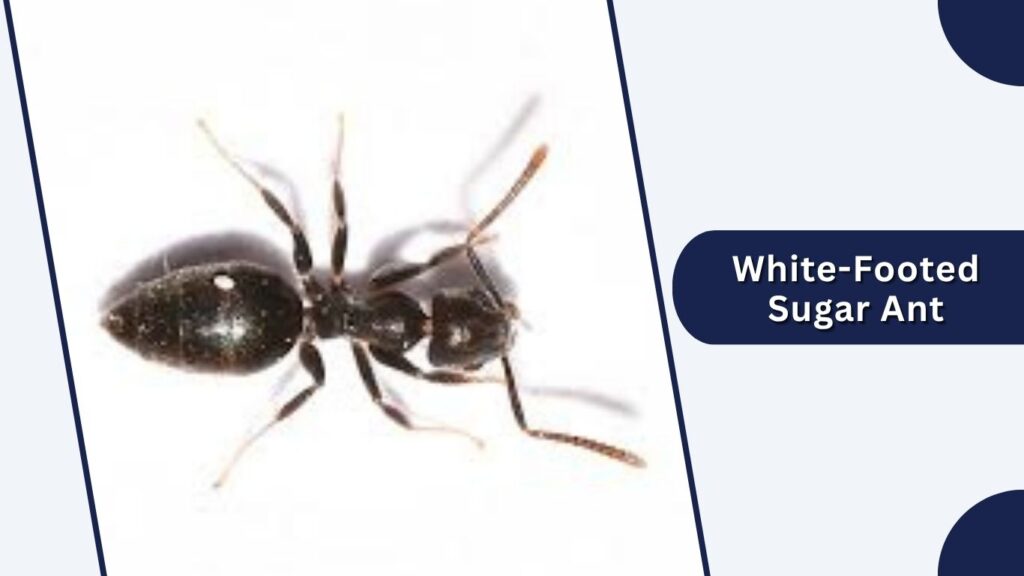
The White-Footed Sugar Ant is a distinctive species recognized for the pale coloration on its feet and lower legs. It is an active forager that commonly searches for sugary foods around trees, gardens, and homes. These ants live in organized colonies and are well adapted to warm environments.
Identification
- Workers grow between 4 and 10 mm long
- Body color is dark brown to black
- Feet and lower legs appear pale or whitish
- Abdomen is smooth and slightly shiny
- Antennae are long and segmented
Habitat and Distribution
White-Footed Sugar Ants are found in forests, gardens, parks, and urban environments across warm regions of Australia and nearby areas. Colonies are commonly built underground, beneath rocks, inside logs, or within cracks in wood and soil.
Behavior and Diet
These ants are active mainly during the evening and nighttime hours. They feed on nectar, sweet liquids, dead insects, and honeydew collected from sap-feeding insects. Workers travel in organized trails and can cover large areas while searching for food sources.
Lifecycle
Queens establish new colonies after mating flights and lay eggs within protected nest chambers. Worker ants care for the larvae through several stages of development until pupation occurs. Adult ants emerge fully formed and begin helping with foraging, brood care, and nest maintenance.
12. Golden-Tailed Sugar Ant
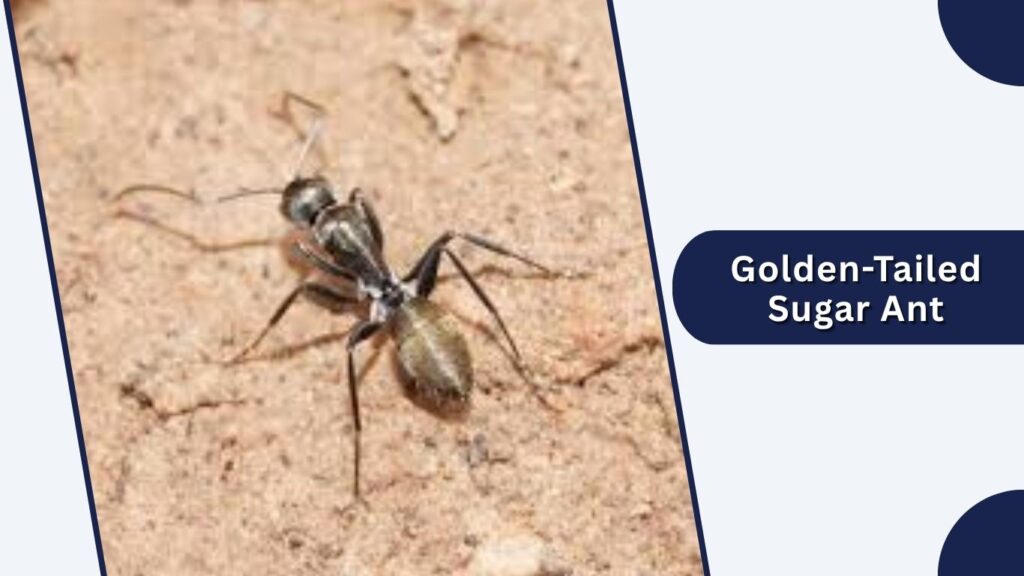
The Golden-Tailed Sugar Ant is a striking ant species known for the golden hairs covering the end of its abdomen. This large carpenter ant is commonly seen foraging around trees and gardens in search of sugary foods. Its bold appearance and active behavior make it easy to notice in warm habitats.
Identification
- Workers measure between 6 and 15 mm long
- Body is dark brown or black
- Abdomen is covered with golden-yellow hairs
- Legs are long and strong
- Antennae are segmented and slightly curved
Habitat and Distribution
Golden-Tailed Sugar Ants are widely distributed across Australia in forests, woodlands, gardens, and suburban parks. Colonies are usually built underground, inside rotting wood, or beneath rocks where moisture and protection are available.
Behavior and Diet
These ants are active foragers that search for nectar, sugary liquids, honeydew, and dead insects. Workers often climb trees and shrubs while collecting food for the colony. They are most active during warm evenings and may travel long distances from the nest.
Lifecycle
Queens begin colonies after mating flights by laying eggs in sheltered chambers. Worker ants feed and protect the larvae until they develop into pupae. Adult ants emerge after metamorphosis and immediately assist with foraging, nest care, and colony defense.
13. Brown House Sugar Ant
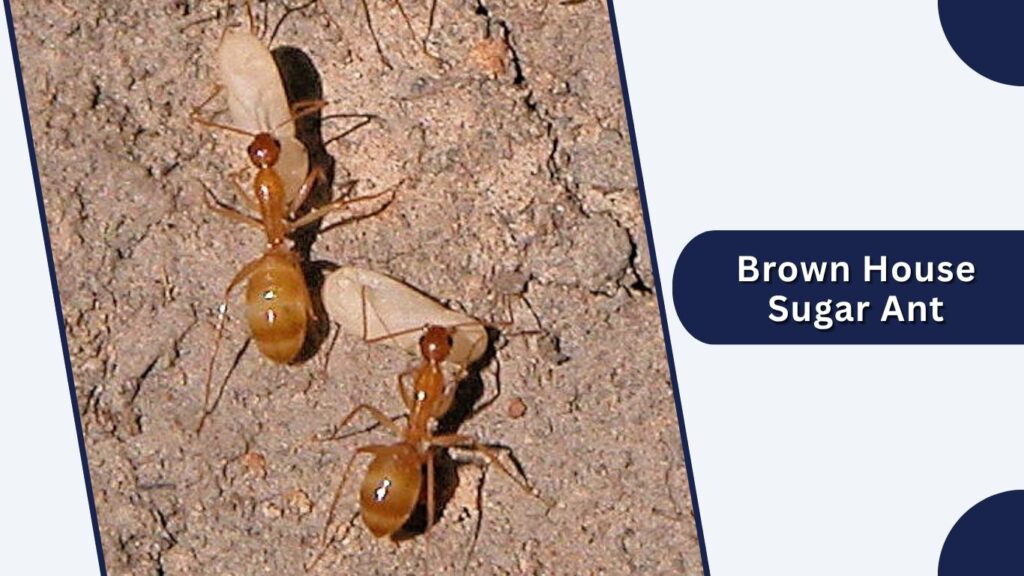
The Brown House Sugar Ant is a small but highly adaptable ant species often found around homes, kitchens, and gardens. It is strongly attracted to sugary foods and can quickly form noticeable foraging trails indoors. These ants are social insects that live in organized colonies with large worker populations.
Identification
- Workers grow between 3 and 8 mm long
- Body color ranges from light brown to dark brown
- Abdomen is rounded and slightly shiny
- Legs are thin and moderately long
- Antennae are clearly segmented
Habitat and Distribution
Brown House Sugar Ants are commonly found in urban and suburban environments throughout warm regions. They build nests in soil, wall cracks, beneath stones, under floors, and around tree roots. Colonies thrive in areas with easy access to food and moisture.
Behavior and Diet
These ants actively search for sugary liquids, crumbs, fruit, nectar, and dead insects. Workers communicate using scent trails that guide other ants toward food sources. They are often most active during warmer parts of the day and evening.
Lifecycle
Queens lay eggs inside hidden nest chambers where workers protect and feed the developing larvae. After pupation, adult ants emerge fully formed and begin colony duties. Established colonies can expand rapidly when food and environmental conditions remain favorable.
14. Carpenter Sugar Ant
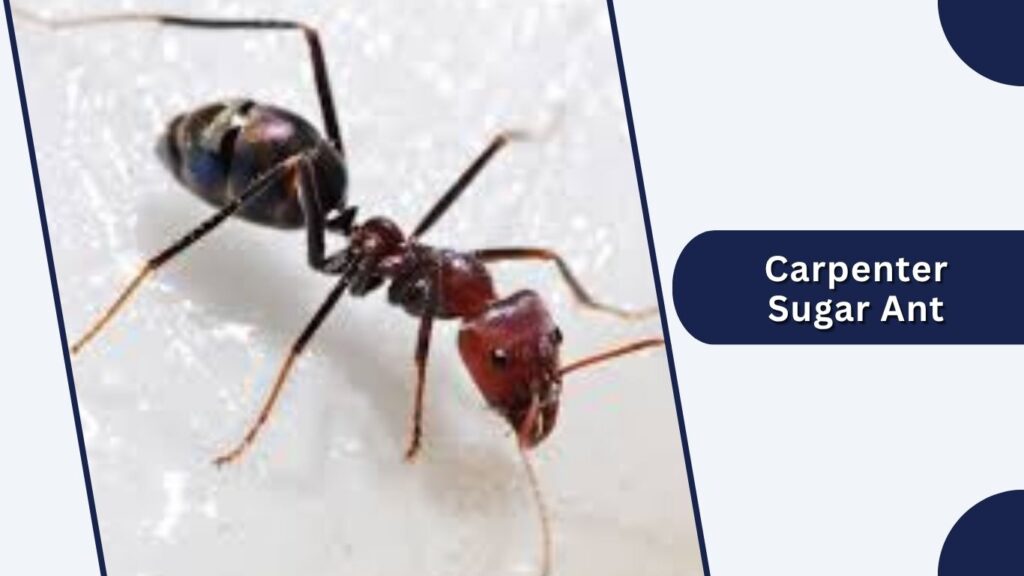
The Carpenter Sugar Ant is a large and powerful ant species known for nesting in wood and feeding on sweet substances. Although it does not eat wood like termites, it tunnels through decaying timber to create nests. These ants are active foragers and are commonly seen in forests and residential areas.
Identification
- Workers range from 6 to 15 mm long
- Body color varies from black to reddish-brown
- Thorax is broad and slightly arched
- Legs are long and strong
- Mandibles are large and powerful
Habitat and Distribution
Carpenter Sugar Ants are found in forests, woodlands, parks, and suburban regions throughout Australia and nearby areas. Colonies are usually established inside rotting logs, tree stumps, wooden fences, or underground chambers near trees.
Behavior and Diet
These ants are active mainly during the evening and nighttime hours. They feed on nectar, honeydew, sugary household foods, and dead insects. Workers travel along established trails and may invade homes while searching for food or nesting locations.
Lifecycle
Queens begin new colonies after mating flights and lay eggs within protected wooden or underground chambers. Worker ants care for the larvae until pupation occurs. Adult ants emerge fully developed and help expand the nest, gather food, and defend the colony.
15. Desert Sugar Ant
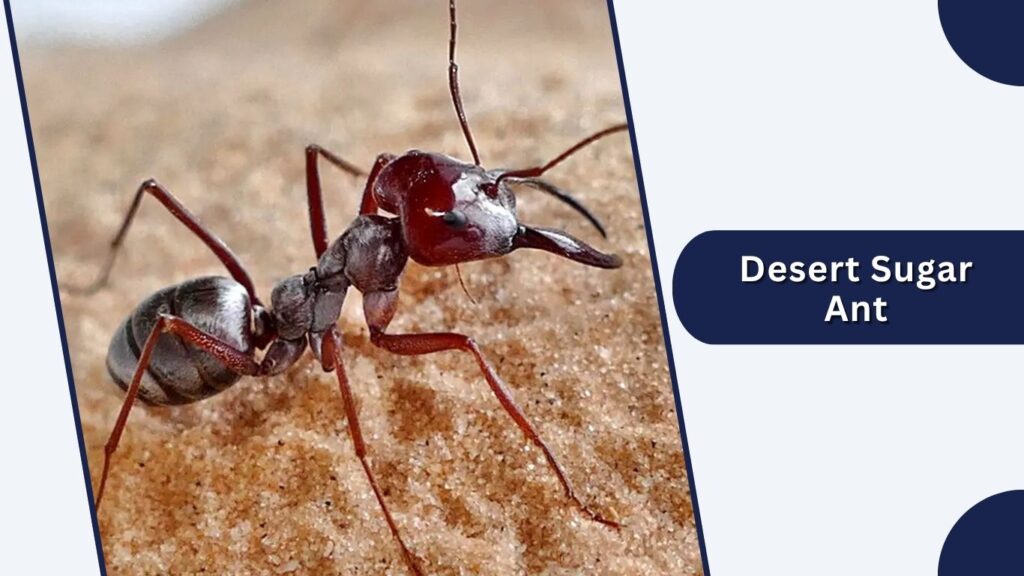
The Desert Sugar Ant is a hardy ant species adapted to hot and dry environments. It is commonly found in arid regions where it searches for sugary foods, seeds, and dead insects. These ants are fast-moving foragers and are capable of surviving extreme temperatures and limited water sources.
Identification
- Workers grow between 5 and 12 mm long
- Body color ranges from sandy brown to dark brown
- Abdomen is smooth and slightly glossy
- Legs are long and well adapted for running
- Antennae are segmented and flexible
Habitat and Distribution
Desert Sugar Ants are mainly distributed across dry inland regions of Australia and similar arid habitats. They live in deserts, scrublands, grasslands, and sparsely vegetated areas. Colonies are usually built underground in sandy or loose soils.
Behavior and Diet
These ants are active foragers that search widely for nectar, seeds, dead insects, and sugary substances. They are often most active during cooler morning or evening hours to avoid extreme daytime heat. Workers communicate using scent trails while traveling between food sources and the nest.
Lifecycle
Queens establish nests after mating flights and lay eggs deep underground where temperatures remain stable. Worker ants care for larvae through several stages before pupation. Adult ants emerge fully developed and quickly begin helping with foraging, nest expansion, and colony defense.
16. Forest Sugar Ant
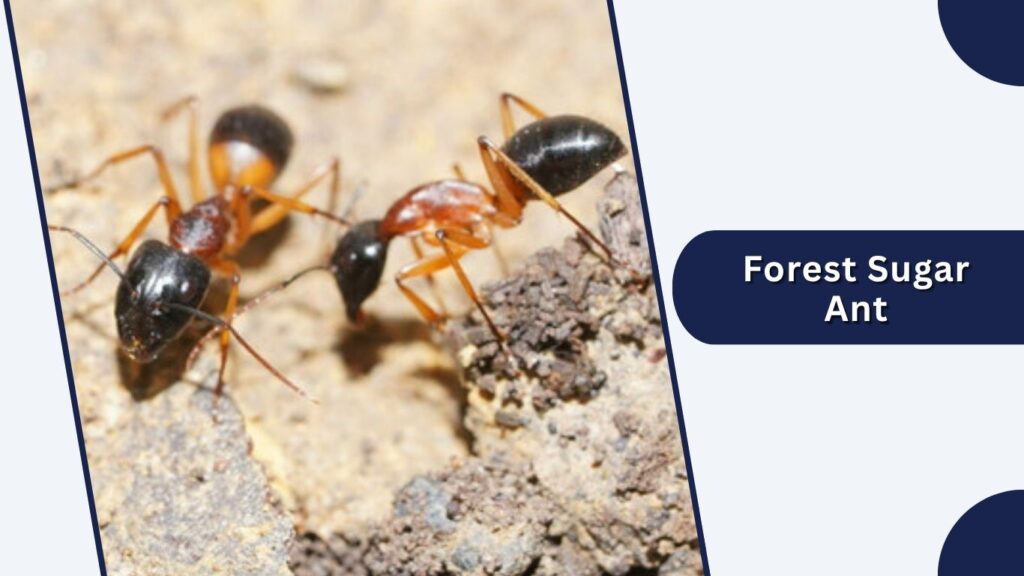
The Forest Sugar Ant is a common woodland species known for its strong foraging behavior and large organized colonies. It is often seen moving along tree trunks and forest floors while searching for food. These ants play an important ecological role by helping recycle organic material in forest habitats.
Identification
- Workers measure between 5 and 13 mm long
- Body color is dark brown to black
- Abdomen appears smooth and rounded
- Legs are long and sturdy
- Antennae are segmented with slight curves
Habitat and Distribution
Forest Sugar Ants are widely distributed in forests, woodlands, and shaded parks across Australia and nearby regions. Colonies are commonly built underground, beneath logs, inside tree stumps, or under rocks where moisture levels remain stable.
Behavior and Diet
These ants actively forage for nectar, honeydew, seeds, and dead insects. Workers often travel in visible trails across tree bark and leaf litter. They are mainly active during warm periods and cooperate closely while transporting food back to the colony.
Lifecycle
Queens lay eggs in protected nest chambers after establishing new colonies. Worker ants feed and protect the larvae until they pupate. Adult ants emerge fully formed and immediately assist with nest maintenance, brood care, and food collection activities.
17. Long-Legged Sugar Ant
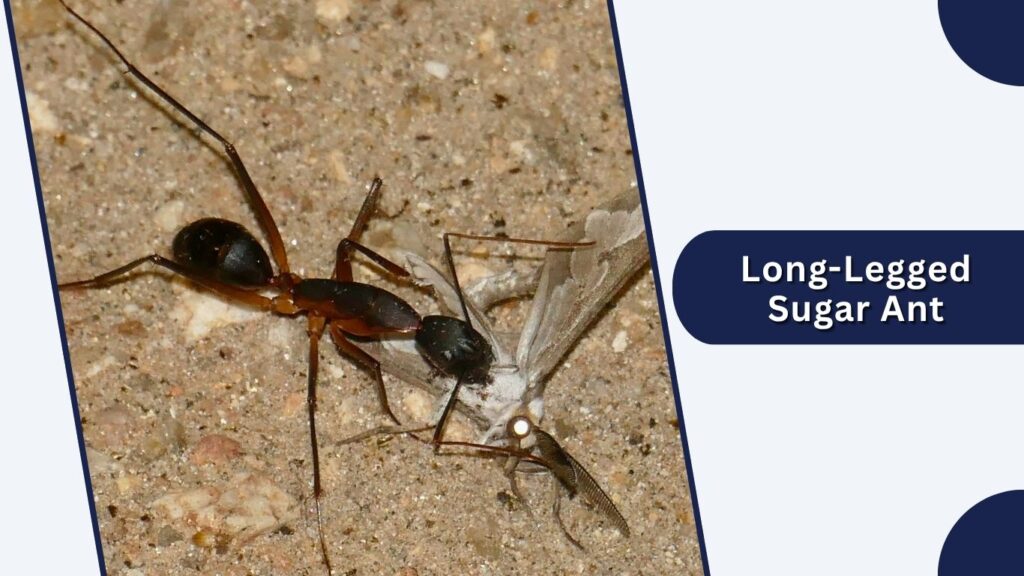
The Long-Legged Sugar Ant is a fast-moving species recognized for its slender body and unusually long legs. These ants are active foragers that travel quickly across trees, soil, and walls while searching for sweet foods. Their speed and agility help them avoid predators and compete for resources.
Identification
- Workers grow between 5 and 11 mm long
- Body color ranges from dark brown to black
- Legs are noticeably long and thin
- Abdomen is narrow and smooth
- Antennae are long and segmented
Habitat and Distribution
Long-Legged Sugar Ants are found in forests, grasslands, gardens, and suburban environments throughout warm regions of Australia. Colonies are commonly established beneath rocks, inside rotting wood, or underground near tree roots and vegetation.
Behavior and Diet
These ants actively search for nectar, honeydew, sugary liquids, and dead insects. Workers move rapidly while following scent trails created by other ants. They are most active during warm evenings and may occasionally enter homes in search of food.
Lifecycle
Queens establish colonies after mating flights and begin laying eggs in protected nesting chambers. Worker ants care for the developing larvae until pupation occurs. Adult ants emerge fully developed and quickly take part in foraging, brood care, and colony defense.
18. Red Sugar Ant
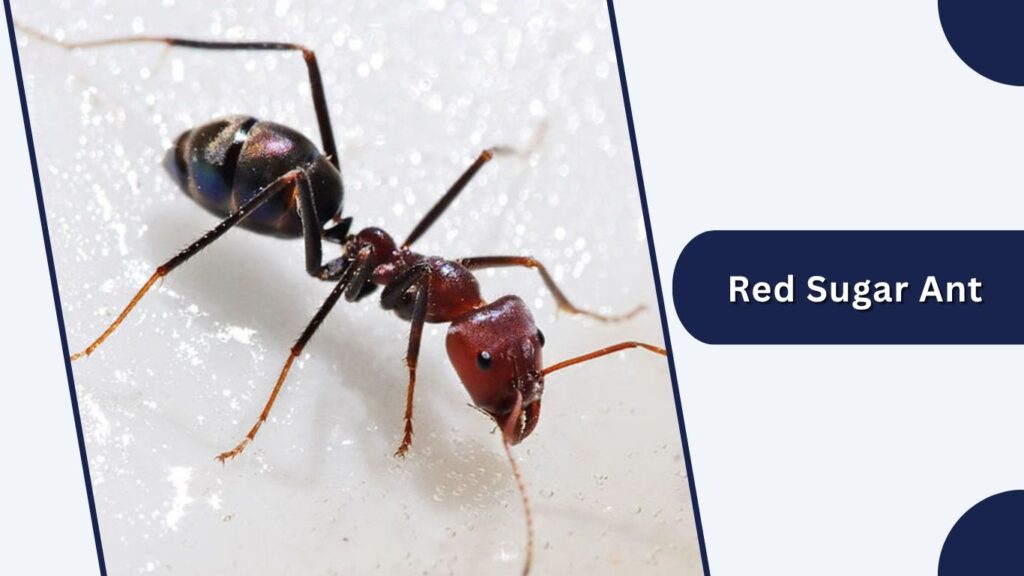
The Red Sugar Ant is a colorful ant species known for its reddish body and strong attraction to sweet foods. It is an active and adaptable species commonly seen in gardens, forests, and residential areas. These ants live in organized colonies and are efficient scavengers in warm environments.
Identification
- Workers measure between 5 and 12 mm long
- Body color ranges from reddish-brown to deep red
- Abdomen is smooth and slightly glossy
- Legs are long and sturdy
- Antennae are segmented and flexible
Habitat and Distribution
Red Sugar Ants are found throughout Australia in forests, woodlands, parks, gardens, and suburban habitats. Colonies are usually built underground, beneath stones, or inside decaying wood where moisture and protection are available.
Behavior and Diet
These ants actively forage for nectar, sugary liquids, fruit, honeydew, and dead insects. Workers often form long trails while transporting food back to the nest. They are mainly active during warm daytime and evening hours depending on weather conditions.
Lifecycle
Queens establish new colonies after mating flights and lay eggs in secure underground chambers. Worker ants protect and feed the larvae until they pupate. Adult ants emerge after metamorphosis and begin helping with food collection, brood care, and nest expansion.
19. Shiny Black Sugar Ant
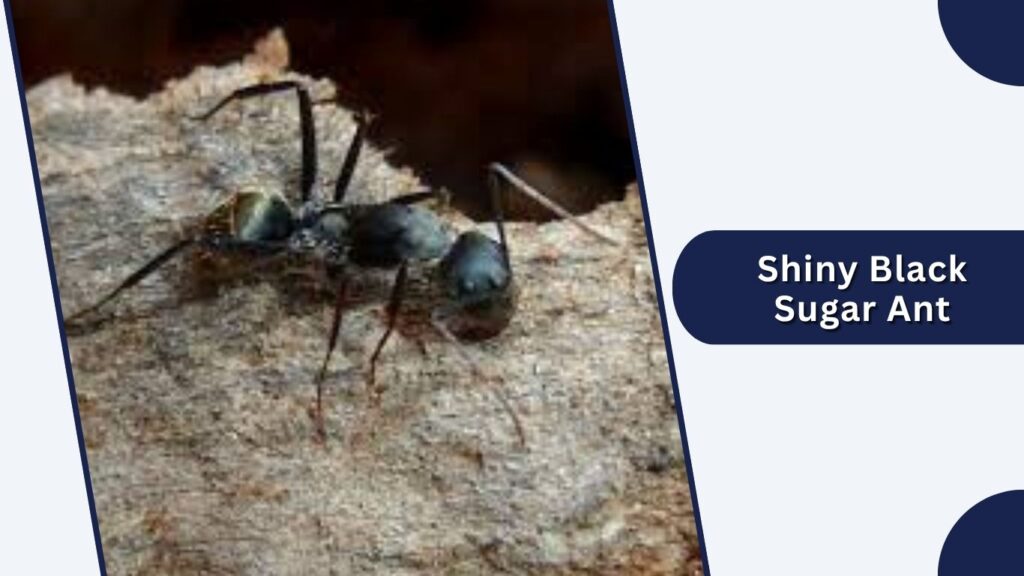
The Shiny Black Sugar Ant is a sleek and glossy ant species commonly found around homes, gardens, and woodland habitats. Its smooth black body and active foraging behavior make it easy to recognize. These ants are highly social and often travel in organized trails while searching for food.
Identification
- Workers grow between 4 and 11 mm long
- Body is glossy black or very dark brown
- Abdomen appears smooth and reflective
- Legs are slender and moderately long
- Antennae are segmented and slightly curved
Habitat and Distribution
Shiny Black Sugar Ants occur across many parts of Australia in forests, suburban gardens, parks, and urban environments. Colonies are commonly built underground, beneath stones, inside logs, or within cracks near buildings and pathways.
Behavior and Diet
These ants feed on sugary liquids, nectar, honeydew, dead insects, and household food scraps. Workers communicate through scent trails and often travel long distances from the nest. They are active during both daytime and nighttime hours depending on temperature.
Lifecycle
Queens lay eggs inside protected nesting chambers where worker ants care for the brood. Larvae grow through several stages before pupating. Adult ants emerge fully developed and quickly begin performing colony duties such as foraging, nest repair, and defense.
20. Southern Sugar Ant
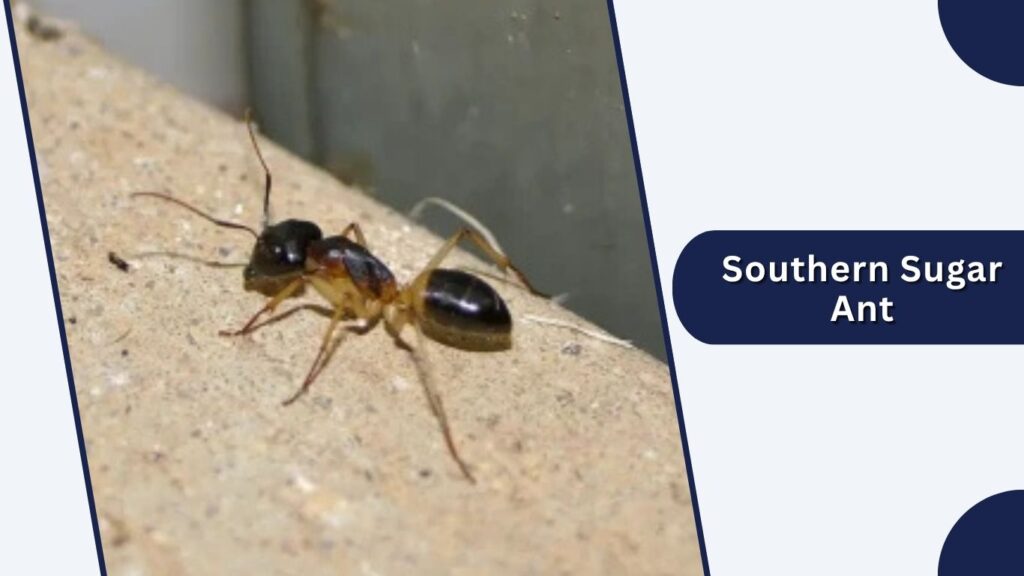
The Southern Sugar Ant is a common species found in warmer southern regions where it actively searches for sugary foods and small insects. It is known for its adaptable nature and organized colonies. These ants are often seen around gardens, parks, and residential areas during warm weather.
Identification
- Workers measure between 5 and 12 mm long
- Body color ranges from brown to black
- Abdomen is rounded and slightly shiny
- Legs are long and well developed
- Antennae are segmented with flexible joints
Habitat and Distribution
Southern Sugar Ants are distributed across southern Australia in forests, grasslands, gardens, and suburban habitats. Colonies are commonly established underground, beneath rocks, or inside rotting wood where conditions remain sheltered and moist.
Behavior and Diet
These ants are active foragers that feed on nectar, sugary liquids, honeydew, seeds, and dead insects. Workers form organized trails while collecting food and transporting it back to the nest. They are especially active during warm evenings and mild daytime temperatures.
Lifecycle
Queens establish colonies after mating flights and begin laying eggs within protected chambers. Worker ants feed and care for the larvae until pupation occurs. Adult ants emerge fully developed and immediately assist with colony tasks such as foraging, brood care, and nest maintenance.
21. Tropical Sugar Ant
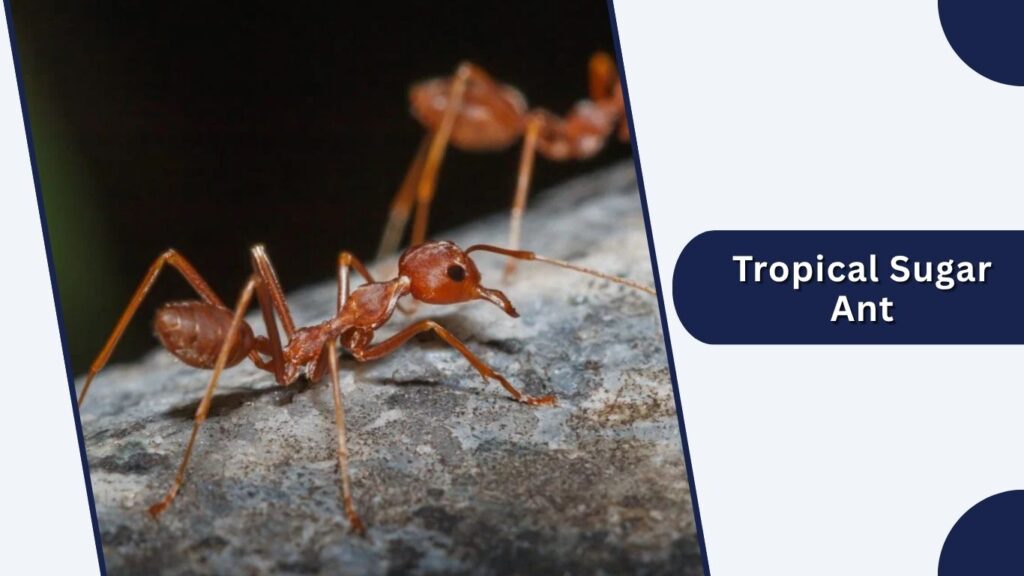
The Tropical Sugar Ant is a warm-climate species known for its fast foraging behavior and strong attraction to sweet foods. It thrives in humid environments and is commonly seen around gardens, kitchens, and forest edges. These ants form active colonies that can grow rapidly in favorable conditions.
Identification
- Workers grow between 4 and 10 mm long
- Body color ranges from reddish-brown to dark brown
- Abdomen is smooth and slightly glossy
- Legs are long and slender
- Antennae are segmented and flexible
Habitat and Distribution
Tropical Sugar Ants are found in tropical and subtropical regions of Australia and nearby islands. They inhabit rainforests, gardens, coastal vegetation, parks, and urban areas. Colonies are commonly built underground, beneath logs, or inside moist wood and wall crevices.
Behavior and Diet
These ants actively forage for nectar, fruit juices, sugary liquids, honeydew, and dead insects. Workers communicate using scent trails and often travel in large numbers toward food sources. They are highly active during warm and humid weather conditions.
Lifecycle
Queens establish colonies after mating flights and lay eggs inside secure nest chambers. Worker ants care for the developing larvae until they pupate. Adult ants emerge fully formed and begin assisting with nest expansion, brood care, and food gathering activities.
22. Yellow Sugar Ant
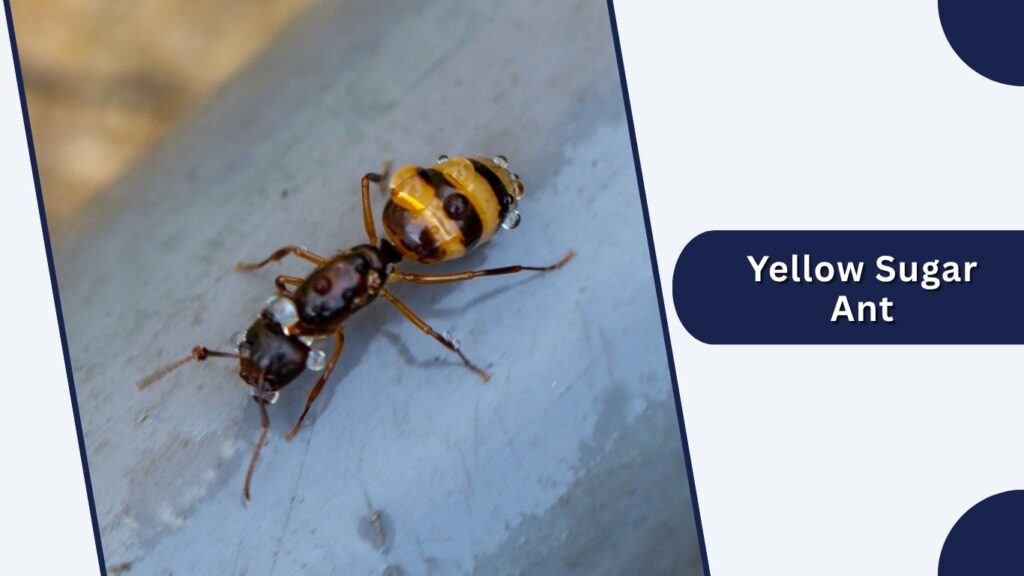
The Yellow Sugar Ant is a small and brightly colored ant species commonly attracted to sugary foods and plant nectar. Its pale yellow body helps distinguish it from darker sugar ant species. These ants are active foragers and are often found in gardens, parks, and around homes.
Identification
- Workers measure between 3 and 8 mm long
- Body color ranges from pale yellow to golden brown
- Abdomen is smooth and slightly translucent
- Legs are thin and delicate
- Antennae are segmented and flexible
Habitat and Distribution
Yellow Sugar Ants are found in warm regions across Australia and nearby tropical areas. They inhabit gardens, grassy fields, forests, parks, and residential spaces. Colonies are usually established underground, beneath stones, or inside moist soil and rotting wood.
Behavior and Diet
These ants feed mainly on nectar, sugary liquids, fruit juices, and honeydew from sap-feeding insects. Workers forage actively during warm weather and communicate using scent trails. They may occasionally enter homes while searching for food and water.
Lifecycle
Queens lay eggs in protected nesting chambers where worker ants care for the larvae. The larvae develop through several stages before pupating. Adult ants emerge fully formed and quickly begin assisting with food collection, brood care, and nest maintenance.
23. Small Sugar Ant
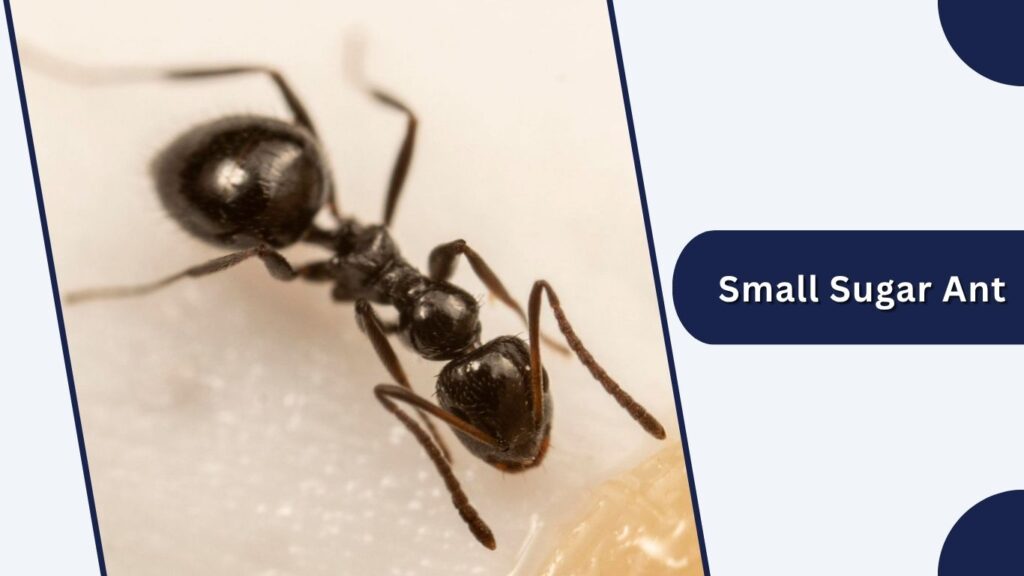
The Small Sugar Ant is a tiny but highly active ant species known for invading homes in search of sweet foods. Despite its small size, it forms organized colonies and efficient foraging trails. These ants are adaptable and can survive in both natural habitats and urban environments.
Identification
- Workers grow between 2 and 6 mm long
- Body color ranges from light brown to dark brown
- Abdomen is small, smooth, and rounded
- Legs are thin and relatively short
- Antennae are segmented and slightly curved
Habitat and Distribution
Small Sugar Ants are commonly found in gardens, kitchens, parks, forests, and suburban areas across warm regions. Colonies are usually built underground, inside wall cracks, beneath stones, or near sources of moisture and food.
Behavior and Diet
These ants actively search for sugary foods, crumbs, nectar, fruit juices, and dead insects. Workers travel in narrow trails and communicate through chemical signals. They are especially active during warm weather and can quickly gather around food sources indoors.
Lifecycle
Queens establish colonies in sheltered nesting sites and lay eggs inside protected chambers. Worker ants care for the larvae until pupation occurs. Adult ants emerge fully developed and begin assisting with foraging, brood care, and colony maintenance activities.
24. Large Sugar Ant
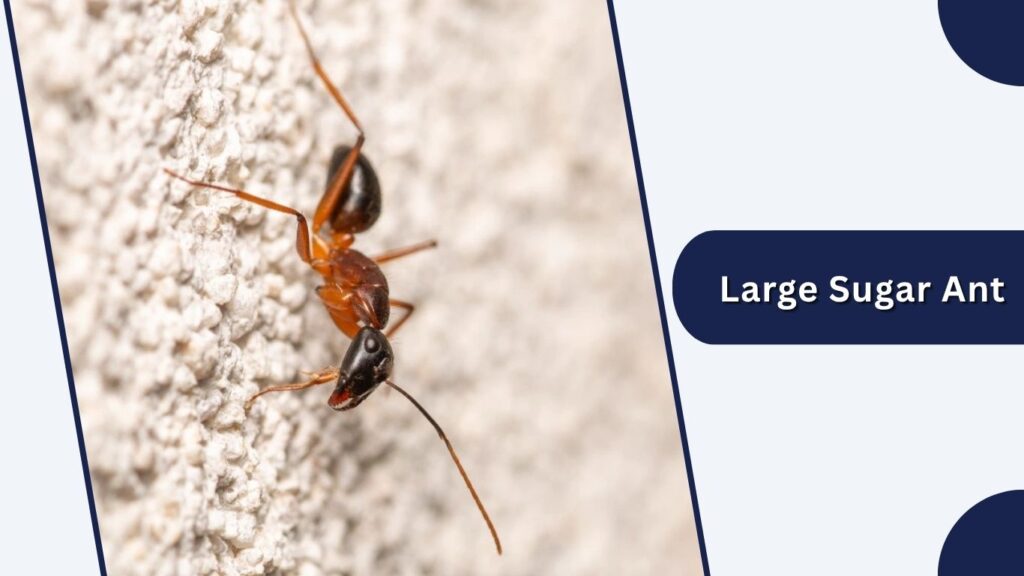
The Large Sugar Ant is a strong and highly visible ant species commonly found in forests, gardens, and suburban environments. Its large body size and active foraging behavior make it easy to identify. These ants are attracted to sweet substances and often travel long distances while searching for food.
Identification
- Workers measure between 8 and 16 mm long
- Body color ranges from dark brown to black
- Abdomen is broad and slightly glossy
- Legs are long, thick, and powerful
- Antennae are segmented and flexible
Habitat and Distribution
Large Sugar Ants are distributed throughout Australia in woodlands, forests, grasslands, parks, and residential areas. Colonies are commonly built underground, inside decaying logs, beneath rocks, or near tree roots where shelter and moisture are available.
Behavior and Diet
These ants are active scavengers that feed on nectar, sugary liquids, honeydew, seeds, and dead insects. Workers often create large foraging trails and cooperate while carrying food back to the colony. They are most active during warm evenings and nighttime hours.
Lifecycle
Queens establish new colonies after mating flights and lay eggs in protected nest chambers. Worker ants feed and protect the larvae through several developmental stages before pupation. Adult ants emerge fully formed and quickly begin helping with nest care, defense, and food collection.
25. Australian Sugar Ant
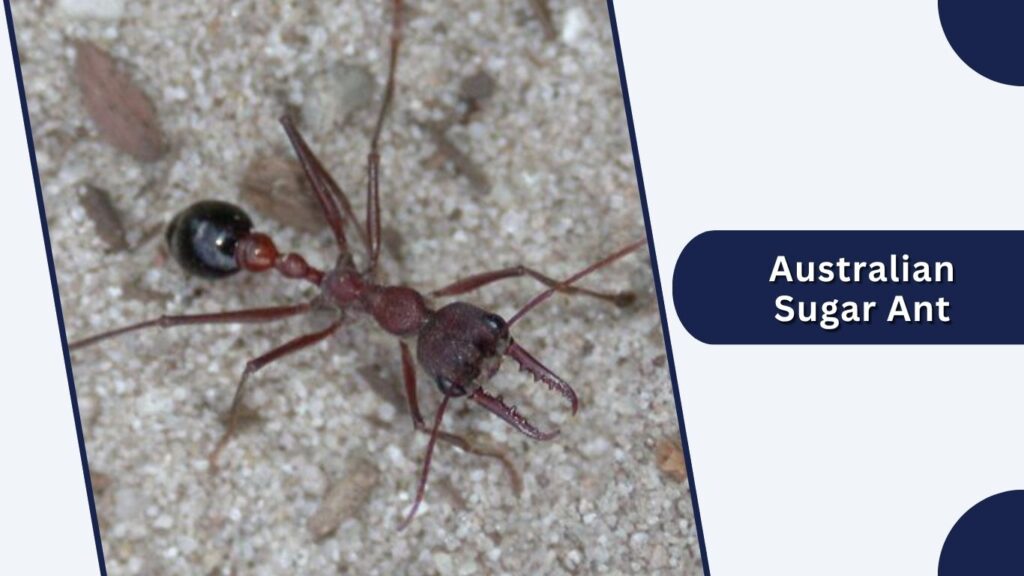
The Australian Sugar Ant is a well-known native ant species recognized for its adaptability and attraction to sweet foods. It is commonly seen in gardens, forests, parks, and around homes. These ants are social insects that form organized colonies and play an important role in local ecosystems.
Identification
- Workers grow between 5 and 14 mm long
- Body color ranges from brown to black
- Abdomen is smooth and rounded
- Legs are long and sturdy
- Antennae are segmented and slightly curved
Habitat and Distribution
Australian Sugar Ants are widely distributed across Australia in forests, grasslands, suburban gardens, and urban environments. Colonies are usually established underground, beneath stones, inside rotting wood, or near tree roots where food and moisture are available.
Behavior and Diet
These ants actively forage for nectar, sugary liquids, fruit juices, honeydew, and dead insects. Workers communicate using chemical scent trails and often travel in organized lines while gathering food. They are most active during warm weather and mild nighttime conditions.
Lifecycle
Queens establish colonies after mating flights and lay eggs within protected underground chambers. Worker ants care for the larvae until they pupate and develop into adults. Newly emerged ants quickly begin performing colony duties such as foraging, brood care, and nest maintenance.
FAQs
What are sugar ants?
Sugar ants are common ants attracted to sweet foods and sugary liquids. Many species belong to the carpenter ant group and are known for foraging around homes, gardens, and forests. They play an important role in ecosystems by recycling organic matter and controlling small insects.
Why are sugar ants called sugar ants?
Sugar ants get their name because they are strongly attracted to sugar, nectar, fruit juices, and other sweet substances. Worker ants often enter homes searching for sugary foods left on counters, floors, or in unsealed containers.
Are sugar ants harmful to humans?
Most sugar ants are harmless to humans and rarely bite unless disturbed. They do not spread serious diseases, but large infestations can become a nuisance when ants invade kitchens, pantries, and food storage areas.
Where do sugar ants build their nests?
Sugar ants commonly build nests underground, beneath rocks, inside rotting wood, tree stumps, wall cracks, or near plant roots. Some carpenter-type sugar ants also nest in decaying timber and wooden structures.
How can you keep sugar ants away from your home?
Keeping surfaces clean, sealing food containers, removing crumbs, and fixing water leaks can help prevent sugar ants from entering homes. Blocking entry points and reducing outdoor food sources near the house can also reduce ant activity.