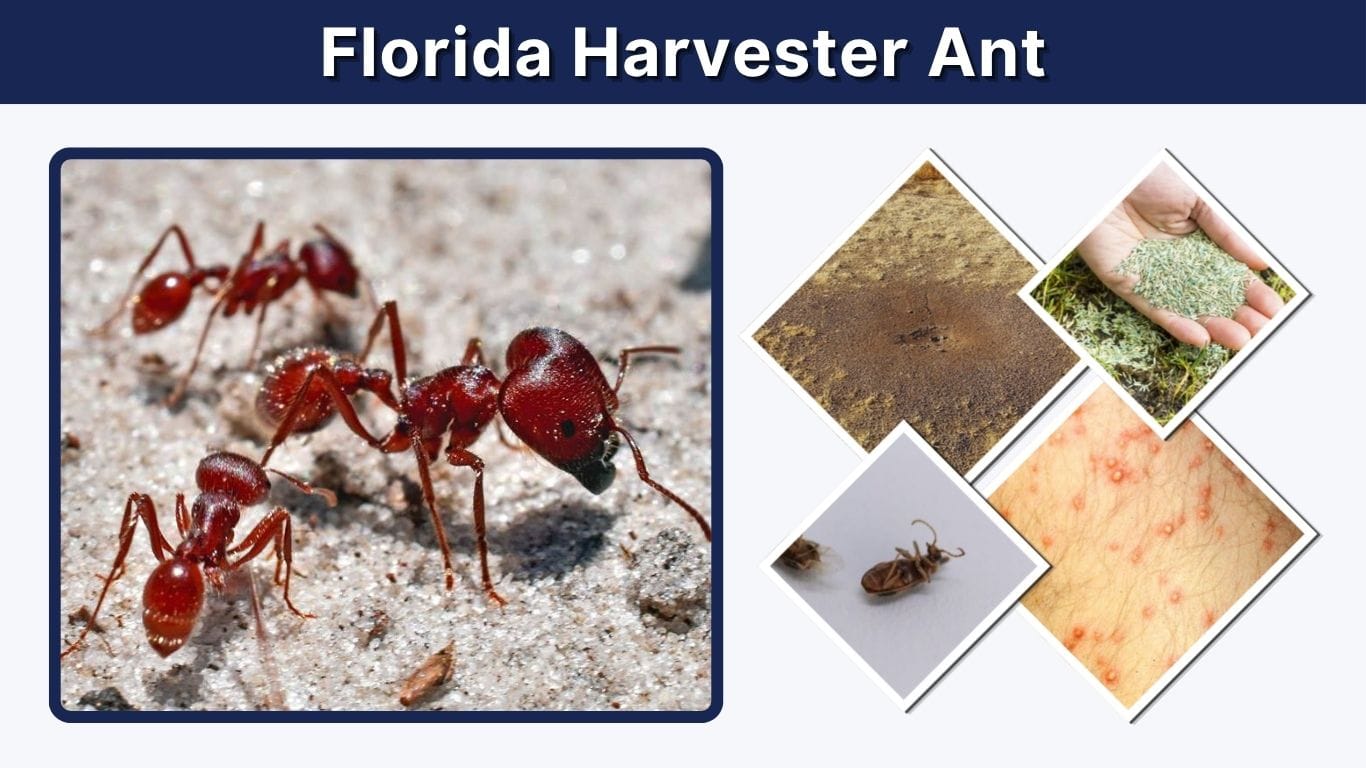
The Florida harvester ant is a native ant best known for its cleared sandy nest areas, seed-collecting behavior, and painful sting. Unlike tiny kitchen ants that trail into homes for sugar, this species usually lives outdoors in open, sandy habitats. It is an important part of Florida’s natural ecosystem, but nests near people, pets, or walkways can become a safety concern.
What Is the Florida Harvester Ant?
The Florida harvester ant is a seed-harvesting ant with the scientific name Pogonomyrmex badius. It belongs to a group of ants known for collecting seeds and storing them underground. These ants are native to the southeastern United States and are strongly associated with Florida’s sandy soils, scrub habitats, open woodland, and dry sunny areas.
This species is not the same as the imported fire ant, although both can sting and both may live outdoors in Florida. Florida harvester ants are generally linked to open sandy ground and visible nest clearings. Their behavior is also different because seed collection plays a major role in their life.
The name “harvester ant” comes from the ant’s habit of gathering seeds for food. Workers carry seeds back to the nest, where they may be stored in underground chambers. They may also collect insects and other food depending on season and availability.
Florida Harvester Ant Identification
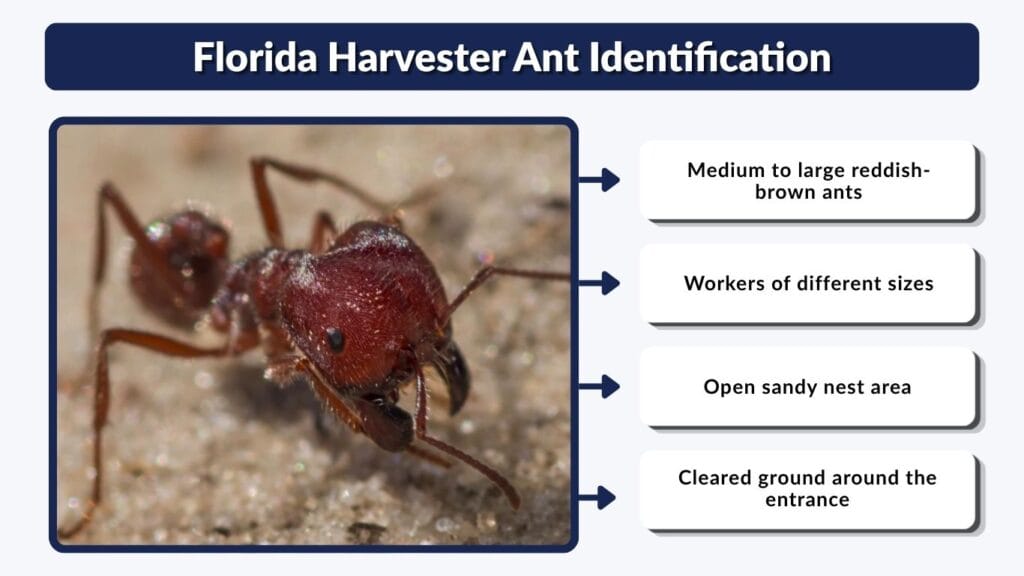
Florida harvester ants are relatively large compared with many household ants. Workers are usually reddish-brown to dark reddish or brownish, although color can vary. They have strong jaws, noticeable heads, and a sturdy body shape. Some workers may look larger than others because this species has workers of different sizes.
They are often seen moving slowly around the nest entrance or traveling along short foraging paths. Unlike tiny nuisance ants that enter kitchens in long trails, Florida harvester ants are mostly outdoor ants. Seeing large ants around a cleared patch of sandy ground is one of the easiest clues.
Key Identification Signs
Look for these features:
- Medium to large reddish-brown ants
- Workers of different sizes
- Open sandy nest area
- Cleared ground around the entrance
- Ants carrying seeds or small food items
- Slow, deliberate movement near the nest
- Outdoor activity in sunny, dry places
The nest is often more helpful for identification than a single ant. If you find a large cleared sandy patch with visible workers near the surface, it may be a Florida harvester ant colony.
Florida Harvester Ant Size and Caste
Florida harvester ant colonies have different castes. A caste is a group within the colony that has a specific role. The main castes include workers, queens, and males. Workers do most daily tasks, queens lay eggs, and males are mainly involved in reproduction during mating flights.
One interesting feature of this species is worker size variation. Some workers are smaller, while others are larger and may have bigger heads. Larger workers may help process seeds or defend the colony, while smaller workers may perform other tasks inside or outside the nest.
Main Colony Castes
The colony may include:
- Queen: The reproductive female that lays eggs
- Workers: Non-reproductive females that forage, dig, defend, and care for young
- Males: Reproductive ants that appear during mating periods
- Brood: Eggs, larvae, and pupae developing inside the nest
A healthy colony depends on the queen and the worker force. Without workers, the colony cannot gather food or maintain the nest. Without the queen, the colony cannot continue producing new workers over the long term.
Florida Harvester Ant Habitat
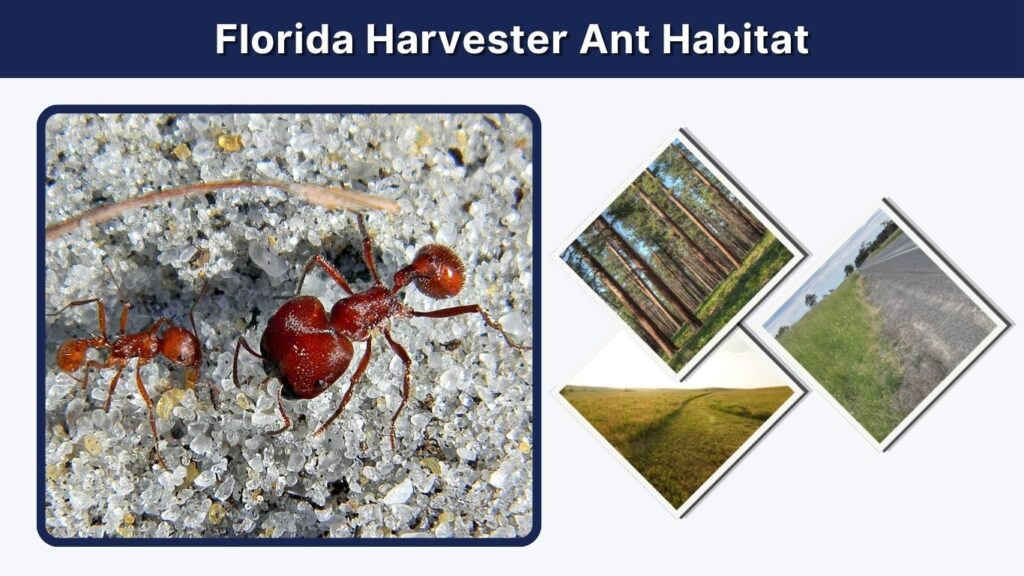
Florida harvester ants prefer open, dry, sandy habitats. They are especially associated with well-drained soils where they can dig deep nests. They may live in scrub, sandhill, pine woodland, open fields, roadsides, and other sunny areas with sparse vegetation.
They do not usually thrive in wet, shaded, heavily vegetated ground. Even though the species occurs through much of Florida, it is limited by its habitat needs. A yard with dry sandy soil and open sun is more suitable than a wet, shaded lawn.
Common Habitat Areas
You may find Florida harvester ants in:
- Florida scrub
- Sandy open yards
- Pine flatwoods and sandhill habitats
- Roadsides with sandy soil
- Dry open fields
- Coastal plain habitats
- Sparse grassy areas with sun exposure
These ants are part of natural sandy ecosystems. Where habitat remains healthy, their nests can be a normal feature of the landscape.
Florida Harvester Ant Nest
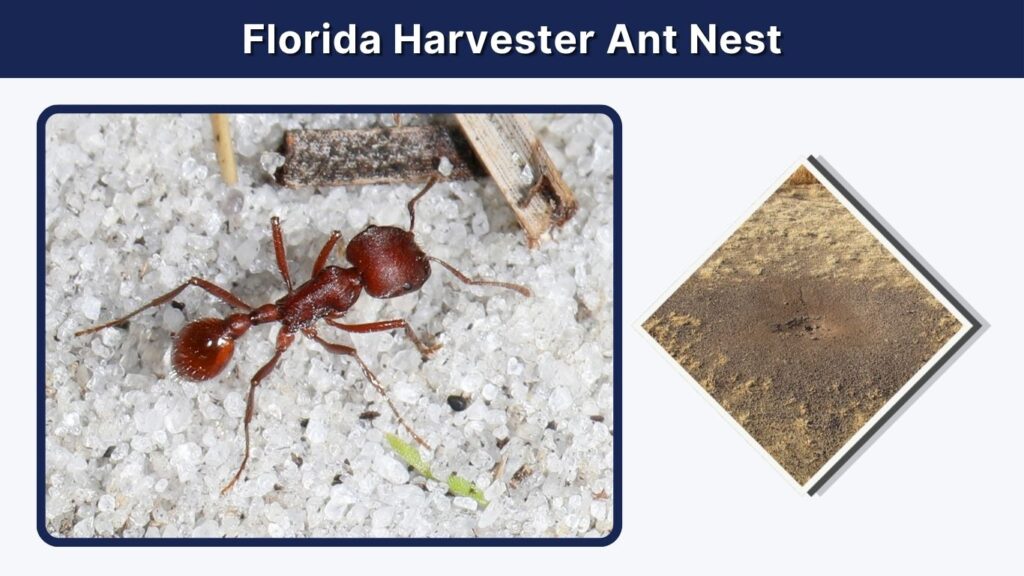
The Florida harvester ant nest is usually very noticeable. The surface often appears as a cleared sandy area with little or no vegetation. Workers remove plant material around the entrance, creating a bare patch. You may see ants walking near the opening or carrying seeds into the nest.
Below the surface, the nest is more complex. Research on Florida harvester ant nest architecture describes underground nests with descending shafts and horizontal chambers. These structures allow the colony to store food, protect brood, and manage temperature and moisture.
What the Nest Looks Like
A Florida harvester ant nest may show:
- A flat cleared patch of sand
- One main nest entrance or several openings
- Little vegetation near the center
- Seed husks or debris around the area
- Worker ants moving on the surface
- Foraging trails leading outward
The nest can be deeper than it looks from the surface. For this reason, simply disturbing the top of the nest may not eliminate the colony.
Florida Harvester Ant Food and Feeding
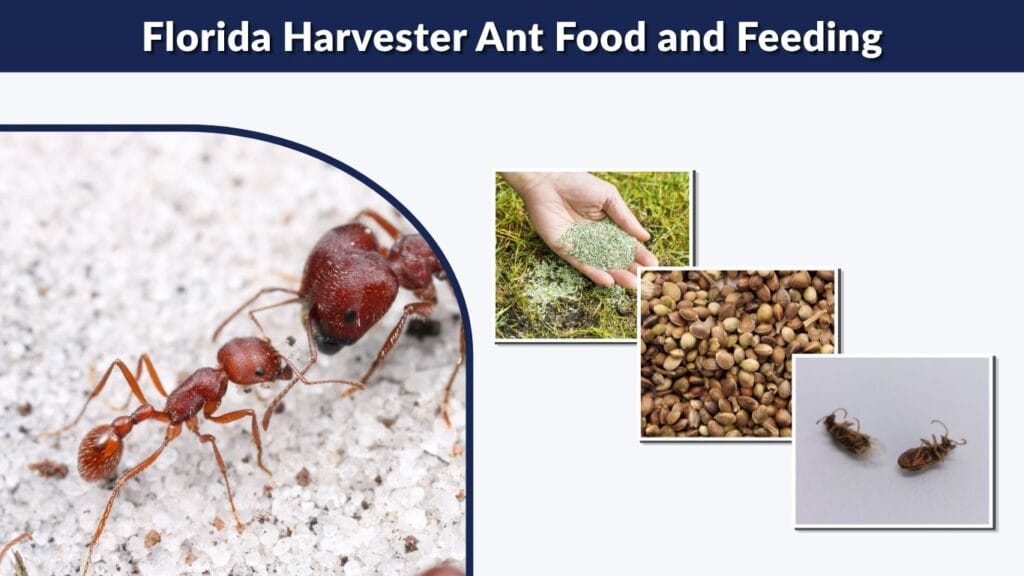
Florida harvester ants are famous for collecting seeds, but seeds are not their only food. They may also collect insects and other protein sources. Recent research describes the species as feeding on both seeds and insects, with diet changing seasonally.
Seeds are carried underground and may be stored in nest chambers. Workers can process seeds before feeding them to larvae or other colony members. Insects provide protein, which is especially useful for developing larvae.
Common Food Sources
Florida harvester ants may feed on:
- Grass seeds
- Weed seeds
- Small plant seeds
- Dead insects
- Small arthropods
- Protein-rich insect material
- Occasional sugary or liquid food sources
Their seed-gathering behavior can influence local plant communities. By collecting, moving, and discarding seeds, these ants can affect which plants grow near the nest.
Florida Harvester Ant Bite or Sting
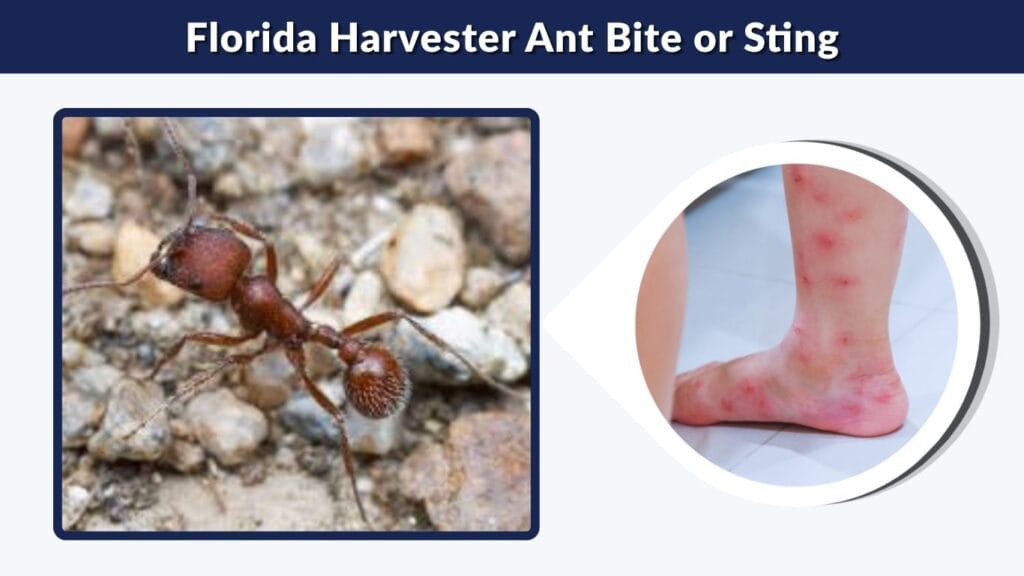
People often ask whether Florida harvester ants bite or sting. The bigger concern is the sting. Harvester ants can sting, and the sting may be painful. They may also use their jaws to grip, but the venomous sting is usually what people notice most.
Stings usually happen when someone steps on or disturbs a nest. Pets may also be stung if they sniff or dig near the colony. For most people, a sting causes pain, redness, swelling, or irritation. Some individuals may have stronger reactions.
What to Do After a Sting
Basic first-aid steps include:
- Move away from the nest immediately
- Wash the area with soap and water
- Apply a cold compress to reduce swelling
- Avoid scratching the sting site
- Monitor for worsening symptoms
- Seek medical help for severe allergic reactions
Get urgent medical care if there is trouble breathing, swelling of the face or throat, dizziness, widespread hives, or a history of serious insect-sting allergy.
Florida Harvester Ant vs Fire Ant
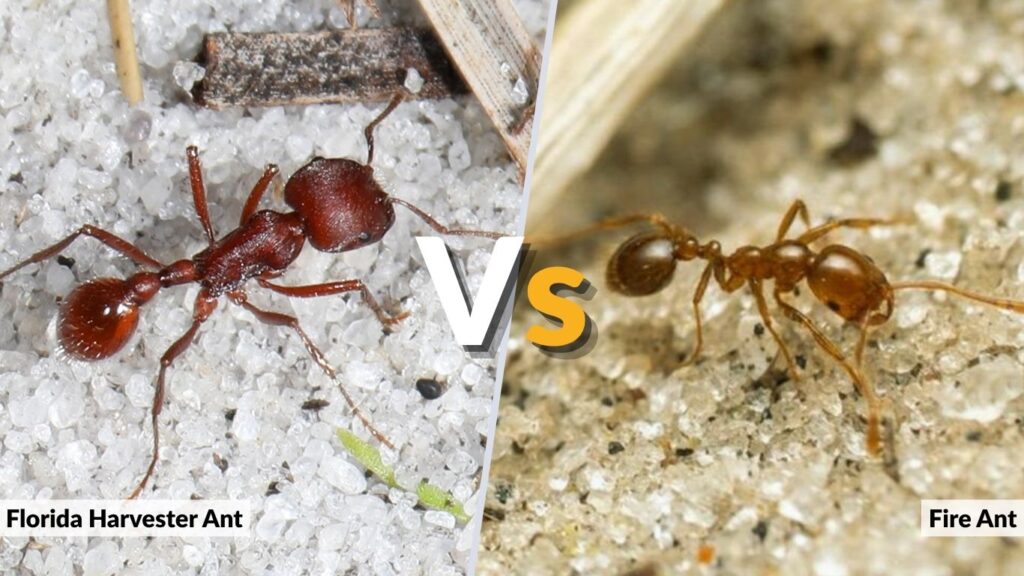
Florida harvester ants and imported fire ants can both sting, but they are not the same. Fire ants are often more aggressive in disturbed mounds and may swarm quickly. Florida harvester ants are usually associated with open sandy nest clearings and seed-harvesting behavior.
Fire ant mounds often look like loose soil mounds without a single obvious central entrance. Florida harvester ant nests often look like cleared, flat sandy patches with visible worker ants and foraging activity.
| Feature | Florida Harvester Ant | Fire Ant |
|---|---|---|
| Main habitat | Dry sandy open areas | Lawns, fields, disturbed soil, many habitats |
| Nest appearance | Cleared bare sandy patch | Soil mound, often dome-like |
| Food behavior | Collects seeds and insects | Omnivorous, scavenging and predatory |
| Sting | Painful sting possible | Painful sting, often multiple stings |
| Indoor problem | Usually outdoor | Mostly outdoor, can invade structures indirectly |
| Ecological role | Native seed collector and soil mover | Imported fire ants are invasive in many areas |
Correct identification matters because control methods and ecological concerns may differ.
Florida Harvester Ant Queen and Nuptial Flight
The queen is the reproductive center of a Florida harvester ant colony. She lays eggs that become workers, males, or future queens depending on colony needs and season. A mature colony may produce winged reproductive ants that leave the nest during nuptial flights.
A nuptial flight is when winged males and young queens fly out to mate. After mating, a queen may search for a suitable nesting site, shed her wings, and begin a new colony. Conditions such as season, rain, humidity, and temperature can influence mating flights.
People interested in captive colonies often search for queens after nuptial flights. However, collecting queens may be regulated depending on location and land ownership, so it is important to follow local rules and avoid collecting from protected areas.
Florida Harvester Ant Captive Colony
Some ant keepers are interested in Florida harvester ant captive colonies because of their seed-harvesting behavior and visible worker size differences. They can be fascinating to observe, but they are not a casual pet for everyone.
They need suitable nesting conditions, correct moisture, proper temperature, secure containment, and a balanced diet. Because they can sting, escape prevention is essential. A colony with a queen can live and grow for a long time if cared for correctly.
Captive Care Considerations
Before keeping them, consider:
- Legal collection and transport rules
- Escape-proof housing
- Safe handling practices
- Dry nesting areas with controlled moisture
- Seed and protein-based diet
- Space for colony growth
- Sting risk for children and pets
For beginners, queenless educational ant farms are often simpler than maintaining a full queenright harvester ant colony.
Ecological Role of Florida Harvester Ants
Florida harvester ants play an important ecological role. They collect seeds, move soil, and create open patches that affect plant growth. Their nests can influence soil structure and nutrient movement. Because they collect both seeds and insects, they are connected to several parts of the local food web.
They may also provide food for predators. Some reptiles, birds, spiders, and other animals may feed on ants or interact with their nests. In natural habitats, they are not just pests; they are part of the ecosystem.
This is why control should be thoughtful. A nest in a natural area may be worth leaving alone, while a nest beside a playground, patio, or pet area may need action.
Florida Harvester Ant Control
Control is usually only needed when nests create a safety problem. If the colony is far from people and pets, leaving it alone may be the best option. If the nest is near a walkway, lawn area, schoolyard, dog run, or patio, management may be necessary.
Avoid digging into an active nest with bare hands. Workers may sting if the colony is disturbed. Also avoid pouring random household chemicals into the soil, as this can harm plants, contaminate soil, and create safety risks.
Safer Control Tips
For problem nests:
- Confirm the ant is a harvester ant
- Mark the nest location
- Keep children and pets away
- Use a labeled outdoor ant product if needed
- Follow all label instructions carefully
- Treat only problem nests
- Contact pest control for large or risky infestations
Natural prevention includes reducing bare sandy patches near high-use areas, maintaining healthy groundcover, limiting spilled birdseed, and avoiding conditions that attract seed-gathering ants close to patios or play spaces.
FAQs
Are Florida harvester ants dangerous?
Florida harvester ants can sting, and the sting may be painful. They are not usually indoor pests, but nests near people or pets can be a concern. Most stings cause local pain, redness, or swelling, but anyone with severe symptoms or insect-sting allergies should seek medical attention quickly.
Where do Florida harvester ants live?
Florida harvester ants live mainly in dry, sunny, sandy habitats. They are found in Florida scrub, sandhill areas, pine woodlands, roadsides, open yards, and other well-drained sandy places. They occur through much of Florida but are limited by their need for suitable open sandy nesting sites.
What does a Florida harvester ant nest look like?
A Florida harvester ant nest often appears as a cleared, bare sandy patch with little vegetation near the entrance. You may see reddish-brown ants moving slowly around the surface, carrying seeds, or following short trails. Underground, the nest contains shafts and chambers for brood, food storage, and shelter.
Do Florida harvester ants bite or sting?
Florida harvester ants may bite with their jaws, but the painful reaction people notice usually comes from the sting. Stings often happen when someone steps on or disturbs a nest. The area may become painful, red, or swollen. Severe allergic reactions need immediate medical attention.
Are Florida harvester ants the same as fire ants?
No, Florida harvester ants and fire ants are different. Florida harvester ants are native seed collectors that often nest in cleared sandy patches. Imported fire ants are invasive in many areas and often build soil mounds. Both can sting, but their nests, behavior, and ecological roles are different.