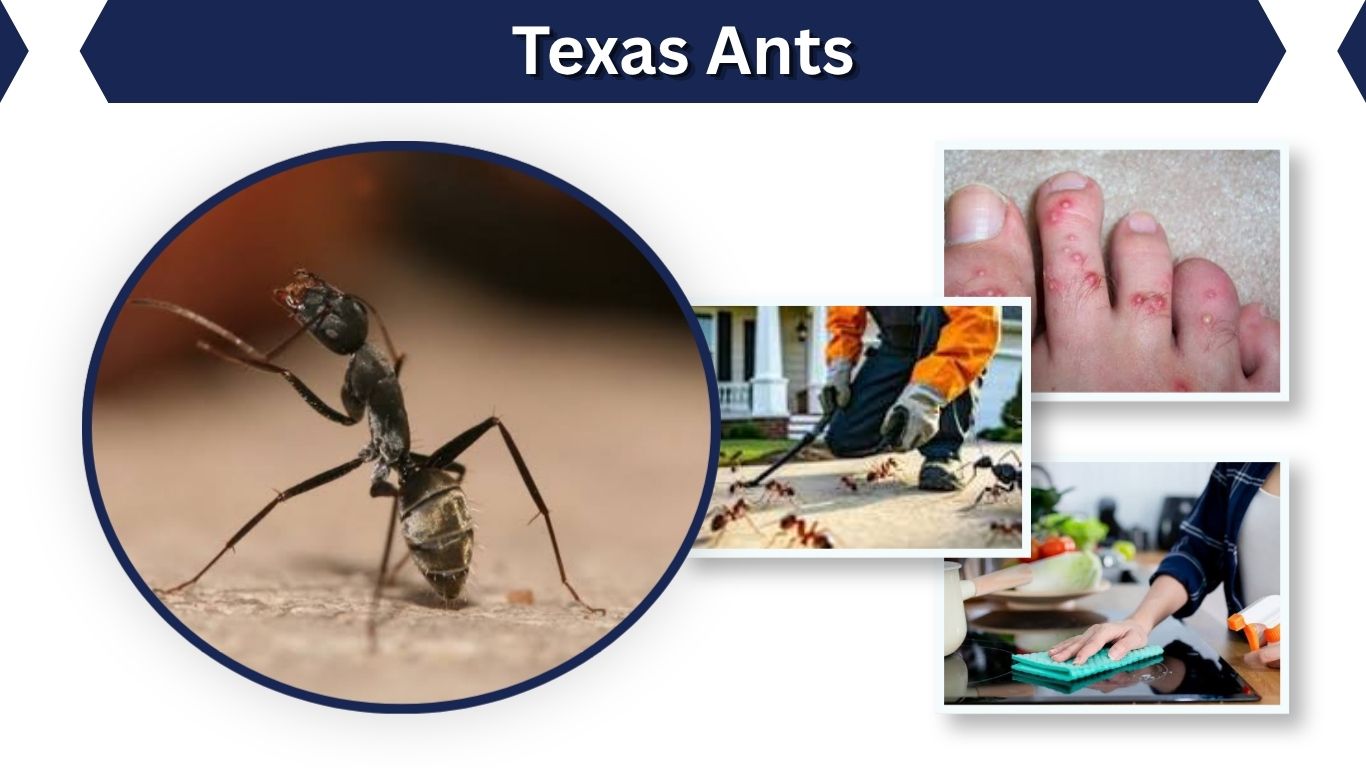
Texas is home to many ant species, ranging from harmless household visitors to aggressive ants capable of delivering painful stings. Common Texas ants include red imported fire ants, carpenter ants, tawny crazy ants, Argentine ants, pharaoh ants, ghost ants, leafcutter ants, and harvester ants.
Correct identification matters because each species behaves differently. Some invade kitchens, some damage wood or electrical equipment, and others build outdoor colonies that can threaten people and pets.
Common Types of Ants in Texas
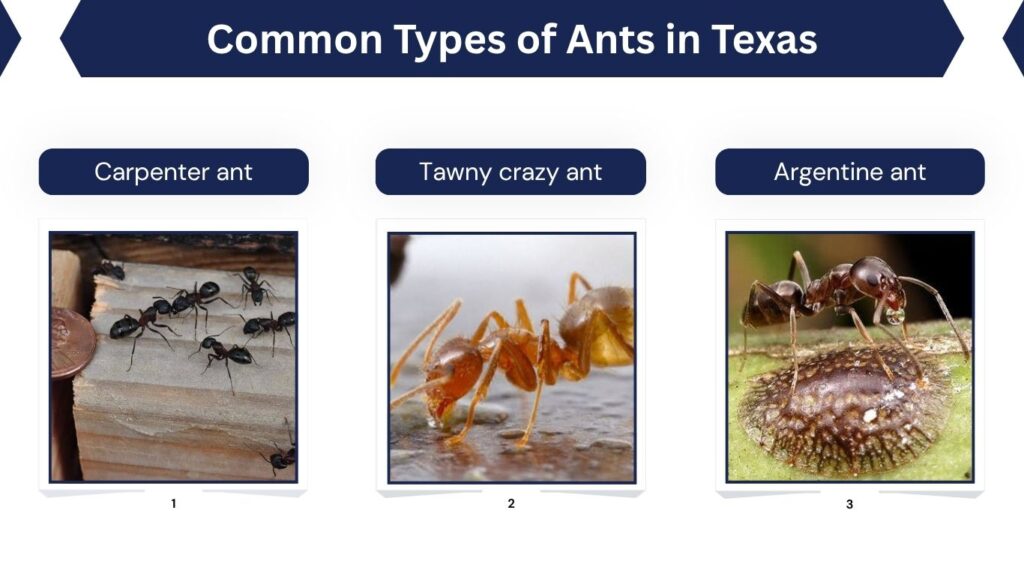
Texas’s warm climate allows ants to remain active for much of the year. The species found around a property can vary according to region, soil, moisture, vegetation, and building conditions.
| Texas ant | Typical appearance | Primary concern |
| Red imported fire ant | Reddish-brown with darker abdomen | Painful stings and lawn mounds |
| Carpenter ant | Large; black, reddish-black, or red and black | Nests inside damp or damaged wood |
| Tawny crazy ant | Tiny and golden-brown | Huge colonies and electrical infestations |
| Argentine ant | Small and light to dark brown | Large indoor and outdoor trails |
| Pharaoh ant | Tiny and yellowish | Persistent indoor infestations |
| Texas leafcutter ant | Rusty brown with prominent spines | Removes leaves from plants |
| Red harvester ant | Large and reddish-orange | Painful, venomous sting |
| Ghost ant | Tiny with dark head and pale body | Kitchen and bathroom infestations |
Red Imported Fire Ant
The red imported fire ant is one of the most troublesome biting ants in Texas. It is widespread across approximately the eastern two-thirds of the state. These ants build soil mounds in lawns, parks, fields, pastures, and along roadsides. Colonies respond aggressively when their mound is disturbed.
A fire ant uses its jaws to grip the skin and then repeatedly stings with its abdomen. The initial burning sensation is often followed by itchy red bumps and small, pus-filled blisters.
Carpenter Ant
Carpenter ants are among the largest black ants in Texas. Depending on the species, workers may be entirely black or have a red or reddish-brown middle section with a black head and abdomen.
These ants excavate galleries in wood to create nests, but they do not eat wood. Indoor activity may indicate damp lumber, a roof leak, plumbing moisture, or decaying structural wood. Carpenter ants can bite when handled or when their nest is disturbed, although they do not sting. Texas A&M AgriLife provides carpenter-ant identification and management guidance because these ants can become structural pests.
Tawny Crazy Ant
Tawny crazy ants are tiny, golden-brown ants that run rapidly in irregular directions instead of following orderly trails. They can form extremely large colonies around buildings, landscapes, utility boxes, and electrical equipment.
First confirmed near Houston in 2002, tawny crazy ants have spread into numerous Texas counties. Heavy infestations can displace other ants, including red imported fire ants.
They do not have functional stingers. However, they can bite and release formic acid, usually producing less severe reactions than fire-ant stings.
Argentine Ant
Argentine ants are small, light to dark brown ants that travel in well-defined trails. They commonly enter buildings in search of water and sweet foods, especially during hot, dry weather or after heavy rain.
Colonies may contain numerous queens and spread across a large area. Argentine ants occur in Texas and other southern parts of the United States.
Pharaoh Ant
Pharaoh ants are extremely small and usually yellow, golden, or light brown. They frequently establish colonies inside warm buildings, including kitchens, apartments, hospitals, and food-storage areas.
Pharaoh ants are among the most commonly encountered indoor ants in Texas. Spraying visible workers can sometimes cause a colony to split and establish additional nests, making appropriately placed ant bait a better control option.
Texas Leafcutter Ant
Texas leafcutter ants are reddish-brown ants with spines on their bodies. Workers cut pieces from leaves and carry them underground. They do not eat the leaves directly; instead, they use the plant material to cultivate fungus that feeds the colony.
A mature nest can remove considerable foliage from trees, garden plants, and agricultural crops. Their large jaws can pinch the skin if workers are handled.
Red Harvester Ant
Red harvester ants are large reddish or orange ants commonly seen in open, sunny areas. They create broad, cleared spaces around their nest entrances and primarily collect seeds.
These ants can sting when their colony is threatened. A harvester-ant sting may cause intense, localized pain and should not be confused with a mild bite from a small household ant.
Which Texas Ants Bite or Sting?
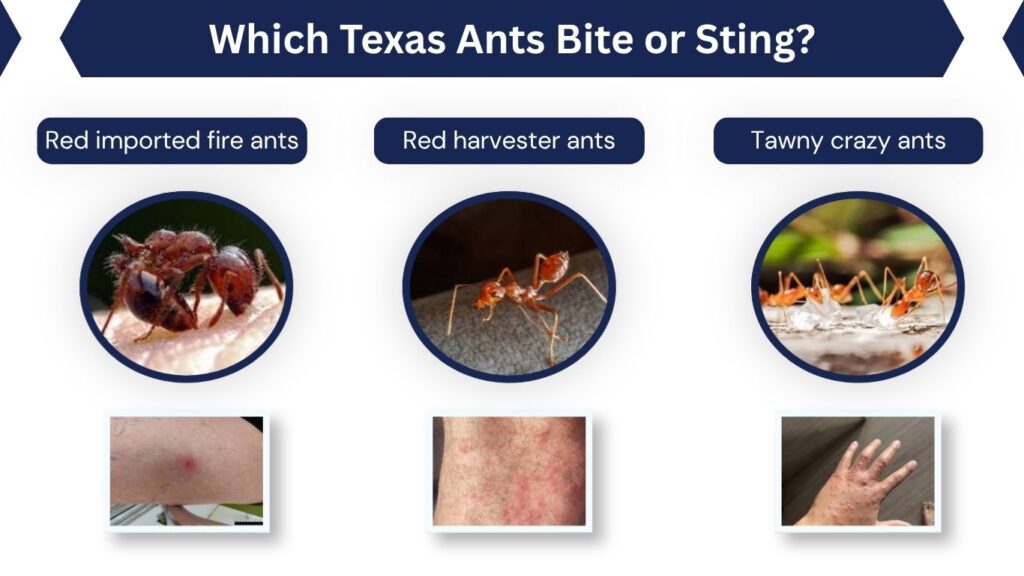
Many Texas ants can bite with their mandibles, but only a few regularly cause significant reactions. Fire ants and harvester ants present the greatest sting concern. Carpenter ants can produce a painful bite, while tiny household ants rarely cause more than minor irritation.
Biting and Stinging Risk
- Red imported fire ants: Bite to hold on and then sting repeatedly.
- Red harvester ants: Can deliver a painful venomous sting.
- Carpenter ants: Bite with strong jaws but cannot sting.
- Tawny crazy ants: May bite and release formic acid but lack a stinger.
- Leafcutter ants: Can pinch with powerful jaws when handled.
- Argentine, pharaoh, and ghost ants: Rarely cause noticeable bites.
The CDC confirms that fire ants both bite and sting. Because they remain attached with their jaws, brushing them off quickly can help reduce the number of stings.
What Do Texas Ant Bites Look Like?
The appearance depends on the species and whether the injury is a bite or a sting. A mild ant bite may leave a small red bump with itching, tenderness, or minor swelling.
Fire-ant stings usually cause immediate burning pain. Raised red welts may develop, followed by small white or yellowish pustules within about a day. Multiple stings often appear in clusters, especially around the feet, ankles, or lower legs.
Reactions can look different on various skin tones. On darker skin, redness may be less visible, so swelling, warmth, itching, tenderness, or changes in skin texture may be more noticeable.
How to Treat Texas Ant Bites

Move away from the colony first and brush off any ants attached to the skin. Do not crush fire ants against the body because they may continue to sting.
Basic First Aid
- Wash the affected area with soap and water.
- Apply a cool compress for 10–20 minutes.
- Avoid scratching or breaking any blister.
- Ask a pharmacist about an antihistamine or hydrocortisone cream for itching.
- Monitor the area for increasing swelling, spreading redness, warmth, pus, or worsening pain.
CDC guidance recommends washing the affected skin and applying a cool compress following venomous bites or stings.
Seek emergency medical care for difficulty breathing, swelling of the face or throat, widespread hives, faintness, severe nausea, slurred speech, or serious swelling. These symptoms may indicate a severe allergic reaction.
How to Control Ants in Texas

Identify the species before choosing a treatment. Products that work for fire-ant mounds may not control carpenter ants nesting inside a wall or pharaoh ants living behind cabinets.
Keep food sealed, remove crumbs, repair plumbing leaks, trim vegetation away from exterior walls, and seal gaps around doors, windows, and utility lines. Reducing moisture is particularly important for carpenter ants.
For widespread fire ants, Texas A&M promotes management programs that combine broadcast bait with targeted treatment of troublesome mounds.
Large numbers of tawny crazy ants, recurring carpenter ants, or ants emerging from electrical equipment may require professional pest control.
FAQs
What Are the Most Common Ants in Texas?
Common Texas ants include red imported fire ants, carpenter ants, tawny crazy ants, Argentine ants, pharaoh ants, ghost ants, harvester ants, and Texas leafcutter ants. The species encountered depends on the region, landscape, moisture level, and whether the ants are nesting indoors or outdoors.
What Are the Red and Black Ants in Texas?
A large ant with a red middle section and black head and abdomen may be a carpenter ant. Fire ants can also appear reddish-brown with a darker abdomen. Because color varies, body size, nest type, behavior, and the presence of a sting should also be considered.
What Are the Most Dangerous Ants in Texas?
Red imported fire ants pose the most common medical concern because they attack in groups and sting repeatedly. Red harvester ants also deliver painful venomous stings. Any ant sting can become serious for someone with an insect-venom allergy.
Do Black Ants in Texas Bite?
Some do. Large black carpenter ants can bite with powerful jaws when handled or threatened. Most tiny black household ants are unlikely to bite people and are primarily nuisance pests searching for food, water, or shelter.
How Long Do Texas Ant Bites Last?
A mild bite may improve within several hours to a few days. Fire-ant pustules and itching may last approximately a week. Symptoms that worsen, spread, become infected, or involve breathing difficulty require medical evaluation.