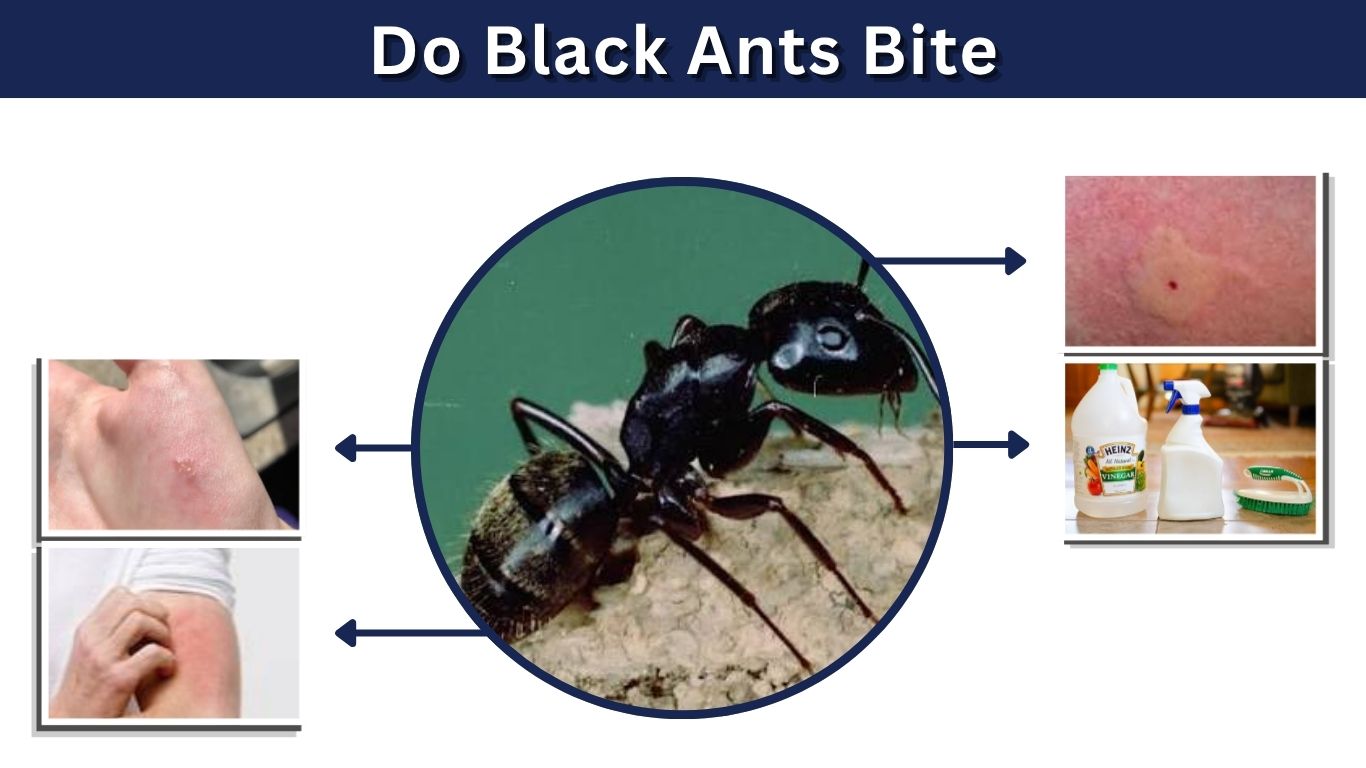
Yes, black ants can bite humans, but the likelihood and severity depend on the species. Most small black ants found in kitchens, gardens, and bathrooms rarely bite unless they are trapped against the skin or their nest is disturbed. Large black carpenter ants can deliver a more noticeable, painful bite. A typical reaction is mild and may include a small red bump, brief pain, itching, or localized swelling.
Do Black Ants Bite Humans?
“Black ant” is a general description based on color, not the name of one species. Many unrelated ants can appear black, and their behavior varies. Ants have pincer-like jaws called mandibles, so many species are physically capable of biting. However, most common household species avoid people and bite only defensively. UC Integrated Pest Management notes that ants can bite with their jaws, although most species rarely do.
Why Do Black Ants Bite?
Black ants usually bite because they feel threatened—for example, when trapped inside clothing, pressed against the skin, handled, or disturbed near a nest. They do not normally bite humans for blood or food. Repeated nighttime marks may instead come from mosquitoes, fleas, bed bugs, or another pest.
Do Black Ants Bite or Sting?
That depends on the species. A bite is made with the ant’s jaws, while a sting comes from a specialized structure at the end of the abdomen. Some ants bite only, some bite and sting, and others rarely do either to humans.
Carpenter ants cannot sting, but they can bite with strong jaws. They may also release formic acid into the wound, producing a burning sensation. Fire ants behave differently: they bite to grip the skin and then sting, often causing painful, itchy bumps or blisters.
Which Black Ants Are Most Likely to Bite?
Size does not confirm an ant’s identity, but larger ants generally have stronger jaws and can produce a more noticeable pinch.
| Type of ant | Likelihood of a noticeable bite | Typical reaction |
| Large black carpenter ant | Moderate when handled or disturbed | Sharp pinch, redness, burning, mild swelling |
| Tiny or little black ant | Low | Often unnoticed or a very small itchy spot |
| Common black house or garden ant | Low | Mild pinch or localized irritation |
| Flying black ant | Low | Possible defensive bite when handled |
| Dark-colored fire ant | High if a nest is disturbed | Burning pain, itching, multiple bumps or blisters |
Do Big Black Ants Bite?
Yes. A big black ant inside or near a house may be a carpenter ant, although proper identification is important. Carpenter ants have powerful mandibles and can inflict a painful defensive bite. They are most likely to bite when picked up, squeezed, or encountered near a disturbed colony.
Repeated indoor sightings may indicate a nesting or moisture problem. Carpenter ants excavate wood to create galleries but do not eat it like termites.
Do Tiny or Little Black Ants Bite?
Tiny black ants have mandibles, but bites from common household species are uncommon and usually cause little pain. They are more interested in food and moisture than people. Suspected nighttime bites should prompt an inspection for other pests.
Do Flying Black Ants Bite?
Flying ants are reproductive males or queens produced by an established colony. Their wings do not make them more aggressive. They may be capable of biting if handled, but swarming ants usually focus on mating and dispersal rather than attacking humans.
What Do Black Ant Bites Look Like?
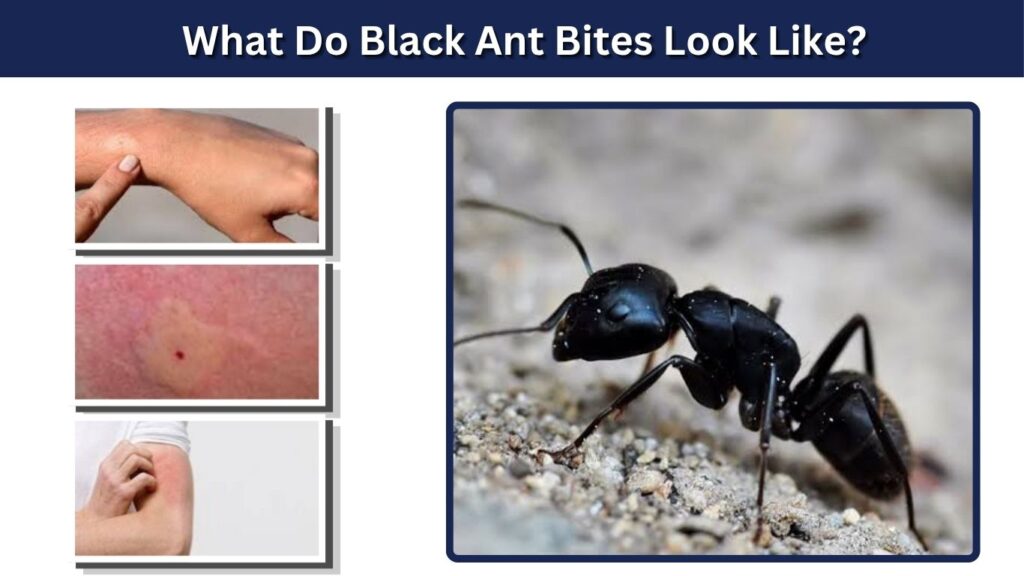
A mild bite may appear as a small red or pink raised spot with tenderness, itching, warmth, or slight swelling. Some people notice only a quick pinch. Reactions vary by species, bite number, location, and personal sensitivity.
Common Symptoms
Possible signs include:
- A sudden pinching or stinging feeling
- A small red bump
- Mild swelling around the bite
- Itching or tenderness
- A burning feeling, especially after a carpenter ant bite
Ant bites commonly affect the hands, feet, or legs because these areas come into contact with ants and their nests. Mild bites generally improve on their own within several days.
Do Black Ant Bites Itch?
They can. Itching occurs when the skin reacts to substances introduced during the bite or to chemicals released by the ant. Scratching may increase irritation, break the skin, and raise the risk of infection.
A pus-filled blister is more characteristic of a fire-ant sting than an ordinary black house-ant bite. Do not pop a blister, because opening it can introduce bacteria.
What to Do When a Black Ant Bites You
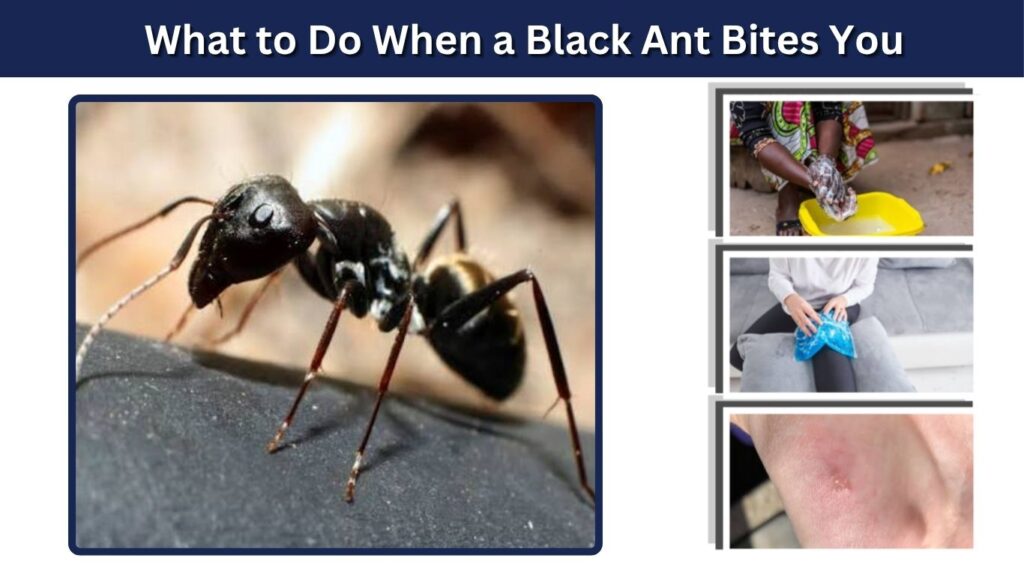
Most mild bites can be managed at home by cleaning the skin and controlling swelling or itching.
Black Ant Bite Treatment
- Move away from the ants and brush any remaining ants off your clothing or skin.
- Wash the affected area gently with soap and water.
- Apply a cold pack wrapped in cloth for about 10 to 20 minutes.
- Avoid scratching, squeezing, or popping any blister.
- For bothersome itching, ask a pharmacist or healthcare professional about an antihistamine or hydrocortisone cream. Use all medicines according to their labels.
- For pain, an appropriate over-the-counter pain reliever may help when used as directed.
Cold compresses, antihistamines, and hydrocortisone are commonly recommended for mild bite symptoms.
How Long Do Black Ant Bites Last?
A minor bite may settle within hours, although redness or itching can last several days. Seek medical advice if symptoms worsen instead of gradually improving.
When to Seek Medical Help
Get emergency help immediately if the person develops trouble breathing, swelling of the lips, tongue, face, or throat, faintness, confusion, or widespread hives. These can indicate a serious allergic reaction.
Contact a healthcare professional if redness spreads, pain increases, the skin becomes hot, pus appears, fever develops, or the bite does not improve. Infection can occur when damaged skin is repeatedly scratched.
How to Prevent Black Ant Bites in the House
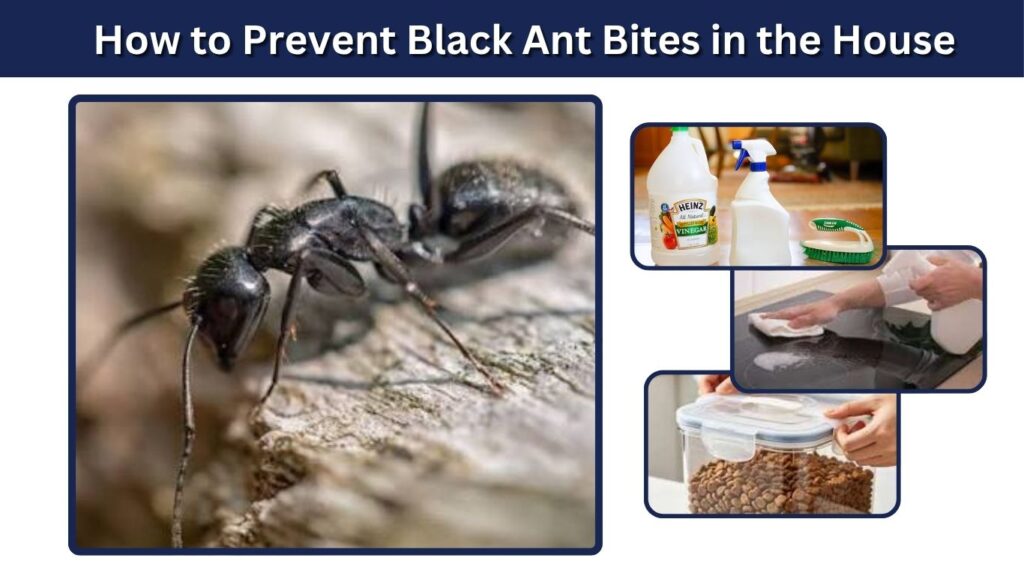
Preventing indoor ants reduces accidental contact and addresses the infestation.
Practical Prevention Steps
- Store food and pet food in sealed containers.
- Clean crumbs, spills, grease, and sugary residue promptly.
- Wipe ant trails with soapy water.
- Seal gaps around windows, doors, pipes, and foundations.
- Repair plumbing leaks and reduce damp wood.
- Trim branches and shrubs touching the building.
- Keep firewood raised and away from the house.
- Use properly labeled ant baits where appropriate rather than relying only on surface sprays.
If large black ants repeatedly appear indoors, especially near damp wood or sawdust-like material, have the ants identified and inspect for a carpenter-ant nest. UC IPM recommends locating nesting sites and correcting access and moisture conditions as part of effective control.
FAQs
Do All Black Ants Bite?
No. Many black-colored ants are capable of using their jaws, but most common species rarely bite people. Whether a bite occurs depends on the species and situation. Large carpenter ants are more likely to produce a noticeable bite than tiny kitchen ants.
Do Black Ants Bite Humans at Night?
Black ants can crawl onto beds while searching for food or moisture, but they do not normally target sleeping humans. Repeated nighttime bites may be caused by bed bugs, fleas, mosquitoes, or another pest, so inspect the room before assuming ants are responsible.
Do Black Ant Bites Hurt?
Some do. A small ant may cause little or no noticeable pain, while a large carpenter ant can produce a sharp pinch followed by burning or tenderness. Pain is usually localized and temporary unless there are multiple bites, infection, or an allergic reaction.
Can Black Ants Bite Dogs?
Black ants may bite a dog that steps on a nest, lies near a colony, or investigates ants with its nose or paws. Most reactions are mild, but facial swelling, vomiting, breathing difficulty, weakness, or numerous bites require prompt veterinary attention.
Why Do Red Ants Bite but Black Ants Do Not?
Color does not determine whether an ant bites or stings. Some red ants, especially fire ants, are highly defensive and can sting, while many black household ants are less aggressive. Black carpenter ants can still bite when handled or when their colony is disturbed.