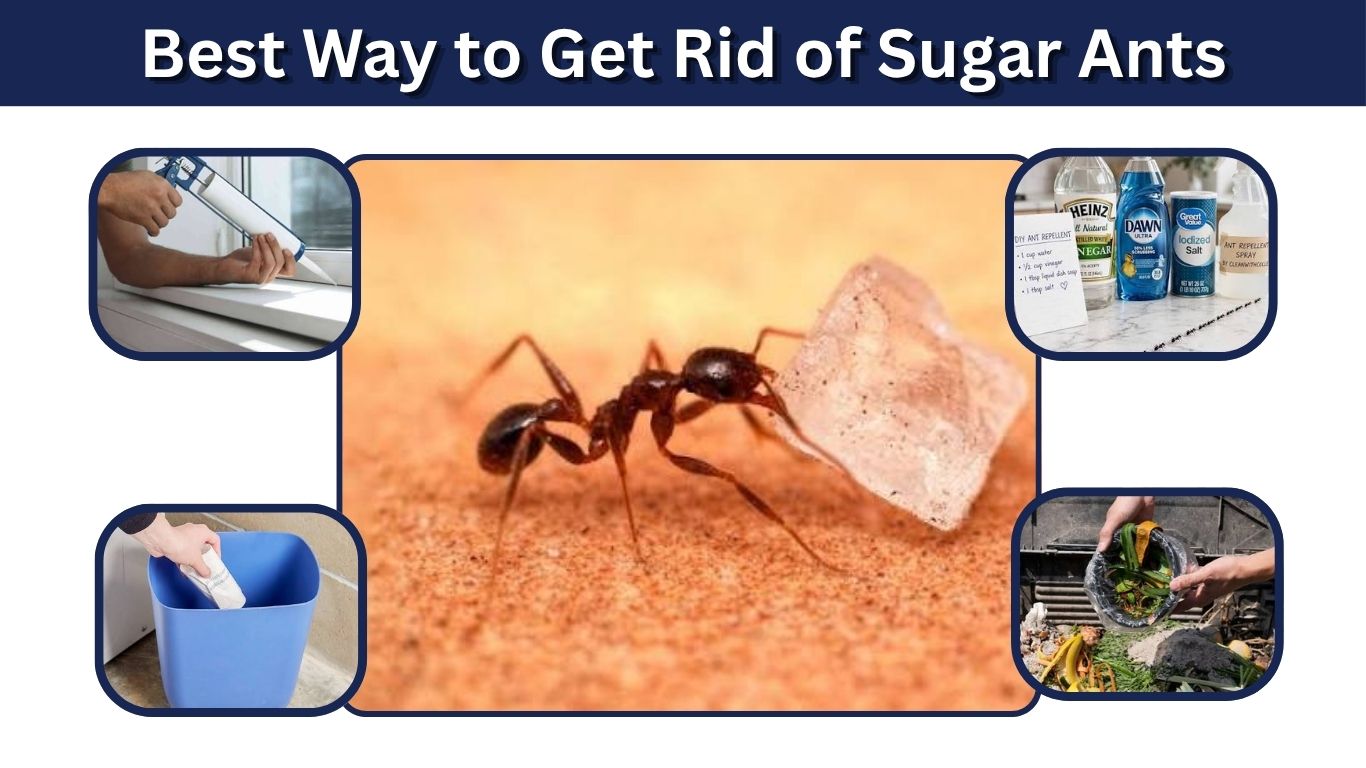
The best way to get rid of sugar ants is to remove their food sources, use slow-acting ant bait, clean their trails, and seal the openings they use to enter your home. “Sugar ant” is a general name for several small ants attracted to sweet foods, so control methods can vary slightly by species. Killing visible workers alone rarely removes the colony. A successful approach targets ants at their nest while making kitchens, bathrooms, and other indoor areas less attractive to new foragers.
What Is the Best Way to Get Rid of Sugar Ants?
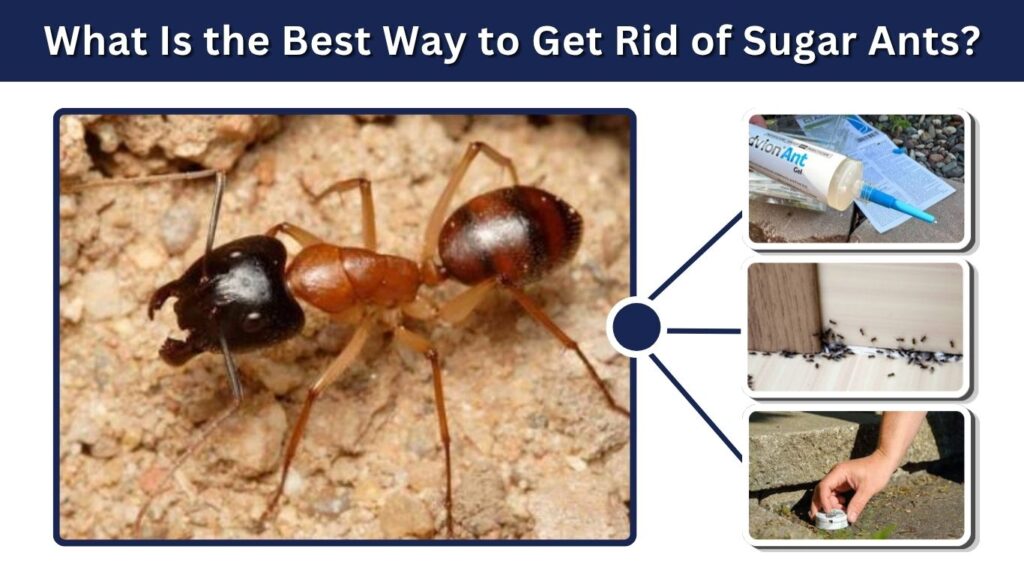
For most household infestations, ant bait combined with sanitation and exclusion is more effective than repeatedly spraying individual workers. Foraging ants collect attractive bait and carry it back toward the colony, potentially exposing other workers and queens. At the same time, removing competing food makes the bait more attractive and discourages new trails.
1. Use Slow-Acting Ant Bait
Ant bait is often one of the most useful methods for controlling an established sugar ant colony.
For best results:
- Place bait beside active ant trails.
- Position it near suspected entry points.
- Follow the product label exactly.
- Keep bait away from children and pets.
- Avoid spraying insecticide directly around the bait.
- Allow workers to carry bait away.
- Replace dried or contaminated bait when instructed.
- Continue monitoring until activity declines.
Do not become alarmed if you initially notice more ants around the bait. Workers may recruit nestmates after discovering an attractive food source.
2. Follow the Ant Trail
Instead of immediately wiping away every ant, observe the trail briefly.
Workers may lead you toward a crack beneath a baseboard, cabinet opening, window frame, plumbing penetration, or another access point.
Knowing where ants enter helps you place bait more effectively.
Once the infestation has been reduced, those openings can be sealed to limit future activity.
Best Way to Get Rid of Sugar Ants in the Kitchen
Kitchens provide nearly everything sugar ants need: carbohydrates, grease, water, and protected spaces. Even tiny amounts of syrup, juice, crumbs, or food residue can sustain foraging ants. Controlling a kitchen infestation requires removing these resources while placing bait where ants can reach it without contaminating food-preparation surfaces.
3. Remove Food Sources
Make your kitchen less attractive by:
- Wiping counters after meals
- Cleaning sticky drink spills
- Sweeping crumbs from floors
- Cleaning beneath appliances
- Storing sugar in sealed containers
- Keeping fruit from becoming overripe
- Rinsing recyclable containers
- Emptying garbage regularly
- Cleaning pet feeding areas
- Keeping pantry foods tightly sealed
Pay special attention to honey, syrup, soda, fruit juice, jam, baked goods, and other sweet foods.
4. Clean Ant Trails
Ant workers can leave chemical trails that help other workers find food.
After bait has had time to work and ant activity has begun declining, wash heavily used trails with ordinary soap and water.
Clean:
- Counter edges
- Cabinet surfaces
- Baseboards
- Window ledges
- Floors
- Areas behind appliances
Cleaning removes food residue and can reduce the chemical cues encouraging ants to follow the same route repeatedly.
Best Way to Get Rid of Sugar Ants in the House
Sugar ants can appear far beyond the kitchen. Bathrooms, laundry areas, bedrooms, and living rooms may provide moisture or access to hidden food. Indoor control is most effective when you determine what the ants are seeking rather than treating every room with insecticide.
5. Seal Entry Points
Once ant numbers have been reduced, inspect the house carefully.
Common openings include:
- Gaps around windows
- Cracks beside baseboards
- Spaces underneath doors
- Plumbing penetrations
- Utility cable openings
- Cracks in exterior walls
- Gaps around cabinets
- Damaged weatherstripping
Use appropriate caulk, sealant, or weatherstripping to close unnecessary openings.
Sealing too early can occasionally cause ants to find another route, so controlling an active colony before extensive sealing may be more effective.
6. Reduce Moisture
Some household ants need regular access to water.
Check for:
- Leaking faucets
- Dripping pipes
- Wet sponges
- Damp cabinets
- Condensation
- Standing water
- Pet water spills
- Moist areas beneath sinks
Repair leaks and dry damp surfaces when possible.
Moisture management is especially important when ants repeatedly appear around sinks, bathrooms, dishwashers, or plumbing.
Best Natural Way to Get Rid of Sugar Ants
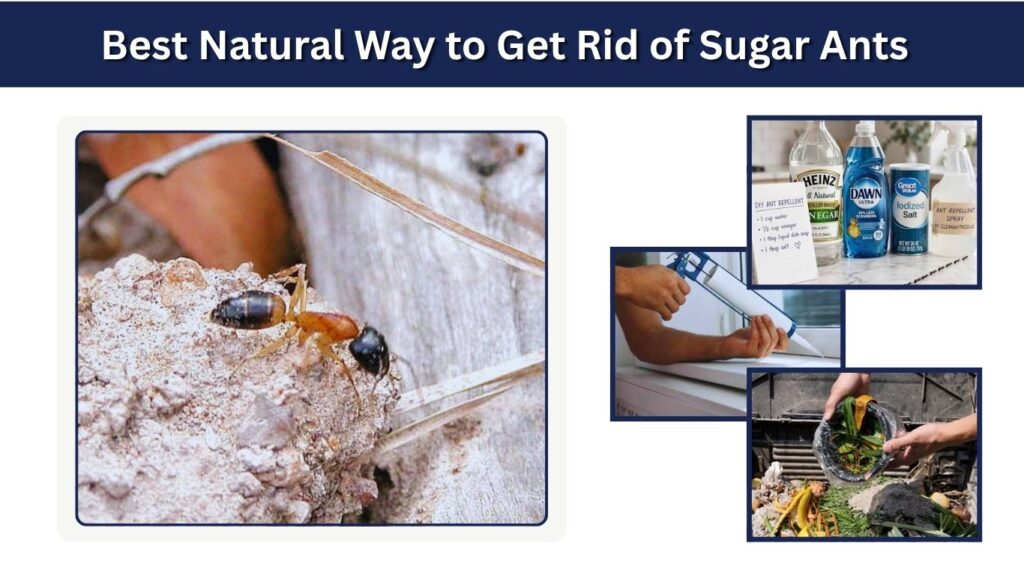
If you prefer to minimize pesticide use, sanitation and exclusion are the most reliable nonchemical strategies. Strong-smelling household substances may temporarily disrupt trails, but they usually do not eliminate a colony. Long-term control comes from depriving ants of food and water while preventing them from entering.
7. Use Soap and Water for Visible Ants
For a small number of workers, ordinary soapy water can remove ants and clean the chemical trail they have been following.
This approach is useful for immediate cleanup, but it generally will not reach a hidden colony.
Use it alongside:
- Food removal
- Regular cleaning
- Moisture reduction
- Entry-point sealing
- Outdoor habitat management
If ants continue returning daily, colony-level baiting may be necessary.
8. Remove Outdoor Attractants
Sugar ants often originate outdoors before workers begin exploring the house.
Reduce conditions near your foundation by:
- Cleaning fallen fruit
- Keeping garbage lids closed
- Moving compost away from entrances
- Trimming vegetation touching the building
- Cleaning outdoor drink spills
- Removing unnecessary food waste
- Fixing leaking outdoor faucets
- Keeping pet food indoors when possible
Reducing nearby food sources can make your home less attractive to foraging colonies.
How to Get Rid of Tiny Black Sugar Ants
Tiny black ants can be difficult to control because their nests may be hidden in soil, wall spaces, cracks, or vegetation. Several different ant species can be described as “black sugar ants,” so appearance alone may not identify the exact species. Nevertheless, baiting and sanitation are effective starting points for many small household ants.
Avoid Spraying Every Ant You See
Contact insecticide can kill visible workers quickly, but the majority of the colony may remain hidden.
In some ant species, inappropriate repellent treatments can also disrupt colony behavior without providing lasting control.
If using a pesticide, choose a product labeled for the target ant and location and follow all directions.
Baits are often preferable when the goal is to reach ants that remain inside the colony.
Change Bait If Ants Ignore It
Ant food preferences can change.
A colony interested in sweet foods one week may become more attracted to protein or fatty foods at another stage of development.
If correctly positioned bait is consistently ignored, consider trying another labeled ant bait with a different food base rather than continuously increasing the amount of the same product.
How to Get Rid of Sugar Ants Outside
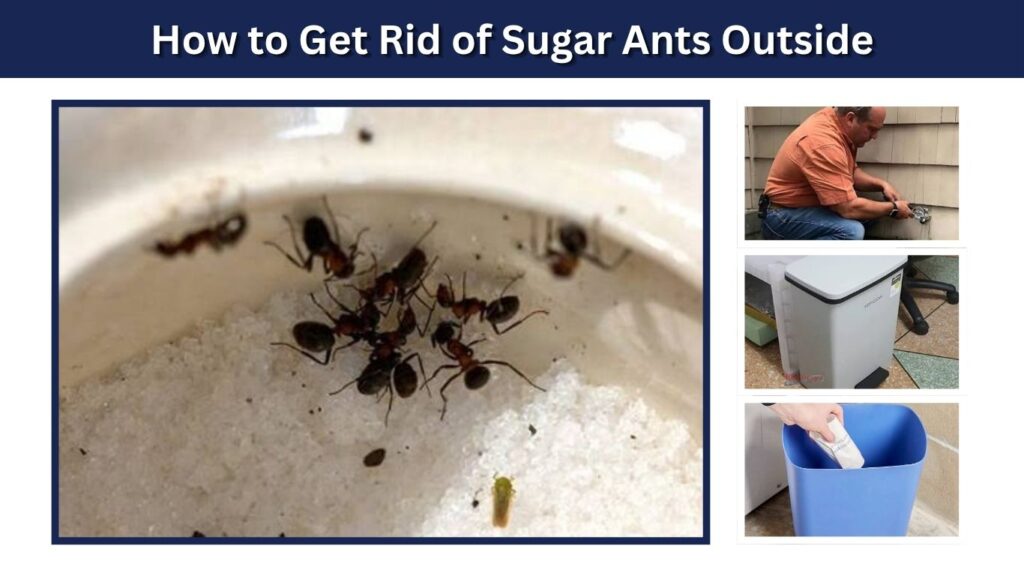
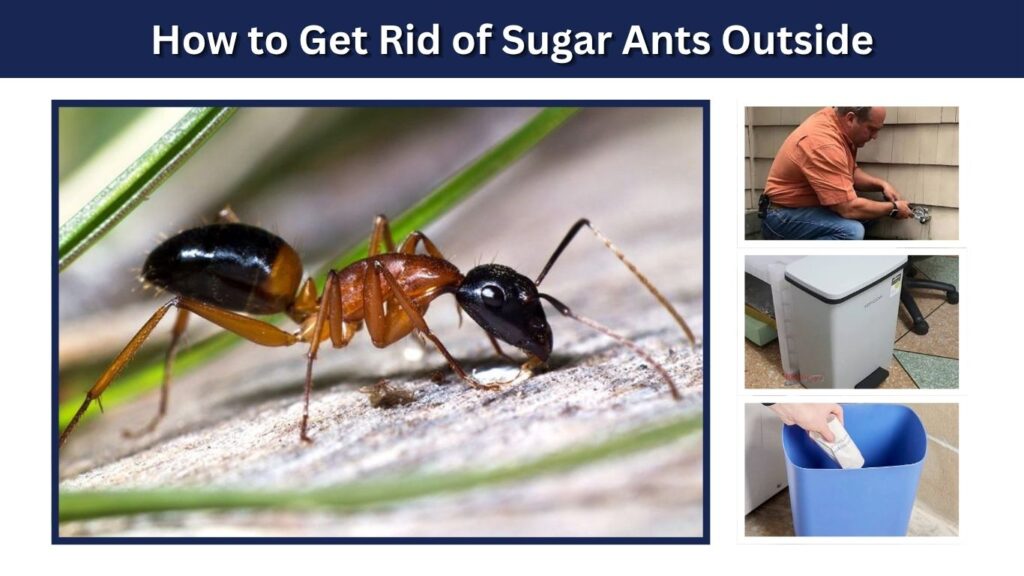
Outdoor sugar ants do not always require control. Ants play useful ecological roles, including scavenging and soil disturbance. Treatment becomes more reasonable when colonies repeatedly invade the house, contaminate food areas, or establish nests directly around heavily used spaces.
Outdoor Control Steps
Start with:
- Locate active trails near the foundation.
- Remove accessible food waste.
- Keep trash containers clean and closed.
- Trim branches touching walls or roofs.
- Repair exterior cracks.
- Fix leaking hoses and faucets.
- Use labeled outdoor bait when necessary.
- Avoid unnecessary broad insecticide spraying.
Targeted treatments help reduce impacts on non-target insects.
When to Call Pest Control
Professional help may be worthwhile when ants continue returning despite several weeks of proper baiting, sanitation, and exclusion.
A professional can identify the ant species and locate nesting sites that may be difficult to find yourself.
Assistance can be especially valuable when ants appear from wall voids, electrical areas, multiple rooms, or inaccessible structural spaces.
Common Mistakes When Removing Sugar Ants
Persistent infestations often continue because treatment focuses only on visible workers. Hundreds or thousands of ants may remain hidden in the colony. Long-term management requires patience because effective bait must be shared through the colony, and environmental conditions that attracted the ants must also be corrected.
Mistakes to Avoid
Avoid these common problems:
- Crushing only visible ants
- Spraying directly beside ant bait
- Leaving sugary spills overnight
- Ignoring pet food
- Using bait where ants cannot reach it
- Sealing ants inside before controlling activity
- Leaving water leaks unrepaired
- Expecting bait to work instantly
- Using pesticides contrary to label directions
A combination of baiting, cleaning, moisture control, and exclusion usually produces better results than relying on a single method.
FAQs
1. What is the fastest way to get rid of sugar ants?
Remove exposed food, clean spills, and place an appropriate slow-acting ant bait along active trails. Visible ants may continue appearing initially because they are carrying bait back toward the colony. Avoid spraying directly around the bait, since this can interfere with foraging.
2. What is the best way to get rid of sugar ants in a kitchen?
Clean food residue, seal pantry products, remove garbage, and use labeled ant bait near trails and entry points. Also clean under appliances and around pet bowls. Once activity has declined, wash old trails and seal cracks that ants were using to enter.
3. Why do sugar ants keep coming back?
Sugar ants usually return because a nearby colony remains active or the house continues providing food, water, and easy entry. Killing individual workers does not remove the colony. Baiting, sanitation, moisture control, and sealing access points are more effective for preventing repeated infestations.
4. Can I get rid of sugar ants naturally?
You can reduce many minor infestations by removing sweet foods, cleaning trails with soap and water, fixing leaks, sealing openings, and keeping outdoor food waste away from the building. However, a large established colony may require an appropriately labeled ant bait or professional treatment.
5. How long does it take to get rid of sugar ants?
Control may take several days to a few weeks depending on the species, colony size, bait acceptance, and number of nests. Slow-acting bait is intentionally not immediate because workers need time to transport it back to the colony and share it with other ants.