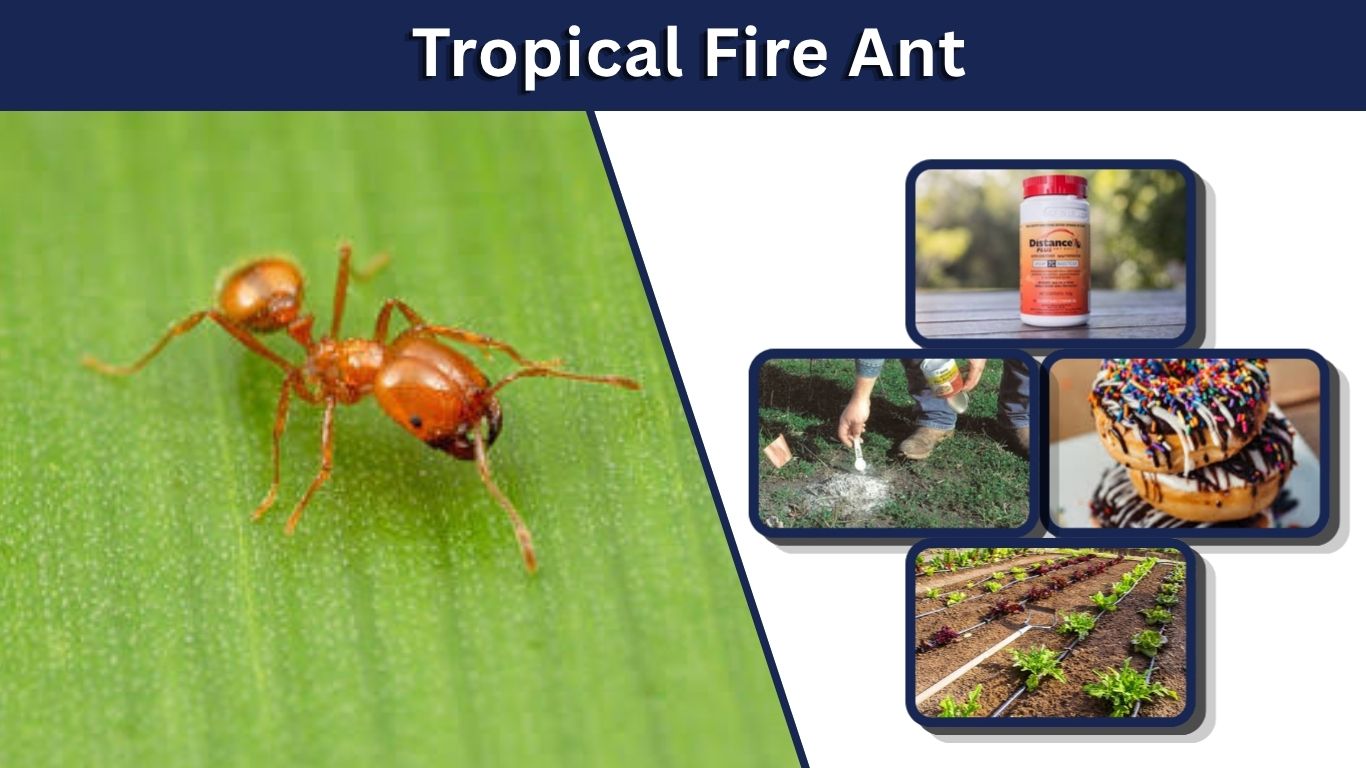
The tropical fire ant (Solenopsis geminata) is an aggressive, ground-nesting ant found across many tropical and subtropical regions. It is recognised by its shiny reddish-brown colour, workers of noticeably different sizes, and large-headed major workers. Colonies are commonly established in lawns, farms, gardens, roadsides, and other sunny, disturbed areas. Tropical fire ants collect seeds, prey on insects, and defend their nests with painful stings. They are widespread in places such as Hawaii and many Pacific islands, where they can become serious household, agricultural, and environmental pests.
What Is a Tropical Fire Ant?
The tropical fire ant is a true fire ant belonging to the genus Solenopsis. It is also sometimes called the ginger ant because of its reddish or orange-brown appearance.
Classification
| Classification | Name |
| Kingdom | Animalia |
| Phylum | Arthropoda |
| Class | Insecta |
| Order | Hymenoptera |
| Family | Formicidae |
| Genus | Solenopsis |
| Scientific name | Solenopsis geminata |
The species originated in the tropical Americas but was transported to many other tropical and subtropical regions through international shipping and the movement of soil, plants, and agricultural goods. It is now considered a widespread invasive pest outside much of its original range.
Tropical Fire Ant Identification
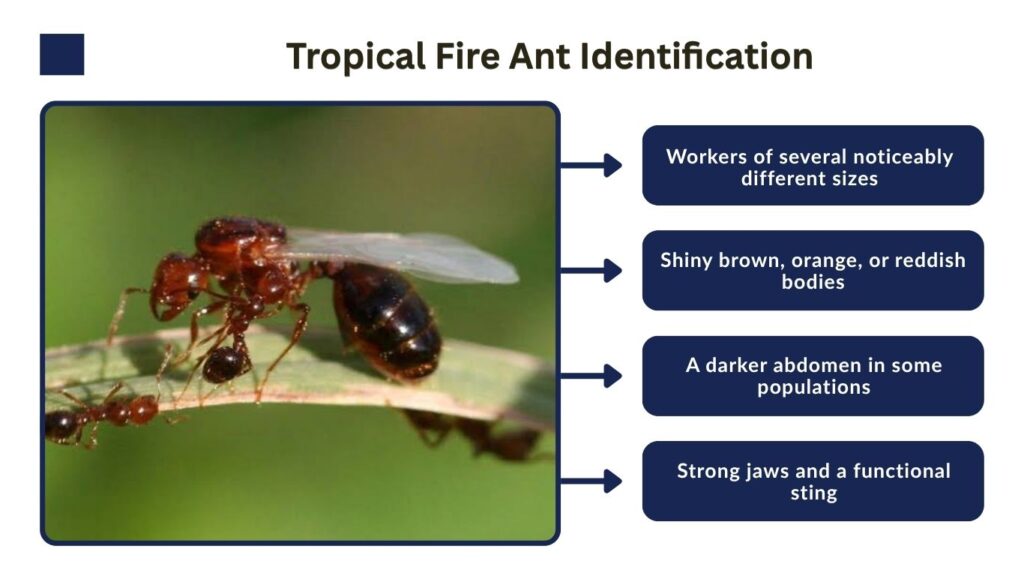
Tropical fire ants can resemble red imported fire ants and several native ant species. Examining worker size, colour, head shape, and nesting behaviour can help with identification.
Size and Colour
Workers usually measure approximately 2–8 mm long, although reported size ranges vary by population. Their bodies are generally shiny reddish brown, orange-brown, or dark red.
Key identification features include:
- Workers of several noticeably different sizes
- Shiny brown, orange, or reddish bodies
- Large major workers with oversized, square-shaped heads
- Two nodes between the middle body and abdomen
- A darker abdomen in some populations
- Strong jaws and a functional sting
- Rapid recruitment when food or threats are detected
The exceptionally large heads of major workers are among the most useful visible features. Smaller workers perform many routine tasks, while large workers can cut up prey and handle heavy seeds.
Red Tropical Fire Ants
Some populations appear strongly red or reddish orange, leading people to call them red tropical fire ants. Colour alone is not reliable for species identification because tropical fire ants vary and can resemble red imported fire ants.
When an unfamiliar fire ant appears in a region where regulated species are a concern, collect a sample safely and contact a local agriculture or invasive-species authority rather than relying only on photographs.
Tropical Fire Ant Queen
The queen is the primary reproductive member of the colony. She is larger than the workers and has a broader abdomen adapted for egg production.
Young queens initially have wings. During a mating flight, winged queens and males leave mature colonies and mate in the air. A fertilised queen lands, removes her wings, and searches for protected soil in which to begin a new nest.
She digs a chamber and lays her first group of eggs. During the colony’s earliest stage, the queen cares for the brood until the first workers mature. Those workers then take over foraging, nest construction, defence, and care of later brood. Established colonies may contain more than one reproductive queen in some circumstances.
Tropical Fire Ant Eggs and Life Cycle
Tropical fire ants undergo complete metamorphosis through four developmental stages.
1. Egg
The queen lays small, pale eggs inside protected underground chambers. Her first eggs can hatch in approximately eight to ten days under favourable conditions.
2. Larva
The larvae are soft, pale, legless grubs. Workers feed and groom them inside the nest. Older larvae can process solid protein food that workers bring into the colony.
3. Pupa
After completing several larval stages, the immature ant enters the pupal stage. Its legs, antennae, and adult body structure gradually develop.
4. Adult
New adults initially perform duties within the nest, such as caring for eggs and larvae. As workers age, they may begin maintaining tunnels, defending the colony, and foraging outside.
Development speed depends on temperature, food, moisture, colony health, and worker care. Tropical conditions may allow colonies to remain active and reproduce for much of the year.
Tropical Fire Ant Habitat and Range
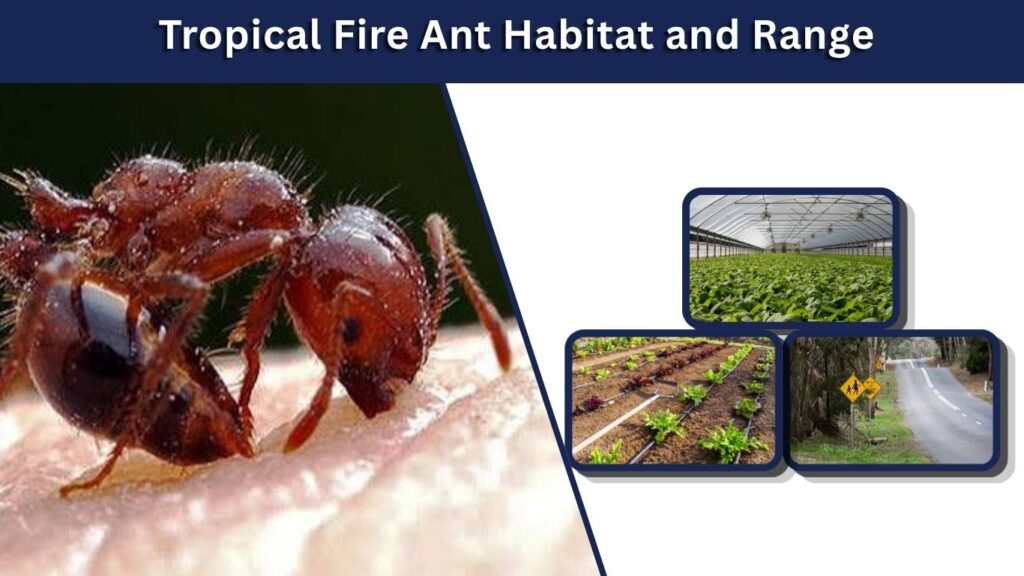
Tropical fire ants inhabit warm regions around the world. They are particularly successful in disturbed, open environments where sunlight reaches the soil.
Common habitats include:
- Lawns and sports fields
- Farms and plantations
- Roadsides and footpaths
- Irrigated gardens
- Parks and school grounds
- Sandy or disturbed soil
- Plant nurseries
- Areas around buildings
Their nests are usually built in soil and may form visible sandy mounds. Colonies can extend deep underground and develop tunnels leading to different foraging areas. They are generally more abundant in open, sunny places than in heavily shaded, undisturbed forests.
Tropical Fire Ants in Hawaii
Tropical fire ants are common and well established throughout Hawaii. Historical records indicate that the species was already established there by the nineteenth century.
They should not be confused with the much smaller little fire ant or with the red imported fire ant. Tropical fire ants move quickly and include large workers with prominent heads. Little fire ants are considerably smaller and move more slowly.
Because tropical and red imported fire ants can look similar without magnification, Hawaii officials recommend submitting suspicious specimens for professional identification.
Tropical Fire Ants in the Philippines and Pacific
The species has spread across many tropical islands and mainland regions through human trade. Colonies can be transported in soil, nursery plants, agricultural materials, containers, and other goods.
In Pacific ecosystems, tropical fire ants may compete with native invertebrates, disturb wildlife, protect plant-feeding insects, and interfere with agriculture. USDA research identifies Hawaii, Guam, and other Pacific islands as important invaded regions.
What Do Tropical Fire Ants Eat?
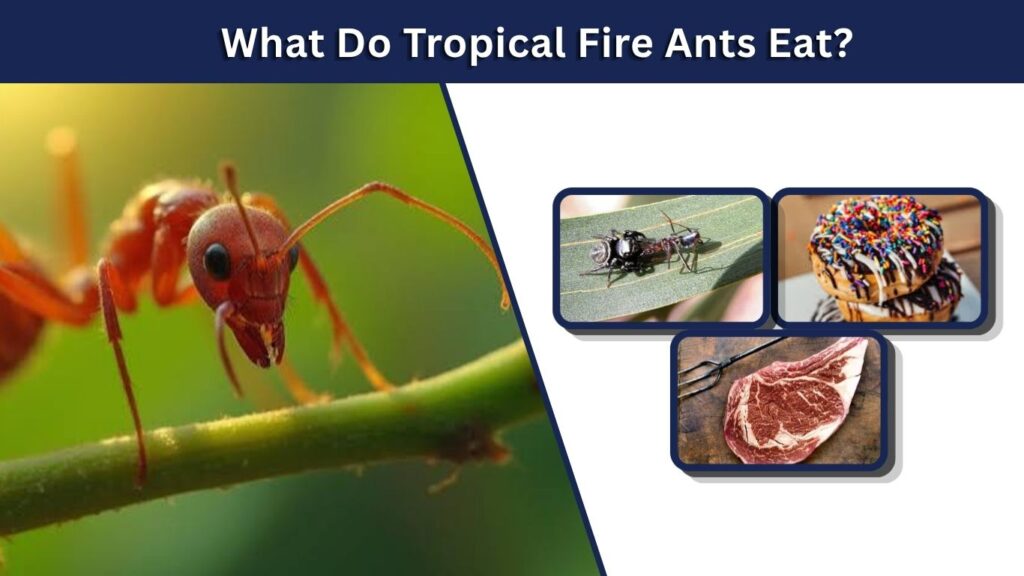
Tropical fire ants are opportunistic omnivores. They collect plant material and hunt or scavenge animal food.
Their diet includes:
- Grass seeds and other seeds
- Dead insects
- Live insect prey
- Meat and fats
- Sugary food
- Honeydew from aphids and mealybugs
- Household food scraps
- Small invertebrates
Large workers use their powerful jaws to cut food into smaller pieces. Smaller workers then transport these pieces into the nest. Colonies may store collected seeds in underground chambers.
Although they consume some agricultural pests, they may also protect aphids, mealybugs, and scale insects in exchange for honeydew. This can allow plant-feeding pest populations to increase.
Tropical Fire Ant Bite and Sting
Tropical fire ants both bite and sting. A worker bites the skin to secure its position and then bends its abdomen forward to inject venom with its stinger. One ant can sting repeatedly, and many workers may attack when a nest is disturbed.
Common Symptoms
A tropical fire ant sting may cause:
- Immediate burning pain
- Redness
- Itching
- Localised swelling
- A raised welt
- A small fluid-filled pustule
- Tenderness lasting several days
The term “fire ant bite” is commonly used, but the burning reaction is primarily caused by the venomous sting.
How to Treat a Sting
Move away from the nest and brush the ants off quickly. Wash the affected skin with soap and water, then apply a cold compress wrapped in cloth to reduce pain and swelling. Avoid scratching or breaking any pustules because damaged skin may become infected.
Seek emergency medical assistance for difficulty breathing, dizziness, widespread hives, faintness, or swelling of the tongue, lips, face, or throat. These may indicate a serious allergic reaction.
Can Tropical Fire Ants Enter the Home?
Tropical fire ants mainly nest outdoors, but workers can enter buildings while searching for food and moisture. Colonies may occasionally establish near foundations, beneath concrete, inside wall gaps, or in potted plants.
To reduce indoor activity:
- Seal cracks around doors and windows
- Repair damaged screens
- Store food in sealed containers
- Clean grease and sugary spills
- Empty pet bowls after feeding
- Remove rubbish regularly
- Trim plants touching the building
- Check potted plants before bringing them indoors
Killing visible workers inside the house will not eliminate an outdoor colony.
How to Get Rid of Tropical Fire Ants
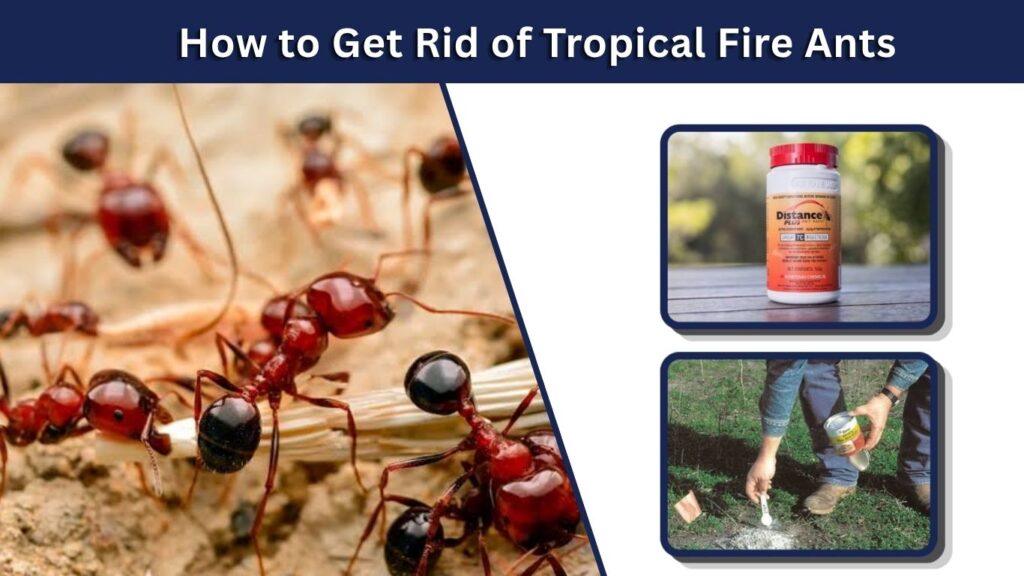
Effective control must reach the queen and the brood inside the nest. Spraying only visible ants usually provides temporary relief.
Use Fire Ant Bait
Choose a bait specifically labelled for fire ants and approved for the treatment site. Worker ants carry slow-acting bait into the colony and share it with other workers and reproductive ants.
Apply bait when ants are actively foraging, the ground is dry, and rain is not expected within the period stated on the label. Do not water the area immediately after application unless instructed.
Treat Individual Mounds
For isolated colonies, use a mound treatment labelled for the location. Apply it exactly as directed because insufficient treatment may leave parts of the colony alive.
Never pour petrol, bleach, boiling oil, or other household chemicals into a nest. These materials can damage soil, harm plants, create fire or poisoning risks, and still fail to kill the queen.
Reduce Suitable Nesting Conditions
Keep food waste contained, repair irrigation leaks, remove unnecessary debris, and inspect soil or potted plants before moving them. Persistent or extensive infestations may require a licensed pest-management professional.
FAQs
Are tropical fire ants dangerous?
They can be dangerous when colonies are disturbed because many workers may sting repeatedly. Most reactions remain localised, but sensitive individuals can experience a severe allergic reaction requiring emergency treatment.
How can you identify a tropical fire ant?
Look for shiny reddish-brown workers of different sizes. Some large workers have distinctive oversized, square-shaped heads. Professional examination may be necessary to separate them from red imported fire ants.
Do tropical fire ants build mounds?
Yes. They usually nest in soil and may produce sandy or irregular mounds in lawns, fields, parks, and other sunny disturbed areas. Underground tunnels can extend beyond the visible mound.
What attracts tropical fire ants?
They are attracted to seeds, oily food, meat, dead insects, sweets, and honeydew. Moist soil, food scraps, irrigation leaks, and disturbed sunny ground can also encourage colonies near buildings.
Are tropical fire ants found in Hawaii?
Yes. Tropical fire ants are common and well established across Hawaii. They are different from little fire ants, although suspicious ants may require expert examination for accurate identification.