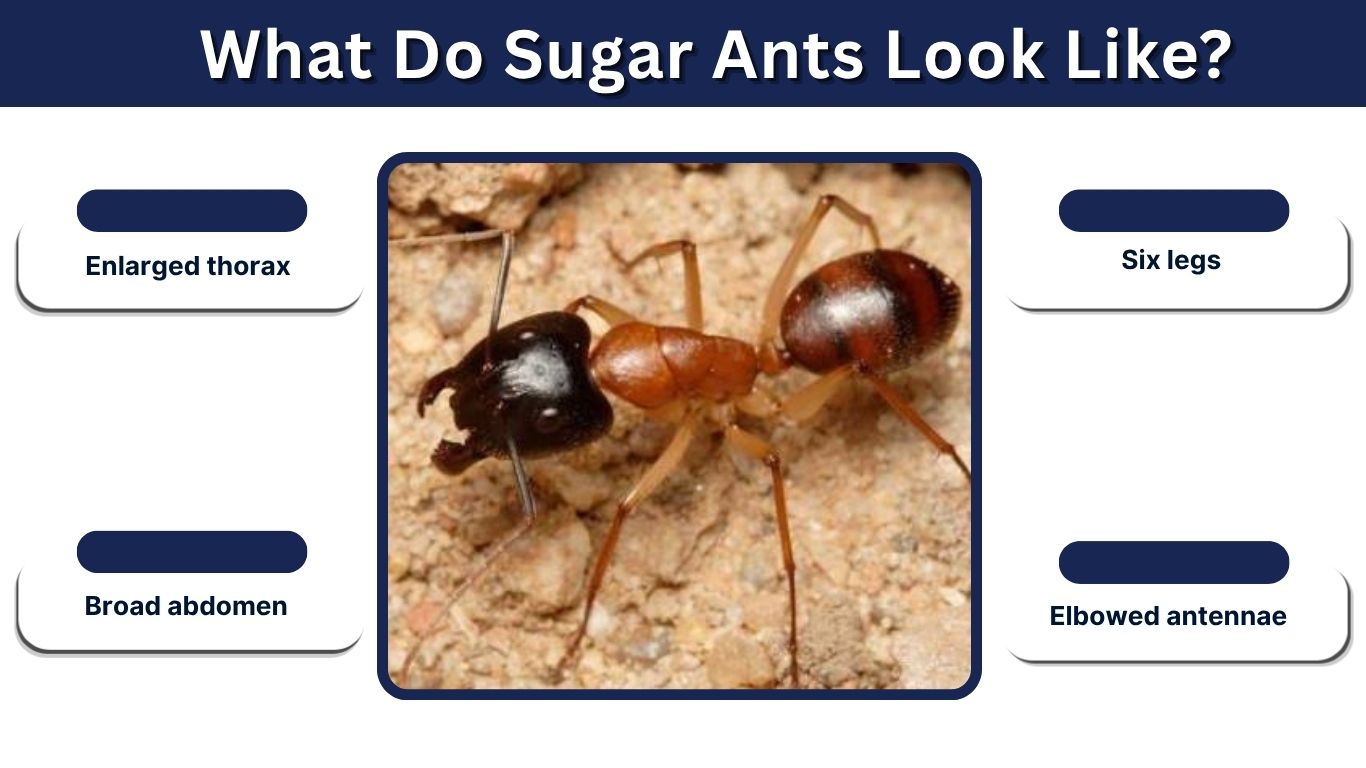
Sugar ants are small ants commonly seen in kitchens, bathrooms, pantries, and other places where sweet foods or moisture are available. The name “sugar ant” can describe several ant species attracted to sugary substances, so their exact appearance varies. Most household sugar ants are tiny, dark-colored ants that travel in noticeable trails. Identifying their body color, size, antennae, nesting areas, eggs, queens, and bite appearance can help you determine whether you are dealing with sugar ants or another household species.
What Do Sugar Ants Look Like?
Most ants commonly called sugar ants are relatively small and have the familiar ant body divided into the head, thorax, and abdomen. Their appearance varies because “sugar ant” is a common name rather than a single species name.
In many homes, people use the term for small ants attracted to sweets, including odorous house ants and related species.
Sugar Ant Identification
Common characteristics include:
- Usually around 1/16 to 1/8 inch long
- Brown, dark brown, reddish-brown, or black body
- Six legs
- Two bent or elbowed antennae
- Narrow waist between the thorax and abdomen
- Smooth or slightly shiny body
- Workers noticeably smaller than queens
- Frequently travel in organized trails
Household sugar ants can be extremely small, making their detailed features difficult to see without magnification.
What Color Are Sugar Ants?
Sugar ants can range from light brown to nearly black.
Many tiny household species appear uniformly dark brown or black. Some have slightly lighter legs or body segments. Their color alone is therefore not always enough for accurate identification.
Size, movement, nesting behavior, and food preferences provide additional clues.
What Do Sugar Ants Look Like in the House?
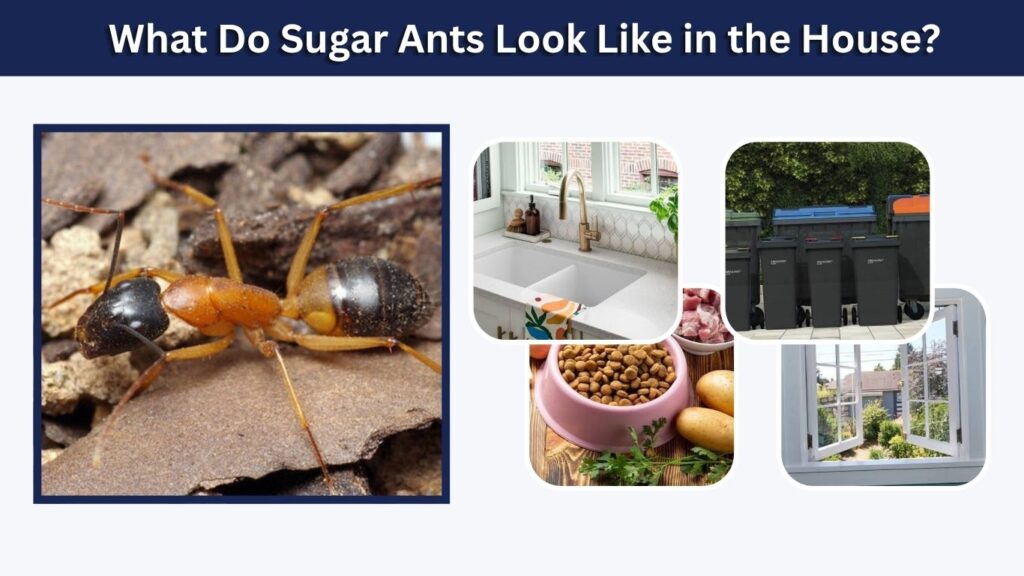
Inside a home, sugar ants are most often recognized by their behavior rather than individual anatomical details. You may notice dozens of tiny ants walking along countertops, walls, sinks, cabinets, or floors.
Once workers discover food, they can create trails between the food source and their nest.
Where You May See Them
Sugar ants commonly appear around:
- Kitchen counters
- Pantry shelves
- Sinks
- Trash containers
- Pet food
- Dishwasher areas
- Bathroom sinks
- Window frames
- Baseboards
- Cracks around cabinets
- Food storage areas
They are particularly attracted to syrups, fruit juice, crumbs, honey, candy, soft drinks, and other carbohydrate-rich foods.
What Does a Sugar Ant Trail Look Like?
A sugar ant trail usually appears as a narrow line of ants moving in both directions.
Some workers travel toward food, while others return toward the colony. Their trails may follow walls, cabinet edges, plumbing lines, or small cracks because these structures provide protected travel routes.
Following a trail can sometimes help reveal where ants are entering the home.
What Do Queen Sugar Ants Look Like?
The queen is much larger than ordinary worker ants. Her main role is reproduction, so she has a more developed body, particularly around the thorax and abdomen.
Queens normally remain inside or near the colony rather than searching your kitchen for food.
Identifying a Sugar Ant Queen
A queen typically has:
- Larger body than workers
- Enlarged thorax
- Broad abdomen
- Six legs
- Elbowed antennae
- Dark brown or black coloration in many species
- Wings during the reproductive stage or scars where wings were shed
A newly produced queen may initially possess wings. After mating, she generally sheds the wings before establishing or joining a nesting site.
Seeing a single larger ant does not automatically mean it is a queen, however. Some ant species naturally have workers of different sizes.
What Do Baby Sugar Ants Look Like?
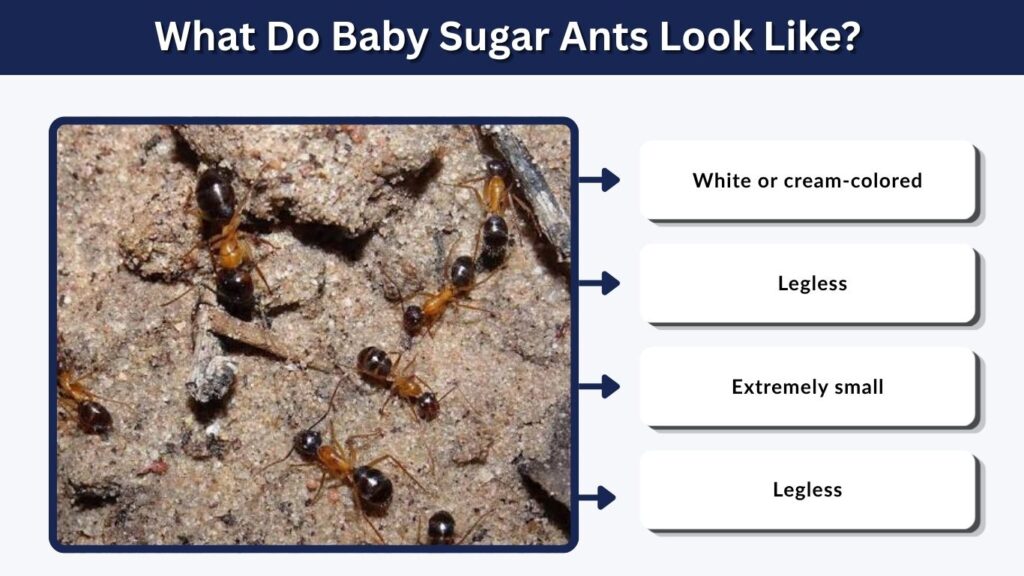
Baby ants do not begin life as miniature versions of adult ants.
Sugar ants undergo complete metamorphosis, passing through egg, larval, pupal, and adult stages. The immature stages usually remain inside the nest and are cared for by adult workers.
Sugar Ant Larvae
Newly hatched larvae are:
- White or cream-colored
- Soft-bodied
- Legless
- Curved or grub-like
- Extremely small
They cannot forage or care for themselves. Worker ants feed and protect them until they develop further.
Sugar Ant Pupae
After the larval stage, the developing ant becomes a pupa.
Depending on the species, the pupa may be exposed or enclosed in a small cocoon. At this point, the body gradually develops recognizable adult features such as legs, antennae, and a defined abdomen.
After emerging as adults, workers usually remain light-colored briefly before their exoskeleton hardens and darkens.
What Do Sugar Ant Eggs Look Like?
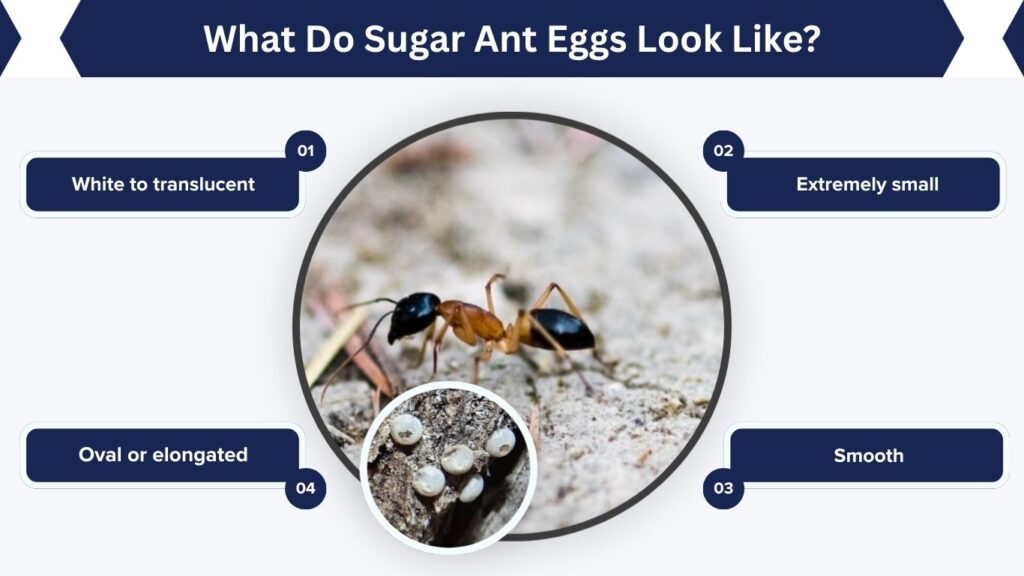
Sugar ant eggs are extremely small and are rarely noticed unless a nest is disturbed.
They generally resemble tiny white or translucent grains. Workers normally keep eggs clustered together inside protected nesting chambers.
Identifying Sugar Ant Eggs
Sugar ant eggs are typically:
- White to translucent
- Oval or elongated
- Extremely small
- Smooth
- Usually found in clusters
Because the eggs are so small, people may mistake clusters of ant brood for tiny grains of rice or crumbs.
If you expose a nest and see workers quickly carrying small white objects away, they may be transporting eggs, larvae, or pupae to safety.
What Do Sugar Ant Nests Look Like?
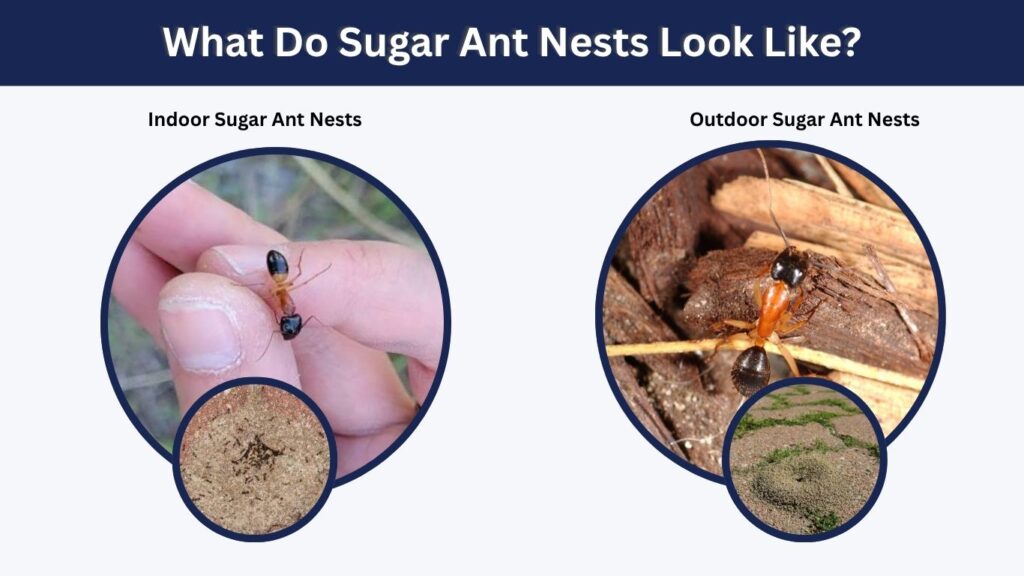
Sugar ant nests can be difficult to locate because many household species establish colonies inside protected spaces rather than building obvious above-ground mounds.
Indoors, they frequently use narrow cavities that provide warmth, moisture, and protection.
Indoor Sugar Ant Nests
Common nesting locations include:
- Wall voids
- Behind baseboards
- Under flooring
- Around plumbing
- Inside cabinet gaps
- Beneath sinks
- Around windows
- Behind appliances
You may not actually see the nest. Instead, persistent ant trails disappearing into cracks often provide the strongest indication of its location.
Outdoor Sugar Ant Nests
Outside, sugar ants may nest:
- Under rocks
- Beneath mulch
- Under logs
- Inside soil
- Under pavement
- Around foundations
- Beneath landscape materials
Outdoor colonies can send workers indoors when they discover accessible food or water.
What Do Sugar Ant Bites Look Like?
Most tiny household sugar ants are not aggressive toward humans, and encounters generally involve ants crawling on the skin rather than attacking.
However, some ants referred to as sugar ants can bite defensively. Reactions are typically minor compared with those produced by aggressive stinging ants.
Appearance of a Sugar Ant Bite
When a noticeable reaction occurs, it may include:
- Tiny red spot
- Mild swelling
- Slight itching
- Localized irritation
- Minor burning sensation
The appearance can vary depending on the ant species and a person’s individual skin reaction.
A large blister, extensive swelling, severe pain, difficulty breathing, or other significant symptoms should not automatically be attributed to a typical household sugar ant.
Sugar Ants vs. Carpenter Ants: What Do They Look Like?
Sugar ants are sometimes confused with carpenter ants, particularly when dark ants appear inside the house.
One of the easiest differences is their size.
Sugar Ant vs. Carpenter Ant
| Feature | Sugar Ant | Carpenter Ant |
| Typical size | Usually very small | Usually much larger |
| Color | Brown to black | Black, brown, reddish, or mixed |
| Food attraction | Strongly attracted to sweets | Sweets and protein sources |
| Indoor trails | Common | Common |
| Wood nesting | Usually not excavating structural wood | Often nests in damaged or moist wood |
| Worker size | Often fairly uniform | Can vary considerably |
Carpenter ants are among the larger ants commonly found inside houses. Some workers can approach 1/2 inch in length, making them dramatically larger than most tiny sugar ants.
Sugar ants generally exploit cracks and cavities, whereas carpenter ants are known for excavating galleries in wood to create nesting space.
Why Are Sugar Ants So Small?
Their small size allows many household sugar ants to enter buildings through extremely narrow openings.
They can travel through gaps around windows, doors, plumbing, wiring, foundations, and cabinets that might appear completely sealed to humans.
Their small bodies also make it easier for colonies to establish satellite nesting areas inside wall voids or other hidden spaces.
Big Sugar Ants
If you see unusually large ants near a trail of tiny ants, several possibilities exist.
A larger individual could be a reproductive queen, but it could also belong to a completely different ant species. Large black ants in particular may be carpenter ants rather than the tiny ants commonly described as sugar ants.
Size differences should therefore be considered together with body shape, nesting location, and behavior.
How to Recognize a Sugar Ant Infestation
A few ants occasionally wandering indoors do not always indicate a large infestation. Repeated trails or increasing numbers provide stronger evidence that a colony is established nearby.
Common signs include:
- Long trails of tiny ants
- Ants returning after cleaning
- Activity around sweet foods
- Ants appearing around sinks
- Workers entering cracks or walls
- Increased activity during warm weather
- Ants repeatedly appearing in the same room
Finding the trail’s entry point is often more useful than simply killing visible workers, because most of the colony remains hidden.
Frequently Asked Questions
What do sugar ants look like up close?
Sugar ants generally have six legs, elbowed antennae, a narrow waist, and a brown to black segmented body. Most household varieties are very small.
Are sugar ants black or brown?
They can be either. Depending on the species, sugar ants may appear light brown, reddish-brown, dark brown, or almost completely black.
What do sugar ant eggs look like?
Their eggs look like extremely small white or translucent oval grains. They are normally kept together inside protected areas of the nest.
How can I tell sugar ants from carpenter ants?
Size is one of the easiest clues. Most household sugar ants are tiny, while carpenter ants are substantially larger and may establish nests in damp or damaged wood.
Can you see baby sugar ants walking around?
Not during their earliest stages. Sugar ant larvae are small, white, legless grubs that stay inside the colony. They begin walking around normally only after completing metamorphosis and emerging as adult ants.