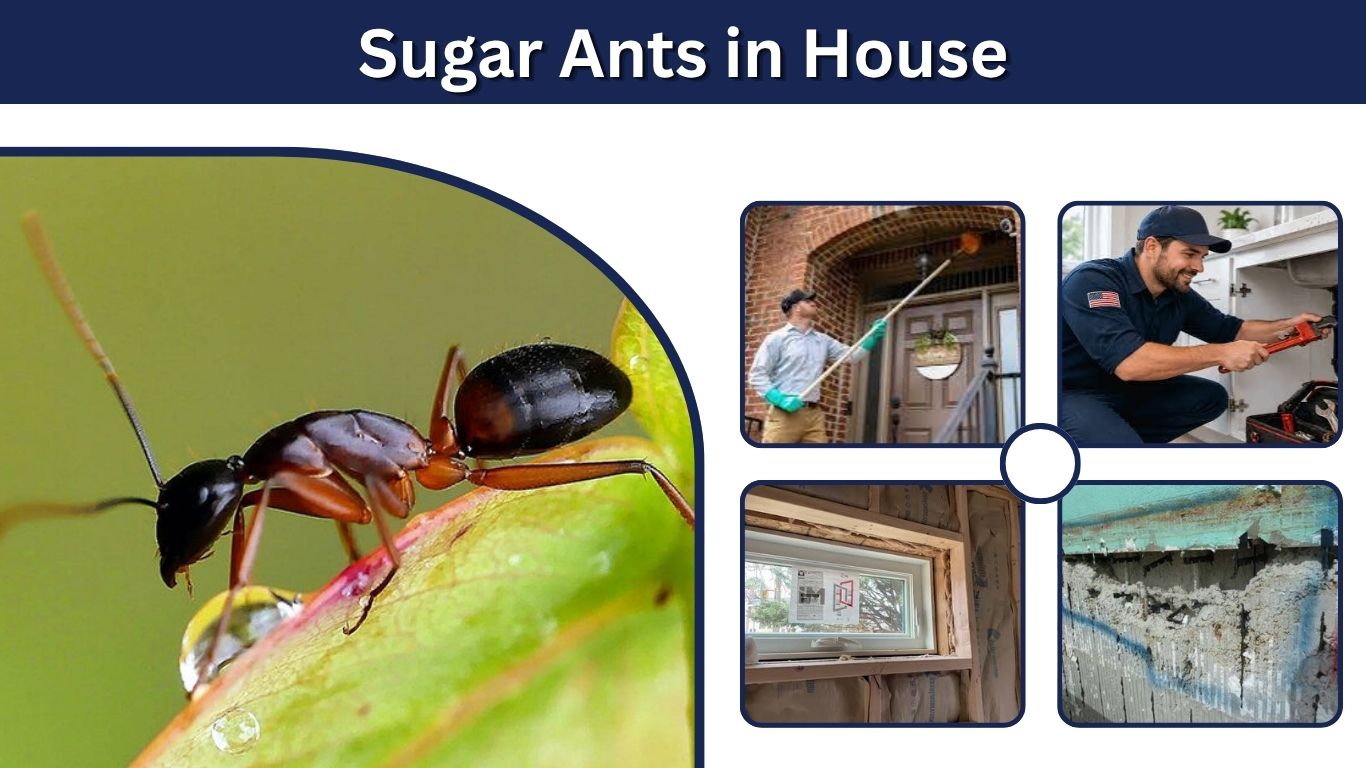
Sugar ants in the house usually appear when tiny ants discover easy access to sweet food, moisture, or shelter. The name “sugar ant” is commonly used for several small ant species attracted to sugary substances rather than one specific household species. They may form long trails through kitchens, bathrooms, pantries, and around windows. Getting rid of them requires more than killing visible workers. Finding their food source, using suitable bait, sealing entry points, and improving sanitation can provide longer-lasting control.
Why Are Sugar Ants in My House?
Sugar ants normally enter homes because they have found something valuable inside. A few scout ants may discover food or water and then create a chemical trail that attracts additional workers. Warm weather often increases activity, although indoor colonies or protected nesting sites can make sugar ants noticeable during winter as well.
What Attracts Sugar Ants?
Common attractions include:
- Spilled sugar, syrup, juice, or soda
- Fruit and other sweet foods
- Crumbs under appliances
- Open trash containers
- Pet food
- Dirty dishes
- Moisture around sinks and pipes
- Honey, jam, candy, and baked goods
- Grease or other food residue
Even very small amounts of food can support an active trail of ants.
How Do Sugar Ants Get Into Your House?
Sugar ants can enter through extremely small openings around doors, windows, foundations, pipes, vents, and utility lines. Tree branches or plants touching exterior walls may also provide access.
Once scouts locate a reliable food source, they return to the colony while laying down a scent trail. Other workers then follow the same route, creating the familiar line of ants moving across a countertop or floor.
Why Are There So Many Sugar Ants?
Seeing large numbers usually means workers have established a successful trail between their nest and a food or water source. The colony itself may be outdoors, inside a wall void, beneath flooring, or in another protected location.
Killing only the ants you can see may temporarily reduce activity, but additional workers can continue arriving unless the trail and colony are addressed.
How to Get Rid of Sugar Ants in the House
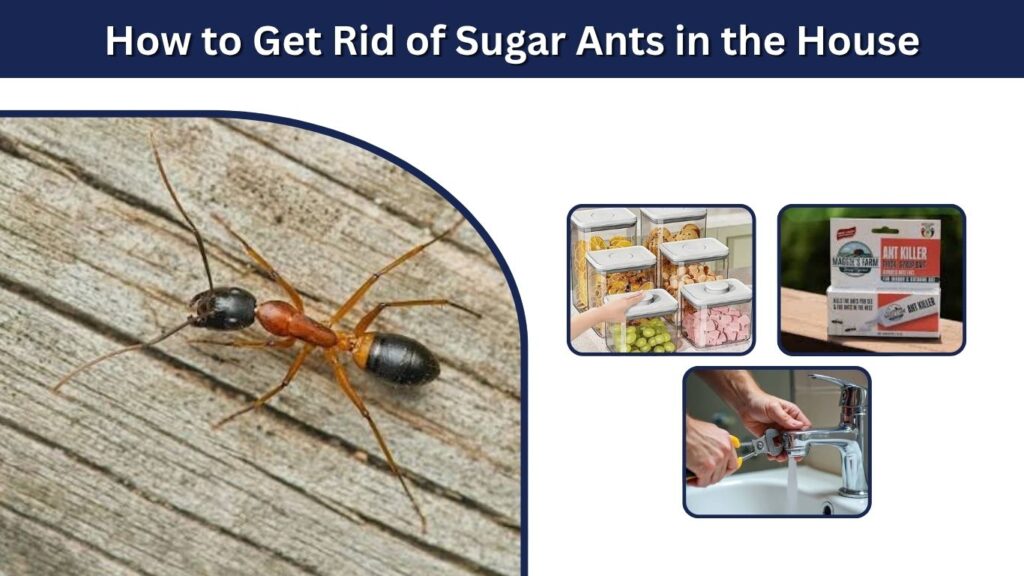
Effective sugar ant control focuses on the colony rather than individual ants. Baits are often useful because workers carry food back toward the nest, potentially spreading the active ingredient among other colony members. Combining baiting with cleaning and exclusion usually provides better results than repeatedly spraying visible trails.
Best Way to Get Rid of Sugar Ants
Try these steps:
- Wipe counters and floors to remove food residue.
- Store sugar, cereal, snacks, and sweets in sealed containers.
- Follow ant trails to identify likely entry points.
- Place ant bait near active trails according to label instructions.
- Avoid spraying directly around bait stations.
- Repair leaking faucets or pipes.
- Seal cracks after ant activity declines.
- Continue monitoring the area for returning ants.
Bait may initially attract more ants because workers are feeding from it. This does not necessarily mean the treatment is failing.
What Kills Sugar Ants in the House?
Commercial ant baits are commonly used for household sugar-feeding ants. Some formulations contain sweet attractants combined with slow-acting insecticides.
A slow-acting product can be useful because workers have time to return to the colony before dying. Always follow the product label carefully, especially in homes with children or pets.
Simply crushing individual workers provides immediate removal but usually does little to affect the hidden colony.
Home Remedies for Sugar Ants
Nonchemical measures can reduce ant activity, especially when an infestation is small:
- Clean food spills immediately.
- Wash ant trails with soapy water.
- Keep counters dry overnight.
- Empty garbage regularly.
- Refrigerate ripe fruit when practical.
- Store pet food in sealed containers.
- Vacuum crumbs from cabinets and appliances.
- Eliminate standing water.
Cleaning trails helps remove some of the scent cues ants use for navigation, but sanitation alone may not eliminate an established colony.
How to Find a Sugar Ant Nest in the House
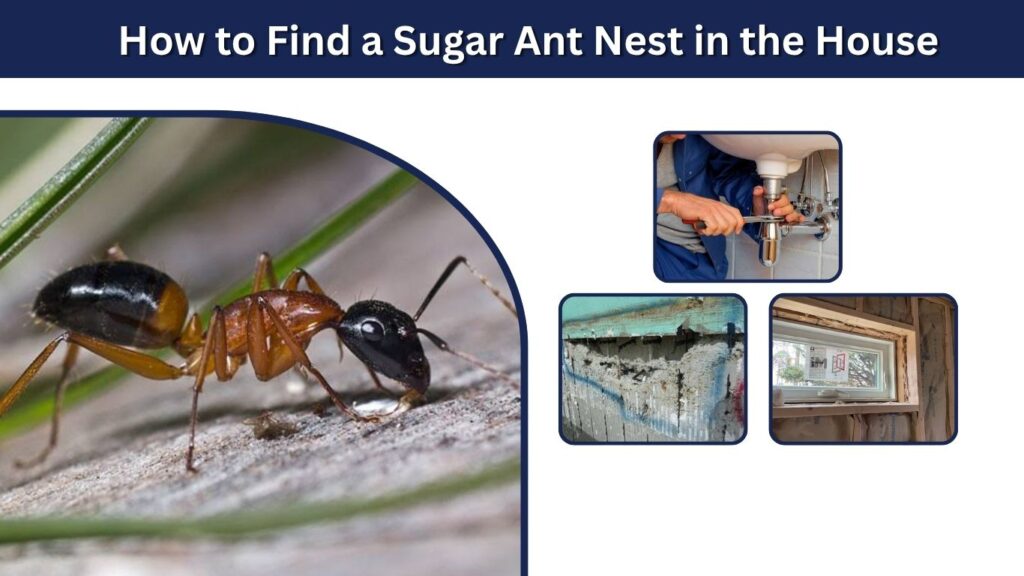
Sugar ants seen indoors do not always have a nest inside the building. Workers may travel from an outdoor colony through tiny structural gaps. However, persistent year-round activity, especially from one wall, cabinet, or floor area, can suggest a nest or satellite colony somewhere within the structure.
Common Nesting Areas
Possible nesting or travel areas include:
- Wall voids
- Around window frames
- Beneath floors
- Behind baseboards
- Inside cabinet gaps
- Near plumbing
- Under sinks
- Beneath appliances
- Around foundations
- Outdoor soil near the building
Watch where the ant trail disappears rather than relying only on where the ants are feeding.
Sugar Ants in House Plants
Ants around houseplants may be attracted to moisture or to honeydew produced by aphids, scale insects, or mealybugs. Inspect leaves and stems carefully for plant pests.
If honeydew-producing insects are present, controlling them may greatly reduce ant activity. Avoid immediately assuming the ants are nesting in the pot simply because they are walking around the plant.
Tiny Black Sugar Ants vs Odorous House Ants
“Sugar ant” is an informal name and can refer to different small ants that seek sweet foods. Odorous house ants are one common household species sometimes called sugar ants, but the terms are not scientifically interchangeable. Accurate identification can matter because different ant species may have different nesting habits and respond differently to control methods.
What Do Sugar Ants Look Like?
Household ants described as sugar ants are commonly:
- Very small
- Brown, dark brown, or black
- Seen traveling in organized trails
- Active around sweet foods
- Frequently found near kitchens and sinks
Color alone is not enough to determine the exact species.
Odorous House Ants vs Sugar Ants
Odorous house ants are small brownish-to-black ants known for producing an unpleasant odor when crushed. They commonly invade buildings and are strongly attracted to sweet substances.
Because “sugar ant” can describe several ants, an ant identified casually as a sugar ant may or may not actually be an odorous house ant.
How to Keep Sugar Ants Out of Your House
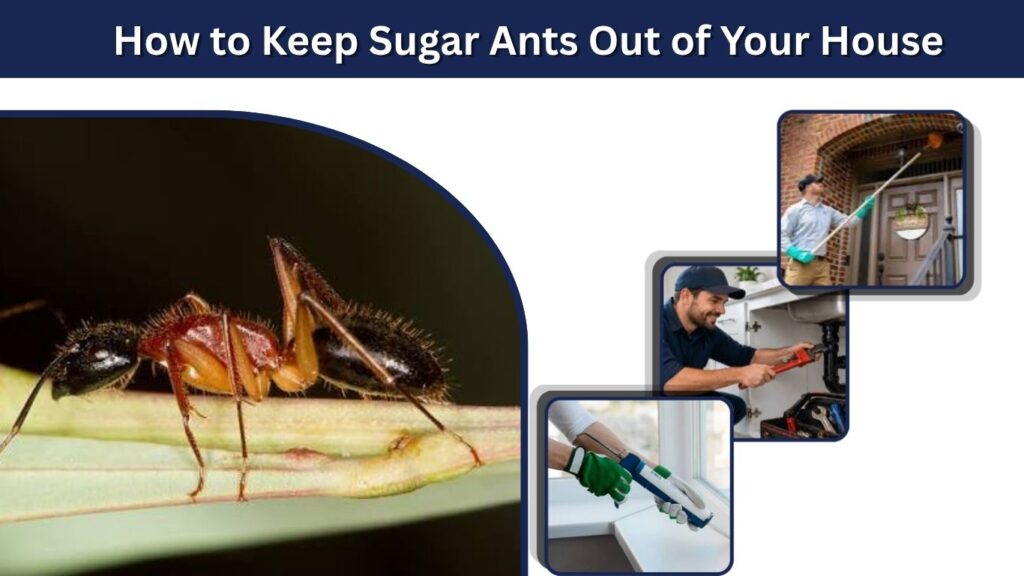
Prevention becomes especially important after an infestation has been reduced. Ants continually search for food and water, so eliminating easy resources makes a home less attractive. Exterior maintenance also helps because many household ant problems begin with colonies living outdoors and sending workers through structural openings.
Ways to Prevent Sugar Ants
Use these preventive measures:
- Seal gaps around windows and doors.
- Caulk cracks around utility lines.
- Keep food in airtight containers.
- Clean kitchen surfaces daily.
- Repair plumbing leaks.
- Keep trash cans covered.
- Remove food residue beneath appliances.
- Trim branches away from exterior walls.
- Avoid leaving pet food out overnight.
- Reduce excessive moisture around the foundation.
Regular inspection can help you catch a new trail before it develops into a larger problem.
Sugar Ants in Winter and Summer
Sugar ants may be more visible during warm months because colonies become highly active and workers forage widely. Summer conditions also increase access to outdoor food and water sources.
Winter activity inside a heated home can occur when ants have access to protected nesting areas, moisture, and food. Persistent cold-season activity may therefore deserve closer inspection.
Are Sugar Ants Bad for Your House?
Most small ants referred to as sugar ants are primarily nuisance pests rather than major structural pests. Their presence can contaminate food surfaces and become frustrating when trails repeatedly appear. However, they should not automatically be confused with carpenter ants or termites, which can be associated with structural concerns.
When to Call Pest Control
Professional help may be worthwhile when ants remain active despite repeated baiting and sanitation, appear throughout multiple rooms, emerge from difficult-to-access wall areas, or return continuously.
A pest professional can identify the species, locate likely nesting areas, and choose a treatment strategy appropriate for the particular ant rather than treating every small household ant the same way.
FAQs
1. Why do I suddenly have sugar ants in my house?
Sugar ants may suddenly appear after scout ants locate food, moisture, or shelter indoors. Once a useful resource is discovered, workers can establish a scent trail that recruits many additional ants, making a small unnoticed problem seem to appear almost overnight.
2. What is the best way to kill sugar ants in the house?
Using an appropriately labeled ant bait along active trails is often more useful than killing individual workers. Workers can carry bait back toward the nest. Cleaning food sources, repairing leaks, and sealing entry points should also be part of the overall control strategy.
3. How do I get rid of tiny sugar ants naturally?
Start by removing food residue, wiping ant trails with soapy water, storing sweet foods in sealed containers, eliminating standing water, and emptying trash regularly. These measures reduce what attracts ants, although an established colony may still require a suitable ant bait.
4. Can sugar ants damage my house?
Most small household ants commonly called sugar ants are nuisance pests and are not known for causing the structural damage associated with termites or carpenter ants. However, correct identification is important if larger ants, wood debris, or other signs of structural pest activity are present.
5. How can I stop sugar ants from coming back?
Keep food sealed, clean crumbs and spills promptly, repair water leaks, seal cracks around windows and utility openings, and monitor previously active areas. Preventing access to food, moisture, and entry points makes it much harder for returning scout ants to establish new trails.